The Exact 8-Week Puppy Potty Training Schedule That Will Save Your Carpets
Welcome to the wonderful, slightly messy world of puppy parenthood! If you are reading this, chances are you’ve either just brought home a wiggly ball of fur or you’re currently staring at a suspicious damp spot on your favorite rug. Don’t panic. Potty training is often cited as the most stressful part of raising a puppy, but it doesn’t have to be a guessing game. The secret isn’t magic; it’s a consistent, biological-based schedule.
Puppies are creatures of habit with very small bladders. At eight weeks old, most puppies can only hold their bladder for about two hours. By the time they reach four months, that capacity increases significantly. This guide isn’t just about avoiding accidents; it’s about teaching your puppy a communication system. We are going to walk through an exact 8-week timeline that transitions your puppy from “clueless” to “carpet-safe.” Grab a cup of coffee, a roll of paper towels, and let’s get to work!
Phase 1: The Essential Toolkit and Setup
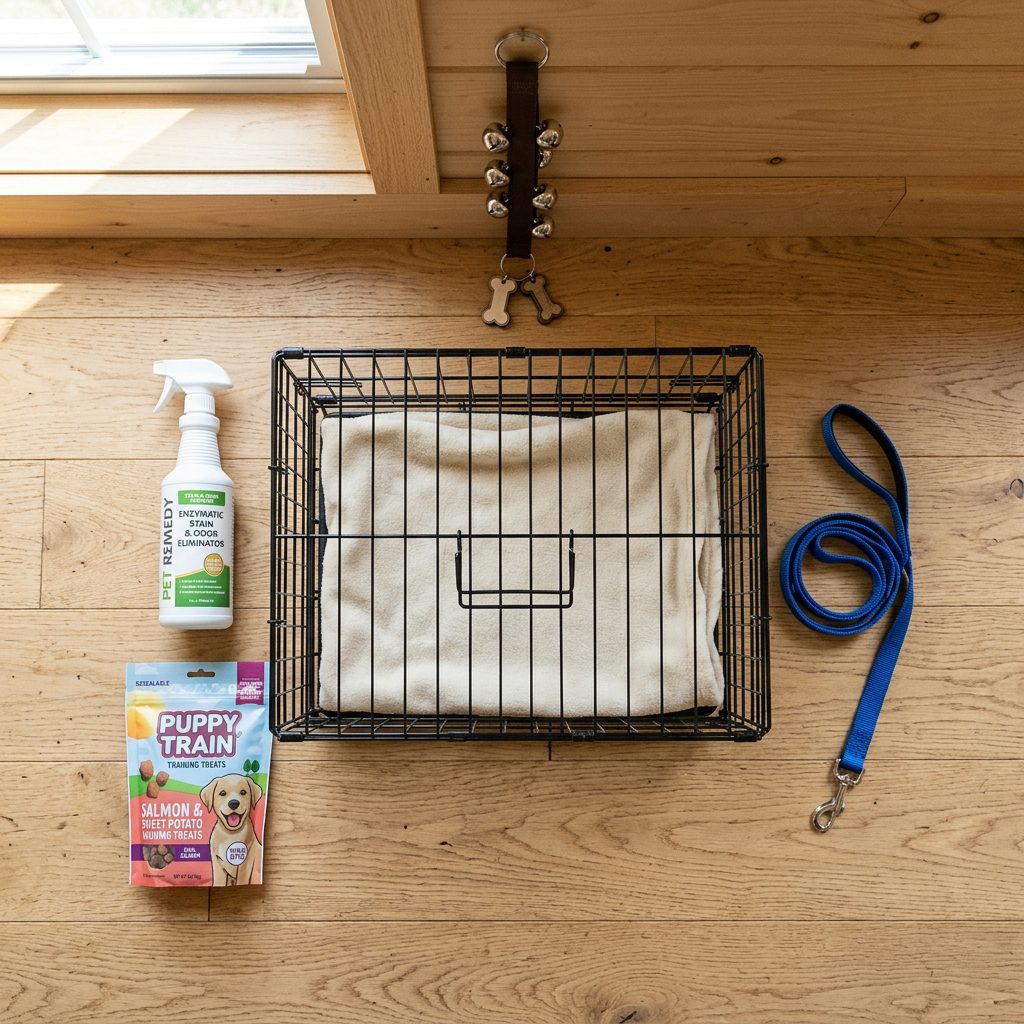
Before we dive into the hourly breakdown, we need to ensure you have the right gear. Trying to potty train without the proper tools is like trying to bake a cake without a bowl—you might get there eventually, but it’s going to be a mess. Savvy owners know that preparation is 90% of the battle.
The Must-Have Potty Training Gear
You don’t need a million gadgets, but you do need these five essentials:
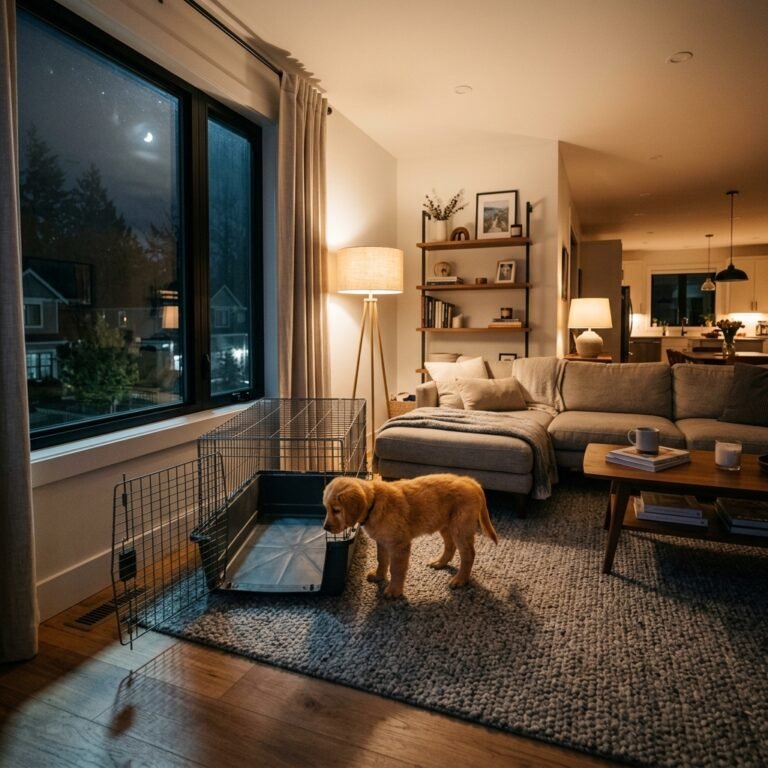
- An Appropriate Crate: The crate should be just large enough for the puppy to stand up, turn around, and lie down. If it’s too big, they will sleep in one corner and pee in the other.
- Enzymatic Cleaner: Regular household cleaners don’t break down the proteins in dog urine. If the puppy can smell it (and their nose is 10,000 times stronger than yours), they will keep returning to that spot.
- High-Value Treats: These are for the “Potty Party.” Think small pieces of boiled chicken or freeze-dried liver.
- A Fixed-Length Leash: Even in a fenced yard, a leash keeps the puppy focused on the task at hand rather than chasing butterflies.
- A Consistent Command: Pick a phrase like “Go Potty” or “Hurry Up” and stick to it.
| Tool | Purpose | Why It Saves Your Carpet |
|---|---|---|
| Crate | Den Instinct | Dogs naturally avoid soiling their sleeping area. |
| Enzymatic Cleaner | Odor Elimination | Removes the pheromones that trigger repeat accidents. |
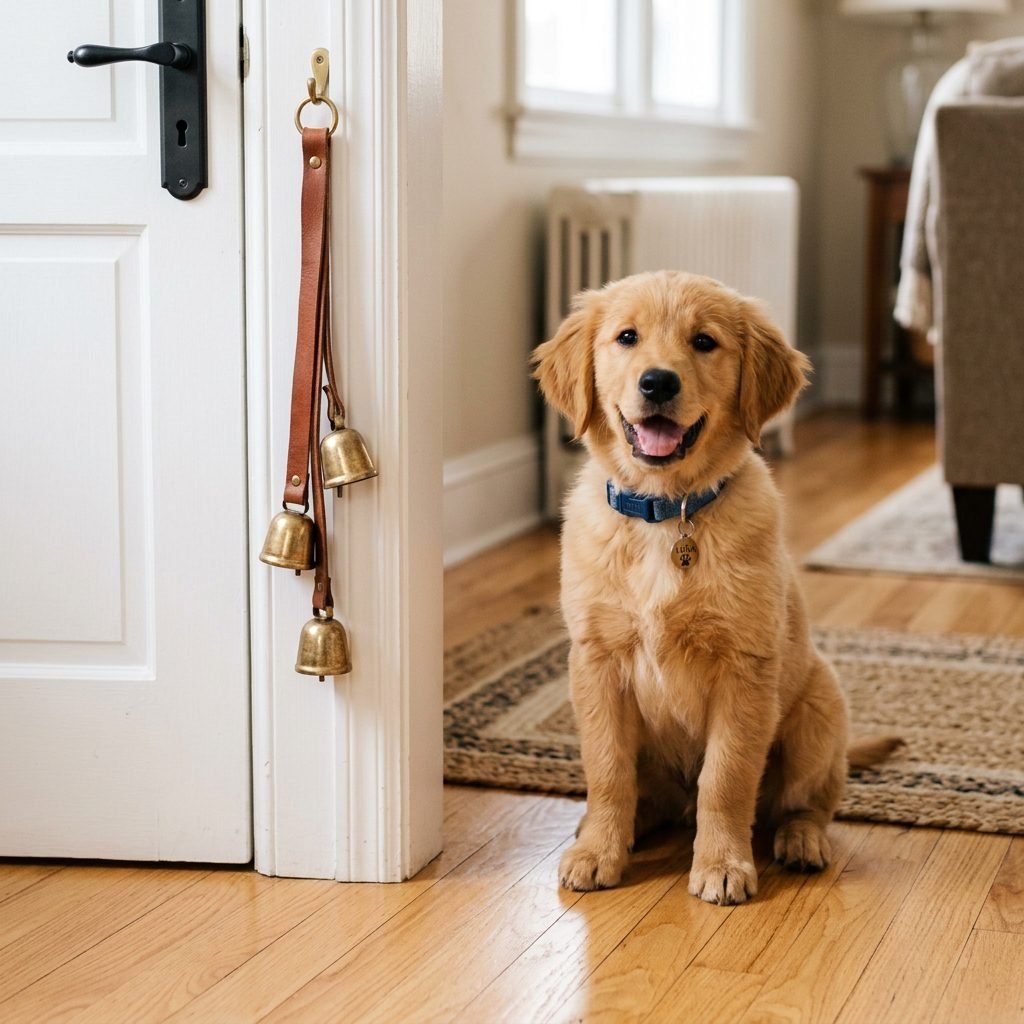
| Training Bells | Communication | Gives the dog a way to “talk” to you before an accident. |
| Long-Term Confinement | Safety Zone | An X-pen with a washable floor for when you can’t supervise. |
Expert Tip: Never use ammonia-based cleaners. Since urine contains ammonia, cleaning with it actually attracts the dog back to the same spot to ‘freshen up’ the scent!
Weeks 1-2: The Foundation of Frequency
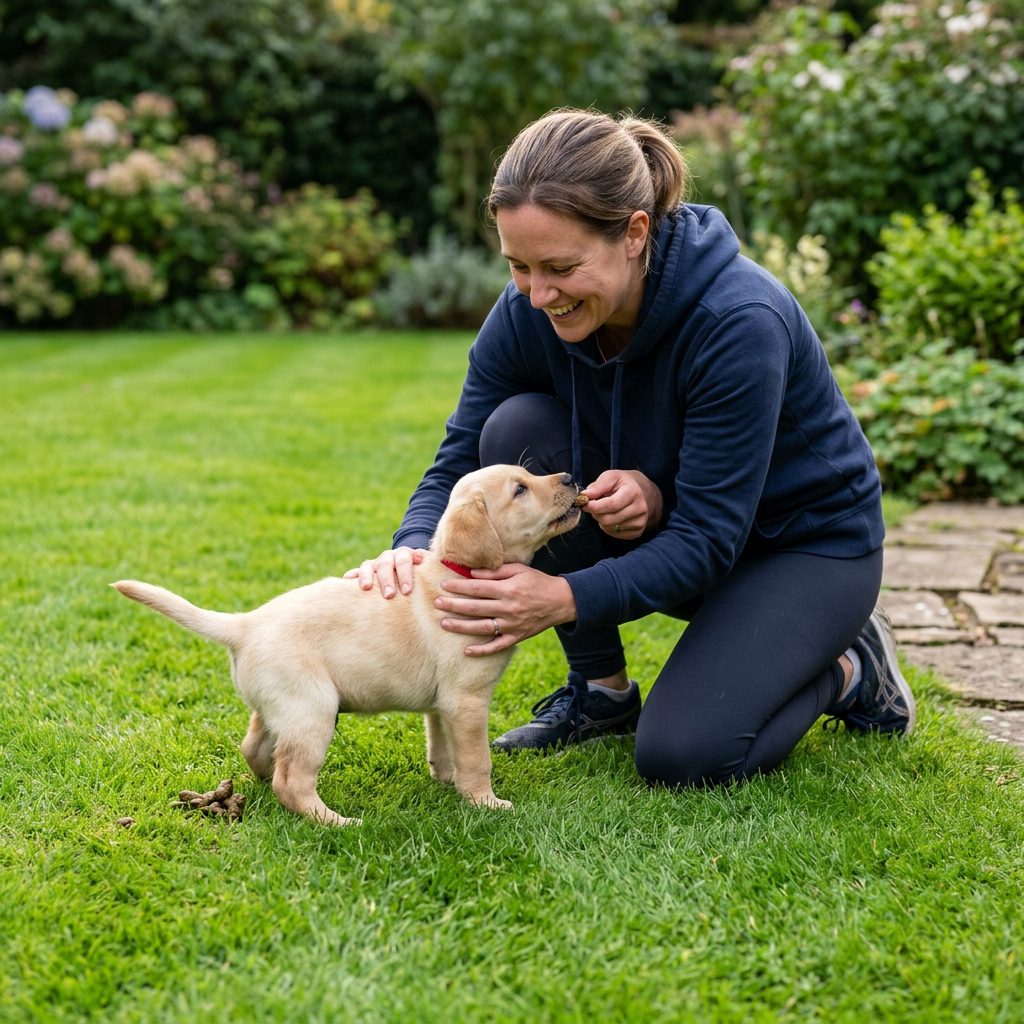
The first two weeks are the most intensive. Your primary goal is zero accidents. This isn’t about the puppy learning yet; it’s about you managing their environment so they never have the chance to fail. During this phase, you are essentially a biological clock.
The Hourly Rhythm
At this stage, your puppy should go outside:
- Immediately upon waking up (even from a 10-minute nap).
- 5 to 15 minutes after eating or drinking.
- After every play session or bout of excitement.
- Every 30 to 60 minutes when they are awake and active.
The ‘Potty Party’ Technique
When you take your puppy out, don’t just stand there. Walk them to their designated spot, say your command, and wait. The moment they finish, throw a Potty Party. This means high-pitched praise, chest scratches, and a treat within three seconds of the act. We want them to think that peeing outside is the most profitable thing they can possibly do.
Sample Daily Schedule (Puppy Age: 8-10 Weeks)
| Time | Activity | Potty Break? |
|---|---|---|
| 6:00 AM | Wake up & Straight outside | YES (Immediate) |
| 6:15 AM | Breakfast & Water | – |
| 6:30 AM | Post-meal outing | YES |
| 7:00 AM | Playtime (Supervised) | YES (After play) |
| 8:00 AM | Nap time in Crate | – |
| 10:00 AM | Wake up & Outing | YES |
Weeks 3-4: Recognizing the Signs
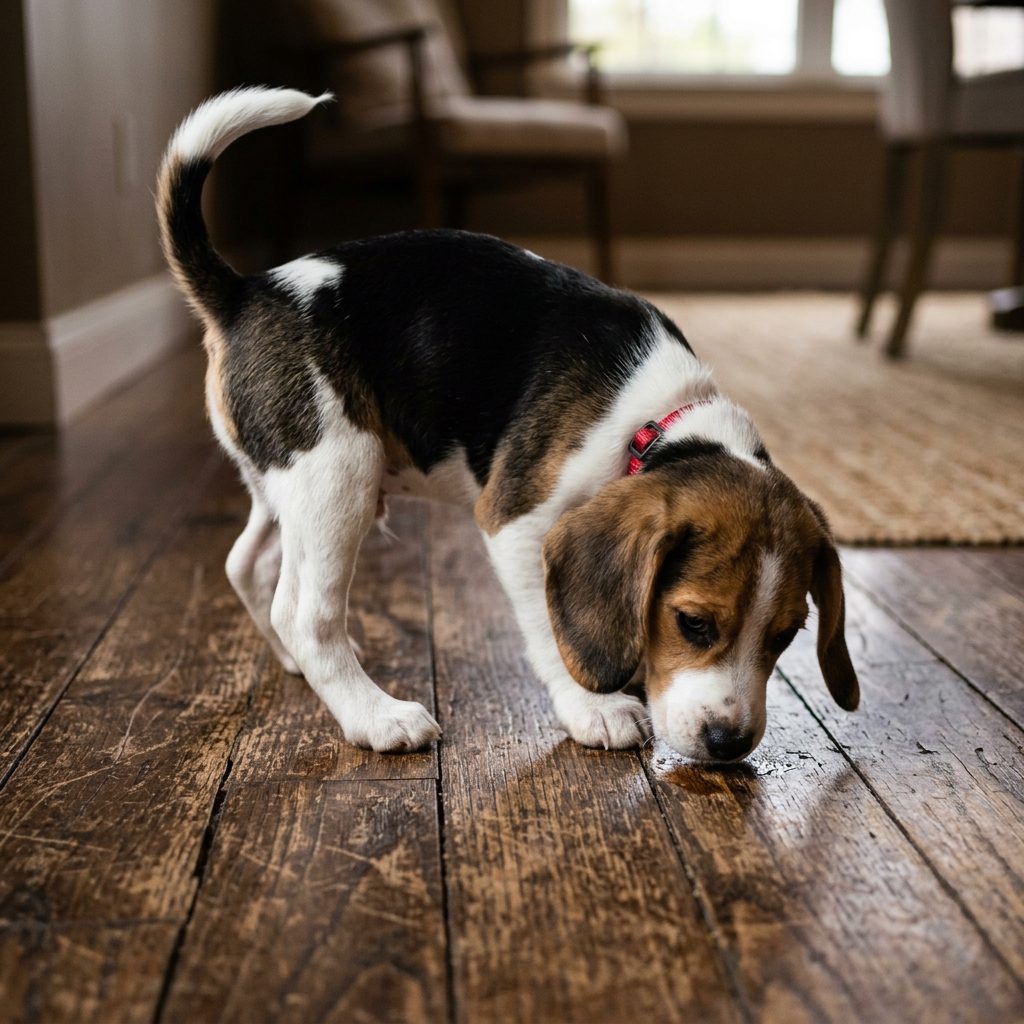
By week three, your puppy is starting to understand the routine. Now, your job shifts from being a clock to being a detective. You need to learn your puppy’s “tell.” Just like a poker player, every puppy has a physical sign they give right before they go.
Common Pre-Potty Behaviors
- The Circle: Intense sniffing in a circular pattern.
- The Wander: Suddenly leaving a fun game to go to a corner or another room.
- The Whimper: A specific, low-pitched whine.
- The Stare: Some puppies will simply stop and stare at you intensely.
If you see any of these, don’t say a word—just scoop them up and head outside. If they start to go inside, a sharp “Oops!” can interrupt them, but never scold or rub their nose in it. Simply take them outside to finish and clean the indoor spot thoroughly.
Expanding the Window
During these weeks, you can begin to stretch the intervals. If they were going every 45 minutes, try an hour. If they are successful, keep that window. If they have an accident, you’ve moved too fast; go back to the previous interval for three more days.
Weeks 5-6: Introducing Communication
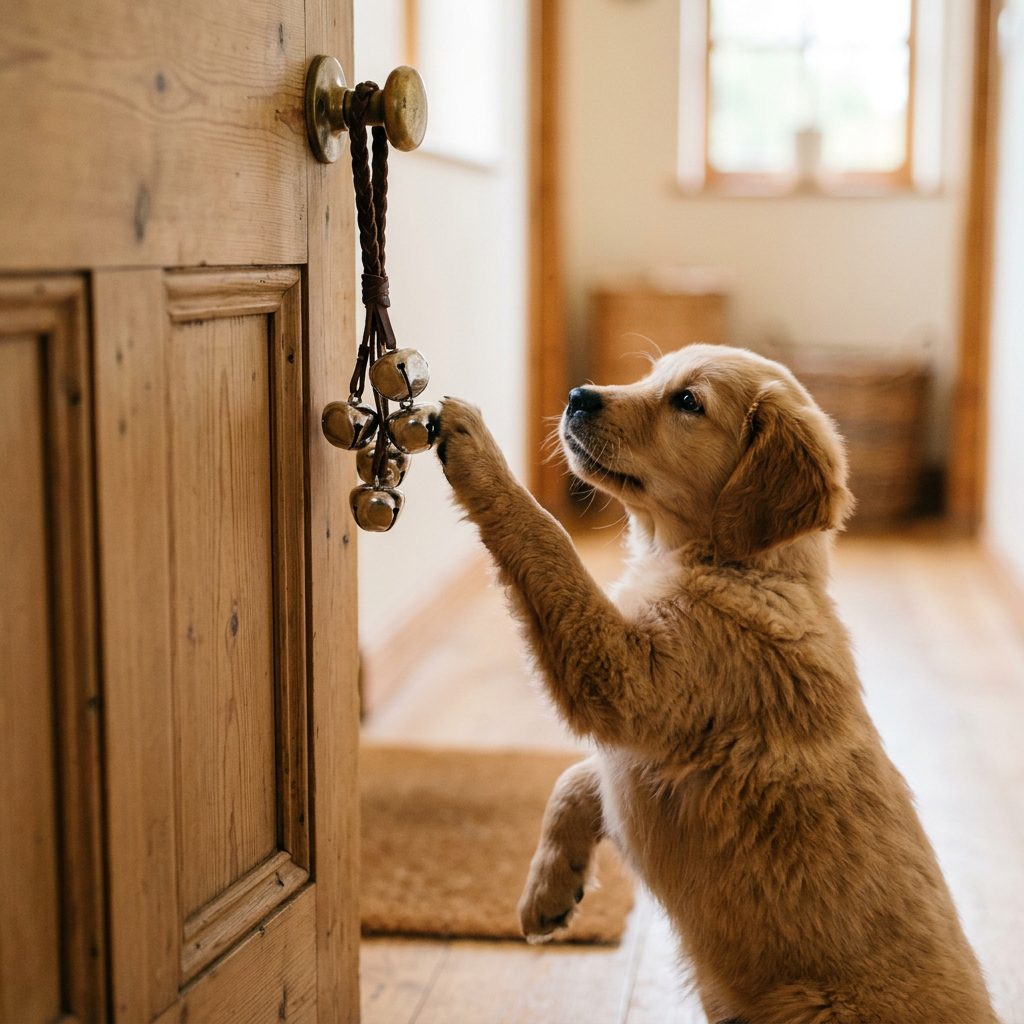
Now that the puppy understands where to go, we want to teach them how to tell you they need to go. This is where training bells or a specific ‘sit by the door’ behavior comes in. Without a signal, the puppy might just stand by the door, and if you aren’t looking, they’ll give up and go on the floor.
How to Teach the Bell Signal
- Hang the bells at the puppy’s nose level on the door you use for potty breaks.
- Every single time you take them out, tap their nose or paw against the bells so they chime.
- Say your command (“Go Potty”) and immediately open the door.
- Repeat this for 14 days straight. Eventually, the puppy will ring the bells themselves to trigger the door opening.
Consistency is Key
During weeks 5 and 6, you might experience a “regression.” This is normal! As puppies grow, they become more interested in the world. They might forget to tell you because they were distracted by a squirrel. Stay vigilant and don’t relax the rules just yet.
Weeks 7-8: Reliability and Freedom
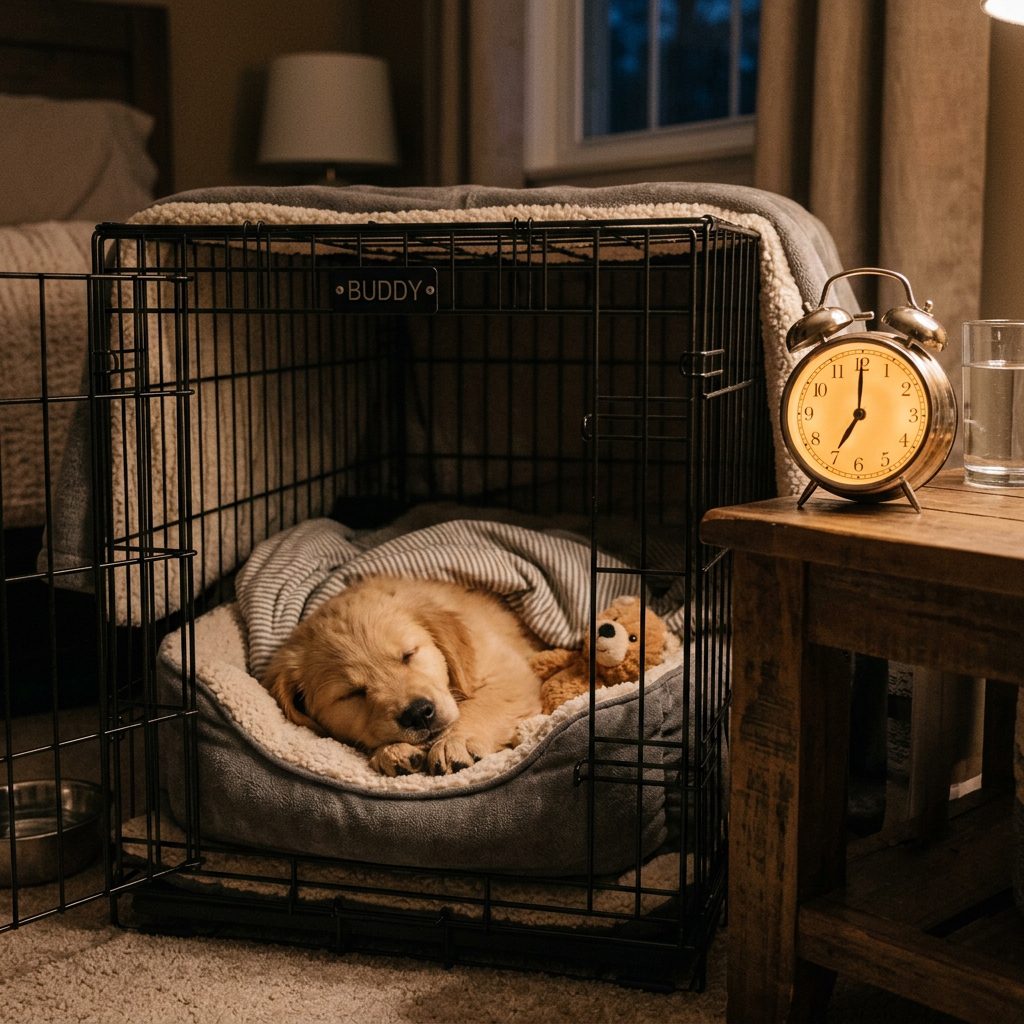
We are in the home stretch! By now, your puppy should have a strong preference for going outside. You should be seeing fewer accidents and more successful communication. This phase is about testing their reliability while slowly granting more freedom in the house.
The ‘One Room at a Time’ Rule
Don’t give a 14-week-old puppy full run of the house. They will find a guest bedroom or a basement corner to use as a secret bathroom. Instead, allow them in the kitchen and living room only. Once they are accident-free in those areas for two weeks, open up one more room. If an accident occurs, you’ve expanded their world too quickly.
Nighttime Success
By 16 weeks (the end of our 8-week program), most puppies can sleep through the night (7-8 hours) without a bathroom break. To help them succeed:
- Remove water bowls 2 hours before bedtime.
- Ensure the final potty break is right before you go to sleep.
- Keep the nighttime outing strictly business—no play, no talking, just potty and back to bed.
Troubleshooting: Why is My Puppy Still Having Accidents?
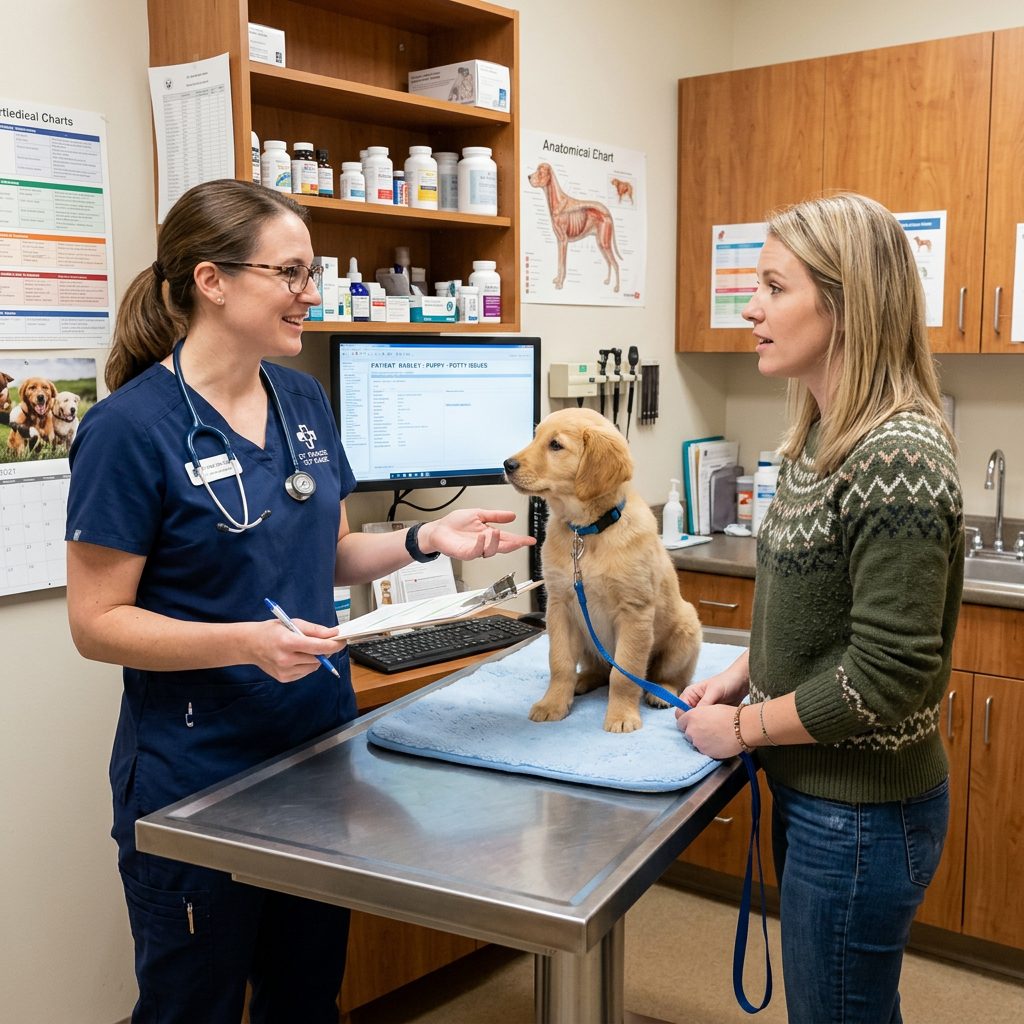
Even with the best schedule, hurdles happen. If your puppy is still struggling after 8 weeks, it’s time to look at external factors. Potty training isn’t just behavioral; it’s physiological.
Common Roadblocks
- Medical Issues: Urinary Tract Infections (UTIs) are common in puppies and make it impossible for them to hold it. If your puppy is peeing tiny amounts every 10 minutes, see a vet.
- Excitement Urination: This is a submissive reflex. If your puppy pees when you come home, don’t make a big deal of your arrival. Ignore them until they calm down.
- Substrate Preference: If a puppy was raised on newspaper or grass, they might struggle to transition to a different surface. Be patient and use the ‘Potty Party’ to reinforce the new surface.
| Problem | Possible Cause | Solution |
|---|---|---|
| Frequent dribbling | UTI or Bladder Stones | Veterinary Checkup |
| Peeing when greeted | Excitement/Submission | Low-key greetings, ignore for 5 mins |
| Peeing on rugs only | Surface Confusion | Remove rugs temporarily; use enzyme cleaner |
| Regression after 4 months | Teething or Hormones | Back to 1-hour schedule for 1 week |
Conclusion
Potty training is a marathon, not a sprint. While this 8-week schedule provides the blueprint, every puppy is an individual. Some will breeze through in four weeks, while others might need ten. The most important thing you can provide is patience and consistency. Remember, your puppy isn’t trying to be “bad” or spiteful when they have an accident; they are simply learning how to live in a human world.
By following this schedule, using the right tools, and keeping your cool, you are building a foundation of trust and communication that will last a lifetime. Soon enough, the days of hovering over your carpets with a spray bottle will be a distant memory, replaced by the joy of a fully house-trained companion. You’ve got this!