Puppy Crying When Left In Playpen Same Room? Here is The Instant Fix!
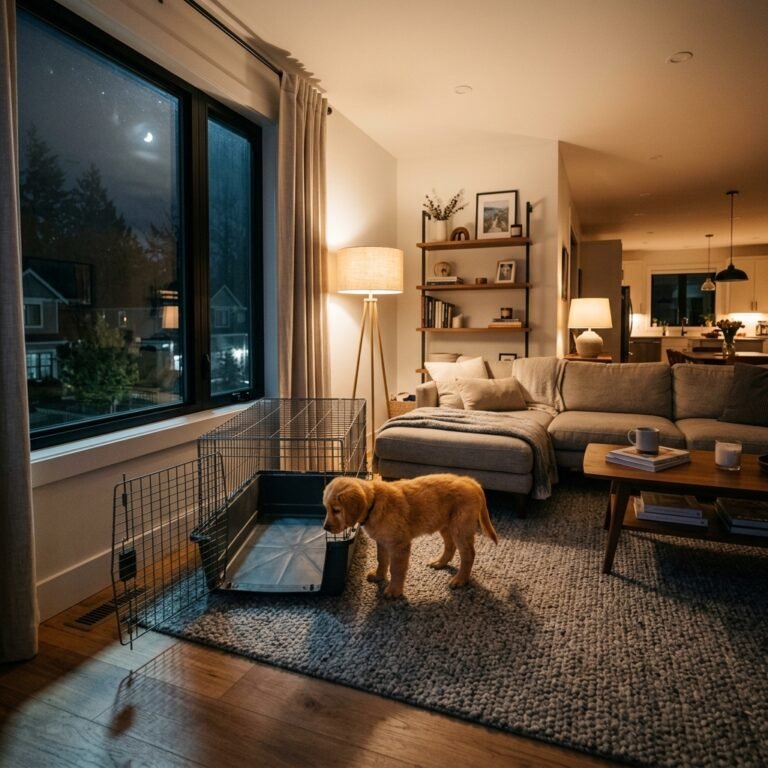
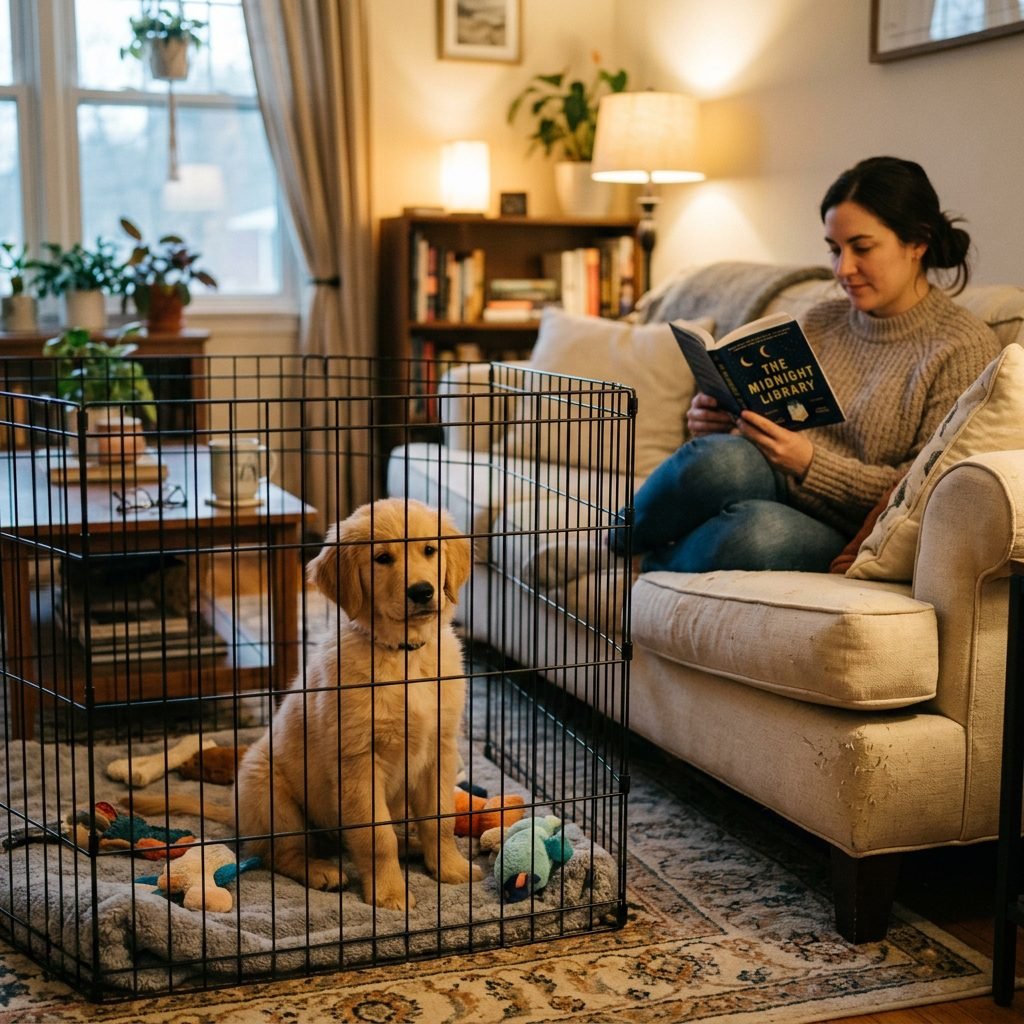
Hey there, savvy dog owners! We have all been exactly where you are right now. You have done your research, you bought the premium gear, and you set up the absolute perfect, cozy playpen for your new furry best friend. It has their favorite orthopedic bed, a spill-proof bowl of fresh water, and a mountain of enriching toys. You gently place them inside, securely latch the gate, and sit down on the couch just a few feet away to finally drink your morning coffee in peace. And then… the relentless crying begins.
It is undoubtedly one of the most frustrating, guilt-inducing, and confusing behaviors for new puppy parents to navigate. Why is your puppy crying when left in the playpen in the exact same room? They can clearly see you! They know you have not abandoned them! Yet, they are howling, whining, and pawing at the bars like they have been left completely alone on a deserted island.
If you are pulling your hair out wondering how to stop the whining, barking, and dramatic puppy tantrums, take a deep breath because you are in the right place. Today, we are going to dive deep into the fascinating canine psychology behind this specific behavior. More importantly, I am going to give you the step-by-step instant fix to transform your demanding little crybaby into a calm, confident, and independent companion. Grab that coffee, ignore the whining for just a few more minutes, and let’s get started!
The Psychology Behind the Whine: Why Do They Cry?
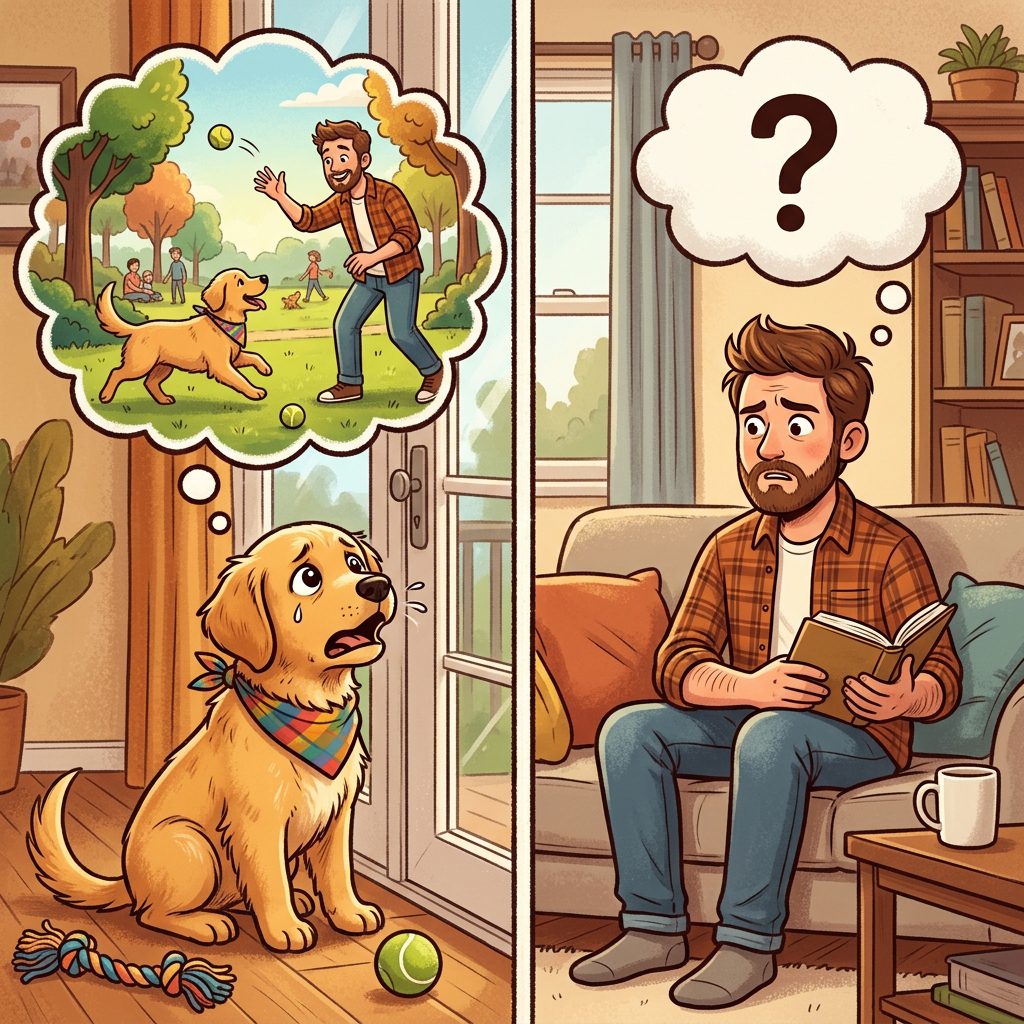
Before we can permanently fix the problem, we need to understand exactly what is going through your puppy’s adorable little head. When your puppy cries in the playpen while you are visibly in the same room, it is rarely a case of true clinical separation anxiety. Instead, it is usually a potent combination of FOMO (Fear Of Missing Out) and barrier frustration.
Barrier Frustration Explained
Puppies are inherently social, pack-oriented creatures. For the first few weeks of their lives in their litter, they had constant, unrestricted access to their mother and siblings. Now, you are their entire world. When you place a physical barrier (the playpen) between them and you, it triggers an instinctual frustration. They want to be at your feet, chewing on your slippers, or curled up in your lap. The playpen says “no,” and puppies do not naturally understand the concept of “no.”
The Attention Trap
Here is where even the most savvy dog owners sometimes accidentally create a monster. If your puppy whines and you look at them, talk to them (even to say “hush!” or “quiet!”), or eventually let them out because you feel guilty, you have just rewarded the crying. In the dog world, any attention is good attention. Your puppy quickly learns: “Aha! If I make this highly annoying, high-pitched noise, my human looks at me and interacts with me!”
Remember: You are dealing with a highly intelligent animal. If crying works even once to get your attention, they will keep trying it. Consistency is your greatest weapon in dog training.
Understanding that this is a learned behavior rather than genuine distress is the very first step to feeling confident enough to implement our instant fix without feeling guilty.
The Step-By-Step Instant Fix
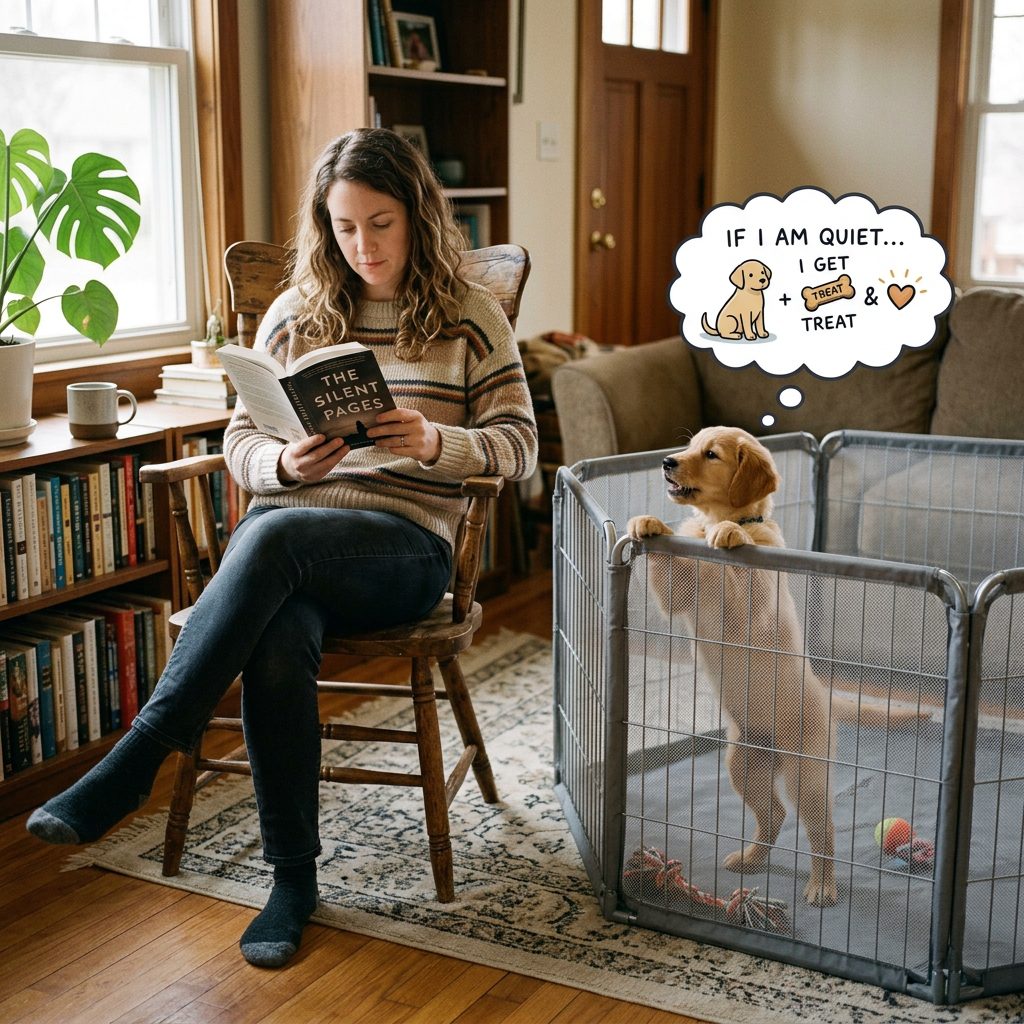
Alright, let’s get down to business. You want the instant fix? The secret lies in a proven behavioral training concept called “Differential Reinforcement.” We are going to reward the exact opposite of what we do not want. We will make silence incredibly rewarding, and crying completely useless. Here is your foolproof, step-by-step guide to silencing the playpen tantrums.
Step 1: The Pre-Game Exhaustion
Never put a puppy with fully charged batteries into a playpen and expect them to chill out. Before playpen time, ensure your puppy has had a solid play session, a mentally stimulating training drill, or a sniffari walk. A physically and mentally tired puppy is a good puppy.
Step 2: The High-Value Distraction
Right before you close the gate, hand them something absolutely incredible. Not just their standard dry kibble, but a stuffed Kong, a lick mat, or a high-value chew. We want their brain to immediately think, “Wow, being in here is actually the best thing ever!”
Step 3: The Silent Treatment
This is the hardest part for loving owners. Sit down in the room and completely, utterly ignore your puppy. Do not make eye contact. Do not sigh. Do not say a word. Become a statue. Your puppy will likely start their crying routine. They might even escalate the crying because their usual tactic is not working (this is a psychological phenomenon called an extinction burst). Hold your ground.
Step 4: The Micro-Reward
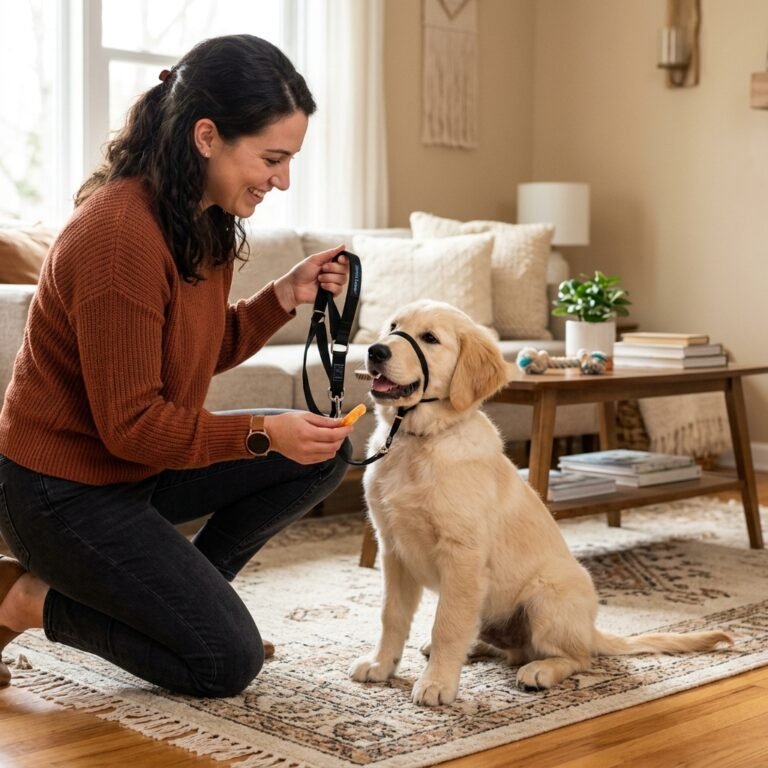
Wait for the exact second your puppy stops crying. Even if they just pause to take a breath for three seconds. The moment they are quiet, calmly say “Good quiet,” and toss a high-value treat into the pen. Do not make a big, exciting fuss, or they will get riled up again. Calm praise, toss the treat, and go back to ignoring them.
Step 5: Extending the Duration
Gradually require longer periods of silence before tossing the treat. Wait five seconds, then ten seconds, then a full minute. Your savvy puppy will quickly connect the dots: Silence makes delicious treats rain from the sky; crying makes my human turn into a boring stone statue.
Essential Tools for Playpen Success
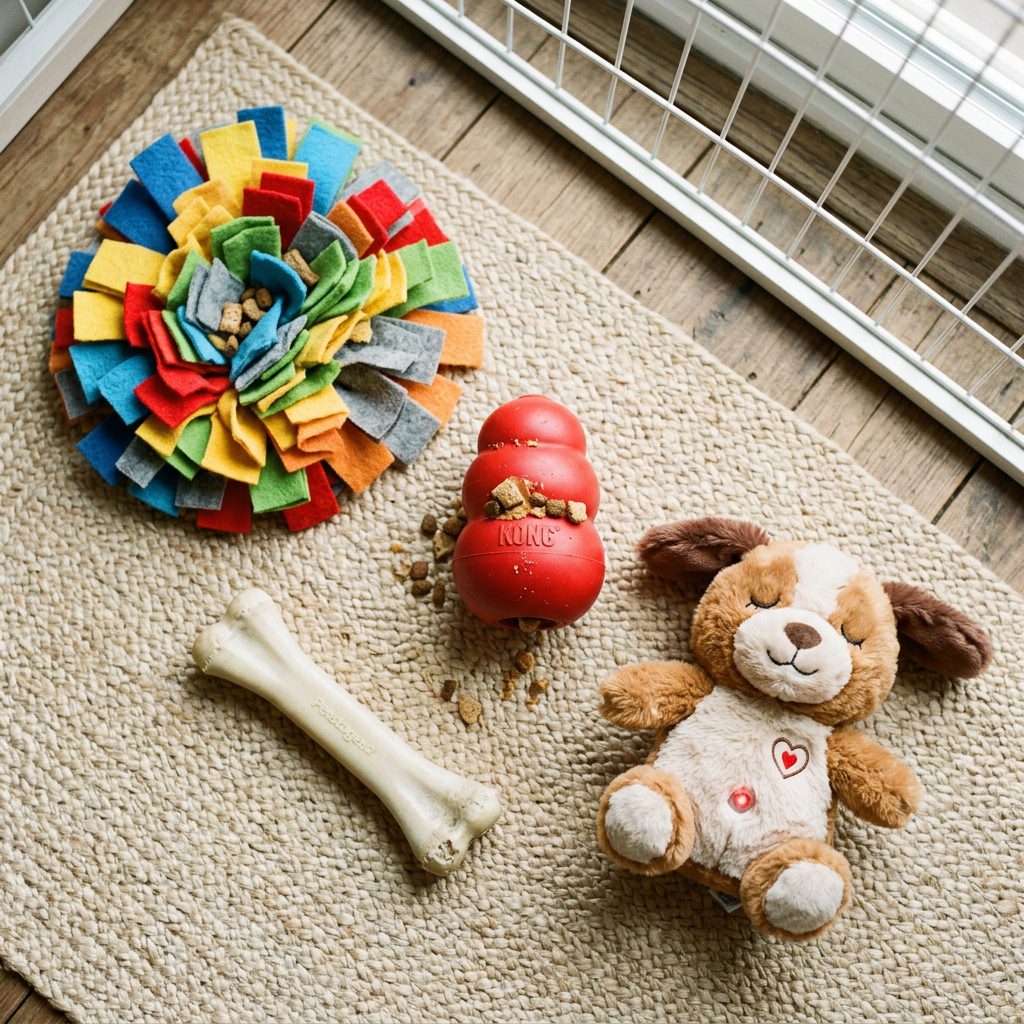
Every professional dog trainer knows that setting up the environment for success is half the battle. You cannot expect your puppy to self-soothe without providing them the right tools. Here is a comprehensive breakdown of the best enriching items to keep in your playpen to encourage independent play and quiet time.
| Tool / Product Type | Why It Works | Best Time to Use |
|---|---|---|
| Stuffed Kongs (Frozen) | Licking releases endorphins that naturally calm the puppy’s nervous system. Freezing it makes it last up to 45 minutes, buying you guaranteed quiet time. | Immediately upon entering the playpen. |
| Snuffle Mats | Engages their powerful sense of smell, providing intense mental stimulation which tires them out much faster than physical exercise alone. | During regular meal times inside the pen. |
| Durable Chew Roots/Bones | Provides a safe, satisfying outlet for teething frustration. Prevents them from chewing on the playpen bars or their bedding. | Always available in the pen. |
| Heartbeat Snuggle Toys | Mimics the rhythmic heartbeat and warmth of their mother and littermates, significantly reducing feelings of isolation even when you are in the room. | Nap times and evening wind-downs. |
By regularly rotating these tools, you prevent the playpen from becoming boring and predictable. The playpen should be viewed by your dog as a magical room where the absolute best toys appear, rather than a frustrating puppy prison.
Common Mistakes Savvy Owners Make
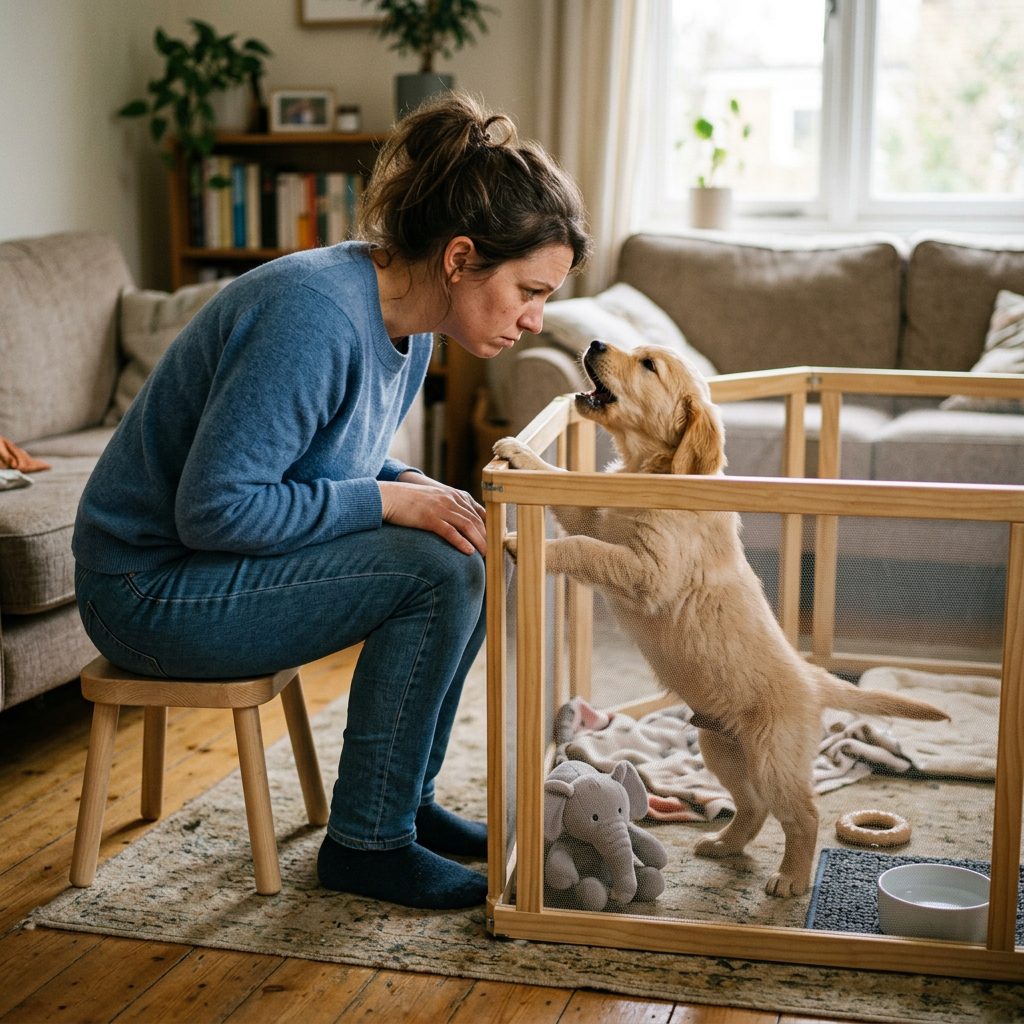
Even the most dedicated and well-researched dog parents can easily fall into a few common traps. When you are sitting in the exact same room, the temptation to interact with your crying puppy is incredibly high. Let’s look at what you must absolutely avoid doing if you want the instant fix to work.
- The “Just This Once” Release: If your puppy cries for 20 minutes and you finally give up and let them out because you have a headache, you have just taught them that 20 minutes of crying is the magic password to freedom. They will cry for 30 minutes next time.
- Negative Attention: Yelling “No!” or “Quiet!” is still attention. To a bored, attention-seeking puppy, getting scolded is vastly superior to being ignored. You are inadvertently rewarding the noise.
- Improper Sizing: If the playpen is too small, they feel trapped and claustrophobic. If it is too large, they might use one corner as a bathroom and the other as a bed. Ensure it is just large enough for a bed, a water bowl, and a small play area.
- Hovering and Staring: Staring at your puppy while they are in the pen builds anticipation. They are waiting for you to do something. Read a book, watch TV, or work on your laptop. Show them through your body language that human relaxation time means puppy relaxation time.
Pro Tip: If you feel your patience wearing thin and you are about to yell, leave the room entirely for a few minutes. Take a deep breath. Do not let your puppy see your frustration, as this feeds into their anxiety.
Troubleshooting Persistent Criers
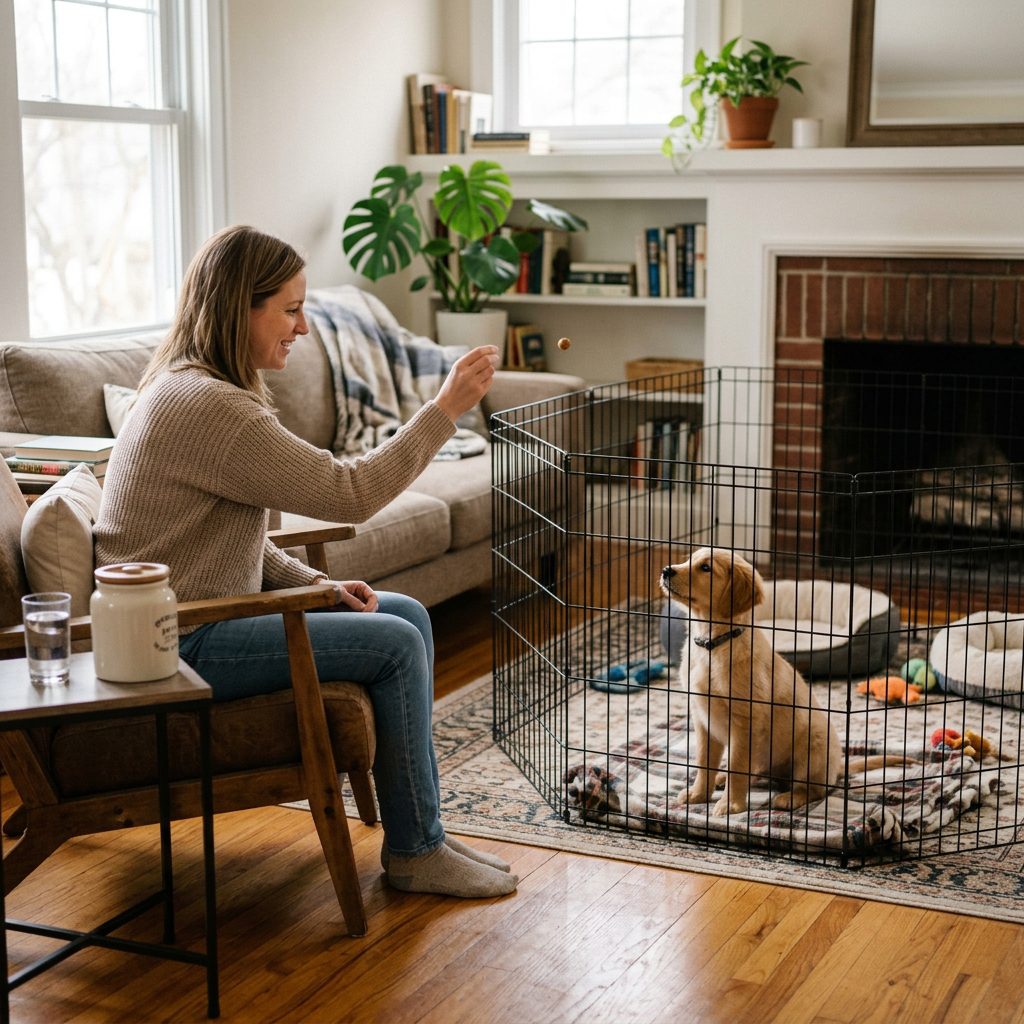
What if you have tried the instant fix, you are using all the right enrichment tools, and your puppy is still crying like the world is ending? Do not panic. Behavior modification takes time, and some puppies are naturally more strong-willed or vocal than others. Let’s troubleshoot the most stubborn scenarios.
The Extinction Burst
I mentioned this briefly earlier, but it is crucial to fully understand. When a behavior that used to work (crying for your attention) suddenly stops working, the puppy will try harder before they give up. It will get worse before it gets better. If the crying suddenly intensifies on day two or three of your training, celebrate! It means the training is working and the puppy is making their final, desperate attempt at the old behavior. Stay strong, wear earplugs if you have to, and ignore it.
Check the Basic Needs
Before you completely ignore a crying puppy, do a quick, honest mental checklist. Have they gone potty recently? Are they thirsty? Are they too hot or too cold? If you suspect they genuinely need to relieve themselves, take them out on a leash, stand in one boring spot for two minutes, and if they do not go, immediately return them to the pen. No play, no cuddles, no talking. This teaches them that crying only results in a boring bathroom break, not a fun play session.
The Distance Game
If being in the exact same room is simply too much for your puppy to handle right now, you might need to adjust your starting line. Sit right next to the playpen. Reward for silence. Then move your chair two feet away. Reward for silence. Gradually inch your way across the room over a few days. This micro-progression builds their confidence and teaches them that physical distance does not mean emotional abandonment.
Conclusion
Dealing with a puppy crying when left in a playpen in the same room can test the patience of even the most savvy, well-prepared dog owners. But by understanding the psychological roots of barrier frustration, utilizing high-value enrichment tools, and strictly applying our step-by-step instant fix of differential reinforcement, you can completely transform your home’s dynamic.
Remember, your puppy is not crying to manipulate you maliciously; they just love you and want to be involved in whatever exciting human things you are doing! By patiently teaching them that the playpen is a place of relaxation, delicious treats, and calm independence, you are giving them a lifelong behavioral gift. A puppy that knows how to self-soothe and entertain themselves becomes a confident, well-adjusted, and highly adaptable adult dog.
Stay consistent, keep those Kongs frozen and ready to go, and always remember to reward the silence rather than punishing the noise. You have got this! Before you know it, you will be enjoying your morning coffee on the couch in total peace while your puppy happily snoozes in their pen right beside you.