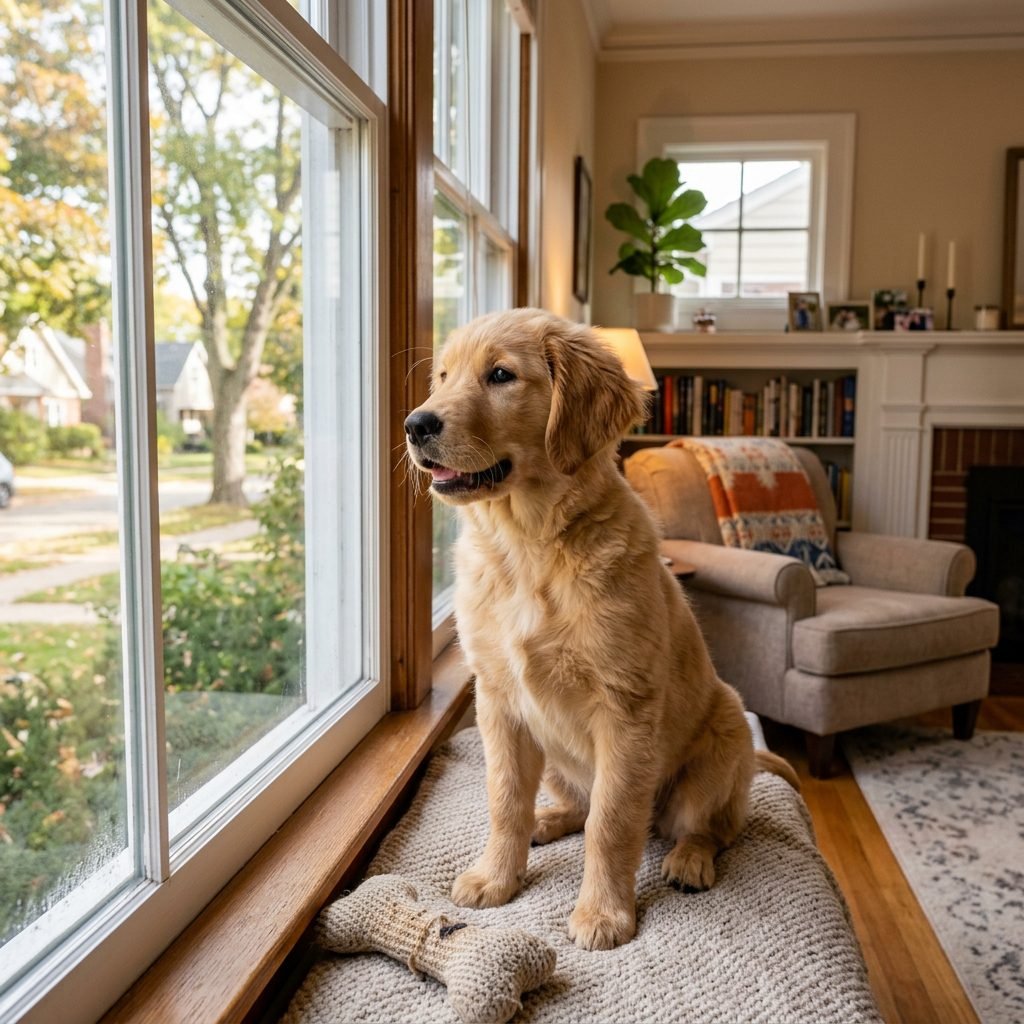
5 Instant Ways to Stop a Puppy Barking at the Window (And Restore Peace Today!)
Hey there, fellow dog lovers! We have all been there. You are finally sitting down with a hot cup of coffee, ready to relax or jump into an important work call, when suddenly—BAM! Your sweet little puppy spots a squirrel, the mail carrier, or simply a leaf blowing in the wind, and erupts into an absolute frenzy of window barking. It is loud, it is startling, and let us be honest, it can be incredibly frustrating.
As savvy dog owners, we know that our puppies are not trying to make us mad. They are just reacting to the world around them in the only way they know how. But that does not mean we have to live with the noise! If you are feeling overwhelmed by the constant woofs and boofs every time someone walks past your house, take a deep breath. You are in the right place.
Remember, barking is a natural canine behavior, but obsessive window barking is a habit we need to gently but firmly redirect to maintain a peaceful home.
In this comprehensive guide, we are going to dive deep into the psychology of why your puppy is acting like the neighborhood watch commander. More importantly, we are going to walk through 5 instant, highly effective ways to stop the barking and regain your sanity. Whether you are dealing with a tiny terrier or a booming mastiff mix, these expert-backed, positive reinforcement strategies will help you transform your noisy window watcher into a calm, relaxed companion.
Understanding the ‘Why’: The Root Cause of Window Barking
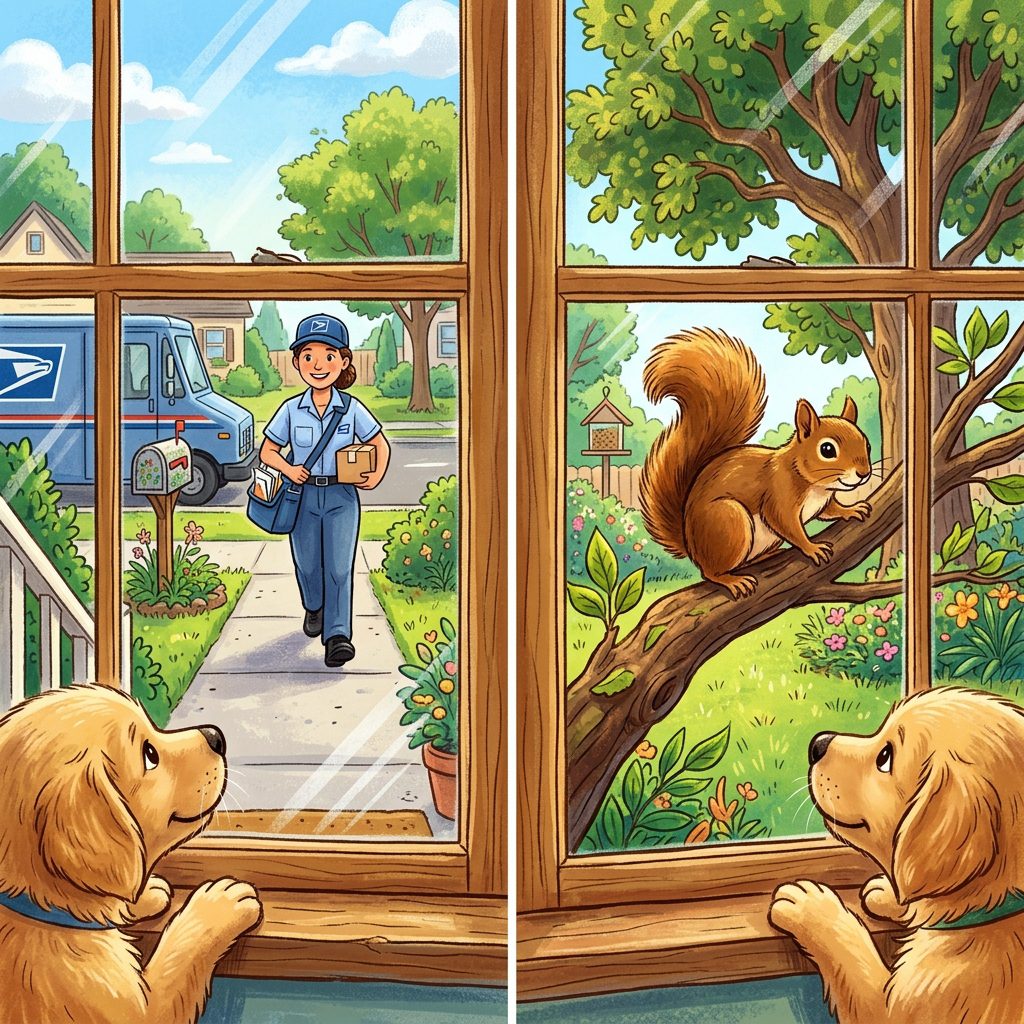
Before we can fix the behavior, we need to understand what is driving it. Puppies do not just bark at the window to hear their own voices (well, most of them do not!). When your puppy is staring out the glass and sounding the alarm, they are usually experiencing one of three main emotions: territorial instincts, alert/fear-based reactivity, or plain old boredom and frustration.
When a dog sees a mail carrier approach the house, they bark. The mail carrier drops the mail and leaves. In your puppy’s mind, their barking successfully chased away the ‘intruder.’ This is incredibly rewarding for them, which is why the behavior escalates so quickly. Let us break down the common triggers so you can identify exactly what your puppy is feeling.
| Barking Trigger | Puppy’s Emotion / Motivation | Body Language Clues |
|---|---|---|
| Mail Carriers / Delivery Drivers | Territorial / Protective | Stiff posture, tail held high, deep continuous barking. |
| Other Dogs Walking By | Frustration / Desire to Play | Whining mixed with barking, pacing, tail wagging frantically. |
| Squirrels / Birds / Cats | Prey Drive | Intense staring, high-pitched yapping, lunging at the glass. |
| Loud Vehicles (Trucks, Motorcycles) | Fear / Alert | Tucked tail, backing away while barking, ears pinned back. |
By pinpointing exactly why your puppy is barking, you can tailor your training approach. A fearful puppy needs confidence building, while a frustrated greeter needs to learn impulse control. Now that we know the enemy, let us gather our tools.
The Toolkit: Essential Gear for Success
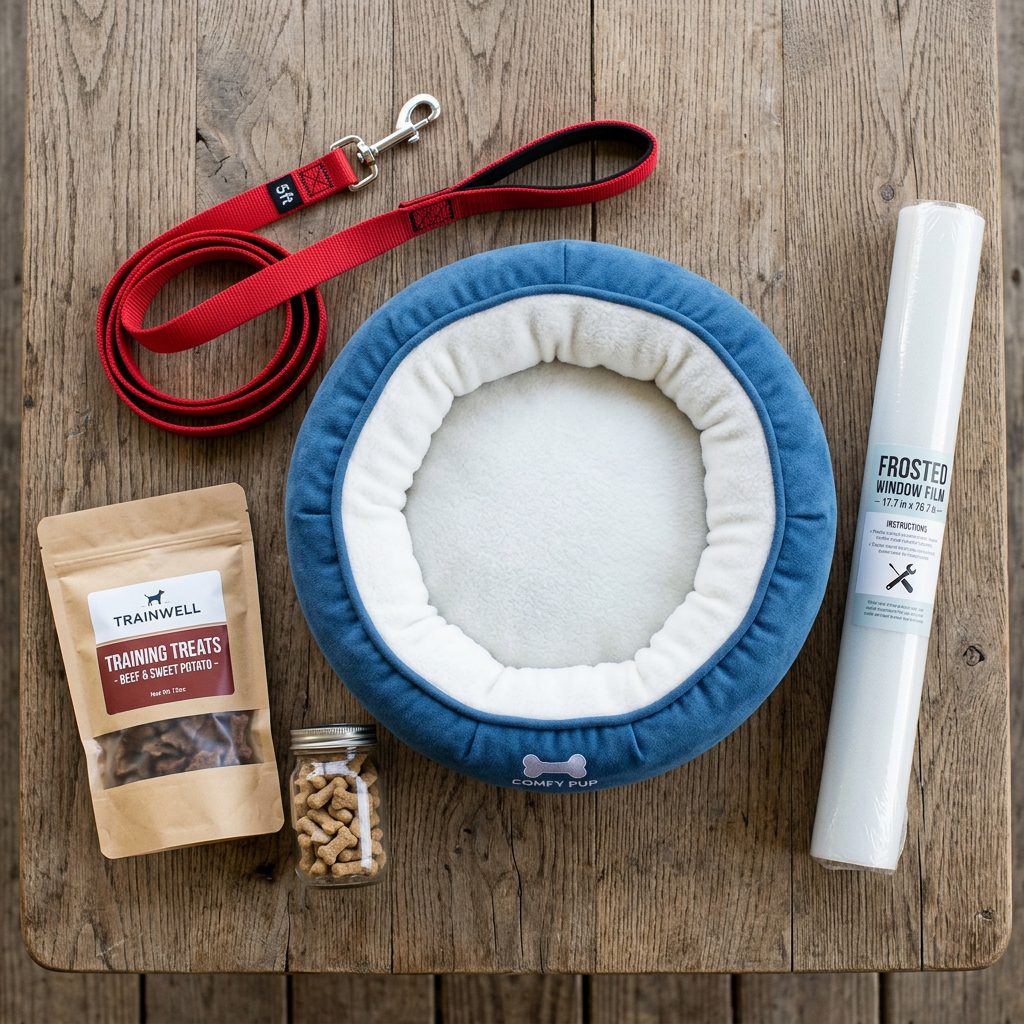
Every good trainer needs a toolkit. You would not try to build a house without a hammer, and you should not try to fix window barking without the right gear. Because we are focusing on positive reinforcement and environmental management, having these items on hand will make the process 100 times easier.
- High-Value Treats: We are talking about the good stuff. Boiled chicken, hot dogs, or freeze-dried liver. Regular kibble will not cut it when competing with a highly stimulating squirrel.
- Window Film or Blinds: This is for our management step. Opaque or frosted window clings are cheap, easy to install, and let light in while blocking the puppy’s view.
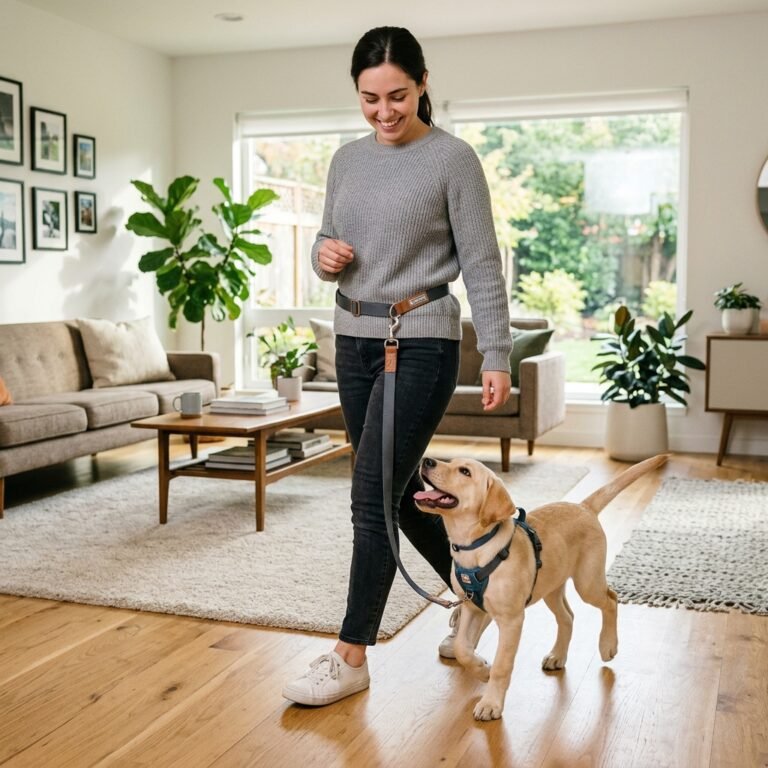
- A Sturdy Leash: Yes, a leash indoors! This is a fantastic tool for managing your puppy’s access to the window during training sessions.
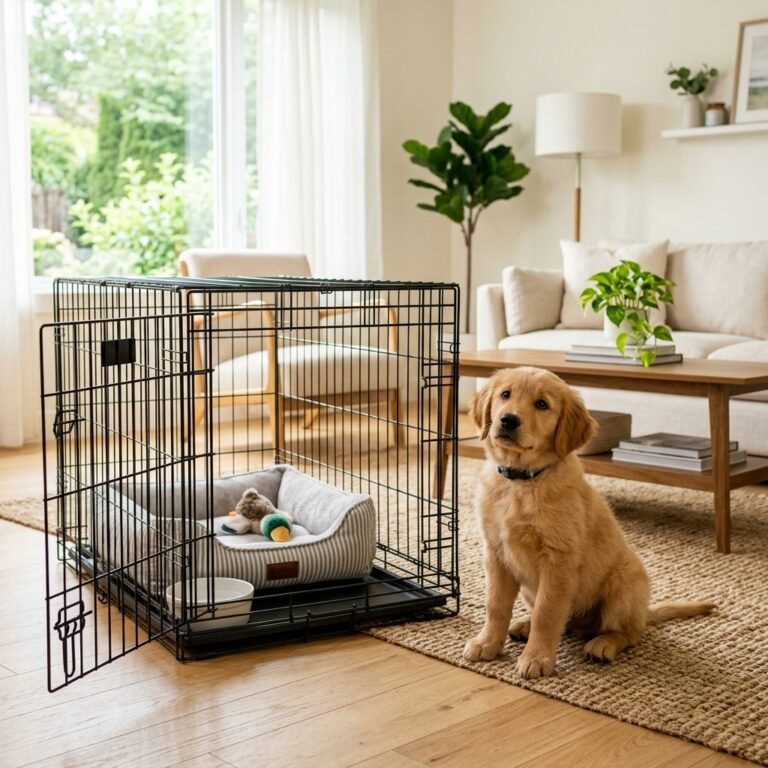
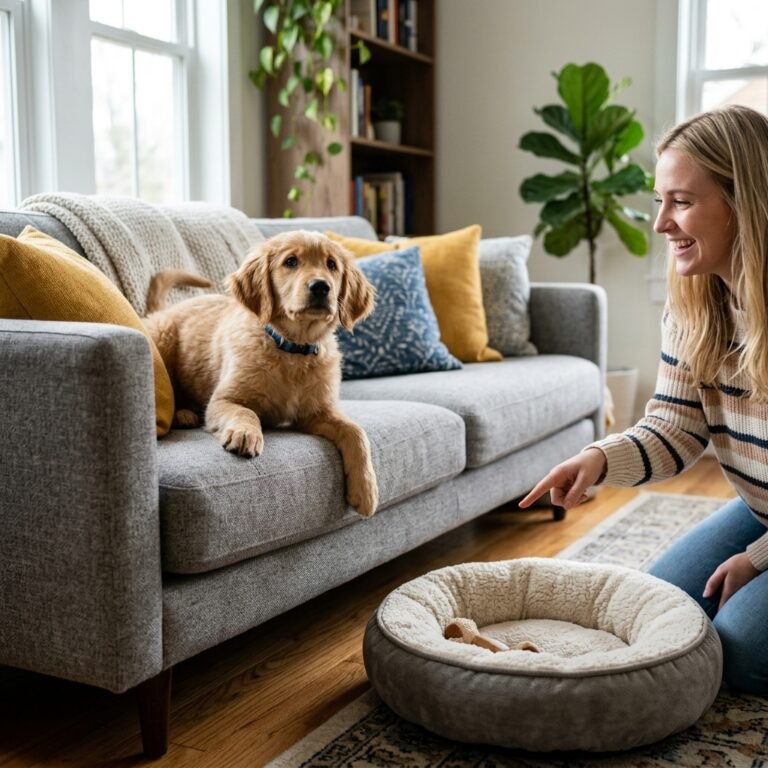
- A ‘Place’ Mat or Dog Bed: You will need a designated spot to send your puppy to when they get triggered.
- Interactive Toys: Puzzle toys, stuffed Kongs, or snuffle mats to keep their brain busy so they do not resort to window watching out of boredom.
Once you have your toolkit assembled, you are ready to implement the five instant strategies. Let us get to the good stuff!
5 Instant Ways to Stop the Barking (Step-by-Step)
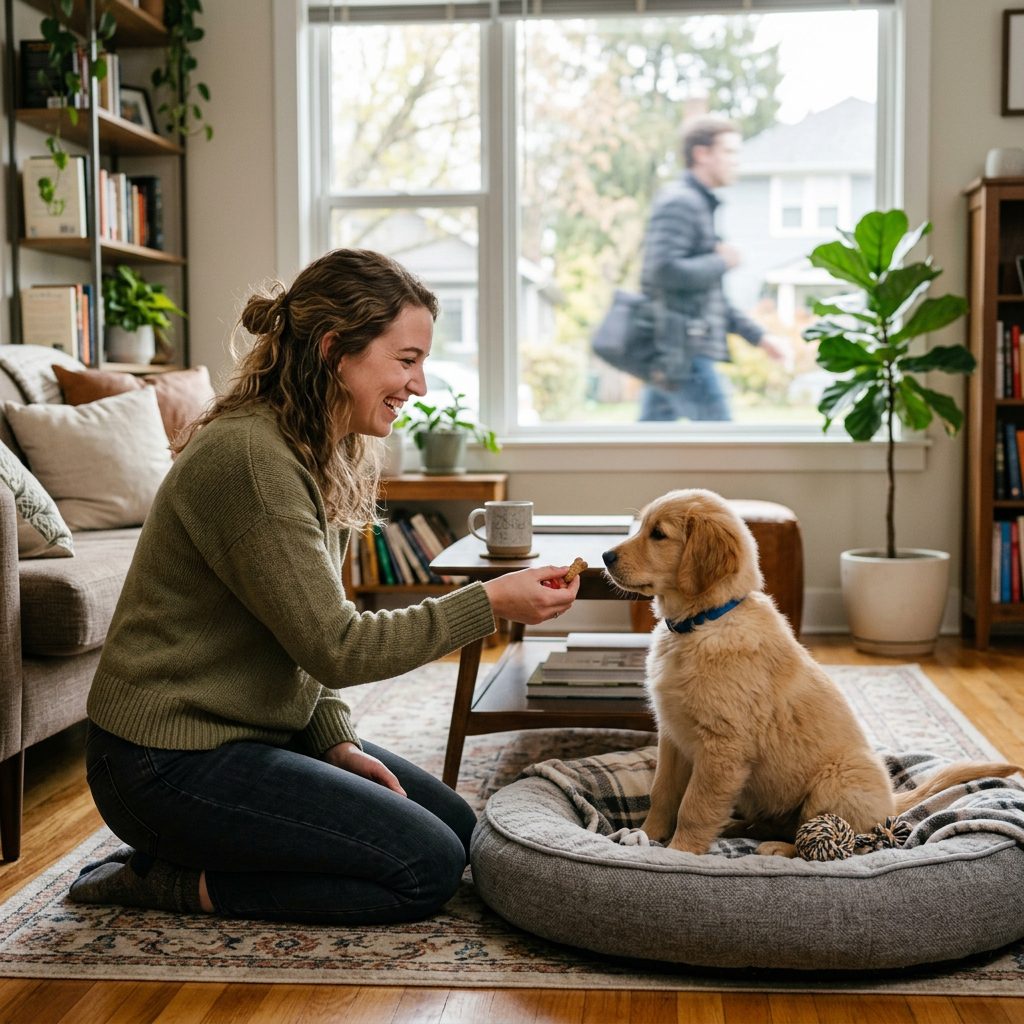
Here is the core of our training strategy. These five methods are designed to give you immediate relief while also building long-term good habits. You do not have to use all five at once, but combining them will yield the fastest results.
1. Manage the Environment (The Quickest Fix)
The absolute fastest way to stop a puppy from barking at the window is to remove their ability to see out of it. This is called environmental management. If they cannot see the trigger, they cannot bark at it. Close the curtains, pull down the blinds, or better yet, apply frosted window film to the lower half of your windows. This allows natural light to flood your home but completely obscures the puppy’s view of the street. Instant peace!
2. Teach the ‘Quiet’ Cue
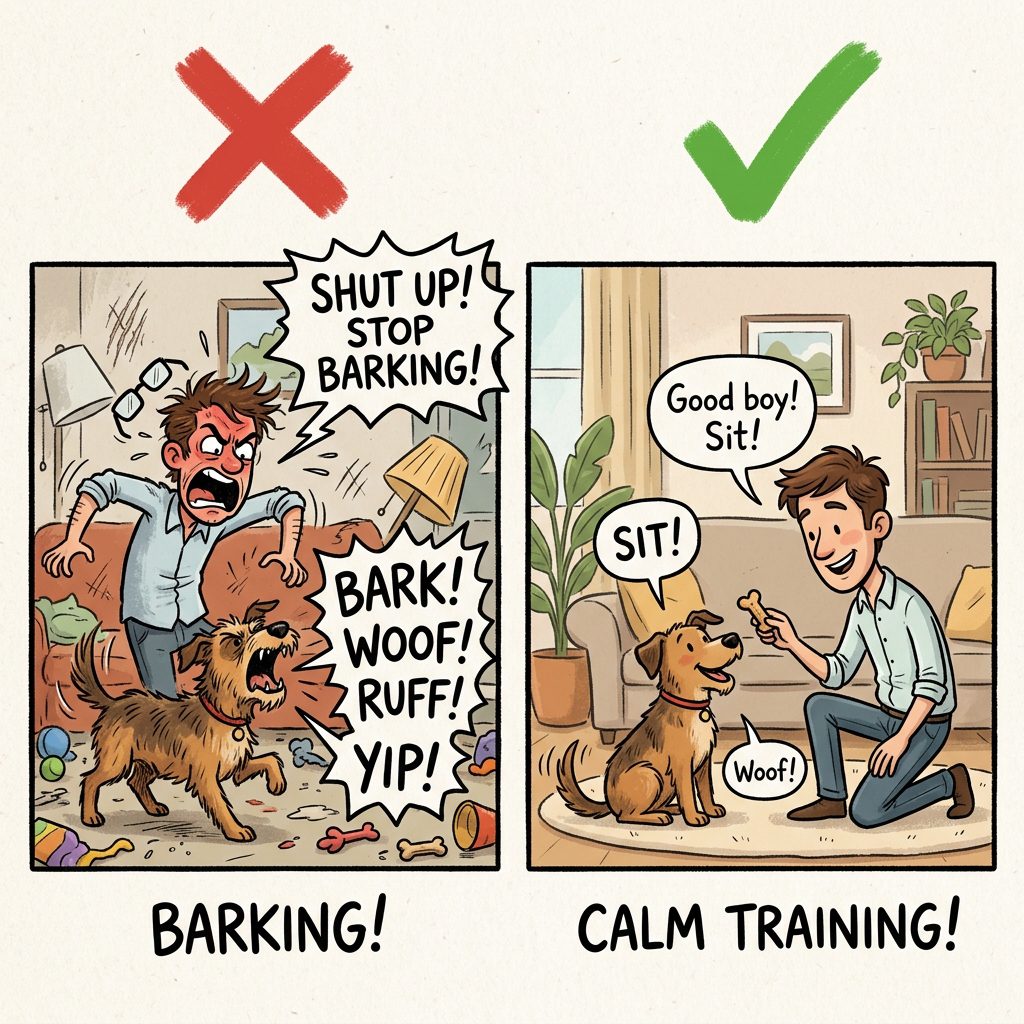
You cannot tell a dog to stop doing something if they do not know what ‘stop’ means. Teaching a ‘Quiet’ cue is essential. When your puppy starts barking, calmly walk over to them. Do not yell—yelling just makes them think you are barking with them! Hold a high-value treat right in front of their nose. Dogs cannot sniff and bark at the same time. The second they stop barking to sniff the treat, say ‘Quiet’ in a calm, firm voice, and give them the treat. Repeat this consistently. Over time, they will associate the word ‘Quiet’ with stopping the noise to get a reward.
3. The ‘Go to Place’ Redirection
Instead of just telling your puppy what not to do, tell them what you want them to do. If they run to the window, calmly say ‘Place’ and guide them to their bed or mat. Reward them heavily for staying on their bed. You are changing the sequence of events: Trigger appears -> Puppy goes to bed -> Puppy gets a treat. Soon, when they see a dog outside, they will automatically run to their bed looking for their reward instead of barking at the glass.
4. Counter-Conditioning (Change the Emotion)
If your puppy is barking out of fear or territorial aggression, we need to change how they feel about the triggers. This is called counter-conditioning. Sit with your puppy near the window (far enough away that they notice the trigger but are not fully reacting yet). The exact second a person or dog appears outside, start feeding your puppy a continuous stream of delicious treats. The second the person is out of sight, the treats stop. Your puppy will quickly learn that people outside equal hot dogs inside. The scary intruder becomes a predictor of wonderful things!
5. Burn Off That Puppy Energy
A tired puppy is a quiet puppy. If your dog is spending all day staring out the window, they might just be incredibly bored. Increase their physical exercise with longer walks or games of fetch. More importantly, increase their mental exercise. 15 minutes of sniffing, trick training, or working on a puzzle toy can exhaust a puppy more than a two-mile run. Give them a job to do indoors so they stop appointing themselves as the neighborhood security guard.
Troubleshooting & Common Mistakes
Training is rarely a straight line. You will have great days and frustrating days. If you feel like you are putting in the work but the window barking is still happening, you might be falling into a few common training traps. Let us troubleshoot.
| Common Mistake | Why It Fails | The Fix |
|---|---|---|
| Yelling ‘No’ or ‘Stop’ | The puppy thinks you are barking along with them, increasing their excitement. | Use a calm, low voice. Use the ‘Quiet’ cue with a treat to interrupt the behavior. |
| Inconsistent Management | Allowing access to the window sometimes, but not others, creates a gambling effect. | Keep the blinds closed or film on the window 100% of the time until the behavior is proofed. |
| Treating Too Late | If you give the treat after they start barking again, you are rewarding the bark. | Timing is everything. Only deliver the treat when the puppy is completely silent. |
| Moving Too Fast | Expecting the puppy to ignore a squirrel immediately is unrealistic. | Start with low-level distractions (like a parked car) before moving to high-level triggers. |
Patience is your best friend here. If your puppy has been practicing this barking behavior for weeks or months, it will take time to rewire their brain. Celebrate the small victories! If they only barked twice instead of ten times, that is massive progress.
Enjoy Your Peaceful Home
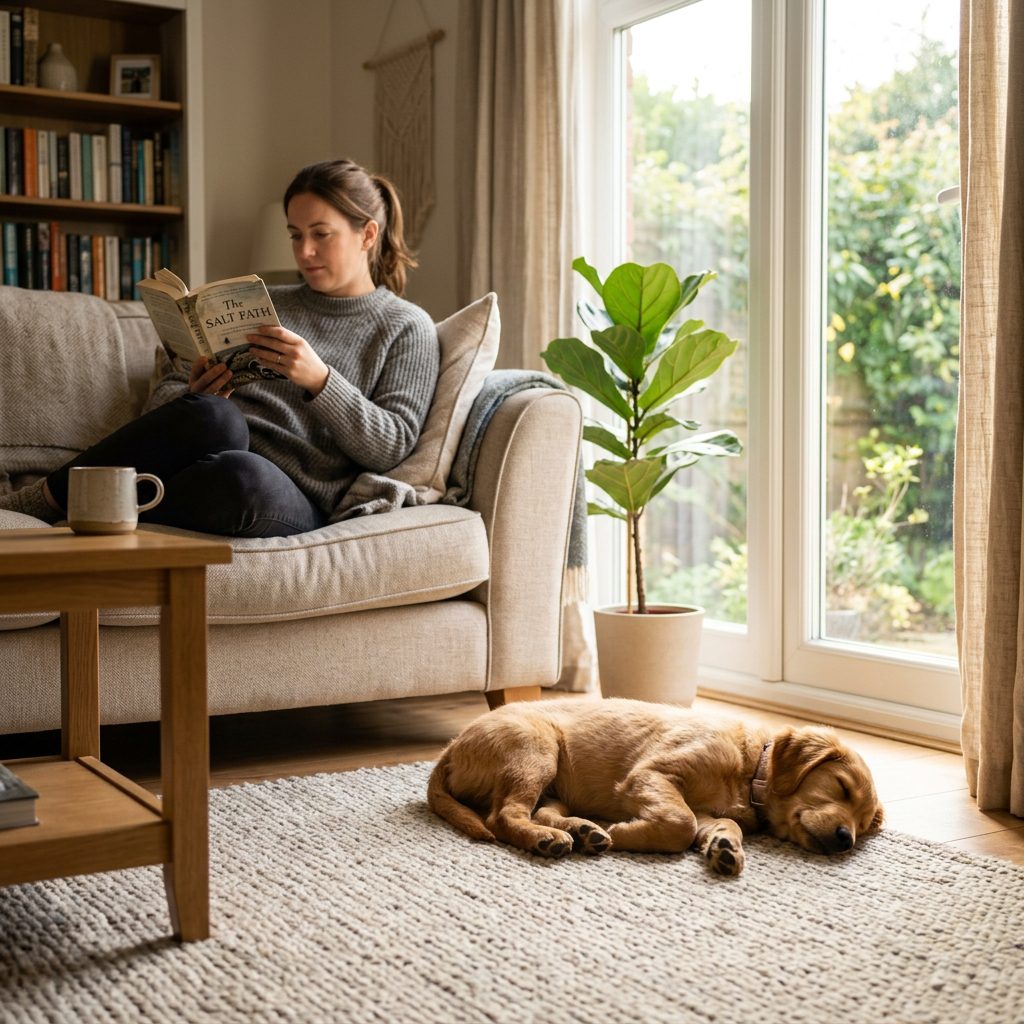
Stopping a puppy from barking at the window is entirely possible, and you have all the tools you need right here. By understanding their motivations, managing the environment, teaching alternative behaviors like ‘Quiet’ and ‘Place,’ and ensuring they are mentally fulfilled, you will see a dramatic decrease in the noise.
Remember, savvy dog owners know that training is a journey, not a magic trick. Stick to these five instant methods, be consistent with your positive reinforcement, and soon enough, you will be able to enjoy your morning coffee in total, blissful silence. You’ve got this, and your puppy does too! Happy training!
Conclusion
To wrap things up, dealing with a puppy barking at the window can test the patience of even the most dedicated dog owners. But by applying these five instant strategies—managing the environment, teaching a ‘quiet’ cue, redirecting to a ‘place,’ utilizing counter-conditioning, and ensuring adequate mental and physical exercise—you can effectively break the cycle of reactivity. Consistency and patience are key. Implement these steps today, and you will be well on your way to restoring peace, quiet, and harmony in your home.