
High-Rise Survival Guide: How To Potty Train A Puppy Using An Elevator Without Accidents
Welcome to high-rise living with a new puppy! It is a magical time filled with puppy breath, endless cuddles, and… an overwhelming sense of panic every time your little furball starts sniffing the living room rug. If you live in an apartment building, you already know the ultimate boss battle of puppy parenthood: the elevator ride. Unlike house dwellers who can simply open a back door and let their dog out, you have to navigate long hallways, wait for elevators, make small talk with your neighbors, and get through the lobby before your puppy’s tiny, unpredictable bladder gives out. It can feel like you are carrying a literal ticking time bomb.
But do not worry, my fellow savvy dog owners! I am here to guide you through this urban dog-raising challenge. As a canine behavior specialist, I have helped countless city dwellers master the art of high-rise potty training. The truth is, puppies have very little physical control over their bladders until they are about 12 to 16 weeks old. When they have to go, they have to go right now. Waiting for an elevator that stops on five different floors is simply not in their biological wheelhouse yet.
In this comprehensive guide, we are going to break down the exact, step-by-step methodology to get your puppy from your apartment to their designated outdoor potty spot without leaving a trail of accidents in the hallway. We will cover the essential gear you need, the foolproof “carry and distract” method, how to set up emergency indoor options, and how to eventually transition your growing pup to walking proudly on a leash all the way outside. Grab your treat pouch, take a deep breath, and let us turn this high-rise hurdle into a potty training victory!
Essential Gear for High-Rise Potty Training
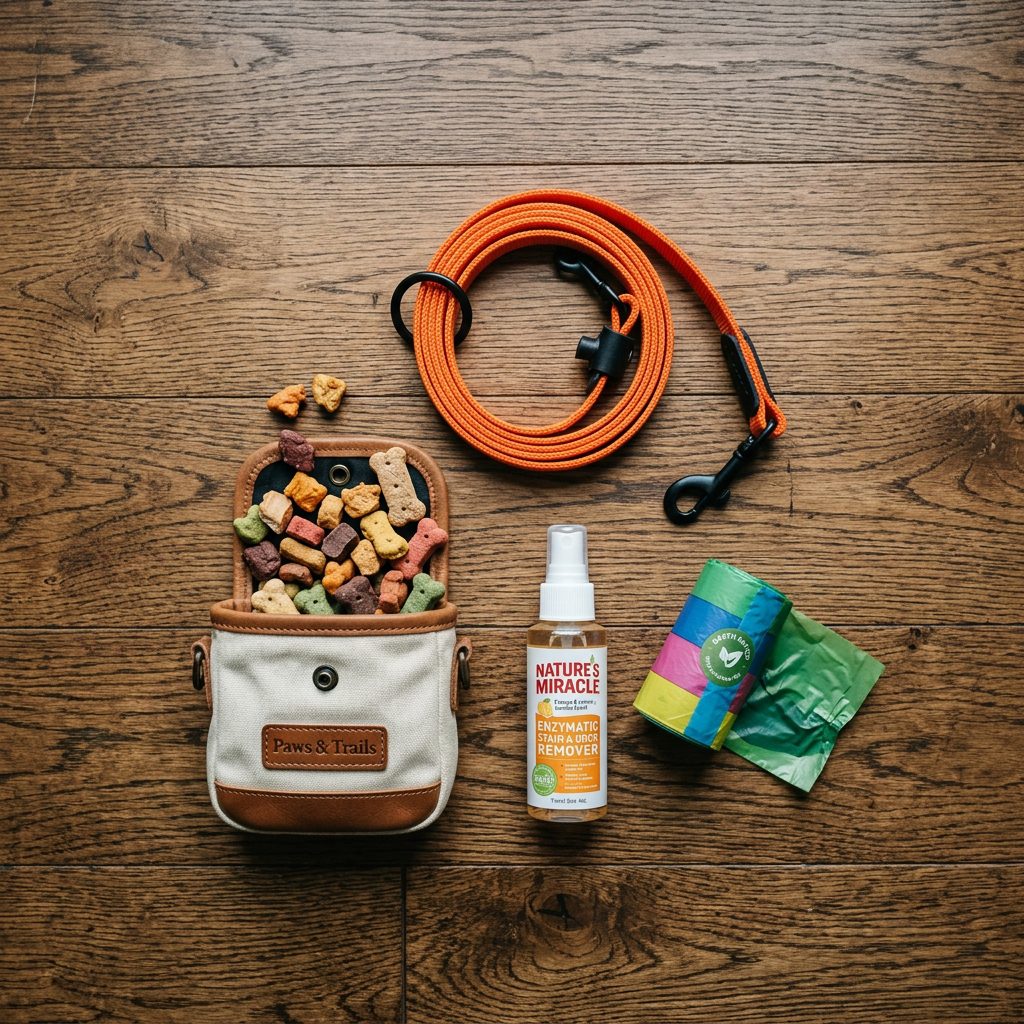
Before we even step foot out of your apartment door, we need to make sure you are properly equipped. High-rise potty training requires a bit more logistical planning than suburban potty training. You cannot just run outside in your socks; you need a “Go Bag” ready by the door at all times. When your puppy gives you the signal that they need to go, you will only have seconds to react. Having your tools organized and easily accessible is the first step to preventing accidents.
The Ultimate Apartment Potty Toolkit
Here is exactly what you need to keep stationed at your front door for quick deployments.
| Essential Item | Why You Need It | Expert Pro Tip |
|---|---|---|
| Slip Lead or Quick-Snap Harness | Saves precious seconds. You do not have time to buckle tiny clips when a pee emergency is happening. | Keep it hanging on the doorknob so you can grab it in one fluid motion. |
| High-Value Treats | To reward your puppy the exact second they finish doing their business outside. | Use something irresistible like freeze-dried liver or tiny pieces of boiled chicken. |
| Enzymatic Cleaner | To clean up inevitable accidents in the hallway or elevator. Normal soap will not remove the pheromones. | Buy a travel-sized spray bottle to keep in your pocket during the elevator ride. |
| Paper Towels & Poop Bags | For immediate cleanup and responsible pet ownership in shared building spaces. | Pre-tear a few paper towels and stuff them in your pocket so you are always ready. |
| Puppy Sling or Carrier | Optional but highly recommended for heavier breeds or very slow elevators. | Keeps your hands free and makes the puppy feel secure during the ride. |
Expert Tip: Dress for success! Keep a pair of slip-on shoes and a jacket right next to your puppy’s gear. When the potty dance starts, you do not have time to tie your shoelaces!
The Foolproof Elevator Protocol: Step-by-Step
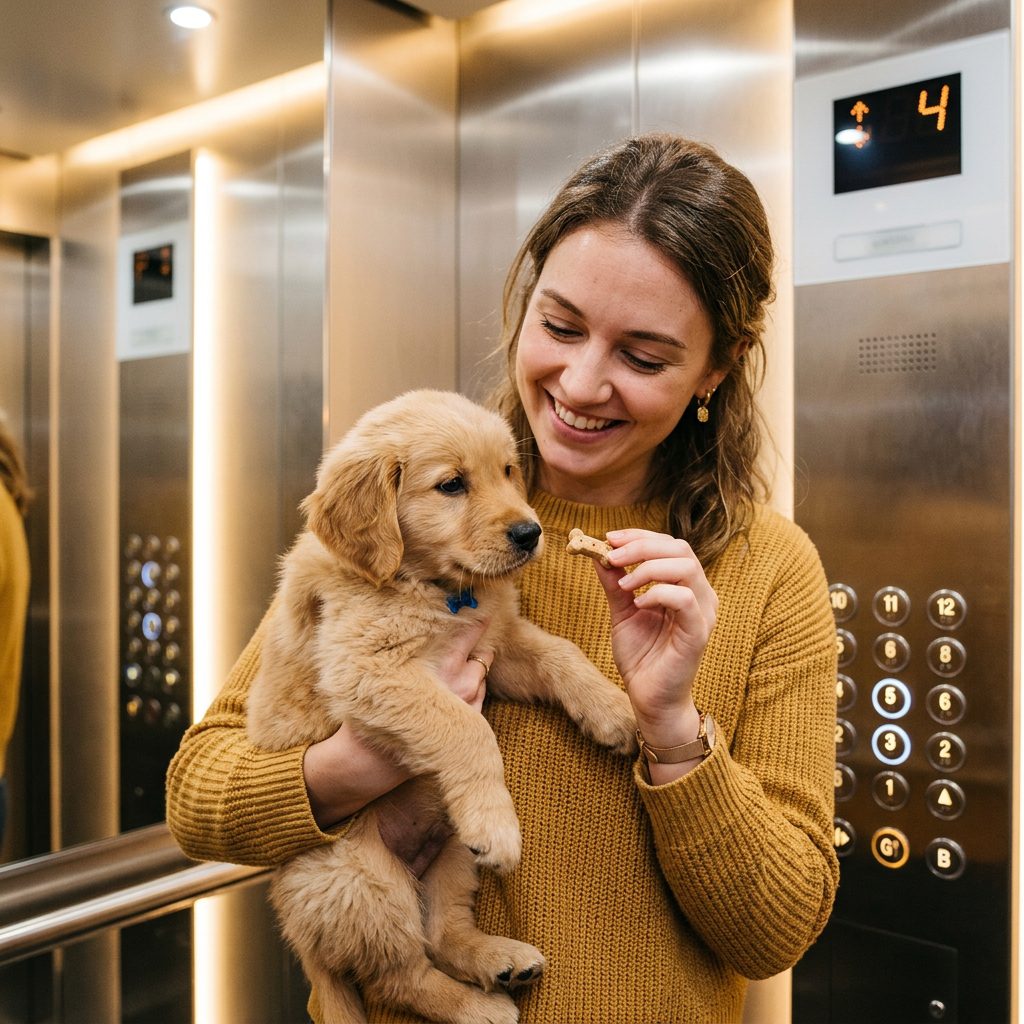
Now that your gear is ready, it is time to tackle the journey itself. The biggest mistake apartment dwellers make is letting their young puppy walk down the hallway and into the elevator on a leash. To a puppy, a long carpeted hallway looks exactly like a giant potty pad. Furthermore, the change in flooring texture—from your apartment wood floor to the hallway carpet, to the metal elevator floor—can physically stimulate their urge to pee. To prevent this, we use the “Floor is Lava” protocol.
Step 1: The Pre-Flight Observation
Timing is everything. You should be taking your puppy out immediately after they wake up, right after they eat, after a vigorous play session, and at least once every two hours. Watch for the classic signs: sniffing the ground intently, circling, or suddenly disengaging from play. The moment you see this, spring into action.
Step 2: The Scoop and Carry
Do not let them walk! Pick your puppy up immediately. Dogs have a natural instinct to keep their sleeping areas and themselves clean. When you hold a puppy securely against your chest, they will instinctively hold their bladder because they do not want to soil themselves (or you). This is your secret weapon. Scoop them up, grab your gear, and head out the door.
Step 3: The Distracted Elevator Ride
Once you are in the elevator, the goal is to keep your puppy calm and distracted. Elevators can be scary for young dogs—the weird noises, the sudden movement, and the strangers getting on and off.
- Hold them securely: Keep them tucked under your arm like a football to make them feel safe.
- Feed a continuous stream of treats: Give them tiny nibbles of a high-value treat to keep their focus entirely on your hand, not on their full bladder or the scary elevator sounds.
- Avoid putting them down: Even if a neighbor asks to pet them, politely say, “We are potty training and in a rush, sorry!” Do not put the puppy on the floor.
Step 4: The Release and Reward
Carry your puppy all the way through the lobby and out the front doors. Only place them on the ground once you have reached the specific patch of grass or concrete where you want them to potty. Give your cue word (like “Go Potty” or “Do Your Business”). The second they finish going, throw a massive party! Praise them enthusiastically and give them a jackpot of treats. This teaches them that holding it through the scary elevator ride results in the best rewards ever.
Creating an Emergency Indoor Option

Let us be realistic: sometimes the elevator protocol is just not going to work. Maybe you live on the 40th floor and the elevator is out of service. Maybe you have a terrible stomach bug and cannot leave the apartment. Or maybe your puppy gets a sudden bout of diarrhea at 3:00 AM. For high-rise dwellers, having an emergency indoor potty option is not a failure; it is a smart management strategy. The key is to choose a system that mimics the outdoors so it does not confuse their outdoor training.
Balcony and Bathroom Solutions
If you have a balcony, this is the perfect spot for an emergency potty station. If not, a well-ventilated bathroom or a designated corner on a hard floor will work. However, avoid using standard fabric pee pads if possible. Pee pads feel very similar to rugs, bathmats, and blankets, which can lead to your puppy confusing your nice living room rug for a toilet. Instead, use a surface that feels distinctly different from your home’s flooring.
| Indoor Option | Pros | Cons |
|---|---|---|
| Real Grass Delivery Services | Feels and smells exactly like the outdoors, making the transition to outside seamless. | Can be expensive; requires a subscription; grass dies and needs replacing every few weeks. |
| Synthetic Turf Trays | Reusable, one-time purchase, distinct texture from indoor rugs. | Requires frequent, rigorous cleaning with enzymatic cleaners to prevent awful odors. |
| Bark/Mulch Boxes | Great natural smell, mimics outdoor parks perfectly. | Puppies might try to chew or eat the bark; can be messy if they dig. |
Expert Tip: If you use an indoor patch, put it on a command just like outside. Lead your puppy to the patch on a leash, say your potty cue, and reward them when they go. Treat the balcony or the indoor patch with the same strict routine as an outdoor trip to maintain consistency.
Troubleshooting Common High-Rise Accidents
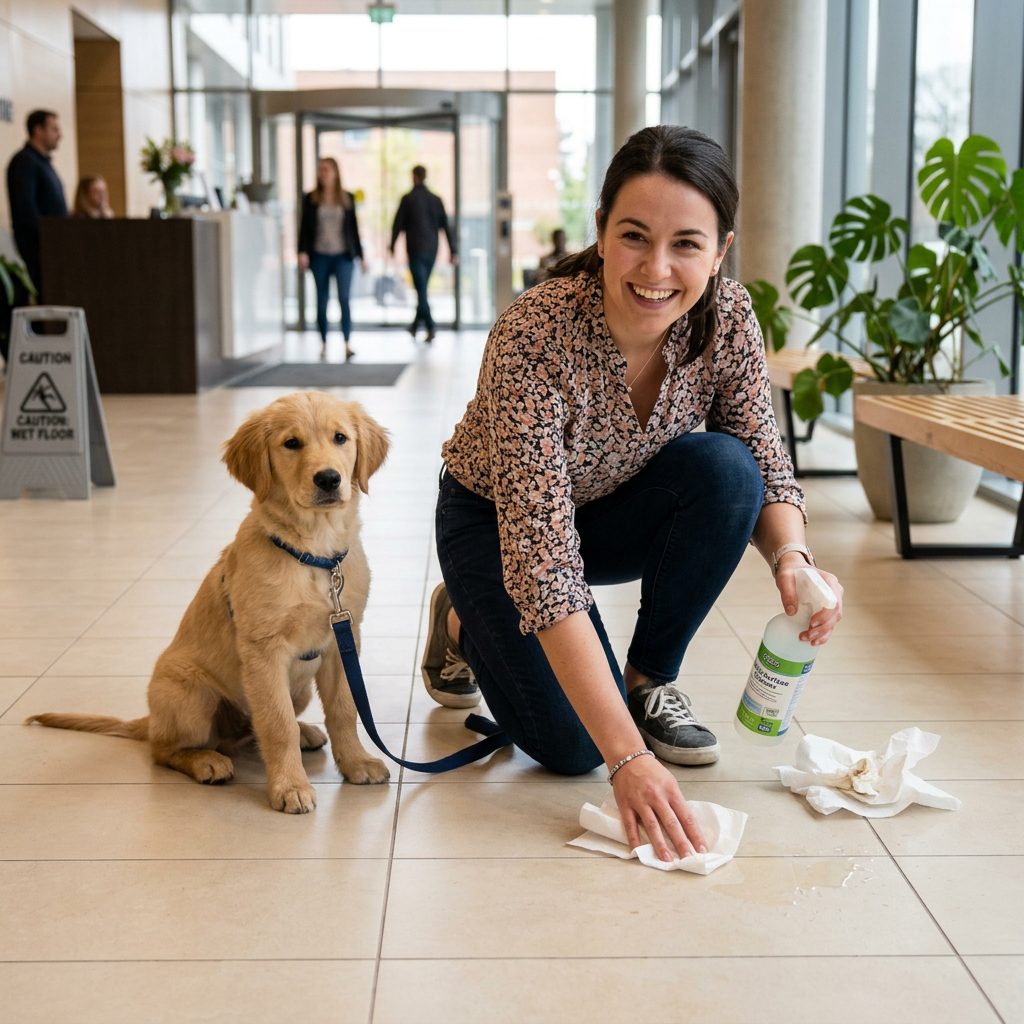
Even with the best preparation, accidents are going to happen. You are raising a baby animal, and perfection is a myth! The most important thing is how you handle these accidents. Getting angry, yelling, or rubbing a puppy’s nose in their mess will only make them afraid of you, leading them to hide behind the sofa to pee next time. Instead, we need to act like detectives, figure out why the accident happened, and adjust our strategy.
Common Elevator and Hallway Mishaps
Here are the most frequent issues apartment dwellers face and exactly how to fix them.
| The Problem | The Likely Cause | The Expert Solution |
|---|---|---|
| Puppy pees while you are picking them up. | Excitement or submissive urination, or you waited too long to initiate the trip. | Take them out 15 minutes earlier than you think you need to. Bend down calmly and scoop them gently without making high-pitched, exciting noises. |
| Puppy pees in the elevator while being held. | Their bladder was absolutely at maximum capacity, or the way they are being held is pressing on their bladder. | Support their bottom and chest evenly. Do not squeeze their stomach. Next time, move faster or use an indoor emergency patch if it is urgent. |
| Puppy pees in the lobby the second you put them down. | They associate the lobby floor with being outside, or they could not hold it those last 20 feet. | Do not put them down in the lobby! Carry them all the way through the front doors until their paws touch the actual outdoor potty zone. |
| Puppy refuses to pee outside, then pees inside upon returning. | The outdoors is too distracting, cold, or scary, so they “hold it” until they are back in their safe apartment. | Stand completely still outside like a tree. Be boring. Give them 10 minutes. If they do not go, carry them back inside, put them in a crate for 10 minutes, and try again. |
If your puppy does have an accident in a common area like the hallway or elevator, stay calm. Clean it up immediately with paper towels, and then thoroughly spray the area with your enzymatic cleaner. Building management and your neighbors will appreciate your diligence, and the enzymes will break down the odor so your puppy (and other dogs in the building) will not be tempted to mark that same spot again.
Graduation Day: Transitioning to Walking on Leash
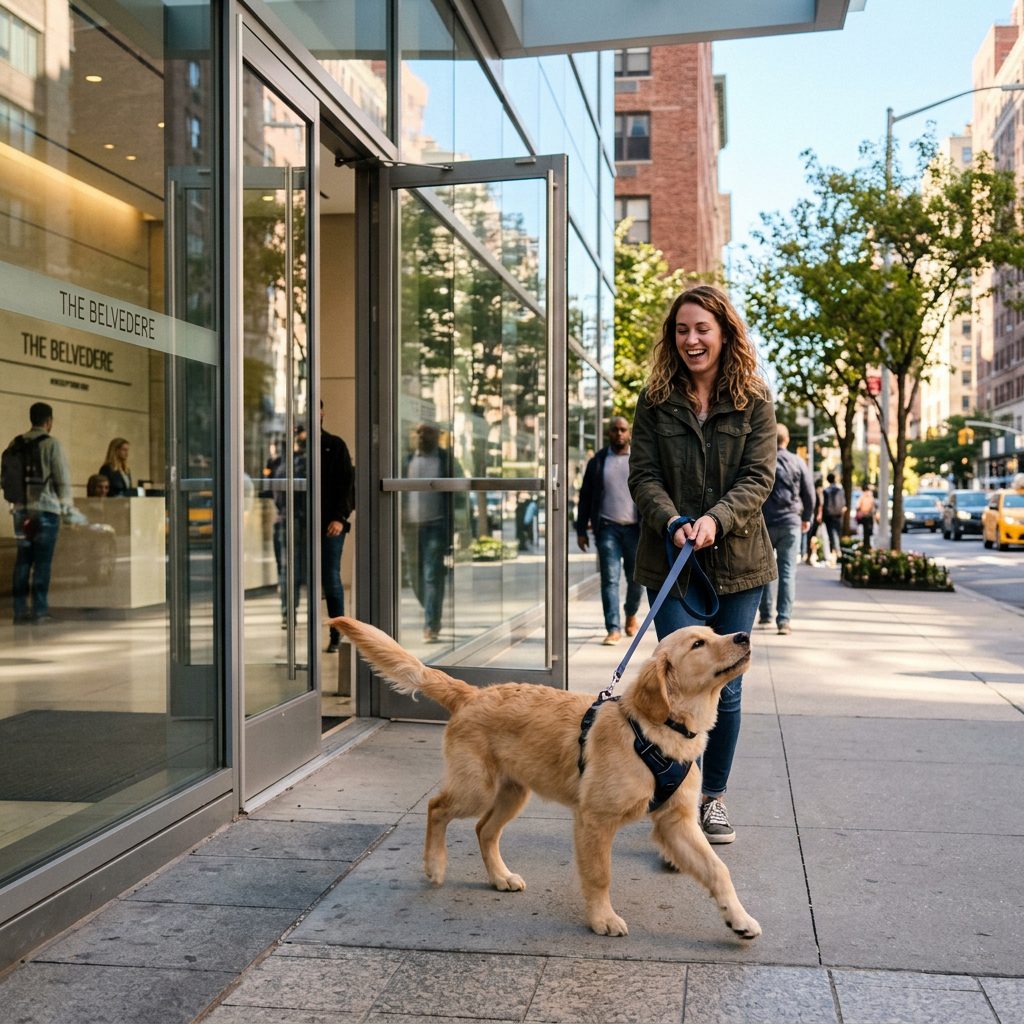
Carrying a 10-pound puppy is easy. Carrying a 40-pound rapidly growing Labrador down four flights of stairs or through a crowded lobby is a fast track to a back injury! Eventually, your puppy needs to graduate from the “Scoop and Carry” method to walking proudly on their own four paws from your apartment door all the way to the outdoor potty spot. But how do you know when they are ready?
Testing Their Bladder Control
You can start testing this transition when your puppy is around 4 to 5 months old, or when they have gone two full weeks without a single indoor accident. Their physical bladder capacity is growing, and they are beginning to understand that outside is the only acceptable place to go. However, we do not want to rush this and ruin our hard work. We will do this in phases.
Phase 1: The Lobby Walk
Start by carrying your puppy down the hallway and through the elevator ride. Once you reach the lobby (and are only a few feet from the front door), put them down on their leash. Briskly walk them out the door. If they make it without an accident, reward them heavily outside! Do this for a few days.
Phase 2: The Elevator Walk
Next, carry them down your hallway, but put them down once you are inside the elevator. Keep them in a “sit” or feed them treats so they do not pace. When the doors open at the lobby, walk them briskly outside. Again, if successful, massive rewards!
Phase 3: The Full Journey
Finally, put their leash on inside your apartment and let them walk out the front door. Keep the pace quick and purposeful. Use an upbeat voice: “Let’s go outside! Good dog!” Do not let them stop to sniff neighbor’s doors or wander in the hallway. Sniffing leads to peeing. Keep a short leash and a brisk pace until you cross the threshold to the outdoors.
If your puppy has an accident during any of these phases, do not panic. Simply interrupt them gently with an “Oops!”, scoop them up immediately, and carry them the rest of the way. It just means they need a little more time before graduating to that phase. Drop back to the previous phase for another week before trying again.
Conclusion
Potty training a puppy in a high-rise apartment is undoubtedly a labor of love. It requires patience, a lot of up-and-down elevator rides, and a pocket full of high-value treats. But remember, this phase is temporary! By utilizing the “Scoop and Carry” method, keeping your emergency toolkit ready by the door, and slowly transitioning to leash walking as their bladder control improves, you are setting your puppy up for a lifetime of success in the city.
Every dog learns at their own pace, so give yourself and your puppy some grace. Celebrate the small victories—like making it through a crowded elevator without a puddle—and learn from the inevitable accidents. Consistency is your greatest tool. Stick to your schedule, manage their environment, and before you know it, you will have a fully house-trained urban companion who navigates elevators like a seasoned pro. You’ve got this, and your puppy is lucky to have such a dedicated owner. Happy training!