Scared Of Rain Gear? How To Desensitize A Puppy To Opening Umbrellas Without Terror
Welcome to the wonderful, sometimes chaotic world of puppy parenthood! If you are reading this, chances are you have experienced the dreaded rainy-day walk. You step outside, the sky opens up, you press the button on your trusty umbrella, and WHOOSH—your confident, happy-go-lucky puppy suddenly turns into a terrified, pancake-flat puddle of panic at the end of the leash. Trust me, you are not alone in this.
For savvy dog owners, understanding canine behavior is the first step to solving any training hurdle. To a puppy, an opening umbrella is not a helpful tool to keep them dry; it is a sudden, loud, shape-shifting monster that appears out of nowhere. The combination of the mechanical click, the rustling fabric, and the massive expansion of size triggers their natural fight-or-flight response. But do not worry! You do not have to resign yourself to getting soaked on every rainy walk.
Through a psychological process called systematic desensitization and counter-conditioning, we can completely change how your puppy feels about rain gear. By breaking down the terrifying event into tiny, manageable, and highly rewarding steps, we can teach your furry best friend that umbrellas predict amazing things, not impending doom. Grab your training pouch, and let us dive into how to desensitize your puppy to opening umbrellas without causing them any terror.
Why Are Puppies So Terrified of Umbrellas?
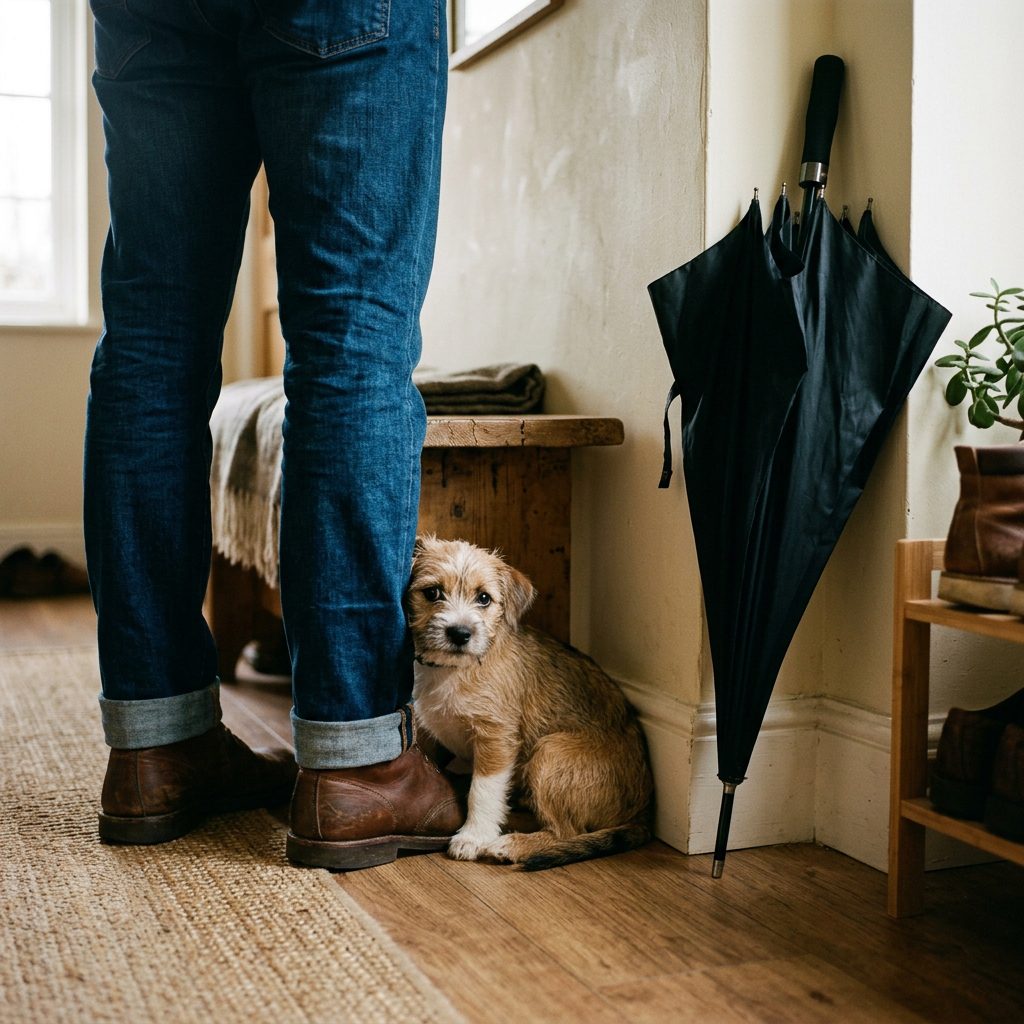
Before we can fix the fear, we need to understand where it comes from. Dogs experience the world much differently than we do. Their senses are highly attuned to sudden changes in their environment, which is an evolutionary trait designed to keep them safe from predators.
The Sensory Overload of Rain Gear
When you open an umbrella, you are hitting three of your puppy’s major sensory triggers all at once:
- Visual Shock: Dogs are incredibly sensitive to motion and sudden changes in silhouette. An umbrella goes from a small, stick-like object to a massive, looming canopy in a fraction of a second. To a puppy, this mimics a predator puffing up or swooping down.
- Auditory Startle: The mechanical click followed by the rapid whoosh of taut nylon is an unnatural sound. Because dogs have a broader hearing range than humans, this sharp noise can be incredibly jarring.
- Spatial Intrusion: Umbrellas take up a lot of space, often directly above the dog’s head. Being “loomed over” is a highly threatening posture in dog language.
To help you see things from your pup’s perspective, let us break down their triggers.
| Umbrella Action | Human Perspective | Puppy Perspective (The Threat) |
|---|---|---|
| Picking it up | Grabbing a tool for the rain | Human is holding a strange, unfamiliar stick |
| Pressing the button | Opening the canopy | A sharp, unnatural “click” warning sound |
| The Canopy expanding | Staying dry | A sudden, massive monster expanding over their head |
| Rustling raincoat | Putting on a jacket | Weird, crinkly sounds that mask normal human noises |
Understanding your dog’s perspective is the golden rule of modern dog training. We are not trying to force them to “get over it”; we are changing their emotional response from fear to anticipation.
The Desensitization Toolkit: What You Need
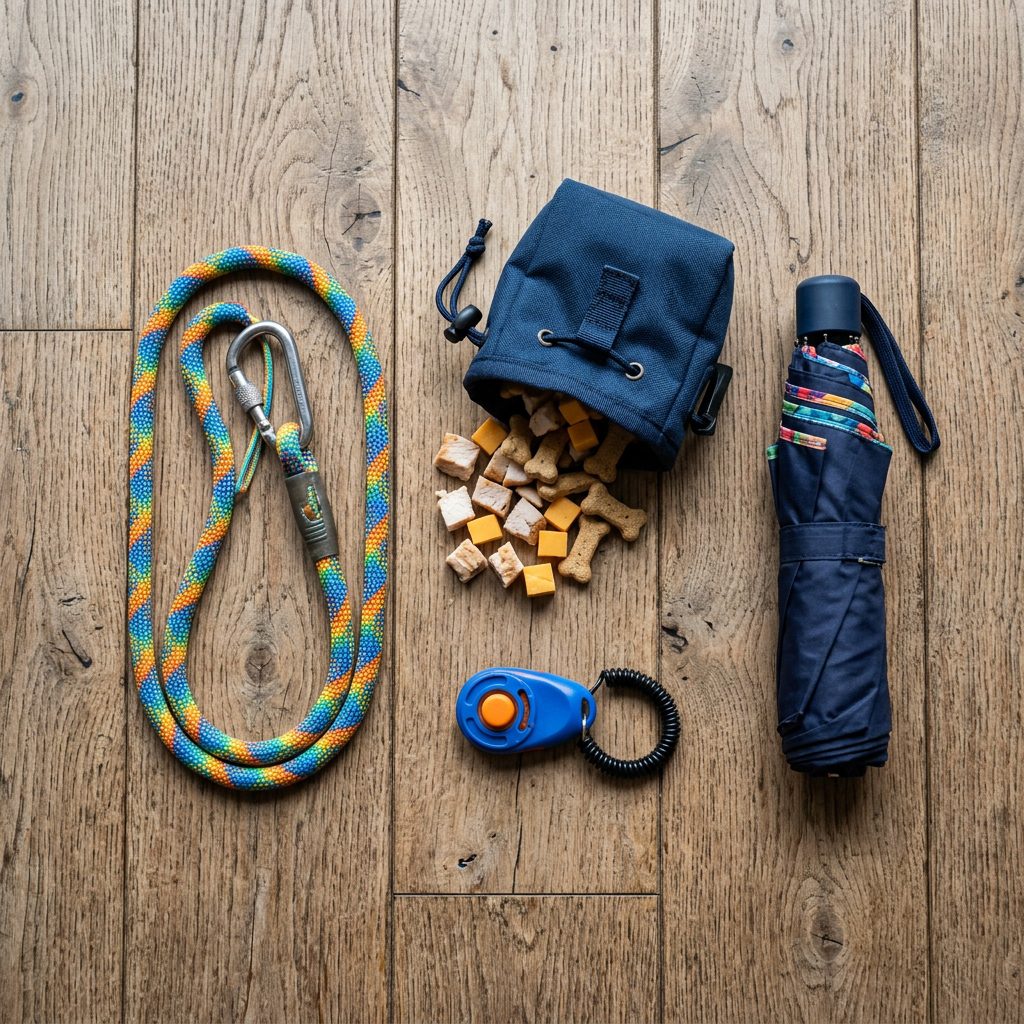
Setting your puppy up for success means having the right tools on hand before you even bring the umbrella into the room. Desensitization requires precision, patience, and a whole lot of motivation. Here is what you need to gather for your training sessions.
1. High-Value Training Treats
When dealing with fear, standard dry kibble simply will not cut it. You need “jackpot” treats. We are trying to rewire the brain to associate the umbrella with the best things in the world. Use soft, smelly treats that your dog rarely gets otherwise. Great options include:
- Boiled chicken breast (shredded into pea-sized pieces)
- Plain hot dogs (sliced very thin)
- Small cubes of mild cheese
- Freeze-dried liver
2. A Clicker (Optional but Highly Recommended)
A clicker is a fantastic tool for marking the exact moment your puppy looks at the umbrella without reacting fearfully. If you do not have a clicker, a consistent verbal marker like “Yes!” works too, but the clicker provides a sharp, consistent sound that cuts through emotional noise.
3. The Right Environment
Start indoors in a quiet, familiar room where your puppy feels completely safe. Do not attempt this outside in the rain for the first time! The environment should be free of other pets, loud noises, or distractions.
4. The “Training” Umbrella
If possible, do not start with a massive, automatic golf umbrella. Begin with a small, manual, travel-sized umbrella. The slower you can open it, the better. A manual umbrella allows you to control the speed of the expansion, which is crucial for the desensitization process.
The Step-by-Step Desensitization Process
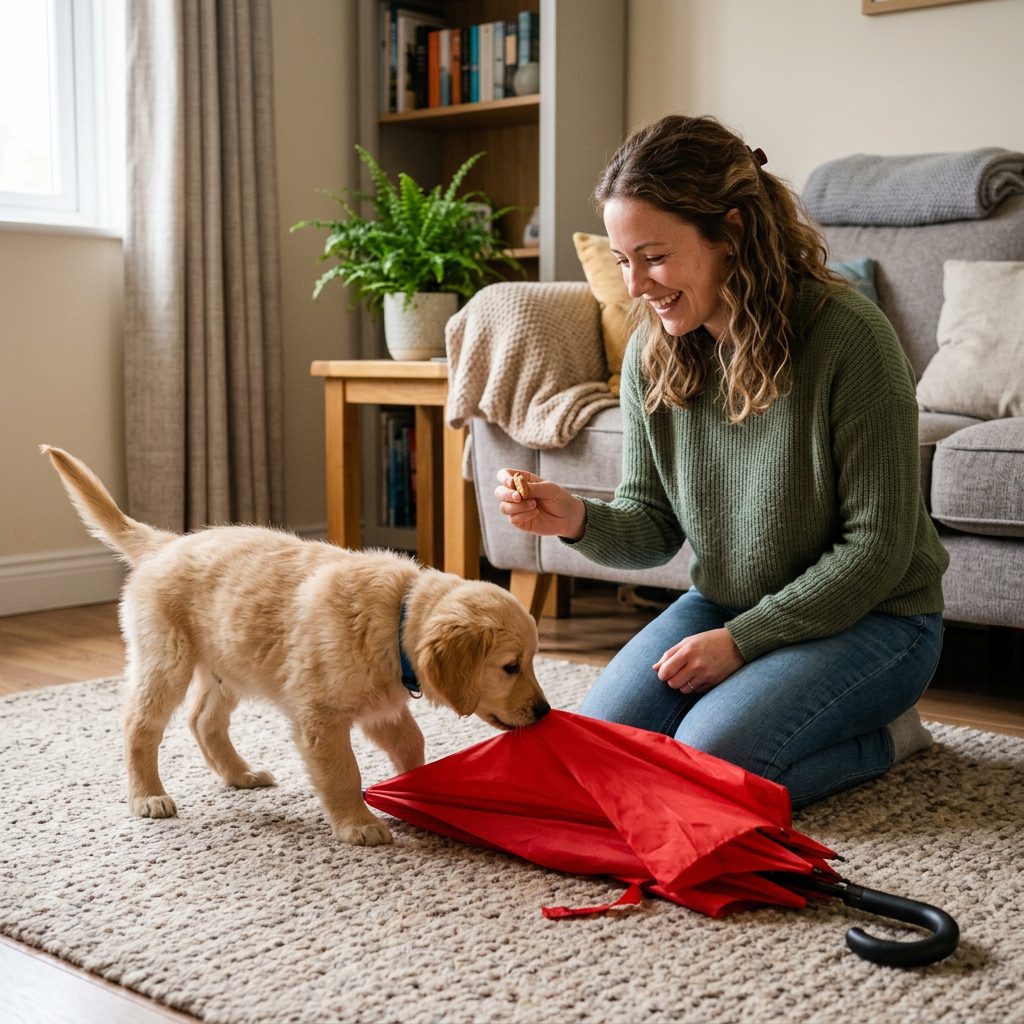
Now we get to the core of the training. This process relies on two principles: Desensitization (gradually exposing the dog to the trigger at a level that does not cause fear) and Counter-Conditioning (pairing that trigger with something amazing). Remember, progress happens at the speed of your puppy’s comfort level.
Phase 1: The Sleeping Umbrella (Presence)
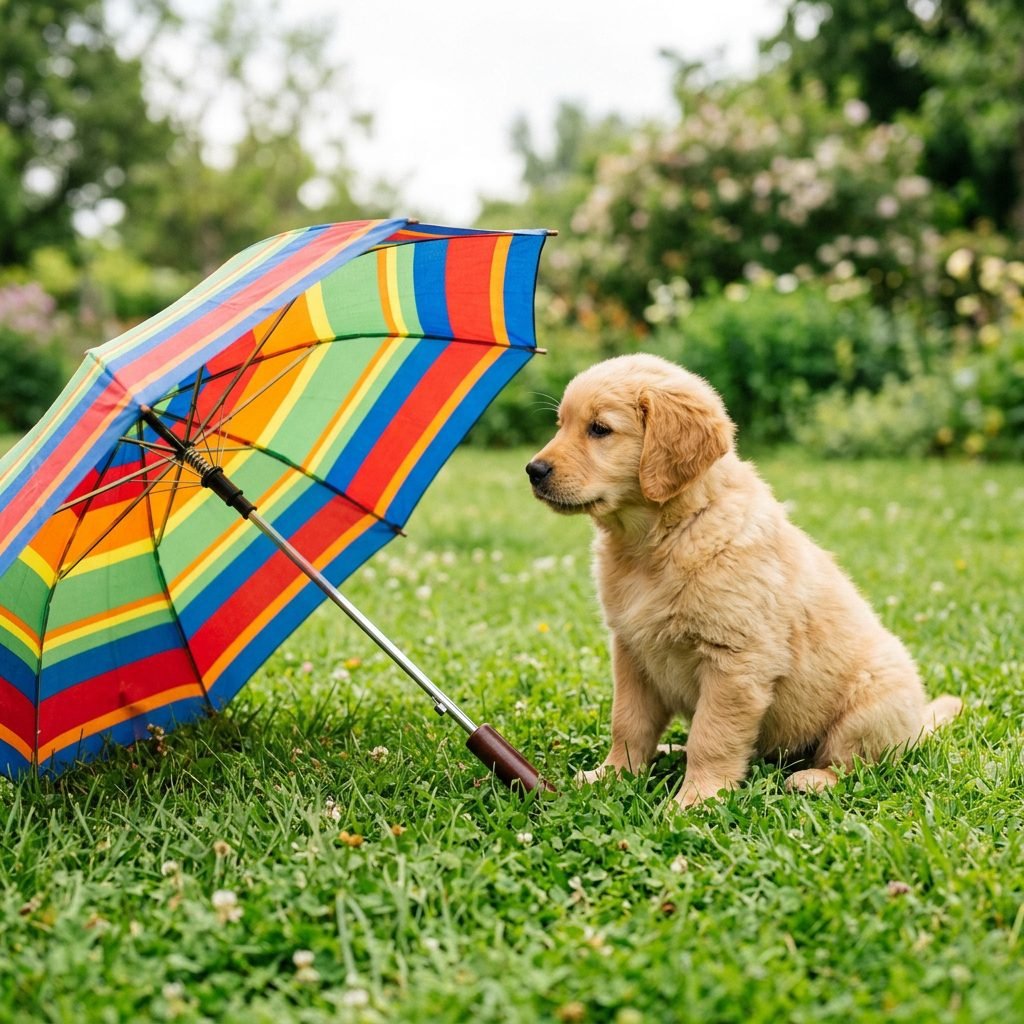
Place the closed umbrella on the floor in the middle of the room. Do not touch it. Let your puppy investigate it at their own pace. Every time your puppy looks at the umbrella, click (or say “Yes!”) and toss a high-value treat away from the umbrella. Tossing the treat away relieves pressure and allows them to approach again. Once they are happily sniffing the closed umbrella, you can move to Phase 2.
Phase 2: The Wiggle (Slight Movement)
Sit on the floor with your puppy. Pick up the closed umbrella. Just holding it might cause suspicion. If your pup stays calm, treat! Next, wiggle the umbrella slightly, or tap it on the floor. Tap, Click, Treat. Repeat this until your puppy sees the umbrella moving and immediately looks at you for their chicken. They are learning that a moving umbrella means snack time.
Phase 3: The Slow Open (The Critical Step)
This is where most people rush, so take it slow. Do not pop the umbrella open! If you have a manual umbrella, undo the strap. Lift the canopy just an inch or two. Open an inch, Click, Treat, Close. Repeat this dozens of times over several sessions. Gradually, open it a little further each time. If your puppy backs away, licks their lips nervously, or yawns (signs of stress), you have gone too fast. Go back to the previous step.
Phase 4: The Full Open
Once you can slowly open the umbrella fully without your puppy reacting, it is time to introduce the “pop.” Warn your puppy by saying a cue word like “Umbrella!” then open it quickly. Immediately shower them with a jackpot of treats. Soon, the sound of the umbrella opening will become a dinner bell rather than a warning siren.
| Training Phase | Goal | Session Length | Treat Value Needed |
|---|---|---|---|
| Phase 1: Presence | Puppy ignores or calmly sniffs closed umbrella | 2-3 mins | Medium (Regular treats) |
| Phase 2: Movement | Puppy stays relaxed when umbrella is picked up | 3-5 mins | High (Chicken/Cheese) |
| Phase 3: Slow Open | Puppy remains calm while canopy expands | 5 mins max | Ultra-High (Hot dogs/Liver) |
| Phase 4: Full Open | Puppy anticipates treats upon hearing the “pop” | 2-3 mins | Ultra-High (Jackpot handfuls) |
Adding Raincoats and Boots to the Mix
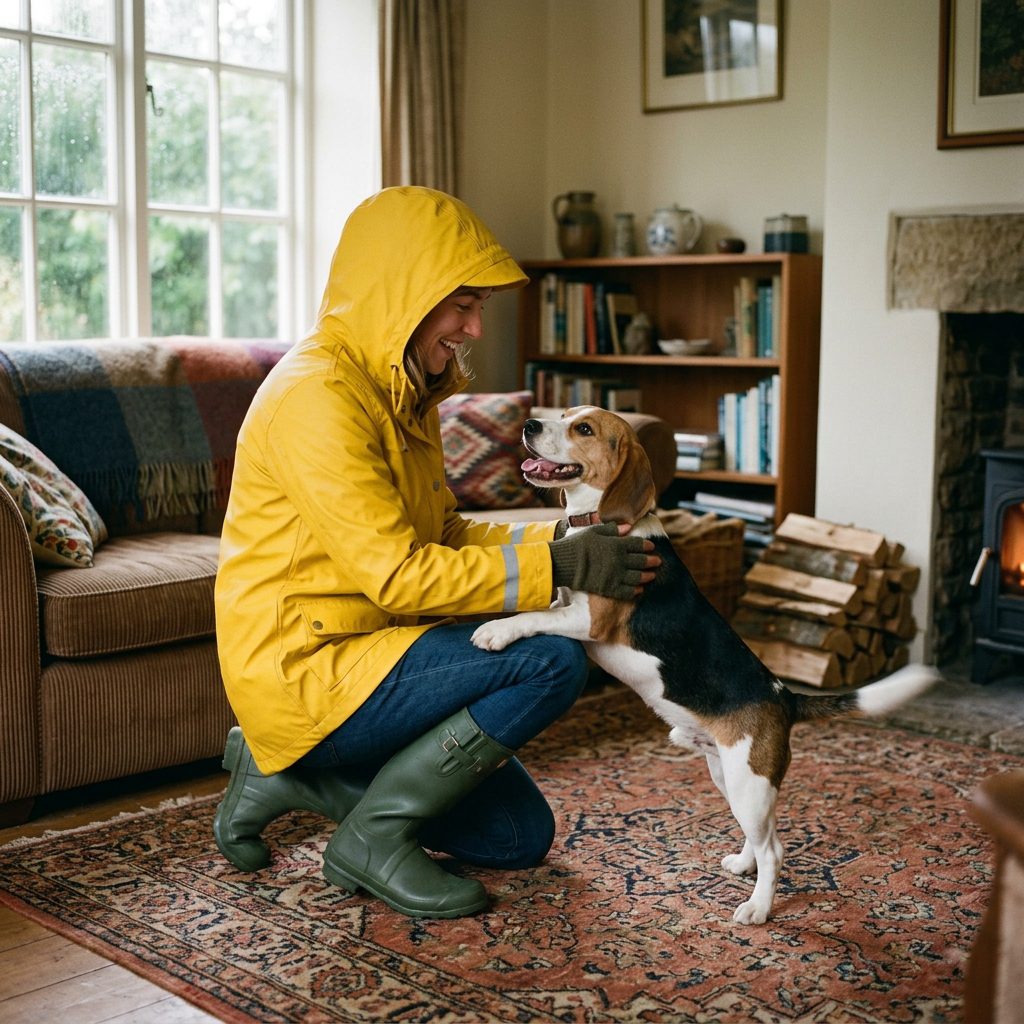
Often, it is not just the umbrella that causes panic. When it rains, humans transform. We put on bulky, crinkly raincoats, pull up large hoods that hide our faces, and stomp around in heavy rubber boots. To a puppy, their beloved owner has just turned into a rustling, faceless alien.
Desensitizing to Your Rain Gear
Apply the exact same logic to your clothing. Before a rainy day happens, bring your raincoat into the living room. Let your puppy sniff it. Put one arm in, toss a treat. Put the other arm in, toss a treat. Zip it up, toss a treat. Walk around the house making crinkly noises while dispensing hot dogs. You want your puppy to think, “Oh boy, the crinkle jacket is on, it is party time!”
What About Doggy Raincoats?
If you plan on putting a raincoat or boots on your puppy, you must desensitize them to wearing the gear as well. Never force a coat onto a frightened puppy. Start by laying the coat on their back for one second, treating, and removing it. Build up the duration slowly. For boots, touch their paws with the boot, treat. Slip one boot on for a second, treat, and take it off. Make dressing up a fun, rewarding game rather than a wrestling match.
Troubleshooting Common Mistakes and Setbacks
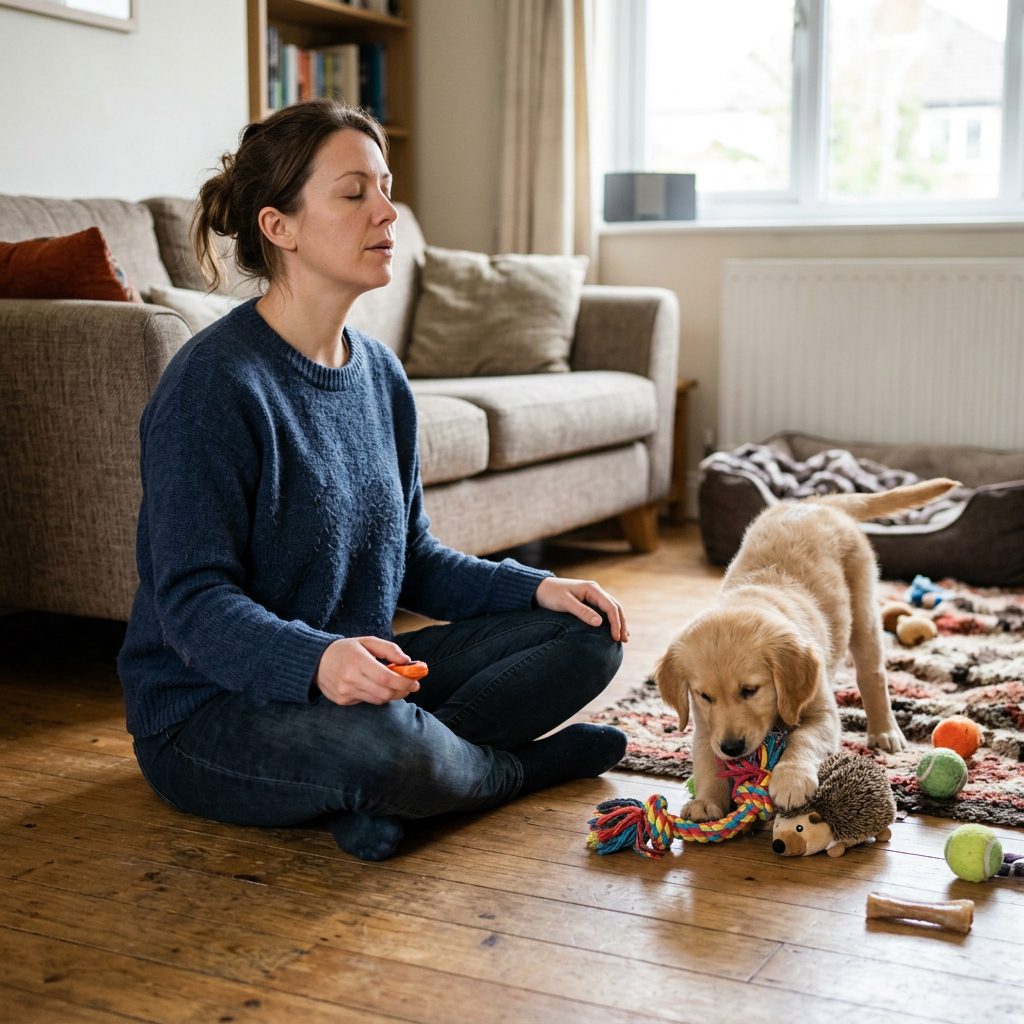
Dog training is rarely a perfectly linear journey. You will likely experience days where your puppy seems to forget everything they learned. This is completely normal! However, as savvy dog owners, we need to be aware of common pitfalls that can derail our desensitization efforts.
Mistake 1: “Flooding” Your Puppy
Flooding is an outdated and harmful technique where a dog is forced to face their fear until they “get used to it.” For example, trapping a puppy in a hallway and opening umbrellas repeatedly until they stop barking. This does not cure the fear; it causes “learned helplessness,” where the dog shuts down out of sheer terror. Always allow your puppy the choice to walk away.
Mistake 2: Trigger Stacking
Trigger stacking occurs when multiple stressful events happen close together, pushing the dog over their emotional threshold. If your puppy just had a scary encounter with a loud truck, and then you try to do umbrella training, they are much more likely to panic. Ensure your puppy is in a calm, relaxed state of mind before starting a session.
Mistake 3: Moving Too Fast
This is the most common error. We get impatient. If your puppy was fine with the umbrella opening two inches yesterday, but today they are hiding, do not push it. Go back to opening it one inch. Progress is dictated by the dog, not the human.
Remember: Desensitization happens at the speed of the learner, not the teacher. Patience today prevents panic tomorrow.
If you find that your puppy is absolutely inconsolable around umbrellas despite your best, slow efforts, there is no shame in reaching out to a certified positive-reinforcement behaviorist. They can help you identify micro-stress signals you might be missing and tailor a plan specifically for your pup.
Conclusion
Helping your puppy overcome their fear of umbrellas and rain gear is a masterclass in building trust. By taking the time to break down the scary monster into manageable, treat-filled steps, you are doing more than just fixing a walking issue. You are showing your puppy that you are their ultimate protector and that they can look to you for guidance when the world gets weird and scary.
Remember to keep your training sessions short—just a few minutes a day is plenty. Use the highest value treats you can find, and always end on a positive note. Before you know it, the sound of an umbrella popping open will not send your puppy running for the hills; it will have them sitting politely at your feet, wagging their tail, and waiting for their well-earned chicken. Rainy days do not have to be dreary when you have a confident, happy pup by your side. Happy training, and stay dry out there!