Is Your Puppy Screaming At The Gate? The Barrier Frustration Fix That Actually Works
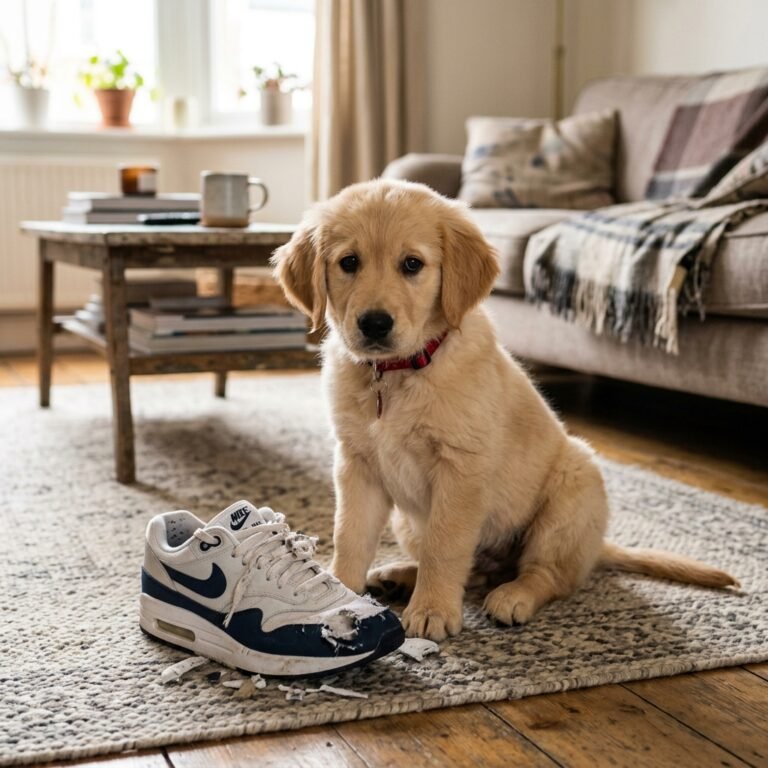
Picture this: You have just brought home the most adorable puppy. You set up a beautiful, safe playpen or block off the kitchen with a sturdy baby gate. You step over it to grab a cup of coffee, and suddenly, it sounds like someone is torturing a banshee in your living room. Your sweet little furball is screaming, pawing, and biting at the gate like their life depends on it. If you are nodding your head right now, take a deep breath. You are not alone, and your puppy is not broken.
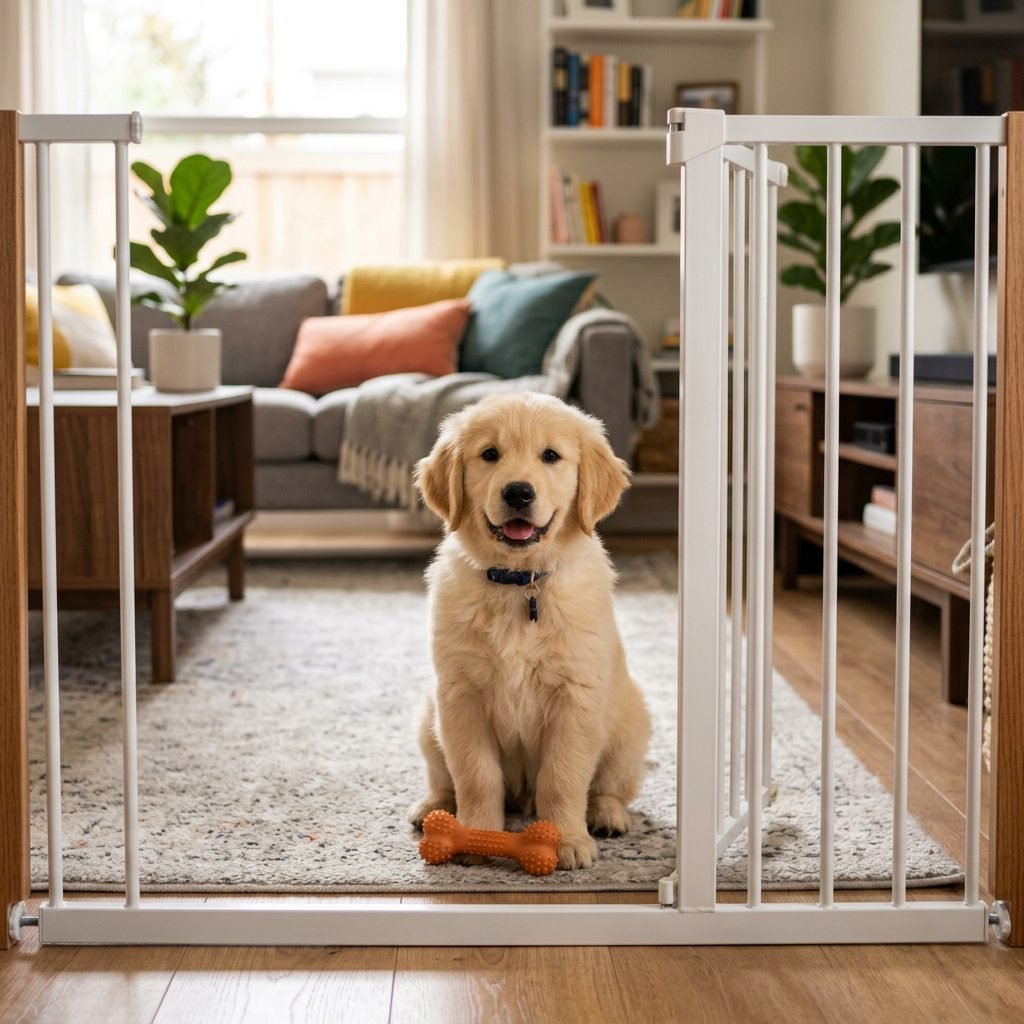
As savvy dog owners, we know that setting boundaries is crucial for a puppy’s development and safety. However, puppies do not naturally understand the concept of a transparent barrier. To them, they can see you, they want to be with you, and this invisible forcefield is ruining their day. This phenomenon is known as barrier frustration, and it is one of the most common—and most ear-piercing—challenges new puppy parents face.
In this comprehensive guide, we are going to dive deep into the psychology behind why your puppy is screaming at the gate. More importantly, we are going to walk through a proven, step-by-step training protocol to fix it. We will cover the exact tools you need, the body language to watch for, and how to troubleshoot when things do not go according to plan. Grab some high-value treats, and let us turn that screaming monster back into the angel you know they can be!
Understanding the Scream: Barrier Frustration vs. Separation Anxiety

Before we can fix the problem, we need to understand what is actually happening in your puppy’s brain. Many dog owners immediately jump to the conclusion that their puppy has severe separation anxiety. While separation anxiety is a real and serious condition, what you are likely witnessing at the baby gate is simply barrier frustration.
Barrier frustration occurs when a dog is prevented from reaching something they want by a physical barrier (like a gate, a crate door, or a leash). They have serious FOMO (Fear Of Missing Out). They can see you, hear you, and smell you, but they cannot get to you. This builds up emotional arousal, which boils over into vocalization—barking, whining, and screaming.
“Barrier frustration is about the restriction of movement, whereas separation anxiety is a profound panic attack about isolation.”
To help you diagnose exactly what your puppy is experiencing, let us look at a breakdown of the key differences.
| Feature | Barrier Frustration | Separation Anxiety |
|---|---|---|
| Trigger | Being physically blocked from something they want (you, another dog, a toy). | Being left completely alone or separated from a primary attachment figure. |
| Body Language | Forward-focused, pawing at the gate, alert, demanding barking. | Pacing, drooling, lip licking, panting, attempting to escape the room/house. |
| When the Barrier is Removed | Immediate relief and excitement. The stress vanishes instantly. | May still act frantic, clingy, or take a long time to calm down. |
| Food Motivation | Will often still take high-value treats or chew on a bone. | Usually refuses even the highest value food due to extreme panic. |
If your puppy fits the barrier frustration profile, congratulations! This is a highly trainable behavior. It simply requires teaching your puppy that the gate is not a punishment, but a cue to relax.
Your Barrier Frustration Toolkit: Setting Up for Success
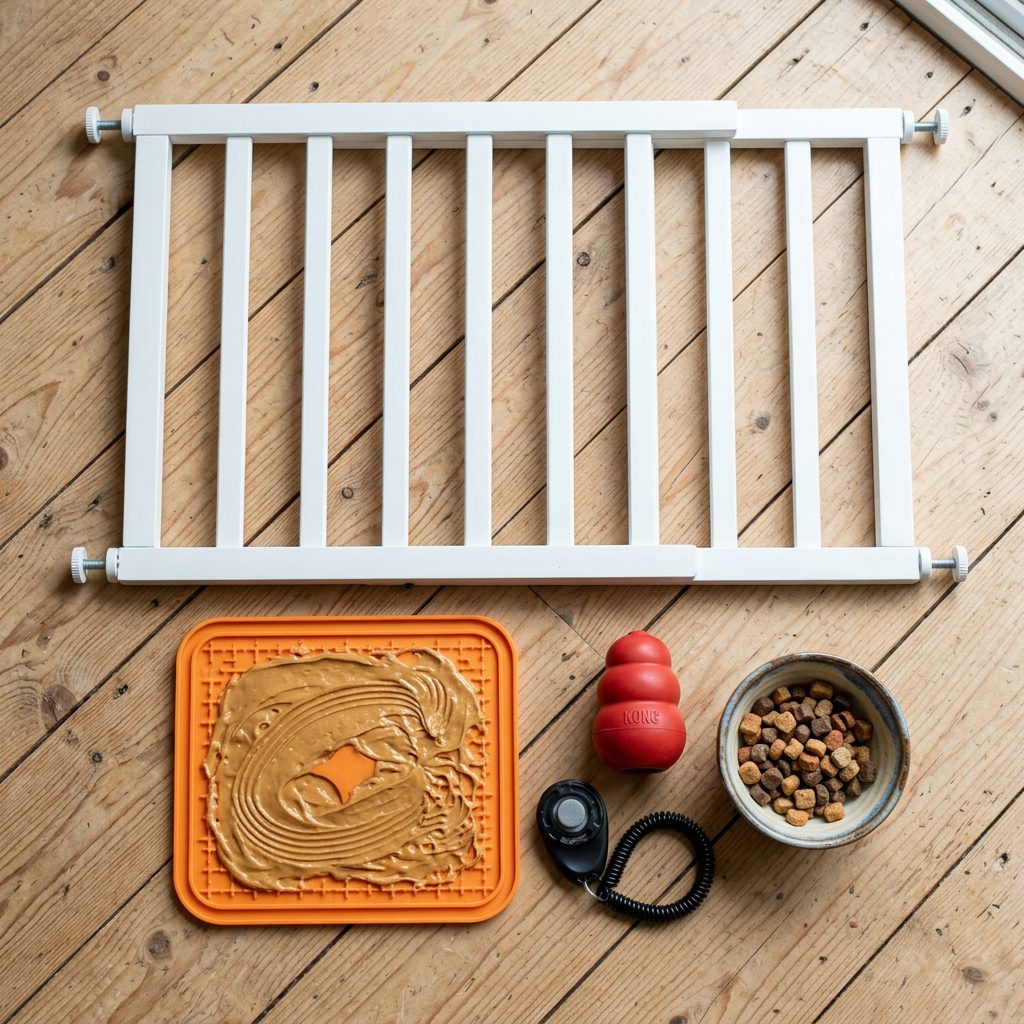
Training a puppy requires the right equipment. You would not try to build a house without a hammer, and you should not try to conquer barrier frustration without a solid toolkit. Here is what you need to gather before we start the training protocol.
- A Sturdy, Safe Baby Gate: Ensure the gate is securely fastened. If the puppy can push it over, they learn that screaming and pushing works. We recommend a walk-through gate so you do not have to clumsily step over it.
- High-Value Training Treats: Regular kibble won’t cut it when competing with the frustration of a barrier. Think boiled chicken, hot dogs, freeze-dried liver, or cheese. Cut them into tiny, pea-sized pieces.
- Long-Lasting Chews and Lick Mats: Licking and chewing are naturally soothing behaviors for dogs. Have a stuffed, frozen Kong, a bully stick, or a lick mat smeared with peanut butter ready to go.
- A Mat or Bed: We want to teach the puppy to go to a specific spot behind the gate and settle. A comfortable, distinct mat works perfectly for this.
- Patience and Earplugs: Seriously. Your puppy is going to test boundaries. Having the mental fortitude to wait out a tantrum is your most valuable tool.
Once you have your toolkit assembled, it is time to change the narrative. Right now, the gate means “I am trapped away from my human.” We are going to change that meaning to “The gate means I get amazing snacks and a chance to relax.”
The Step-by-Step Fix: Curing the Gate Screams
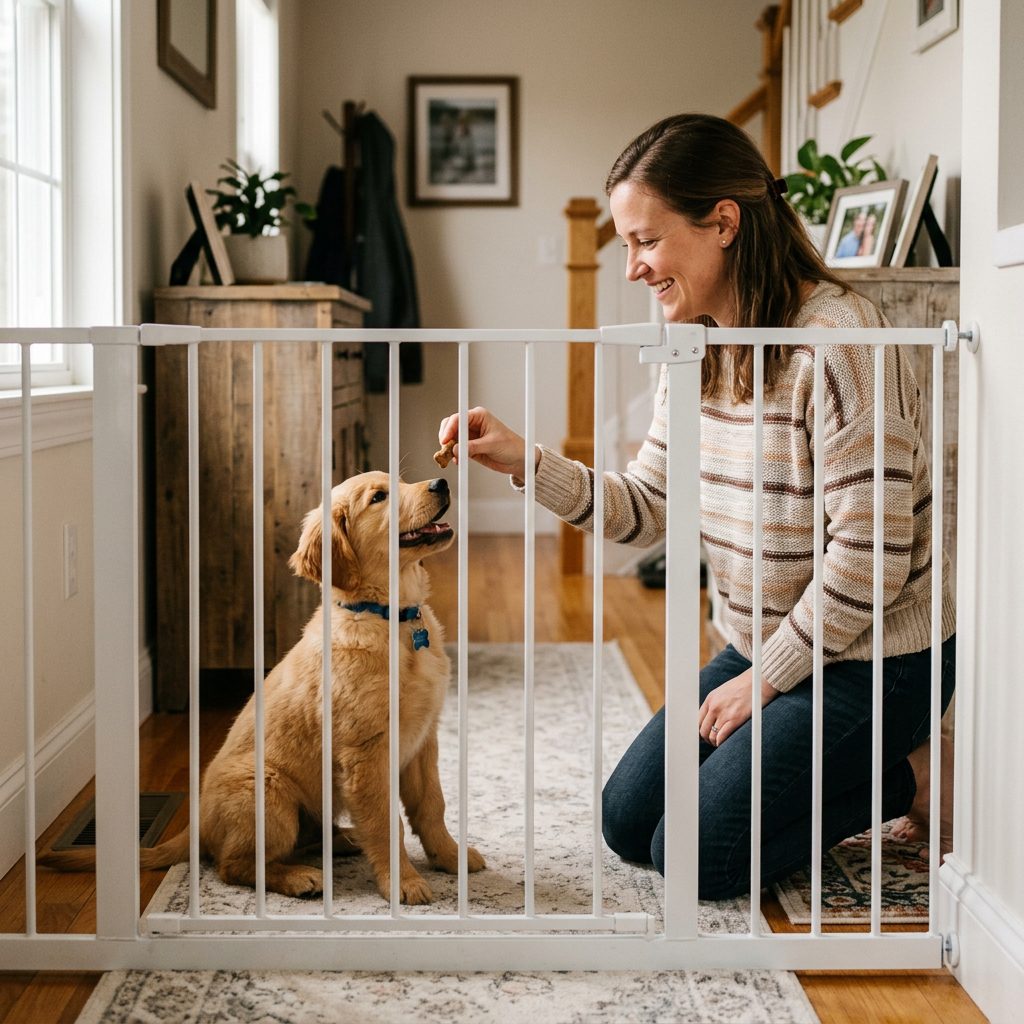
This protocol relies on two foundational dog training concepts: Desensitization (gradually getting your puppy used to the trigger) and Counter-Conditioning (changing their emotional response to the trigger). We are going to break this down into manageable phases.
Phase 1: The Invisible Gate Game
Do not wait until you actually need to leave the room to start training. Start when you have free time and the puppy is relatively calm.
- Stand on the same side of the gate as your puppy. Keep the gate open.
- Toss a treat through the open gate. Let the puppy walk through to get it.
- Call them back, and reward them. Repeat this until the puppy is happily going back and forth. This builds positive associations with the physical space around the gate.
Phase 2: The Peek-a-Boo Protocol
Now, we introduce the barrier, but only for a microsecond.
- Put the puppy on one side of the gate and step to the other side. Immediately toss a high-value treat over the gate before the puppy has a chance to whine.
- Take one step back. Step forward, treat.
- Take two steps back. Step forward, treat.
- If the puppy whines or barks, you went too far, too fast. Ignore the barking, wait for one second of silence, reward that silence, and then decrease your distance next time.
Phase 3: Adding Duration and Distraction
Once your puppy can watch you step away without screaming, it is time to build duration. This is where your long-lasting chews come in.
- Place the puppy’s mat behind the gate. Give them their frozen Kong or lick mat on the bed.
- Step over the gate. While they are happily licking, walk around the room.
- Leave the room for 5 seconds, then return. Do not make a big fuss when you return. Simply walk back in.
- Gradually increase the time you are out of sight: 10 seconds, 30 seconds, 1 minute, 5 minutes.
Pro Tip: Mix up your repetitions! If you always make it harder (10 seconds, then 20, then 30), the puppy will get frustrated. Do 10 seconds, then 2 seconds, then 15 seconds, then 5 seconds. Keep it unpredictable!
Troubleshooting: When the Puppy Keeps Crying
Dog training is rarely a perfectly linear journey. You will have great days, and you will have days where it feels like you are back at square one. Here are the most common roadblocks savvy dog owners face with barrier frustration, and exactly how to navigate them.
The Extinction Burst: Why It Gets Worse Before It Gets Better
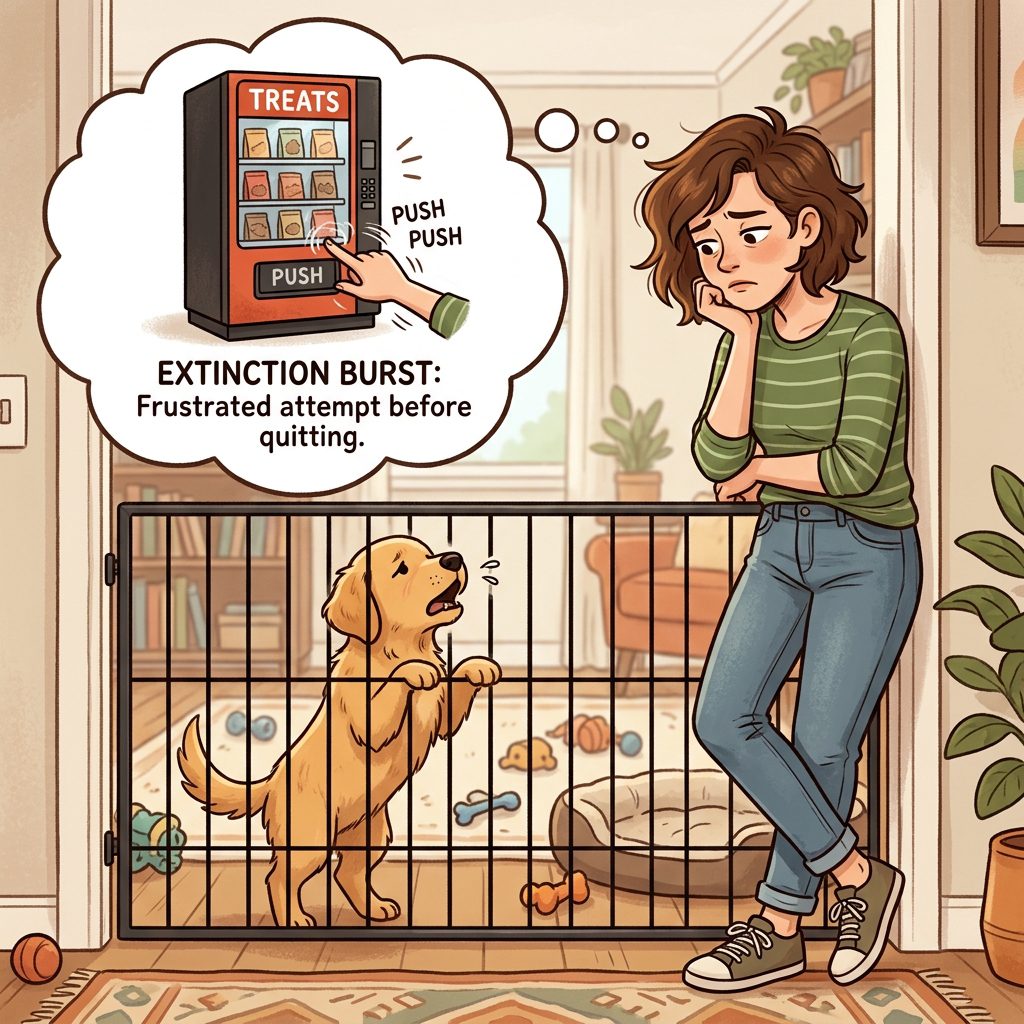
You have been practicing. The puppy is doing great. Then, suddenly, on day four, the puppy screams louder and longer than ever before. Do not panic! This is a well-documented psychological phenomenon called an extinction burst.
Think of it like a vending machine. If you put a dollar in and press the button, you expect a soda. If the soda does not come out, you do not just walk away. You press the button harder, you shake the machine, you might even kick it. Your puppy is doing the same thing. Barking used to get your attention (even if it was you yelling “Quiet!”). Now that you are ignoring the barking, the puppy tries barking louder and harder. You must wait this out. If you give in during an extinction burst, you have just taught your puppy that extreme screaming is the secret code to get what they want.
Common Mistakes to Avoid
- Saying “It’s Okay” or “Quiet”: Any attention is good attention to a frustrated puppy. Talking to them, even to scold them, reinforces the vocalization. Silence is your best tool.
- Releasing Them While Crying: Never open the gate or let the puppy out while they are actively whining or barking. Wait for at least three seconds of quiet before interacting with the gate.
- Moving Too Fast: The biggest mistake owners make is expecting a puppy to go from zero to thirty minutes behind a gate in one day. If your puppy is failing, you need to lower your criteria. Go back to shorter durations.
- Using the Gate as Punishment: The area behind the gate should be a puppy paradise, not a time-out zone. If you angrily shove your puppy behind the gate when they are bad, they will naturally hate being back there.
Remember, your puppy’s brain is still developing. They are learning how to self-soothe and regulate their emotions. By providing clear boundaries, consistent rules, and high-value rewards for calm behavior, you are giving them the skills they need to be an independent, confident adult dog.
Conclusion
Dealing with a puppy screaming at the gate is undoubtedly one of the most stressful parts of early dog ownership. It tests your patience, your eardrums, and sometimes your sanity. But as a savvy dog owner, you now have the blueprint to fix it. By understanding that this is barrier frustration rather than true separation anxiety, you can approach the problem with empathy rather than frustration.
Remember the golden rules: set up a safe and rewarding environment, use high-value treats to change the gate’s meaning, and never, ever reward the screaming with your attention. Consistency is your superpower. Celebrate the small victories—that first time your puppy chooses to lie down and chew their toy instead of barking at you is a massive milestone!
Stick with the step-by-step protocol, be patient with the inevitable extinction bursts, and before you know it, that baby gate will just be another piece of furniture in a peaceful, happy home. You’ve got this, and your puppy is lucky to have an owner so dedicated to their training and well-being. Happy training!