Stop Buying Rawhide! Make These 100% Safe Dehydrated Duck Necks at Home!
The Rawhide Lie: Why Your Dog Deserves Better
Let’s cut to the chase: if you are still buying those white, bleached, bone-shaped ‘treats’ from the grocery store, you aren’t just buying a snack; you’re buying a chemically treated byproduct of the leather industry. As a canine nutrition hacker, I’ve spent years deconstructing what goes into commercial pet products, and rawhide is the ultimate offender. It is indigestible, loaded with formaldehyde, and a massive choking hazard. But your dog has that biological drive to chew, right? You want to keep their teeth clean and their brain occupied without a trip to the emergency vet. That is where the dehydrated duck neck comes in. This is the ‘insider secret’ of the raw feeding community that is finally hitting the mainstream. Duck necks are 100% digestible, packed with natural glucosamine for joint health, and act as nature’s toothbrush. In this guide, I’m going to show you how to stop overpaying for ‘premium’ treats and start making these high-value chews in your own kitchen for a fraction of the cost.
Hacker Tip: Most ‘white’ rawhides are bathed in bleach and hydrogen peroxide to look clean. If it looks like a cartoon bone, it’s probably a chemical cocktail. Real food has color and texture.
The Rawhide Horror Show: What the Big Brands Aren’t Telling You
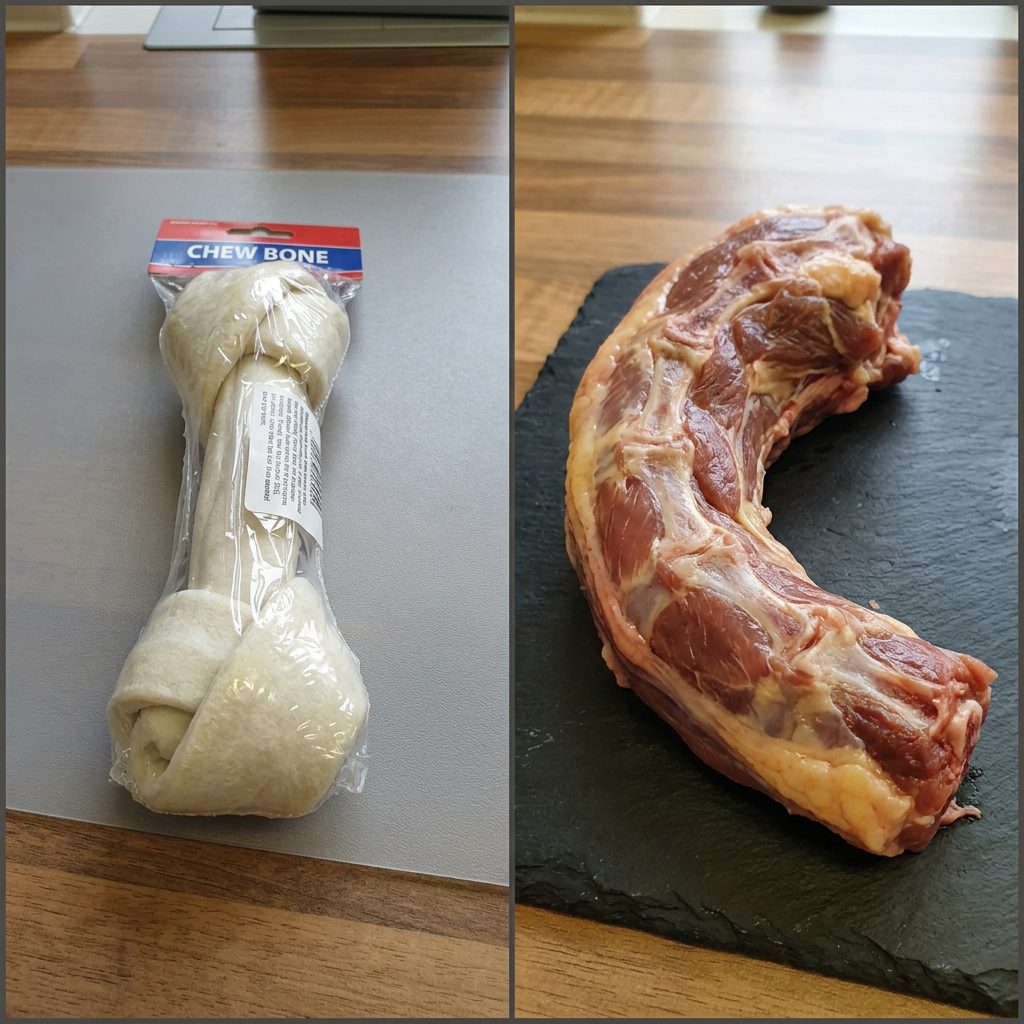
Before we get into the kitchen, you need to understand the ‘enemy.’ Rawhide is not a food product; it is a byproduct of the tanning industry. To make rawhide, the hide is first treated with a chemical bath to ‘preserve’ it during transport. Then, it’s treated with lime to strip the hair and fat. To make it look white and ‘appetizing’ (to humans, not dogs), it is bleached. Finally, it’s glued together with various adhesives and flavored with artificial ‘beef’ or ‘chicken’ sprays. This is not nutrition.
The Three Major Risks of Rawhide
- Digestive Blockage: Rawhide does not break down in the stomach. It swells up to four times its size, leading to life-threatening intestinal blockages.
- Chemical Toxicity: Traces of arsenic, lead, and formaldehyde have been found in imported rawhide products.
- Choking: As the dog chews, the rawhide becomes a slimy, rubbery mass that can easily slide down the throat and get stuck.
By switching to dehydrated duck necks, you are providing a single-ingredient protein source that breaks down naturally in the digestive tract. The bones in duck necks are ‘soft’ bones (non-weight bearing), meaning when they are dehydrated at the correct temperature, they crumble rather than splinter.
The Safe Chef Guide: Safety Disclaimer and Cost Breakdown

SAFETY FIRST: I am not a veterinarian. I am a nutrition hacker who prioritizes biological appropriateness. While duck necks are generally safe for most dogs, always supervise your dog while they are chewing. If your dog is a ‘gulper’ (tries to swallow things whole), you may need to hold one end of the neck while they chew. Always consult your vet before introducing a new protein, especially if your dog has a history of pancreatitis or kidney issues.
Real Cost Breakdown: DIY vs. Store-Bought
Let’s look at the numbers. If you buy a single dehydrated duck neck at a boutique pet store, you’re looking at a premium price tag. Making them at home is the ultimate budget hack.
| Source | Quantity | Approx. Price | Price Per Neck |
|---|---|---|---|
| Boutique Pet Store | 1 Neck | $4.50 – $6.00 | $5.25 |
| Online Bulk (Pre-dried) | 10 Pack | $35.00 | $3.50 |
| DIY (Wholesale Raw) | 10 lbs (approx. 40 necks) | $30.00 | $0.75 |
By sourcing raw duck necks from a local butcher or an ethnic grocery store (like an Asian market), you are saving over 80% compared to retail prices. That is money you can put back into high-quality kibble or supplements.
The Dehydration Blueprint: The Recipe
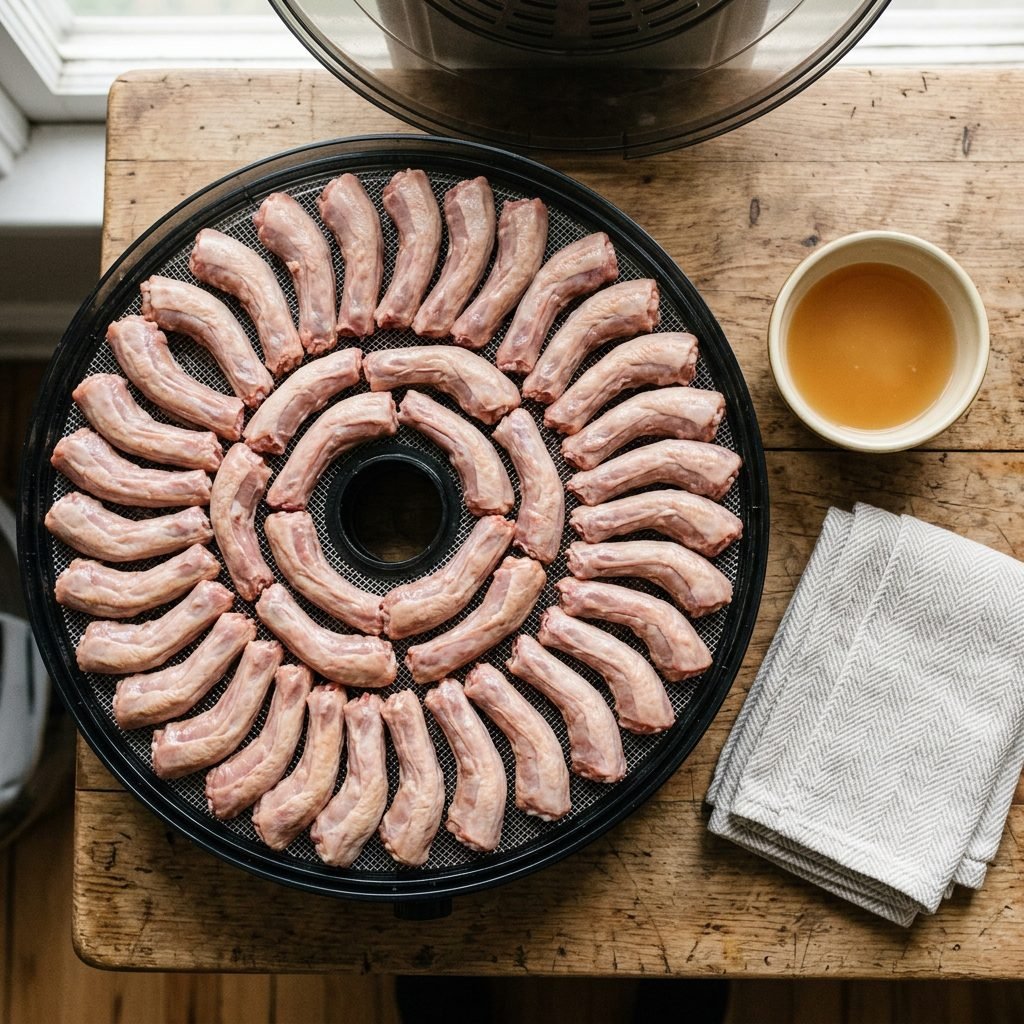
Making these is incredibly simple, but you must follow the temperature guidelines to ensure the bones are safe and the pathogens are killed. You will need a dehydrator or an oven that can hold a low temperature.
Ingredients & Tools
- Raw Duck Necks: 5-10 lbs (Skin on or off, depending on your dog’s fat tolerance).
- Apple Cider Vinegar: 1/4 cup (for a quick antimicrobial soak).
- A Dehydrator: (Excalibur or any tray-based model) or an oven with a ‘warm’ setting.
Step-by-Step Instructions
- The Prep: Rinse the duck necks in a bowl of water mixed with apple cider vinegar. This helps kill surface bacteria. Pat them bone-dry with paper towels.
- The Trim: If your dog is prone to weight gain or has a sensitive stomach, trim away any excess flaps of yellow fat from the base of the neck.
- The Layout: Place the necks on the dehydrator trays. Ensure they are not touching so the air can circulate freely. Do not overlap!
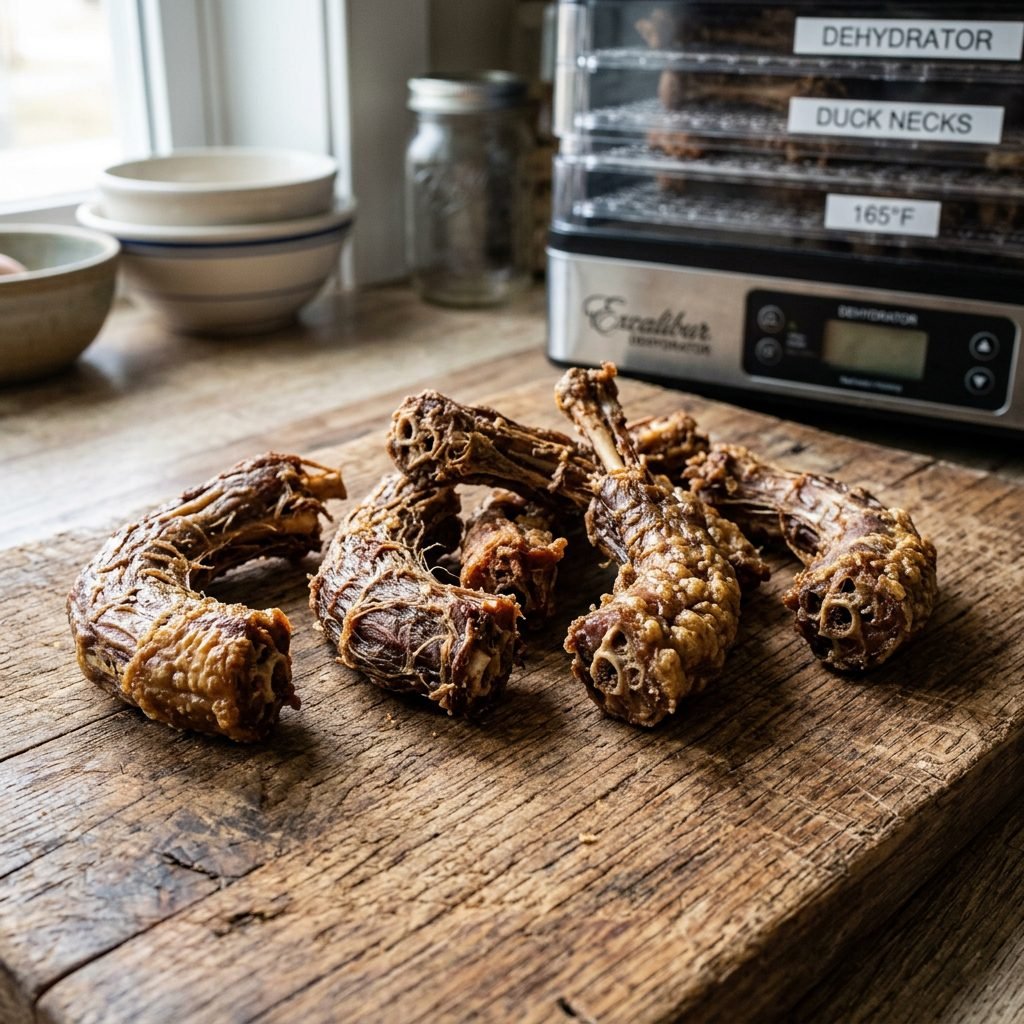
- The Temperature: Set your dehydrator to 160°F (71°C). This is the ‘magic number’ to ensure any potential salmonella or bacteria is neutralized while the bone remains in a safe, crumbly state.
- The Wait: Dehydrate for 24 to 30 hours. The necks are done when they are completely stiff and ‘snap’ when you try to bend them. There should be no ‘give’ or moisture in the center.
Insider Secret: If you want to make these even more ‘high-value,’ lightly dust the raw necks with a tiny bit of organic turmeric or dried parsley before dehydrating for an extra antioxidant kick!
Batch Cooking & Storage Secrets
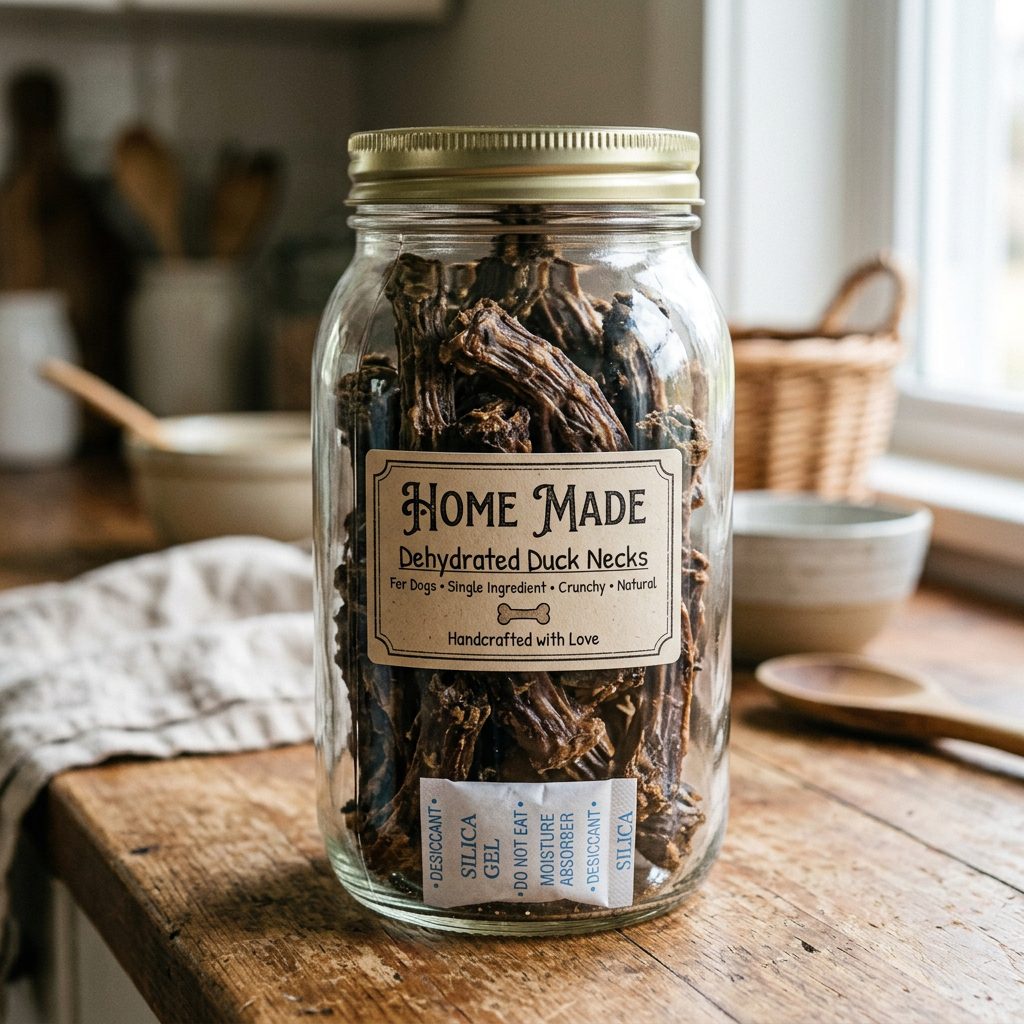
Since we are hacking our way to better nutrition, we don’t want to run the dehydrator every day. Batch cooking is the way to go. One 10lb case of duck necks can last a single-dog household for two months.
How to Store Your Haul
Because these are a single-ingredient product with no chemical preservatives, they are susceptible to moisture. If they get damp, they will mold. Here is how to keep them fresh:
- Short-Term (1-2 weeks): Store in a glass jar or airtight container in a cool, dry pantry.
- Long-Term (1-6 months): Store in a vacuum-sealed bag or a freezer-safe Ziploc bag in the freezer. You can give them to your dog straight from the freezer for an extra-crunchy challenge.
- The Silica Hack: Save those ‘Do Not Eat’ silica packets from your (human) seaweed snacks or shoe boxes and toss one into your dog treat jar to absorb any stray moisture.
A Note on ‘The Poop Check’
When you first introduce duck necks, monitor your dog’s stool. The high calcium content in the bones can sometimes make stool a bit harder or chalky. If this happens, simply reduce the frequency. One duck neck every 2-3 days is the ‘sweet spot’ for most medium-to-large dogs.
The Nutritional Science: Why Duck vs. Chicken?
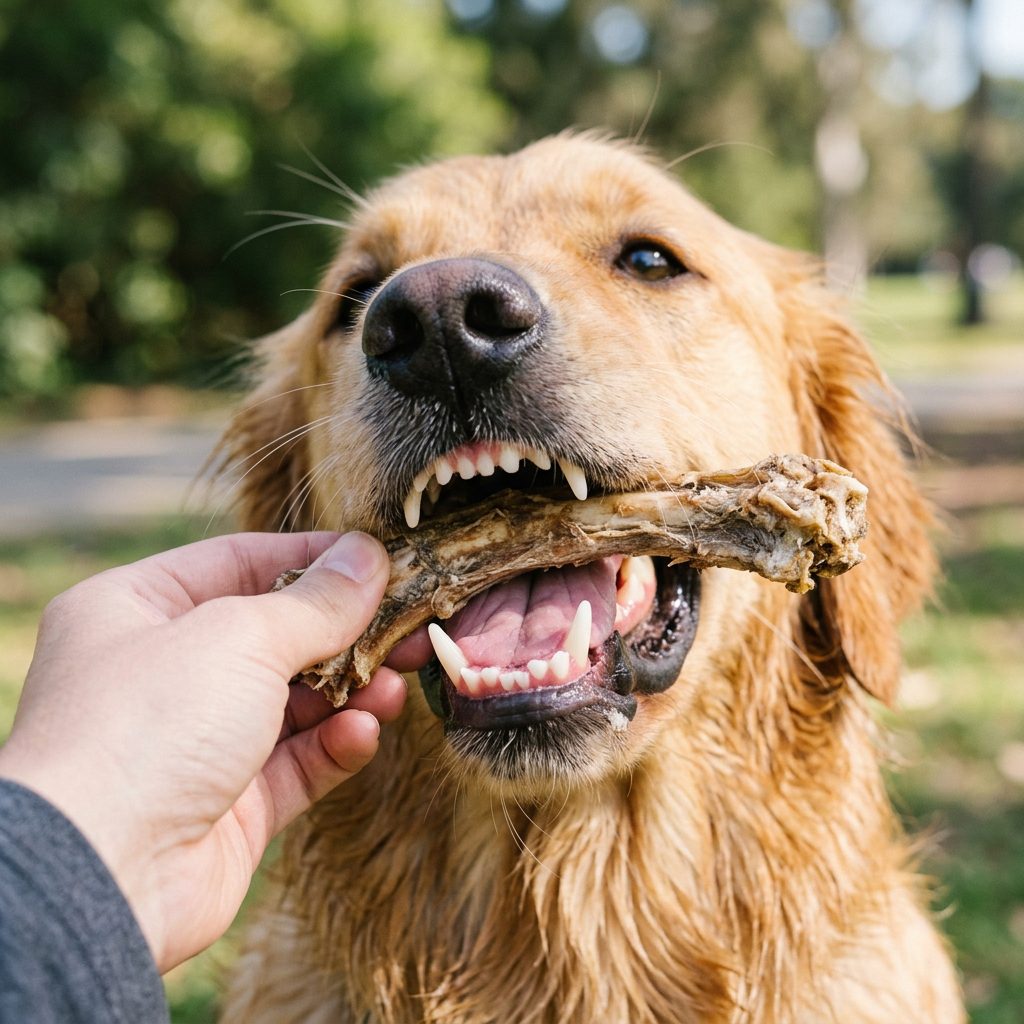
You might be wondering, ‘Why can’t I just use chicken necks?’ You can, but duck necks are the superior ‘hacker’ choice. Duck is a novel protein for many dogs, meaning they are less likely to have an allergic reaction compared to common chicken or beef. Furthermore, duck necks are larger and provide a longer chewing session, which is better for scraping plaque off the molars.
The Hero Nutrients in Duck Necks
- Glucosamine & Chondroitin: These are the building blocks of joint cartilage. Feeding duck necks is like giving your dog a natural joint supplement.
- Calcium & Phosphorus: Essential for maintaining strong skeletal structure, provided in a perfectly balanced ratio by nature.
- Selenium: An antioxidant that supports immune function.
By making these at home, you are ensuring your dog gets these nutrients in their rawest, most bioavailable form, without the high-heat processing that kills nutrients in commercial kibble ‘treats.’
Conclusion
Final Verdict: Join the Nutrition Revolution
Stop being a victim of the big pet food marketing machine. You don’t need to spend $20 on a bag of ‘dental chews’ that are mostly wheat gluten and artificial dyes. By spending 15 minutes prepping a batch of dehydrated duck necks, you are taking control of your dog’s health and your household budget. You’re giving them a treat that satisfies their primal urge to chew while cleaning their teeth and lubricating their joints. It’s a win-win-win. So, head to your local butcher, fire up that dehydrator, and watch your dog go wild for a snack that is actually good for them. Welcome to the world of canine nutrition hacking!