The Squeeze Bottle Hack: How to Make 500 High-Value Training Treats for Under $2
Let’s get real for a second, my fellow savvy dog owners. If you’ve been working on recall, loose-leash walking, or just trying to teach your pup to stop barking at the mailman, you know you need high-value treats. But here’s the dirty little secret the pet industry doesn’t want you to know: you are getting absolutely ripped off.
Those tiny bags of premium, semi-moist training treats? They can easily cost you upwards of $1.50 per ounce. When you’re rapid-fire rewarding a puppy or working through behavioral modification with a reactive dog, that adds up faster than an emergency vet bill on a Sunday. You might find yourself burning through a ten-dollar bag of treats in a single afternoon. As your resident Canine Nutrition Hacker, I refuse to let you pay a premium for what is essentially processed meat paste, tapioca starch, and vegetable glycerin.
Today, I’m sharing my absolute favorite insider secret. It’s incredibly cheap, it’s highly effective, and it completely bypasses all the junk fillers found in commercial treats. I call it The Squeeze Bottle Hack. By the end of this comprehensive guide, you will know exactly how to make roughly 500 high-value, lickable training rewards for under two bucks. We are going to dive deep into the economics of dog training, the psychology of why licking is superior to chewing for anxious dogs, the exact hardware you need, and my top battle-tested recipes. Let’s hack your dog’s training routine and save your wallet in the process.
The Economics of Dog Training: Why Store-Bought Treats Are Draining Your Wallet
The Economics of Dog Training: Why Store-Bought Treats Are Draining Your Wallet
Before we get our hands dirty in the kitchen, we need to look at the cold, hard math of dog ownership. When you flip over a bag of typical commercial training treats and look at the ingredient label, what do you actually see? Sure, there’s usually a meat source listed first to catch your eye, but right behind it, you’ll find things like pea flour, tapioca starch, vegetable glycerin, and various chemical preservatives. You aren’t just paying for meat; you are paying a massive markup for marketing, fancy packaging, and shelf-life stabilizers that your dog simply does not need.
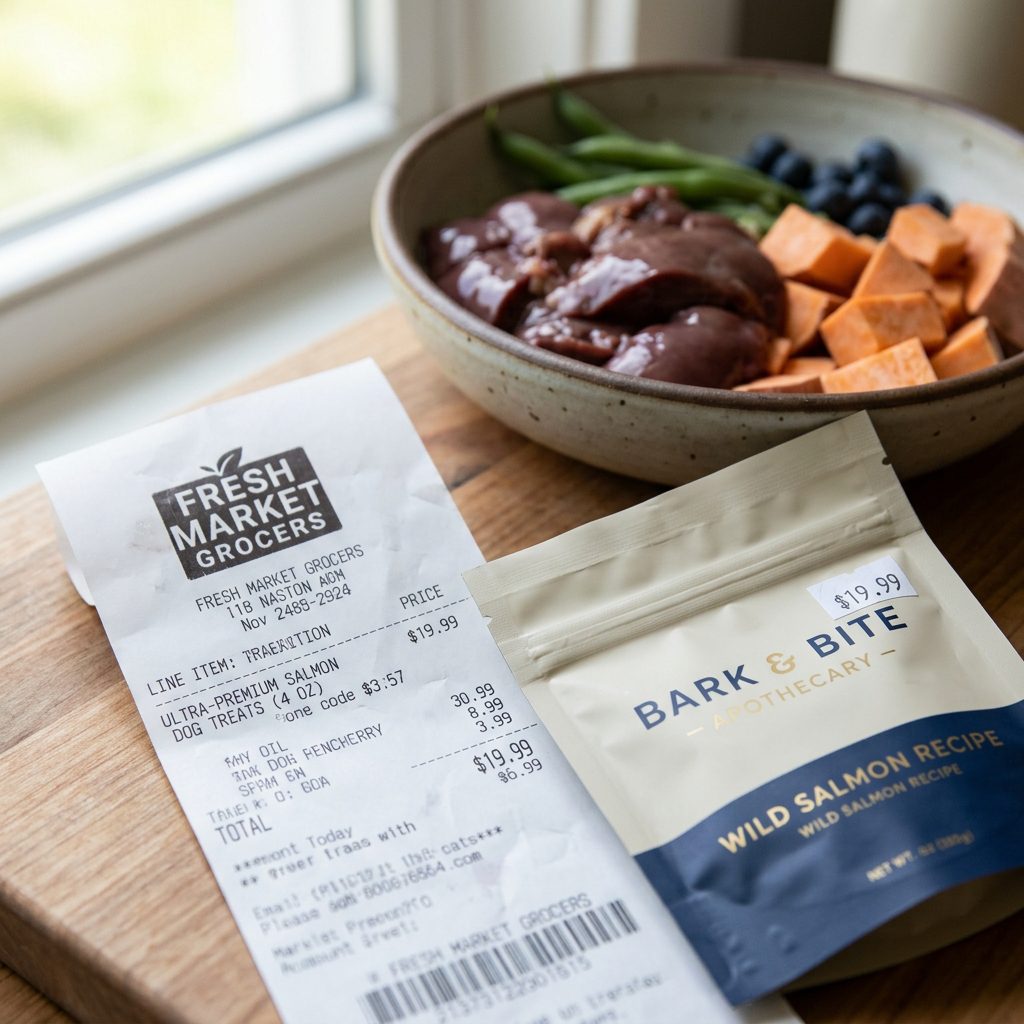
Let’s break down the actual cost of reinforcing your dog’s good behavior. When you are doing intense training sessions, you need tiny, pea-sized treats so your dog doesn’t get full or fat. A standard bag of premium soft treats might hold 100 of these tiny morsels and cost you $10. That is ten cents per repetition. If you do 50 repetitions a day, you are spending $5 a day just on treats!
| Treat Type | Average Cost Per Ounce | Estimated Cost for 500 Rewards | Filler Ingredient Content |
|---|---|---|---|
| Premium Store-Bought (Soft) | $1.50 – $2.50 | $25.00 – $45.00 | High (Glycerin, Starches, Syrups) |
| Freeze-Dried Raw | $3.00 – $5.00 | $50.00+ | Low (Usually single ingredient) |
| The Squeeze Bottle Hack | $0.10 – $0.20 | Under $2.00 | Zero Fillers (100% Real Food) |
Look closely at those numbers. When you utilize the squeeze bottle method, you are slashing your training budget by up to 95%. By purchasing raw ingredients like chicken liver or canned tuna and pureeing them yourself, you yield a massive volume of high-value reward for literal pennies. You could easily save over $50 a month just by switching your delivery mechanism. That is money you can put toward high-quality kibble, joint supplements, or new toys.
Hacker Tip: Stop buying treats based on the front of the bag. The front is marketing; the back is the truth. If you see sugar, molasses, or corn syrup in the first five ingredients of a training treat, put it back on the shelf. Your dog doesn’t need a sugar crash during obedience class.
The Psychology of the Lick: Why This Hack Works Faster
The Psychology of the Lick: Why This Hack Works Faster
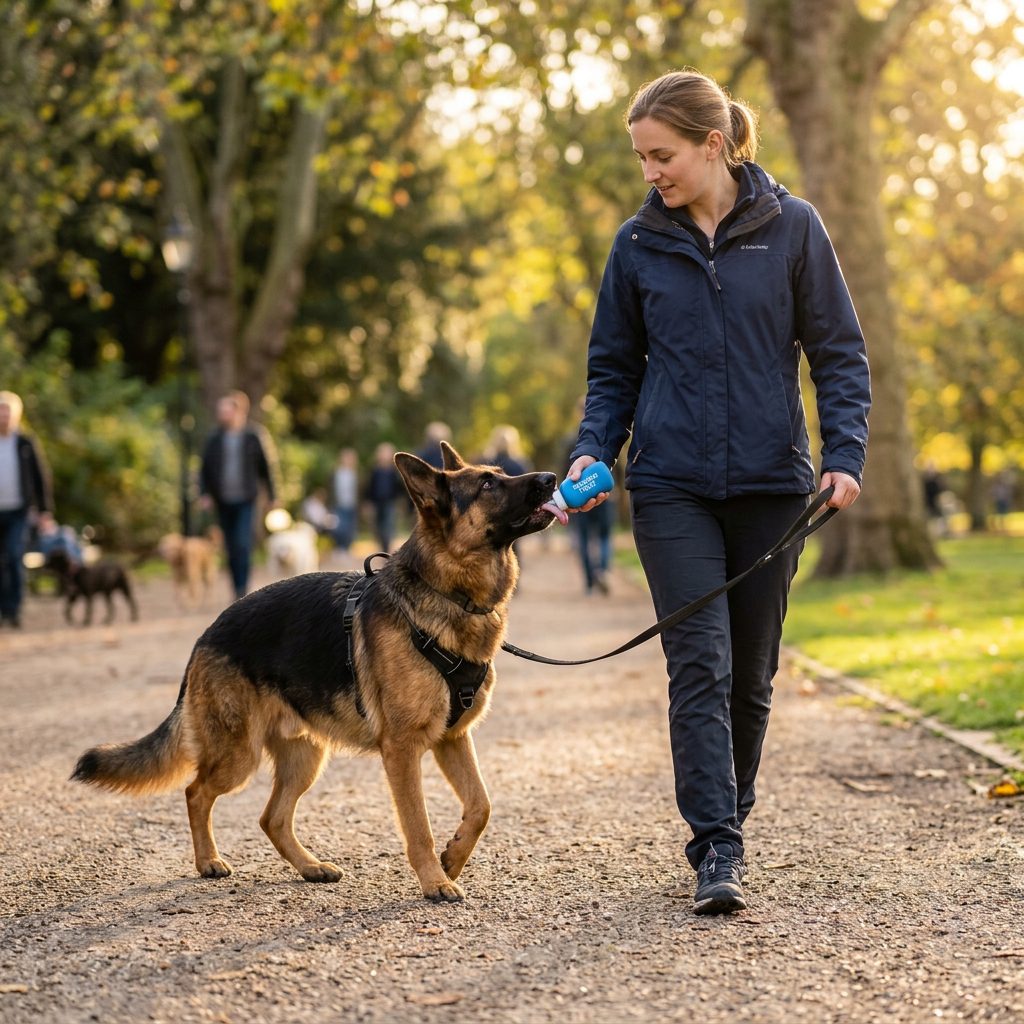
The Squeeze Bottle Hack isn’t just about saving money; it is actually a superior behavioral tool. When you toss your dog a piece of kibble or a hard biscuit, they have to break focus, chew, and swallow. This spikes their arousal levels. If you are working with a reactive dog who barks at other dogs on walks, the last thing you want is to increase their arousal.
Enter the power of licking. Scientifically speaking, licking is a naturally soothing, self-regulating behavior for dogs. When a dog licks, their brain releases endorphins that help calm their nervous system. By presenting a squeeze bottle and allowing your dog to take a prolonged lick of a meat puree, you are actively lowering their heart rate and keeping them in a calm, focused state of mind.
Duration Over Quantity
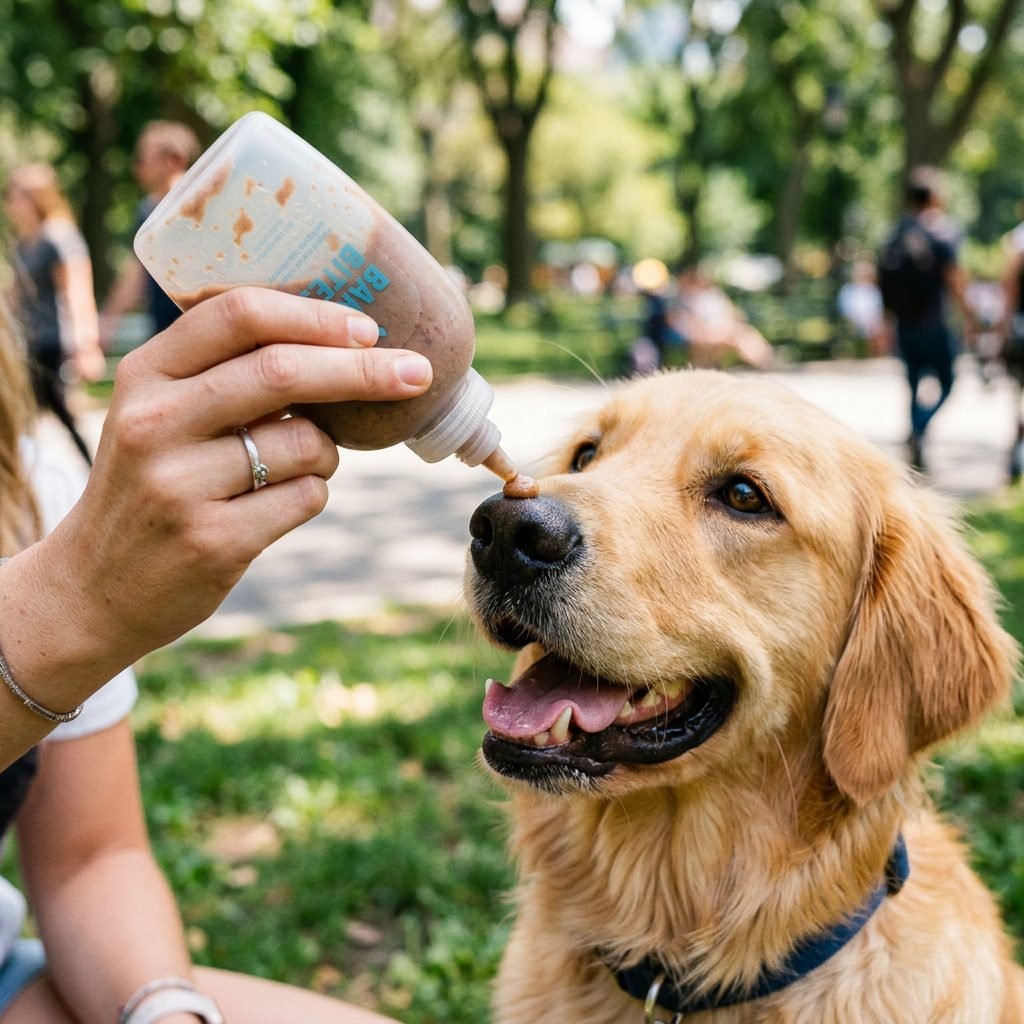
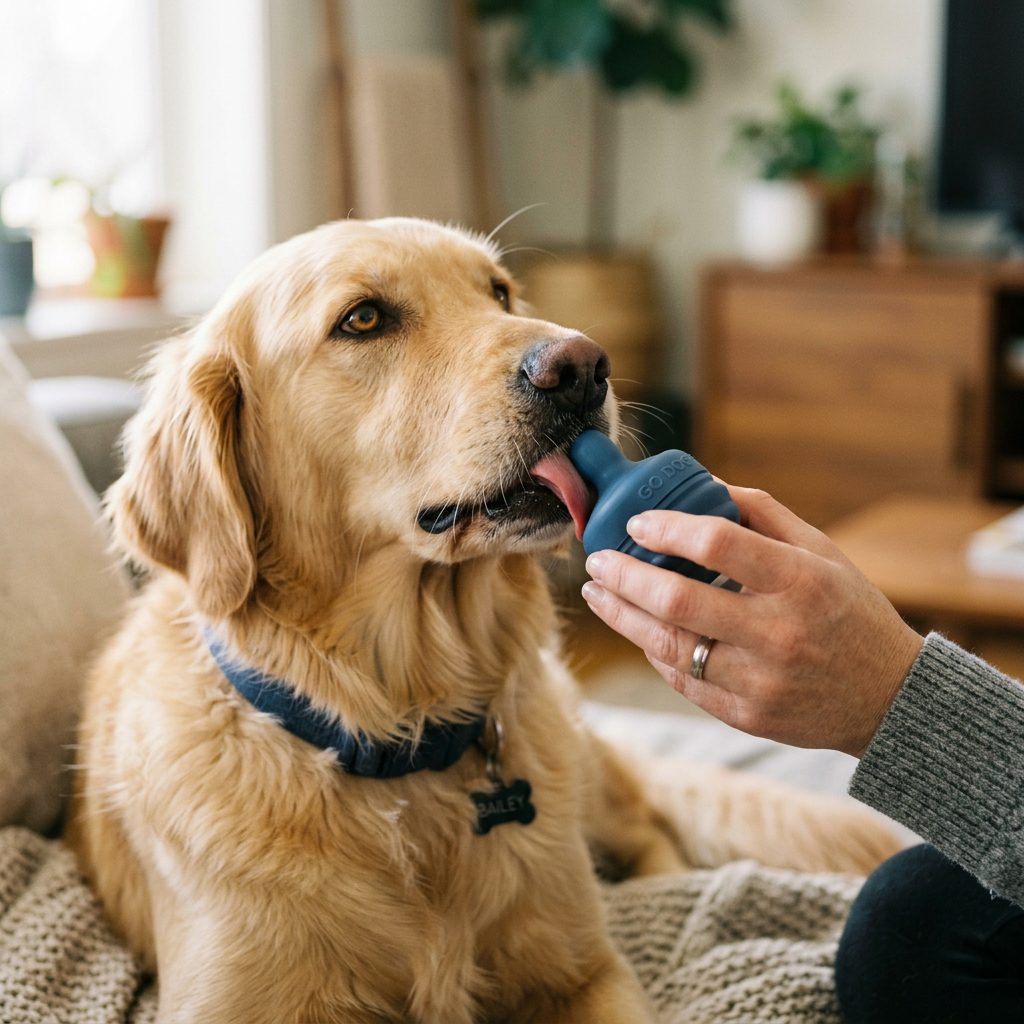
Another massive benefit of the squeeze bottle is that it allows you to control the duration of the reward. If you are teaching your dog to hold a “Stay” or to walk perfectly at your heel, you can hold the bottle down by your side and apply a continuous, tiny amount of pressure. The dog gets a continuous stream of flavor for three to five seconds, which reinforces the behavior much stronger than a single split-second gulp of a solid treat. You get more bang for your buck, and your dog gets a longer-lasting sensory experience.
- Reduces Arousal: Perfect for reactive, fearful, or overly excitable dogs.
- Continuous Reinforcement: Ideal for loose-leash walking and prolonged “stay” commands.
- No Crumb Sniffing: Unlike dry treats that drop crumbs and cause your dog to break focus to sniff the ground, the squeeze bottle goes straight from the nozzle to the tongue.
The Gear: Choosing the Perfect Squeeze Bottle
The Gear: Choosing the Perfect Squeeze Bottle
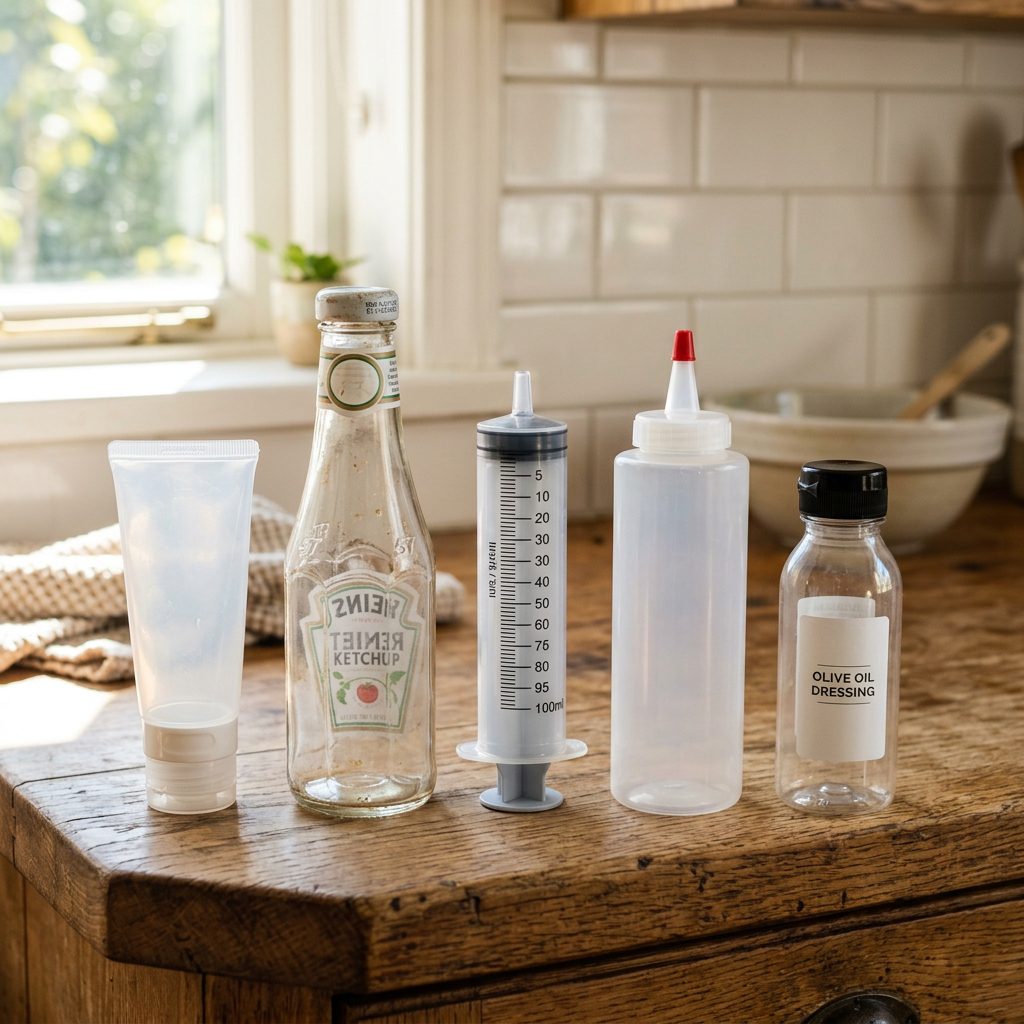
The secret to this entire operation isn’t just the recipe; it is the delivery system. You can’t just use any old container you find in your recycling bin. You need something that can dispense a pea-sized amount of high-value goodness with a quick squeeze, and then immediately stop without leaking all over your treat pouch or your pants.
Silicone Travel Tubes (The Premium Choice)
If you want to do this right, head to the travel section of your local pharmacy, big-box store, or shop online. Look for TSA-approved silicone travel bottles (the kind typically used for shampoo or lotion). They are flexible, incredibly easy to clean, and usually feature a no-drip silicone cross-valve. This valve is the holy grail of the hack because it cuts off the flow of the meat paste the very second you stop squeezing. Brands like GoToob are fantastic, but generic versions work just as well.
Condiment Bottles (The Budget Option)
If you are on a strict budget or need to make massive batches for a multi-dog household, a standard plastic condiment squeeze bottle (like you’d use for ketchup or mustard at a picnic) will absolutely work. Just be aware that you might need to take a pair of scissors and snip the tip to make the opening slightly wider, depending on how smooth you blend your recipe. However, they lack the no-drip valve, so keep a rag handy or store it upright in your pocket!
Syringes (For the Tiny Pups)
If you have a toy breed like a Chihuahua or a Pomeranian, even a travel tube might dispense too much. You can purchase large, needle-less plastic syringes (often used for jello shots or administering liquid medication) online. You can load them up with puree and dispense literal drops of flavor at a time.
The Safe Chef Guide: Crafting the Ultimate High-Value Puree
The Safe Chef Guide: Crafting the Ultimate High-Value Puree
SAFETY DISCLAIMER: I am a Canine Nutrition Hacker, not a veterinarian. The following recipes are intended for intermittent or supplemental feeding only. They are training treats, not complete and balanced meals. Always factor treats into your dog’s daily caloric intake (treats should not exceed 10% of daily calories) to prevent weight gain, and consult your vet if your dog has a history of pancreatitis or specific food allergies.
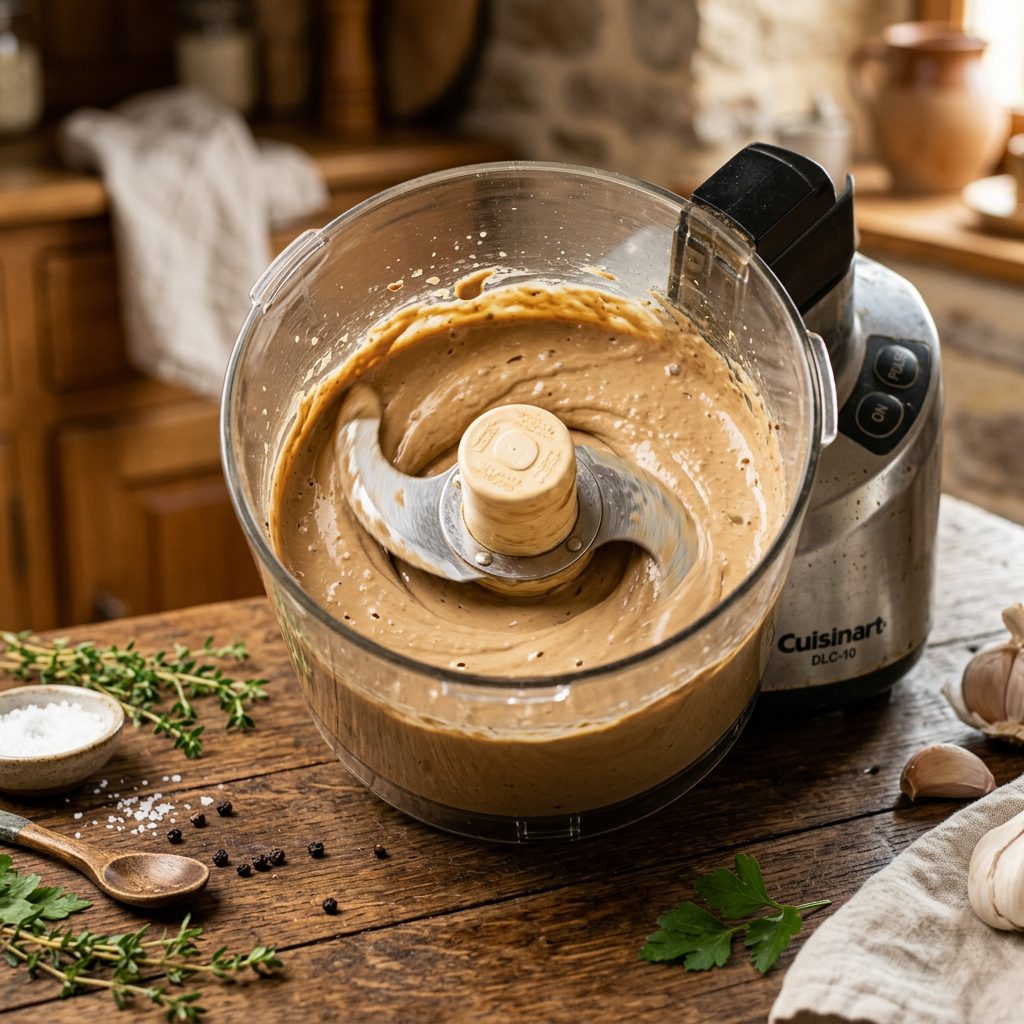
Now for the fun part: the formulation. To make the squeeze bottle hack work flawlessly, you need a puree that is thick enough not to drip, but thin enough to pass through a small nozzle without clogging. It needs to be the consistency of thick pancake batter or smooth hummus. Here are my top three battle-tested recipes.
Recipe 1: The Chicken Liver Special (The Ultimate High-Value Reward)
Liver is the holy grail of dog training. It is incredibly cheap, highly nutrient-dense, and smells absolutely terrible to us—which means dogs lose their minds for it. Warning: Liver is very rich in Vitamin A. Do not feed massive quantities daily, as it can cause loose stools. Use this for your hardest training scenarios.
- Boil 1/2 pound of raw chicken livers in a pot of water until fully cooked (about 10 to 15 minutes).
- Drain the livers, but save the boiling liquid (the broth).
- Place the cooked livers in a blender or food processor.
- Add 2 tablespoons of plain, unsweetened yogurt (fantastic for gut probiotics).
- Blend on high, slowly adding the reserved boiling liquid one tablespoon at a time until you reach a perfectly smooth consistency.
Recipe 2: The Peanut Butter Pumpkin Potion (For Sensitive Stomachs)
If your dog has a sensitive stomach and rich meats cause gastrointestinal distress, this vegan-friendly, fiber-rich option is an absolute lifesaver.
- 1/2 cup of 100% pure canned pumpkin (CRITICAL: Ensure it is NOT pumpkin pie filling, which contains toxic spices and sugars).
- 1/4 cup of natural peanut butter (CRITICAL: Check the label to ensure it contains NO XYLITOL, which is deadly to dogs).
- A splash of warm water or bone broth to thin it out.
- Blend until perfectly creamy and load into your bottle.
Recipe 3: The Tuna Fish Stinker (For Distracting Environments)
When you are training in a highly distracting environment (like a busy park full of squirrels), you need something with a pungent odor to pull your dog’s focus back to you.
- 1 can of tuna packed in water (do not drain the water).
- 1/4 cup of plain cream cheese or cottage cheese.
- Blend until smooth. The water from the tuna usually provides the exact perfect consistency without needing extra liquid.
Batch Cooking: How to Prep, Freeze, and Clean Like a Pro
Batch Cooking: How to Prep, Freeze, and Clean Like a Pro
The only downside to using fresh, filler-free ingredients is that they do not have the indefinite shelf life of chemical-laden commercial treats. If you leave a squeeze bottle of chicken liver puree in your hot car in July, you are going to have a very, very bad time. Here is how you hack the storage process to ensure you always have fresh treats ready to go.
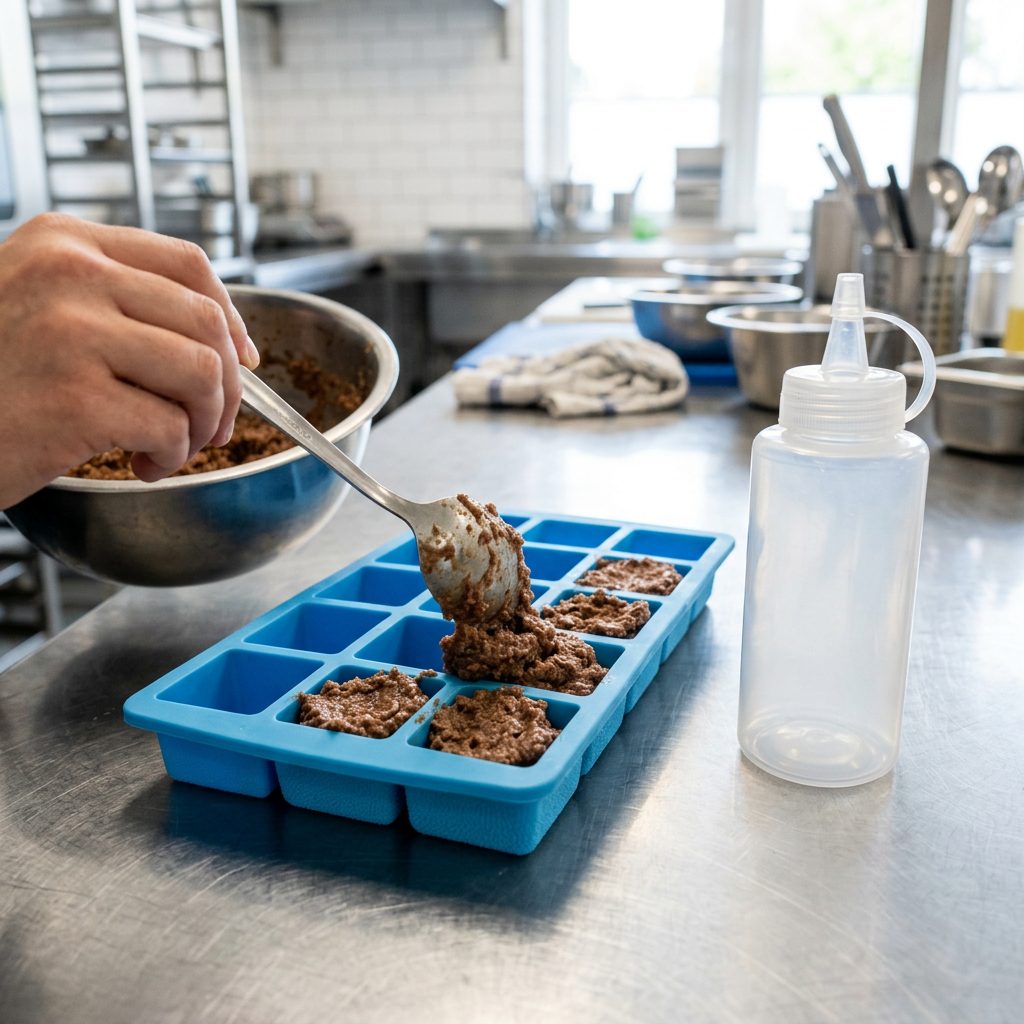
The Silicone Ice Cube Tray Trick
When I make a batch of puree, it usually yields way more than fits in a single 3-ounce travel tube. To prevent waste and save time, I pour the leftover puree into silicone ice cube trays and freeze them solid. Once frozen, I pop the cubes out and store them in a labeled freezer bag. When my training bottle runs empty, I just drop two or three frozen cubes into the squeeze bottle and let them thaw in the fridge overnight. Boom—fresh training treats ready for the next morning’s walk.
Insider Secret: If you are heading out for a summer training session, put the frozen cubes directly into the squeeze bottle right before you leave the house. As you train in the heat, the puree will slowly melt, giving you a perfectly chilled, slushy treat that actually helps cool your dog down from the inside out!
Cleaning Your Gear (Crucial Step)
Hygiene is non-negotiable. Because we are dealing with pureed meats and dairy, you must clean your squeeze bottles thoroughly after every single use to prevent dangerous bacterial growth. This is exactly why I highly recommend the silicone travel tubes with wide mouths. You can easily take them apart, scrub them out with hot, soapy water, and use a small bottle brush or pipe cleaner to get into the nozzle. Always let the silicone parts air dry completely before refilling them. If you notice any funky smells that won’t wash out, soak the silicone in a mixture of hot water and white vinegar for ten minutes.
Troubleshooting the Hack: Overcoming Common Obstacles
Troubleshooting the Hack: Overcoming Common Obstacles
Like any good hack, sometimes things don’t go perfectly on the first try. If you are new to the squeeze bottle method, you might run into a few minor hiccups. Here is how to troubleshoot like a pro.
The Nozzle Keeps Clogging
If you are squeezing the bottle and nothing is coming out, or it suddenly explodes out the side, your puree is either too thick or you didn’t blend it long enough. The Fix: Always blend your mixture for an extra 30 seconds longer than you think you need to. If you are using ingredients with fibers or small chunks (like certain types of canned fish or stringy meats), press the puree through a fine mesh strainer before loading it into the bottle.
My Dog Bites the Bottle
Some highly food-motivated dogs get so excited by the smell of the puree that they lunge and try to chew the plastic nozzle off. The Fix: Do not squeeze the bottle while they are biting it. Pull the bottle away, ask for a “Sit,” and try again. Present the bottle very slowly. The exact second their tongue touches the bottle instead of their teeth, apply a tiny bit of pressure to dispense the treat. You are essentially training a “gentle” cue specifically for the bottle. They will quickly learn that licking produces food, but biting makes the food disappear.
The Puree is Too Runny
If the mixture is dripping out of the bottle without you squeezing it, you added too much liquid. The Fix: Add a thickening agent. A tablespoon of plain oat flour, a dash of extra canned pumpkin, or a little bit of plain mashed potato will thicken it right up without adding harmful fillers.
Conclusion
The pet industry has spent millions of dollars conditioning us to believe that effectively training a dog requires spending a small fortune on tiny, star-shaped pieces of highly processed meat. As savvy dog owners and Canine Nutrition Hackers, it is time we take back control of our wallets, our training routines, and our dogs’ nutrition.
The Squeeze Bottle Hack isn’t just about saving money—though making 500 high-value rewards for under $2 is an absolutely massive win. It is about knowing exactly what is going into your dog’s body. No mystery preservatives, no cheap corn gluten meal, no hidden sugars. Just pure, high-value, real-food motivation that your dog will bend over backward for. Furthermore, by utilizing the power of licking, you are actively helping your dog stay calm, focused, and ready to learn.
So, skip the pet store treat aisle this week. Grab a cheap travel bottle, boil up some chicken liver or crack open a can of tuna, and watch your dog’s focus skyrocket during your next training session. Your wallet, your training goals, and your dog’s health will thank you. Happy hacking!