These Frozen Parsley and Bone Broth Paws Will Cure Your Dog’s Bad Breath Fast
The Root of the Stink: Why Commercial Dental Chews Are Failing You
The Truth About Plaque, Tartar, and Gut Health
To truly fix a problem, we have to understand where it comes from. Most dog owners assume that bad breath (halitosis) is strictly a mouth issue. While it is true that plaque and tartar buildup on the teeth are major culprits, they are only half the story.
Insider Secret: Bad breath does not just start in the mouth; it often starts in the gut. If your dog’s microbiome is out of whack from digesting highly processed kibble and cheap treats, their breath will reflect that internal imbalance.
When a dog eats starchy, carbohydrate-heavy diets, those sugars feed the bad bacteria in their mouth and their digestive tract. These bacteria produce volatile sulfur compounds—which is a fancy scientific term for ‘stuff that smells like rotting eggs.’
Exposing the Commercial Dental Stick Ingredient Label
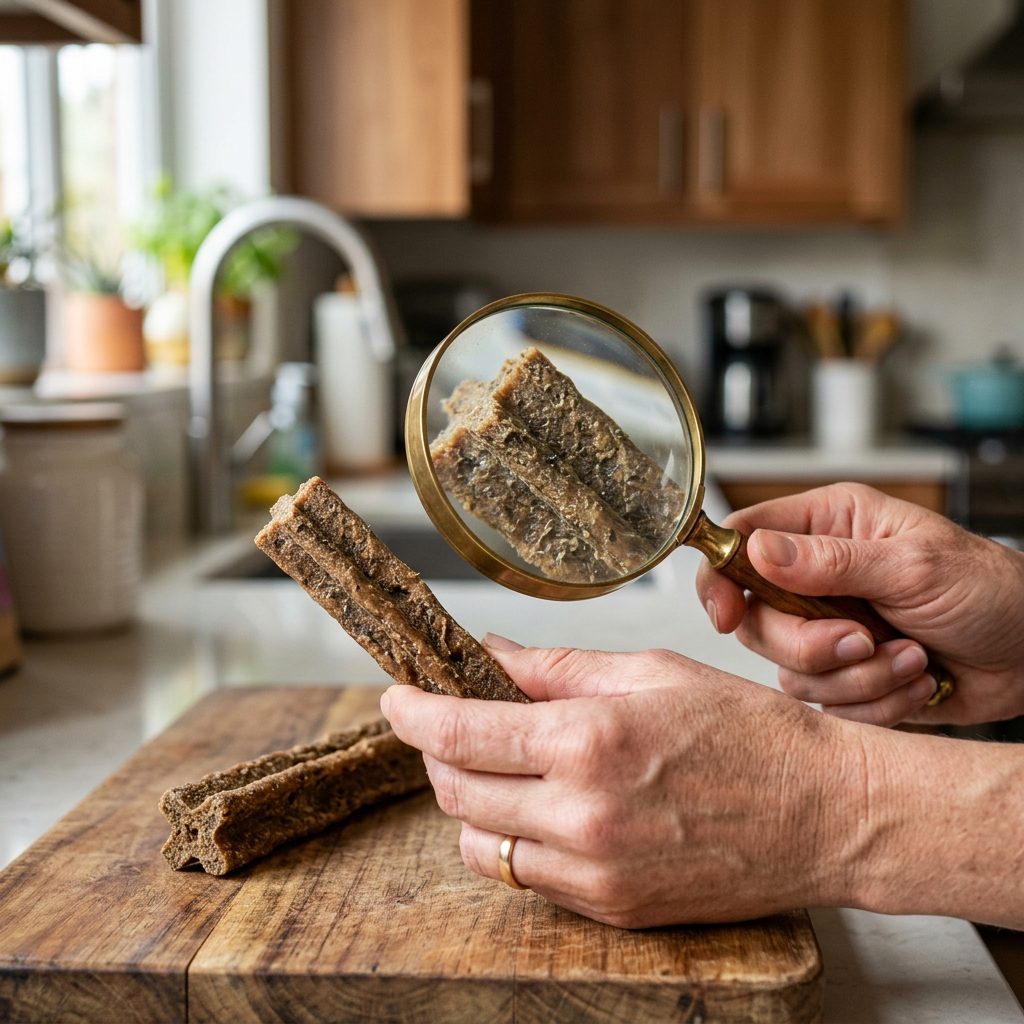
Let us play forensic scientist for a minute. Go to your pantry or look up a bag of popular, name-brand commercial dental chews online. Look closely at the first five ingredients. What do you see? You will likely find wheat flour, wheat gluten, glycerin, gelatin, and powdered cellulose. Do you see any actual meat? Any fresh herbs? No. You are looking at a highly processed stick of starch. These starches stick to your dog’s teeth, feeding the exact bacteria we are trying to eliminate! Furthermore, ingredients like glycerin and artificial preservatives can disrupt your dog’s gut flora. You are paying a premium price for a product that acts as a band-aid, masking the odor temporarily with artificial mint flavors while secretly contributing to the root cause of the plaque. It is time to ditch the fillers and take control of your dog’s dental and digestive health with real, functional ingredients.
The Hero Ingredients: Why Parsley and Bone Broth?
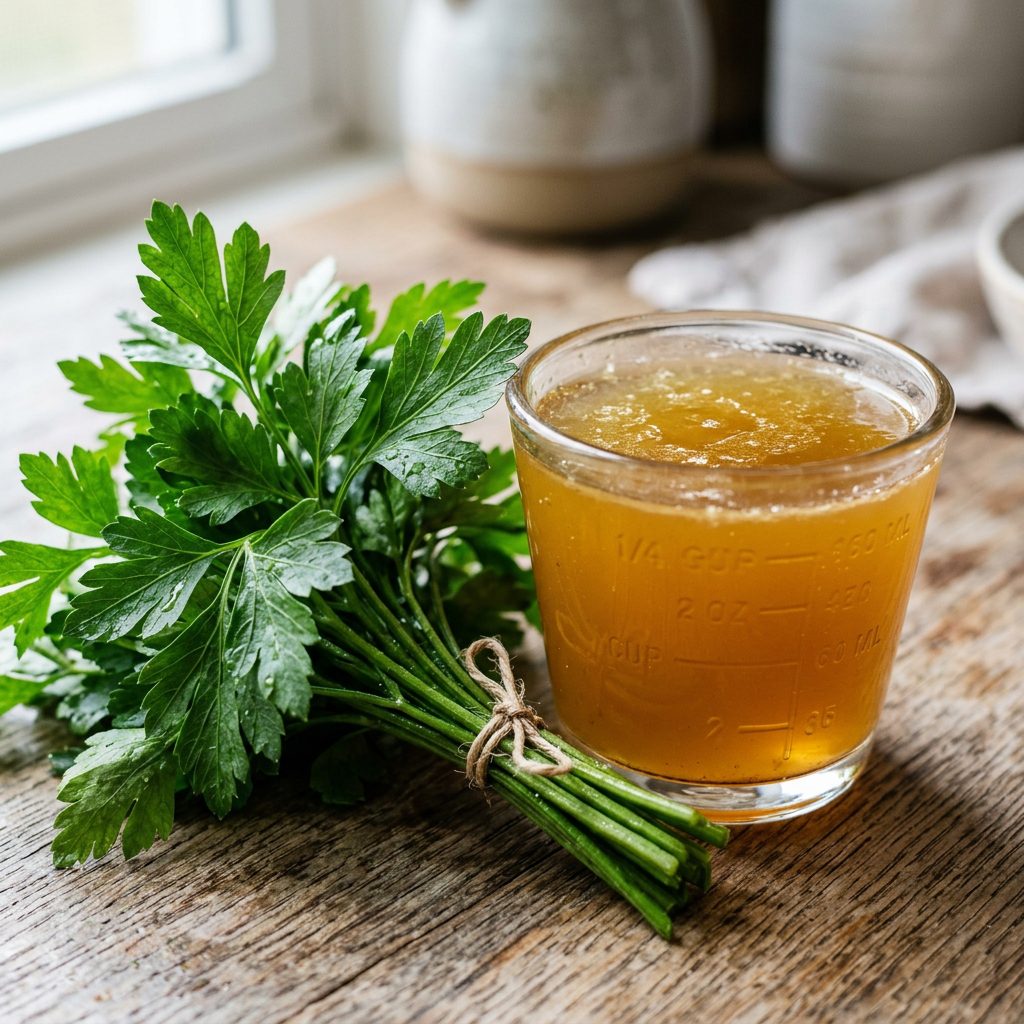
Parsley: Nature’s Ultimate Deodorizer
When you think of parsley, you probably think of that useless green garnish sitting on the side of your diner breakfast plate. But in the canine nutrition hacking world, parsley is a powerhouse. Parsley is incredibly rich in chlorophyll, the green pigment found in plants. Chlorophyll is essentially nature’s deodorizer. It works by binding to toxins in the digestive tract and neutralizing volatile sulfur compounds before they can travel up the esophagus and out of your dog’s mouth. Warning: Always use standard curly or flat-leaf Italian parsley from the grocery store. Never forage for wild parsley or use a plant known as ‘Spring Parsley’ (Cymopterus), which is highly toxic to dogs. Stick to the culinary aisle! Besides freshening breath, culinary parsley is packed with Vitamin K, Vitamin C, and antioxidants that support overall immune health.
Bone Broth: The Gut-Healing Liquid Gold
If parsley is the breath-freshening superhero, bone broth is its trusty sidekick. Remember how we talked about bad breath originating in the gut? Bone broth is loaded with gelatin and collagen, which are essential for repairing and sealing the gut lining. A healthy gut means better digestion, less gas, and significantly better breath. Furthermore, bone broth is highly palatable. Dogs go absolutely wild for the rich, meaty taste. By using bone broth as the base for our frozen paws, we are guaranteeing that your dog will view this breath-freshening hack as a high-value reward rather than a medicinal supplement.
Hacker Tip: Make sure your bone broth is 100% dog-safe. This means absolutely NO onions, NO garlic, and NO added sodium. You can make your own by simmering marrow bones in water and a splash of apple cider vinegar for 24 hours, or you can buy a dedicated pet-safe brand.
The Real Cost Breakdown: DIY vs. Store-Bought
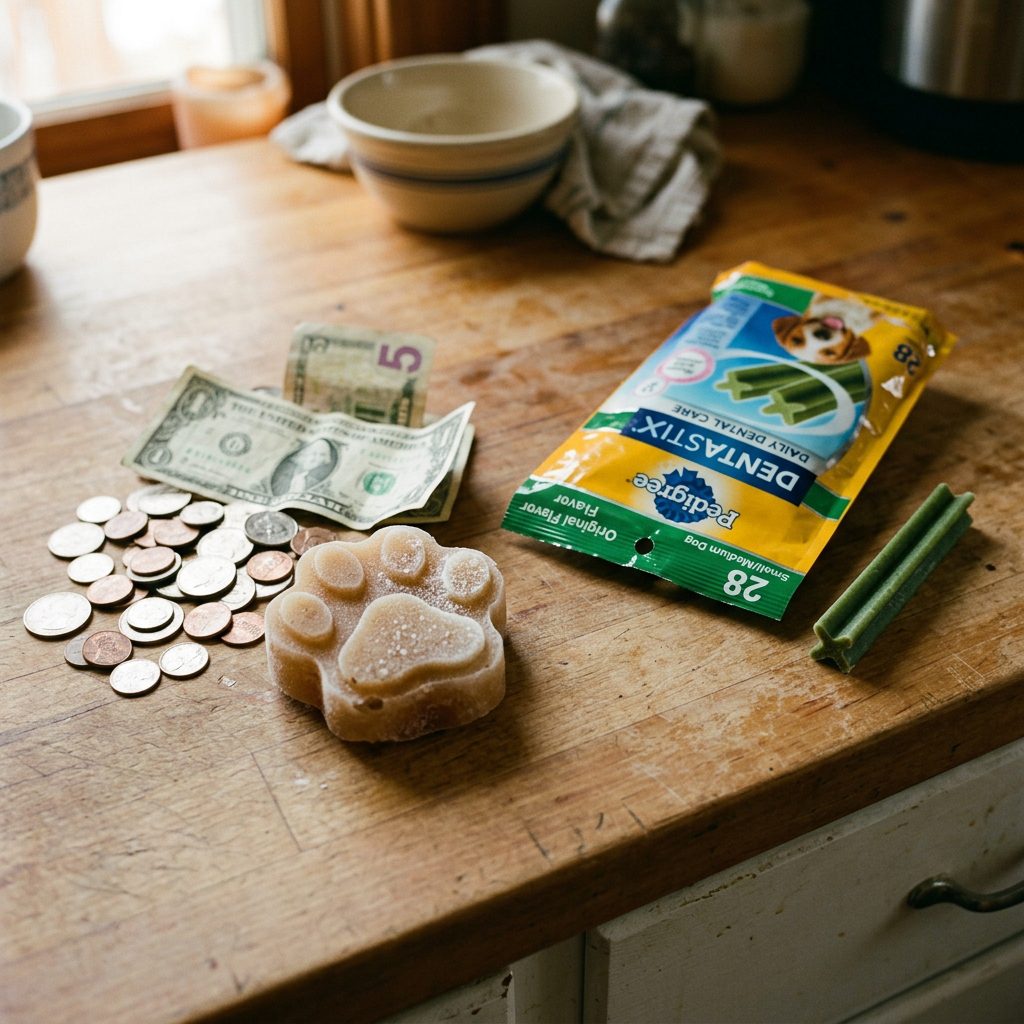
Stop Throwing Your Money Away
As savvy dog owners, we do not just care about nutrition; we care about our wallets. The pet industry is a multi-billion dollar machine designed to convince you that you need their overpriced, heavily marketed products. Let us look at the cold, hard numbers. When you buy premium commercial dental treats, you are paying for the packaging, the marketing, and a massive markup on cheap, starchy ingredients.
Cost Comparison Matrix
| Product Type | Primary Ingredients | Cost Per Day (50lb Dog) | Hacker Verdict |
|---|---|---|---|
| Premium Dental Stick | Potato starch, glycerin, powdered cellulose | $1.50 – $2.00 | Overpriced fillers. Feeds bad bacteria. |
| Budget Dental Chew | Rice flour, wheat starch, artificial poultry flavor | $0.75 – $1.00 | Junk food disguised as a health product. |
| DIY Bone Broth & Parsley Paws | Filtered water, grass-fed bones, fresh parsley | $0.15 – $0.25 | Nutrient-dense, incredibly cheap, and actually works! |
As you can see from the table above, making your own functional treats is a fraction of the cost. You are saving up to $600 a year by switching from premium store-bought sticks to these DIY frozen paws, and you are providing vastly superior nutrition. That is money you can put toward high-quality proteins, puzzle toys, or your dog’s emergency vet fund.
The Safe Chef Guide: Frozen Parsley and Bone Broth Paws Recipe
Actionable Steps to Minty Fresh Breath
It is time to put on your chef’s hat. This recipe is ridiculously simple, requires zero baking, and takes about ten minutes of active prep time.
What You Need (Equipment & Ingredients)
- 1 cup of high-quality, dog-safe bone broth (homemade or store-bought, zero onions/garlic).
- 1/2 cup of fresh curly or flat-leaf parsley (finely chopped).
- Optional: 1 tablespoon of organic, unrefined coconut oil (great for healthy coat and antibacterial properties).
- A food processor or a sharp kitchen knife.
- A silicone mold (paw print shapes make it fun, but standard ice cube trays work perfectly fine).
The Actionable Steps
- Prep the Greens: Wash the fresh parsley thoroughly to remove any dirt or pesticides. Shake off the excess water and chop it very finely. If you have a food processor, pulse it a few times until minced. You want the pieces small enough so they disperse evenly in the liquid.
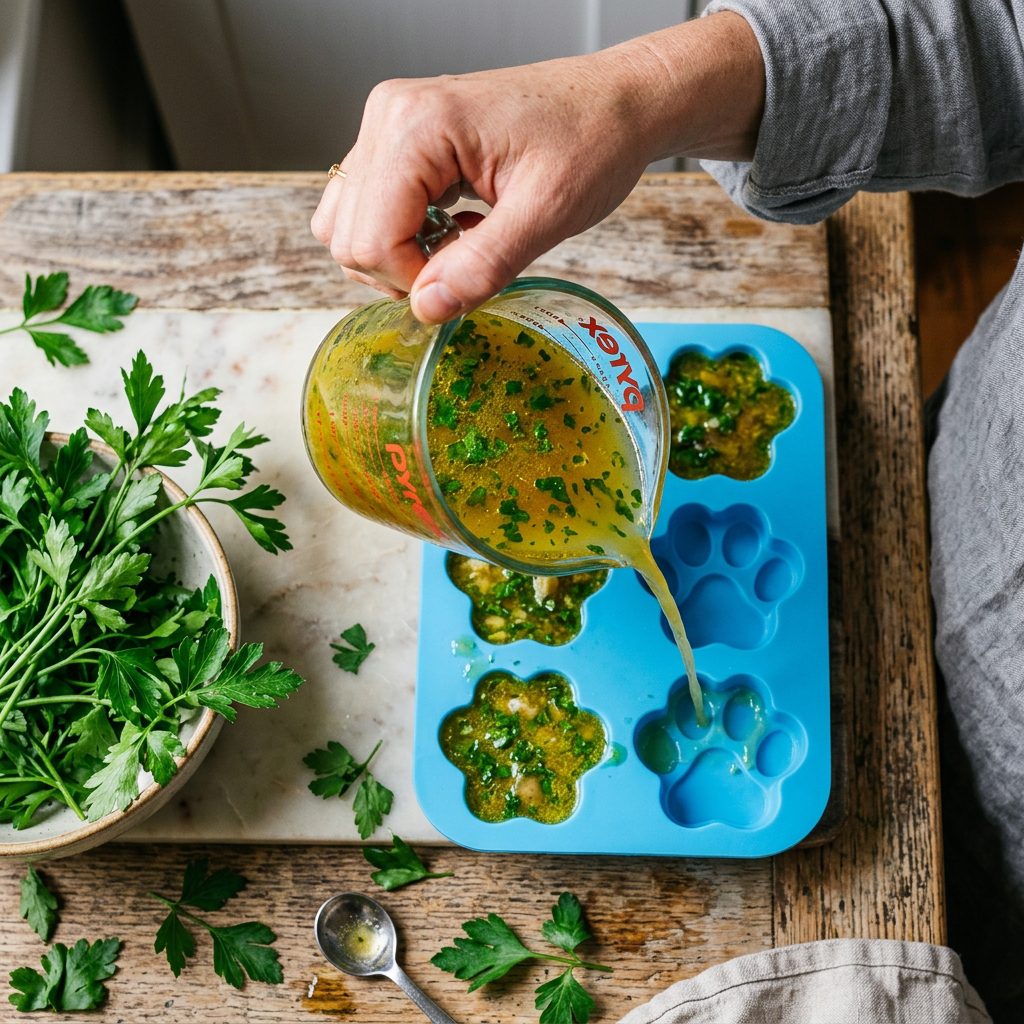
- Mix the Base: In a measuring cup with a pour spout, combine the dog-safe bone broth and the minced parsley. If you are adding coconut oil, melt it slightly so it is liquid, and stir it into the mixture vigorously.
- Fill the Molds: Carefully pour the mixture into your silicone molds. Do not fill them all the way to the brim, as the liquid will expand slightly as it freezes.
- The Freeze: Place the molds on a baking sheet to keep them stable, and place them in the freezer for at least 4 to 6 hours, or until completely solid.
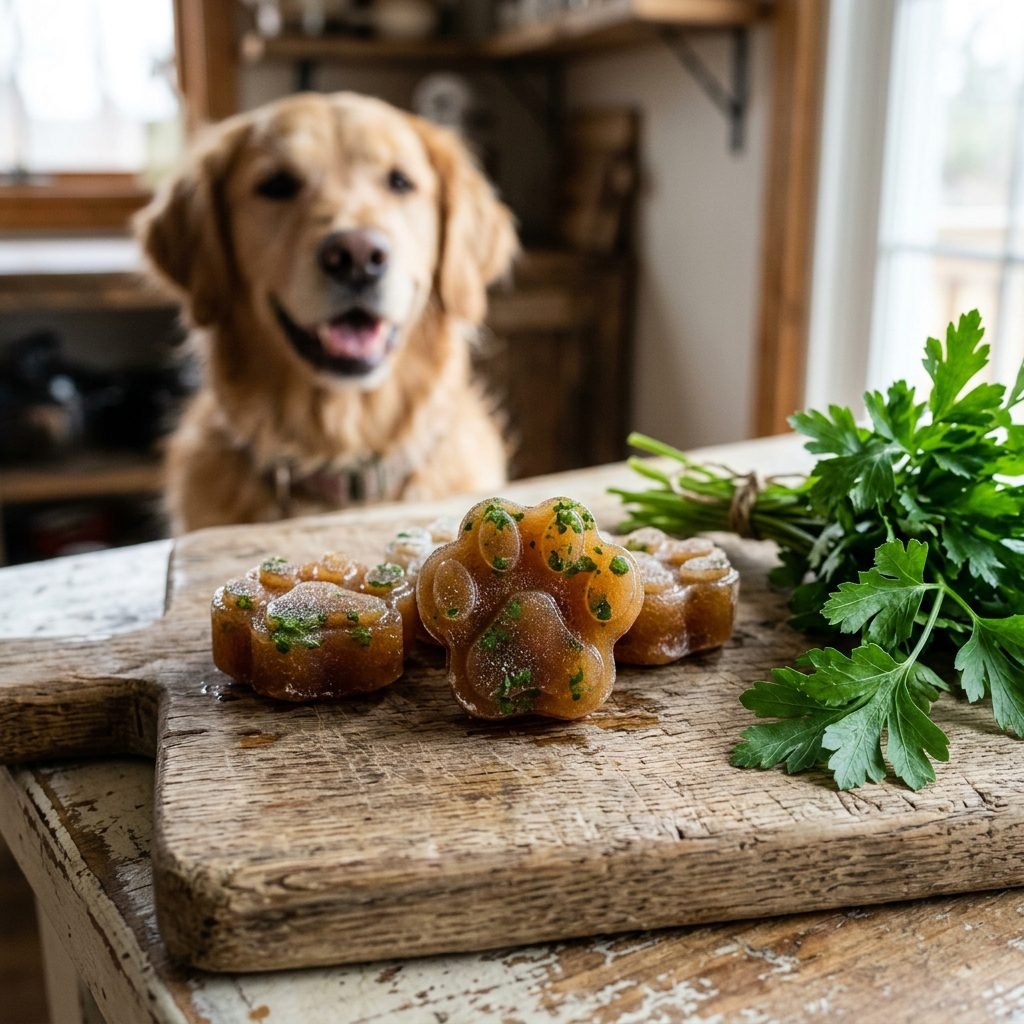
- Pop and Serve: Pop the frozen paws out of the mold and serve one to your dog!
Insider Secret: If your bone broth is homemade and highly concentrated (like meat jello), you can dilute it 50/50 with filtered water to make the batch stretch further without losing the palatability.
Batching, Storage Hacks, and Troubleshooting
Maximizing Your Prep Time
We are busy people. Nobody wants to be making dog treats every single day. The beauty of this recipe is that it is perfectly designed for batching. I highly recommend buying three or four silicone molds and making a massive batch on a Sunday afternoon.
Storage Hacks to Prevent Freezer Burn
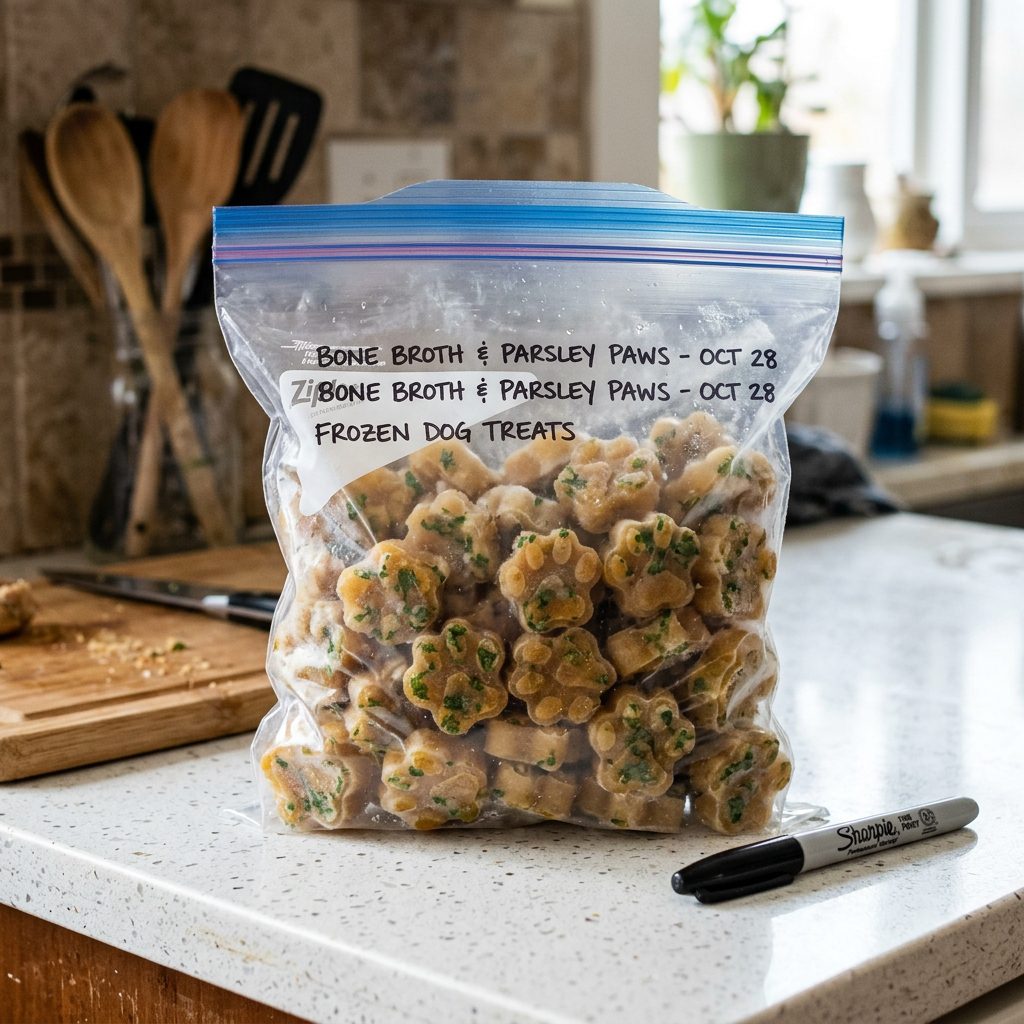
Once your bone broth and parsley paws are completely frozen, do not leave them in the open silicone mold. The dry air of the freezer will eventually cause freezer burn, degrading the quality and taste of the treat. Instead, pop all the frozen paws out of the mold and transfer them into an airtight, freezer-safe ziplock bag or a vacuum-sealed container. Label the bag with the date. When stored this way, these breath-freshening treats will easily last for up to three months in the freezer.
Serving Suggestions and Picky Eaters
For a medium-sized dog (around 50 lbs), one to two frozen paws a day is the perfect amount to maintain fresh breath and support gut health. Give it to them outside or on a washable mat, as as the frozen broth melts, it can leave a little wet spot on your carpet. Troubleshooting: What if your dog will not eat it? While rare, some dogs are suspicious of cold textures. If your dog sniffs the frozen paw and walks away, try letting it sit at room temperature for five minutes so the outside gets slightly soft and the meaty aroma of the bone broth activates. You can also toss the frozen cube directly into their regular bowl of kibble or raw food. As it melts, it creates a delicious, breath-freshening gravy that even the pickiest eaters cannot resist.
Conclusion