Instant Teething Relief: Frozen Baby Carrot Teething Treats For Puppies
Welcome to the Teething War Room
If you’re reading this, you’re likely in the thick of it. Your ankles are shredded, your favorite pair of leather loafers looks like it went through a woodchipper, and your puppy—that sweet little ball of fluff—has transformed into a relentless ‘land shark.’ Welcome to the puppy teething phase. As the Canine Nutrition Hacker, I’ve seen it all. I’ve watched well-meaning owners drop $15.00 on a bag of ‘specialized’ teething rings that are basically glorified sugar sticks with a side of corn gluten meal. We aren’t doing that today. We’re going to use a secret weapon that’s sitting in your refrigerator right now: The humble baby carrot. In this deep dive, I’m going to show you why frozen baby carrots are the ultimate hacker’s tool for teething relief, how to prep them safely, and why your puppy’s gut will thank you for skipping the commercial junk.
The Forensic Breakdown: Carrots vs. Commercial Teething Rings
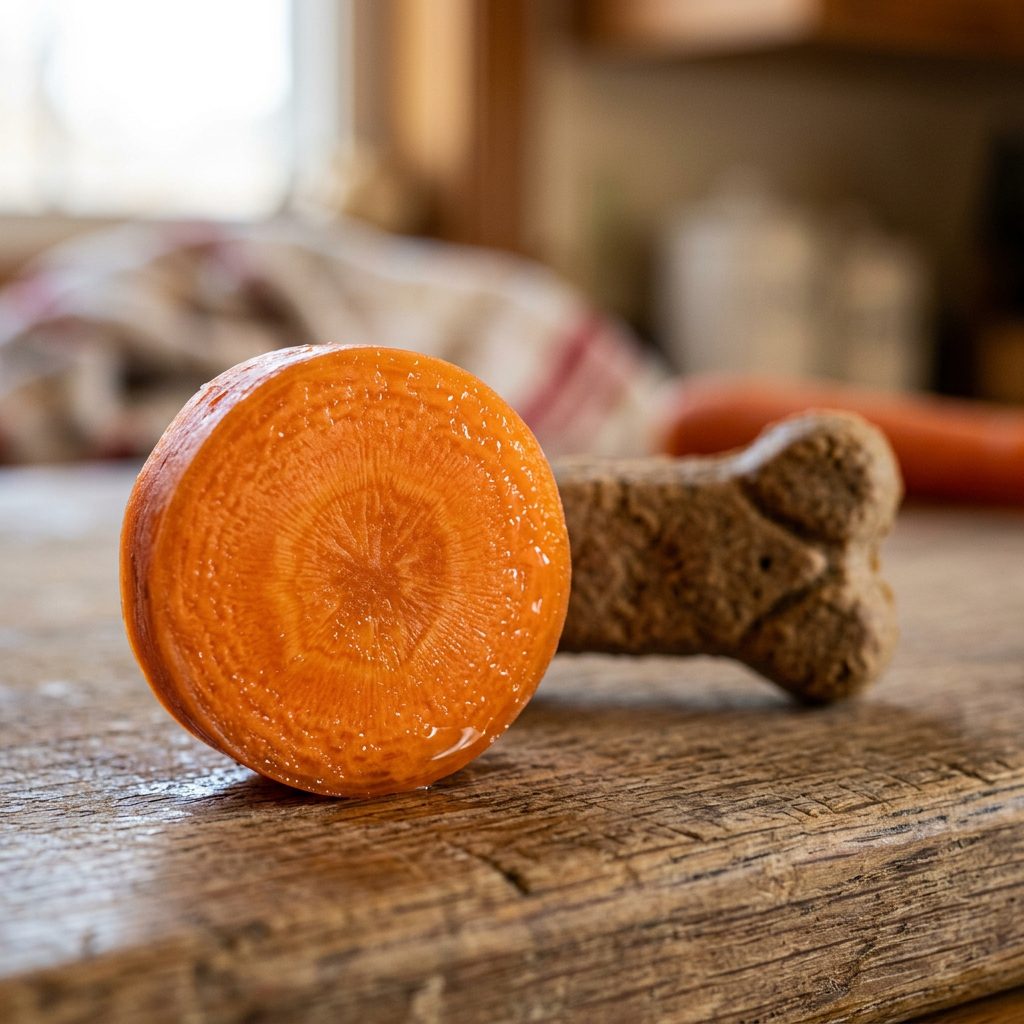
When you walk down the treat aisle at a big-box pet store, you’re bombarded with ‘Teething Relief’ packaging. But as a savvy owner, you need to look past the cute puppy photos on the bag and flip it over to the First 5 Ingredients. Most commercial puppy teething treats are loaded with rice flour, glycerin, and ‘animal digest’—a vague term for mystery meat by-products. These ingredients provide zero nutritional value and can actually cause upset stomachs in young puppies.
The Nutritional Edge of Carrots
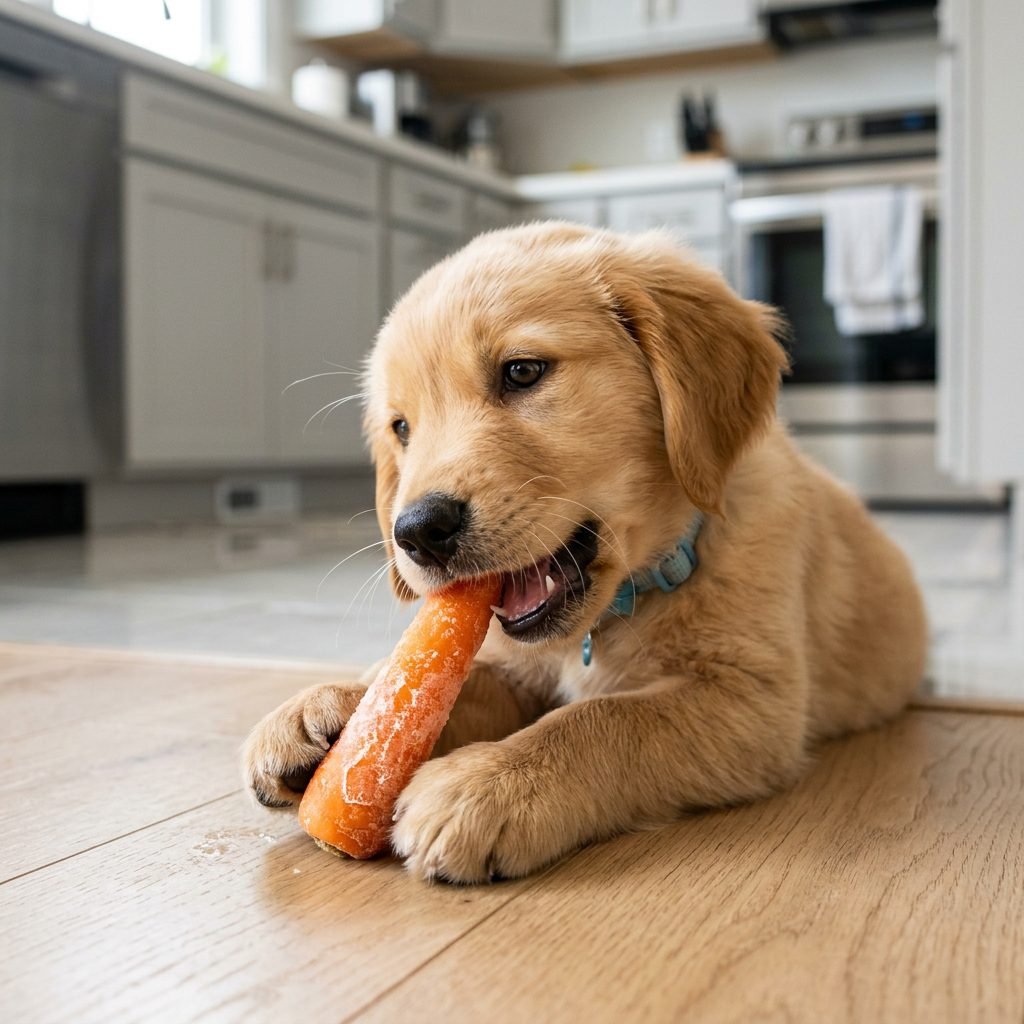
Carrots aren’t just crunchy; they are nutritional powerhouses. They are low in calories (perfect for preventing puppy obesity) and high in Beta-carotene, which the body converts to Vitamin A. This supports eye health, skin integrity, and a shiny coat. More importantly, for a teething puppy, the mechanical action of chewing a frozen carrot helps massage the gums and encourages the shedding of baby teeth naturally.
Hacker Tip: Don’t pay the ‘puppy tax’ on specialized snacks. A 2lb bag of organic baby carrots costs about $2.50. A 6oz bag of ‘Teething Rings’ can cost $12.00. That is a 480% markup for inferior ingredients.
| Feature | Frozen Baby Carrots | Commercial Teething Rings |
|---|---|---|
| Primary Ingredient | Whole Carrot | Rice Flour / Wheat Starch |
| Calorie Count | Extremely Low (~4 calories) | High (~50-100 calories) |
| Cooling Effect | Natural & Sustained | Fast-melting / None |
| Cost Tier | Ultra-Budget | Premium / Overpriced |
| Verdict | The Hacker’s Choice | The Marketing Trap |
The Safe Chef Guide: Preparing the Ultimate Frozen Treat
SAFETY DISCLAIMER
I am not a veterinarian. While carrots are generally safe, always supervise your puppy during chew time. Frozen carrots can be a choking hazard if swallowed whole. If your puppy is a ‘gulper’ rather than a ‘chewer,’ you must modify the size (use full-sized large carrots instead of baby carrots). Always consult your vet before introducing new foods into a puppy’s diet.
The Prep Process
To maximize the soothing effect, we aren’t just tossing them in the freezer. We want to optimize the texture. Follow these steps for the perfect frozen relief:
- Selection: Choose organic baby carrots to avoid pesticide residue. If your puppy is a large breed (like a Lab or Shepherd), use full-sized carrots to prevent the ‘one-gulp’ choking risk.
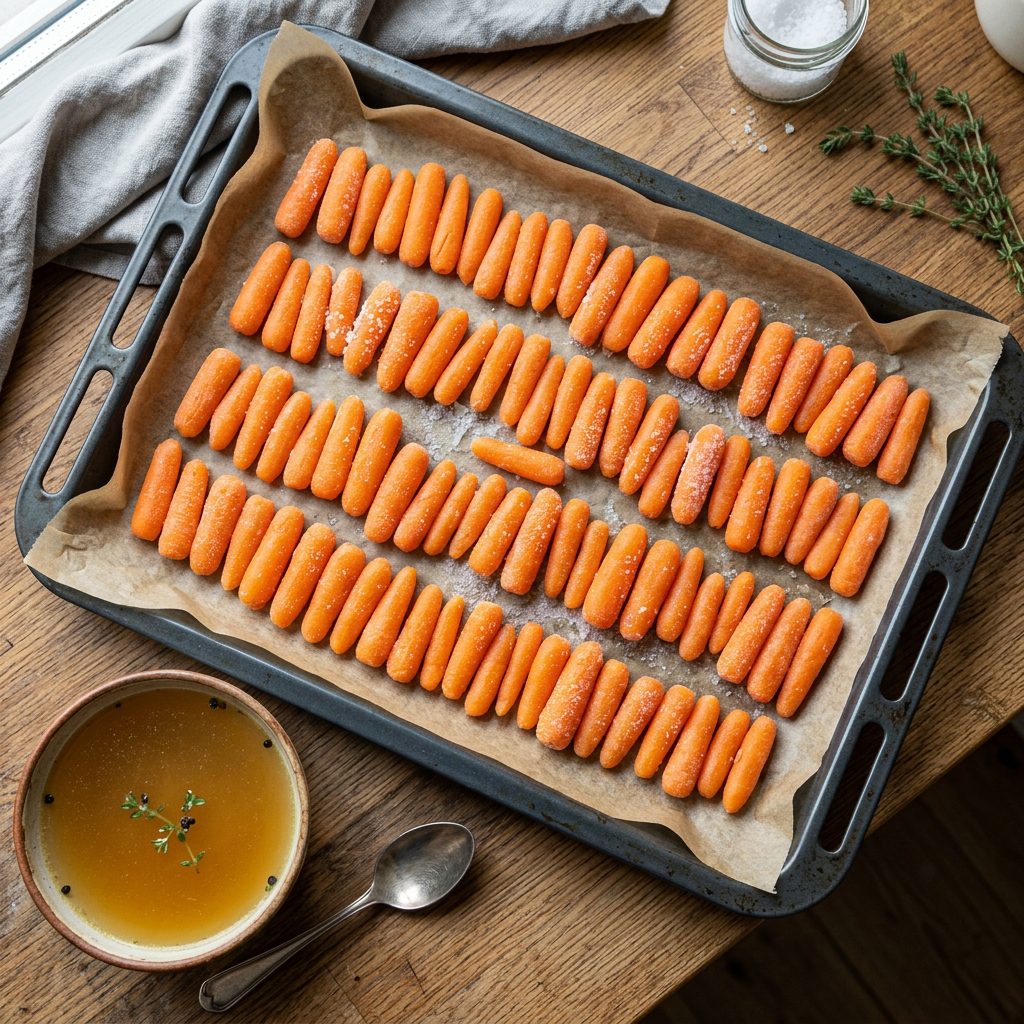
- The Soak (Optional): For an extra nutritional punch, soak the carrots in low-sodium beef or chicken bone broth for 30 minutes before freezing. This infuses them with flavor and collagen.
- The Flash Freeze: Lay the carrots in a single layer on a baking sheet lined with parchment paper. This prevents them from clumping together into a ‘carrot-brick.’
- Storage: Once frozen solid (about 4 hours), transfer them to a freezer-safe silicone bag.
Real Cost Breakdown
If you give your puppy two teething treats a day:
- Store-bought: $1.80 per day (Approx. $54/month)
- Frozen Carrots: $0.12 per day (Approx. $3.60/month)
That is a savings of over $50.00 a month that you can put toward high-quality protein or a better puppy training class.
The Science of Cold: Why Frozen is Better
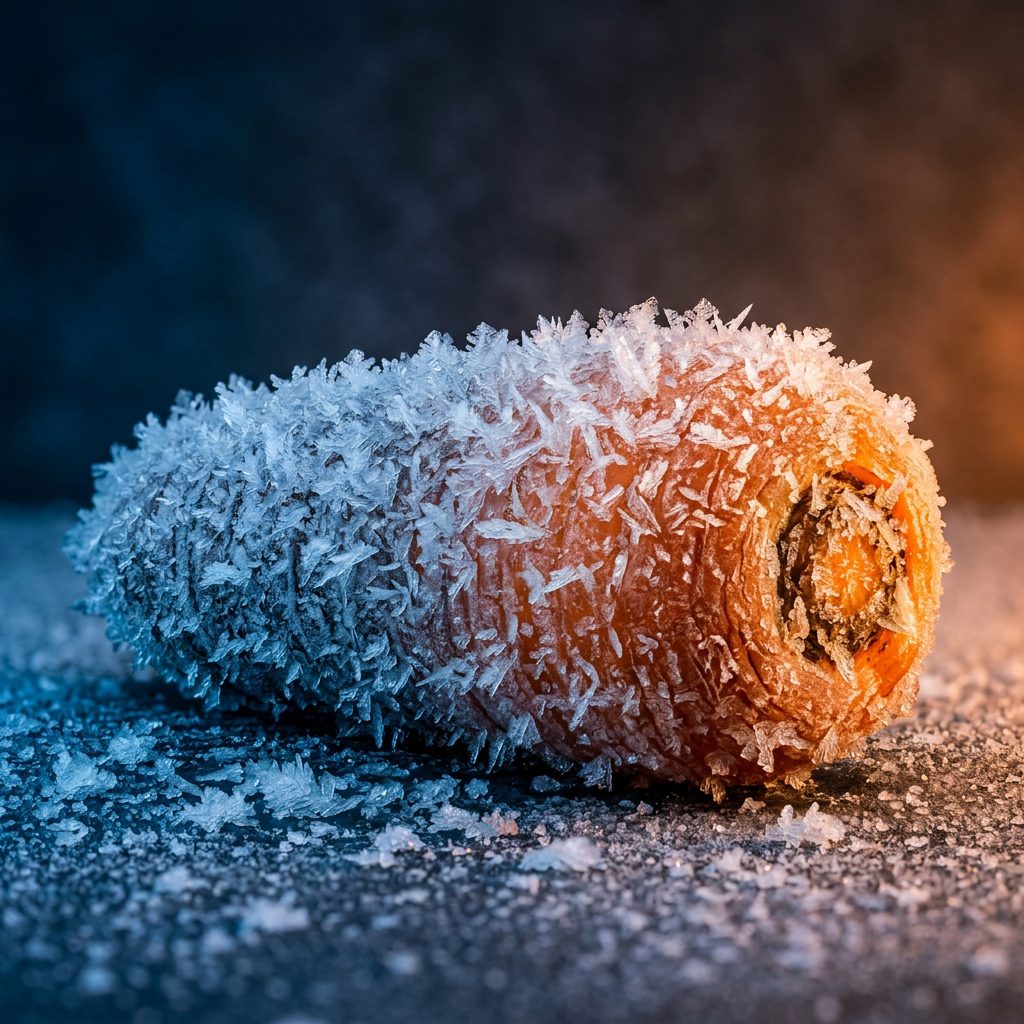
Why does freezing the carrot matter? When a puppy’s adult teeth begin to push through the gums, it causes significant inflammation and heat. This is why they seek out cold things to chew on (like your metal table legs). The cryotherapy (cold therapy) provided by the frozen carrot causes vasoconstriction—it shrinks the blood vessels in the gums, which numbs the area and reduces swelling. It’s essentially a natural, edible ice pack.
The Fiber Factor
Puppies often struggle with loose stools as they transition between foods or pick up ‘treasures’ in the backyard. The insoluble fiber in carrots acts like a gentle broom for the digestive tract, helping to firm up stools. However, moderation is key. Too many carrots can lead to a fiber overload, resulting in gas. Stick to 1-3 baby carrots a day depending on your puppy’s size.
Insider Secret: If your puppy has a sensitive stomach, blanch the carrots (boil for 2 minutes then plunge into ice water) before freezing. This breaks down some of the tough cellular walls, making them easier to digest while keeping the crunch.
Common Pitfalls and How to Avoid Them
Even the best ‘hacks’ have risks if you aren’t careful. Here is how to keep your puppy safe while they enjoy their carrot:
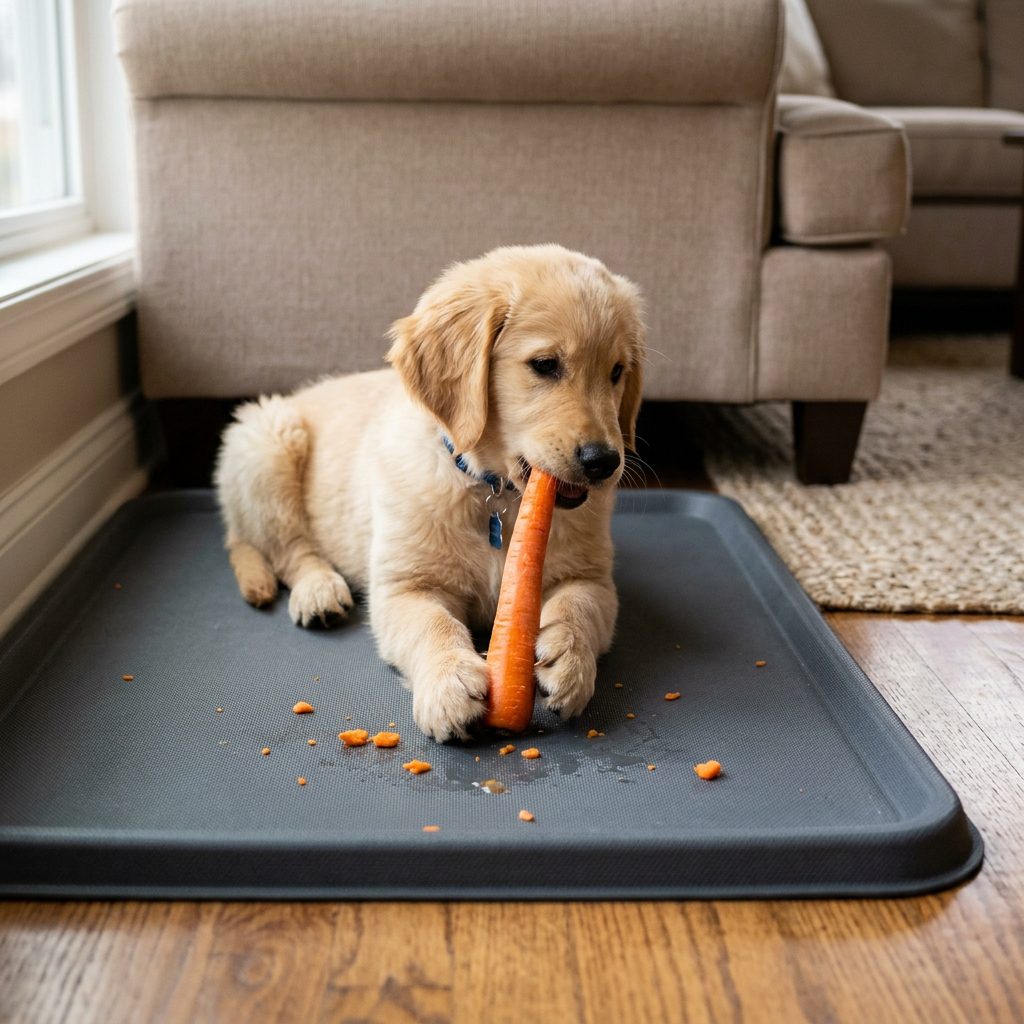
- The Choking Hazard: This is the big one. If the carrot gets small enough to be swallowed whole, take it away. Never leave a puppy unattended with a frozen treat.
- The Orange Mess: Carrots contain natural dyes. If your puppy chews them on a white shag carpet, you’re going to have an orange stain. Encourage chewing on a towel, in their crate, or on a hard floor.
- Vitamin A Toxicity: While rare, overdoing carrots over a long period can lead to too much Vitamin A. Stick to the ‘10% Rule’—treats should never make up more than 10% of your dog’s daily caloric intake.
Hacker Recipe: The ‘Carrot-Sicle’
If your puppy finds plain carrots boring, try this: Puree 3 carrots with half a cup of plain, unsweetened Greek yogurt. Pour the mixture into a silicone mold and freeze. You get the teething relief of the ice plus the probiotics from the yogurt to support their developing immune system.
Conclusion
Take Back Your Home (And Your Sanity)
Puppy teething doesn’t have to be an expensive, stressful nightmare. By choosing frozen baby carrots, you are opting for a solution that is nutritionally superior to 90% of the junk on pet store shelves, significantly cheaper, and incredibly effective at numbing sore gums. You’re not just a dog owner; you’re a Canine Nutrition Hacker. You’ve looked at the data, analyzed the costs, and chosen the path that benefits both your puppy’s health and your bank account. So, clear a spot in your freezer, grab a bag of carrots, and give your ‘land shark’ the relief they deserve. Your baseboards will thank you.