Choking Hazard! How To Train Your Puppy To Eat Slower Without Buying A Costly Slow Feeder
Hey there, savvy dog parents! If you are reading this, chances are you have a furry little vacuum cleaner at home. You put the food bowl down, turn around for two seconds to grab a paper towel, and poof! The food is gone, and your puppy is looking at you as if they have not been fed in weeks. While it might seem a little comical at first, a puppy that inhales their meals is actually facing a serious health risk.
As a canine specialist, I have seen countless pet parents stress over their dog’s speed-eating habits. The immediate worry is often choking, but the long-term dangers, like Gastric Dilatation-Volvulus (commonly known as bloat), are even more terrifying. The pet industry’s solution? Sell you a thirty-dollar plastic puzzle bowl. While those slow feeders can be great, you absolutely do not need to spend your hard-earned cash to fix this problem.
“Training your puppy to eat slower is not just about changing their mealtime pace; it is about teaching impulse control, improving digestion, and ultimately, keeping them safe.”
In this comprehensive guide, we are going to dive deep into why your dog eats like it is a race, the hidden dangers of speed-eating, and most importantly, how to train your puppy to slow down using free household items and proven behavioral techniques. Grab a cup of coffee, get comfortable, and let us transform your frantic eater into a polite, paced diner!
Why Fast Eating is a Real Danger for Puppies
Before we jump into the solutions, it is crucial to understand exactly why we need to intervene. Dogs are opportunistic scavengers by nature. In the wild, eating fast meant you got the lion’s share (or rather, the wolf’s share) of the meal before competitors could steal it. However, in your safe, comfortable kitchen, this evolutionary trait is a massive liability.
The Big Three Dangers
- Choking: When a puppy gulps their food without chewing, kibble can easily become lodged in their throat. This is a terrifying experience for both the dog and the owner, requiring immediate emergency intervention.
- Poor Digestion and Gas: Swallowing food whole means the stomach has to work overtime. Furthermore, gulping food forces the puppy to swallow large amounts of air, leading to excessive flatulence and stomach discomfort.
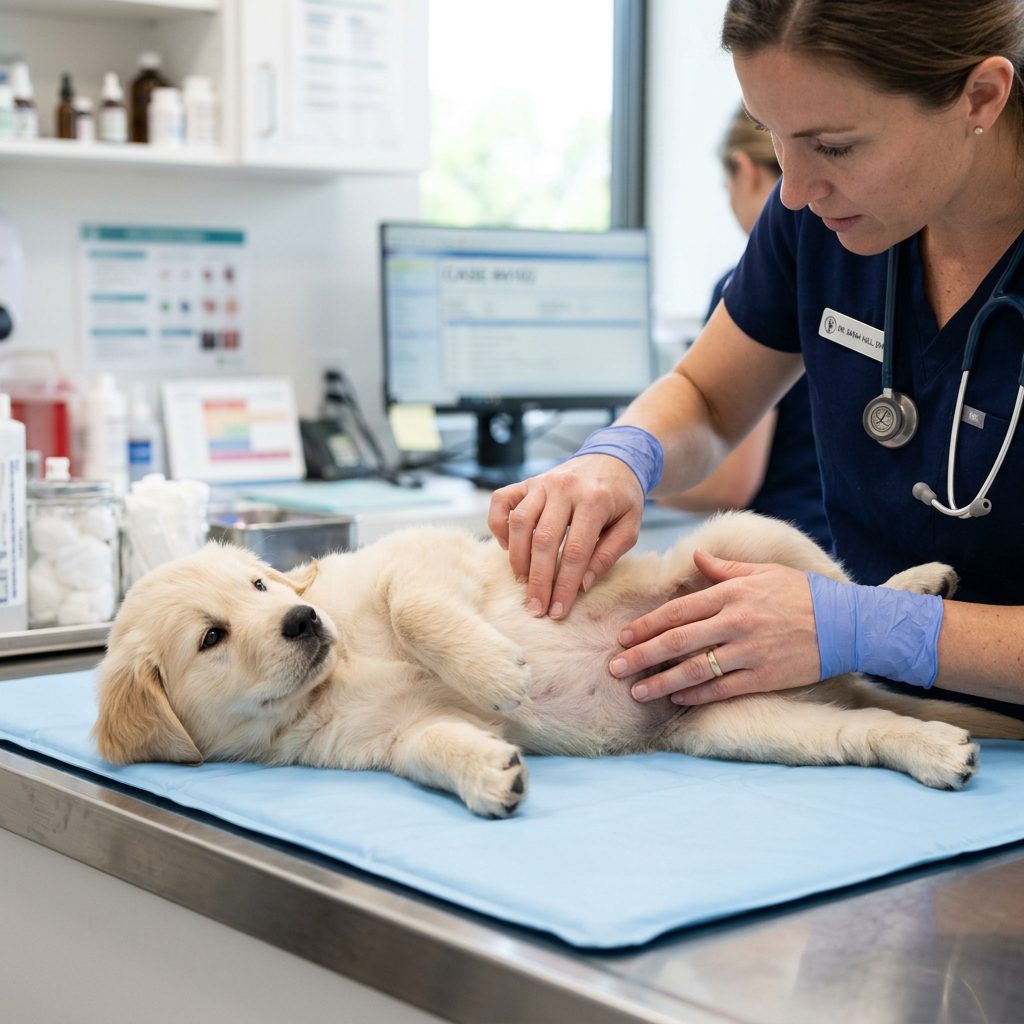
- Gastric Dilatation-Volvulus (Bloat): This is the most severe risk. When a dog swallows too much air along with their food, their stomach can expand like a balloon and actually twist on itself, cutting off blood supply. Bloat is a life-threatening veterinary emergency.
To help you monitor your puppy’s post-meal health, here is a quick reference guide to normal behavior versus warning signs of bloat or distress.
| Condition | Normal Post-Meal Behavior | Warning Signs (Seek Vet Immediately) |
|---|---|---|
| Breathing | Steady, calm panting or resting breath rate. | Labored breathing, heavy panting, or pale gums. |
| Abdomen | Soft, relaxed, and normal in size. | Swollen, hard to the touch, or visibly distended. |
| Behavior | Relaxed, sleepy, or ready for gentle play. | Pacing, restlessness, looking at their stomach, whining. |
| Digestion | Normal burping or passing gas occasionally. | Unproductive vomiting (retching but nothing comes up). |
Household Hacks: DIY Slow Feeders You Already Own
You do not need to rush to the pet store to fix this issue. Some of the most effective slow feeders are items you already have lying around your house. Let us explore some incredibly easy, zero-cost DIY hacks to put the brakes on your puppy’s eating speed.
The Muffin Tin Method
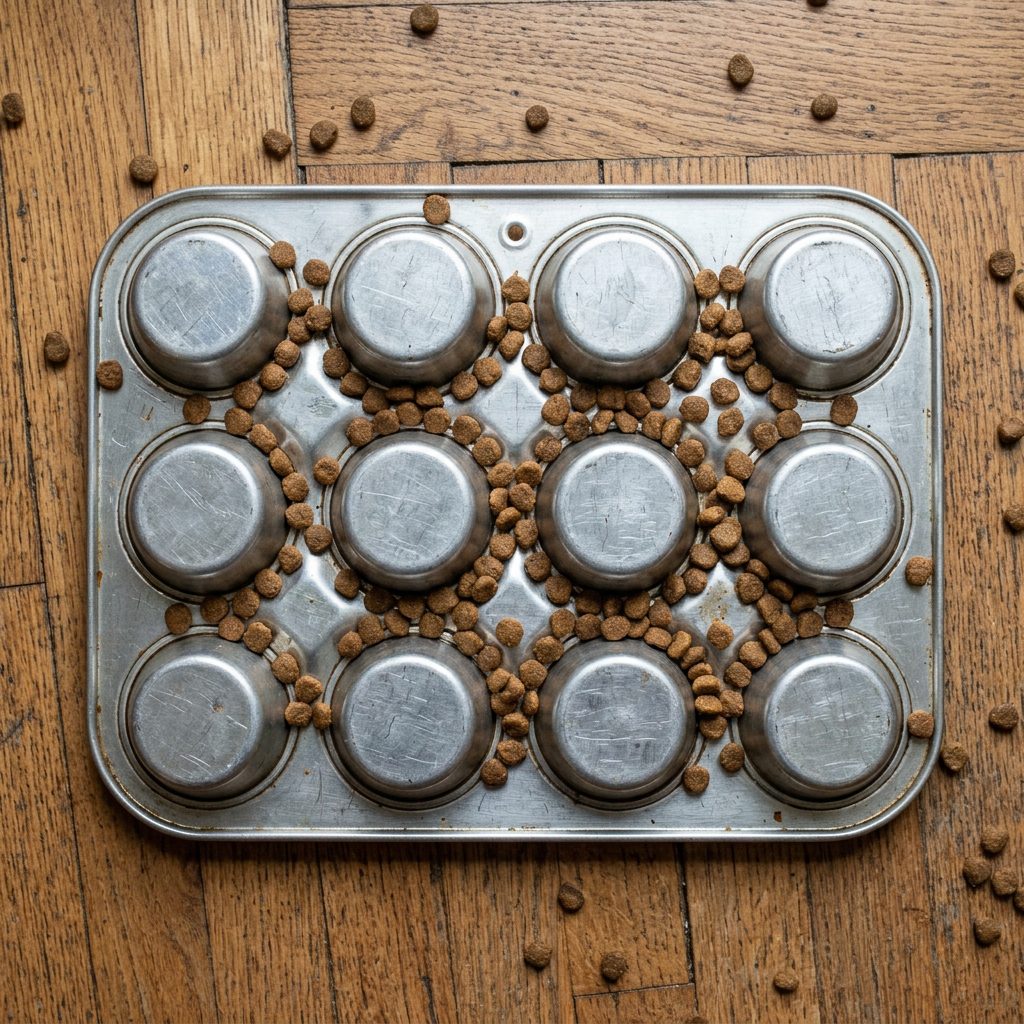
This is a classic trainer hack. Take a standard 12-cup metal or silicone muffin tin and turn it upside down. Scatter your puppy’s kibble between the raised bumps of the upside-down cups. Because the kibble falls into the narrow valleys between the cups, your puppy has to use their tongue to fish out the pieces one by one, drastically slowing down their intake.
The Tennis Ball Trick
If you have a standard dog bowl and a clean, heavy-duty tennis ball (or any safe, large toy), simply place the ball right in the middle of the food bowl. Your puppy will have to constantly nudge and push the ball out of the way to get to the kibble underneath. Crucial Safety Note: Ensure the ball is significantly larger than your dog’s mouth to prevent it from becoming a choking hazard itself!
The Rolled Towel Snuffle Mat
- Take an old, clean bath towel and lay it flat on the floor.
- Sprinkle your dog’s entire meal evenly across the towel.
- Starting from one end, tightly roll the towel up into a long tube.
- Tie the tube into a loose knot if your dog is a smart cookie, or just leave it rolled for beginners.
Your puppy will have to use their nose and paws to unroll the towel and sniff out the kibble. This not only slows them down but also provides excellent mental stimulation, tiring them out just as much as a physical walk!
Step-by-Step Training: The Impulse Control Method
While household hacks are fantastic management tools, true behavioral change comes from training. Teaching your puppy impulse control around food is one of the most valuable lessons they can learn. It teaches them that calm behavior, not frantic rushing, is what earns them their meal.
Step 1: The ‘Wait’ Command at Mealtime
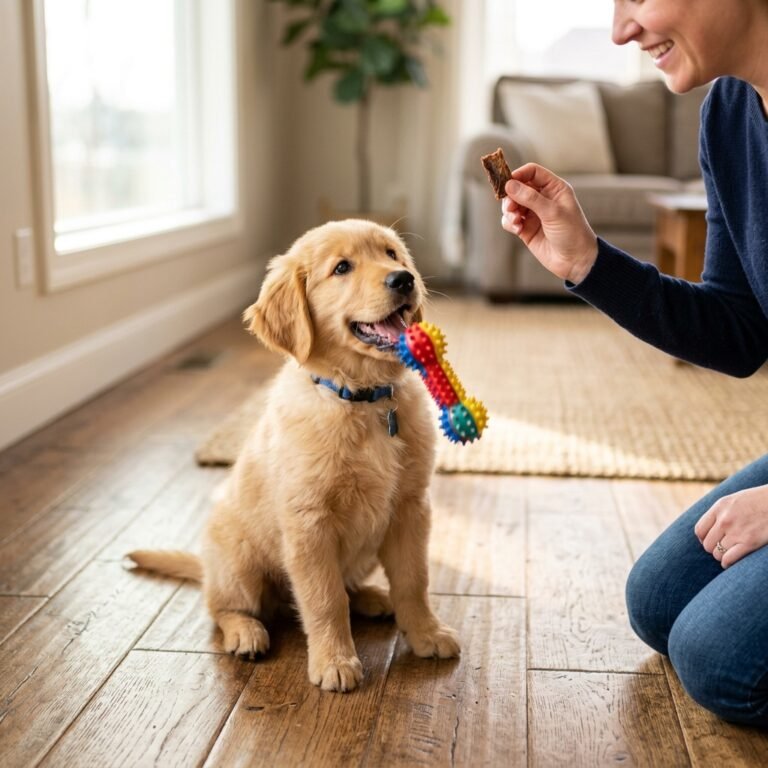
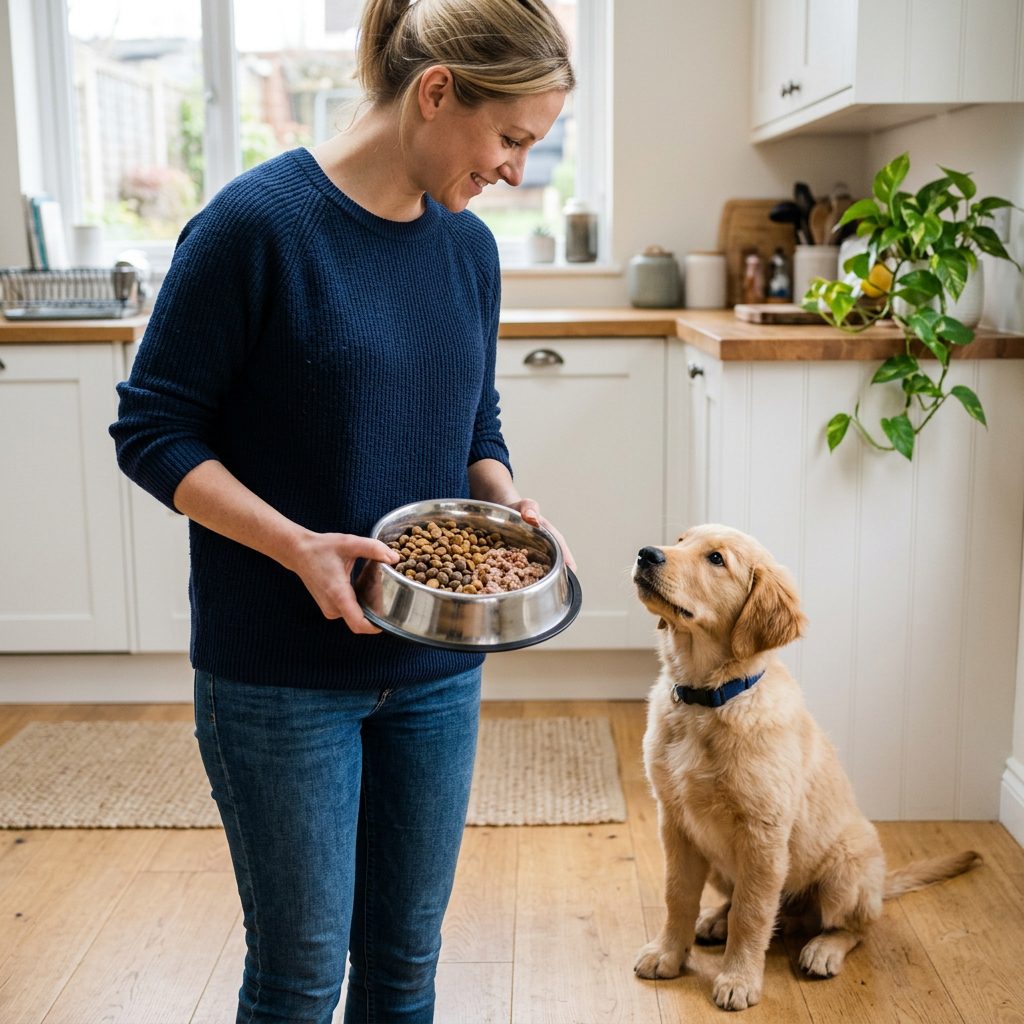
Start by holding your puppy’s bowl of food at chest level. Your puppy will likely be jumping and whining. Stand completely still and wait. The moment your puppy stops jumping and puts all four paws on the floor, slowly begin to lower the bowl. If they rush forward, immediately lift the bowl back up to your chest. Repeat this dance until you can place the bowl entirely on the floor while they remain standing or sitting back.
Step 2: Adding the Release Cue
Once the bowl is on the floor and your puppy is holding their position (even for just one second), say your release word—like “Okay!” or “Free!”—in a happy tone, and let them eat. Over a few days, gradually increase the time they must wait before you give the release word. This teaches them that the food isn’t going anywhere and they don’t need to panic.
Step 3: Mid-Meal Interruptions
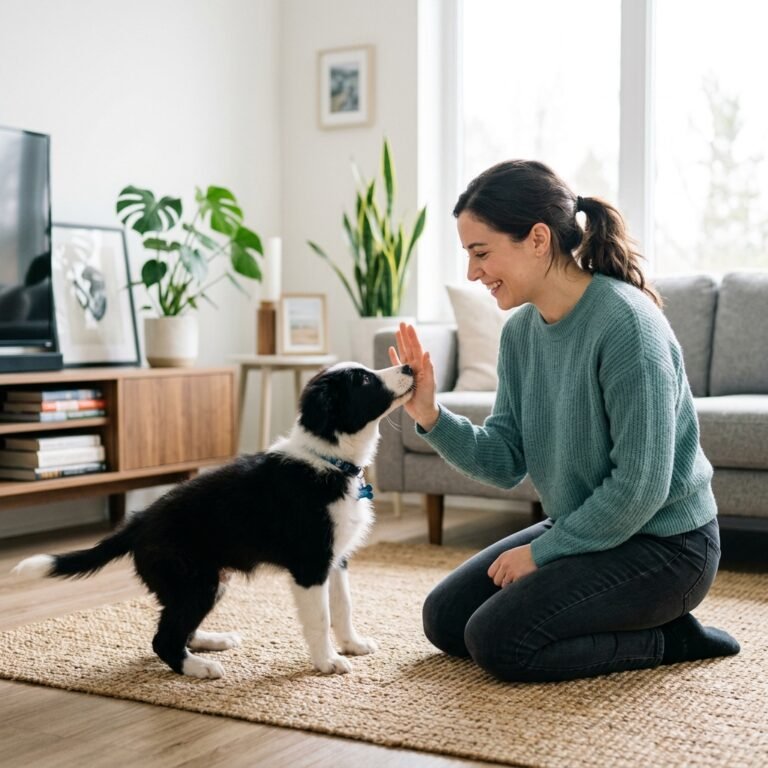
To further break the cycle of inhaling food, practice interrupting their meal. While they are eating, cheerfully call their name. When they look up, hand them a super high-value treat (like a piece of chicken or cheese) from your hand, then tell them to go back to their bowl. This teaches them that stepping away from the bowl is rewarding and breaks the trance of speed-eating.
“Patience is key here. The first few sessions might take ten minutes just to get the bowl on the floor. Stay calm, be consistent, and your puppy will quickly learn the new rules of engagement.”
Portion Pacing: Hand-Feeding and Scatter Feeding
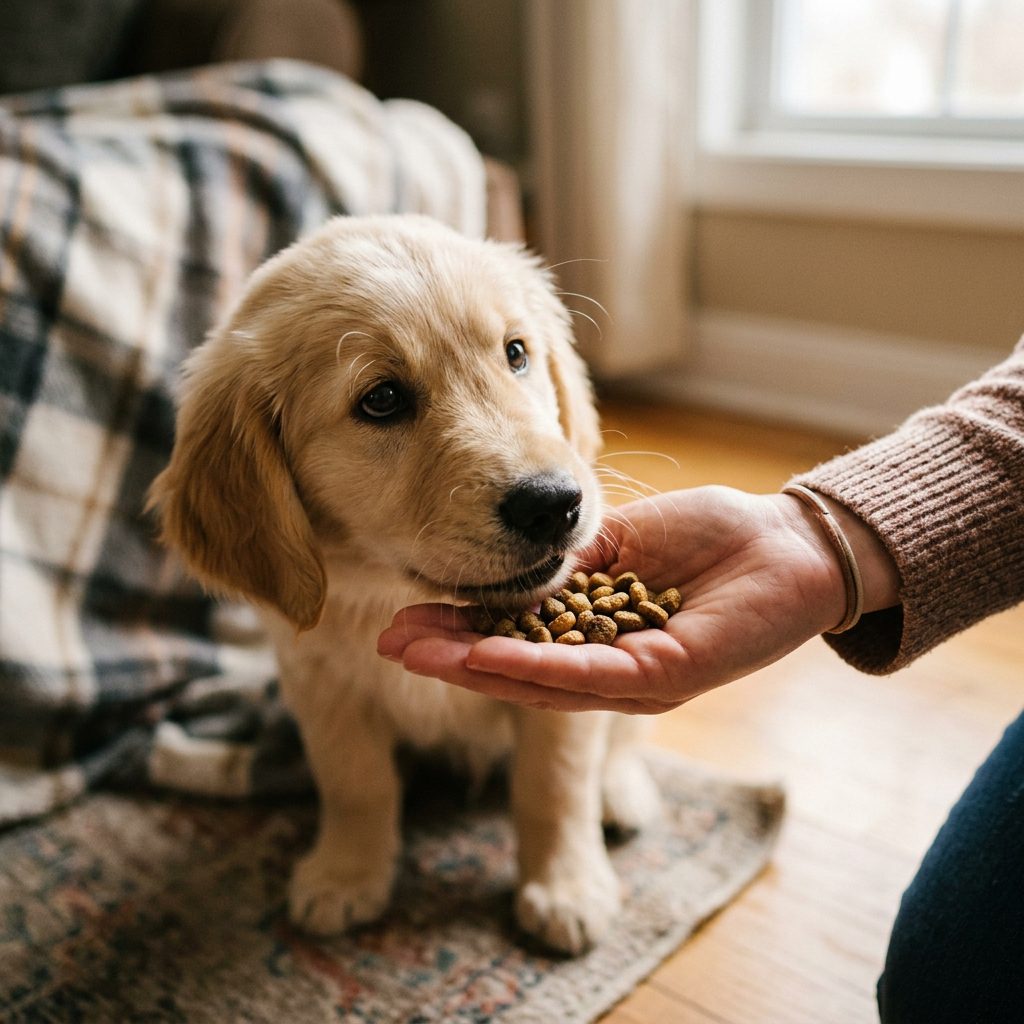
If your puppy is still struggling with eating too fast despite your best efforts with DIY bowls and impulse control, it is time to change the delivery method entirely. Ditching the bowl is a highly recommended strategy by canine behaviorists.
The Magic of Hand-Feeding
Hand-feeding is exactly what it sounds like: you feed your puppy their entire meal piece by piece from your hand. While it sounds time-consuming, it is incredibly beneficial. First, it completely eliminates speed-eating. Second, it builds massive value in you as the owner, strengthening your bond. Third, you can use their daily kibble allowance as training treats, meaning you can practice sit, down, stay, and recall without adding extra calories to their diet.
Scatter Feeding (The Foraging Method)
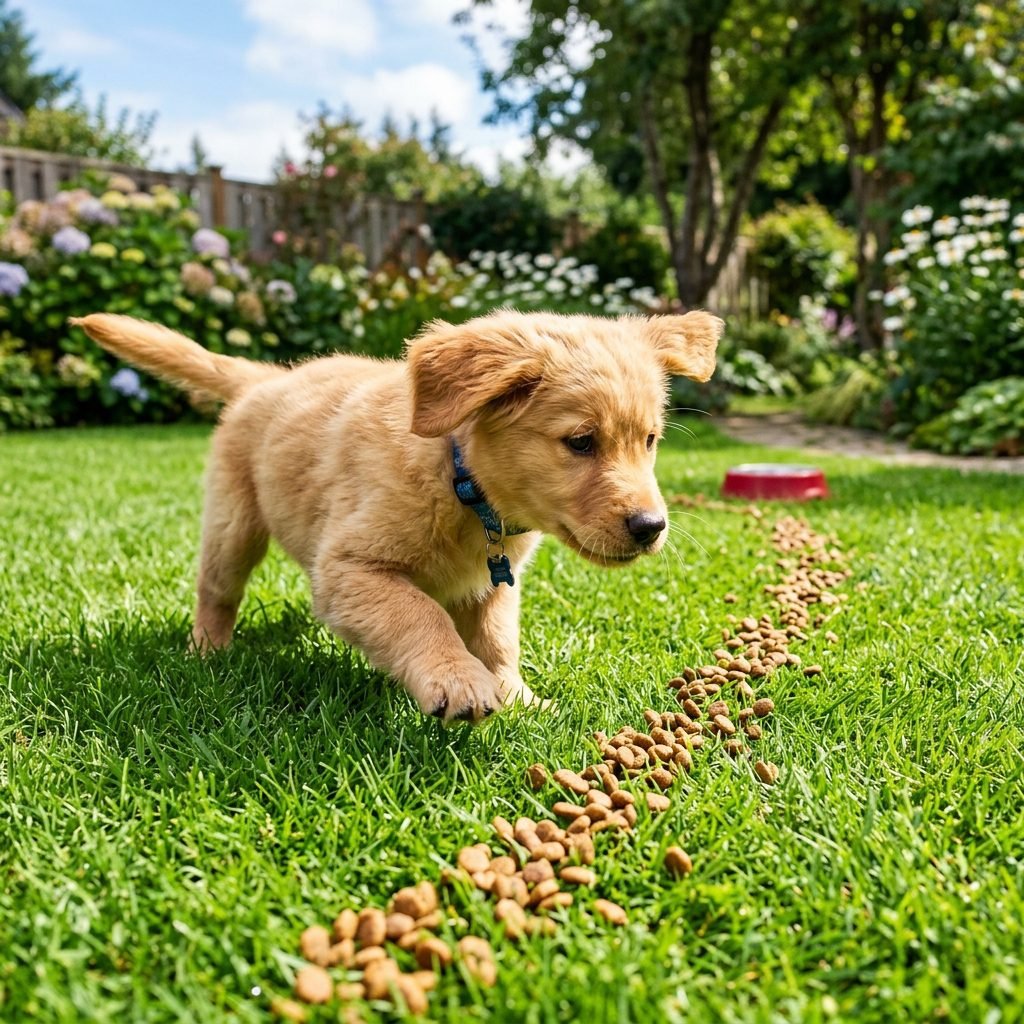
If you have a safe, pesticide-free lawn, or a clean living room floor, scatter feeding is a brilliant alternative. Take your puppy’s meal and literally toss it across a wide area. Dogs are natural foragers, and using their nose to hunt for their food is deeply satisfying for them.
- Mental Burn: Sniffing out food lowers a dog’s heart rate and acts as a natural stress reliever.
- Pacing: It is physically impossible to gulp food when you have to find each piece individually in the grass or on a textured rug.
- Engagement: It turns a boring 30-second meal into a fun, 15-minute game of hide and seek.
Troubleshooting Common Speed-Eating Relapses
Training is rarely a perfectly straight line. You might find that your puppy does great with the towel trick for a week, and then suddenly figures out how to shake it aggressively to get all the food out at once. Or perhaps you have multiple dogs, and the competition is driving the fast eating. Let us troubleshoot some common hurdles.
Dealing with Multi-Dog Households
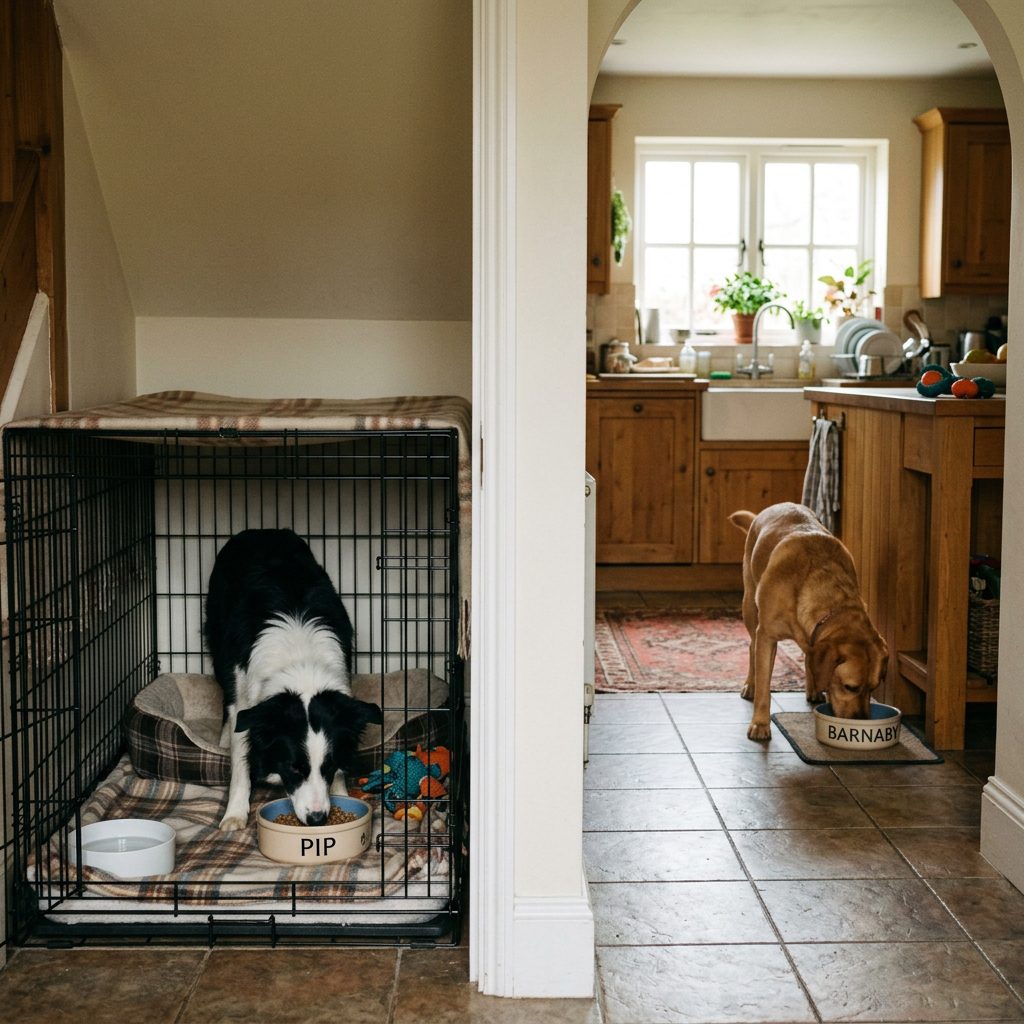
If you have more than one dog, your puppy’s speed-eating might be driven by resource guarding or fear of competition. Even if your older dog is perfectly sweet, the puppy’s instinct says, “I better eat this fast before the big guy takes it.” The easiest fix? Separate them. Feed your puppy in their crate or in a completely different room behind a closed door. Removing the visual and auditory pressure of another dog eating can instantly slow a puppy down.
When Hacks Stop Working
Puppies are smart. They will eventually learn the fastest way to beat your DIY slow feeders. When this happens, it is time to rotate your strategies. Below is a quick troubleshooting table to help you pivot when your puppy gets too clever.
| The Problem | The Reason | The Solution |
|---|---|---|
| Puppy flips the upside-down muffin tin over. | They realized brute force is faster than licking. | Place the muffin tin inside a heavy cardboard box they can’t flip, or switch to scatter feeding. |
| Puppy swallows the kibble whole during hand-feeding. | High arousal; they are too excited by your presence. | Lower your energy. Speak softly, wait for a calm ‘sit’ before offering the next piece. |
| Puppy shakes the rolled towel violently. | They learned shaking releases the food instantly. | Tie the towel into a tighter knot, or dampen the towel slightly and freeze it before feeding. |
| Puppy guards the scattered food aggressively. | Scatter area is too small, triggering resource guarding. | Spread the food over a much larger area, or return to hand-feeding to build trust. |
Conclusion
Training your puppy to eat slower is an investment in their long-term health and happiness. By understanding the risks of choking and bloat, and taking proactive steps to manage their mealtime pace, you are being the responsible, savvy dog owner your puppy needs. Remember, you do not need to rely on costly, store-bought slow feeders to get the job done. With a little creativity using muffin tins, towels, and the power of impulse control training, you can transform mealtime from a frantic race into a calm, rewarding experience.
Be patient with your furry friend. Changing ingrained behaviors takes time, consistency, and a lot of positive reinforcement. Rotate through the different methods we discussed—from hand-feeding to scatter feeding—to keep your puppy mentally stimulated and engaged. Stick with it, and soon enough, you will be able to enjoy a peaceful cup of coffee while your puppy politely and slowly enjoys their breakfast. Happy training, and here is to a happy, healthy, and safe puppy!