Why Is Your Dog Scared Of Hats? How To Socialize Your Puppy To Weird Clothing Instantly!
Have you ever popped on a cozy winter beanie, a wide-brimmed sun hat, or even a pair of oversized sunglasses, only to have your normally sweet and affectionate puppy stare at you in absolute horror? You are not alone! It is incredibly common for savvy dog owners to discover that their confident canine suddenly turns into a barking, backing-up, or hiding mess the second a piece of weird clothing enters the picture. But why exactly is your dog scared of hats? And more importantly, how can you fix it without causing them more stress?
Welcome to the ultimate guide on canine desensitization! As dog lovers, we want our furry best friends to feel safe and secure in all environments, whether we are bundled up for a blizzard or wearing a goofy costume for Halloween. When your dog reacts negatively to your clothing, they aren’t being stubborn or silly; they are experiencing genuine confusion and fear. To a dog, you have essentially shape-shifted. Their entire world revolves around recognizing your unique silhouette, your facial expressions, and your scent. When you disrupt that visual baseline with a giant sombrero or a puffy winter coat, their primal instincts kick in.
In this comprehensive guide, we are going to dive deep into the fascinating psychology behind canine vision and silhouette recognition. We will explore exactly why hats, sunglasses, and bulky coats trigger a fear response. Then, we will equip you with a professional, step-by-step socialization protocol designed to help your puppy (or adult dog!) conquer their fear of weird clothing instantly. By using positive reinforcement, patience, and a little bit of canine behavioral science, you will have your dog wagging their tail at your wildest wardrobe choices in no time. Let’s get started on building a more confident, happy pup!
The Psychology: Why Your Dog Thinks Your Hat Is an Alien
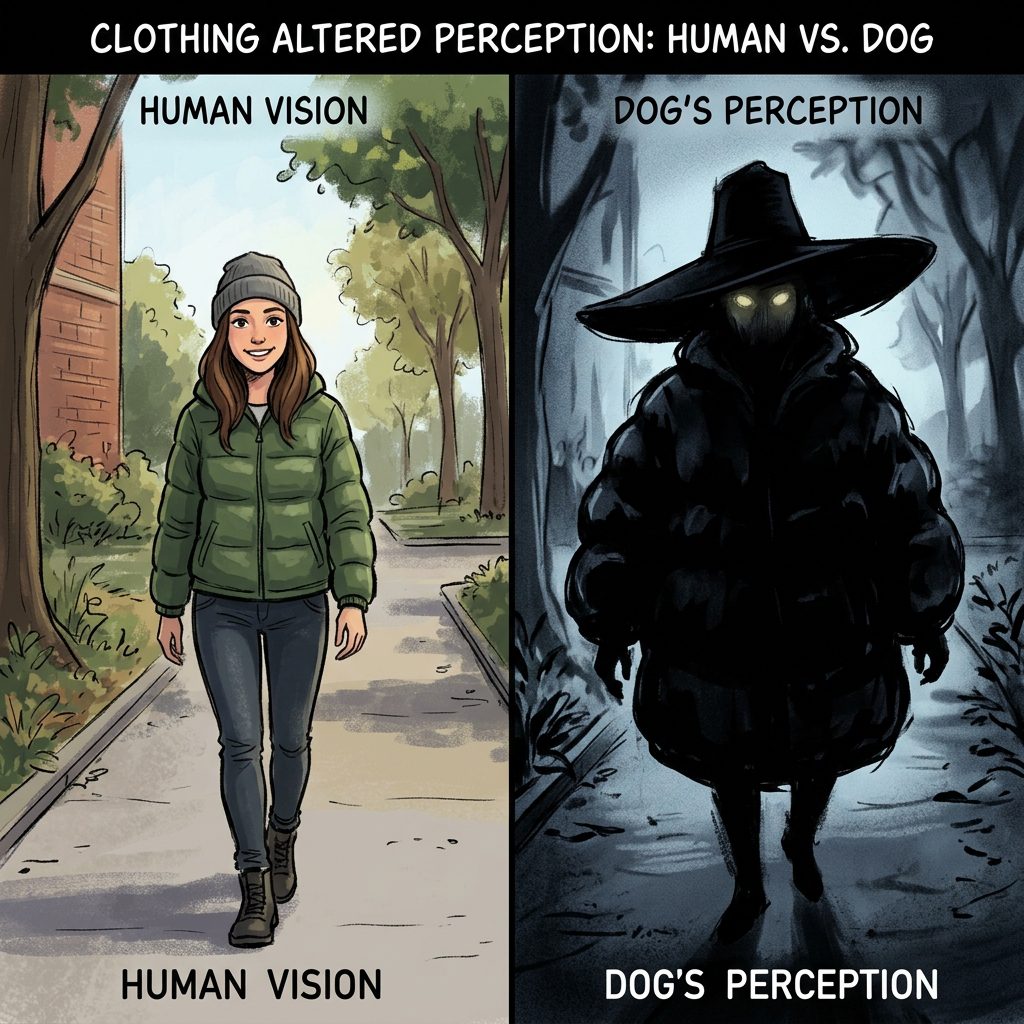
To truly understand why your dog is scared of hats, we need to look at the world through their eyes. Dogs are incredibly observant creatures, but their vision works differently than ours. While we rely heavily on detailed facial recognition and color, dogs rely heavily on outlines, silhouettes, and body language to identify friends, foes, and family members.
The Power of the Silhouette
From the moment you bring your puppy home, they begin memorizing your specific shape. They know the curve of your shoulders, the height of your head, and the way you walk. When you suddenly place a large, unfamiliar object on your head, you drastically alter that familiar silhouette. A wide-brimmed hat makes your head look disproportionately wide. A tall winter beanie makes you look unnaturally tall. To your dog’s brain, this sudden change is a massive red flag. Their evolutionary instincts whisper, ‘That is not my human. That is a strange, potentially dangerous creature.’
Blocking Crucial Communication
Clothing doesn’t just change your shape; it often blocks the very tools your dog uses to communicate with you. Dogs constantly scan our faces for micro-expressions. They look at our eyes to gauge our mood and intentions. When you wear sunglasses, you completely cover your eyes, effectively blinding your dog to your emotional state. Similarly, a scarf pulled up over your nose hides your mouth. Without these visual cues, your dog feels disconnected and anxious. They can’t read you, so they default to a defensive posture.
“To a dog, a human in a large hat and sunglasses is the equivalent of a human wearing a full-face mask. It strips away all the familiar non-verbal communication they rely on to feel safe.” – Canine Behavior Principle
Furthermore, some materials make strange noises. A crinkly raincoat or a rustling puffy jacket adds an auditory layer of weirdness to the visual anomaly. When you combine a changed silhouette, hidden facial features, and strange sounds, it is completely understandable why your dog might let out a warning bark or tuck their tail between their legs. The good news is that because this fear is based on unfamiliarity, it is highly treatable through structured desensitization.
Your Socialization Toolkit: What You Need
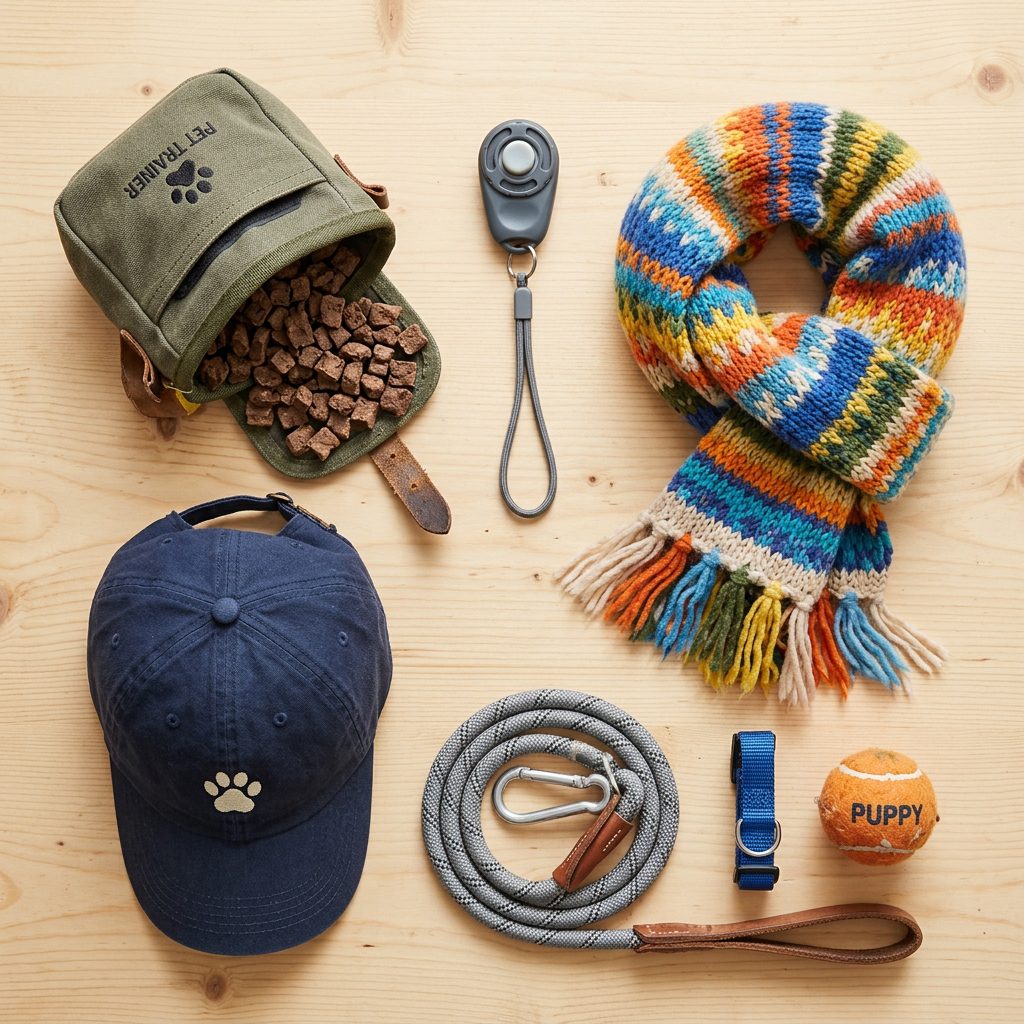
Before we jump into the active training steps, we need to gather our tools. Desensitizing a dog to a fear trigger requires precision, patience, and the right equipment. You cannot simply force the hat onto your head and expect your dog to get over it. That approach, known as ‘flooding,’ often backfires and makes the fear much worse. Instead, we are going to use a technique called systematic desensitization paired with counter-conditioning. This means we will introduce the scary object gradually while pairing it with something your dog absolutely loves.
Setting Up for Success
To do this effectively, you need a quiet environment free from other distractions. Turn off the TV, put away other toys, and ensure no other pets or family members will interrupt your session. You want your dog’s primary focus to be on you, the clothing item, and the rewards. Here is a breakdown of the specific tools you will need to successfully socialize your puppy to weird clothing.
| Training Tool | Purpose & Application |
|---|---|
| High-Value Treats | Must be irresistible (e.g., boiled chicken, freeze-dried liver, hot dogs). Standard kibble won’t work for overcoming fear. |
| The ‘Weird’ Clothing Item | Start with the least intimidating item (e.g., a small baseball cap) before moving to big, floppy hats or noisy jackets. |
| A Clicker (Optional but Recommended) | Provides a clear, consistent marker sound to tell the dog exactly when they did the right thing, followed immediately by a treat. |
| A Safe Space | A comfortable mat or dog bed where your dog feels secure. They should always have the option to retreat if they feel overwhelmed. |
Remember, the treats you use here must be significantly better than their everyday food. We are trying to change a negative emotional response (fear) into a positive one (joy). If your dog thinks, ‘Wow, every time that weird hat appears, it rains hot dogs!’, their fear will rapidly dissipate. Keep your training sessions incredibly short—no more than 3 to 5 minutes at a time. It is much better to have three successful 2-minute sessions a day than one frustrating 15-minute session.
Step-by-Step Guide: Socializing Your Puppy to Weird Clothing
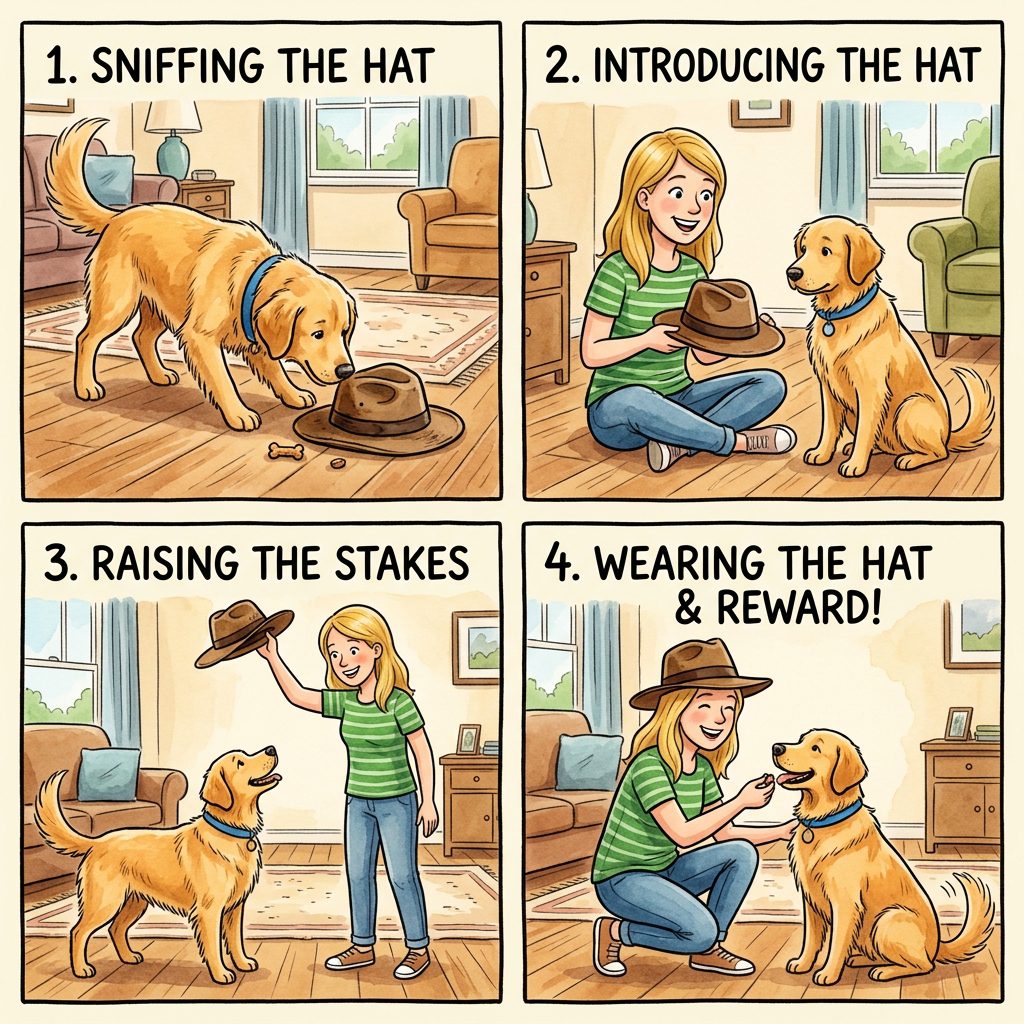
Now that we have our psychology straight and our toolkit ready, it is time for the fun part: the training! This step-by-step guide is designed to move at your dog’s pace. Never rush to the next step if your dog is showing signs of stress (lip licking, yawning, pinning ears back, or stiffening their body). If they show stress, simply take a step back to the previous level where they felt comfortable.
Step 1: The Neutral Object (The Floor Test)
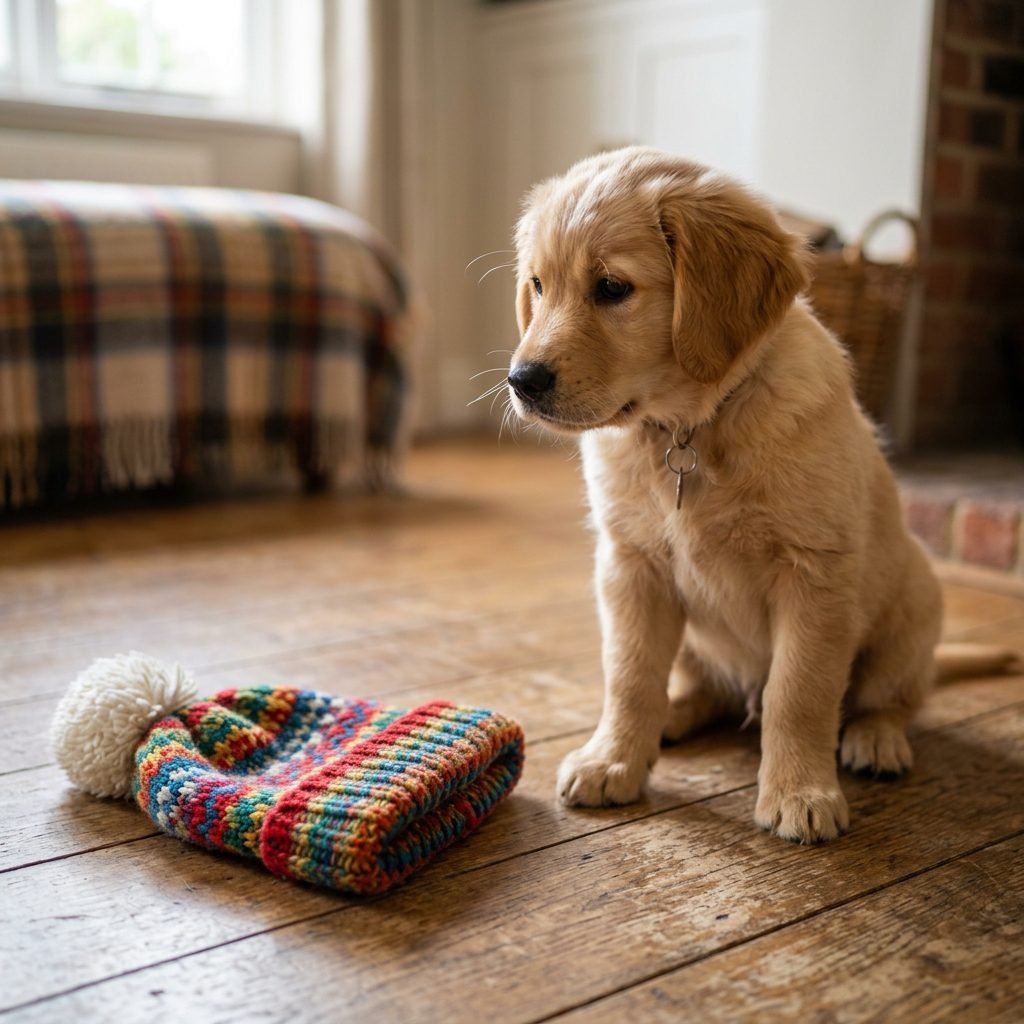
Do not put the hat on your head! Instead, place the hat on the floor in the middle of the room. Stand a few feet away with your dog on a loose leash or free-roaming. Allow your dog to notice the hat. The second they look at the hat, click your clicker (or say ‘Yes!’) and toss a high-value treat to them. If they take a step toward the hat, click and treat. If they sniff the hat, give them a jackpot (three treats at once). The goal here is to teach the dog that the hat is just an inanimate object that magically produces snacks.
Step 2: The Object in Motion
Once your dog is happily sniffing the hat on the floor, pick it up. Hold it casually at your side. Click and treat your dog for looking at you while you hold it. Next, slowly move the hat around in your hands. If your dog remains calm, click and treat. We are teaching them that the object is safe even when it is moving. If your dog backs away when you move the hat, you are moving it too fast or too much. Slow down your movements.
Step 3: The Proximity Test
Now, bring the hat closer to its intended destination (your head), but don’t wear it yet. Hold the hat against your chest. Click and treat. Hold the hat near your shoulder. Click and treat. Hold the hat just above your head for one second, then immediately bring it down. Click and treat! You are breaking down the action of putting on a hat into tiny, manageable micro-steps. Your dog is learning that the hat approaching your head is the predictor of amazing food.
Step 4: The Partial Wear
This is the critical transition. Rest the hat on top of your head, but do not pull it down or adjust it fully. Leave it there for exactly one second. Say ‘Yes!’, pull the hat off, and feed your dog. Repeat this process, gradually increasing the duration to two seconds, then three seconds, then five seconds. You are showing your dog that the silhouette change is temporary and harmless.
Step 5: The Full Wear and Normalcy
Finally, put the hat on completely. Immediately start tossing treats to your dog. While wearing the hat, speak to your dog in your normal, happy, high-pitched ‘dog voice.’ This auditory reassurance helps bridge the gap; even though you look different, you sound exactly like their beloved owner. Walk around the room slowly while wearing the hat, dropping treats as you go. Once your dog is comfortable with this, you can start introducing other weird clothing items using the exact same protocol!
Troubleshooting Common Mistakes and Reactions
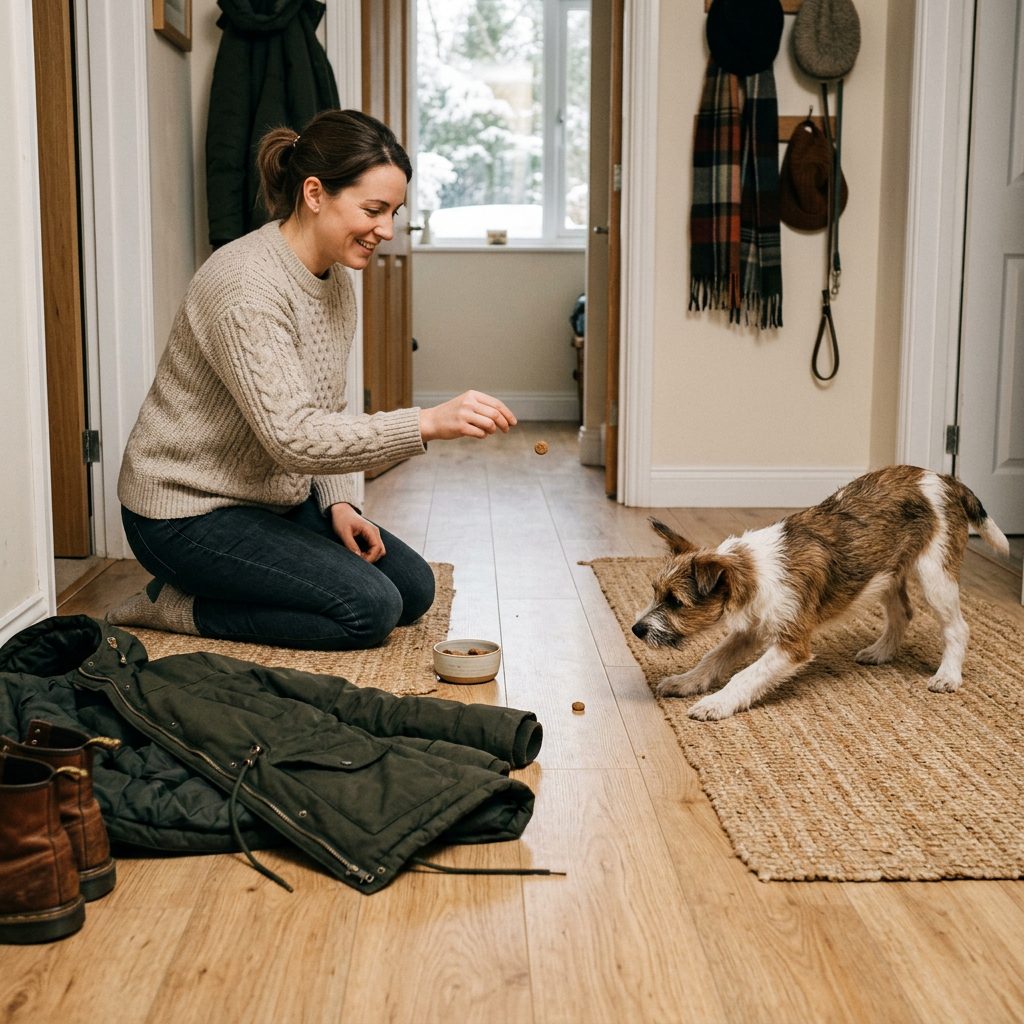
Dog training is rarely a perfectly straight line. Even with the best intentions, you might encounter a few bumps in the road. It is crucial to remain calm and adaptable. If you get frustrated, your dog will sense that frustration and associate it with the clothing item, making their fear worse. Here are some of the most common reactions dogs have during desensitization and exactly how you, as a savvy dog owner, should handle them.
My Dog is Barking Non-Stop at the Hat
If your dog is barking relentlessly, they are over their ‘threshold.’ This means their brain is too flooded with adrenaline and fear to learn anything. Do not punish the barking. Punishing a fearful dog only confirms their belief that the situation is dangerous. Instead, increase the distance. If you are holding the hat, put it down. If you are 5 feet away, move 15 feet away. Find the distance where your dog stops barking and can focus on you, and start Step 1 from there.
My Dog is Hiding or Submissively Urinating
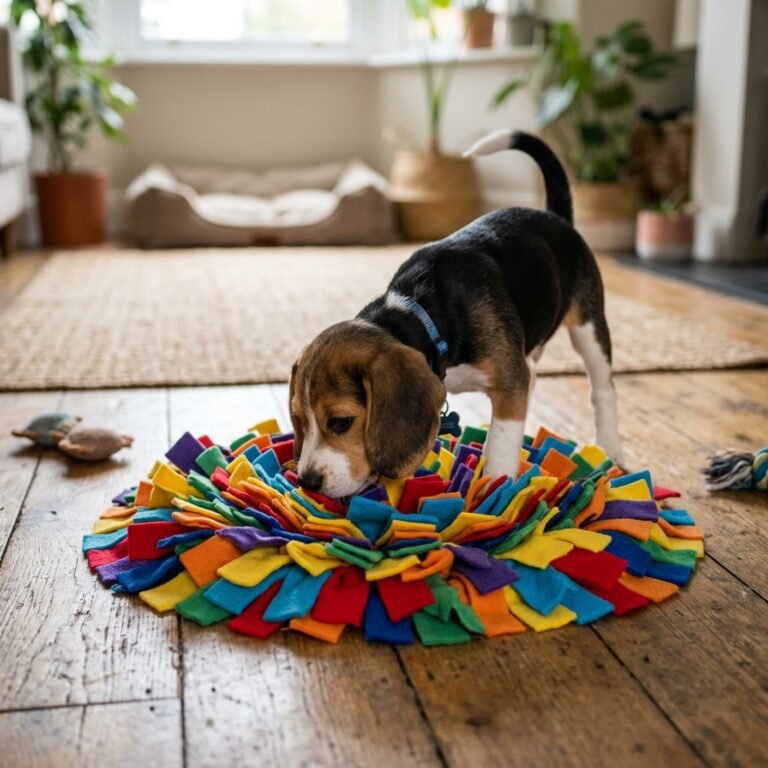
Flight and freeze responses are just as significant as fight (barking/lunging) responses. If your dog runs out of the room, hides under the couch, or pees on the floor when you bring out the winter coat, you have moved way too fast. Clean up any messes without making a fuss. For dogs with this level of extreme fear, you might need to start by just having the clothing item visible in the room while they eat their daily meals out of a puzzle toy, completely ignoring the item until they realize it won’t attack them.
- Mistake: Forcing Interaction. Never drag your dog toward the scary object. Let them approach it on their own terms, at their own speed.
- Mistake: Laughing at Their Fear. While it might look funny when a dog barks at a pair of sunglasses, laughing or making sudden loud noises can startle them further. Maintain a calm, soothing demeanor.
- Mistake: Using Low-Value Treats. If your dog won’t take a treat, they are too stressed. Upgrade your treats to something smellier and more delicious, or increase the distance from the trigger.
What About Sunglasses and Face Masks?
Because sunglasses and masks hide your facial features, they require an extra step of auditory reassurance. When desensitizing your dog to sunglasses, put them on and immediately start talking to your dog, asking for simple, well-known commands like ‘Sit’ or ‘Paw.’ When they comply, reward heavily. Doing familiar obedience routines helps ground the dog and proves that you are still the same person, just with a slightly different face.
Conclusion
Wrapping It Up: Patience Pays Off
Socializing your dog to hats, sunglasses, and weird clothing doesn’t have to be a stressful ordeal. By understanding the psychology behind your dog’s visual perception and utilizing a structured, positive reinforcement-based desensitization protocol, you can easily help your furry friend overcome their fears. Remember that every dog is unique; some puppies might get over their fear of a beanie in five minutes, while an older rescue dog might take a few weeks of consistent, short training sessions to feel comfortable around a bulky winter coat.
The key to success is patience, high-value treats, and a willingness to work at your dog’s pace. Never force the issue, and always celebrate the small victories. The bond you share with your dog is built on trust, and by showing them that you will keep them safe—even when you look like a shape-shifting alien—you are strengthening that bond immeasurably. So grab your clicker, chop up some hot dogs, and pull out that goofy sun hat. You and your pup have got this! Happy training!