The Secret to Writing Your Dog’s Name on a Birthday Cake Like a Professional Baker!
Welcome to the Inner Circle of Canine Cake Design
Let’s get real for a second: your dog doesn’t care if their name is written in Comic Sans or Helvetica. They’d be just as happy eating a pile of kibble off the floor. But for us—the savvy dog owners who treat our pups like family—the birthday cake is a rite of passage. I’ve spent years analyzing ingredient labels and kitchen hacks, and I’ve seen some absolute disasters in the world of ‘dog bakeries.’ I’m talking about cakes loaded with refined sugars, artificial dyes, and hydrogenated oils that would make any forensic nutritionist cringe.
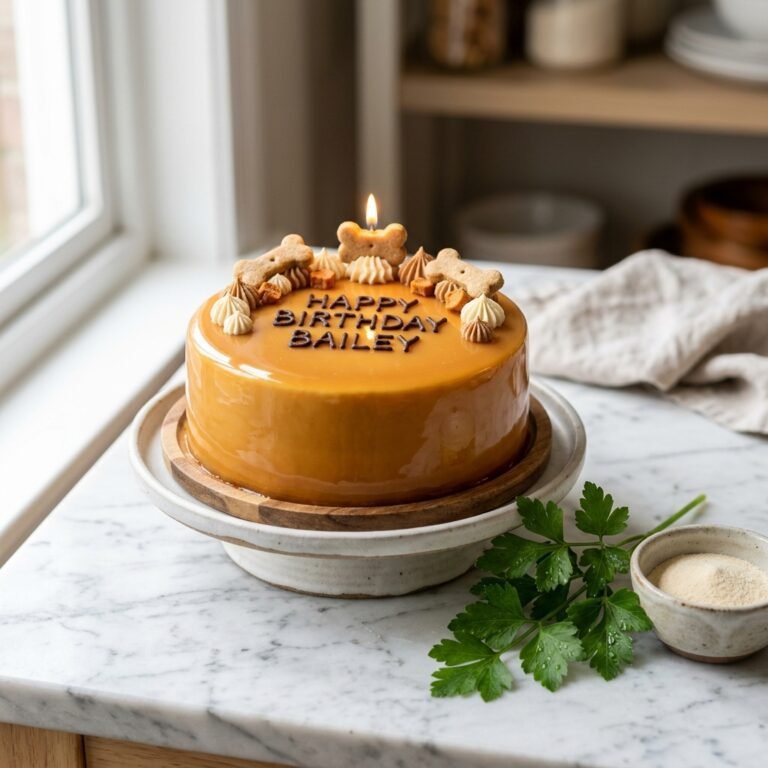
You don’t need to spend $50 at a boutique pet shop to get a professional-looking result. Today, I’m pulling back the curtain on the ‘insider secrets’ of cake lettering. We aren’t just slapping some peanut butter on a biscuit; we are engineering a safe, high-contrast, professional-grade lettering medium that stays put and looks incredible in your Instagram photos. Grab your apron; we’re about to turn you into a canine pastry pro.
The Forensic Breakdown of Dog-Safe ‘Ink’
Why Store-Bought Frosting is a Nutritional Nightmare
Before we pick up a piping bag, we have to talk about the ‘ink.’ Most commercial dog frostings are basically sugar-laden shelf-stable fats. As a nutrition hacker, I look for ingredients that offer functional benefits, not just empty calories. We want a ‘writing medium’ that is stiff enough to hold its shape but healthy enough to be a meal topper.
Hacker Tip: Never use human ‘decorator icing’ from a tube. It contains high-fructose corn syrup and potentially Xylitol (Birch Sugar), which is highly toxic to dogs even in tiny amounts.
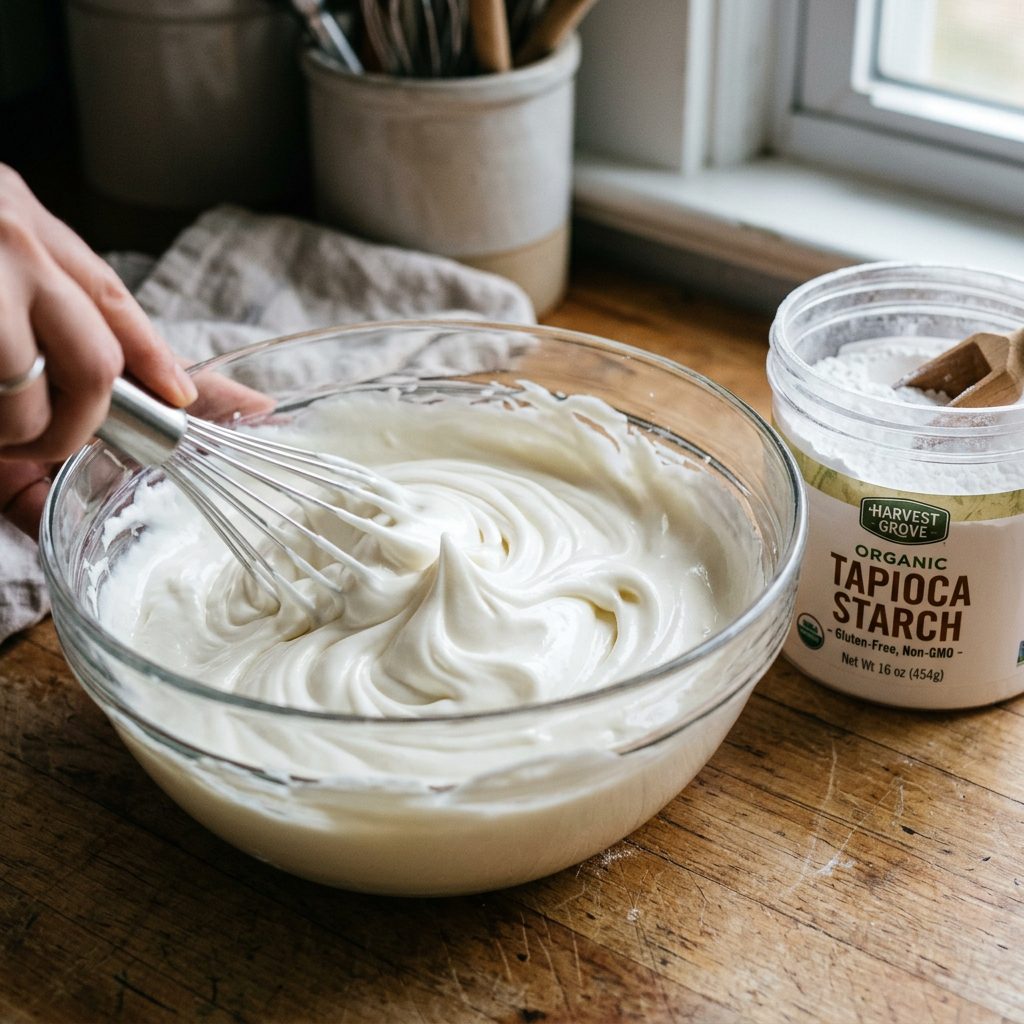
The secret to professional lettering is viscosity control. We need something that flows under pressure but stops instantly. My go-to base is a combination of strained Greek yogurt and tapioca starch. The yogurt provides probiotics and protein, while the starch acts as a thickening agent that mimics the texture of royal icing without the sugar crash.
The Safe Chef Guide: Ratios and Recipes
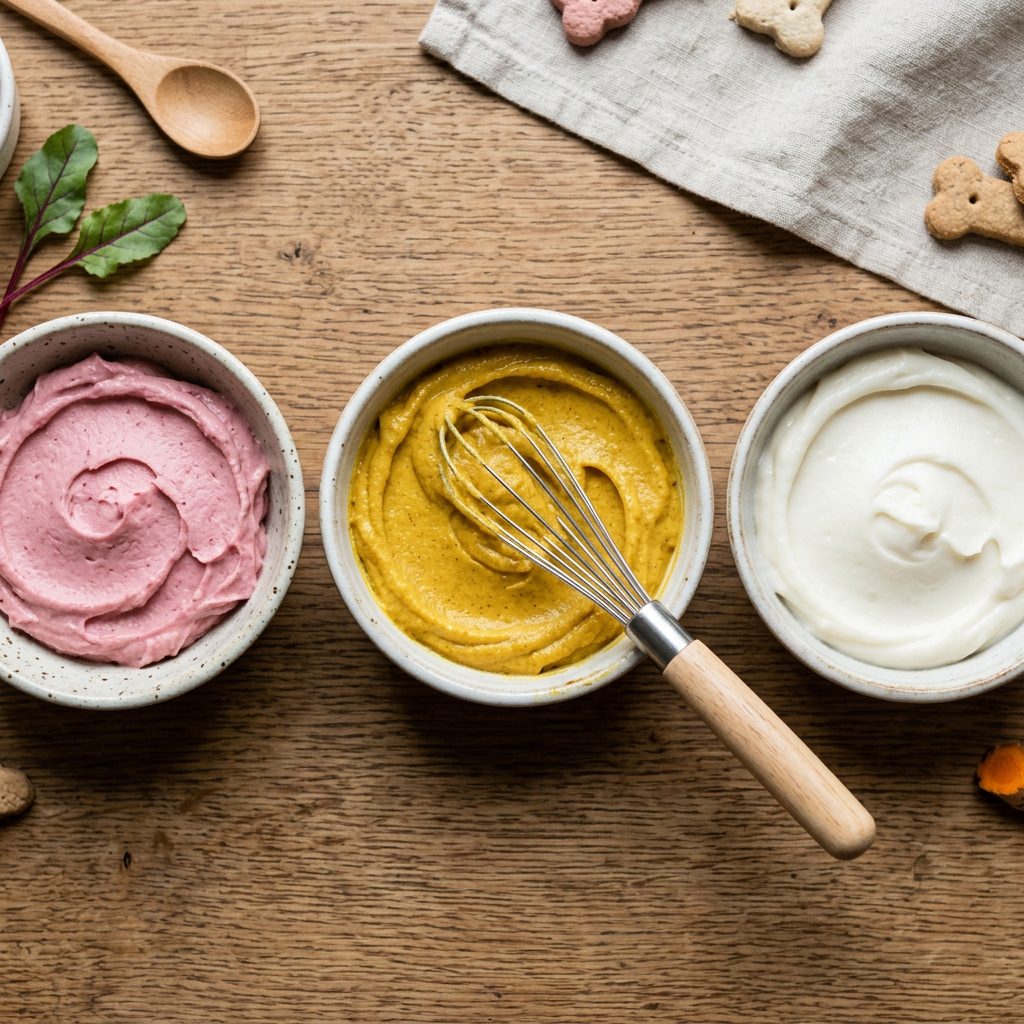
The ‘Perfect Script’ Frosting Recipe
SAFETY DISCLAIMER: I am a canine nutrition enthusiast and hacker, not a veterinarian. While these ingredients are generally safe for healthy dogs, always introduce new foods slowly. If your dog has pancreatitis or dairy sensitivities, consult your vet before serving.
To get that ‘professional baker’ look, you need the right ratios. If it’s too thin, the name will bleed into the cake. If it’s too thick, it will break as you squeeze. Here is the golden ratio for lettering:
- Base: 1/2 cup Plain, Non-Fat Greek Yogurt (ensure it is Xylitol-free).
- Stiffener: 1/4 cup to 1/2 cup Tapioca Starch (add slowly until you hit ‘toothpaste’ consistency).
- Natural Pigment: 1/2 teaspoon Beet Powder (for pink) or Turmeric (for yellow). Avoid artificial food dyes!
The Batch Preparation Hack
Don’t try to mix this directly in the piping bag. Mix it in a small bowl first. If you’re doing multiple colors, divide the base before adding the starch. This mixture can be made 24 hours in advance, but it’s best used fresh. If it sits in the fridge, the starch may continue to hydrate, making it too stiff—just add a drop of water to revive it.
Professional Lettering Techniques: The ‘Ghost’ Method
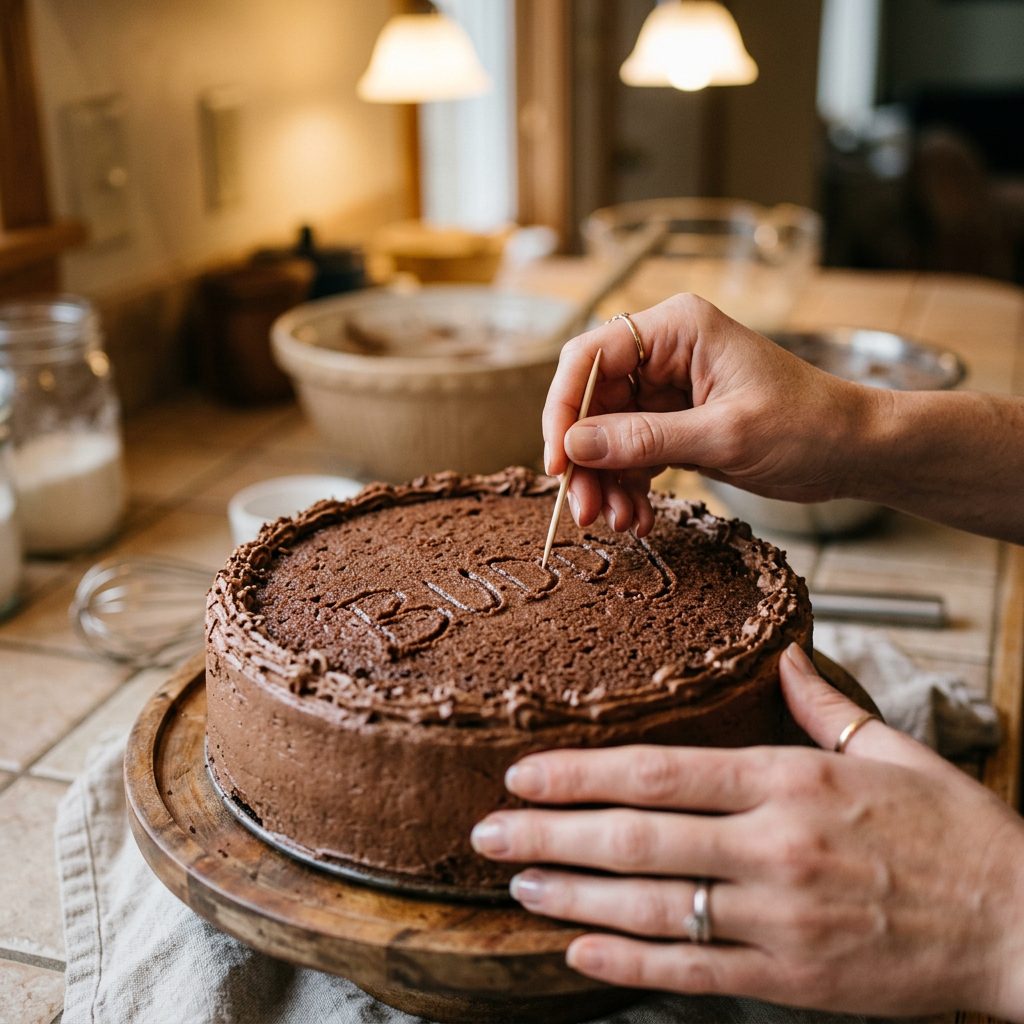
Mastering the Mechanics
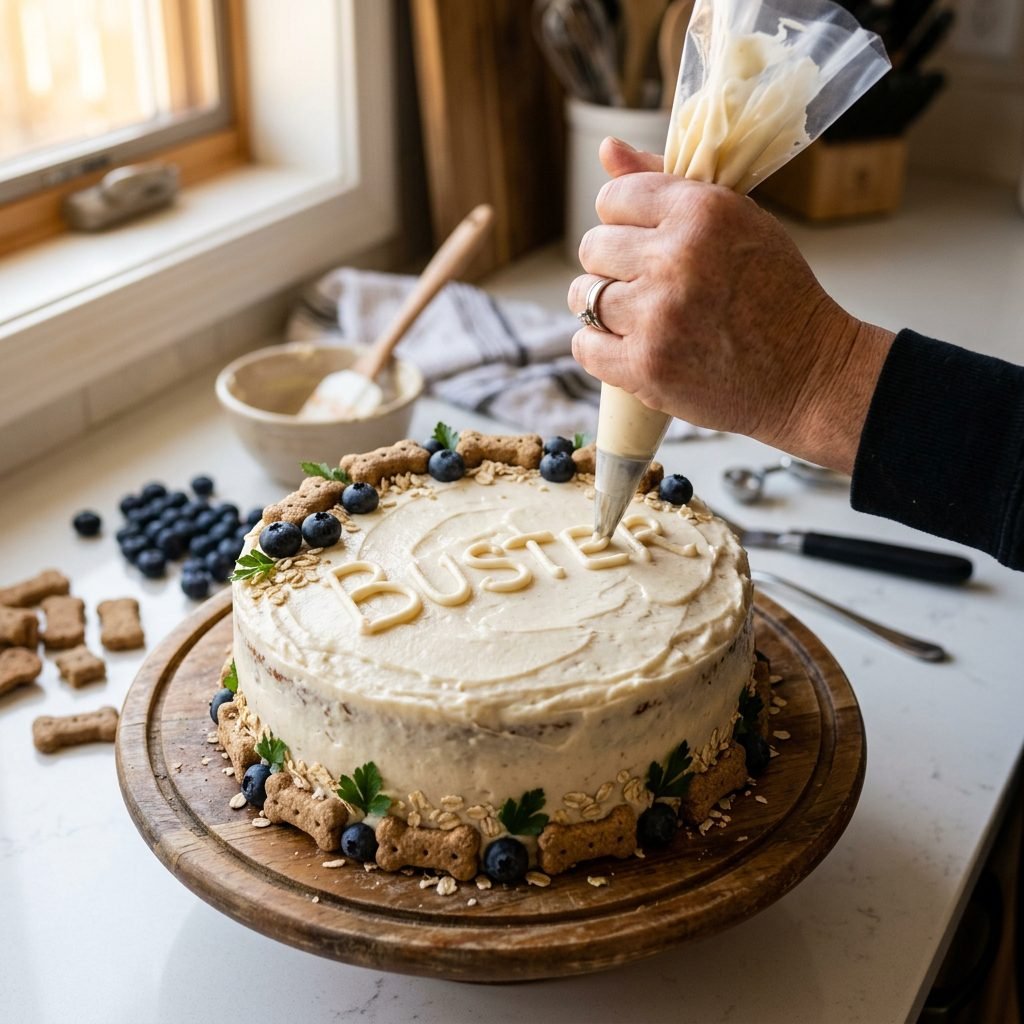
Most people fail at writing because they try to ‘draw’ with the frosting like a pen. Professional bakers know that pressure and height are the real secrets. You want to hold the tip about half an inch above the cake surface, letting the ‘thread’ of frosting fall onto the cake.
- The Ghost Writing Trick: Use a toothpick to lightly ‘etch’ the name into the cake’s surface first. This gives you a guide to follow so you don’t run out of room halfway through ‘Bartholomew.’
- The Anchor Point: Start your letter by touching the tip to the cake, then lift up while squeezing. This creates a clean starting point.
- The Constant Squeeze: Maintain a steady, even pressure. If you pulse your hand, your letters will look like a string of sausages.
Insider Secret: If you don’t have a professional piping bag, use a heavy-duty freezer bag. Cut a tiny corner off—much smaller than you think you need. You can always make the hole bigger, but you can’t make it smaller!
Cost Analysis: DIY Precision vs. Boutique Prices
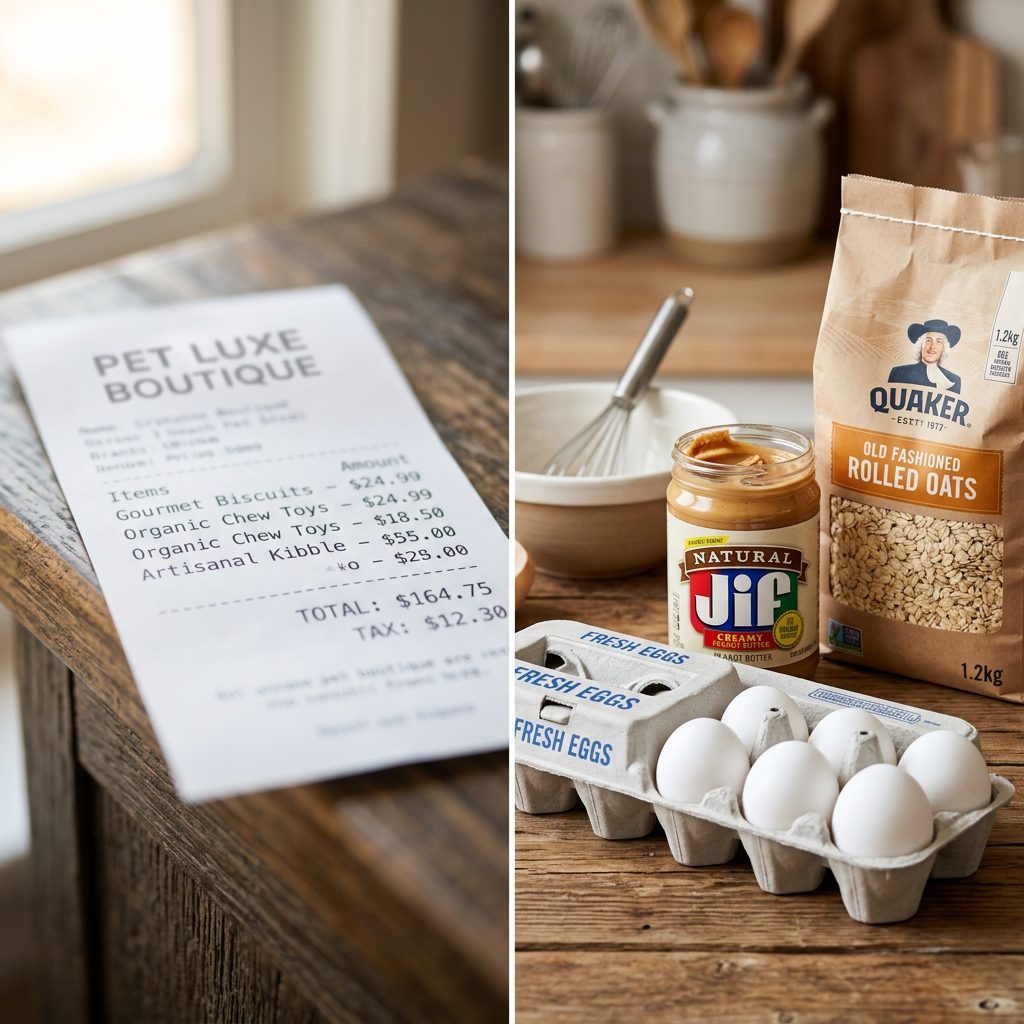
Why You’re Saving Big
Let’s look at the numbers. A custom-ordered ‘Designer Dog Cake’ from a high-end bakery can run you anywhere from $35 to $65, plus shipping or pickup time. By hacking the process yourself, you aren’t just saving money; you’re ensuring the quality of the ingredients.
| Item | Boutique Bakery Cost | DIY Hacker Cost |
|---|---|---|
| Base Cake Ingredients | Included ($15 value) | $4.50 (Oats, Eggs, PB) |
| Custom Lettering Fee | $10.00 – $15.00 | $0.50 (Yogurt/Starch) |
| ‘Premium’ Surcharge | $5.00+ | $0.00 |
| Total Cost | $45.00+ | ~$5.00 |
By doing it yourself, you’re effectively paying yourself $40 an hour for about 15 minutes of work. Plus, you know exactly what’s in it. No ‘meat by-products’ or ‘artificial flavorings’ here.
Troubleshooting: When the Frosting Fails
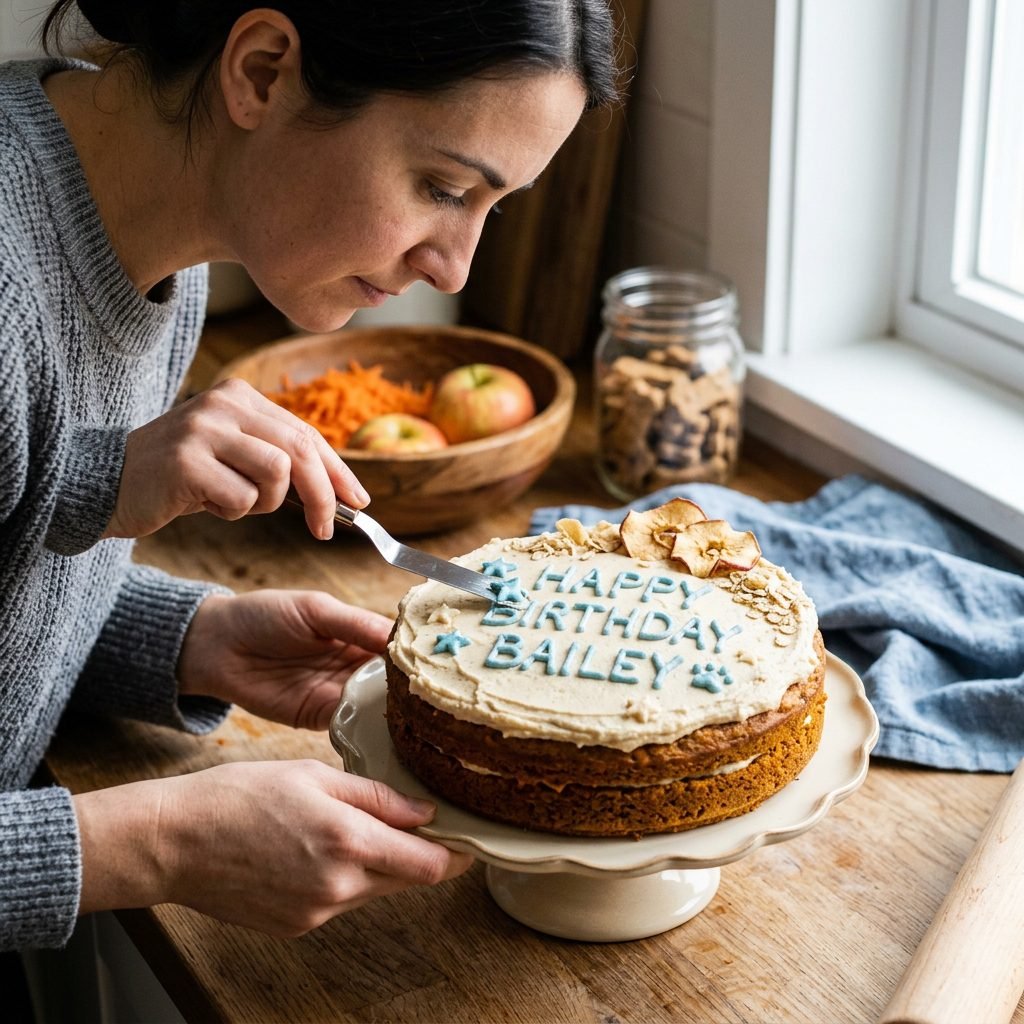
Common Pitfalls and How to Fix Them
Even the best hackers run into bugs. If your lettering looks less like ‘Fido’ and more like a ‘blob,’ here’s how to pivot:
- The Frosting is Too Runny: This usually happens if the yogurt wasn’t strained. Add more starch, one teaspoon at a time. If it still won’t stiffen, pop it in the freezer for 5 minutes to firm up the fats.
- The Letters are Peeling Off: This happens if the cake surface is too oily (common with peanut butter-heavy recipes). Lightly dust the top of the cake with a tiny bit of oat flour before writing to give the ‘ink’ something to grip.
- The Tip Keeps Clogging: You likely have a lump of starch or a bit of yogurt skin. Empty the bag, strain the mixture through a fine-mesh sieve, and try again. Precision requires purity.
Conclusion
The Final Verdict: You’ve Got This
Writing your dog’s name on a cake isn’t about being a perfect artist; it’s about the intentionality of the ingredients and the love you put into the process. By using the yogurt-starch method, you’ve bypassed the low-quality fillers found in commercial treats and provided your pup with a high-protein, gut-friendly celebration. Your dog might lick the name off in three seconds flat, but you’ll have the photos—and the satisfaction of knowing you’re the smartest nutritionist in the dog park. Happy baking, hackers!