Ditch the Peanut Butter! Use These 5 Genius Low-Calorie Spreads to Keep Your Dog Busy!
We have all been there: you are trying to get a few minutes of peace to hop on a Zoom call or finish the dishes, so you reach for the jar of peanut butter and smear it into your dog’s favorite enrichment toy. It is the ultimate canine ‘babysitter.’ But as a canine specialist who has spent years analyzing the diets of thousands of dogs, I have seen a worrying trend. While peanut butter is undeniably delicious and convenient, it is also a calorie bomb. Just a couple of tablespoons can pack nearly 200 calories, which, for a medium-sized dog, can represent a significant chunk of their daily caloric intake. Over time, this ‘innocent’ habit can lead to weight gain, lethargy, and joint issues.
As savvy dog owners, you know that mental stimulation is just as important as physical exercise. Licking is a self-soothing behavior for dogs that releases endorphins, helping them relax and de-stress. But we do not have to sacrifice our pups’ waistlines for their mental health. Today, we are going to dive deep into why it is time to diversify your dog’s ‘spread’ portfolio. We will explore five genius, low-calorie alternatives that provide the same long-lasting engagement as peanut butter but with a fraction of the fat and calories. Get ready to transform your dog’s snack time into a nutritional powerhouse session!
The Hidden Cost of the Peanut Butter Habit
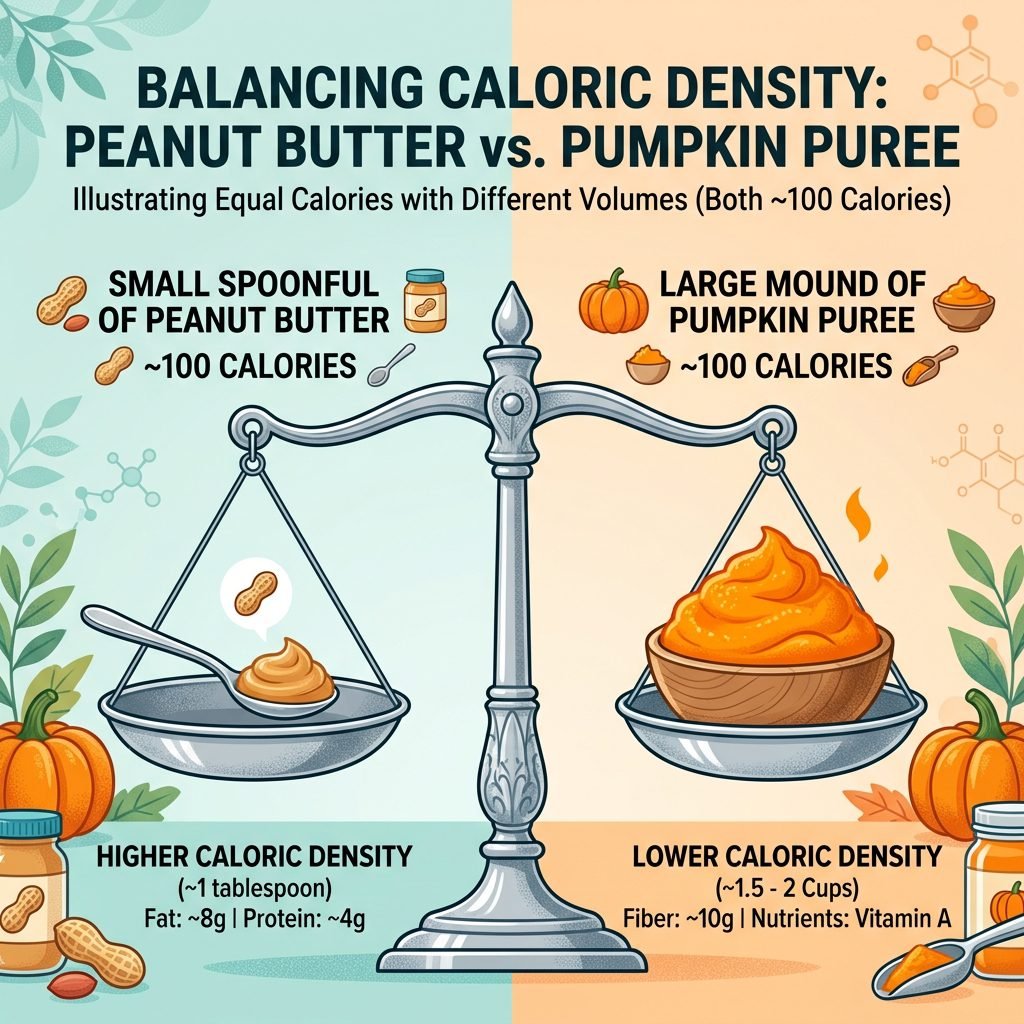
Before we jump into our alternatives, it is crucial to understand why we are looking for substitutes in the first place. Peanut butter is primarily composed of fats. While these are ‘healthy’ fats in moderation, the sheer density of energy in a small serving is staggering. For a 20-pound dog, two tablespoons of peanut butter are roughly equivalent to a human eating three cheeseburgers as a ‘snack.’ Furthermore, many commercial peanut butters contain added sugars, salt, and palm oil, which can lead to inflammation and digestive upset.
Caloric Density Comparison
To put things into perspective, let’s look at how peanut butter stacks up against some of our favorite low-calorie alternatives. When we talk about keeping a dog ‘busy,’ we usually want a spread that takes time to lick off but doesn’t require a hike across the state to burn off afterward.
| Spread Type (1 Tablespoon) | Approximate Calories | Primary Benefit |
|---|---|---|
| Standard Peanut Butter | 90-100 kcal | High Protein/Fat |
| Pureed Pumpkin (Canned) | 5-8 kcal | Fiber & Digestion |
| Plain Non-Fat Greek Yogurt | 10-12 kcal | Probiotics |
| Mashed Banana | 15-20 kcal | Potassium |
| Bone Broth Gelatin | 2-5 kcal | Hydration & Joints |
As you can see, you could give your dog nearly ten times the amount of pumpkin for the same caloric cost as one tablespoon of peanut butter! This is a game-changer for ‘volume feeders’—dogs who feel more satisfied when they have more to eat, even if the calorie count is low.
The Big Five: Genius Low-Calorie Spreads
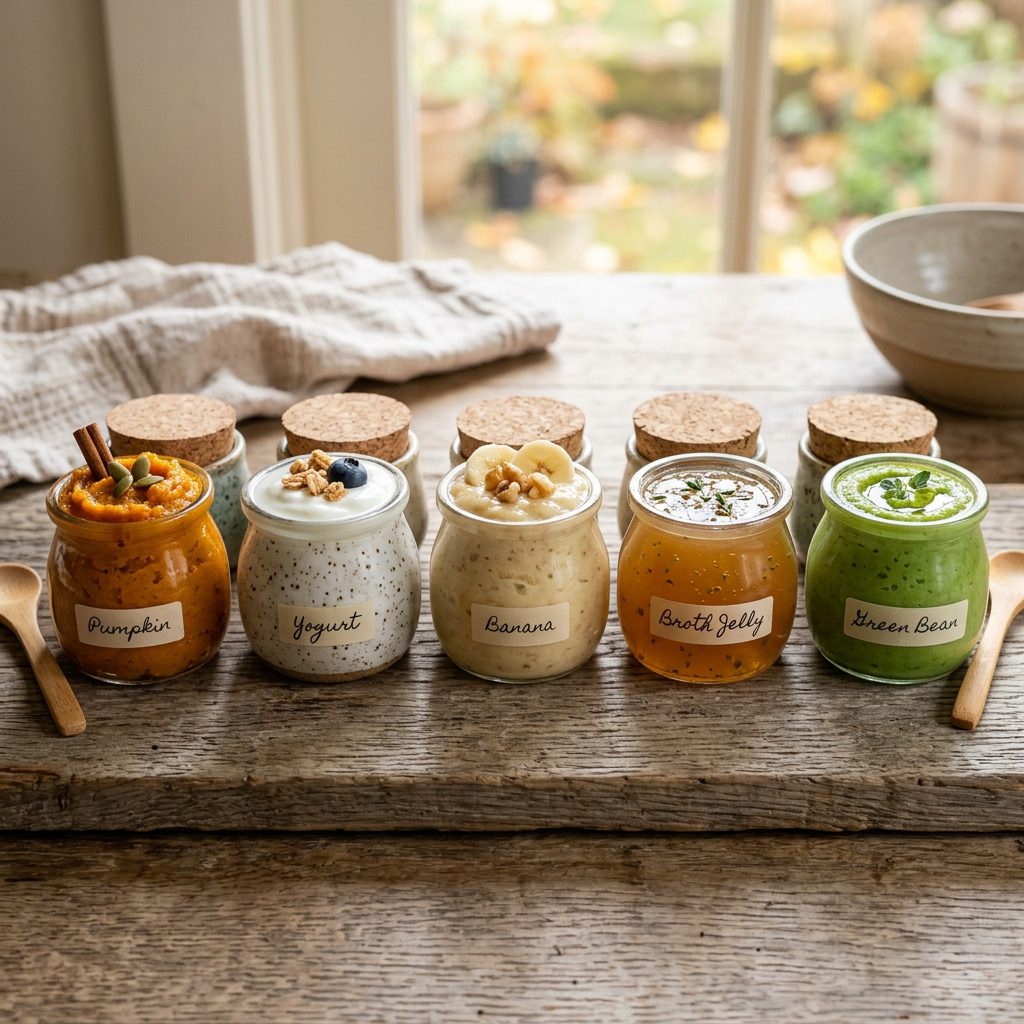
Now, let’s get into the stars of the show. These five spreads are not just low in calories; they are packed with functional nutrients that support your dog’s overall well-being.
1. Pureed Pumpkin: The Digestion Dynamo
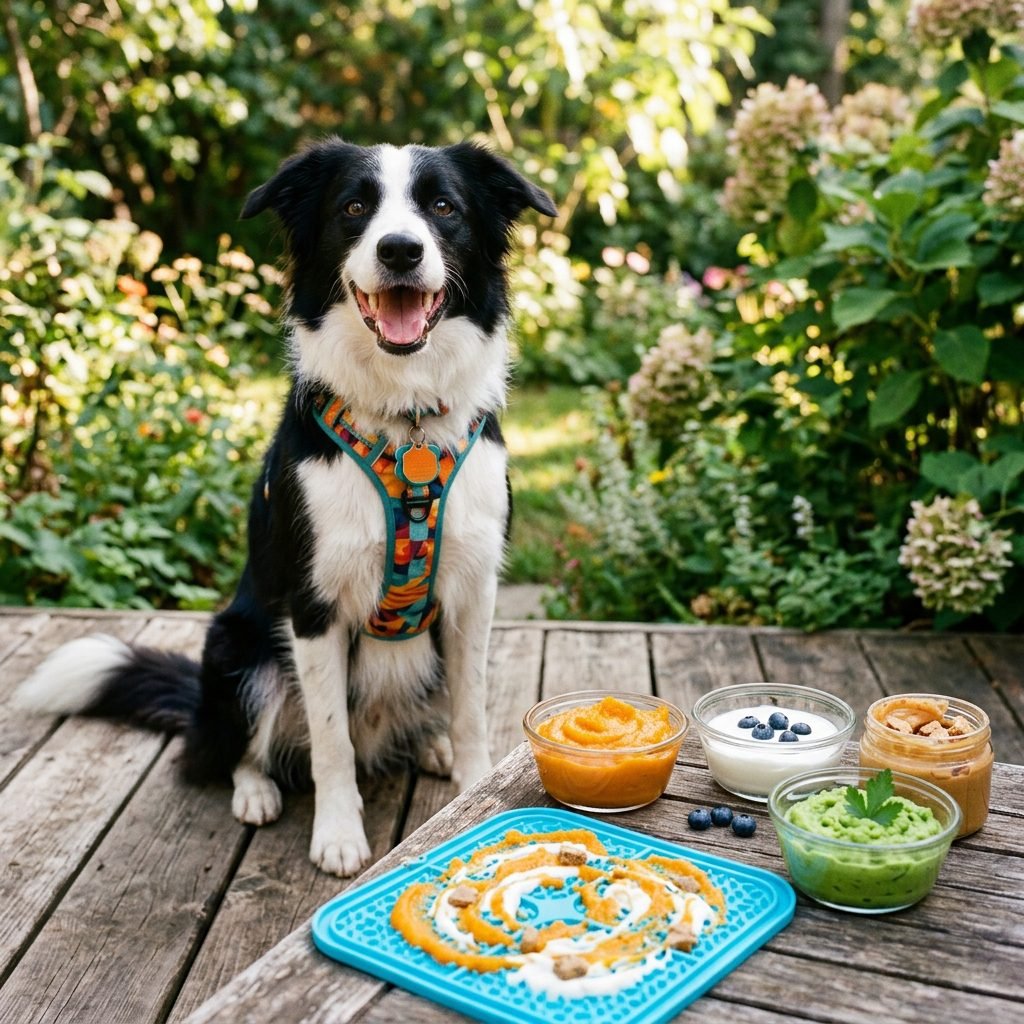
Canned pumpkin (ensure it is 100% pure pumpkin, not pie filling) is the gold standard of dog spreads. It is loaded with soluble fiber, which helps regulate your dog’s digestion. Whether your pup is dealing with a bout of diarrhea or a bit of constipation, pumpkin is the ‘great equalizer.’ It also contains Vitamin A and Vitamin C, supporting immune health. Pro tip: Spread it thin on a lick mat and freeze it for a 30-minute ‘pumpkin popsicle’ session.
2. Non-Fat Plain Greek Yogurt: The Probiotic Powerhouse
If your dog isn’t lactose intolerant, Greek yogurt is a fantastic option. It is higher in protein than regular yogurt and contains live active cultures that support a healthy gut microbiome. A healthy gut means a stronger immune system and even better skin and coat health. Always choose ‘plain’ and ‘non-fat’ to keep the calories at a minimum and avoid any hidden artificial sweeteners like Xylitol.
3. Mashed Banana & Cinnamon: The Sweet Treat
For the dogs with a sweet tooth, mashed banana is a winner. While slightly higher in sugar than pumpkin, it is rich in potassium, magnesium, and Vitamin B6. Adding a tiny pinch of cinnamon (which is dog-safe in small amounts) can provide anti-inflammatory benefits. Because bananas are dense, they stick to the ridges of enrichment toys exceptionally well.
4. Low-Sodium Bone Broth Gelatin: The Hydration Hero
This is a specialist favorite! By mixing low-sodium bone broth with plain, unflavored gelatin, you create a ‘jelly’ that is incredibly low in calories but high in collagen. Collagen supports joint health and coat shine. You can smear this jelly into the deep crevices of a Kong. It provides a unique texture that many dogs find fascinating to lick and nibble.
5. Pureed Green Beans or Steamed Carrots: The ‘Green’ Spread
If you have a food processor, this is a must-try. Steaming green beans or carrots and blending them into a smooth paste creates a ‘veggie pate.’ It is virtually fat-free and provides a massive boost of beta-carotene and Vitamin K. Most dogs love the natural sweetness of carrots, making this a high-value reward without the high-value calories.
Maximizing the ‘Busy’ Factor: Application Techniques
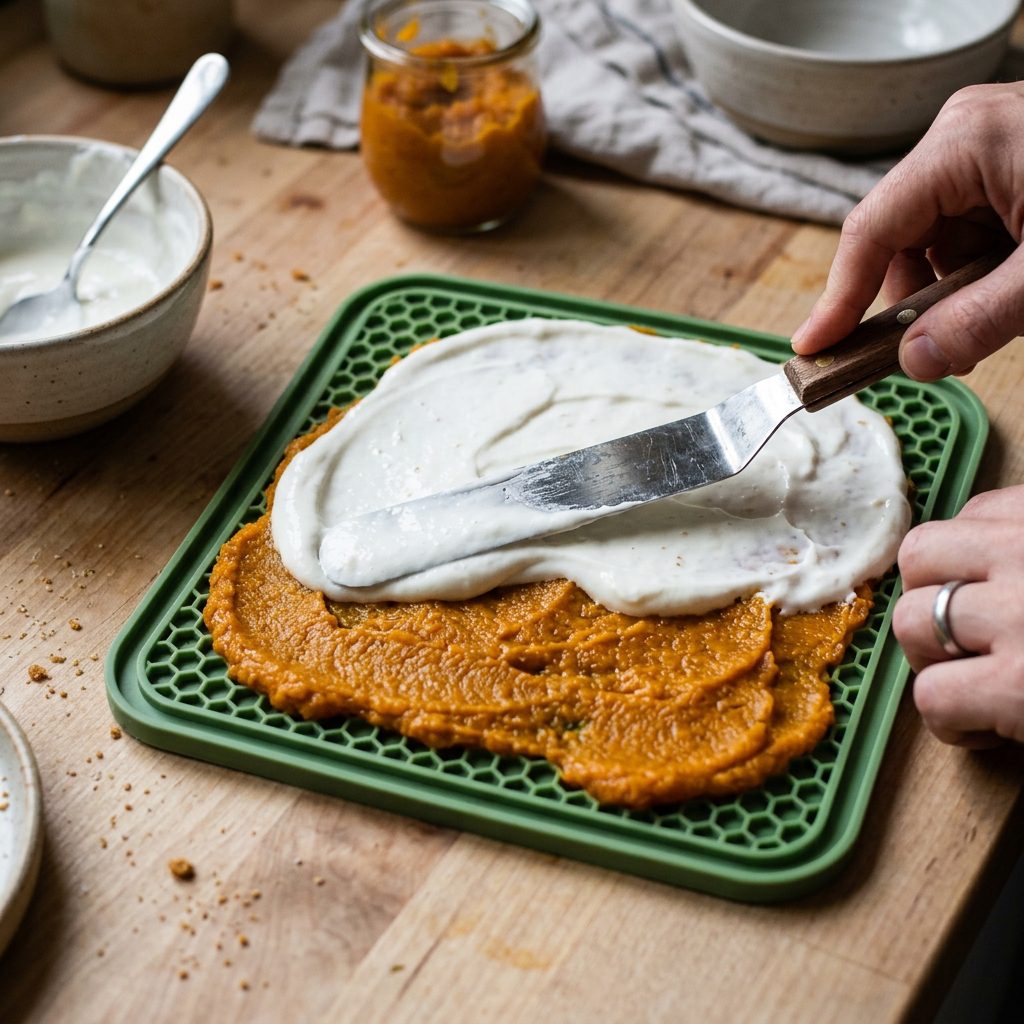
Choosing the right spread is only half the battle. To truly keep your dog busy, you need to master the art of application. As a trainer, I recommend using these spreads in ways that challenge your dog’s tongue and brain.
The Layering Technique
Don’t just use one spread! Create a ‘parfait’ of flavors. Use a layer of pumpkin at the bottom of a toy, a layer of yogurt in the middle, and top it off with a few pieces of kibble stuck into the mashed banana. This keeps the dog engaged as they discover new tastes and textures as they progress through the toy.
The Deep Freeze
The secret weapon of savvy dog owners is the freezer. A room-temperature spread might last five minutes; a frozen spread can last thirty. Freezing these low-calorie options makes them harder to remove, requiring more ‘work’ from the dog. This is especially useful for high-energy breeds or puppies who are currently teething.
Texture Variation
Use different tools for different spreads. A flat lick mat is perfect for thin spreads like yogurt or pumpkin. For the thicker ‘veggie pates’ or banana mash, use a deep-well rubber toy (like a Kong or Toppl). The goal is to make the dog work for every single molecule of food.
Expert Tip: If your dog is new to these healthy spreads, start by mixing them 50/50 with a little peanut butter. Gradually decrease the peanut butter over a week until they are happily enjoying the low-calorie version alone!
Safety First: Ingredients to Avoid at All Costs
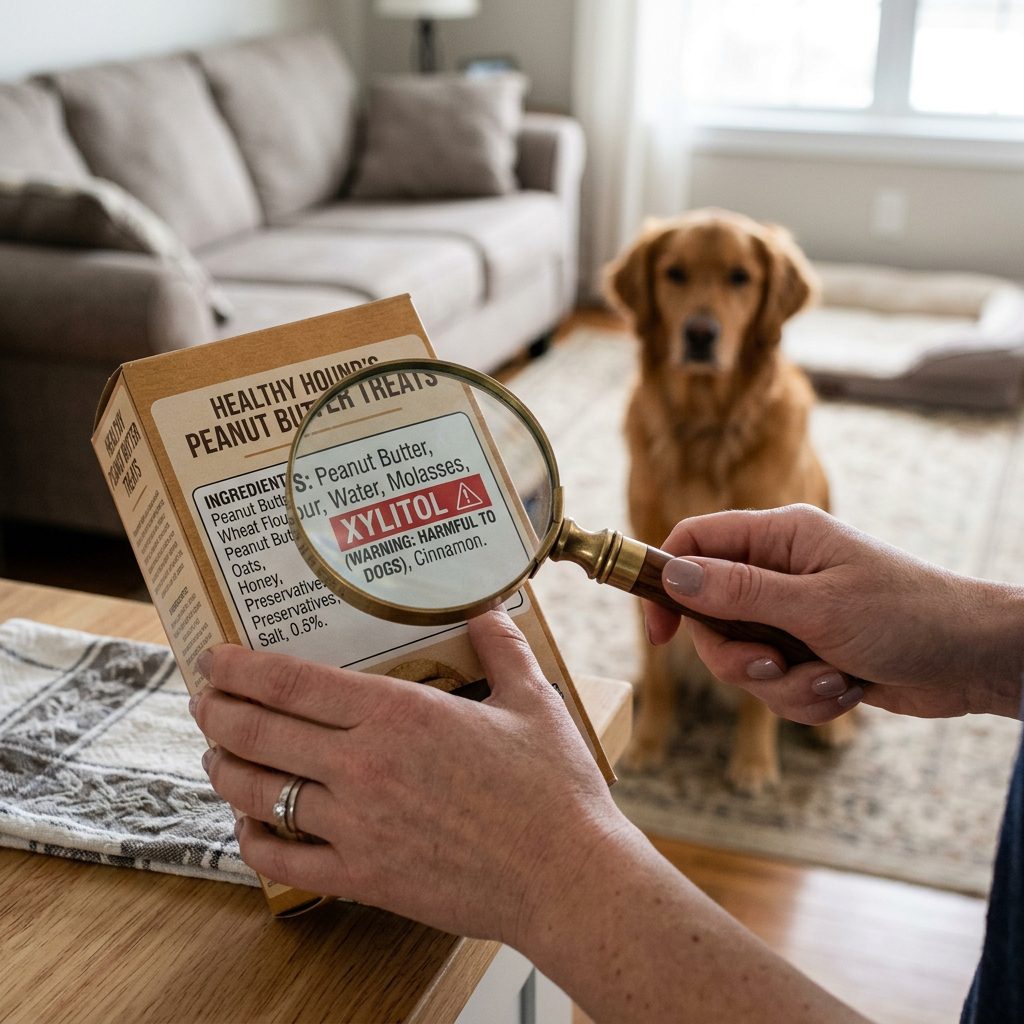
While we are focusing on health, we must remain vigilant about safety. Not all human-grade healthy foods are safe for dogs. When you are ‘ditching the peanut butter,’ make sure you aren’t accidentally introducing something dangerous.
| Ingredient | Risk Level | Reason |
|---|---|---|
| Xylitol (Birch Sugar) | EXTREME | Causes rapid insulin release and liver failure. |
| Grapes/Raisins | EXTREME | Can cause acute kidney failure. |
| Macadamia Nuts | HIGH | Causes weakness, vomiting, and tremors. |
| Added Salt/Sodium | MODERATE | Can lead to dehydration and ion poisoning. |
| Artificial Colors | LOW/MODERATE | Can cause allergic reactions or hyperactivity. |
Always read the labels on your yogurt and canned pumpkin. Xylitol is increasingly common in ‘low sugar’ or ‘diet’ human foods and is highly toxic to dogs even in tiny amounts. If a label says ‘natural sweeteners’ but doesn’t specify, put it back on the shelf. Stick to single-ingredient items whenever possible.
Transitioning Your Dog to a Low-Calorie Lifestyle
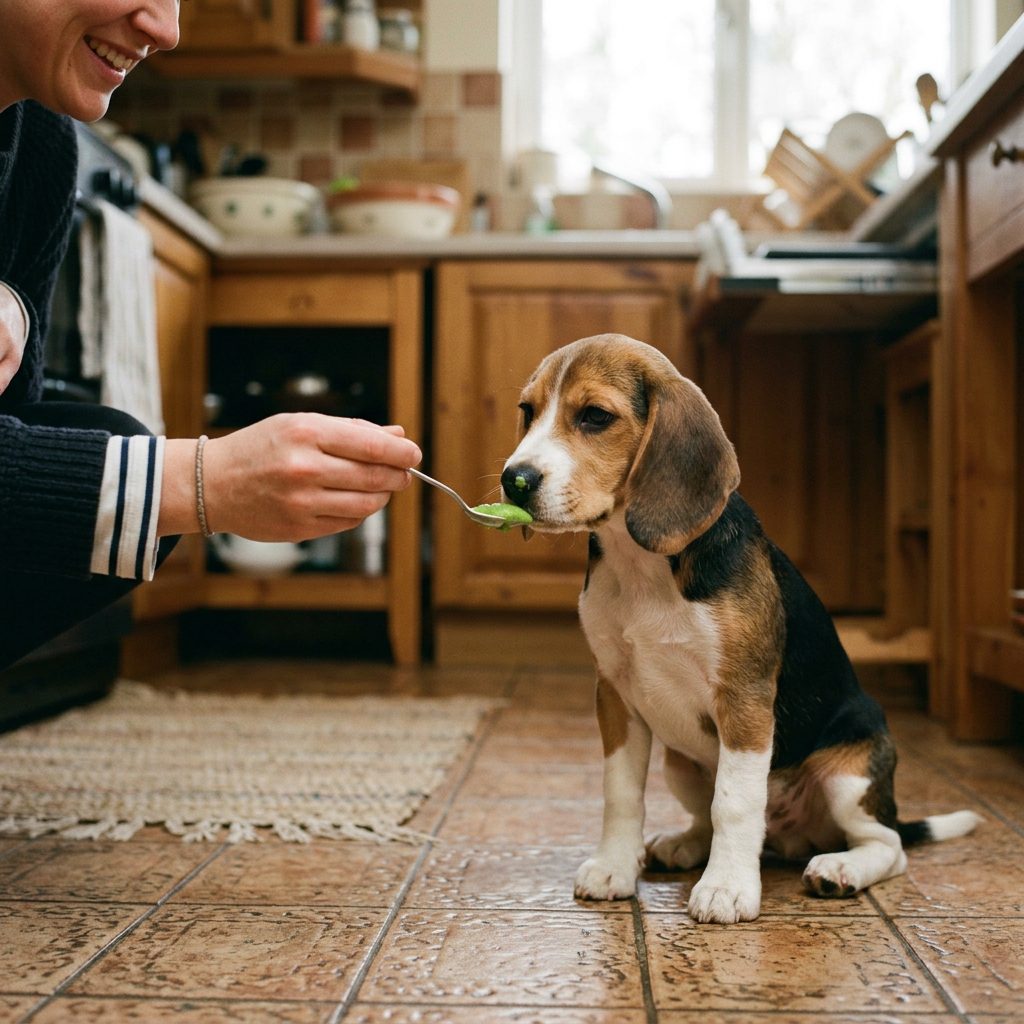
If your dog is a peanut butter addict, they might look at a pile of green bean puree with a bit of skepticism. Transitioning requires patience and a bit of strategy. We want our dogs to associate these new, healthy spreads with the same joy they felt for the high-fat stuff.
Step-by-Step Transition Guide
- The Introduction: Offer a small lick of the new spread off your finger during a calm moment. Don’t force it.
- The Hybrid Approach: For the first three days, mix 75% peanut butter with 25% of the new spread.
- The Shift: Move to a 50/50 split for the next three days. You will likely notice your dog doesn’t even care about the difference by now!
- The Final Swap: Move to 100% of the healthy spread, perhaps ‘garnishing’ it with a single tiny piece of freeze-dried liver to keep the scent profile high-value.
Remember, the goal isn’t just weight loss; it is long-term health. By reducing the caloric load of their daily enrichment, you are opening up ‘room’ in their diet for other healthy additions, like fresh blueberries or small pieces of boiled chicken during training sessions.
Conclusion
Ditching the peanut butter doesn’t mean ditching the fun. By embracing these five genius low-calorie spreads—pumpkin, Greek yogurt, mashed banana, bone broth gelatin, and veggie purees—you are providing your dog with a diverse array of nutrients while keeping them mentally sharp and physically fit. As savvy owners, our job is to balance our dogs’ happiness with their health. These alternatives prove that you don’t need high fat and high calories to keep a dog busy and satisfied.
Next time you reach for that heavy jar of nut butter, stop and think about the ‘Pumpkin Dynamo’ or the ‘Probiotic Powerhouse’ instead. Your dog’s heart, joints, and waistline will thank you for years to come. Happy licking!