This Slow-Cooked Knuckle Gelatin Recipe Rebuilds Senior Dog Joints Like Magic!
The ‘Liquid Gold’ Secret Big Pharma Doesn’t Want You to Know
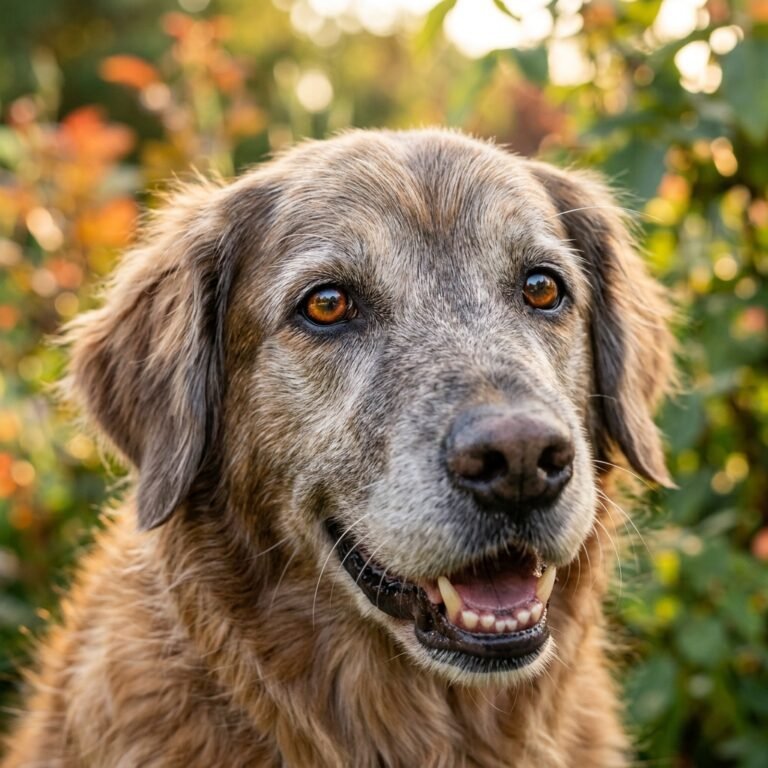
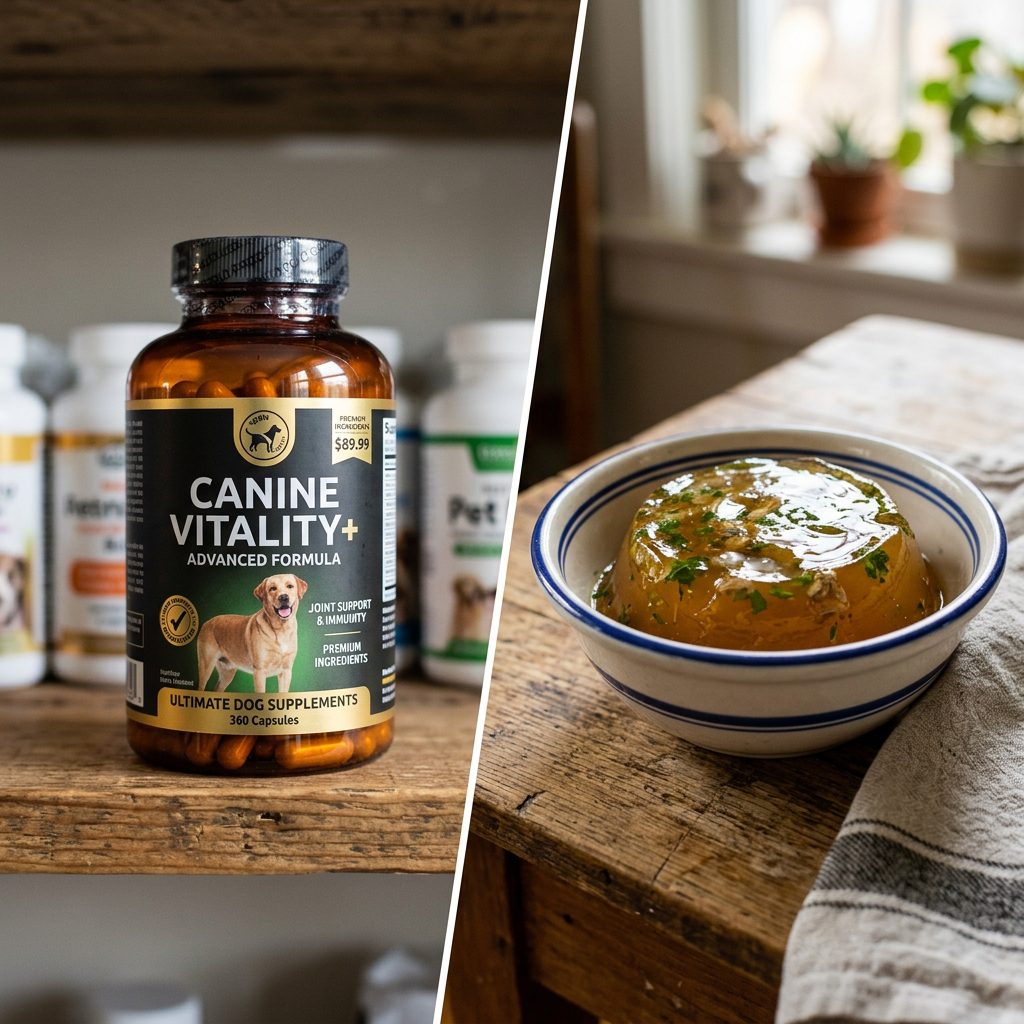
If you have a senior dog, you’ve likely seen the signs: the slow rise from the floor, the hesitation before the stairs, and that heartbreaking ‘old dog’ stiff walk. You go to the vet, and they hand you a bottle of joint supplements that costs $60 a month and is packed with more fillers than actual active ingredients. I’m here to tell you there’s a better way. As a canine nutrition hacker, I don’t look at the flashy labels; I look at the molecular biology of what actually repairs a joint. The secret isn’t in a pill—it’s in the gelatinous matrix of slow-cooked knuckle bones.
We are talking about a bioavailable explosion of Type II collagen, glucosamine, and chondroitin that your dog’s body can actually use. This isn’t just ‘soup.’ When done correctly, this recipe turns into a thick, rubbery ‘jiggle’ that acts like a lubricant for those creaky hinges. Best of all? It costs pennies compared to those fancy chews. Let’s stop overpaying for marketing and start cooking for results.
The Forensic Breakdown: Why Knuckles Over Marrow?
The Collagen Hierarchy
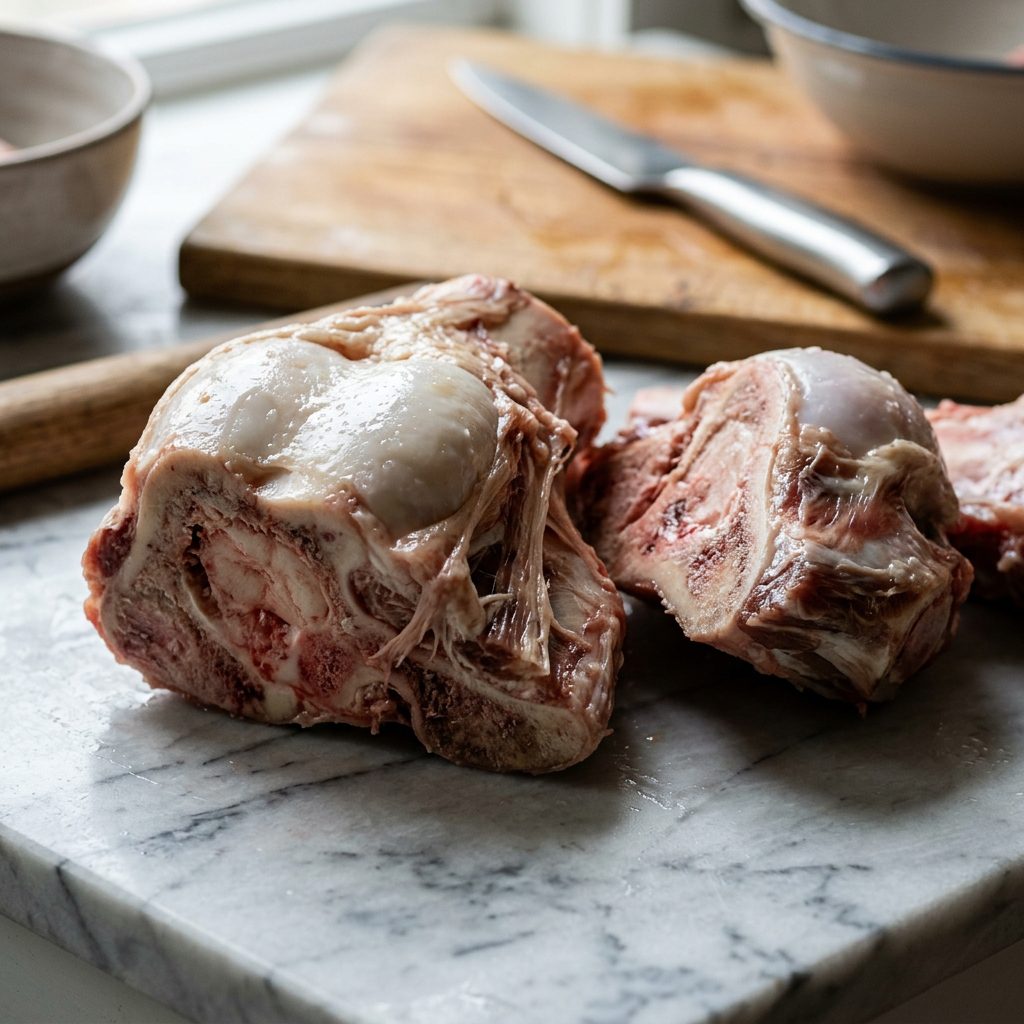
Most dog owners make the mistake of buying ‘marrow bones.’ While marrow is great for healthy fats, it’s practically useless for joint repair. If you want to rebuild cartilage, you need connective tissue. Beef knuckles are the gold standard because they are the actual joints of the cow, loaded with synovial fluid, cartilage, and tendons. When we slow-cook these for 24 to 48 hours, we are performing a chemical extraction of the most potent joint-building blocks on the planet.
The Science of the ‘Jiggle’
The magic happens when collagen is denatured into gelatin. Gelatin contains high concentrations of proline and glycine, two amino acids that are often missing in standard kibble but are essential for maintaining the integrity of the canine musculoskeletal system. Glycine, in particular, helps reduce inflammation in the gut and the joints simultaneously. If your ‘bone broth’ doesn’t turn into a solid, rubbery block in the fridge, you didn’t get the collagen out. You just made flavored water. This guide ensures you get the real deal every single time.
The Safe Chef Guide: Safety First, Results Second
SAFETY DISCLAIMER: I am a canine nutrition hacker, not a veterinarian. This recipe is intended as a supplemental ‘topper’ and not a complete and balanced meal. Always consult with your vet before introducing new proteins if your dog has a history of pancreatitis or kidney disease.
The Golden Rule: Never Feed Cooked Bones
This is the most important part of the guide. We are using the bones to extract the gelatin, but the bones themselves must NEVER be fed to your dog once the cooking process is finished. Cooking makes bones brittle and prone to splintering, which can cause internal perforations. We will be straining this mixture through a fine-mesh sieve to ensure only the liquid gold remains.
Real Cost Breakdown: DIY vs. Store-Bought
Let’s look at the numbers. A high-end joint supplement for a large dog can easily set you back a small fortune. Here is how the DIY version stacks up:
| Feature | Premium Store-Bought Chews | DIY Knuckle Gelatin |
|---|---|---|
| Main Ingredient | Soy/Corn Starch + 500mg Glucosamine | 100% Pure Bovine Collagen |
| Bioavailability | Moderate (Synthetic) | Superior (Whole Food) |
| Monthly Cost (50lb Dog) | $45.00 – $65.00 | $9.00 – $12.00 |
| Fillers/Preservatives | High (BHA/BHT often present) | Zero |
The Master Recipe: Slow-Cooked Knuckle Gelatin
The Ingredients List
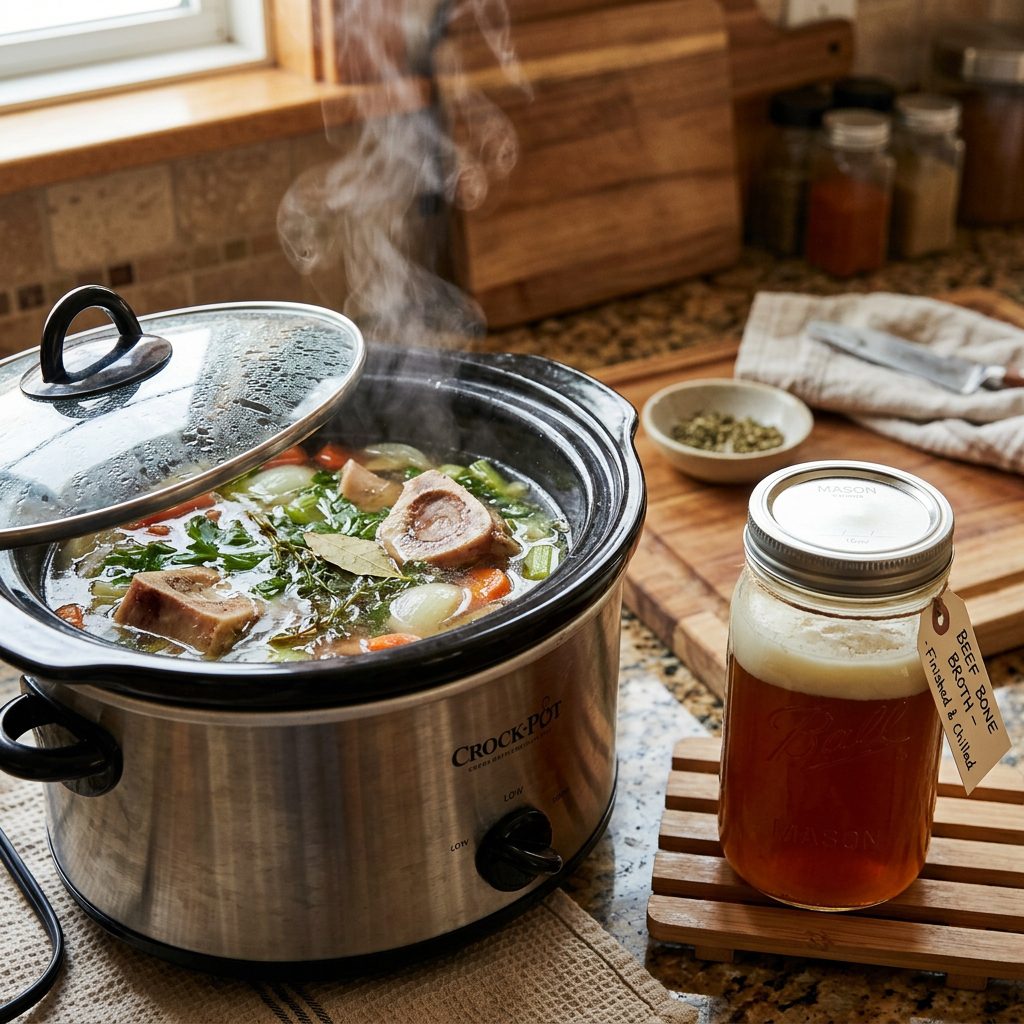
- 2-3 Large Beef Knuckle Bones: Try to get them from a local butcher for the freshest cartilage.
- Filtered Water: Enough to cover the bones by 2 inches.
- 2 Tablespoons Apple Cider Vinegar (ACV): This is the ‘hacker’s tool.’ The acid in the vinegar helps leach the minerals and collagen out of the bone matrix.
- Optional: 1 tsp Turmeric: For an added anti-inflammatory punch (always serve with a pinch of black pepper to activate).
The Step-by-Step Process
- The Soak: Place your knuckle bones in a large slow cooker. Cover with water and add the Apple Cider Vinegar. Let it sit for 30 minutes. This ‘softens’ the bones for extraction.
- The Long Simmer: Set your slow cooker to ‘Low.’ You are going to let this cook for a minimum of 24 hours. 48 hours is even better if you want maximum potency.
- The Fat Cap: After cooking, strain the liquid through a fine-mesh sieve into glass jars. Discard the bones immediately. Let the jars cool in the fridge.
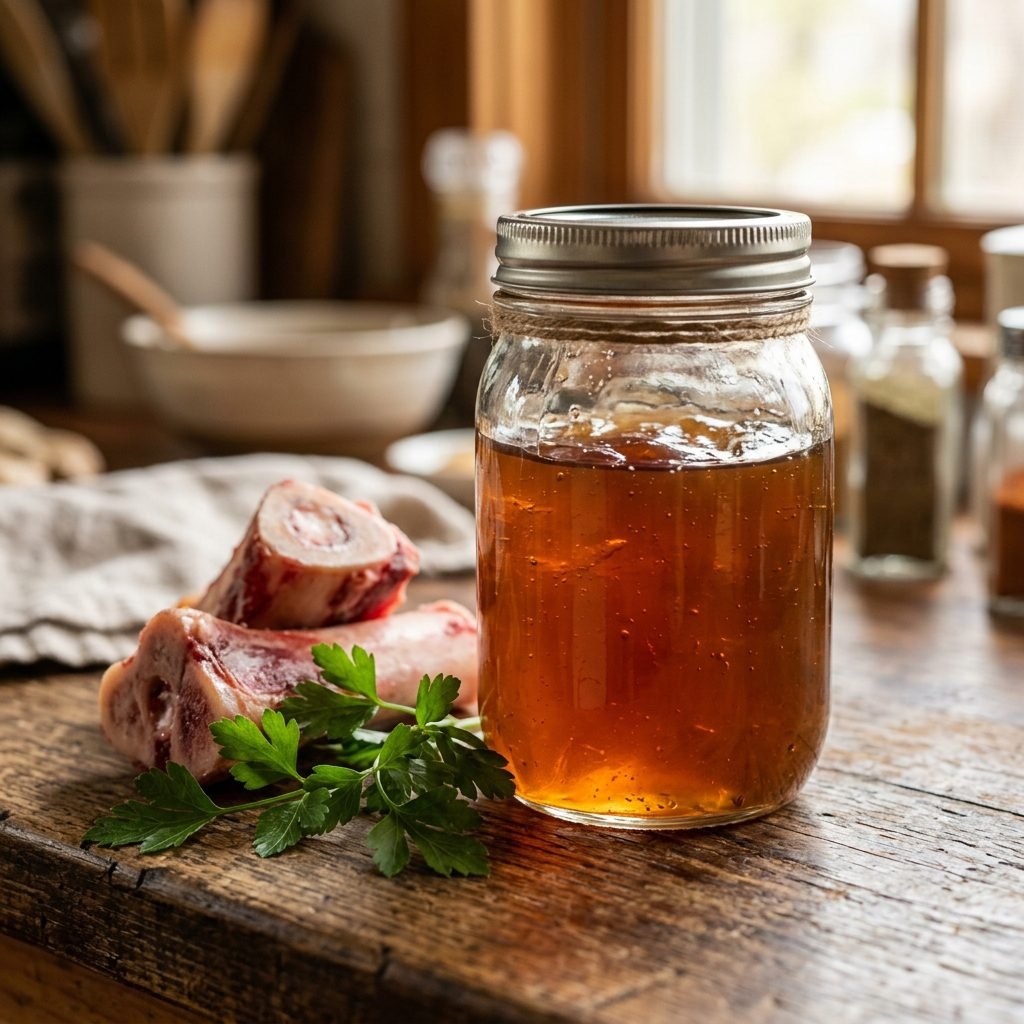
- The Reveal: Once chilled, a hard white layer of fat will form on top. Scrape this off and discard it (or use it for cooking if your dog doesn’t have fat sensitivities). Underneath, you should find a thick, dark amber ‘jello.’ That is your joint-rebuilding magic.
Hacker Tips: Storage and Maximizing Absorption
Batch Cooking & Freezing
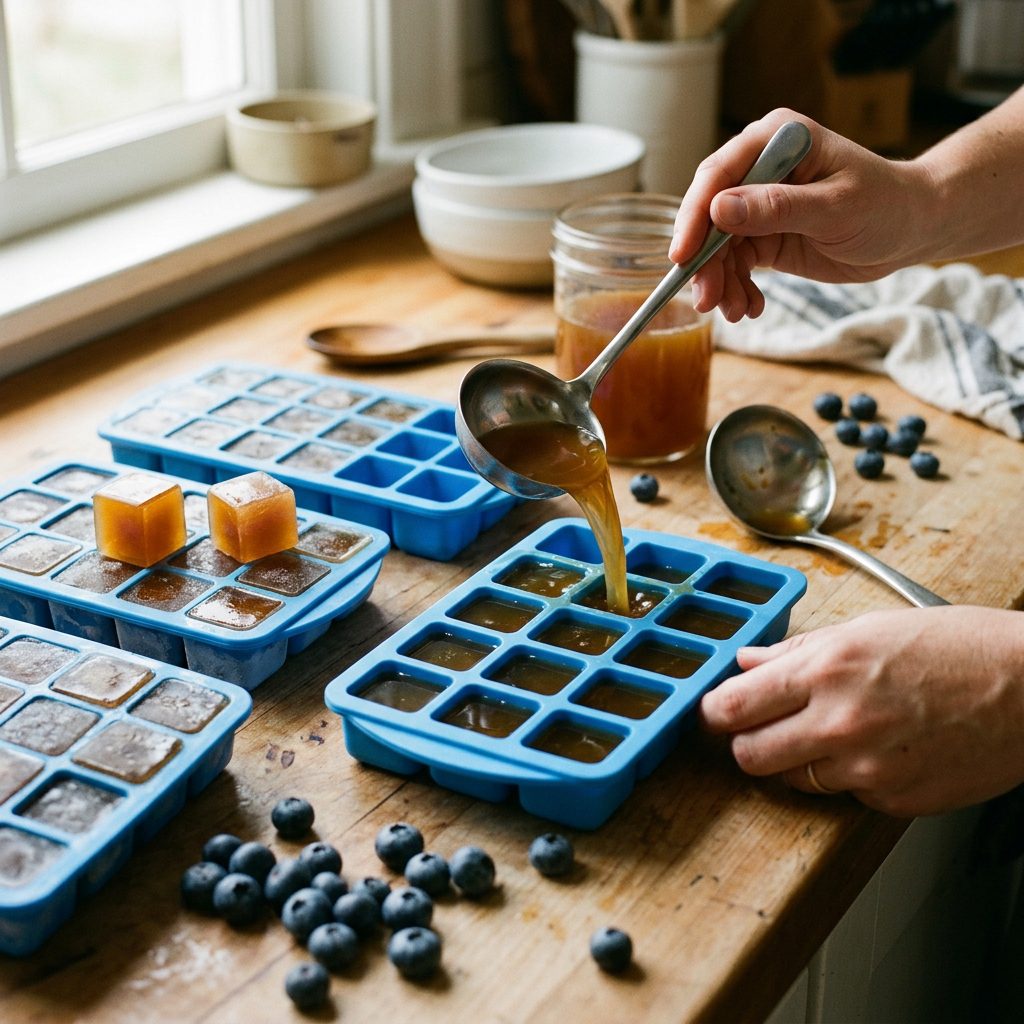
Don’t make this every day. I recommend doing a massive batch once a month. Use silicone ice cube trays to portion out the gelatin. Once frozen, pop the cubes into a freezer bag. One cube is roughly one serving for a 25lb dog. For a senior dog, two cubes a day (one morning, one night) is the sweet spot for noticing a difference in mobility.
The Vitamin C Secret
Collagen synthesis in the body is significantly boosted by the presence of Vitamin C. While dogs produce their own Vitamin C, seniors often have lower levels. To get the most ‘bang for your buck,’ serve this gelatin alongside a small amount of dog-safe Vitamin C sources like blueberries or steamed red bell peppers. This helps the body weave those amino acids back into the dog’s own cartilage matrix more efficiently.
Insider Secret: If your dog is a picky eater, the smell of this gelatin is like ‘doggy crack.’ It’s a great way to hide bitter medications or get them to eat a less-than-appetizing prescription diet.
The Results: What to Expect
The Timeline of Healing
This isn’t a steroid shot; it’s nutrition. You won’t see a change in 24 hours. However, if you are consistent, here is the typical progression I see in senior dogs:
- Week 1: Improved coat shine and better digestion (thanks to the glycine).
- Week 3: Noticeable decrease in ‘morning stiffness.’ The dog starts getting up faster.
- Week 6: Increased desire for play. Many owners report their dogs ‘acting like puppies again’ during walks.
Remember, we are providing the raw materials for repair. The body takes time to distribute those nutrients to the joints. Stick with it, and your wallet—and your dog—will thank you.
Conclusion
Final Thoughts from the Nutrition Hacker
You don’t need a degree in veterinary medicine to see that the current model of pet care is designed to keep you buying expensive, processed solutions. By going back to the basics—using the parts of the animal that modern ‘kibble’ discards—we can provide our senior dogs with a level of vitality that truly seems like magic. This knuckle gelatin recipe is the ultimate hack: it’s cheap, effective, and 100% natural. Your dog spent their whole life looking after you; now it’s time to look after their joints with the best nutrition possible. Get that slow cooker out and start the transformation today!