The Ultimate High-Value Training Reward: How to Dehydrate Lamb Hearts at Home for Pennies!
Let’s be real, fellow dog parents: training a dog, especially when dealing with high-distraction environments or complex behavioral issues like reactivity, requires a serious secret weapon. You’ve likely stood in the pet store aisle, staring at tiny bags of premium, single-ingredient organ meat treats that cost a small fortune, wondering if you need to take out a second mortgage just to teach your dog a reliable recall.
The truth is, the most powerful currency in dog training doesn’t have to drain your wallet. The secret lies in your own kitchen, and it starts with lamb hearts.
As savvy dog owners, we know that not all treats are created equal. Kibble might work in the living room, but the moment a squirrel darts across the park, that dry biscuit loses all its negotiating power. You need a high-value reward—something so smelly, so meaty, and so irresistible that your dog will practically do backflips to get a taste. Enter the lamb heart. Organ meats are a nutritional powerhouse, and lamb hearts specifically offer an incredible balance of lean protein, essential amino acids, and a rich, gamey aroma that drives dogs wild.
In this comprehensive guide, we are going to dive deep into the ultimate dog training hack. I will walk you through exactly why lamb hearts are the perfect training tool, how to source them cheaply, and the foolproof, step-by-step method to dehydrate them at home. By the end of this article, you will be producing premium-grade, high-value training treats for mere pennies on the dollar, giving you the ultimate leverage in your training sessions while keeping your pup exceptionally healthy.
Why Lamb Hearts? The Nutritional and Training Benefits
The Psychology of High-Value Rewards
Before we get into the kitchen, let’s talk about canine psychology. Dogs are opportunistic scavengers and predators by nature. Their sense of smell is their primary way of interacting with the world. When you use a high-value reward like dehydrated lamb heart, you are tapping right into their primal instincts. The rich, concentrated scent of dehydrated organ meat cuts through environmental distractions like a foghorn. When your dog smells lamb heart, their brain releases a surge of dopamine, creating a powerful positive association with whatever behavior they just performed. This is why trainers use organ meats for critical skills like emergency recall, counter-conditioning, and desensitization.
A Nutritional Superfood for Canines
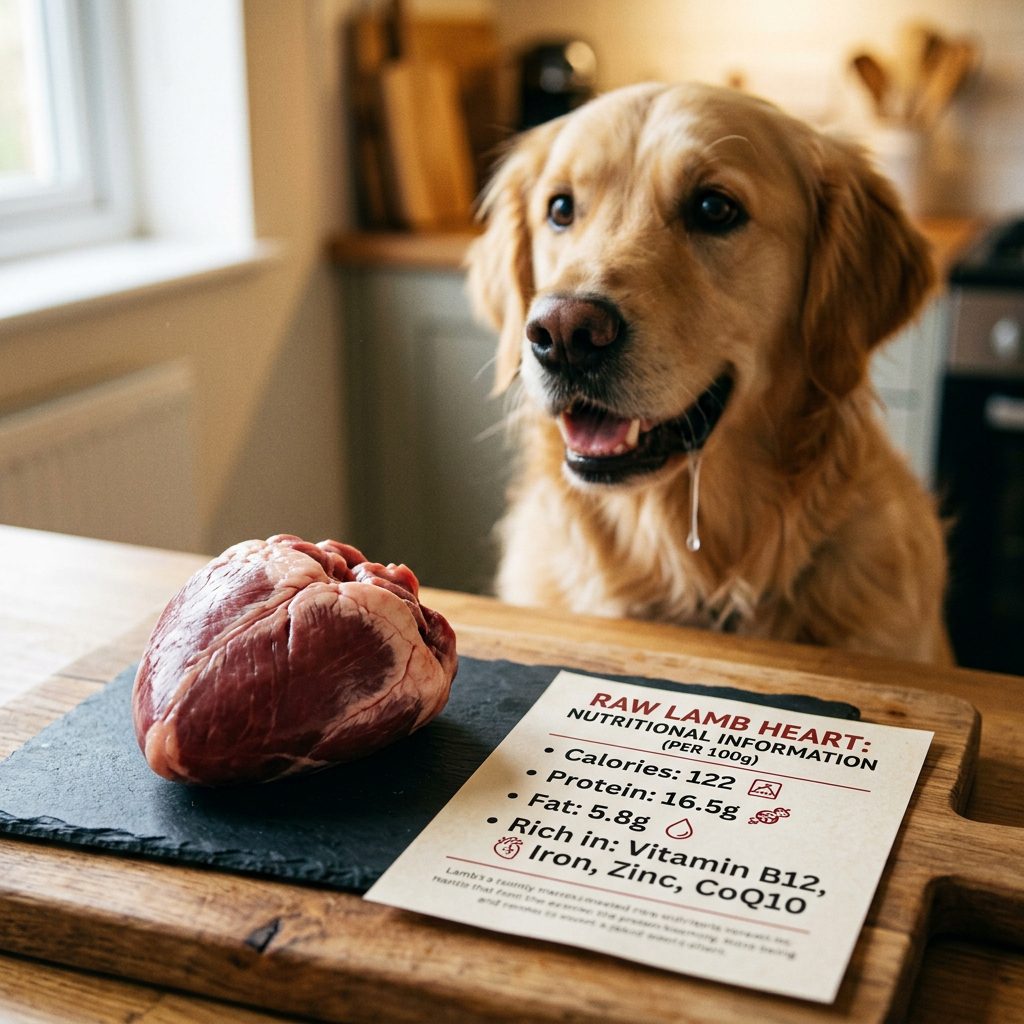
Lamb heart isn’t just a tasty bribe; it is a legitimate superfood for your dog. While we classify the heart as an organ, it is actually a heavily exercised muscle. This means it is leaner than other organs like the liver, making it easier on your dog’s digestive system while still packing a massive nutritional punch. Lamb hearts are incredibly rich in essential nutrients that support your dog’s cardiovascular health, energy levels, and immune system.
Key Nutrients Found in Lamb Hearts
| Nutrient | Benefit for Dogs |
|---|---|
| Taurine | An essential amino acid critical for heart health and preventing dilated cardiomyopathy (DCM). |
| Coenzyme Q10 (CoQ10) | A powerful antioxidant that supports cellular energy and cardiovascular function. |
| B-Vitamins (B12, Riboflavin) | Vital for maintaining a healthy nervous system, brain function, and red blood cell production. |
| Iron | Helps transport oxygen throughout the body, keeping your dog energetic and active. |
| Zinc | Supports a robust immune system, healthy skin, and a shiny coat. |
Because it is a single-ingredient treat, dehydrated lamb heart is also fantastic for dogs with food allergies or sensitive stomachs. You know exactly what is going into your dog’s body—no artificial preservatives, no mystery fillers, and no hidden sugars. Just pure, unadulterated meat.
Tools of the Trade and Sourcing Your Ingredients
Essential Equipment for Dehydrating
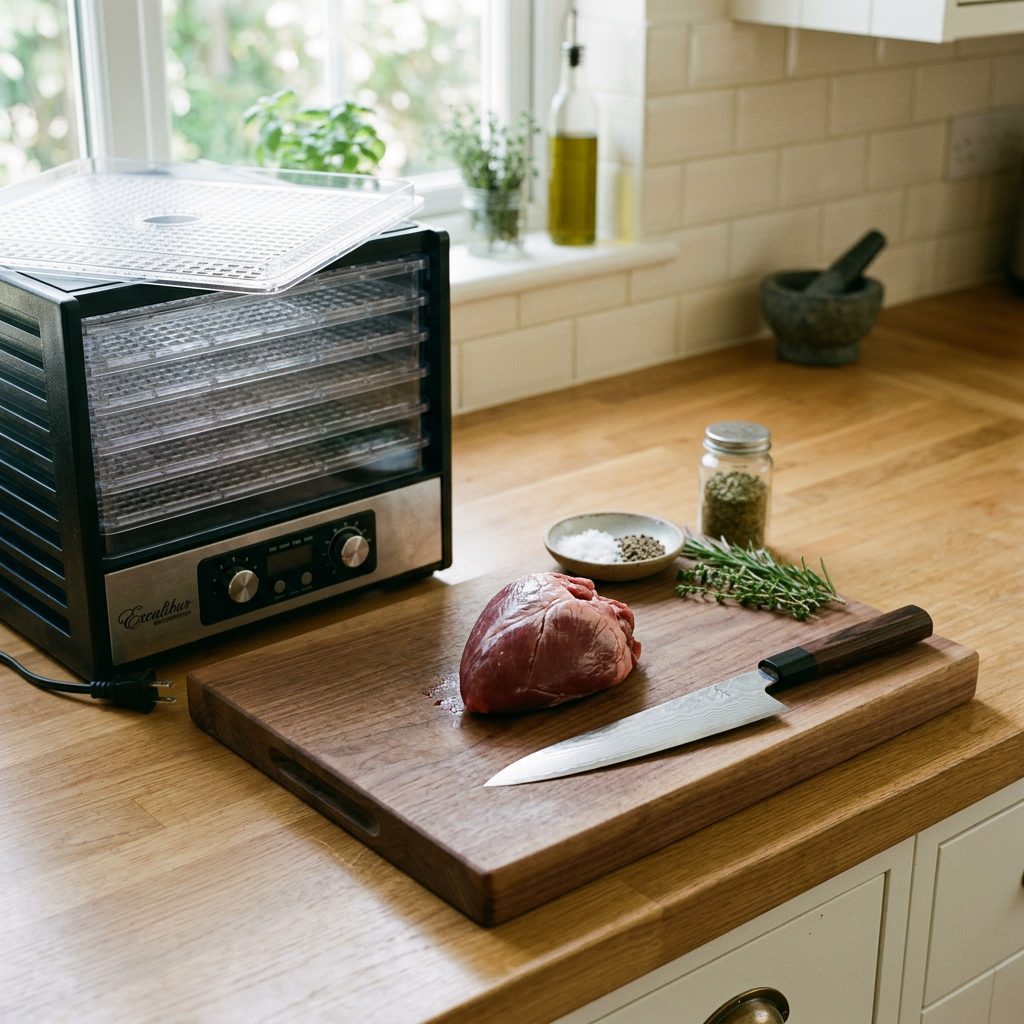
You don’t need a professional commercial kitchen to make incredible dog treats, but having the right tools will make the process infinitely easier and safer. Here is what you need to get started:
- A Food Dehydrator: While you can use an oven (which we will discuss), a dedicated food dehydrator is the gold standard. It provides consistent, low-temperature airflow that safely dries the meat without cooking it, preserving the vital nutrients.
- A Very Sharp Chef’s Knife: Slicing meat thinly and evenly is the secret to perfect jerky. A dull knife will make this process frustrating and dangerous.
- A Large Cutting Board: Preferably plastic or a non-porous material that can be easily sanitized after working with raw meat.
- Paper Towels: For patting the raw meat dry before dehydrating, which speeds up the process.
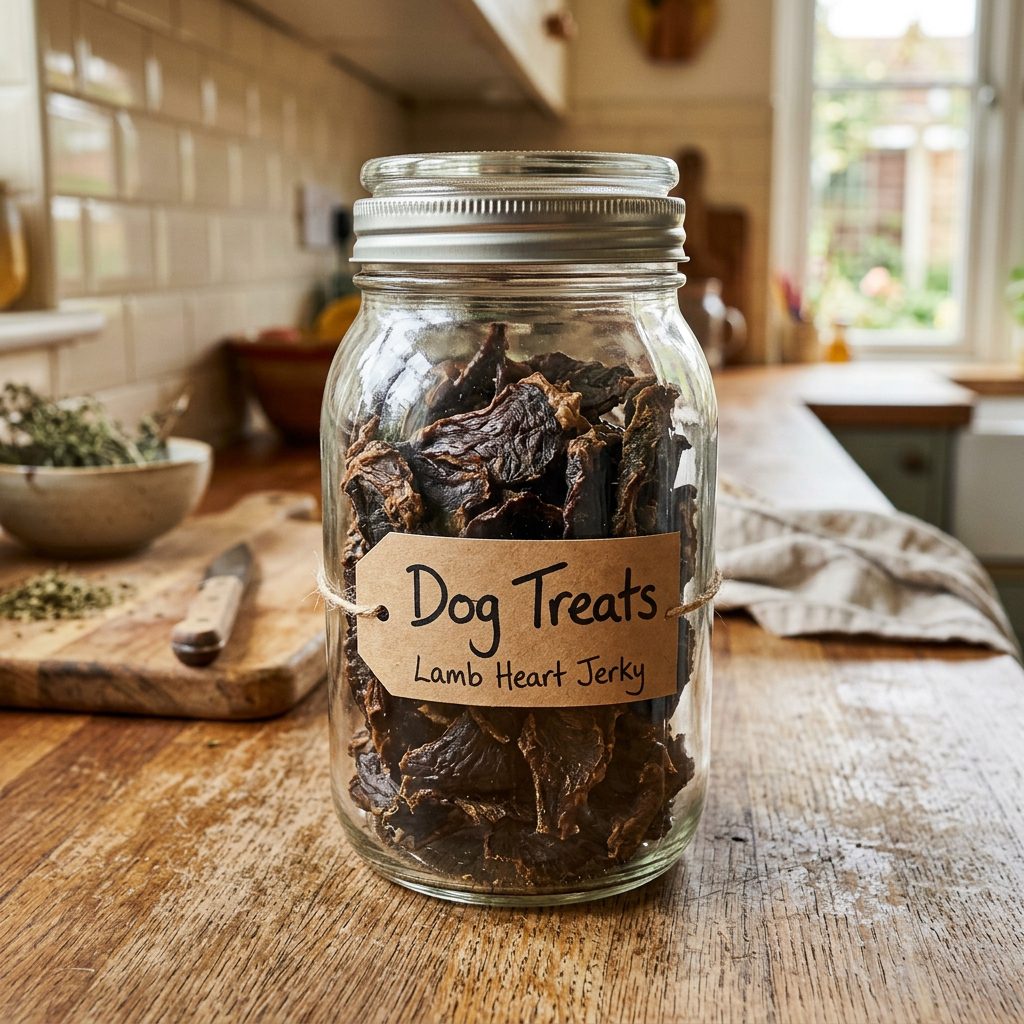
- Airtight Storage Containers: Glass mason jars or vacuum-seal bags are perfect for extending the shelf life of your finished treats.
Where to Find Cheap Lamb Hearts
If you walk into a high-end grocery store, you might not find lamb hearts, or if you do, they might be overpriced. To get these for pennies, you need to think like a savvy shopper. Here are the best places to source your ingredients:
- Local Butcher Shops: Call your local butcher. Often, organ meats are considered offal and are discarded or sold very cheaply. If you ask them to save lamb hearts for you, you can usually negotiate a fantastic bulk price.
- Ethnic Supermarkets: Asian, Hispanic, and Middle Eastern markets often have extensive meat counters that feature a wide variety of organ meats at incredibly low prices.
- Local Farmers and Homesteaders: If you live near rural areas, connecting directly with sheep farmers can yield a goldmine of cheap, pasture-raised organ meats.
- Raw Dog Food Co-ops: Look for local raw feeding groups on social media. They frequently buy organ meats in massive bulk directly from slaughterhouses and distribute them among members at wholesale prices.
When selecting your lamb hearts, look for meat that is deep red and firm to the touch. A little bit of fat on the outside is fine (and tasty for the dog), but you will want to trim excess hard fat to ensure the jerky dehydrates properly and lasts longer.
Step-by-Step Guide: How to Dehydrate Lamb Hearts
Preparing for Perfection
Now comes the fun part. Making dehydrated lamb heart jerky is incredibly simple, but the secret to success lies in the preparation. Follow these steps meticulously, and you will have professional-grade treats every single time.
- Step 1: The Pre-Freeze (The Ultimate Hack)
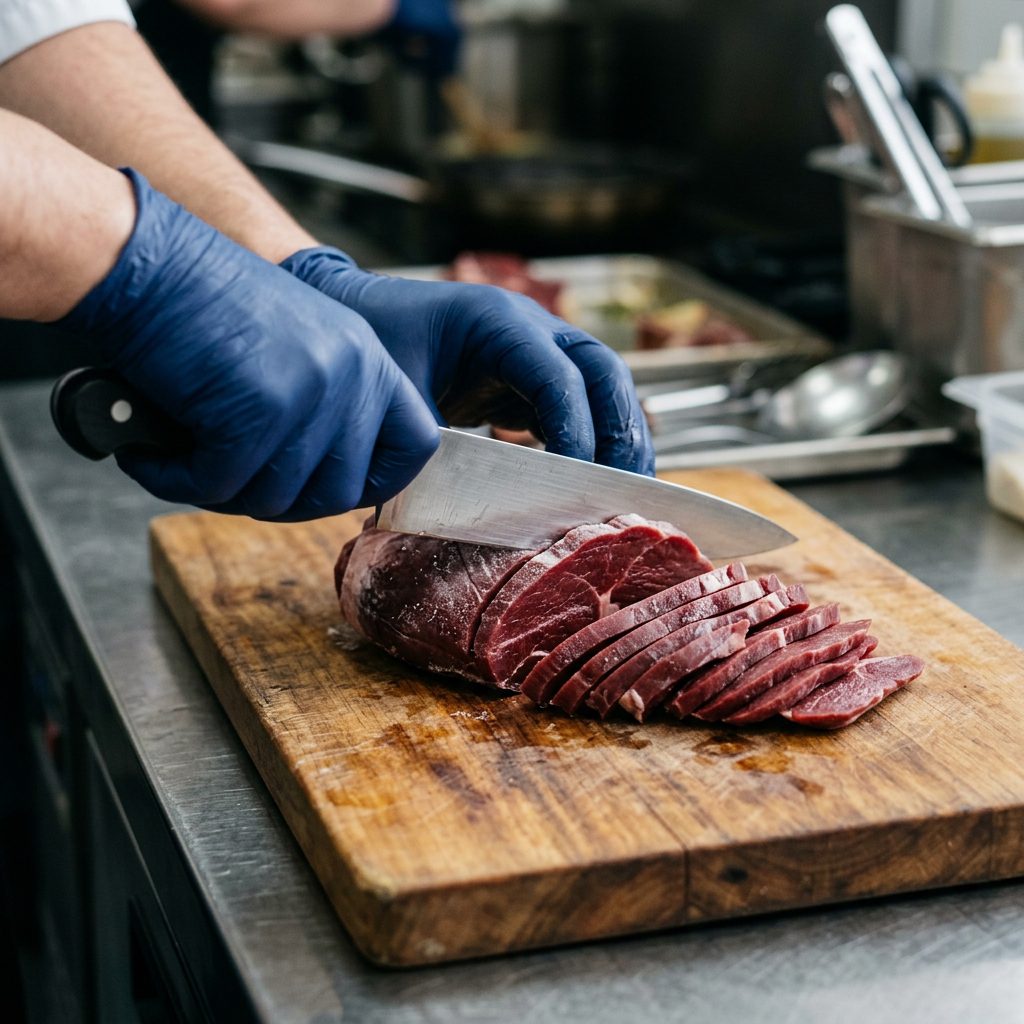
Raw organ meat can be slippery and difficult to slice thinly. The best trick is to place your raw lamb hearts in the freezer for about 1 to 2 hours before you plan to cut them. You do not want them frozen solid, just firm enough that your knife glides through them cleanly, allowing for uniform slices. - Step 2: Trimming the Fat
Remove the hearts from the freezer. Using your sharp knife, carefully trim away the hard, white fat caps and any tough connective tissue or valves around the top of the heart. While dogs love fat, fat does not dehydrate well and will cause your jerky to go rancid much faster. The leaner you can make the meat, the longer your treats will last. - Step 3: Slicing the Meat
Slice the lamb heart into thin strips, aiming for about 1/8 to 1/4 inch in thickness. Consistency is key here. If your slices are uneven, some pieces will be bone-dry while thicker pieces remain dangerously raw in the middle. For training treats, I recommend cutting these strips into small, pea-sized cubes before dehydrating, as they will shrink down to the perfect instant-reward size. - Step 4: Patting Dry
Lay your sliced meat on a layer of paper towels and gently pat them dry. Removing excess surface moisture will significantly cut down on your dehydrating time. - Step 5: Loading the Dehydrator
Arrange the pieces on your dehydrator trays. Ensure that none of the pieces are touching or overlapping. Proper airflow is essential for safe dehydrating. If the meat overlaps, moisture will get trapped, creating a breeding ground for bacteria. - Step 6: Setting the Temperature and Time
Set your dehydrator to 160°F (71°C). This is the crucial temperature required to kill any potential pathogens like Salmonella or E. coli while safely drying the meat. Depending on the thickness of your slices and the humidity in your home, this process will take anywhere from 8 to 12 hours. - Step 7: The Bend Test
After about 8 hours, start checking your treats. Take a piece out and let it cool for 5 minutes (meat feels softer when warm). Try to bend it. For long-term storage, the meat should snap cleanly in half, revealing a dry interior with no signs of moisture. If it bends without breaking, it needs more time.
Oven Dehydrating Alternative
If you don’t have a dehydrator, you can use your oven. Set your oven to its lowest possible temperature (usually around 170°F). Place the meat on wire cooling racks set over baking sheets to allow air to circulate underneath. Prop the oven door open slightly with a wooden spoon to let moisture escape. Keep a close eye on them, as ovens tend to cook the meat rather than dry it, which can make it crumbly, but your dog will still love it!
Storage, Shelf Life, and Safe Serving Sizes
Conditioning and Storing Your Jerky
You’ve spent hours creating the perfect treats; the last thing you want is for them to mold. Once your lamb hearts are fully dehydrated and have cooled completely to room temperature, you need to condition them. Place the treats in a loosely packed glass jar or airtight container for a few days, shaking the jar daily. If you see any condensation forming on the inside of the glass, the treats are not dry enough and need to go back into the dehydrator. If the glass stays clear, you are good to go!
For optimal shelf life:
- Pantry Storage: Completely dry jerky stored in an airtight container in a cool, dark cupboard will last for 2 to 3 weeks.
- Refrigerator: Storing the treats in the fridge will extend their life to about 1 to 2 months.
- Freezer: For bulk prep, vacuum seal your treats and toss them in the freezer. They will stay fresh for up to 6 months! Just pull out a handful whenever you need them for a training session.
How Much is Too Much? Safe Serving Sizes
As incredible as lamb hearts are, they are incredibly rich. Organ meats are dense in nutrients, and feeding too much too quickly can lead to a condition known among dog owners as disaster pants (severe diarrhea). Treat lamb heart as a high-value supplement, not a meal replacement. Organ meats should make up no more than 10% of your dog’s overall daily diet.
Suggested Daily Maximum Serving Guide
| Dog Weight (lbs) | Max Daily Dehydrated Pieces (Pea-Sized) |
|---|---|
| Toy Breeds (Under 10 lbs) | 5 – 10 tiny pieces |
| Small Breeds (10 – 25 lbs) | 10 – 20 pieces |
| Medium Breeds (26 – 50 lbs) | 20 – 30 pieces |
| Large Breeds (51 – 90 lbs) | 30 – 45 pieces |
| Giant Breeds (90+ lbs) | 45 – 60 pieces |
Note: Always introduce any new food, including lamb heart, slowly to your dog’s diet to monitor for any gastrointestinal upset.
Training Strategies: Maximizing the High-Value Status
The Art of the Jackpot Reward
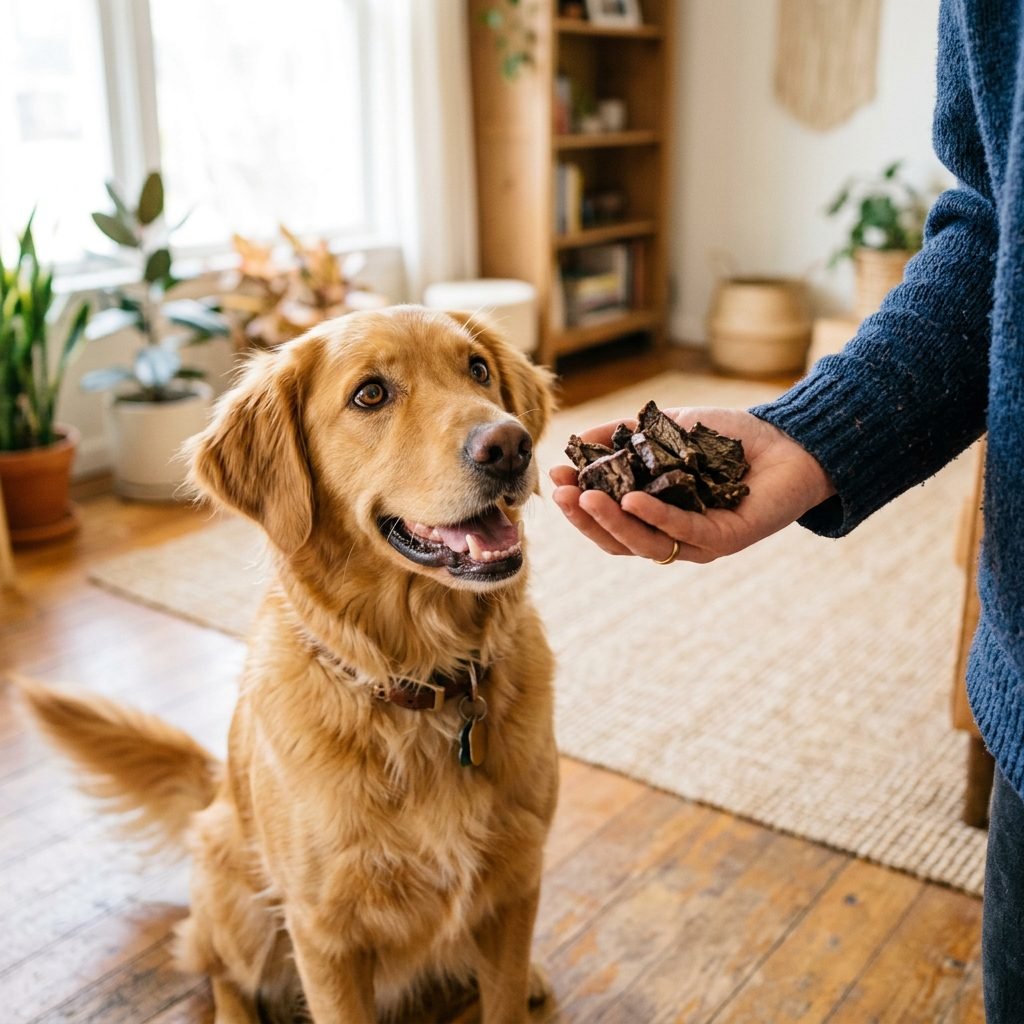
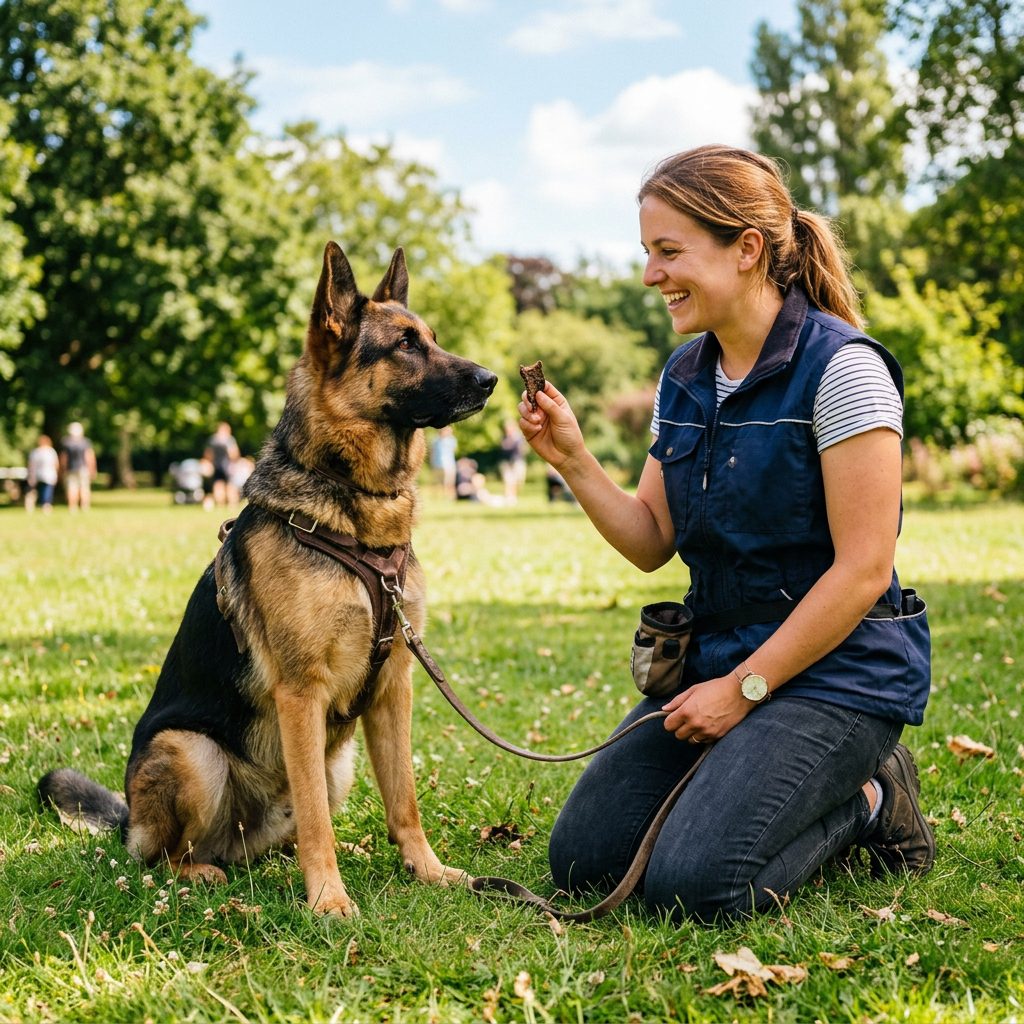
Now that you possess the ultimate training currency, you need to use it strategically. If you give your dog lamb heart just for existing, it loses its magic. High-value treats should be reserved strictly for teaching new, difficult behaviors, or for working in highly distracting environments.
One of the most effective ways to use these treats is the Jackpot Method. When your dog performs a highly difficult task perfectly—like recalling away from a running squirrel—don’t just give them one piece of lamb heart. Give them five or six pieces in rapid succession, praising them excitedly. This massive payout leaves a lasting impression on the dog’s brain, ensuring they will be eager to repeat that behavior in the future.
Counter-Conditioning and Reactivity
If you have a reactive dog (a dog that barks or lunges at other dogs, people, or cars), dehydrated lamb heart is your best friend for counter-conditioning. The goal is to change your dog’s emotional response to the trigger from negative (fear/frustration) to positive (anticipation of a delicious treat).
- The Setup: Find a distance from the trigger where your dog notices it but isn’t reacting yet (under threshold).
- The Execution: The exact second your dog looks at the trigger, feed them a piece of lamb heart. Repeat this continuously while the trigger is present.
- The Result: Over time, your dog will see another dog or person and immediately look to you, expecting their lamb heart. You have successfully rewired their brain using the power of high-value nutrition!
Nosework and Enrichment
Because these treats are so exceptionally smelly, they are perfect for canine enrichment. Hide small pieces of dehydrated lamb heart around your living room, in snuffle mats, or rolled up in towels. Instruct your dog to find it. This engages their natural foraging instincts, tires out their brain, and provides a deeply satisfying reward at the end of the hunt.
Troubleshooting and Common Dehydrating Mistakes
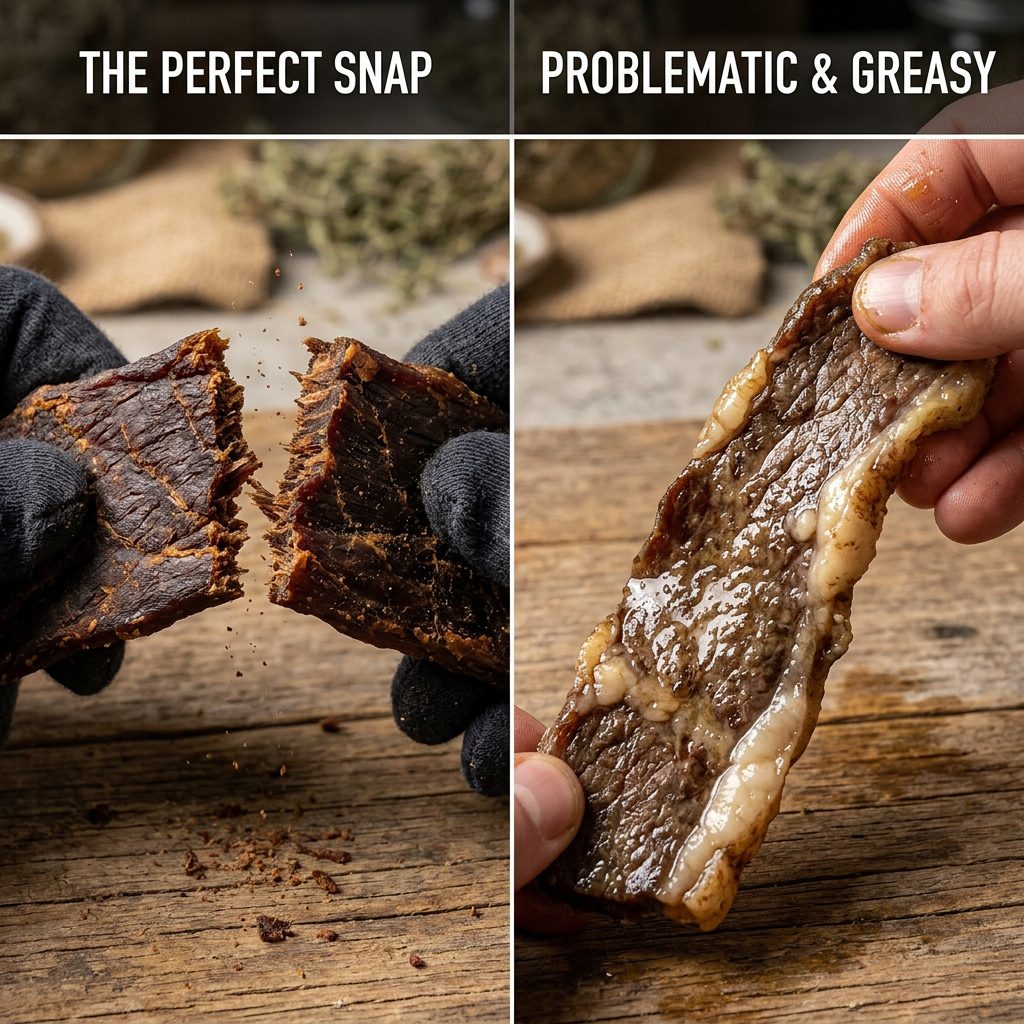
Fixing Common Jerky Issues
Even the best home chefs run into hiccups when learning to dehydrate meat. Here are the most common issues you might face when making your lamb heart treats, and exactly how to fix them.
1. The Meat is Greasy and Won’t Dry
If your finished treats feel slick or greasy, you likely didn’t trim enough fat off the raw heart before dehydrating. Fat does not evaporate. The Fix: Take paper towels and aggressively blot the finished treats to remove as much surface oil as possible. You must store these greasy treats in the freezer, as the fat will cause them to go rancid at room temperature within days.
2. The Treats are Crunchy on the Outside but Squishy Inside
This condition is known as case hardening. It happens when the dehydrator temperature is set too high initially. The outside of the meat cooks and seals shut, trapping raw moisture inside. The Fix: Unfortunately, case-hardened meat is a breeding ground for bacteria and should be thrown away. Next time, ensure your temperature is strictly set to 160°F (71°C) and slice the meat thinner.
3. The Jerky Crumbles into Dust
If your treats shatter into a million pieces when you try to break them, you have over-dehydrated them, or you used an oven that actually baked the meat. The Fix: Don’t throw it away! Take that crumbly meat dust and sprinkle it over your dog’s regular kibble as an incredibly appetizing food topper. Next time, check your dehydrator a few hours earlier.
4. White Spots on the Jerky
If you pull your treats out of storage and notice white, fuzzy spots, that is mold. This means the treats were not dried thoroughly or were stored in a humid environment without proper conditioning. The Fix: Throw the entire batch away immediately. Never risk feeding your dog moldy meat. Ensure you do the bend test and the glass jar conditioning test for your next batch.
Conclusion
Wrapping It Up: Elevate Your Training Game
Making your own dehydrated lamb heart treats is a game-changer for any savvy dog owner. Not only are you taking absolute control over your dog’s nutrition by eliminating artificial preservatives and mystery ingredients, but you are also creating a high-value reward that will supercharge your training sessions. By sourcing your ingredients smartly from local butchers or ethnic markets, you are literally making premium, boutique-quality dog treats for pennies.
Remember, the key to success is in the preparation: freeze the meat slightly for easy slicing, trim the fat meticulously, and dehydrate at a safe 160°F until the meat snaps cleanly. Treat these rich morsels as the potent training currency they are, utilizing them for crucial skills like recall, counter-conditioning, and intense focus work.
Your dog works hard for you, and they deserve the absolute best. So, dust off that dehydrator, grab a sharp knife, and get ready to become your dog’s absolute favorite person in the world. Happy training, and happy dehydrating!