Don’t Get Fined! The Ultimate Checklist to Legally Sell Dog Treats from Home
Welcome to the insider’s club, savvy dog owner! You have done it. You have cracked the code on canine nutrition and perfected a homemade dog treat recipe that has dogs literally drooling at your feet. Your pup is obsessed, your friends are begging for batches, and the local dog park crowd is asking, “Where can I buy these?” The entrepreneurial lightbulb goes off. You think, “I should start selling these from my kitchen!” But hold your horses, because the pet food industry is not a free-for-all. In fact, it is one of the most highly regulated industries out there. If you just slap a cute label on a mason jar and start selling at the local farmer’s market, you are walking into a legal minefield. As The Canine Nutrition Hacker, I spend my days analyzing ingredient labels like a forensic scientist and exposing the fillers big brands use. But today, we are flipping the script. Today, we are putting your treats under the microscope. I am going to show you exactly how to navigate the bureaucratic red tape, avoid devastating fines, and legally launch your dog treat empire right from your home kitchen. We are going to bypass the nonsense, decode the confusing government jargon, and set you up for massive, compliant success.
Here is the hard truth that catches most enthusiastic bakers off guard: legally, dog treats are classified as “commercial animal feed.” Yes, you read that right. Those artisanal, organic, grain-free pumpkin biscottis you bake with love are regulated under the exact same umbrella as livestock feed for cattle and pigs. That means the FDA, the AAFCO (Association of American Feed Control Officials), and your State Department of Agriculture all have a say in what you do. Ignorance of the law is not an excuse they accept, and fines for selling unregistered pet treats can range from a few hundred dollars to thousands, not to mention a mandatory “stop sale” order that will kill your business overnight. But do not panic! I have got your back. This ultimate checklist will walk you through the exact steps you need to take to protect your assets, test your treats, format your labels perfectly, and source your ingredients like a true professional. Grab a cup of coffee, get your notebook ready, and let us hack the legal system of the pet food industry together!
The Reality Check: Pet Treats Are Regulated Like Livestock Feed
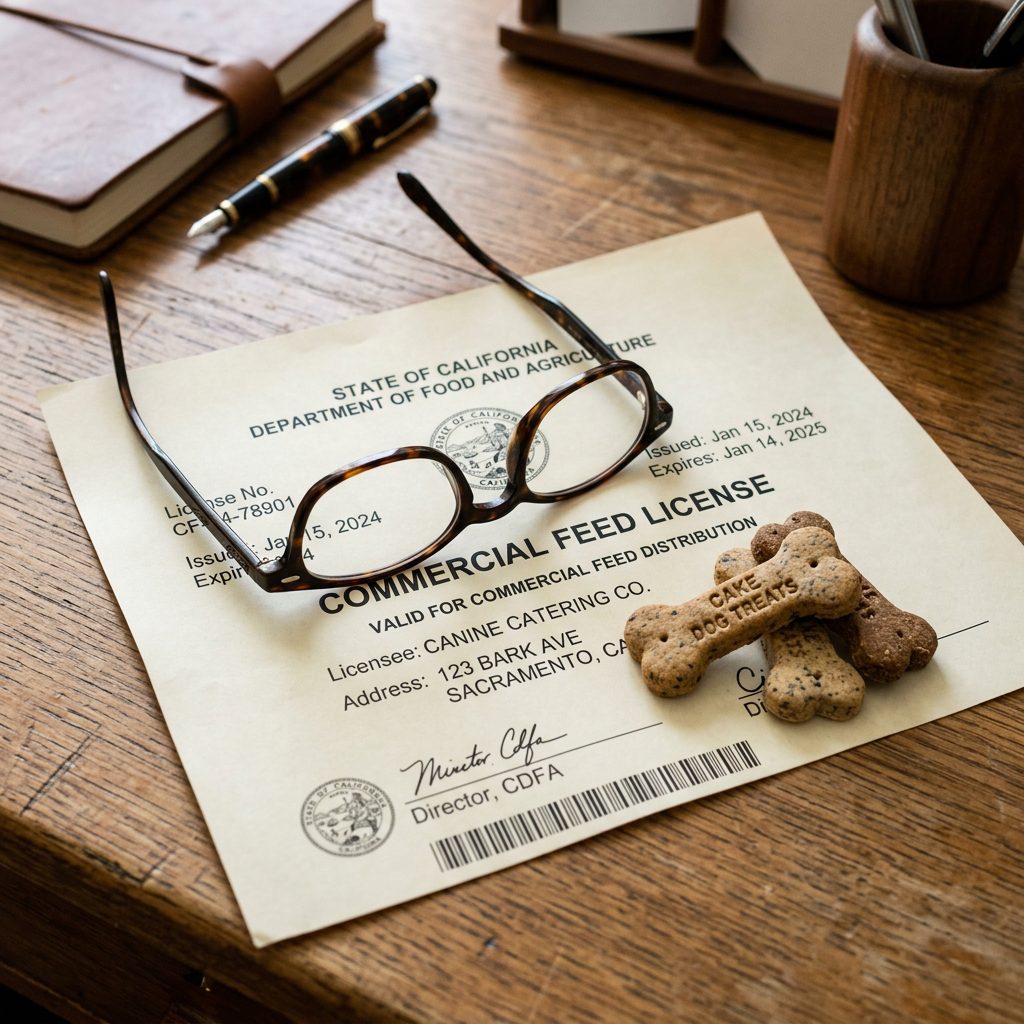
Let us kick things off with the biggest misconception in the homemade dog treat world: Cottage Food Laws. If you have ever baked cookies or cupcakes for humans and sold them at a bake sale, you probably know that most states have Cottage Food Laws that allow you to sell low-risk human foods made in a home kitchen. Here is the insider secret: Cottage Food Laws almost NEVER apply to pet food. Because pet treats fall under “commercial feed” laws, they are governed entirely differently. You are not dealing with the local health department; you are dealing with the State Department of Agriculture.
The AAFCO vs. State Laws
To understand the rules of the game, you need to know the players. The FDA regulates pet food on a federal level, ensuring it is safe and properly labeled. Then there is AAFCO. AAFCO is not a regulatory agency; they do not have the power to fine you. Instead, they are an advisory body that sets the nutritional standards and labeling guidelines. However, almost every single state has adopted AAFCO guidelines into their actual state laws. So, while AAFCO cannot fine you, your State Department of Agriculture absolutely will if you violate AAFCO standards.
| Regulatory Body | What They Do | Can They Fine You? |
|---|---|---|
| FDA (Federal) | Oversees food safety, recalls, and FSMA compliance across state lines. | Yes (Massive Federal Fines) |
| AAFCO (Advisory) | Creates uniform standards for definitions, labels, and nutritional adequacy. | No (Advisory Only) |
| State Dept. of Agriculture | Enforces state feed laws, issues licenses, and conducts random label audits. | Yes (State-level Fines & Stop Sales) |
“Hacker Tip: Do not waste time calling your local health department about selling dog treats. Go straight to your State Department of Agriculture’s website and search for ‘Commercial Feed License’. That is the golden ticket you need.”
Before you bake another batch, you must research your specific state’s requirements for a Commercial Feed License. Some states require you to register your entire business for a flat fee, while others require you to register each individual treat recipe you sell. For example, if you sell a Peanut Butter Crunch and a Sweet Potato Chew, that might be two separate registration fees. Knowing this upfront will save you from accidental violations and help you budget your startup costs effectively.
Step-by-Step Business Setup: Shielding Your Assets
Now that you know who is watching, let us talk about protecting yourself. Selling dog treats is a business, and you need to treat it like one from day one. You are dealing with animals that can have allergies, sensitive stomachs, or unexpected reactions. If a dog gets sick and the owner blames your treats, you need a legal shield between your personal assets (your house, your car, your savings) and your business.
Forming Your Business Entity
Operating as a Sole Proprietorship is easy and free, but it offers zero liability protection. If you get sued, everything you own is on the line. As a savvy business owner, you should strongly consider forming an LLC (Limited Liability Company). An LLC creates a legal wall between you and your business. It is usually inexpensive to set up (ranging from $50 to $500 depending on your state) and adds a massive layer of professionalism to your brand. Once your LLC is formed, you will need to get an EIN (Employer Identification Number) from the IRS, which is completely free and acts like a social security number for your business.
Zoning Laws and Sales Tax
Just because you are baking at home does not mean your neighborhood is zoned for commercial manufacturing. You need to check your local city or county zoning ordinances for “Home Occupation Permits.” Some municipalities have strict rules about commercial deliveries, customer foot traffic, or the types of equipment you can use in a residential home. Secondly, dog treats are generally considered taxable goods. You will likely need to apply for a Sales and Use Tax Permit from your state’s comptroller or department of revenue so you can legally collect and remit sales tax on your treats.
- Step 1: Form an LLC to protect your personal assets.
- Step 2: Obtain a free EIN from the IRS.
- Step 3: Check local zoning laws and apply for a Home Occupation Permit if required.
- Step 4: Register for a State Sales Tax Permit.
- Step 5: Open a dedicated business bank account to keep finances strictly separate.
“Insider Secret: Never commingle your personal and business funds. If you buy a bag of flour for your dog treats using your personal debit card, you are ‘piercing the corporate veil’ and risking your LLC’s liability protection!”
The Forensic Science: Guaranteed Analysis & Lab Testing
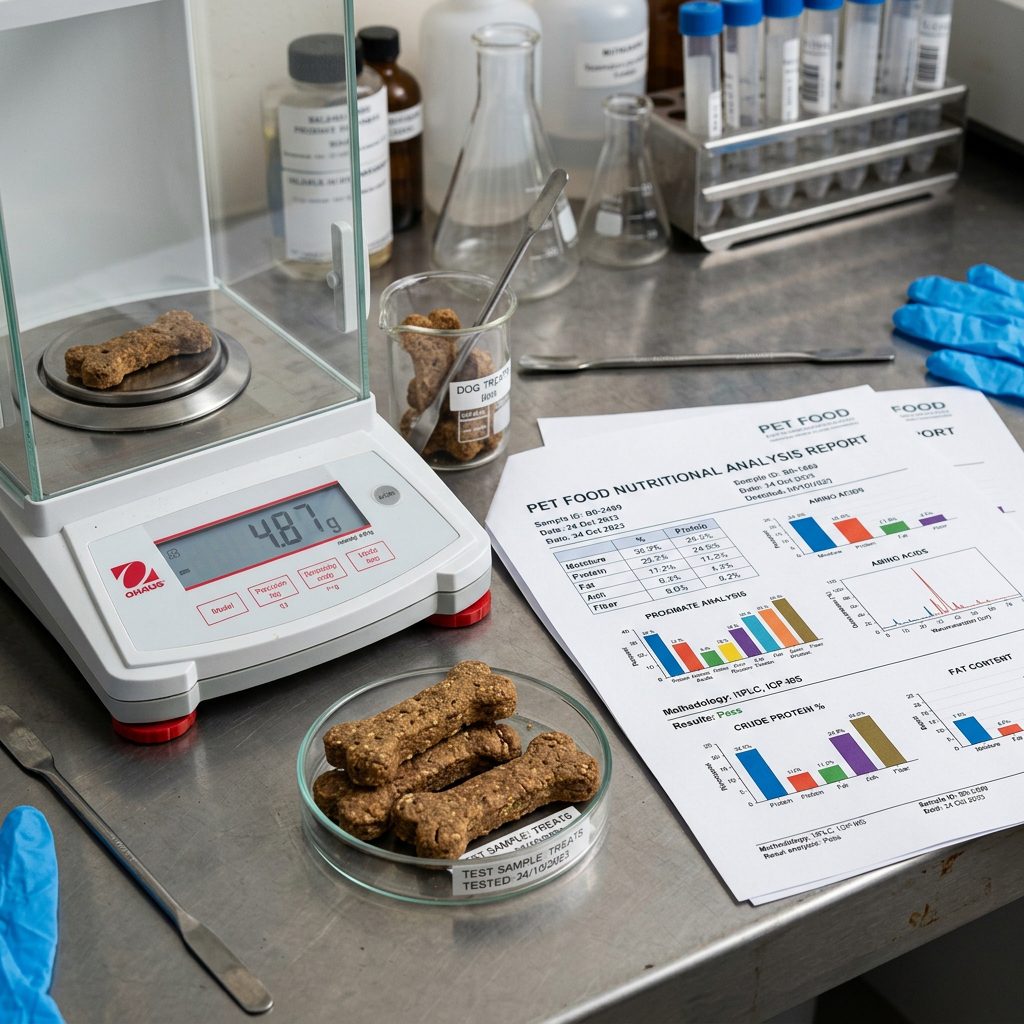
This is where my inner Canine Nutrition Hacker really gets excited. You cannot just guess what is in your treats; you have to prove it scientifically. By law, every single package of pet treats must display a “Guaranteed Analysis.” This is the forensic breakdown of your treat’s nutritional profile. It tells the consumer (and the state inspectors) exactly what they are paying for. At a bare minimum, AAFCO guidelines require you to list four specific metrics: Crude Protein (Minimum), Crude Fat (Minimum), Crude Fiber (Maximum), and Moisture (Maximum).
Understanding the “Big Four”
Why these four? Crude Protein and Crude Fat are the primary drivers of canine nutrition and energy. Consumers want to know their dog is getting quality macros. Crude Fiber is essential for digestion, and it is capped at a maximum because too much fiber acts as a cheap filler (which we absolutely hate!). Finally, Moisture is heavily regulated because water is heavy and cheap. The state wants to ensure you are not overcharging for water weight, and more importantly, moisture levels dictate shelf life. High moisture treats are prone to mold and bacterial growth, which is a massive safety hazard.
How to Get Your Treats Tested
You cannot calculate the Guaranteed Analysis using an online recipe calculator. You must send a physical sample of each treat recipe to a certified agricultural or food testing laboratory. You will bake a batch, seal it up, and mail it to a lab (like Midwest Laboratories or a local university extension). They will incinerate, dissolve, and analyze your treat to give you the exact percentages.
| Testing Metric | What It Measures | Approximate Lab Cost (Per Recipe) |
|---|---|---|
| Crude Protein (Min) | Nitrogen content to determine total protein levels. | $15 – $25 |
| Crude Fat (Min) | Total lipid/fat content, crucial for caloric density. | $15 – $25 |
| Crude Fiber (Max) | Indigestible plant material and potential fillers. | $15 – $25 |
| Moisture (Max) | Water content, critical for determining shelf life. | $10 – $15 |
Total Cost Expectation: Expect to pay between $50 and $100 per recipe for a standard Guaranteed Analysis panel. If you have five different flavors, that is an upfront investment of $250 to $500 just for lab testing. This is why savvy treat makers start with just one or two killer recipes to keep initial costs low while they build their customer base.
Decoding the Label: How to Avoid Misbranding Fines
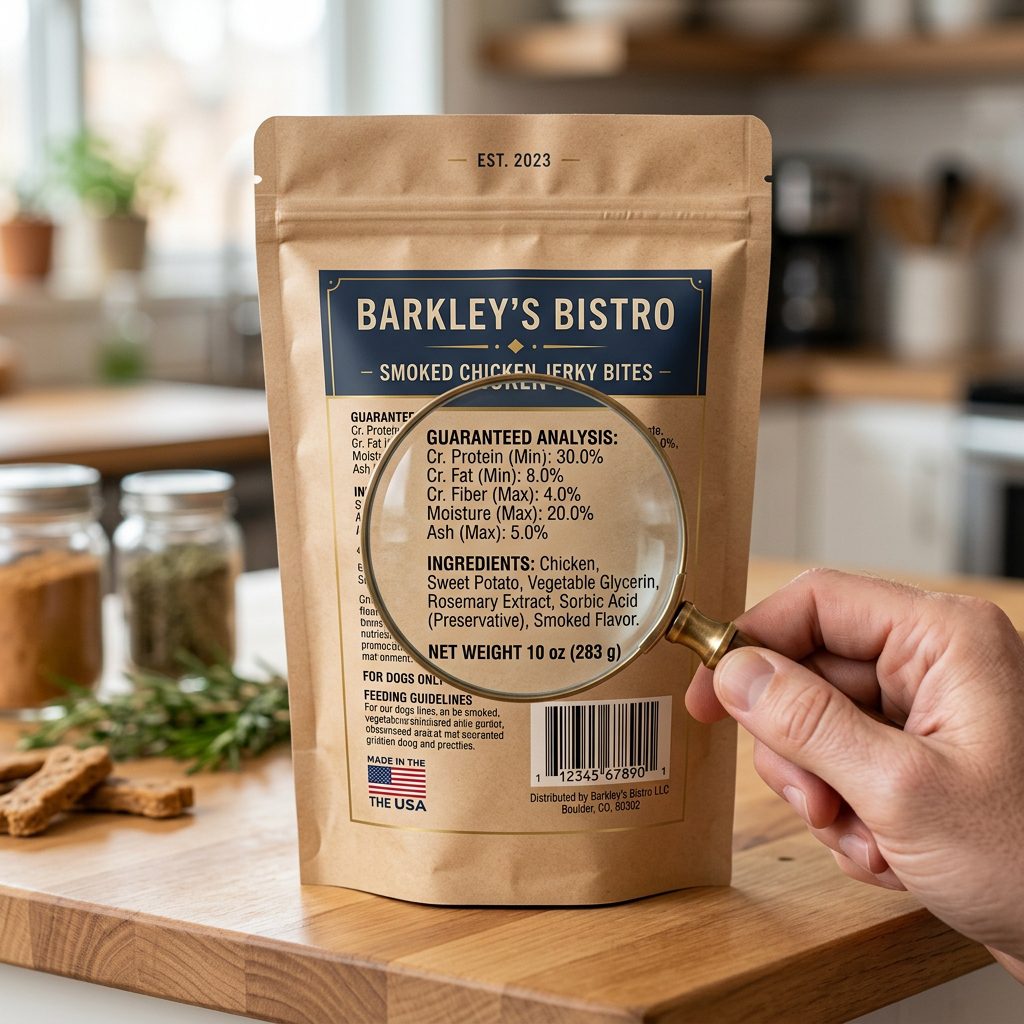
You have your lab results, your business is registered, and you are ready to design your packaging. Stop right there. Labeling is the number one area where new dog treat businesses get slapped with fines. The State Department of Agriculture inspectors love to audit labels because mistakes are glaringly obvious. Your label must be divided into two specific areas: the Principal Display Panel (PDP) and the Information Panel. If you mess up the formatting, your product is legally considered “misbranded,” and you will face a stop-sale order.
The Principal Display Panel (The Front)
The PDP is the front of your package. It must include three non-negotiable items. First, the Product Name. AAFCO has incredibly strict rules about naming. If you call your treat a “Beef Dog Treat,” it must contain at least 95% beef. If it is a “Beef Recipe Dog Treat,” it must contain at least 25% beef. If you call it “Beef Flavor Dog Treat,” it only needs enough beef for a dog to taste it. Be very careful with your wording! Second, you need the Species Designation (e.g., “Dog Treats”). Third, you must have the Net Quantity Statement, which must be listed in both standard (ounces/pounds) and metric (grams/kilograms) units, placed in the bottom 30% of the front panel.
The Information Panel (The Back)
The back of your package is where the forensic details live. This panel must include your Guaranteed Analysis (exactly as the lab reported it), your Ingredient List, feeding directions, and your manufacturer name and address.
- Ingredient List Rules: Ingredients must be listed in descending order by predominance by weight. This means the heaviest ingredient goes first. You must use official AAFCO ingredient names. You cannot say “bacon grease”; you must use the official term like “animal fat.”
- The “First 5 Ingredients” Truth: As a nutrition hacker, you know consumers read the first five ingredients. If your first ingredient is wheat flour, you are selling a filler-heavy treat. Formulate your recipes so a high-quality protein or whole food is at the top of the list!
- Manufacturer Info: You must list your business name and full street address. If your business is listed in a local city directory or phone book, you can get away with just the City, State, and Zip.
“Hacker Tip: Beware of ‘Ingredient Splitting.’ Big brands use this trick by listing ‘flaked corn,’ ‘ground corn,’ and ‘kibbled corn’ separately so meat stays as the first ingredient. Do not do this. Be transparent. Savvy dog owners will catch on, and honesty builds incredible brand loyalty.”
Sourcing Ingredients: The Safe Chef’s Guide to Profitability
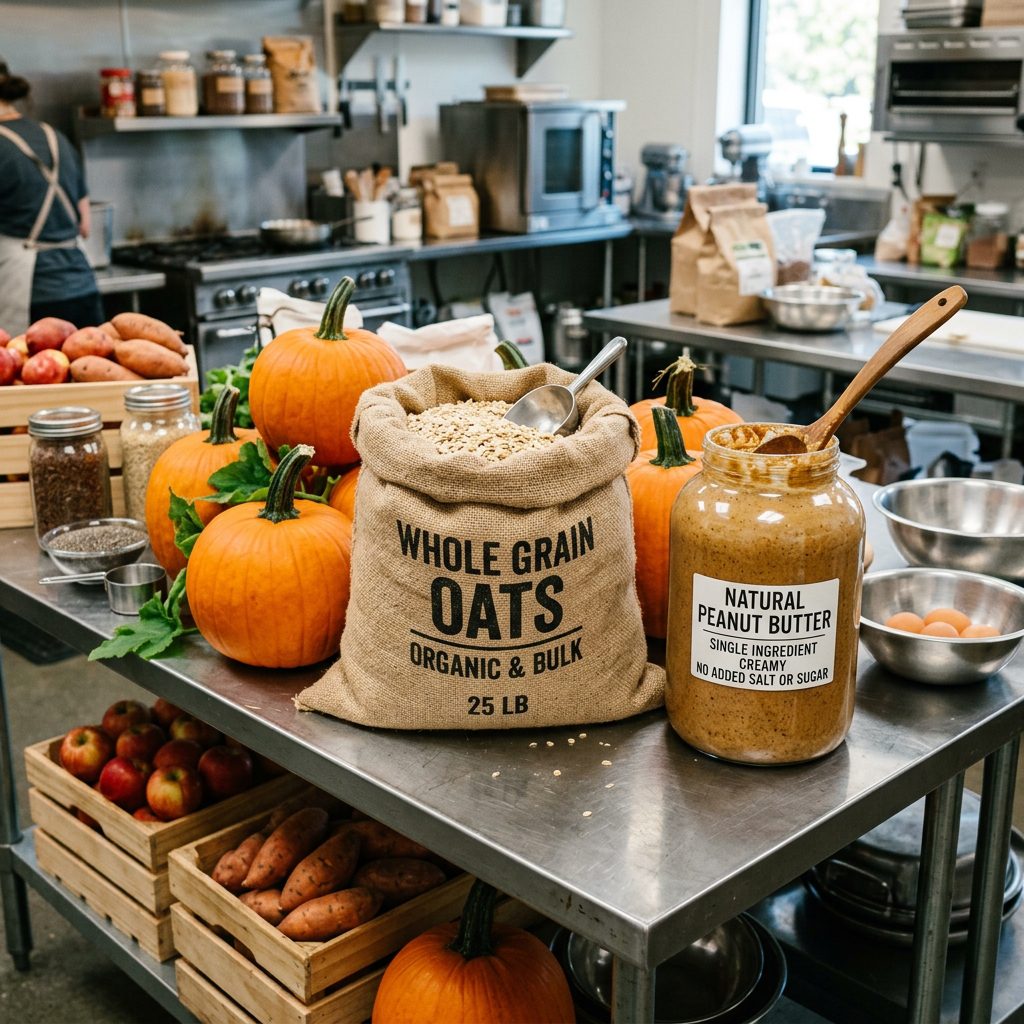
We have covered the legalities, but let us talk about the actual product. To be a successful Canine Nutrition Hacker and business owner, you need to master ingredient sourcing. Buying ingredients at retail prices from your local grocery store is a surefire way to kill your profit margins. Furthermore, you need absolute consistency in your ingredients because any change in your recipe means you have to pay for a new lab test and register a new label with the state.
Safety First: The Danger of Human Ingredients
Before you buy in bulk, you must understand that not all human-grade food is safe for dogs. A classic trap for novice bakers is peanut butter. Many commercial peanut butters now use Xylitol (Birch Sugar) as a low-calorie sweetener. Xylitol is highly toxic and potentially fatal to dogs even in microscopic amounts. You must audit your suppliers rigorously. If you buy a bulk bucket of peanut butter, you need a guarantee from the manufacturer that their facility is 100% Xylitol-free to avoid cross-contamination. The same goes for certain flours, preservatives, and flavorings.
Real Cost Breakdown: Retail vs. Wholesale Sourcing
To make a profit, you need to transition from a home baker to a commercial manufacturer mindset. This means setting up wholesale accounts with restaurant supply stores (like WebstaurantStore) or local agricultural co-ops. Let us look at a forensic breakdown of how sourcing impacts your bottom line when producing a 50lb batch of oat and pumpkin treats.
| Ingredient | Retail Cost (Grocery Store) | Wholesale Cost (Bulk Supplier) |
|---|---|---|
| Rolled Oats (50 lbs) | $65.00 ($1.30/lb) | $22.00 ($0.44/lb) |
| Pure Pumpkin (12 cans) | $36.00 ($3.00/can) | $18.00 ($1.50/can) |
| Peanut Butter (Bulk 5 lbs) | $25.00 ($5.00/lb) | $12.00 ($2.40/lb) |
| Total Batch Cost | $126.00 | $52.00 (Massive Savings!) |
By sourcing wholesale, you just dropped your production cost by more than half. This allows you to price your treats competitively while maintaining a healthy profit margin. It also ensures batch-to-batch consistency. When you buy from a dedicated supplier, the moisture content of the flour and the fat content of the peanut butter remain stable, which means your Guaranteed Analysis remains accurate and legally compliant. Always keep your invoices and lot numbers from suppliers; if there is ever a recall on the flour you used, you need to know exactly which batches of your dog treats were affected so you can execute a targeted recall.
Conclusion
Starting a home-based dog treat business is an incredibly rewarding journey, but as you now know, it is not as simple as baking cookies and setting up a folding table at the farmer’s market. The pet food industry is guarded by strict regulations, AAFCO guidelines, and state agriculture laws designed to keep our furry best friends safe. By treating your venture like a true commercial feed business from day one—forming your LLC, paying for professional lab testing, meticulously formatting your labels, and sourcing wholesale ingredients—you are completely bulletproofing your business against fines and stop-sale orders.
You are no longer just a dog lover who bakes; you are a savvy, street-smart Canine Nutrition Hacker. You have the ultimate checklist to legally sell dog treats from home. Do not let the red tape intimidate you. Use it to your advantage! When your customers see your perfectly compliant labels and your transparent, high-quality ingredient lists, they will know they are buying from a true professional who puts their dog’s health above all else. Now get out there, get your licenses in order, and start baking the treats that will take the local dog community by storm!