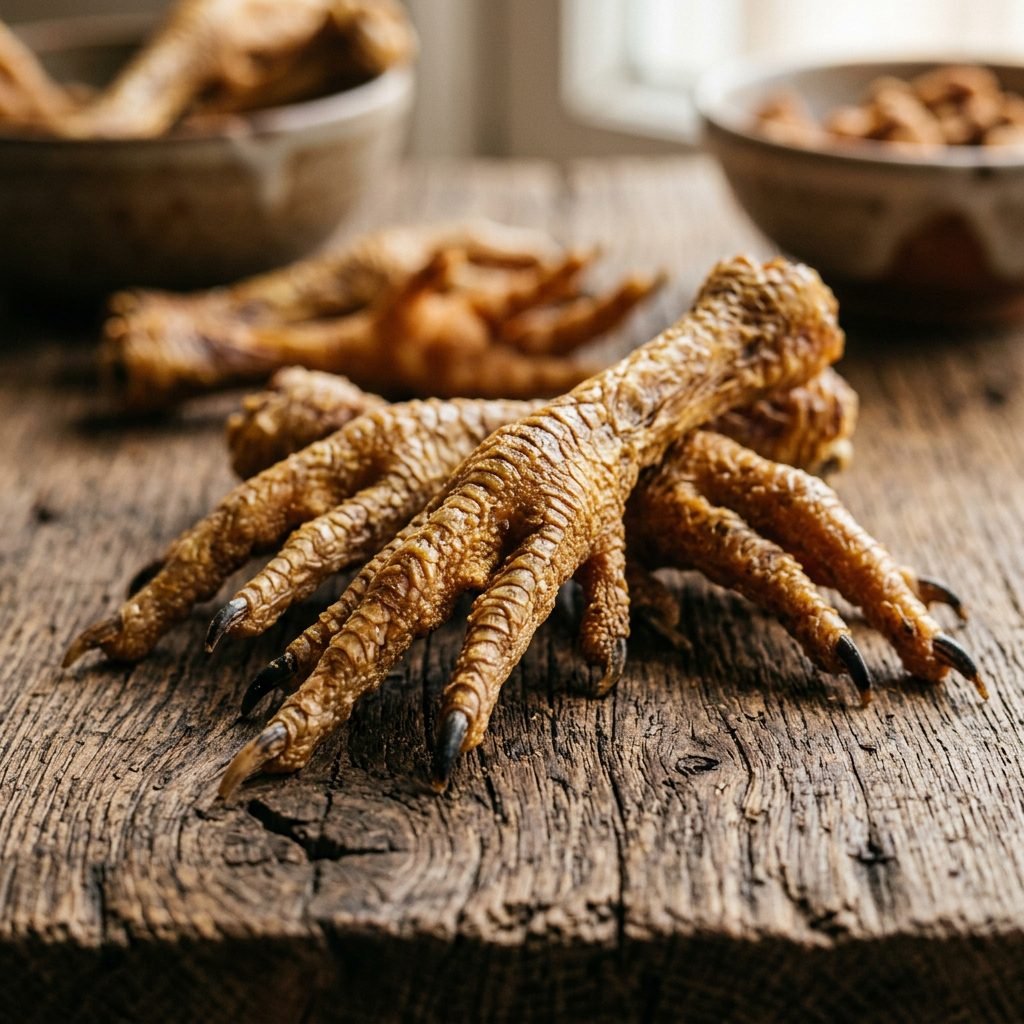
This DIY Crunchy Dehydrated Chicken Foot Chew Is the Joint Relief Secret Your Dog Needs!
Let’s get real for a second: the pet supplement industry is a multi-billion dollar machine that thrives on our fear of our dogs getting old and stiff. We see those flashy bottles of ‘Joint Support’ chews with 50 ingredients, most of which are grain-based fillers, artificial colors, and synthetic preservatives. As the Canine Nutrition Hacker, I’m here to tell you that the secret to your dog’s mobility isn’t sitting on a shelf in a plastic tub—it’s probably sitting in the ‘odd bits’ section of your local butcher or ethnic grocery store for pennies on the dollar.
I’m talking about chicken feet. Yes, they look a bit prehistoric. Yes, your friends might think you’ve joined a cult when they see them in your dehydrator. But if you want to provide your dog with a massive dose of natural, bioavailable glucosamine and chondroitin, there is simply no better delivery vehicle than a dehydrated chicken foot. These are nature’s toothbrushes and joint-savers rolled into one crunchy, satisfying package. In this guide, we’re going to strip away the marketing fluff and show you exactly how to source, prep, and dehydrate these ‘ugly’ superfoods at home.
The Science of the Crunch: Why Chicken Feet Rule
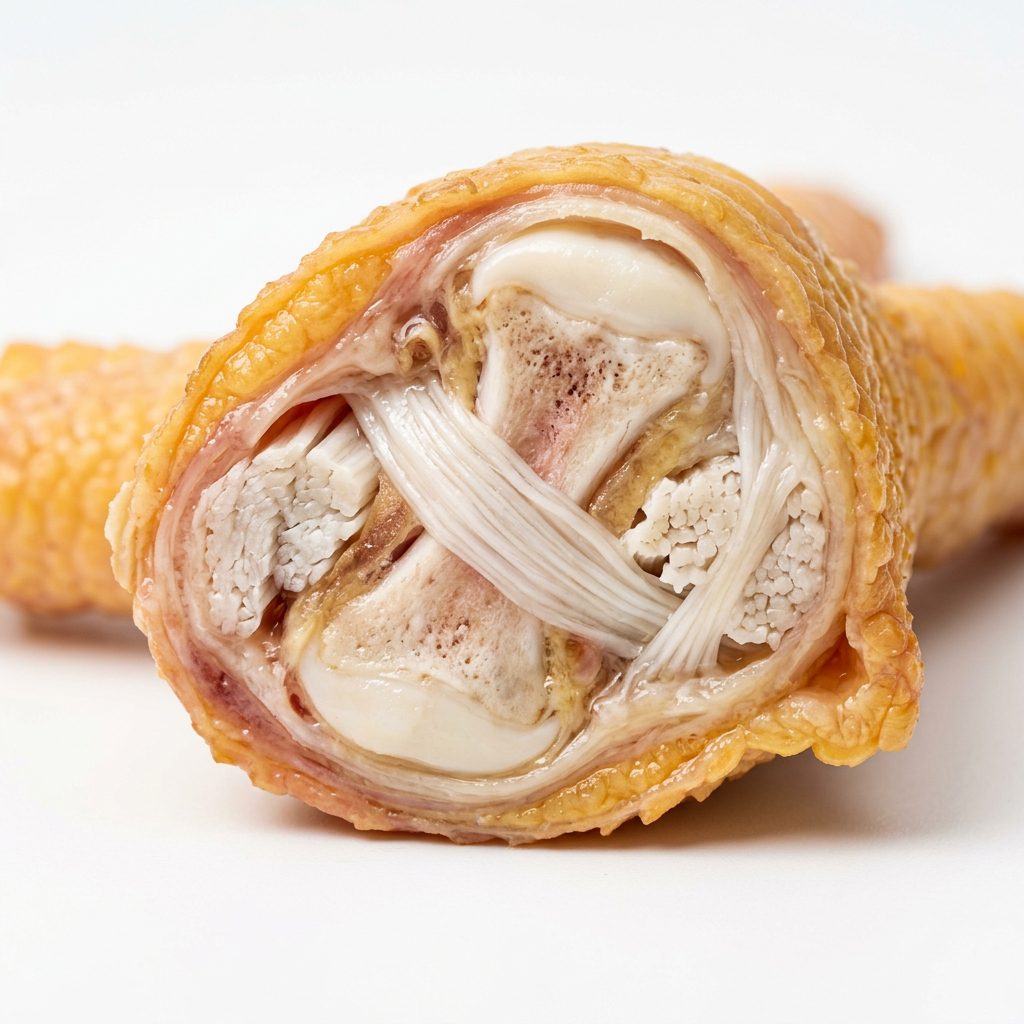
Why are we obsessed with these spindly little things? It comes down to the biological makeup of the foot itself. Unlike muscle meat, chicken feet are comprised almost entirely of skin, tendons, and cartilage. This is the holy trinity of joint health ingredients.
Natural Glucosamine and Chondroitin
Most commercial joint supplements use synthetic versions of these compounds. However, chicken feet are packed with the real deal. Glucosamine and chondroitin are the building blocks of cartilage, helping to maintain the ‘cushion’ in your dog’s joints. When your dog crunches through a foot, they aren’t just getting a treat; they’re getting a direct infusion of the structural components needed to repair and maintain their own connective tissues.
The Collagen Factor
Chicken feet are a powerhouse of Type II Collagen. This specific type of collagen is what makes up the majority of the joint cartilage in mammals. For senior dogs or breeds prone to hip dysplasia, this isn’t just a snack—it’s preventative medicine. Plus, the high protein content supports muscle maintenance without the high calorie count of fatty treats.
Dental Hygiene Hack
Forget those ‘dental sticks’ made of potato starch and green dye. The mechanical action of a dog chewing through the tiny bones and tough skin of a dehydrated chicken foot acts like a natural abrasive. It helps scrape away plaque and tartar from the gum line. It’s the ultimate multi-tasker: better joints and fresher breath.
Safety First: The Nutrition Hacker’s Disclaimer

Before we dive into the ‘how-to,’ we need to clear the air. I am a researcher and a dog owner who demands the best, but I am not a veterinarian. Every dog is an individual, and you need to use your brain before you start tossing feet at your pup.
Insider Secret: Never, ever give your dog cooked chicken feet from the oven or a soup pot. High-heat cooking changes the molecular structure of the bone, making it brittle and prone to splintering. Dehydration, however, uses low heat to remove moisture, leaving the bone crumbly and safe for digestion.
The ‘Watch Out’ List
- Poultry Allergies: If your dog is one of the many who react to chicken, this is a no-go. Try duck or turkey feet instead!
- Pancreatitis: While chicken feet are relatively lean once dehydrated, they do contain fat. If your dog has a history of pancreatitis, consult your vet first.
- The Gulp Factor: If your dog is a ‘gulper’ who doesn’t chew, you need to hold the foot while they gnaw on it to prevent a choking hazard.
The Economics of Crunch: DIY vs. Store-Bought

Why should you do this yourself? Because the markup on ‘artisanal’ dog treats is absolute insanity. Let’s look at the numbers. When you buy a pre-packaged bag of dehydrated chicken feet from a boutique pet store, you are paying for the fancy packaging and the ‘convenience’ tax.
| Metric | Premium Store-Bought Chews | DIY Dehydrated Feet |
|---|---|---|
| Price per lb (approx) | $35.00 – $50.00 | $1.50 – $3.00 |
| Ingredients | Chicken feet, often preservatives | 100% Chicken Feet |
| Source Transparency | Often ‘Global Sourcing’ (vague) | Your local butcher (traceable) |
| Chemical Treatments | Irradiation or smoke flavorings | None |
By making these at home, you are saving roughly $30 per pound. If you give your dog two feet a day, those savings add up to hundreds of dollars a year—money you can spend on better quality base food or that expensive orthopedic bed they probably won’t sleep on anyway.
Sourcing and Prepping the Goods
You won’t find high-quality chicken feet at a standard big-box supermarket usually. You need to go where the ‘real’ food is. Check out Asian supermarkets, local butcher shops, or farmers’ markets. You want feet that look plump and white or yellow, with no dark ‘ammonia burns’ on the pads.
The Prep Protocol
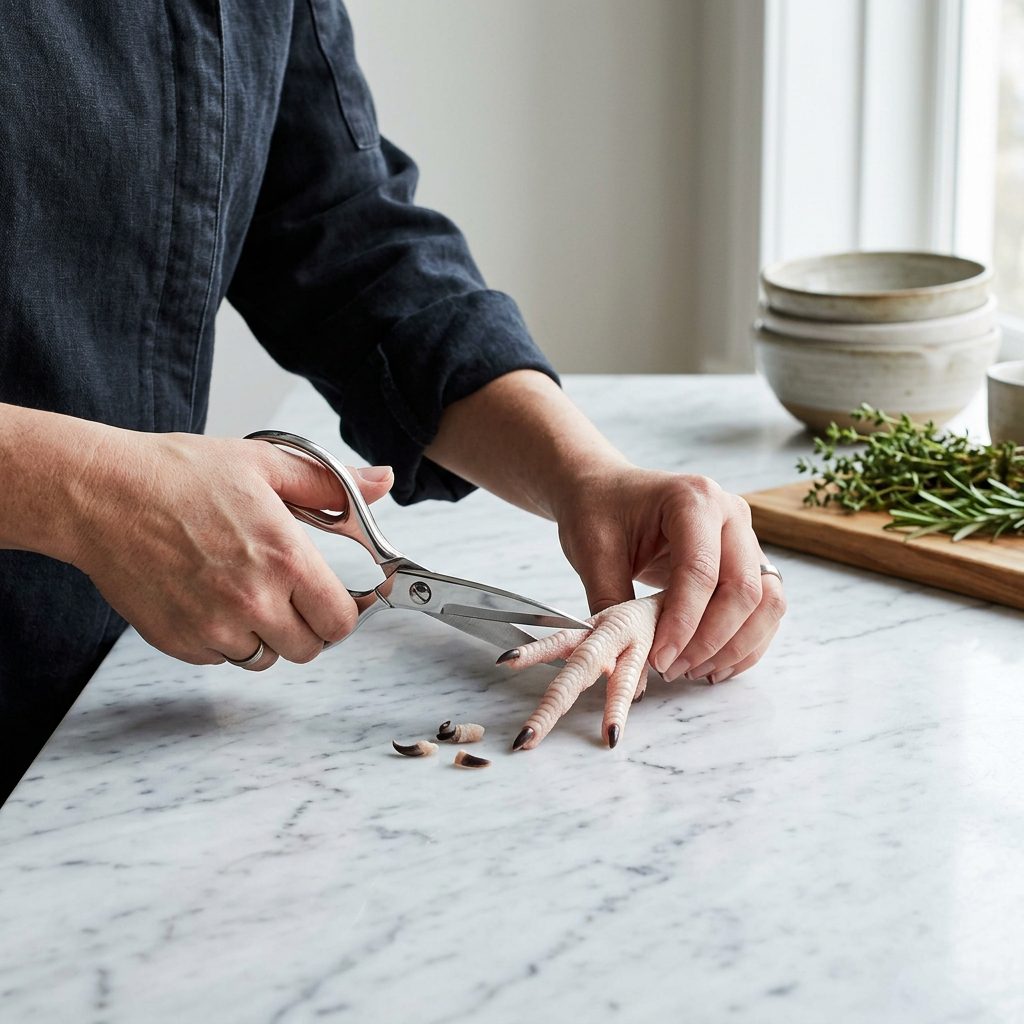
- The Manicure: This is the most important part. Use a pair of heavy-duty kitchen shears to snip off the claws. While the claws soften during dehydration, they can still be sharp and uncomfortable. Plus, removing them makes the treats look less like something out of a horror movie.
- The Wash: Give them a good soak in cold water with a splash of apple cider vinegar. This helps remove any surface bacteria or debris.
- The Dry: Pat them bone-dry with paper towels. The less moisture they start with, the faster your dehydrator will finish the job.
Hacker Tip: If you find a ‘deal’ on a 40lb case of feet, buy it! You can prep and freeze raw feet for up to 6 months, pulling out only what you need for each dehydration batch.
The Step-by-Step Dehydration Protocol
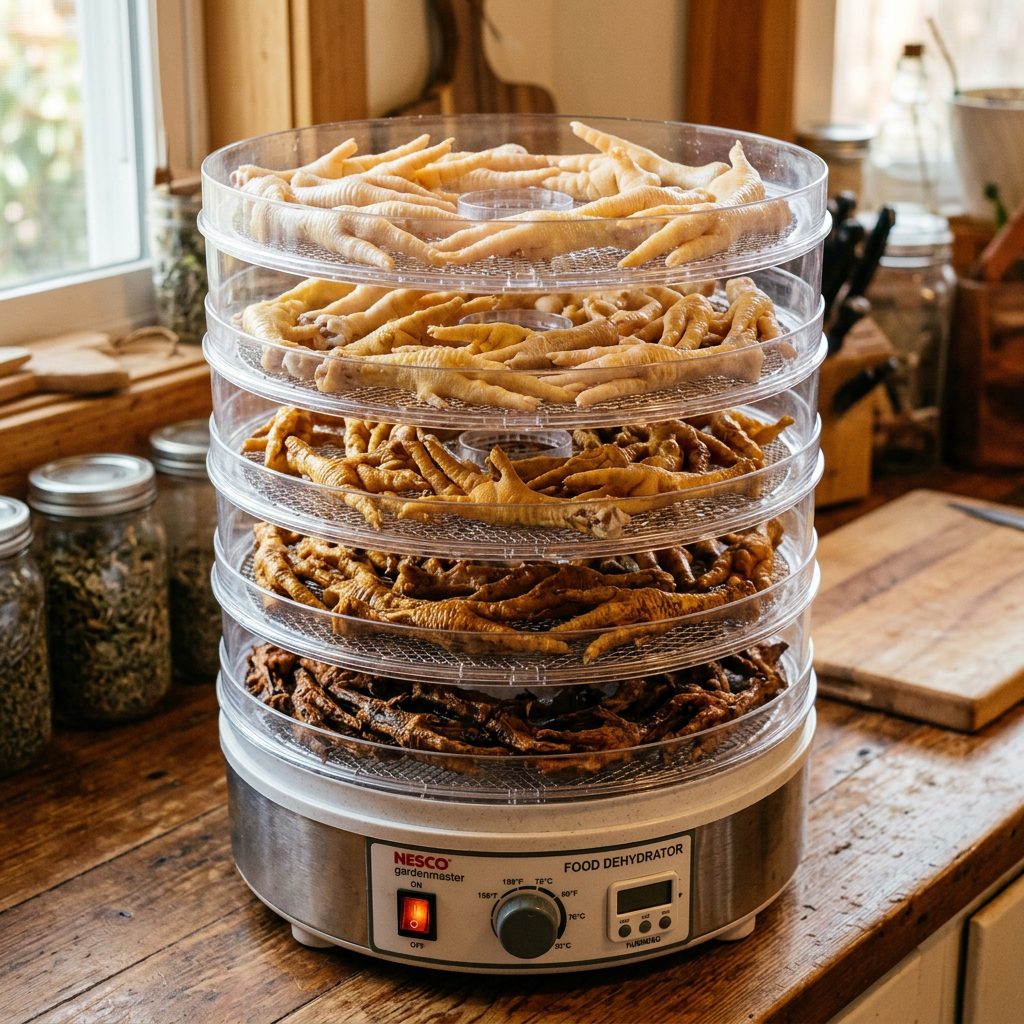
You don’t need a $500 dehydrator for this. A basic model with a temperature dial will do the trick. The goal is low and slow. We want to remove the water without ‘cooking’ the bone.
1. Arrange the Trays
Lay the feet out on your dehydrator trays. Make sure they aren’t touching. Airflow is the secret to a shelf-stable treat. If they are crowded, you’ll end up with ‘soggy’ spots that can mold later.
2. Set the Temperature
Set your dehydrator to 150°F to 160°F (65°C to 71°C). This temperature is high enough to kill pathogens like Salmonella but low enough to preserve the delicate collagen and keep the bones from becoming brittle.
3. The Waiting Game
Dehydration usually takes between 24 to 36 hours depending on the humidity in your house and the size of the feet. You’ll know they are done when the skin is translucent, the feet feel light, and they have a distinct ‘snap’ when you try to bend a toe.
4. The Cooling Phase
Don’t bag them immediately! Let them cool to room temperature on the trays. If you bag them while warm, condensation will form, and your hard work will turn into a fuzzy mold experiment within days.
Storage and Serving: The Hacker’s Guide
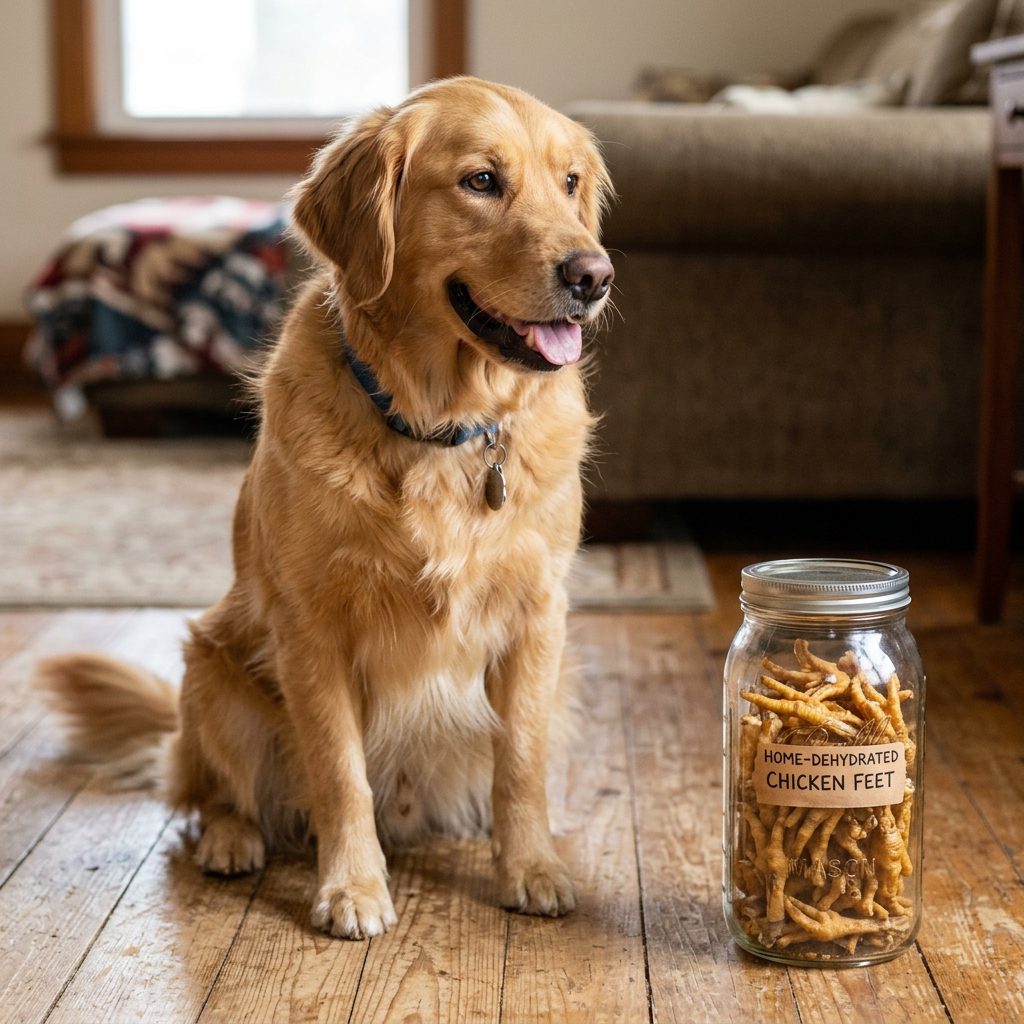
Now that you have a mountain of ‘canine gold,’ you need to store it correctly. Because we aren’t using chemical preservatives like potassium sorbate, these treats are susceptible to the elements.
Storage Secrets
- Short Term: Keep them in an airtight glass jar or a silicone bag in a cool, dark pantry. They will stay fresh for about 2 weeks.
- Long Term: Keep them in the refrigerator (up to 1 month) or the freezer (up to 6 months). Serving them straight from the freezer is actually a great way to soothe a teething puppy’s gums!
- The Silica Hack: Save those little ‘do not eat’ silica packets from your own food or shoe boxes and toss one into the jar. It will suck up any residual moisture.
How Many Should You Give?
Treat these as a supplement, not a meal replacement. For a medium-sized dog (40-60lbs), one foot per day is the sweet spot for joint maintenance. Small dogs might only need half a foot (yes, you can snap them in half), while giant breeds can easily handle two or three.
Conclusion
There you have it—the ultimate ‘insider’ secret to canine joint health. By taking control of the process, you’ve eliminated the fillers, bypassed the corporate markup, and provided your dog with a whole-food supplement that actually works. Your dog doesn’t care that the treats look a little weird; they only care that they taste amazing and make them feel like a puppy again.
Remember, consistency is key. You won’t see a change in your dog’s mobility overnight. But keep up the ‘one foot a day’ routine, and in a few weeks, you might just notice a little extra spring in their step and a lot less stiffness in the morning. Now, go find a butcher, fire up that dehydrator, and start hacking your dog’s nutrition for the better!