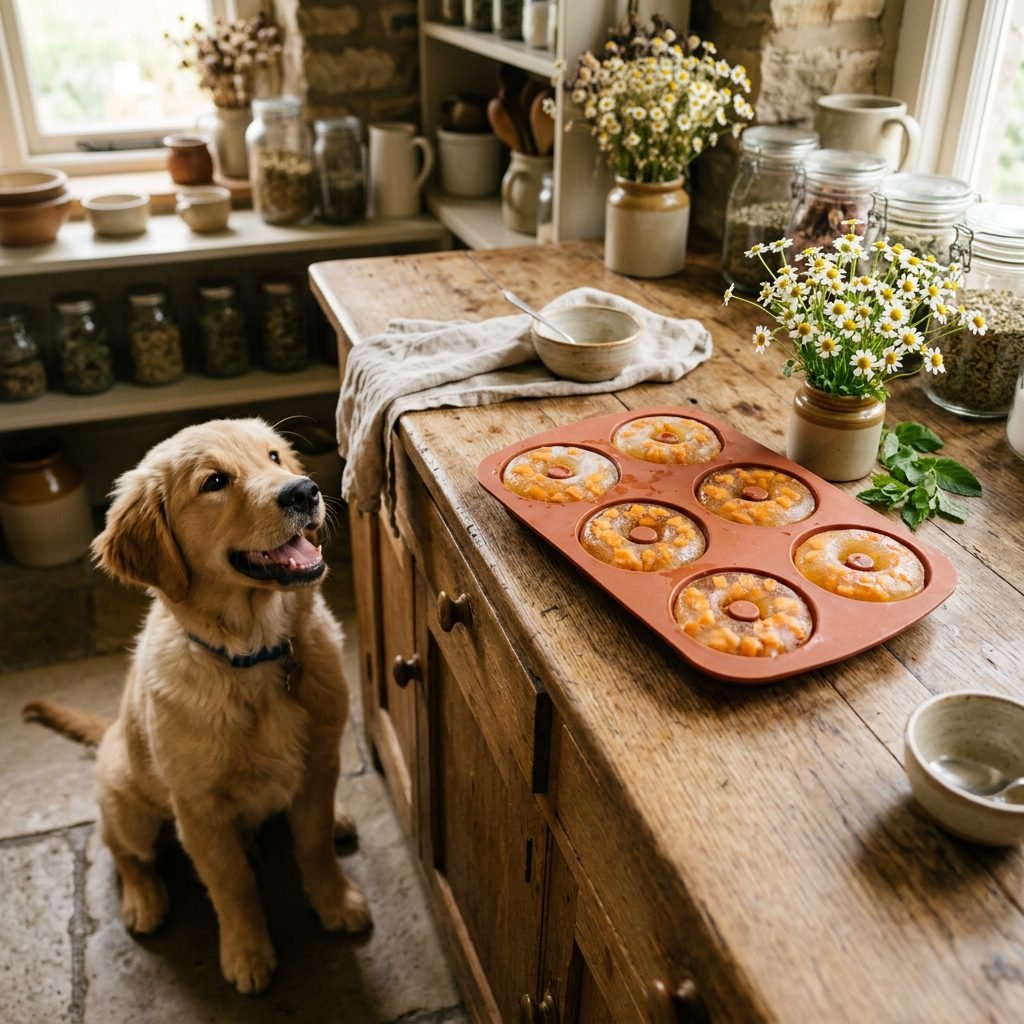
The Sanity Saver: Frozen Chamomile Teething Rings to Stop Your Puppy From Chewing Your Furniture
SAFETY DISCLAIMER: I am The Canine Nutrition Hacker, a street-smart dog owner and obsessive label-reader, not a veterinarian. Always consult your vet before introducing new foods or herbs to your puppy’s diet, especially if they have underlying health conditions. DIY treats are meant for supplemental feeding and teething relief, not as a complete meal replacement.
Listen up, savvy dog parents. If you are reading this, your house probably looks like a beaver moved in. Your baseboards are chewed, your favorite sneakers have mysterious puncture wounds, and the legs of your expensive dining room table are starting to look like toothpicks. Welcome to the velociraptor phase of puppyhood.
We have all been there. You bring home this adorable, fluffy bundle of joy, and within a few weeks, their baby teeth start falling out, replaced by adult teeth pushing aggressively through their tender gums. The discomfort your puppy feels is real, and their natural instinct is to chew on absolutely everything to relieve that pressure. But here is the insider secret the pet industry does not want you to realize: you do not need to spend a fortune on synthetic, plastic chew toys or highly processed edible rings to solve this problem.
As someone who analyzes ingredient labels like a forensic scientist, I get incredibly frustrated walking down the puppy aisle at the big-box pet stores. I see so-called soothing rings packed with artificial flavors, questionable plastics, and edible chews loaded with cheap fillers. Why are we giving our vulnerable puppies synthetic materials when Mother Nature provides the ultimate, cost-effective solution?
Today, I am giving you my ultimate hack: The Frozen Chamomile Teething Ring. It is cheap, it is incredibly effective, it is 100% natural, and most importantly, it is going to save your sanity and your furniture.
The Science of Soothing: Why Chamomile is a Puppy’s Best Friend
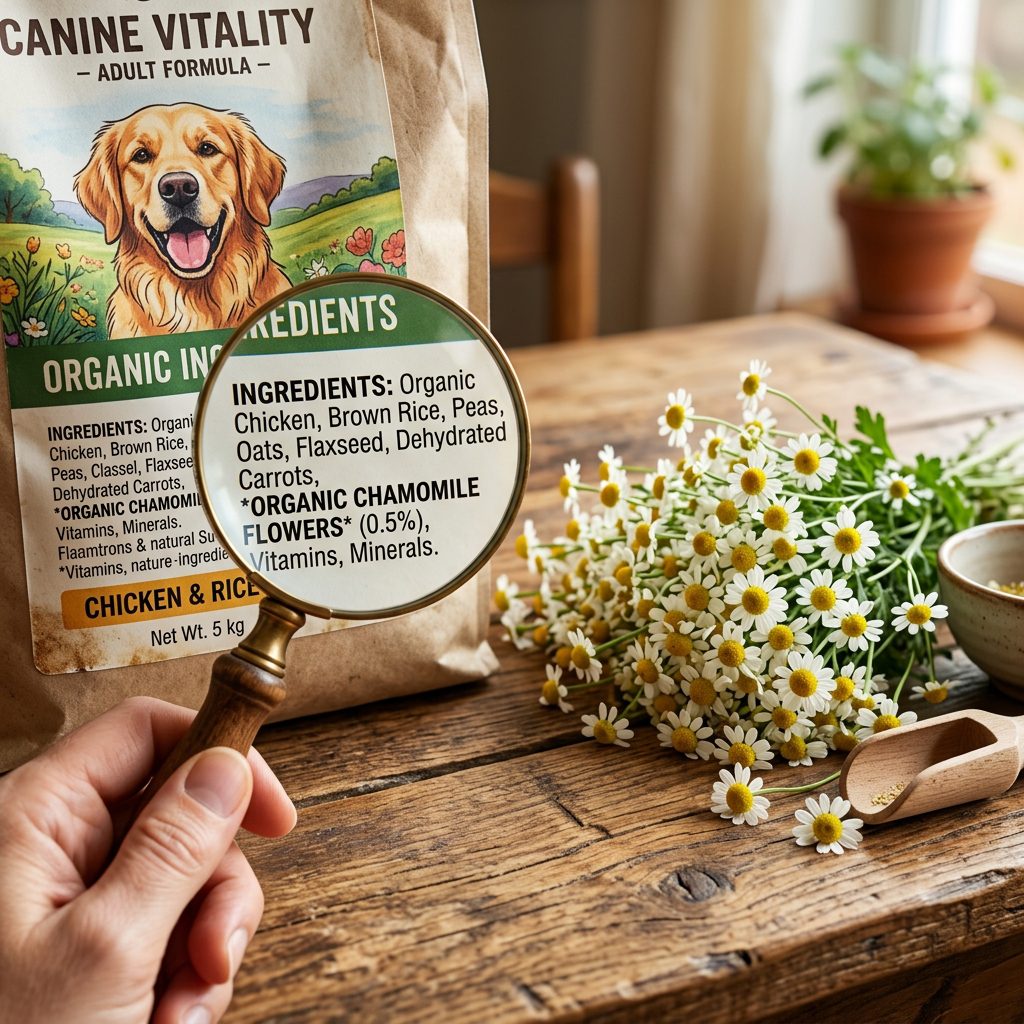
Before we get into the kitchen, let us talk about why we are using chamomile instead of just plain tap water. When a puppy is teething, usually between the ages of three to six months, their gums become highly inflamed, red, and swollen. The cold temperature of a frozen ring acts as a natural anesthetic, numbing the gums and reducing the swelling. But when you add chamomile to the mix, you are leveling up your puppy parenting game.
Chamomile is a powerhouse herb. It contains a natural compound called apigenin, an antioxidant that binds to certain receptors in your dog’s brain, promoting relaxation and reducing anxiety. Teething is a stressful, painful process for a puppy. They are cranky, they are tired, and they act out by chewing your couch. By infusing their teething ring with organic chamomile, you are providing both physical numbing from the ice and mild, natural anxiety relief from the herb.
The Problem with Store-Bought Chews
Let us look at what you are usually buying at the store. Many commercial teething rings are made of nylon or hard plastics. While some are durable, heavy chewers can break off sharp pieces, leading to potential intestinal blockages. Then you have the edible teething rings. If you read the first five ingredients on a popular commercial teething ring, you will often see things like wheat starch, glycerin, gelatin, natural flavor, and powdered cellulose. What is powdered cellulose? It is literally wood pulp. You are paying top dollar for wood pulp and synthetic glycerin.
Insider Secret: Skip the commercial puppy teething gels, too. Many of them contain clove oil or artificial numbing agents that can cause stomach upset if swallowed in large quantities. A frozen herbal tea ring is much safer and significantly cheaper.
Pennies on the Dollar: DIY vs. Store-Bought Premium
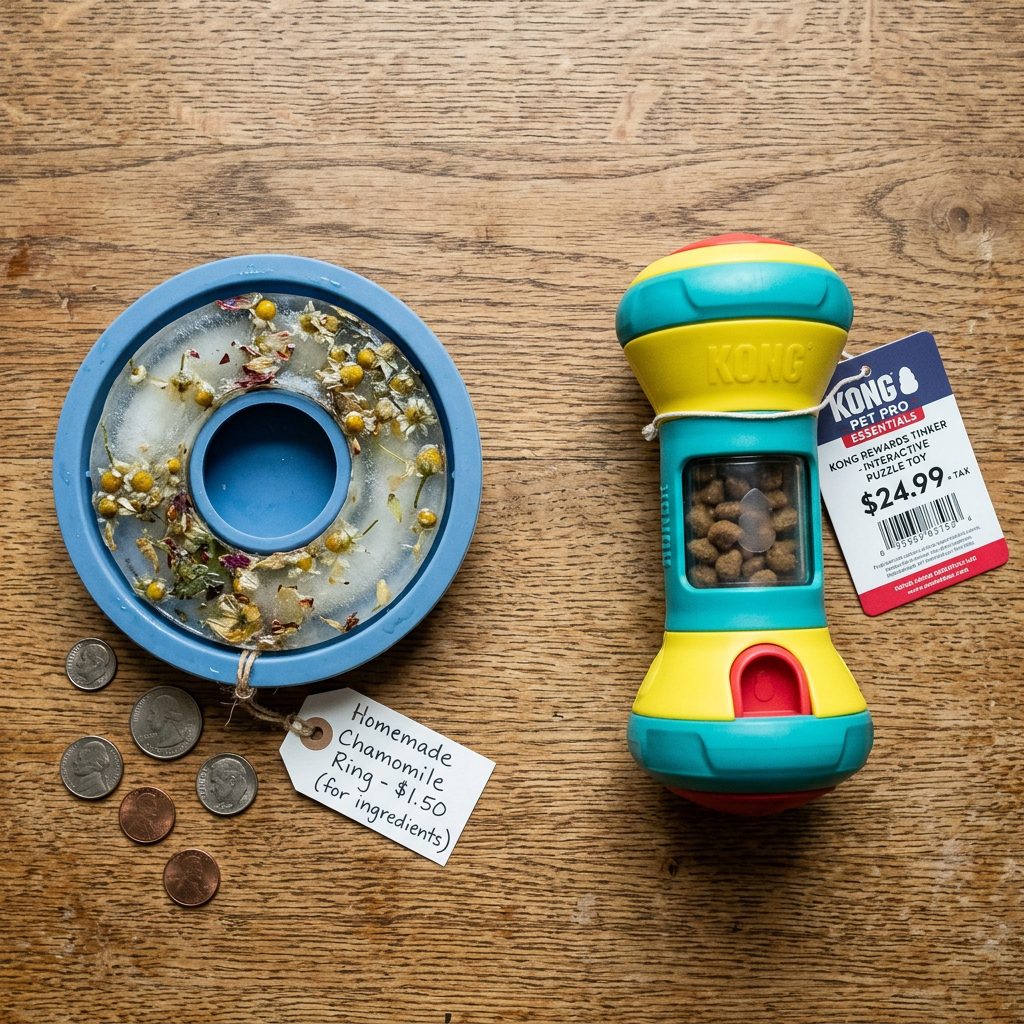
Let us talk money, because being a savvy dog owner means protecting your wallet just as fiercely as you protect your dog’s health. The pet industry thrives on the desperation of exhausted puppy owners. When your dog is crying and chewing the drywall, you will pay anything for relief. But let us break down the actual cost of my DIY Chamomile Teething Rings compared to the commercial alternatives.
| Teething Solution | First 5 Ingredients / Material | Cost Per Unit | The Hacker Verdict |
|---|---|---|---|
| Premium Plastic Chew Toy | Nylon, Synthetic Flavoring, Dyes | $12.00 – $18.00 | Expensive. Risk of microplastic ingestion and cracked teeth. |
| Commercial Edible Teething Ring | Wheat Starch, Glycerin, Cellulose, Pea Protein, Chicken Flavor | $3.50 – $5.00 | High filler content. Lasts only 10 minutes. Overpriced. |
| DIY Chamomile Teething Ring | Filtered Water, Organic Chamomile Tea, Optional Carrots | $0.15 – $0.30 | The Ultimate Hack. Pennies per day, highly soothing, zero fillers. |
As you can see, making your own teething rings at home costs roughly $0.20 per ring. If you give your puppy one ring a day during their peak teething months, you are spending maybe $6.00 a month, compared to dropping $30 to $50 on edible chews that are packed with ingredients you cannot even pronounce. That is money saved that you can put toward high-quality, biologically appropriate dog food or professional training sessions.
The Actionable Recipe: Building the Ultimate Teething Ring
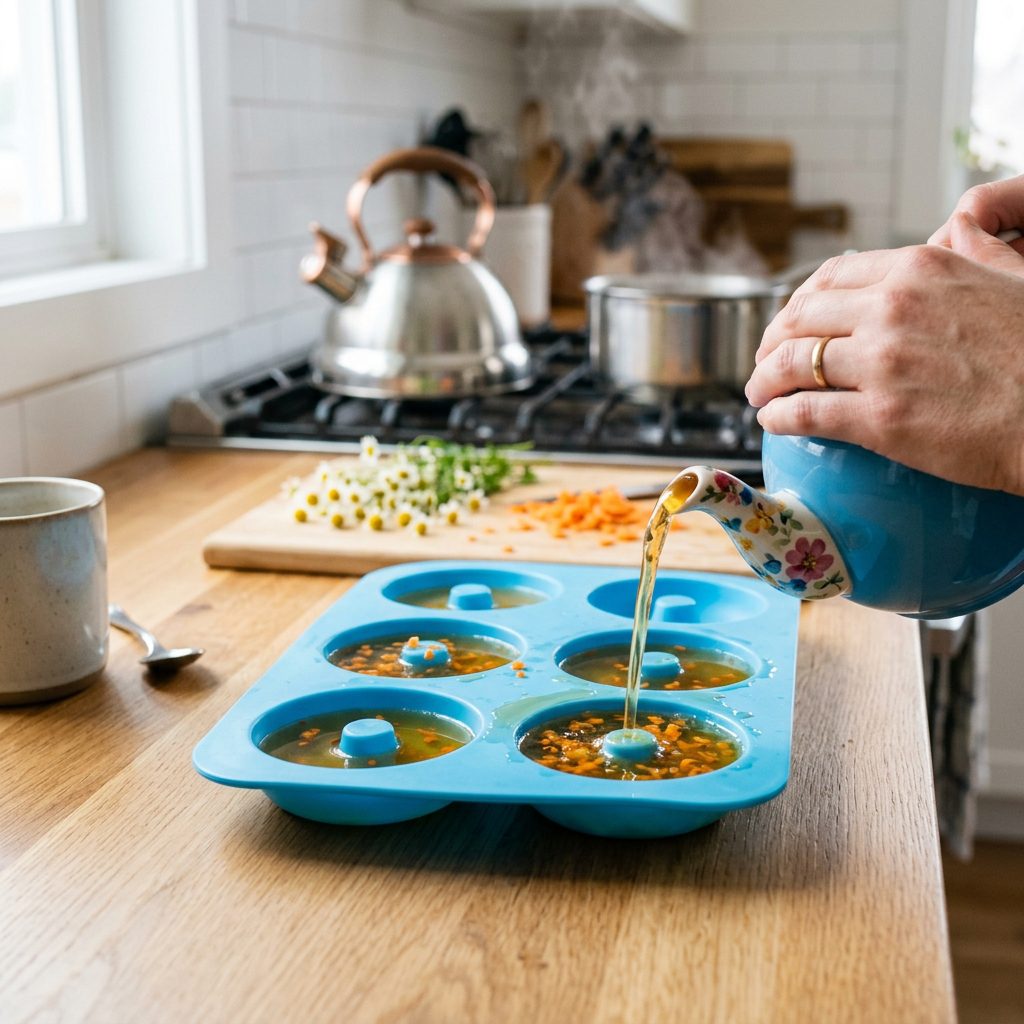
Alright, let us get into the kitchen. Making these rings is incredibly simple, but you need the right tools. The secret to this hack is a silicone donut mold. You can find these online for a few dollars. The donut shape is critical because the hole in the middle makes it easy for your puppy to hold between their paws, and it prevents the ice from being a solid, round choking hazard.
Ingredients You Will Need:
- 2 bags of 100% pure, organic chamomile tea (Ensure there is NO caffeine, NO added sweeteners, and NO toxic additives like xylitol or artificial flavors).
- 2 cups of filtered, boiling water.
- 1/2 cup of dog-safe bone broth (Make sure it is formulated for dogs, meaning absolutely NO onions or garlic).
- Optional: 1/4 cup of finely diced organic carrots or blueberries for added texture and vitamins.
Step-by-Step Instructions:
- Brew the Tea: Place the two chamomile tea bags in a heat-safe pitcher. Pour the 2 cups of boiling filtered water over the bags. Let it steep for about 10 to 15 minutes. You want a strong brew so the soothing properties are concentrated.
- Cool it Down: Remove the tea bags and let the tea cool to room temperature. Never pour boiling liquid into your silicone molds, and never mix hot liquid with your bone broth.
- Mix the Magic: Once cooled, stir in the 1/2 cup of dog-safe bone broth. The bone broth adds an irresistible meaty flavor that will keep your puppy engaged, masking the herbal taste of the chamomile.
- Add the Crunch: If you are using diced carrots or blueberries, drop a few pieces into each cavity of your silicone donut mold. Carrots are fantastic for teething because they offer a slight crunch as the ice melts.
- Pour and Freeze: Carefully pour the liquid mixture into the donut molds, filling them almost to the top. Place the mold flat in your freezer and leave it for at least 4 to 6 hours, or until completely solid.
Once frozen, you have a perfectly shaped, incredibly soothing, and highly palatable teething ring that will keep your velociraptor occupied and away from your furniture.
Batch Cooking: How to Build a Teething Arsenal
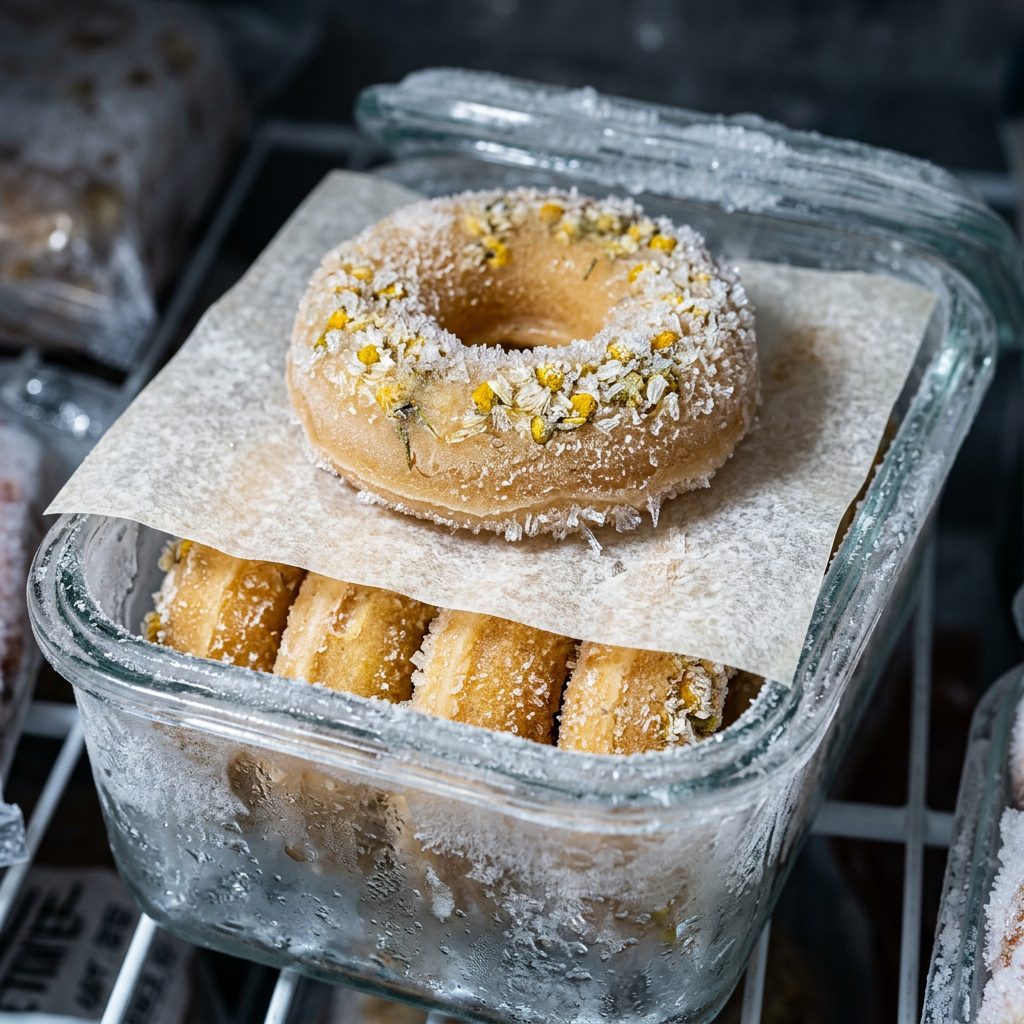
If you have a teething puppy, you know that emergencies happen fast. You cannot wait four hours for a ring to freeze when your dog has decided the baseboard is their new chew toy. You need an arsenal ready to go. This is where batch cooking comes in.
I recommend buying two or three silicone donut molds so you can make 12 to 18 rings at a time. Once the rings are completely frozen solid in the molds, pop them out immediately. Do not leave them in the molds indefinitely, or they will start to develop freezer burn and absorb the weird smells from your freezer (and your puppy definitely does not want a teething ring that tastes like frozen leftover lasagna).
The Storage Hack
Pop the frozen rings out and transfer them into a heavy-duty, freezer-safe silicone bag or an airtight glass container. Separate the layers with unbleached parchment paper so they do not stick together into one giant ice block. By doing this, you instantly free up your molds to make another batch.
Insider Secret: If your puppy is a heavy chewer and crushes the ice ring too quickly, try the ‘Wet Washcloth Hack’ as an alternative. Soak a clean, cheap washcloth in the same chamomile and bone broth mixture, tie it into a tight knot, and freeze it. The fabric fibers act like doggy dental floss, and the frozen knot provides a tough, durable chew that lasts twice as long as pure ice.
Having a stash of 20 rings in the freezer means you are always prepared. Right after a play session, or when you notice that manic teething energy bubbling up, you can simply open the freezer, grab a ring, and buy yourself 20 minutes of absolute peace and quiet.
Safety First: Managing the Mess and the Chew Session

Now that you have your arsenal of sanity-saving teething rings, we need to talk about execution. As the Canine Nutrition Hacker, I always preach safety first. No chew toy, whether it is a $20 piece of indestructible rubber or a $0.20 frozen tea ring, is 100% safe to be left unsupervised.
Supervising the Session
Always give the frozen chamomile ring to your puppy while you are in the room. As the ice melts and the ring gets thinner, there is a chance your puppy could try to swallow the remaining piece whole. Because it is ice, it will eventually melt in their stomach, but swallowing a large chunk of ice can cause a temporary blockage or discomfort. If the ring breaks into pieces that are small enough to swallow but large enough to pose a choking hazard, take those pieces away immediately.
Managing the Melting Mess
Let us address the elephant in the room: ice melts. If you give this to your puppy on your expensive Persian rug, you are going to have a wet, slightly beef-scented chamomile stain. Here is how you manage the mess like a pro:
- The Crate Strategy: The best place to give a frozen teething ring is inside their wire crate with a plastic tray, or on a washable crate mat. This not only contains the mess but also builds positive associations with the crate. They learn that the crate is where they get their high-value, soothing treats.
- The Outdoor Option: If the weather is nice, let them enjoy their icy treat on the grass or the patio.
- The Towel Method: If you want them next to you on the couch while you watch TV, lay down a thick, designated dog towel.
By controlling the environment, you remove the stress of the mess and allow the chamomile to do its job: soothing your puppy’s gums and calming their busy brain.
Conclusion
Surviving the puppy teething phase does not require maxing out your credit card on gimmicky toys, nor does it mean you have to sacrifice your favorite pair of shoes to the canine gods. By stepping into the kitchen and using simple, natural ingredients like organic chamomile and dog-safe bone broth, you take control of your puppy’s health and your household’s sanity.
These DIY frozen chamomile teething rings are a testament to what it means to be a savvy dog owner. You are ditching the synthetic fillers, saving hundreds of dollars, and providing genuine, biologically appropriate relief for your best friend’s sore gums. So, grab a silicone mold, brew some tea, and reclaim your furniture. Your puppy—and your baseboards—will thank you.