The Ultimate Dieter’s Crunch: Low Calorie Spaghetti Squash Dog Treats for Overweight Pups!
The Great ‘Diet’ Treat Deception
Let’s get real for a second. If you’ve ever looked at a bag of ‘Weight Management’ dog treats and thought you were doing your pup a favor, I’ve got some news that might sting. As a canine nutrition hacker, I’ve spent years dissecting labels, and the ‘diet’ treat industry is a masterclass in marketing over medicine. Most of those expensive bags are packed with cellulose (that’s literally sawdust, folks), corn gluten meal, and synthetic flavorings designed to make your dog crave more of nothing. You’re paying premium prices for filler that does nothing for your dog’s metabolic health.
We are flipping the script today. We’re moving away from the lab-created ‘diet’ snacks and moving toward the ultimate secret weapon in the canine weight loss arsenal: Spaghetti Squash. This isn’t just a trendy pasta sub for humans; it’s a high-fiber, low-calorie powerhouse that provides the ‘crunch’ dogs crave without the insulin spike that leads to fat storage. If your dog is carrying a few extra pounds, or if you’re just a savvy owner who refuses to feed ‘junk’ even during snack time, you’re in the right place. Let’s hack your dog’s treat jar.
The Safe Chef Guide: Why Spaghetti Squash?
SAFETY DISCLAIMER: I am a canine nutrition researcher and a savvy dog owner, not a veterinarian. While spaghetti squash is generally safe and highly beneficial for dogs, always consult your vet before making significant changes to an overweight dog’s diet, especially if they have underlying conditions like diabetes or pancreatitis. This recipe is intended for supplemental feeding only and should not exceed 10% of your dog’s daily caloric intake.
When we look at spaghetti squash through a forensic lens, it’s easy to see why it’s the ‘Hero Ingredient’ for overweight pups. Unlike sweet potatoes or carrots, which are high in natural sugars, spaghetti squash has a low glycemic index. This means it won’t cause a massive spike in blood glucose, which is the primary driver of fat storage in canines.
The Nutritional Breakdown
- High Fiber Content: The fibrous strands of the squash act as a natural ‘bulking agent.’ It fills the stomach, signaling to the brain that the dog is full (satiety) without the 500-calorie price tag of a standard biscuit.
- Hydration Station: Spaghetti squash is roughly 90% water. Hydration is key for metabolism, helping the kidneys flush out toxins as your dog burns fat.
- Vitamin Punch: It is loaded with Vitamin A for vision and Vitamin C for immune support, plus B-vitamins that help convert food into usable energy rather than stored blubber.
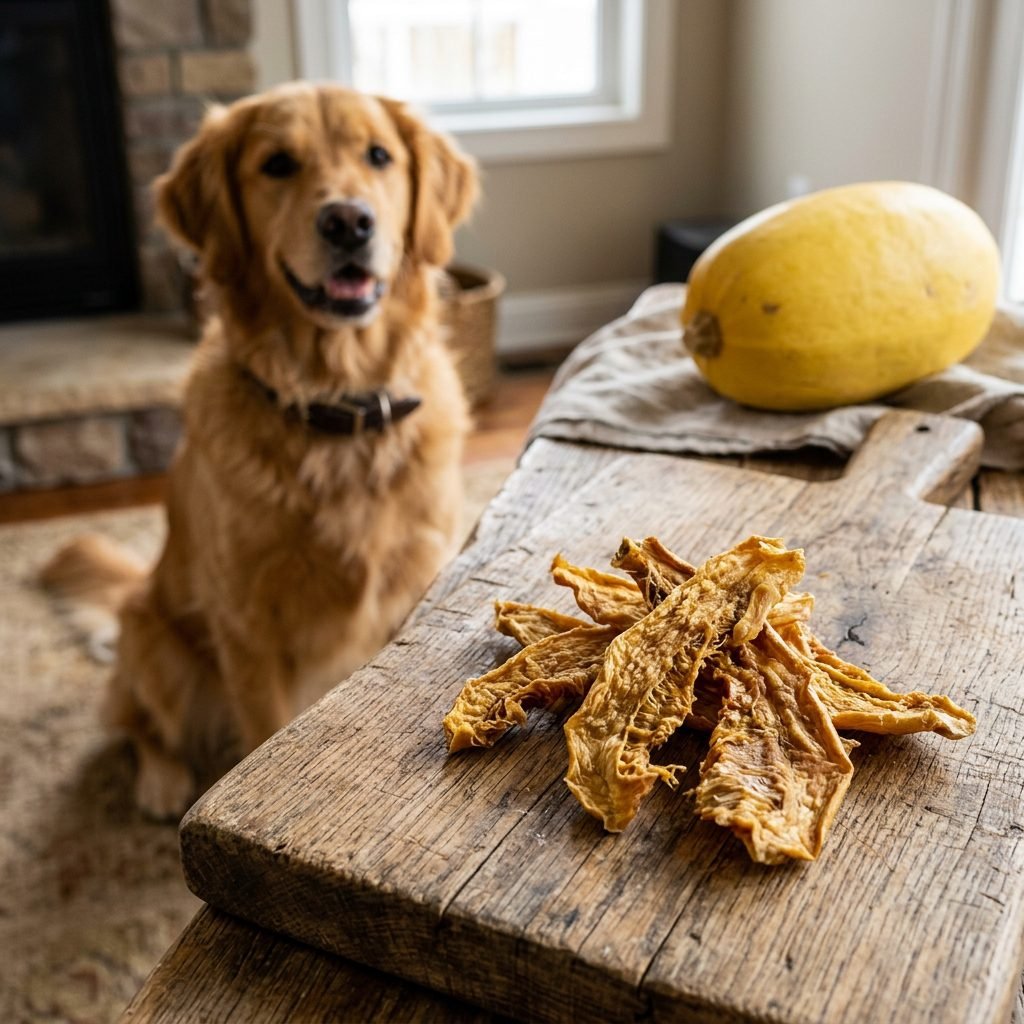
The ‘hacker’ secret here is the texture. When dehydrated or baked correctly, these squash strands create a satisfying ‘crunch’ that mimics the mouthfeel of high-calorie grain-based treats. It tricks the dog into thinking they are getting a high-value reward while they are actually eating a bowl of water and fiber.
The Cost Comparison: DIY vs. Store-Bought ‘Diet’ Treats
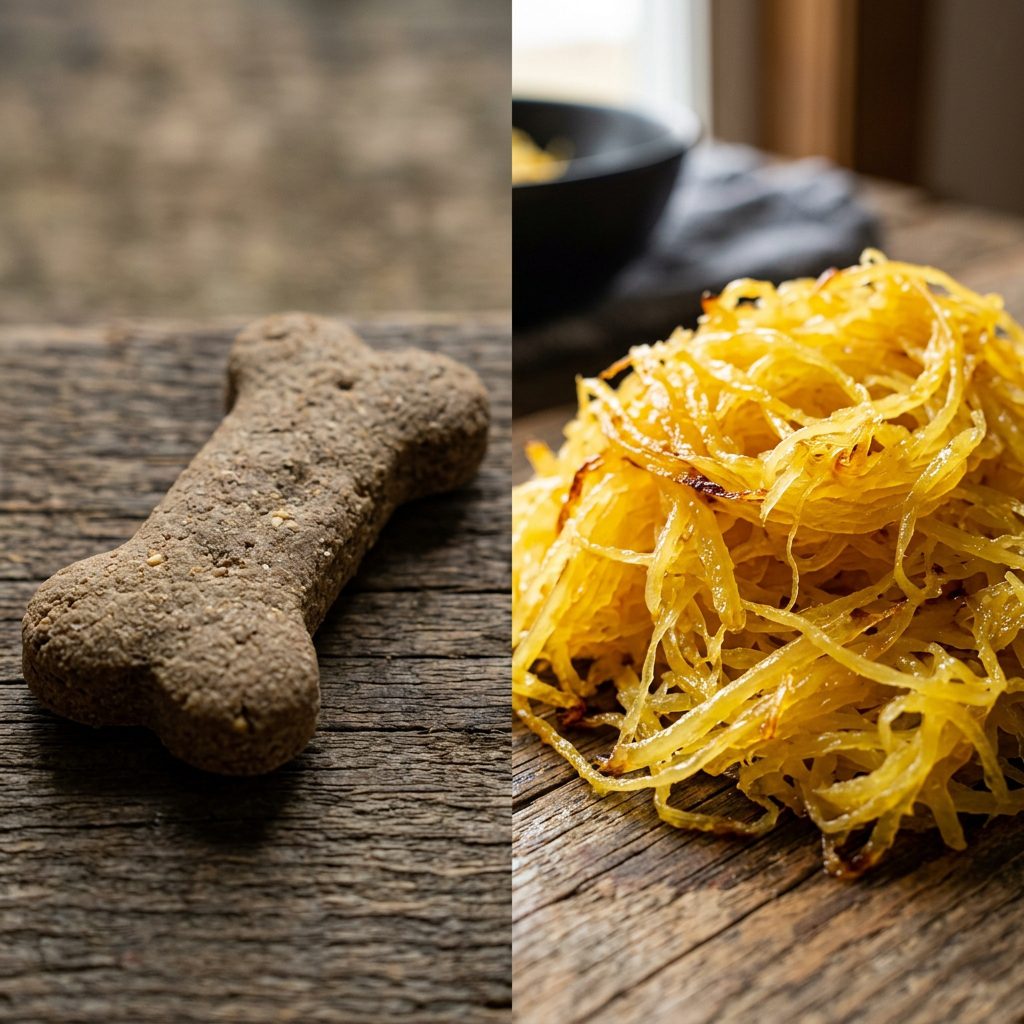
The pet food industry wants you to believe that ‘specialized’ nutrition requires a specialized price tag. I call foul. Let’s look at the math. A 10oz bag of premium, grain-free ‘healthy weight’ treats can easily set you back $14.99 to $18.99. When you look at the ingredients, you’re often paying for pea flour and potato starch—cheap binders that are still calorie-dense.
By using spaghetti squash, you are bypassing the middleman and the manufacturing costs. Here is how the numbers shake out for a typical batch of ‘Dieter’s Crunch’ treats compared to a leading ‘Healthy Weight’ brand.
| Feature | Store-Bought ‘Diet’ Treats | DIY Spaghetti Squash Crunch |
|---|---|---|
| Main Ingredient | Pea Flour / Cellulose | Fresh Spaghetti Squash |
| Calories Per Treat | 25 – 40 kcal | 2 – 5 kcal |
| Cost Per Ounce | $1.50 – $1.90 | $0.25 – $0.40 |
| Fillers/Preservatives | High (Citric acid, mixed tocopherols) | Zero |
| Verdict | Expensive ‘Sawdust’ Biscuits | Nutrient-Dense Budget Winner |
By making these at home, you aren’t just saving money; you’re gaining total control over what enters your dog’s system. No hidden sugars, no ‘natural flavors’ that are actually MSG-adjacent chemicals, and no mystery meat by-products. Just pure, unadulterated fiber.
The Actionable Recipe: The Dieter’s Crunch
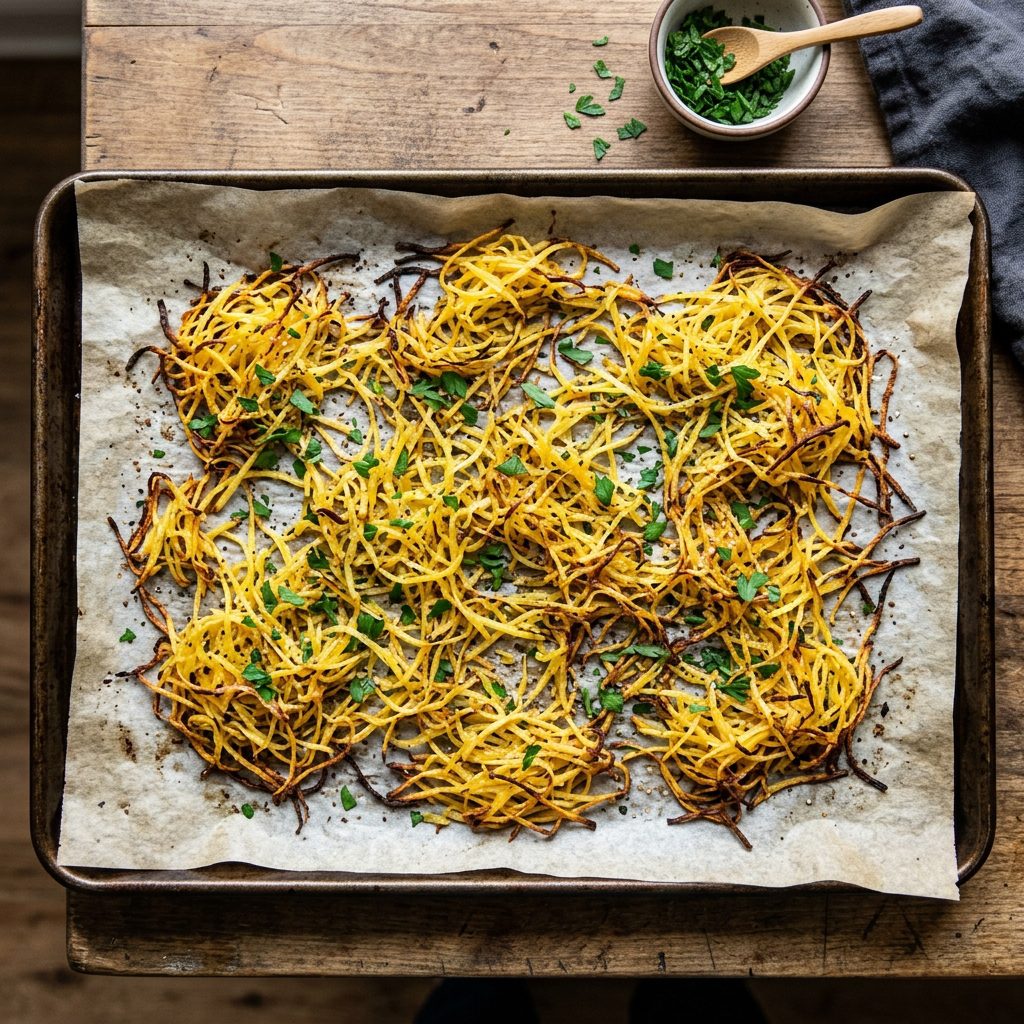
This isn’t a complex culinary feat. We are looking for maximum efficiency and maximum nutrition. To make the perfect batch, you only need one main ingredient and two optional ‘boosters’ to increase palatability without adding fat.
Ingredients & Ratios
- 1 Medium Spaghetti Squash: The base.
- 1 Teaspoon Ceylon Cinnamon (Optional): Helps regulate blood sugar (do not use Cassia cinnamon in large amounts).
- 1 Tablespoon Dried Parsley (Optional): For fresh breath and a hit of Vitamin K.
Step-by-Step Instructions
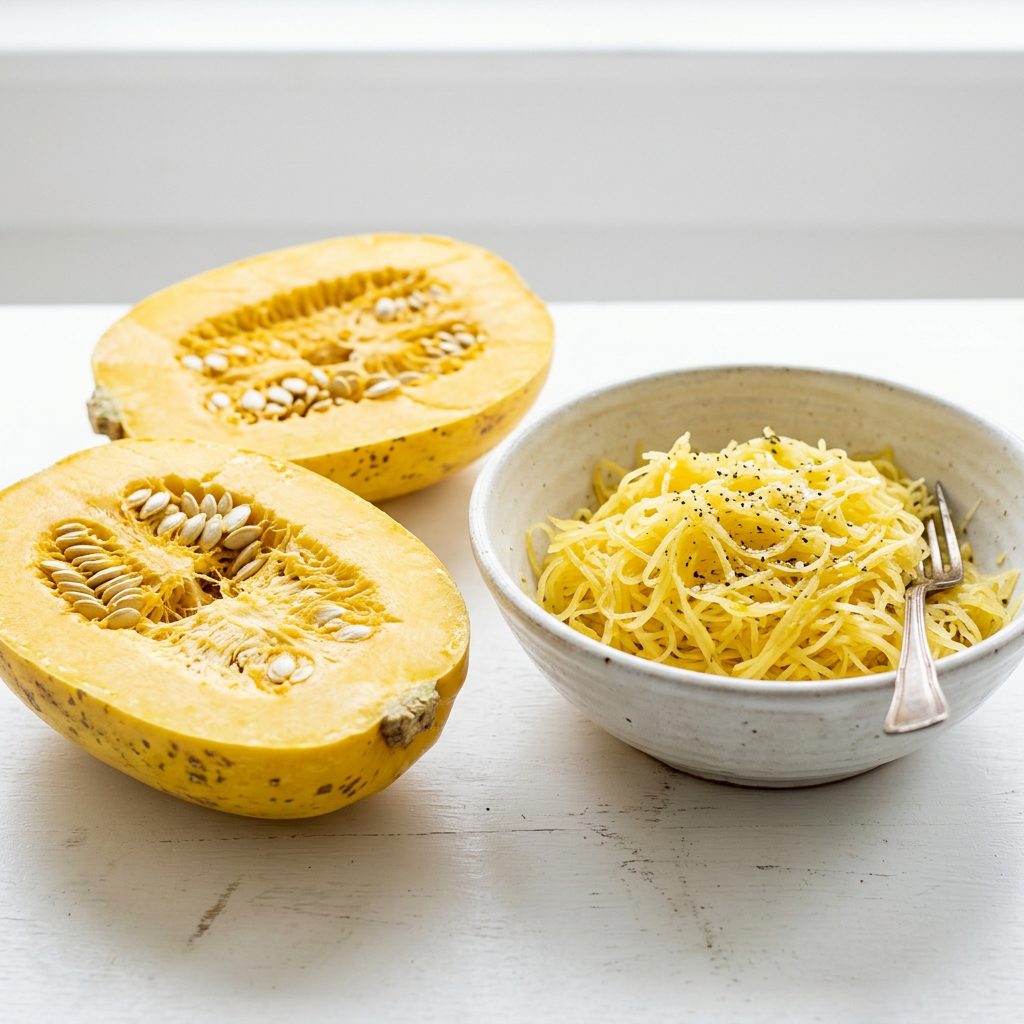
- The Roast: Preheat your oven to 400°F. Cut the squash in half lengthwise and scoop out the seeds. Place face down on a baking sheet with a splash of water and roast for 40 minutes until tender.
- The Shred: Once cool enough to handle, use a fork to scrape the flesh. It will naturally fall away in ‘spaghetti’ strands. This is the magic texture we want.
- The Seasoning: Toss the strands in a bowl with your cinnamon and parsley. No oil! We are avoiding fats here to keep the calorie count at rock bottom.
- The Crunch Factor: Lower your oven to 225°F (or use a dehydrator). Spread the strands in a single, thin layer on a parchment-lined sheet. Bake for 2 to 3 hours, turning occasionally, until they are brittle and crunchy.
Hacker Tip: If your dog is a ‘picky’ eater, you can toss the squash strands in 2 tablespoons of low-sodium beef or chicken bone broth before dehydrating. It adds an intense meaty aroma with negligible calories.
Batch Cooking & The ‘Freezer Hack’
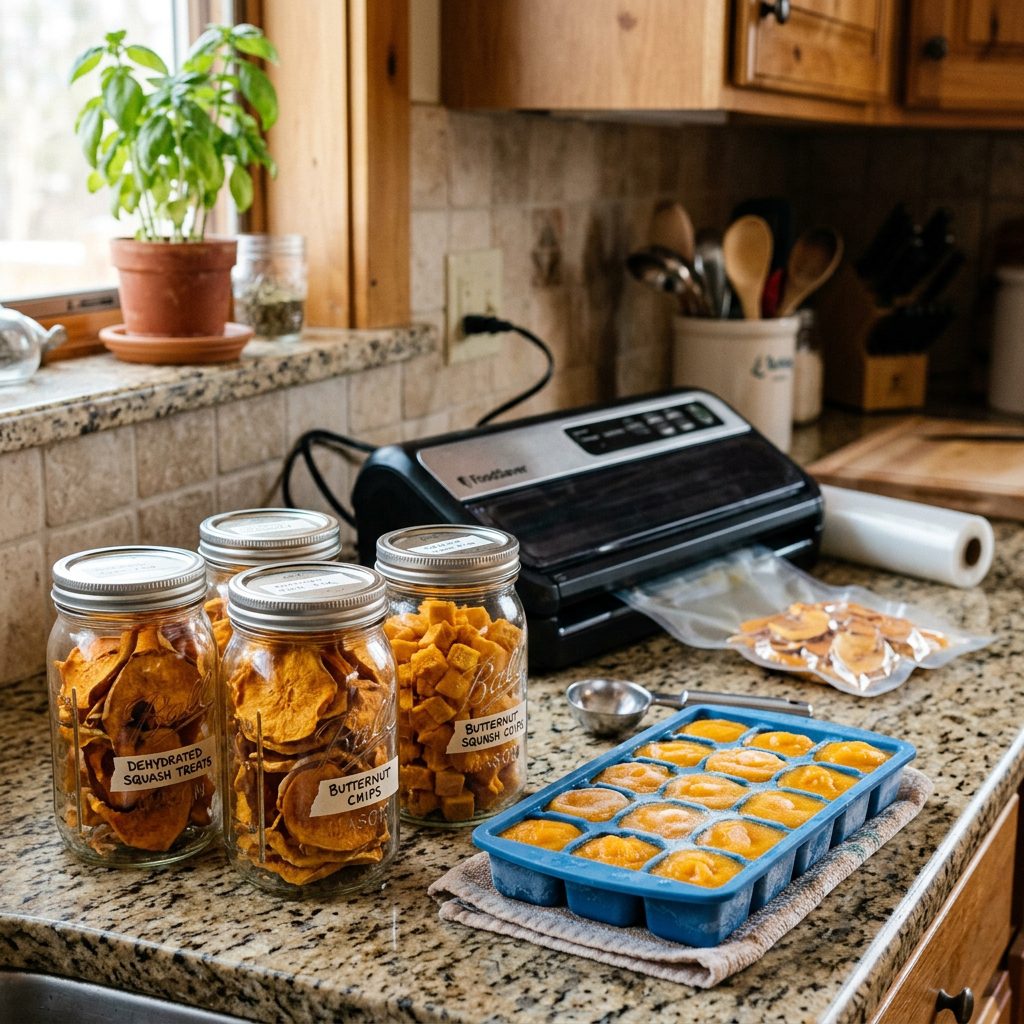
I know you’re busy. You don’t have time to roast a squash every three days. The secret to success in canine weight management is consistency, and consistency requires batching. Spaghetti squash is one of the most freezer-friendly vegetables in existence.
When I do a ‘Squash Run,’ I buy three or four large squashes at once. I roast them all, shred them, and then I follow this storage protocol:
The Storage Protocol
- The Dehydrated Batch: Once dehydrated into ‘crunchies,’ these can stay in an airtight glass jar for up to 2 weeks in a cool, dry pantry. If there is any moisture left, they will mold, so make sure they are ‘snap’ dry.
- The Frozen ‘Mix-In’ Pucks: Take the wet, shredded squash that you haven’t dehydrated yet and press it into silicone ice cube trays. Freeze them solid. These ‘pucks’ can be dropped into your dog’s regular dinner bowl to add volume and fiber, helping them feel full while you slowly reduce their kibble portions.
- Vacuum Sealing: If you have a vacuum sealer, you can store dehydrated treats for up to 6 months. This is how you win the budget game—buying squash when it’s in season and cheap (usually autumn) and feeding it all year.
By having these treats ready to go, you won’t be tempted to reach for the high-calorie ’emergency’ biscuits when your dog gives you those ‘I’m starving’ eyes. You’re prepared, you’re savvy, and you’re in control.
Conclusion
Final Verdict: The Hacker’s Way to a Leaner Dog
Weight loss for dogs isn’t about deprivation; it’s about substitution. By replacing those ‘filler-heavy’ commercial treats with the DIY Spaghetti Squash Crunch, you are performing a surgical strike against canine obesity. You are cutting out the wheat, corn, and soy that cause inflammation and weight gain, and replacing them with bioavailable fiber and hydration.
Remember, every calorie counts when a dog is trying to shed pounds. A single ‘standard’ biscuit can be the equivalent of a human eating a double cheeseburger. But with these squash treats, you can reward your pup frequently, keep their tail wagging, and watch the scale move in the right direction. You’ve got the recipe, you’ve got the science, and you’ve got the insider edge. Now, go hack that treat jar!