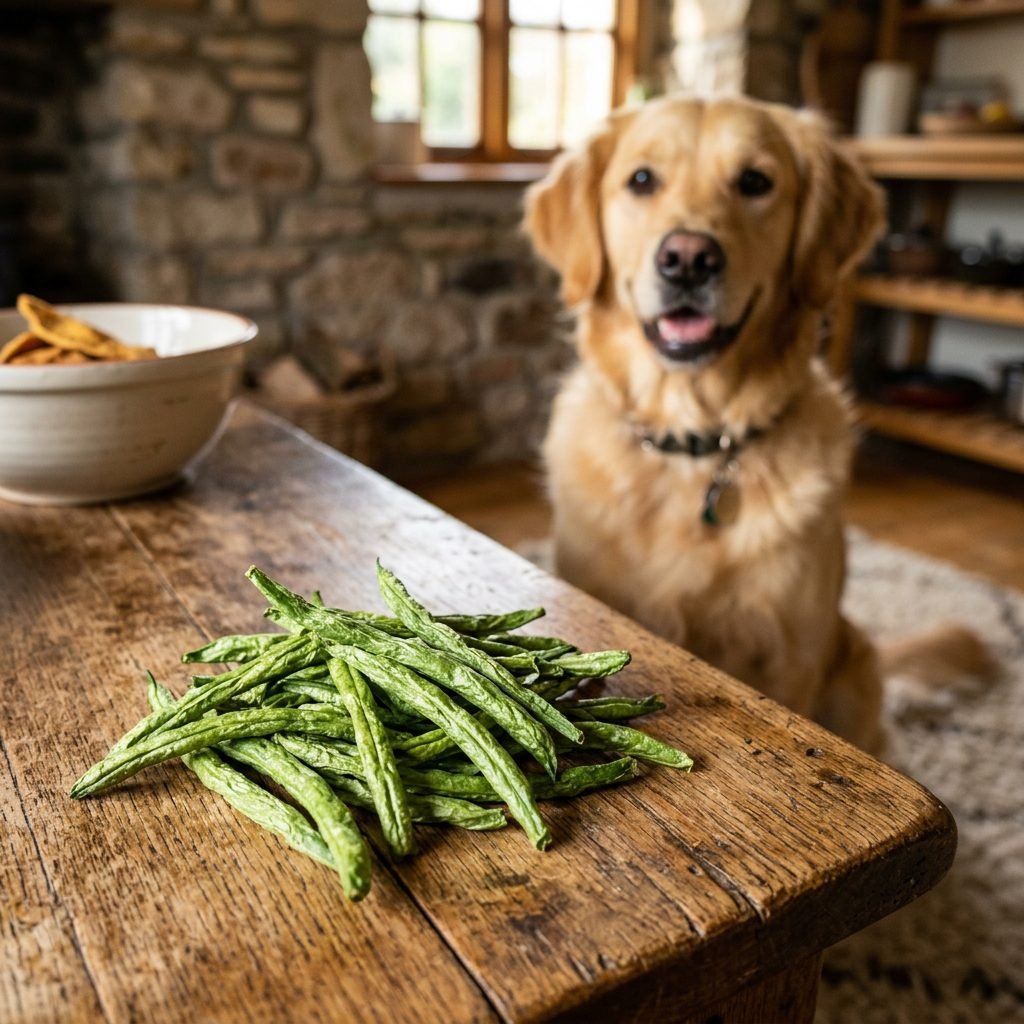
The Ultimate Low-Calorie Crunchy Snack: How to Dehydrate Green Beans for Your Dog
Listen up, savvy dog parents. As your resident Canine Nutrition Hacker, I spend my days analyzing pet food labels like a forensic scientist. And let me tell you, the commercial dog treat industry is pulling a fast one on us. You walk into a pet store, and what do you see? Aisles upon aisles of brightly colored bags promising health, vitality, and a wagging tail. But if you turn that bag around and read the label, the truth is terrifying. We are talking about treats where the first five ingredients are wheat flour, corn syrup, glycerin, mystery meat by-products, and artificial colors. These are not treats; they are metabolic disasters waiting to happen. The obesity epidemic in dogs is skyrocketing, with over fifty percent of our furry best friends carrying dangerous excess weight. This leads to joint issues, diabetes, and a shortened lifespan. But you are a savvy dog owner. You are not going to fall for the flashy marketing. You want to bio-hack your dog’s diet, maximize their nutrition, and minimize the junk. That is why today, we are mastering the ultimate low-calorie, high-crunch snack: the dehydrated green bean. This single-ingredient powerhouse is about to revolutionize your training sessions and your budget. SAFETY DISCLAIMER: I am a passionate canine nutrition hacker, not a licensed veterinarian. While green beans are a fantastic, safe, and healthy snack for the vast majority of dogs, you must always consult your vet before introducing new foods into your dog’s diet. This is especially critical if your dog has a history of calcium oxalate bladder stones, kidney disease, or specific dietary allergies. Furthermore, remember the golden rule of canine bio-hacking: treats, even healthy ones, should never make up more than 10% of your dog’s total daily caloric intake. Nutritional balance is key.
The Nutritional Truth: Why Green Beans Are the Ultimate Hacker Snack
Let us look under the hood of the humble green bean. Why are we choosing this specific vegetable over carrots, sweet potatoes, or apples? The answer lies in the caloric density and the fiber matrix.
The First 5 Ingredients Truth
Take a look at a popular commercial dental chew or veggie treat. The first five ingredients usually read something like this: Rice flour, wheat starch, glycerin, gelatin, and gum arabic. Where is the actual nutrition? It is buried under a mountain of cheap, starchy fillers designed to artificially inflate the manufacturer’s profit margins. These starches spike your dog’s blood sugar and convert directly to fat if not immediately burned off. Now, look at our DIY alternative. Ingredient one: Green beans. That is it. End of list.
The Forensic Nutrient Breakdown
Green beans are a nutritional goldmine. A full cup of raw green beans contains a mere 31 calories. Compare that to a single medium commercial dog biscuit, which can pack anywhere from 40 to 100 calories per cookie. You can hand out dehydrated green beans like candy during an intense training session without worrying about expanding your dog’s waistline. But it is not just about what green beans lack (calories and fat); it is about what they bring to the table. They are loaded with Vitamin K, which is essential for blood clotting and bone health. They contain Vitamin C, a powerful antioxidant that helps reduce cognitive aging and inflammation in dogs. They also provide a solid dose of iron and magnesium. Furthermore, the high fiber content acts as a prebiotic, feeding the beneficial bacteria in your dog’s gut microbiome. This means better digestion, firmer stools, and a dog that feels satiated and full, stopping the constant begging at the dinner table.
Insider Secret: The pet food industry uses glycerin to keep semi-moist treats soft and chewy. Glycerin is a sugar alcohol that can cause gastrointestinal upset in sensitive dogs. By completely dehydrating green beans until they snap, you achieve a satisfying crunch naturally, completely bypassing the need for artificial texturizers.
The Cost Hacker’s Breakdown: DIY vs. Store-Bought Premium Treats
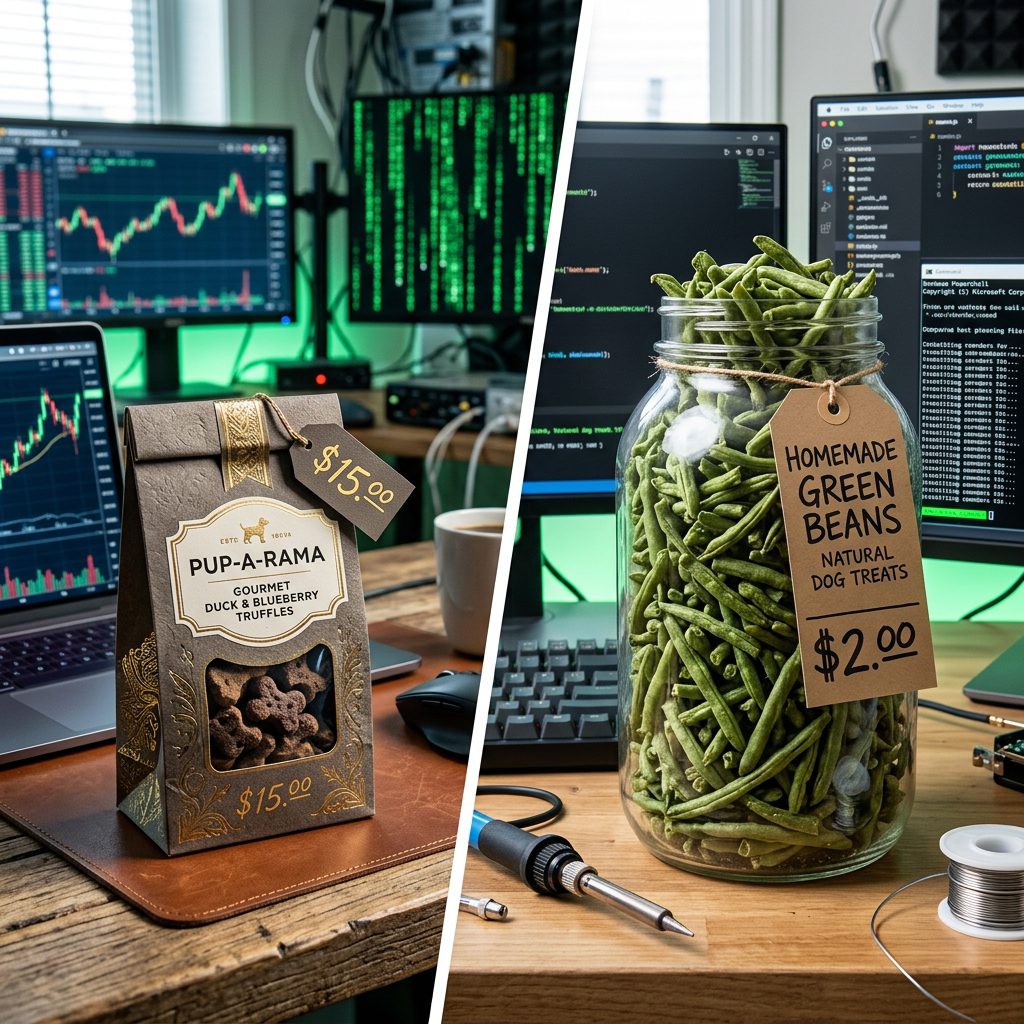
You know I love running the numbers. The pet food industry relies heavily on what I call the convenience tax. You walk into a high-end boutique pet store, and you see a beautifully branded, minimalist bag of Artisanal Dehydrated Green Beans. You flip it over, see that it contains only one ingredient, and you happily drop fifteen dollars for a measly four-ounce bag. Let us expose the real cost of making these at home and see how much money you are leaving on the table.
| Metric | Store-Bought Premium Veggie Treats | DIY Dehydrated Green Beans (Bulk) |
|---|---|---|
| Primary Ingredient | Green Beans (often with preservatives) | 100% Fresh or Frozen Green Beans |
| Cost Per Ounce (Approximate) | $3.75 to $5.00 | $0.20 to $0.30 |
| Cost Per Month (Daily Snacking) | $60.00+ | $4.50 |
| Recall Risk | Moderate (Cross-contamination risks) | Zero (Controlled by you) |
Let that sink in. By purchasing fresh green beans when they are in season at your local farmer’s market, or by grabbing massive bulk bags of frozen green beans from Costco or Sam’s Club, you are slashing your treat budget by over ninety percent. If you have a fifty-pound dog that trains daily, you are looking at saving roughly $1.50/day, which translates to over five hundred dollars a year. That is money you can redirect toward high-quality, biologically appropriate protein for their main meals, routine veterinary care, or that orthopedic memory foam bed you have been eyeing for your senior dog. Bio-hacking your dog’s health should not make you go broke.
Choosing Your Weapon: The Science of Dehydrators vs. Standard Ovens
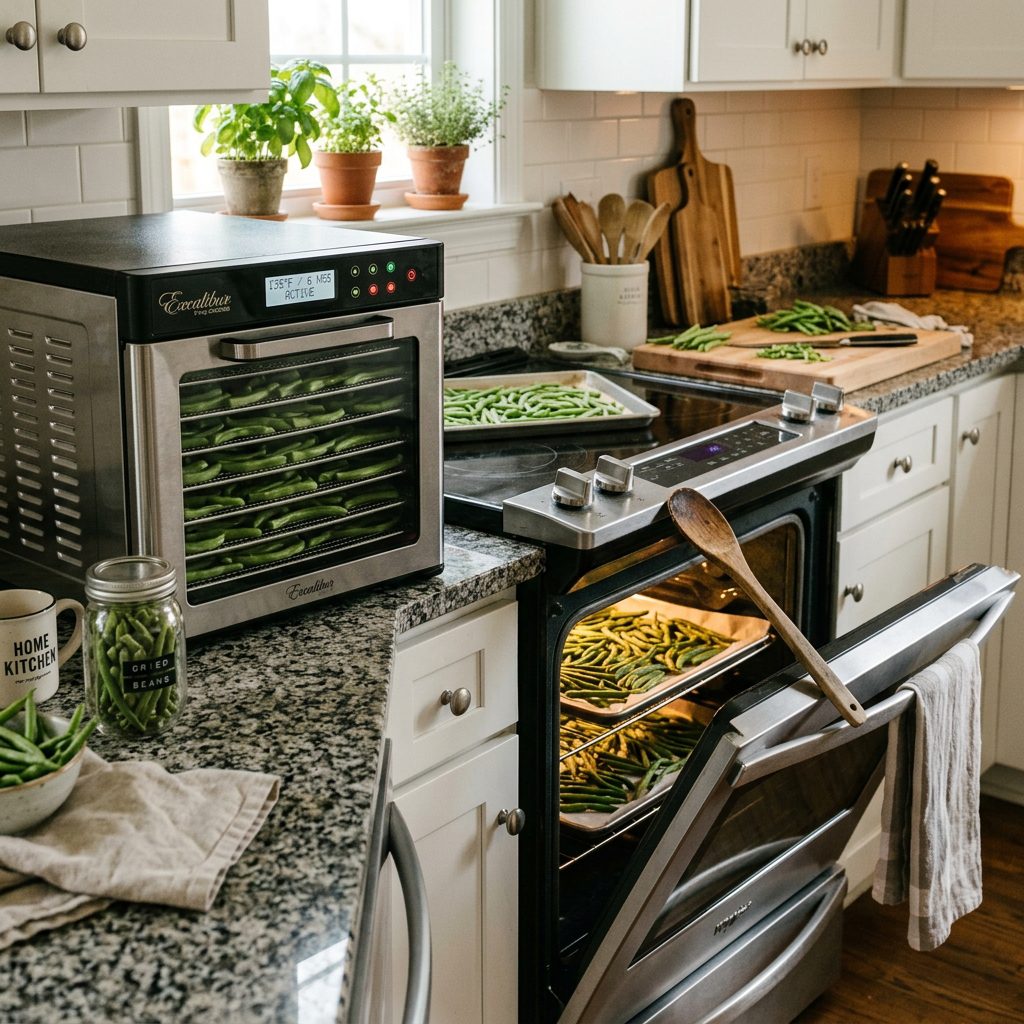
To achieve that perfect, satisfying snap that dogs go absolutely crazy for, you need to master the art of moisture removal. The goal is to extract the water content without cooking the nutrients out of the bean. You have two main options in your kitchen arsenal, and both work wonderfully depending on your budget and setup.
The Dedicated Food Dehydrator Method
If you are serious about DIY dog treats, investing in a dedicated food dehydrator is the ultimate hacker move. Dehydrators provide consistent, low-temperature airflow across multiple stacked trays. This is the optimal, scientifically proven way to preserve the water-soluble vitamins, like Vitamin B and Vitamin C, found in green beans. High heat destroys these delicate nutrients, but a dehydrator operates in the sweet spot. You simply set your machine to exactly 125 degrees Fahrenheit and let it run. It is virtually foolproof, energy-efficient, and allows you to process massive batches simultaneously.
The Standard Kitchen Oven Hack
Do not have a dehydrator? No problem. You can hack your standard kitchen oven to do the exact same job. The trick here is temperature control and airflow management. Most modern ovens only go down to 170 degrees Fahrenheit, which is slightly too hot and risks baking the beans instead of drying them. To circumvent this, set your oven to its absolute lowest temperature setting. Then, take a wooden spoon and use it to prop the oven door open about an inch or two. This crucial step allows the evaporated moisture to escape the oven cavity, mimicking the continuous airflow of a commercial dehydrator. If you skip propping the door, the moisture remains trapped, and you will end up with roasted, mushy beans instead of the crispy, shelf-stable chips we are aiming for.
The Actionable Recipe: Step-by-Step Green Bean Dehydration
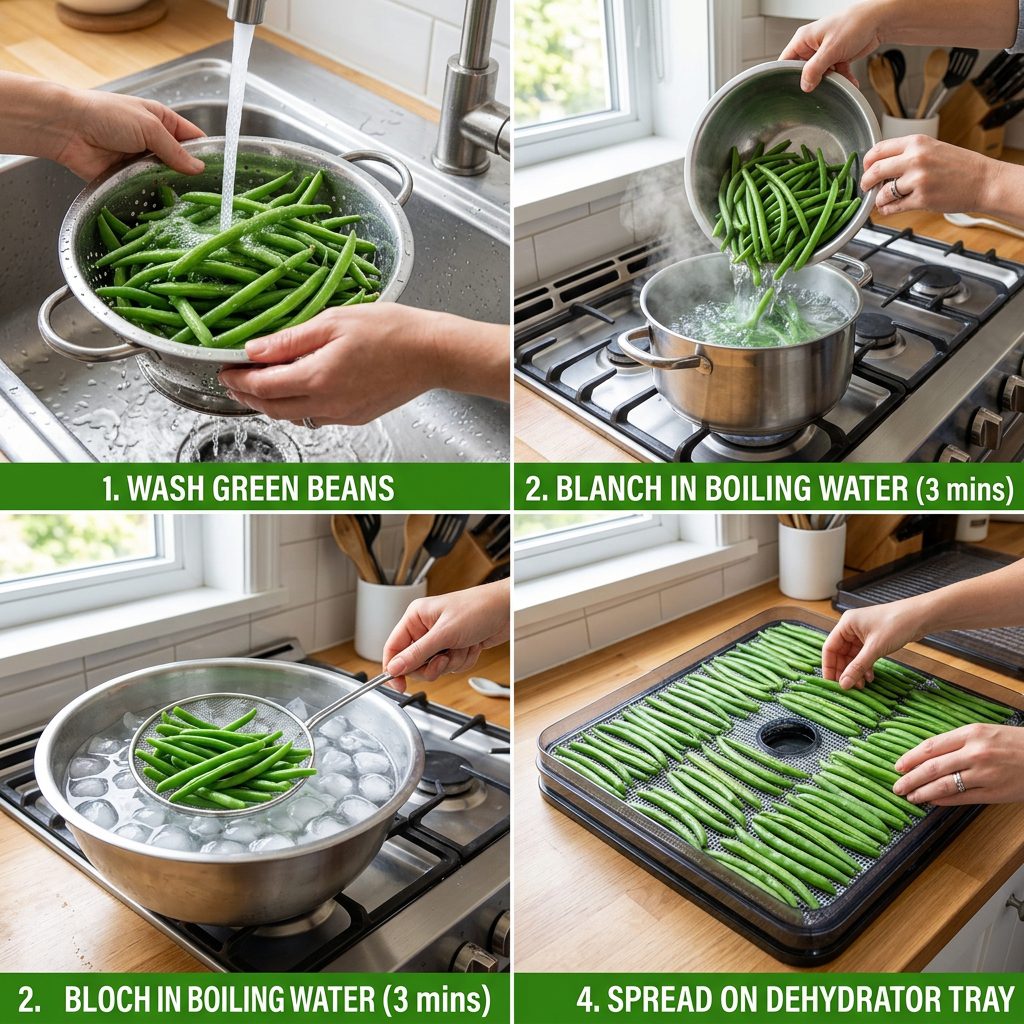
Alright, let us get our hands dirty. This is my foolproof, step-by-step guide to creating the ultimate low-calorie crunchy snack. The active prep time is minimal, but the nutritional payoff is massive. Follow these steps exactly for flawless execution.
- Sourcing and Washing: Start with fresh, crisp green beans. Wash them thoroughly in a colander under cold running water to remove any dirt, debris, or residual agricultural chemicals. If you are utilizing the frozen green bean budget hack, ensure you let them thaw completely at room temperature, then aggressively pat them dry with paper towels. Moisture is the enemy of the crunch!
- Trimming and Sizing: Snip off the tough, fibrous ends of the fresh green beans. For large breeds like German Shepherds or Labradors, you can leave them whole. For smaller breeds like Pugs or Terriers, snap them in half or into thirds to create perfectly bite-sized training rewards.
- The Blanching Hack (Optional but Highly Recommended): Blanching is a culinary technique that involves dropping the raw beans into a pot of rolling boiling water for exactly two minutes, then immediately plunging them into a bowl of ice water. Why go through this extra step? The boiling water rapidly breaks down the tough cellular walls of the bean, making the nutrients more bioavailable and easier for your dog’s digestive tract to process. The ice bath instantly stops the cooking process, locking in that vibrant, appetizing green color.
- Arranging for Maximum Airflow: Lay the prepared beans out on your dehydrator trays or parchment-lined baking sheets. This is a critical failure point for beginners: Make absolutely sure the beans are not touching or overlapping! Overcrowding blocks the airflow, traps moisture, and leads to uneven drying and potential mold growth later.
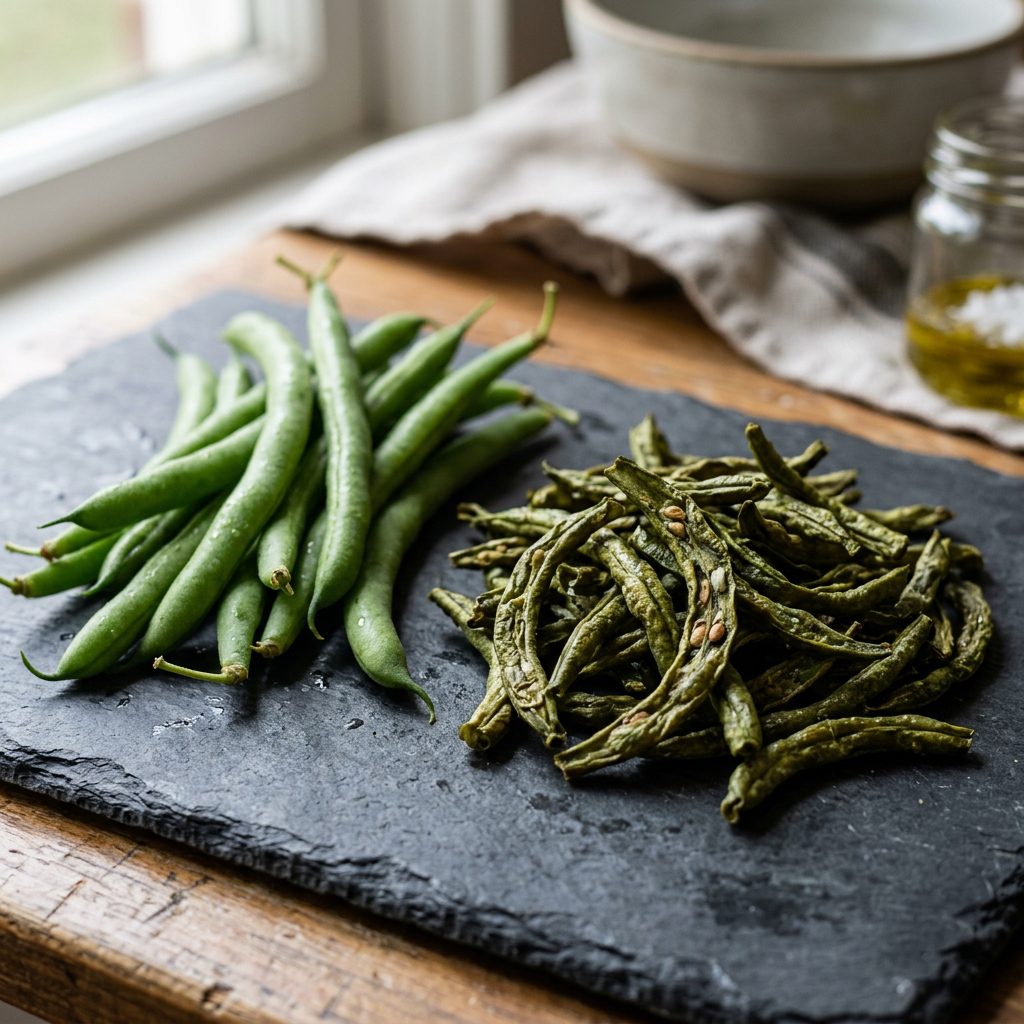
- The Drying Process: If you are using a dehydrator, set the temperature to 125 degrees Fahrenheit and leave them for 8 to 10 hours. If you are utilizing the hacked oven method, set it to the lowest temperature, prop the door, and start checking them after the 4-hour mark. You are looking for a completely brittle, snappy texture. Take a bean out, let it cool for a minute, and try to bend it. If it bends, it still holds moisture and needs more time. If it snaps cleanly in half, you have achieved perfection.
Troubleshooting: How to Avoid the Dreaded Chewy Bean
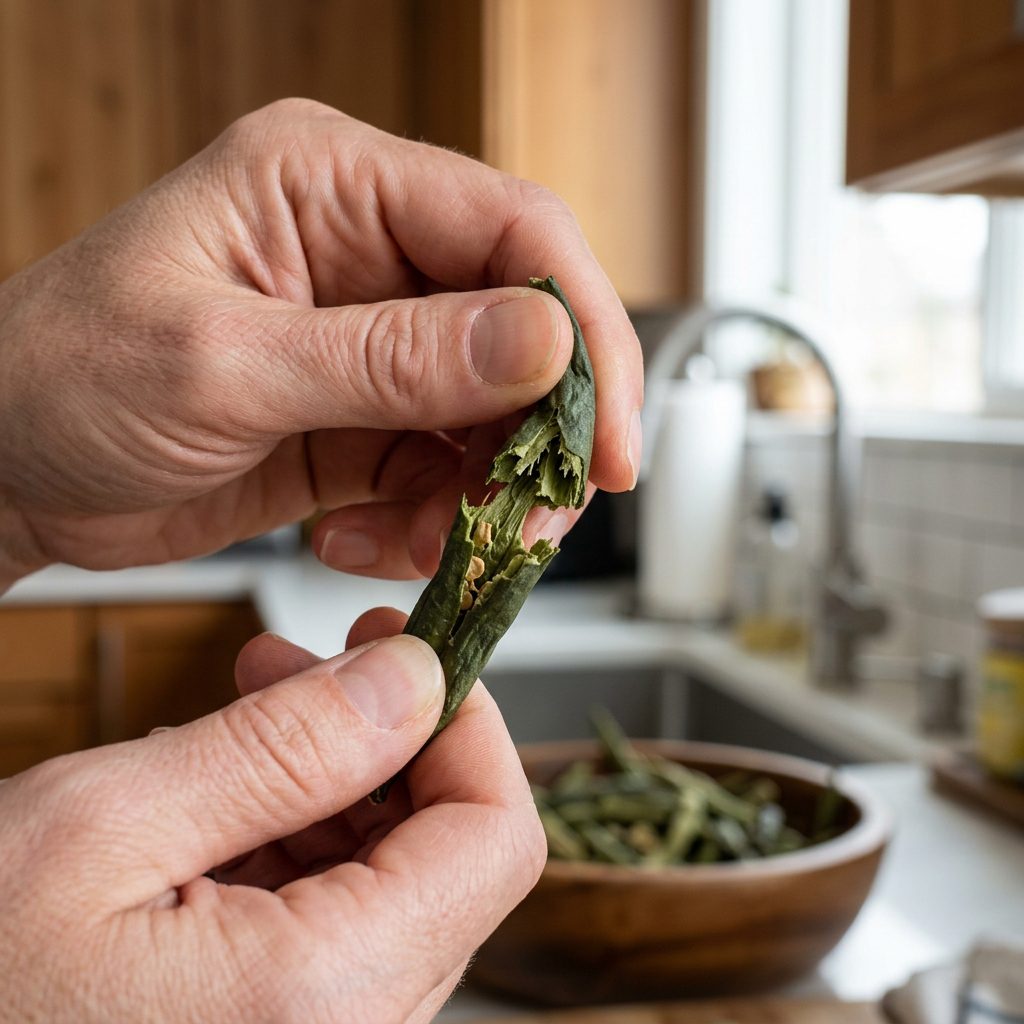
Even the best hackers run into bugs. If this is your first time dehydrating treats, you might encounter a few common issues. Let us troubleshoot the most frequent problems so you do not waste a single batch of healthy snacks.
The Beans Are Chewy, Not Crunchy
This is the number one complaint I hear from beginners. If your green beans have a leathery, chewy texture rather than a satisfying snap, they simply have not dehydrated long enough. Ambient humidity in your house plays a massive role in dehydration times. If you live in a humid climate like Florida, a batch might take twelve hours instead of eight. Do not panic; just put them back in the dehydrator or oven and check them every hour until they snap. Remember, you cannot over-dehydrate them at 125 degrees, but under-dehydrating them leaves residual moisture, which is a breeding ground for mold.
The Beans Turned Brown and Taste Burnt
If your green beans look like sad, brown twigs, your temperature was too high. This usually happens when people use the oven method without propping the door open, or if their oven’s lowest setting is still hovering around 200 degrees Fahrenheit. High heat cooks the sugars in the beans, leading to caramelization and burning. While a slightly browned bean will not harm your dog, it destroys the delicate vitamins and alters the taste. Always monitor your oven temperature with a secondary oven thermometer if you suspect it runs hot.
Insider Secrets: Advanced Flavor Hacks and Long-Term Batch Storage
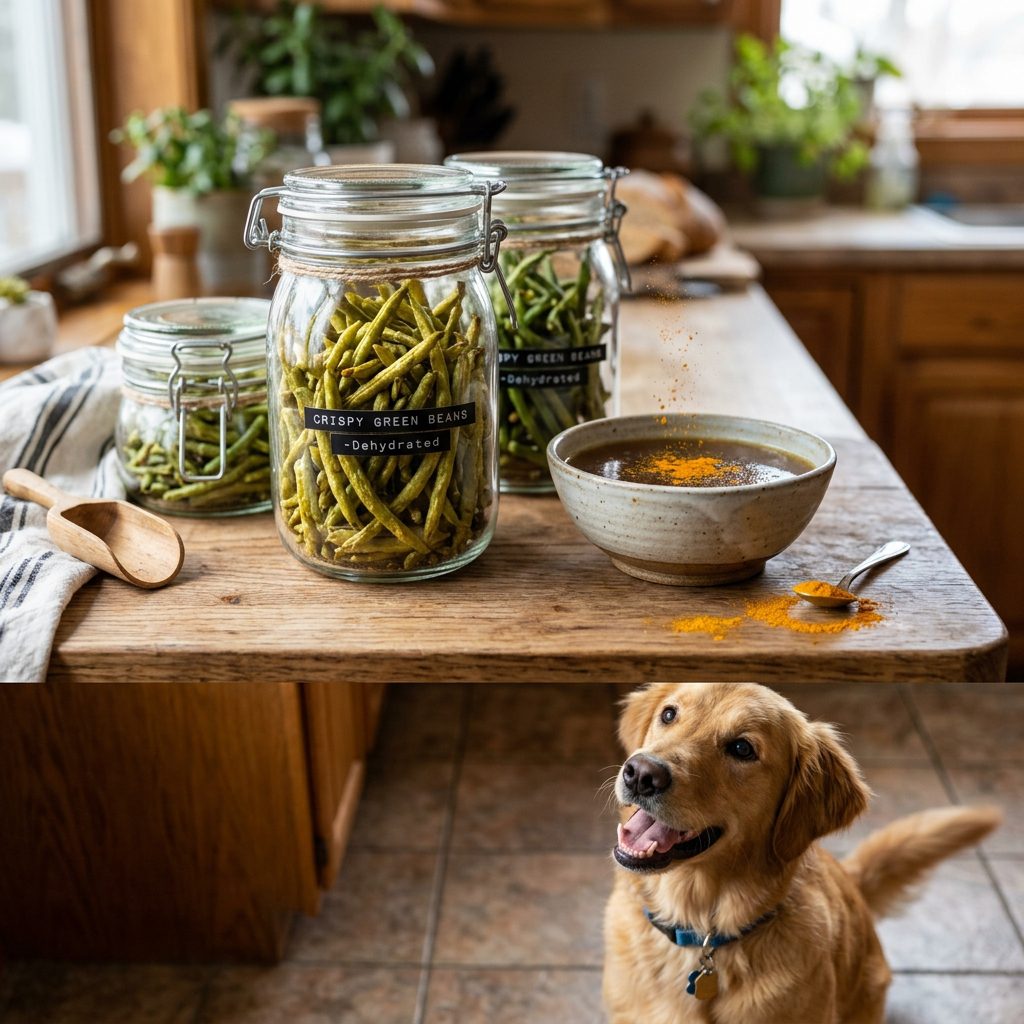
Now that you have mastered the basic crispy green bean chip, let us talk about leveling up the flavor profile and storing your bounty so it stays fresh for weeks. Plain green beans are fantastic, but sometimes we need to entice a particularly picky eater or add an extra functional health boost.
The Savory Bone Broth Hack
If your dog turns their nose up at plain vegetables, deploy this insider secret. Before you place the raw green beans on the trays, toss them in a mixing bowl with a single tablespoon of dog-safe bone broth. Warning: Ensure the bone broth contains absolutely zero onions, garlic, or added sodium, as these are highly toxic to dogs. Lightly coat the beans—do not soak them. The broth adds a rich, savory, meaty aroma that drives dogs wild, transforming a boring vegetable into a high-value reward without adding significant calories.
The Anti-Inflammatory Turmeric Sprinkle
For senior dogs dealing with joint stiffness, you can bio-hack this treat by lightly dusting the damp green beans with a pinch of organic turmeric powder and a microscopic dash of black pepper (which increases turmeric absorption) before dehydrating. This turns your low-calorie snack into a functional, anti-inflammatory powerhouse.
Mastering Batch Cooking and Storage
When you take the time to dehydrate, you want to maximize your return on investment. I highly recommend extreme batch cooking. Buy massive quantities of green beans and run your dehydrator overnight. Once the drying process is complete, you must let the beans cool completely on the trays for at least an hour. If you put warm beans into a container, they will release condensation, ruining your perfect crunch. Once cool, store them in airtight glass mason jars and keep them in a cool, dark pantry. Because all the moisture has been scientifically removed, these treats can last up to a month at room temperature.
Hacker Tip: To guarantee absolute freshness, throw a food-safe silica gel packet (the little packets that come in seaweed snacks or beef jerky) into the mason jar. It will aggressively absorb any residual ambient moisture and keep your green beans snapping like the day you made them! For ultra-long-term storage, you can freeze dehydrated treats in vacuum-sealed bags for up to six months.
Conclusion
Joining the DIY canine nutrition revolution is one of the most empowering decisions you can make as a pet parent. Taking control of your dog’s diet does not require a Ph.D. in animal nutrition, nor does it require spending your entire paycheck at a boutique pet store. By simply mastering the art of dehydrating green beans, you are providing a vitamin-packed, low-calorie treat that perfectly satisfies your dog’s primal urge to crunch. You are bypassing the shady filler ingredients, avoiding the chemical preservatives, and saving a substantial amount of money in the process. That is exactly what being a savvy, street-smart dog owner is all about. So, fire up that oven or dust off that dehydrator, grab a bulk bag of fresh green beans, and start hacking your dog’s health today. Your dog’s waistline, their overall longevity, and your wallet will thank you.