From Kitchen to Retail: The Exact Strategy to Sell Your Homemade Dog Treats in Local Pet Boutiques!
Welcome to the Insider’s Club of Canine Culinary Success
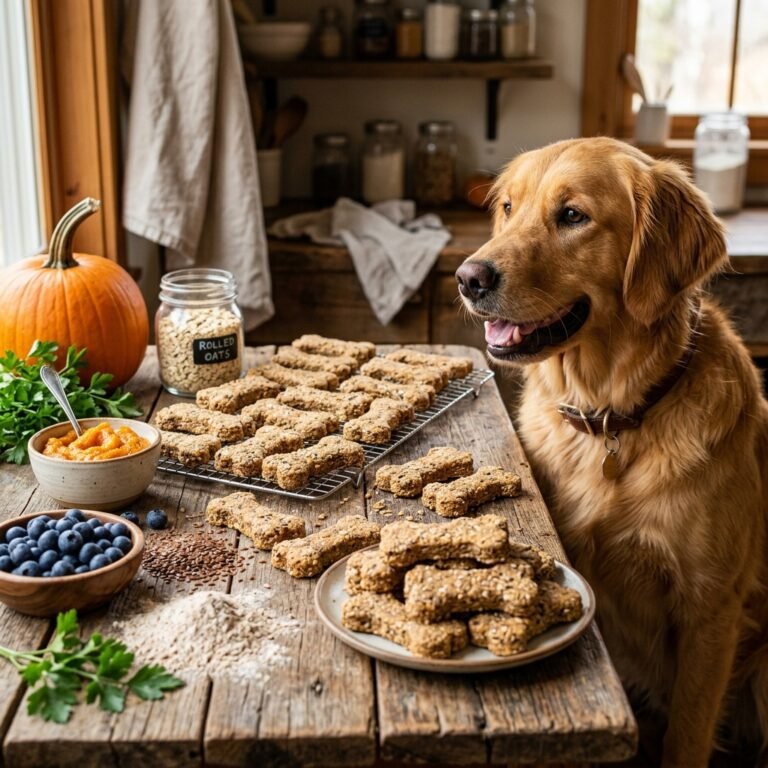
Listen up, savvy dog owners. You have done the hard work. You have analyzed the ingredient labels on those commercial bags of treats and realized they are packed with absolute garbage—corn gluten meal, artificial dyes, and mystery meat by-products. You decided to take matters into your own hands. You stepped into your kitchen, sourced real, human-grade ingredients, and baked a treat that makes every dog in your neighborhood go absolutely wild.
But right now, you are just the popular dog parent at the local park. What if you could take that exact same recipe, scale it, and see it sitting proudly on the shelf of that high-end pet boutique downtown? I am the Canine Nutrition Hacker, and I am here to tell you that transitioning from a kitchen hobbyist to a retail powerhouse is entirely within your reach. However, it requires a completely different mindset. You can no longer just be a baker; you have to become a forensic formulator, a packaging expert, and a savvy negotiator.
Insider Secret: The big commercial brands rely on cheap fillers and massive marketing budgets. Your superpower is transparency and quality. Local pet boutiques are desperate for authentic, healthy, filler-free products to offer their educated clientele. You just have to know how to hand it to them on a silver platter.
In this comprehensive guide, we are going to strip away the fluff and give you the exact, no-nonsense blueprint to get your homemade dog treats into retail stores. We will cover the legal loopholes, the formulation secrets for shelf life, the brutal truth about pricing, and the exact script you need to pitch a store owner. Grab your apron and your calculator—it is time to hack the pet retail industry.
The Safe Chef Legal Guide: Don’t Get Shut Down Before You Start
The Unsexy (But Necessary) Legal Blueprint
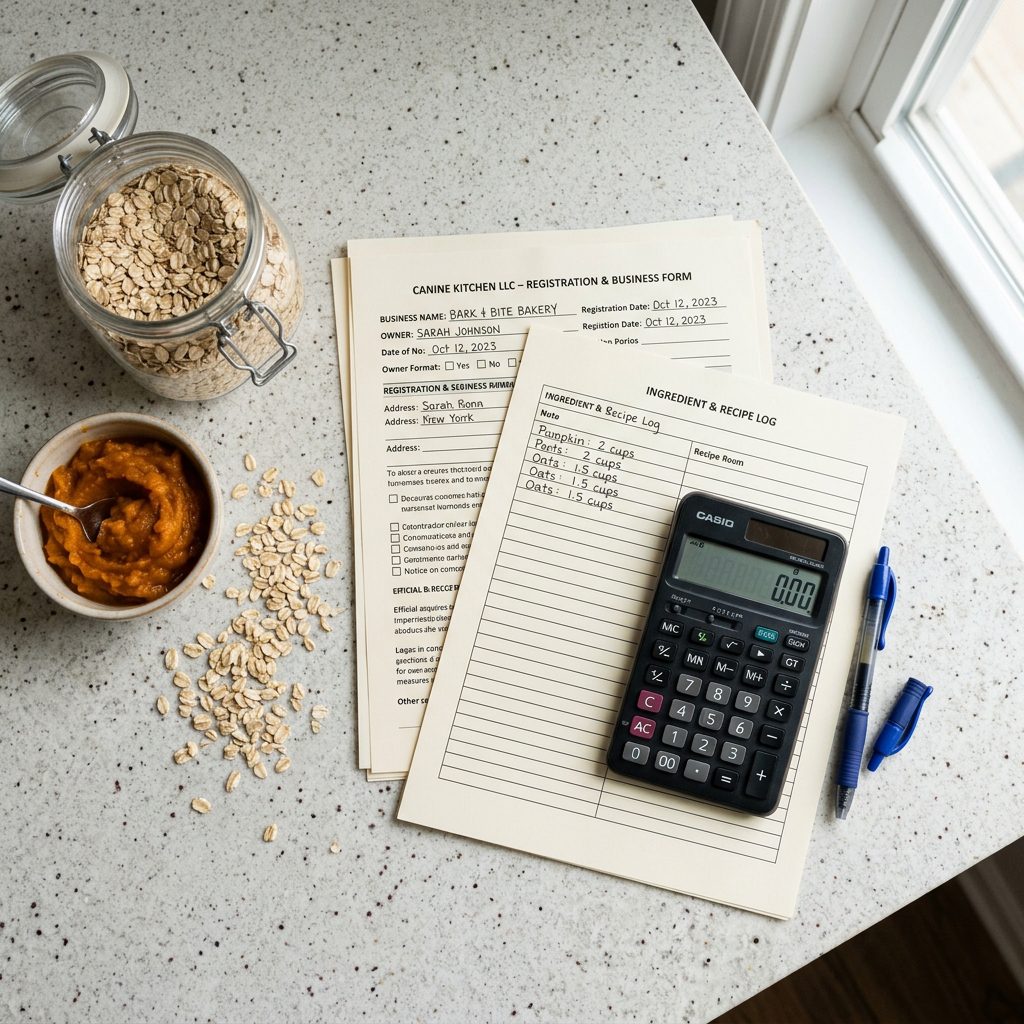
Let us start with a massive, non-negotiable safety and legal disclaimer: I am a nutrition hacker and business strategist, not a lawyer or a veterinarian. Before you sell a single biscuit, you must understand that the pet food industry is highly regulated. You cannot simply bake treats in your oven, slap a cute sticker on a Ziploc bag, and ask a store to sell them. That is a one-way ticket to a cease-and-desist letter from your State Department of Agriculture.
Understanding AAFCO and State Feed Officials
The Association of American Feed Control Officials (AAFCO) sets the standard for pet food labeling in the United States. While AAFCO does not directly approve your treats, your state’s Feed Control Official uses their guidelines to regulate what you can and cannot do. Every single state has different rules regarding commercial feed registration. Some states require a small annual fee of $50, while others require extensive facility inspections.
- Step 1: Locate your State Chemist or Department of Agriculture. Search online for your state’s specific commercial pet feed regulations.
- Step 2: Get a Guaranteed Analysis. This is non-negotiable for retail. You must send a sample of your treats to a certified laboratory to determine the exact percentages of Crude Protein, Crude Fat, Crude Fiber, and Moisture. This usually costs between $50 and $100 per recipe.
- Step 3: Register your product. Submit your label, your Guaranteed Analysis, and your registration fee to your state.
Hacker Tip: Do not let the paperwork intimidate you. The barrier to entry is exactly what keeps the lazy competition out. Once you have your guaranteed analysis and state registration, you instantly elevate yourself from a ‘hobbyist’ to a ‘legitimate pet food manufacturer’ in the eyes of boutique owners.
Formulating for the Shelf: Why Fresh Treats Fail in Retail
The Battle Against Moisture and Mold
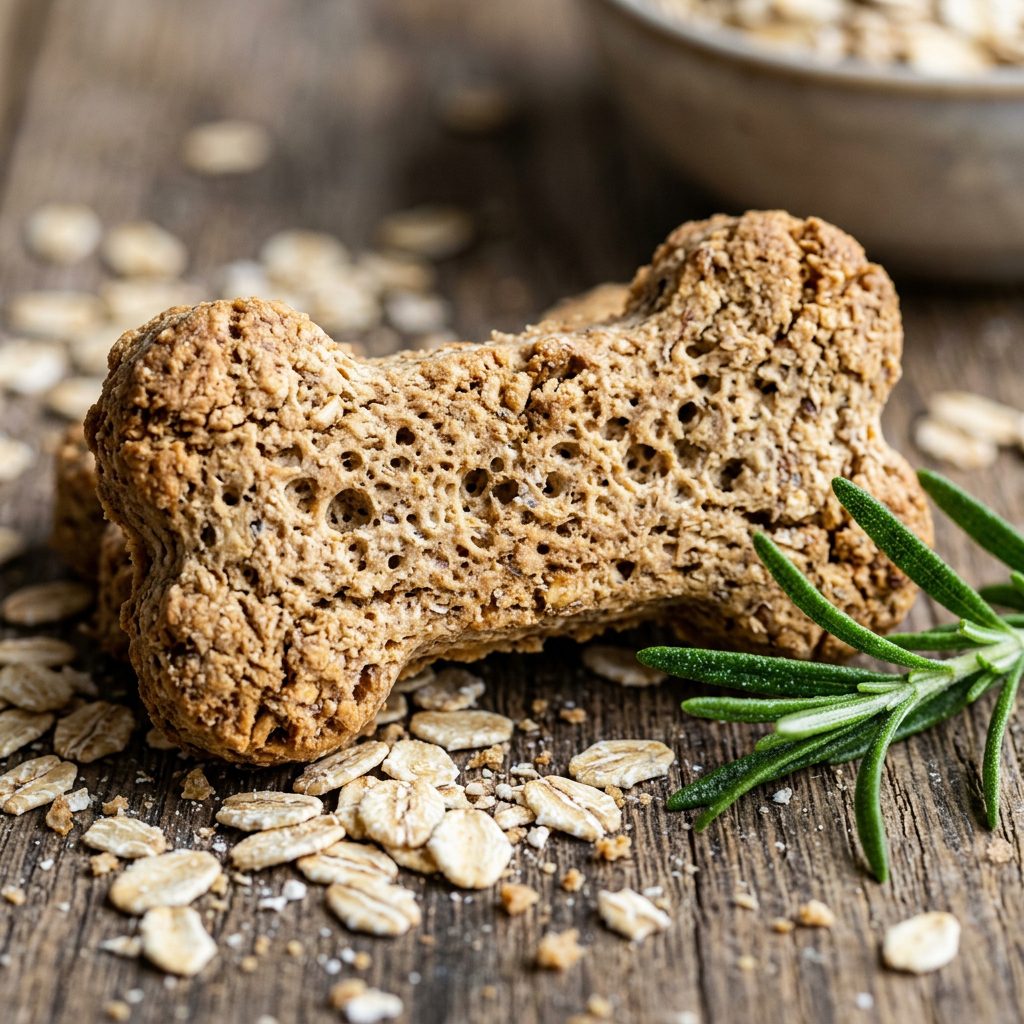
Here is a brutal truth that most DIY treat bakers learn the hard way: the recipe your dog loves fresh out of the oven will probably grow mold after two weeks on a retail shelf. When you bake for your own dog, you store the treats in the fridge or freezer. In retail, your product needs to survive at room temperature for months. The enemy here is not lack of flavor; the enemy is moisture.
Enemy Ingredients vs. Hero Ingredients
When you are formulating for retail, you have to look at your ingredients like a forensic scientist. Anything that holds onto water is a potential hazard for shelf stability.
- Enemy Ingredients: Fresh meats, large chunks of fresh fruit (like whole blueberries or apple chunks), and high-fat dairy. These create pockets of moisture where bacteria and mold thrive.
- Hero Ingredients: Oat flour, pureed pumpkin (in moderation), dehydrated meats, and natural preservatives.
The Secret to Natural Preservation
You refuse to use chemical preservatives like BHA or BHT—that is why you started this journey in the first place! So, how do you keep treats fresh? The answer lies in baking technique and natural antioxidants.
- The Double Bake Method: Just like making biscotti, bake your treats until they are cooked through, then lower the oven temperature to 200 degrees Fahrenheit and let them dehydrate for several hours. You want to remove as much moisture as physically possible. A dry treat is a safe treat.
- Natural Tocopherols: Use mixed tocopherols (a form of Vitamin E) or rosemary extract. These act as natural preservatives by preventing the fats in your treats from going rancid.
Insider Secret: Invest in a water activity meter if you plan to scale. Water activity (aW) is different from moisture content. It measures the ‘free water’ available for mold growth. If you get your treat’s aW below 0.6, it is virtually impossible for mold to grow.
The Brutal Truth About Pricing: Cost Breakdown Strategy
Stop Underpricing Your Masterpieces
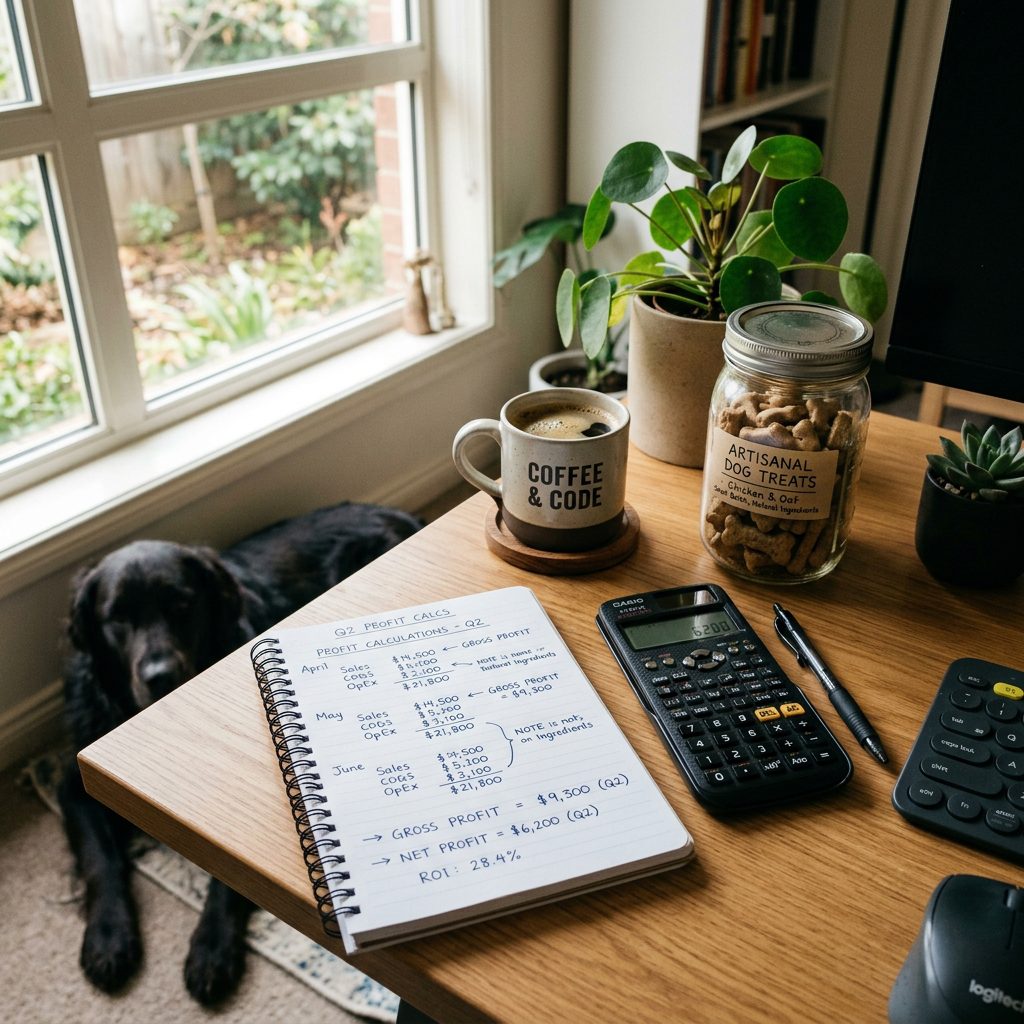
The fastest way to go out of business is to price your treats based on what you *feel* is fair, rather than what the math dictates. Savvy dog owners know that premium nutrition costs money, and boutique shoppers are willing to pay for quality. But you have to make sure your margins make sense for both you and the retailer.
Understanding the Retail Math
When you sell to a local boutique, you are selling at Wholesale. The boutique then marks up the product to the Suggested Retail Price (SRP). The industry standard is a 50% margin for the retailer, meaning they double the wholesale price. If you want your treats on the shelf for $10, you must sell them to the store for $5. Therefore, your Cost of Goods Sold (COGS)—which includes ingredients, packaging, and a portion of your labor—must be significantly lower than $5 for you to make a profit.
Real Cost Breakdown: DIY vs. Wholesale vs. Retail
Let us look at a forensic breakdown of a standard 6oz bag of Premium Peanut Butter & Pumpkin Crunchers.
| Expense Category | Cost per 6oz Bag (COGS) | Wholesale Price (To Store) | Retail Price (SRP) |
|---|---|---|---|
| Ingredients (Organic) | $1.15 | – | – |
| Packaging (Bag & Label) | $0.65 | – | – |
| Labor & Overhead (Est.) | $0.70 | – | – |
| Total Cost to Make | $2.50 | – | – |
| Your Profit Margin | – | $5.00 (You make $2.50) | – |
| Boutique Profit Margin | – | – | $10.00 (Store makes $5.00) |
If your COGS is $2.50, and you sell wholesale for $5.00, you are making a 50% profit margin. The store buys it for $5.00 and sells it for $10.00, making their required 50% margin. Do not skip this math. If you cannot get your COGS down to at least half of your wholesale price, you need to buy ingredients in larger bulk or rethink your packaging.
Packaging That Sells (And Stays Compliant)
First Impressions Are Everything in Retail
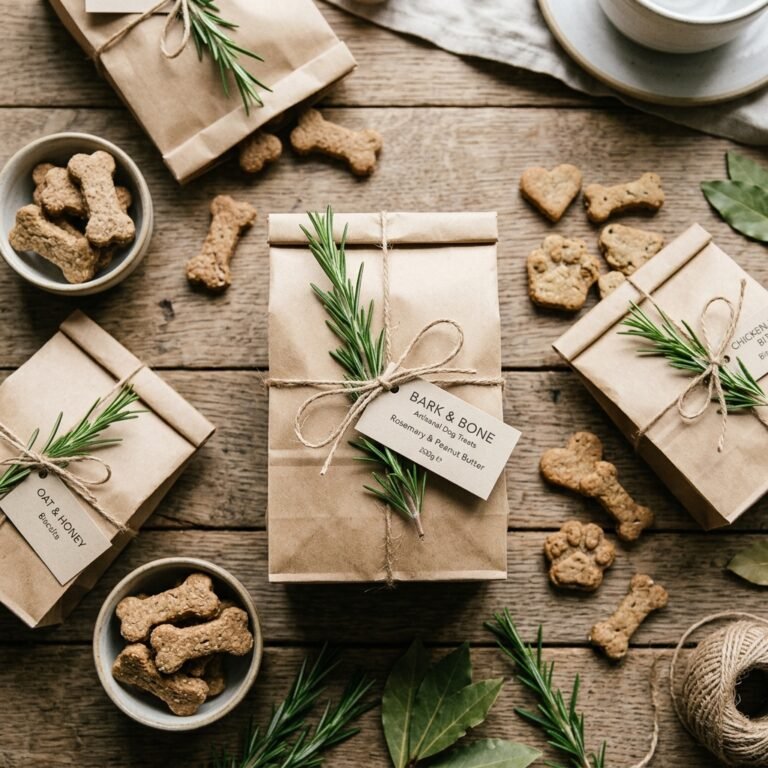
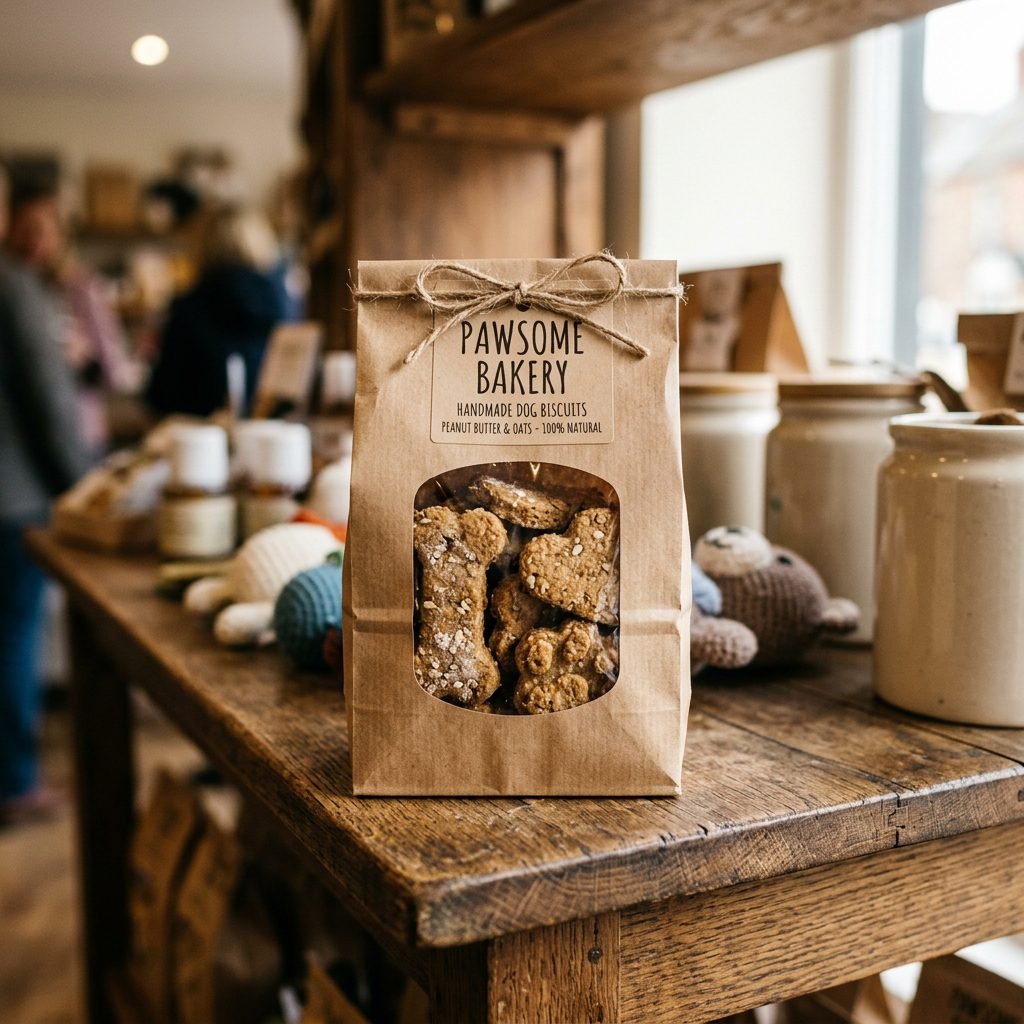
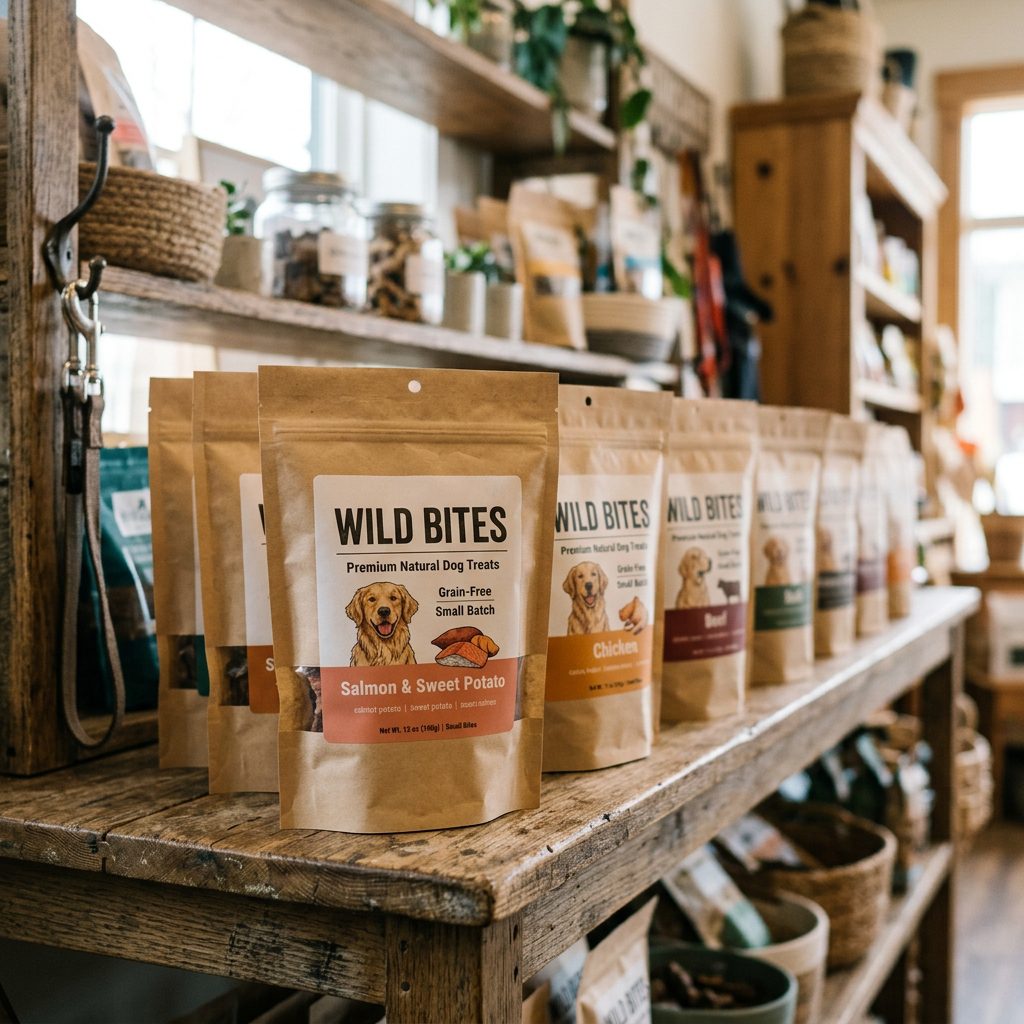
You can have the most nutritionally perfect, filler-free dog treat in the world, but if it is packaged in a flimsy sandwich bag with a handwritten Sharpie label, no premium boutique is going to put it on their shelves. Savvy dog owners shop with their eyes first. Your packaging needs to communicate ‘premium quality’ instantly.
The Anatomy of a Perfect Label
Remember that state registration we talked about earlier? Your label is where all of that comes into play. To be legally compliant and retail-ready, your packaging MUST include specific elements.
- Product Name: Make it clear and appealing (e.g., ‘Rustic Pumpkin Crunchers’).
- Net Weight: Must be listed in both ounces and grams (e.g., ‘Net Wt 6 oz (170g)’).
- Guaranteed Analysis: The exact percentages of protein, fat, fiber, and moisture you got from the lab.
- Ingredient List: Listed in descending order by weight. This is where you shine! Highlight that your first ingredient is ‘Real Chicken’ or ‘Organic Oat Flour,’ not ‘Corn Gluten Meal.’
- Feeding Guidelines: A simple statement like ‘Intended for intermittent or supplemental feeding only.’
- Manufacturer Info: Your business name and address.
Batch Cooking and Storage Hacks
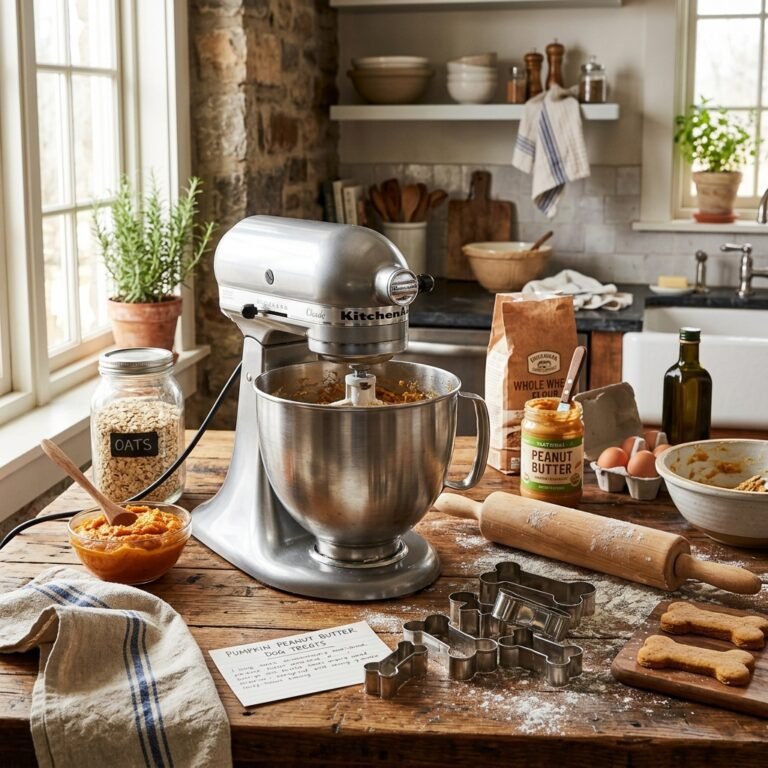
As you scale, you will need to master batch production. You cannot bake one bag at a time. Hacker Tip: Make massive batches of dough and freeze them in pre-portioned logs or pre-cut shapes. When an order comes in from a boutique, you can pull the dough straight from the freezer to the oven. Always store your finished, dehydrated treats in airtight, food-safe bins with commercial-grade silica gel packets to maintain that crucial low moisture environment before packaging them into your retail bags.
The Pitch: How to Approach Local Boutiques
Getting the ‘Yes’ from the Store Owner
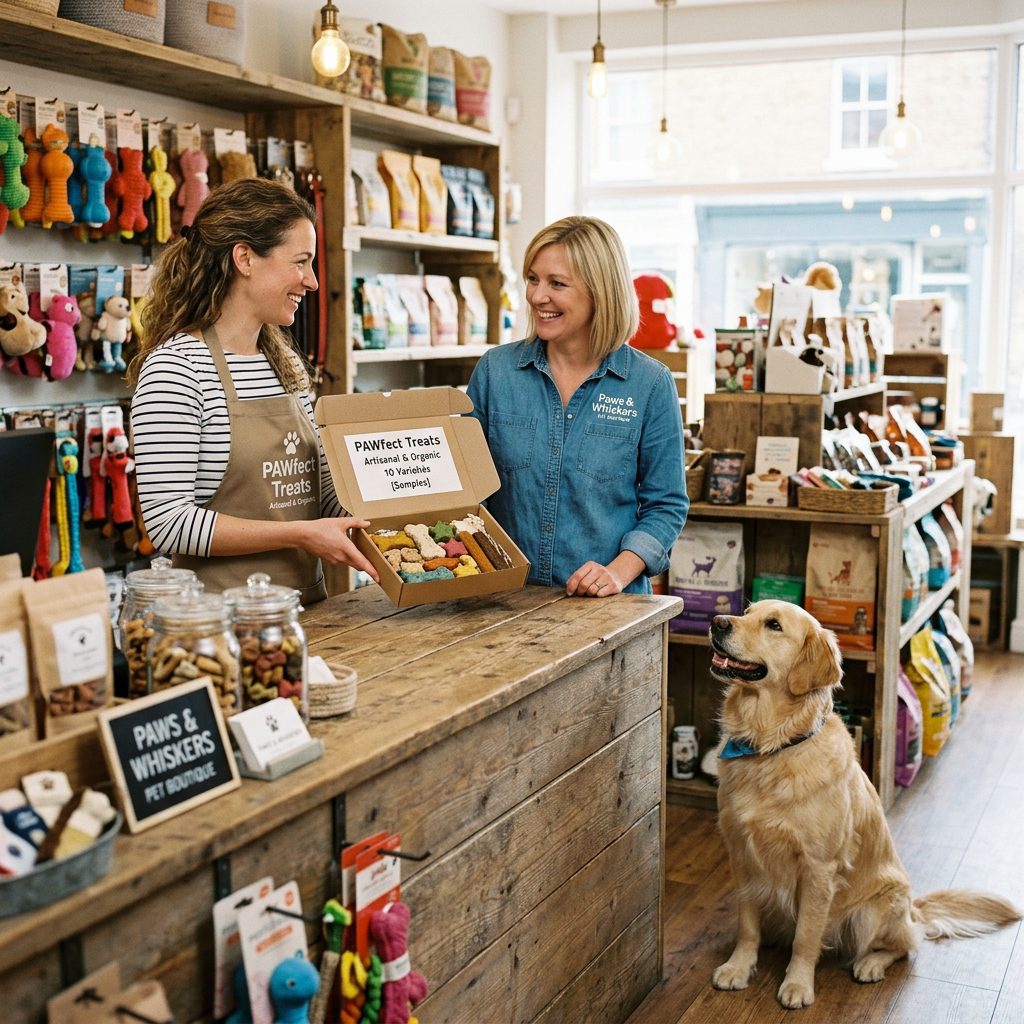
You have the legal clearance, the shelf-stable formula, the correct pricing, and the premium packaging. Now, you have to actually sell the product to the store owner. Do not just walk in unannounced during their busiest time of day and demand they look at your treats. You need a strategic, professional approach.
The Reconnaissance Mission
Before you pitch, visit the boutique as a customer. Look at the brands they currently carry. Are they selling cheap, mass-produced treats, or do they focus on raw diets, limited-ingredient kibbles, and high-end accessories? You want to ensure your product aligns with their target audience—the savvy dog owner who cares about canine nutrition.
The Exact Pitch Script
Call the store and ask to speak to the manager or owner. Say this:
‘Hi [Name], my name is [Your Name] and I am the founder of [Your Business Name], a local dog treat company right here in [City]. I am a huge fan of your boutique, especially your focus on healthy, filler-free pet nutrition. I have developed a line of limited-ingredient treats that are fully state-registered and packaged for retail. I would love to drop off a few free samples for your staff’s dogs to try, and leave a wholesale pricing sheet. When is a quiet time this week for me to pop in for literally three minutes?’
Why this works:
- You establish local connection: Boutiques love supporting local makers.
- You show you know their store: You complimented their specific focus on nutrition.
- You prove legitimacy: Mentioning you are ‘fully state-registered’ immediately removes their fear of liability.
- You respect their time: Asking for just three minutes and leading with free samples makes it impossible to say no.
Conclusion
Your Kitchen is the Launchpad
Transitioning from a passionate home baker to a legitimate pet retail supplier is not an overnight process. It requires forensic attention to detail, a willingness to navigate legal frameworks, and a solid understanding of business margins. But as a savvy dog owner, you already possess the most important trait: a relentless dedication to canine health and nutrition.
You are stepping into an industry that is dominated by giants who cut corners with cheap fillers and artificial garbage. Your homemade treats are the antidote. By following this exact strategy—securing your guaranteed analysis, dropping your moisture content, nailing your wholesale margins, and pitching with confidence—you are not just starting a business. You are hacking the system and bringing true, wholesome nutrition to the retail shelves of your community. Now, get back in that kitchen, fire up the ovens, and let’s get to work.