Don’t Dump the Whey! Make These High-Protein Dog Biscuits From Leftover Yogurt Liquid!
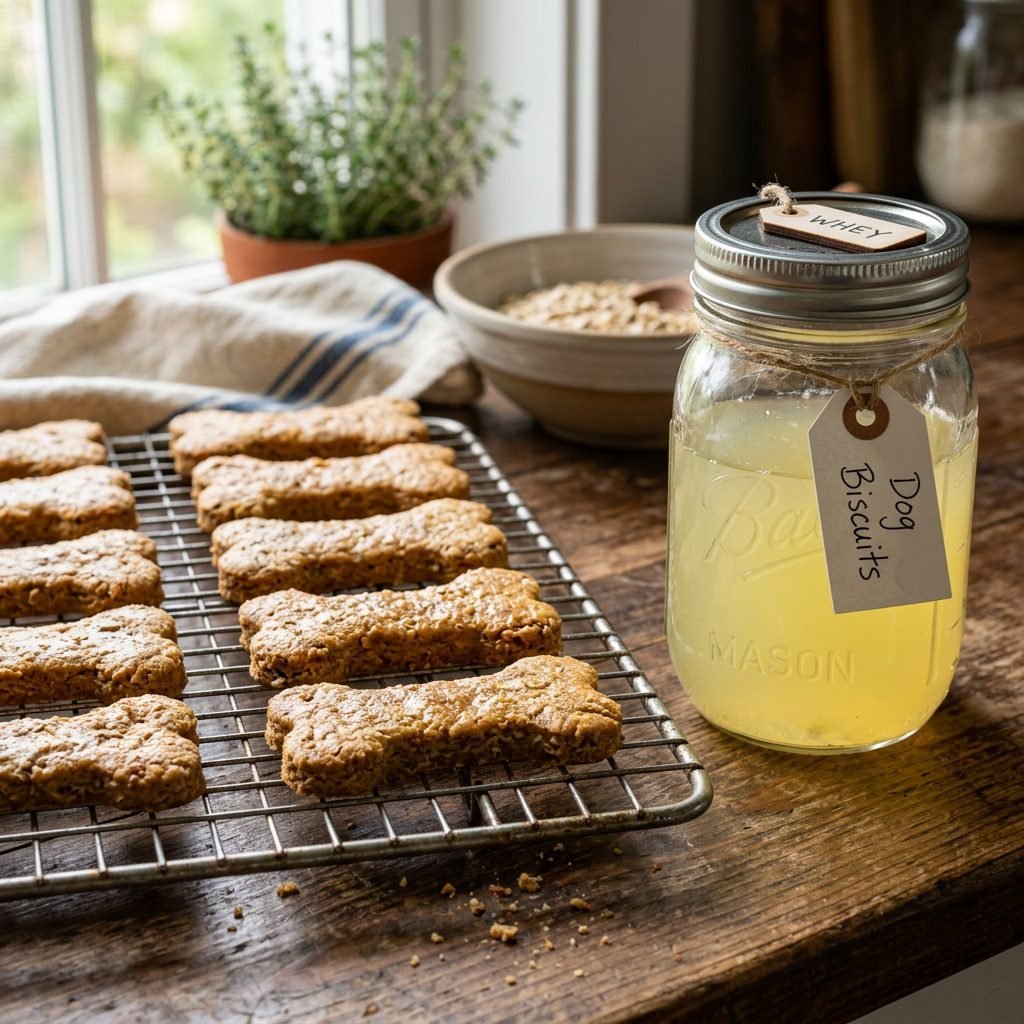
If you have ever opened a fresh tub of Greek yogurt and seen that yellowish, watery liquid pooling at the top, your first instinct was probably to drain it down the sink. Stop right there. As the Canine Nutrition Hacker, I am here to tell you that you are literally pouring money and muscle-building nutrients into the sewer. That liquid is acid whey, and in the world of high-performance canine nutrition, we call it “Liquid Gold.”
Most dog owners are overpaying for “high-protein” treats that are actually stuffed with pea protein and potato starch. We are going to do better. By reclaiming this byproduct of the yogurt-making process, we can create a snack that is packed with essential amino acids, minerals, and a boost of hydration that your dog will go absolutely wild for. This isn’t just about saving a few bucks—though we will definitely do that—it’s about maximizing every single calorie your dog consumes. Let’s dive into the forensic breakdown of why whey belongs in your dog’s treat jar, not your plumbing.
The Safety Protocol: Is Whey Safe for All Dogs?

Before we fire up the oven, let’s get the legalities and the biological realities out of the way. I am a nutrition hacker, not your veterinarian. While I spend my days analyzing amino acid profiles, your specific dog has a unique medical history that only a professional can navigate.
Hacker Tip: While yogurt whey is significantly lower in lactose than whole milk, it still contains some. If your dog has a known, severe dairy allergy, proceed with extreme caution or skip this one.
Most dogs handle the small amount of lactose in yogurt whey quite well because the fermentation process of the yogurt has already broken down much of the complex sugars. However, if your dog is prone to pancreatitis or has a highly sensitive stomach, start with a tiny piece of a biscuit to monitor for any digestive upset. This guide is intended to supplement a balanced diet, not replace it. Always ensure your dog has access to fresh water, especially when introducing high-protein treats.
The Forensic Breakdown: Why Whey is a Nutritional Powerhouse
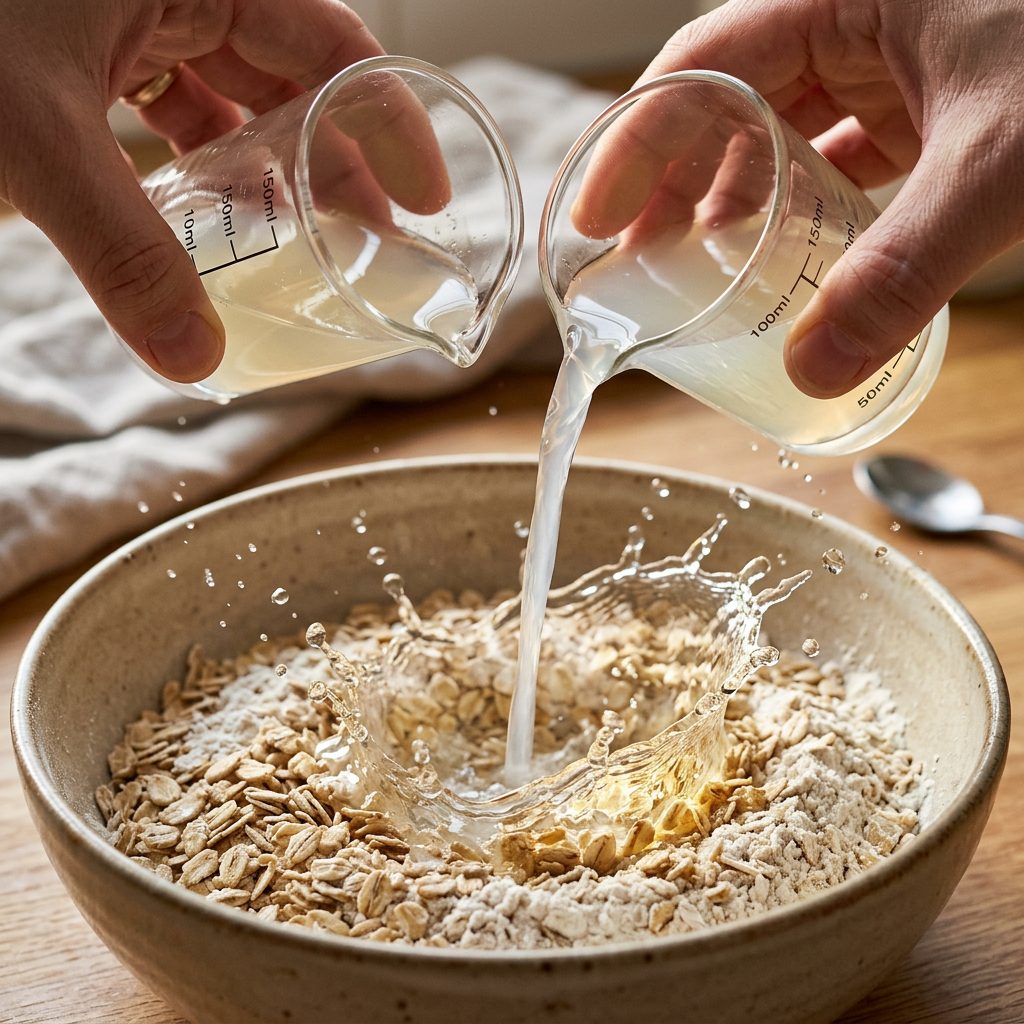
Let’s look at the science. Why are we obsessed with whey? When milk is curdled to make yogurt or cheese, it separates into curds (the solids) and whey (the liquid). The whey contains the globular proteins—specifically beta-lactoglobulin and alpha-lactalbumin. For your dog, these are incredibly easy to digest and absorb.
Key Nutrients Found in Yogurt Whey:
- Riboflavin (Vitamin B2): Essential for energy production and metabolizing fats and carbohydrates.
- Calcium & Phosphorus: The building blocks for strong bones and teeth, delivered in a highly bioavailable liquid form.
- Potassium: Critical for nerve function and heart health.
- Probiotic Remnants: While baking kills live bacteria, the metabolites produced during fermentation still offer gut-health benefits.
When you use whey instead of water in a biscuit recipe, you are essentially fortifying the treat from the inside out. You’re replacing empty moisture with a nutrient-dense broth that enhances the flavor profile, making these treats high-value rewards for training.
The Financial Report: DIY vs. Store-Bought Premium Treats
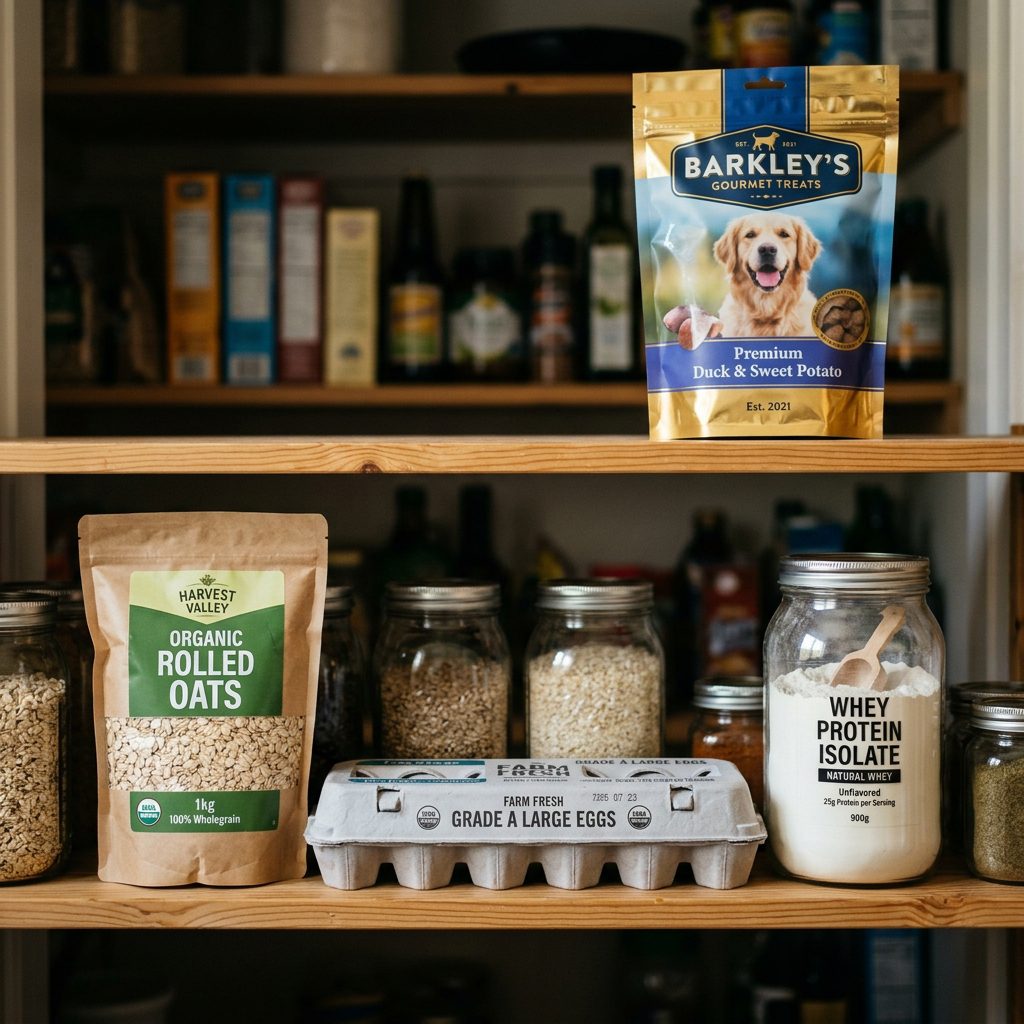
One of my favorite parts of being a nutrition hacker is exposing the massive markup on “premium” dog treats. Let’s look at the numbers. If you buy a high-protein, limited-ingredient biscuit from a boutique pet store, you’re often paying upwards of $15 for a 10-ounce bag. By using leftover whey and pantry staples, your cost drops to pennies.
| Metric | Premium Store Brand | Hacker’s Whey Biscuits |
|---|---|---|
| Primary Protein | Pea Protein / Chicken Meal | Fresh Yogurt Whey & Eggs |
| Fillers | Potato Starch / Tapioca | Whole Grain Oats |
| Cost Per Ounce | $1.50 – $2.00 | $0.12 – $0.15 |
| Preservatives | Citric Acid / Mixed Tocopherols | None (Fresh/Frozen) |
| Verdict | Overpriced & Processed | Pure, Potent & Cheap |
By making these at home, a savvy owner can save approximately $150 to $200 per year on treats alone, while providing a superior nutritional profile. That is money you can reinvest into higher-quality primary proteins for their main meals.
The Master Recipe: High-Protein Whey Biscuits

This recipe is designed for maximum crunch and nutrient density. We use a 3:1 ratio of dry to wet ingredients to ensure a shelf-stable texture. If your dog has a gluten sensitivity, we will use oat flour as the base.
Ingredients:
- 2 Cups Whole Wheat Flour (or Oat Flour for gluten-free)
- 1 Cup Rolled Oats (provides fiber and texture)
- 1 Large Egg (the “glue” and extra protein)
- 3/4 Cup to 1 Cup Yogurt Whey (add slowly until dough forms)
- 1 Tablespoon Peanut Butter (Xylitol-free! This is for aroma and healthy fats)
Instructions:
- Preheat your oven to 350°F (175°C). Line a baking sheet with parchment paper.
- In a large bowl, whisk the egg, peanut butter, and 3/4 cup of whey.
- Gradually fold in the flour and oats. If the dough is too crumbly, add the remaining whey one tablespoon at a time.
- Knead the dough on a lightly floured surface until it is smooth.
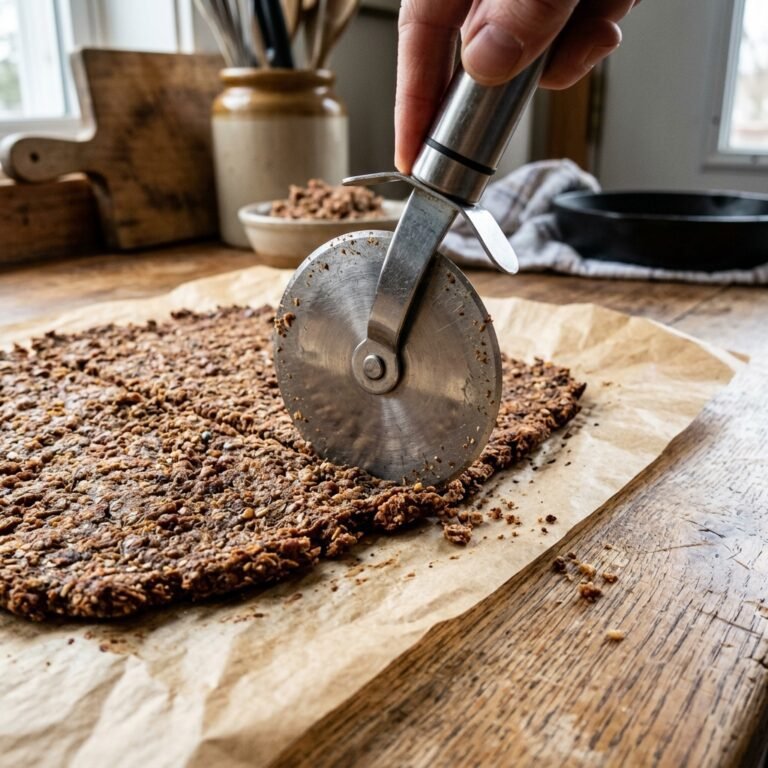
- Roll out to 1/4 inch thickness and use a cookie cutter (or a pizza cutter for squares) to create your shapes.
- Bake for 25-30 minutes. For an extra-crunchy biscuit (better for teeth!), turn off the oven and leave them inside for an extra hour to dehydrate.
The Hacker’s Customization: Add-ins for Specific Health Goals

Once you have the base recipe down, you can start “hacking” the biscuits to address specific health concerns. This is where you move from a dog owner to a canine nutritionist.
For Joint Health:
Add 1 teaspoon of Turmeric and a pinch of black pepper to the dough. The curcumin in turmeric is a powerful anti-inflammatory, and the whey provides the moisture needed for it to incorporate fully.
For Fresh Breath:
Fold in 2 tablespoons of finely chopped fresh Parsley. Parsley is a natural deodorizer and provides a hit of Vitamin K.
For a Shiny Coat:
Add 1 tablespoon of Ground Flaxseeds. The Omega-3 fatty acids in flaxseeds work synergistically with the proteins in the whey to support skin barrier function.
Insider Secret: If your dog is a picky eater, add a teaspoon of dried liver powder to the mix. It turns these into high-value “jackpot” treats that will make them do backflips for a simple ‘sit’.
Storage and Preservation: The Pro-Level Hack
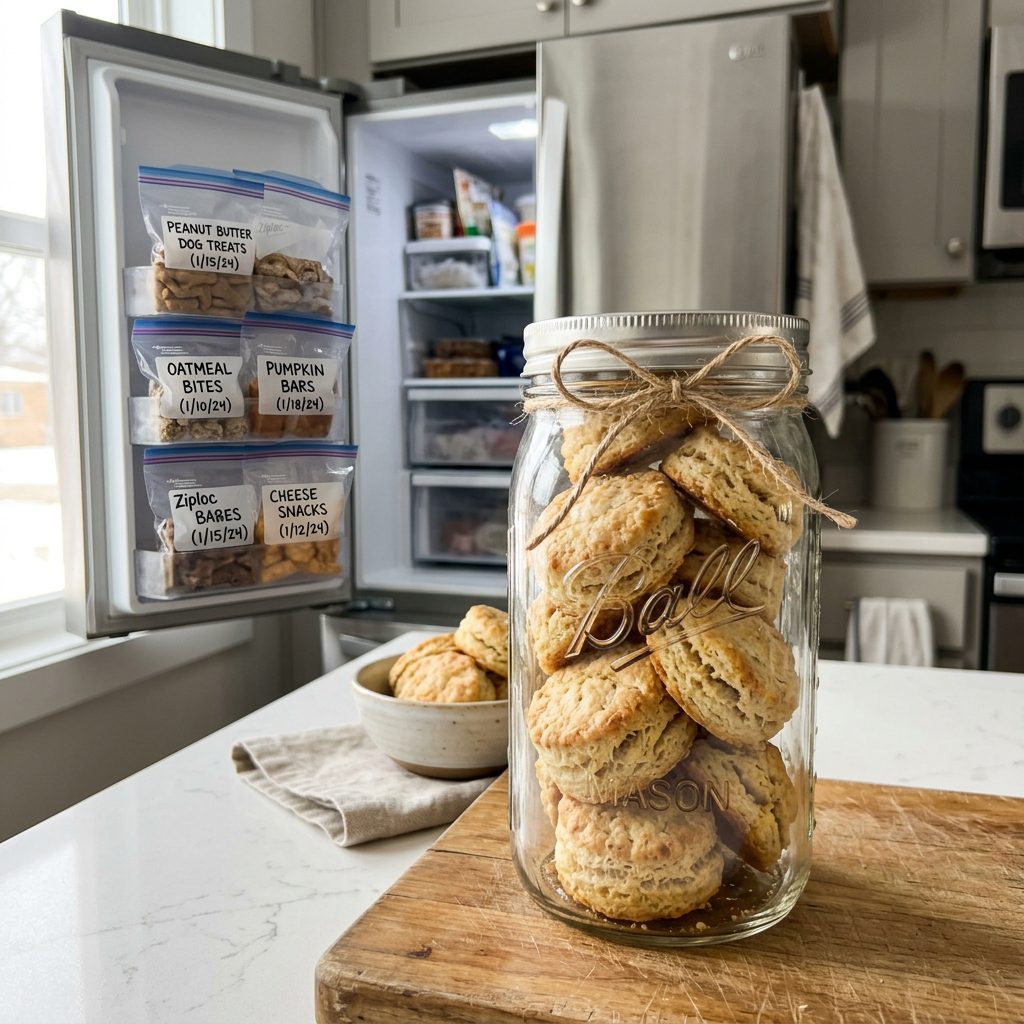
Because these treats don’t contain the nasty artificial preservatives found in commercial bags (like BHA or BHT), you need to handle storage like a pro. If you leave these in a sealed plastic bag on a warm counter, they will mold. We want to avoid that at all costs.
- The Counter Method: Only keep what you will use in 3 days in an airtight glass jar.
- The Fridge Method: These will stay fresh for up to 2 weeks in the refrigerator.
- The Freezer Hack: This is my preferred method. Freeze the biscuits in a single layer on a tray, then toss them into a freezer bag. They stay nutrient-dense for up to 6 months. You can even serve them frozen for a cooling summer treat!
If you want them to be truly shelf-stable (like the ones from the store), you need to remove almost all the moisture. Use a food dehydrator after baking, or leave them in a low-temp oven (150°F) for 3-4 hours. A “snapping” sound when you break the biscuit is the sign of a perfectly dehydrated, shelf-stable treat.
Conclusion
There you have it. You’ve just turned a waste product into a high-performance nutritional supplement. By reclaiming yogurt whey, you are honoring the “nose-to-tail” philosophy of canine nutrition while keeping your wallet fat and your dog lean. Remember, the best food for your dog isn’t always the most expensive bag on the shelf—it’s the one where you control every single ingredient. Don’t dump the whey; build a better dog. Happy hacking!