Your Dog Is Begging For These Ultra-Crunchy Sourdough Discard Crackers
The Sourdough Secret the Pet Industry Doesn’t Want You to Know
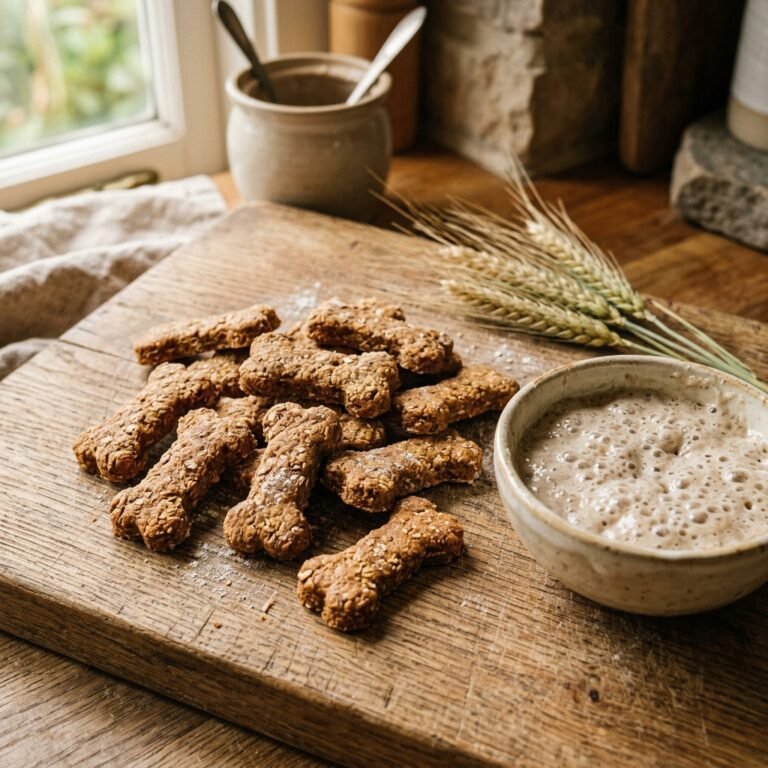
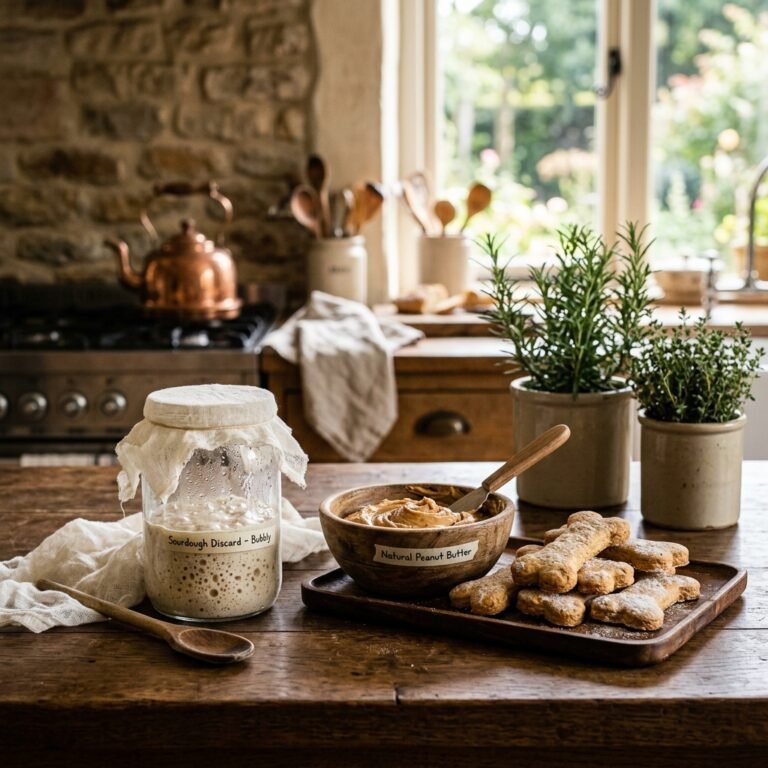
Let’s get real for a second. You’ve been nurturing that sourdough starter like it’s your first-born child. You’re feeding it, burping it, and—if you’re like most of us—tossing half of it down the drain every single day. As a Canine Nutrition Hacker, watching you pour that fermented liquid gold away makes my skin crawl. Why? Because that ‘discard’ is a nutritional powerhouse that can be transformed into the crunchiest, most gut-friendly treats your dog has ever tasted.
We’ve been conditioned to believe that dog treats need to come in a shiny, expensive bag with a picture of a cartoon wolf on the front. But have you actually looked at the labels on those ‘artisanal’ biscuits? They are often loaded with refined sugars, questionable preservatives like BHA, and ‘natural flavors’ that are anything but natural. By using your sourdough discard, you are leveraging the power of fermentation to break down anti-nutrients, making the grains easier for your dog to digest while saving a small fortune. Today, we’re going to stop the waste and start the crunch.
The Safety Brief: Is Sourdough Safe for Dogs?
The ‘Raw’ Danger vs. The ‘Baked’ Benefit
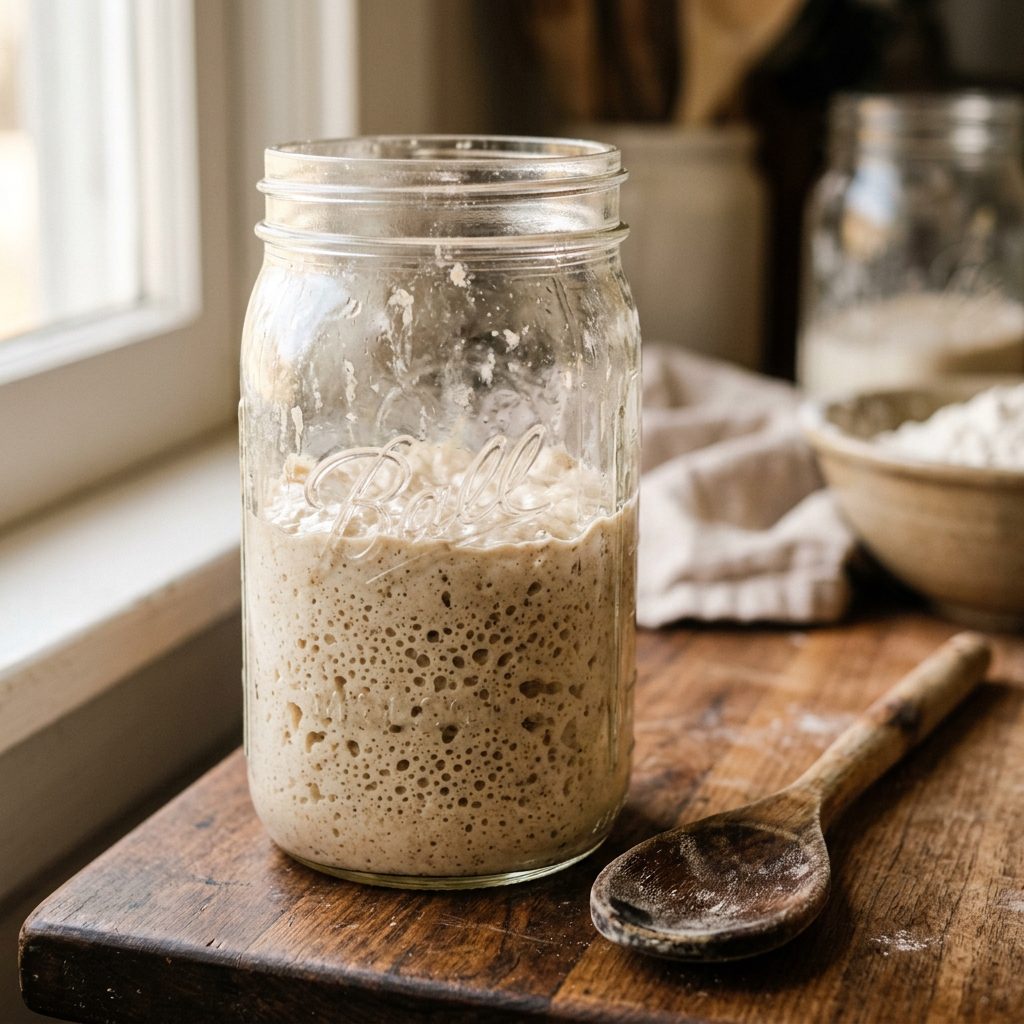
Before we dive into the kitchen, we need to address the elephant in the room. You might have heard that sourdough or yeast is toxic to dogs. This is partially true. Raw bread dough is a massive ‘no-go’ for canines. When a dog eats raw dough, the warm environment of their stomach acts like a proofing oven. The yeast continues to ferment, producing ethanol (alcohol poisoning) and carbon dioxide, which can lead to life-threatening bloat.
Hacker Secret: The danger is in the fermentation process *inside* the dog. Once your sourdough discard is baked into a hard, dry cracker, the yeast is neutralized, and the alcohol is evaporated. What’s left is a highly digestible, prebiotic-rich snack.
When making these crackers, you must ensure they are baked until they are completely dry and crunchy. We aren’t looking for soft, pillowy bread here; we want a ‘snap’ that helps mechanically clean teeth. Additionally, never add onions, garlic, or excessive salt to your dog’s batch, even if you’re making a parallel batch for yourself. Stick to dog-safe herbs like parsley or a dash of turmeric for anti-inflammatory benefits.
The Cost Breakdown: DIY vs. Premium Store Brands
Stop Getting Ripped Off by ‘Artisanal’ Labels
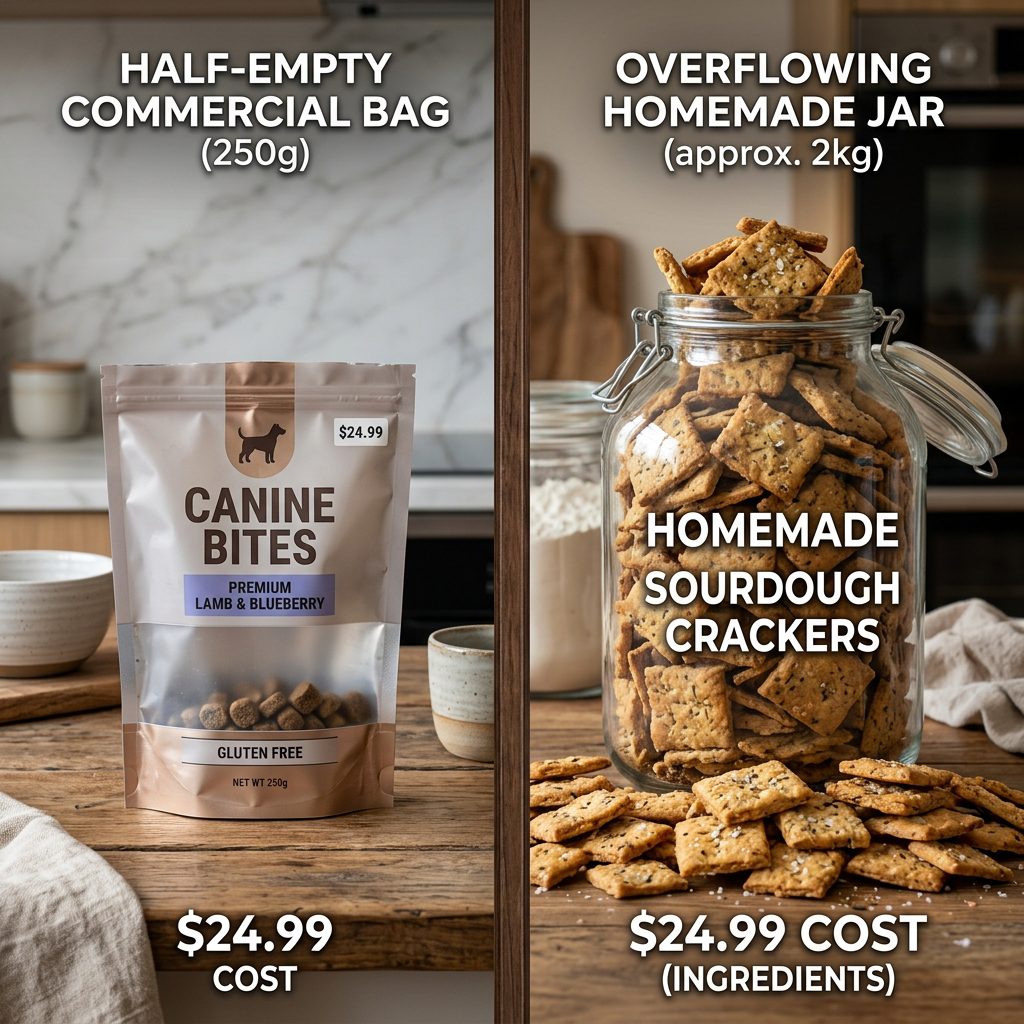
If you walk into a boutique pet store, you’ll see ‘Fermented Grain Biscuits’ retailing for upwards of $20 a pound. It’s a marketing masterclass in charging you for something you’re currently throwing in the trash. Let’s look at the cold, hard numbers of making these at home versus buying the ‘premium’ stuff.
| Feature | Store-Bought ‘Premium’ Biscuits | The Hacker’s Sourdough Crackers |
|---|---|---|
| Price Per Pound | $18.00 – $25.00 | $0.75 – $1.50 |
| Primary Ingredient | Wheat Flour / Glycerin | Fermented Sourdough Discard |
| Preservatives | Potassium Sorbate / Citric Acid | Natural Dehydration |
| Digestibility | Low (Unfermented Grains) | High (Pre-digested by Lactobacilli) |
| Waste Factor | High Packaging Waste | Zero Waste (Uses Discard) |
By making these yourself, you aren’t just saving money; you’re controlling the quality. Most commercial treats use bleached white flour, which spikes a dog’s insulin. By using your discard—which has likely been fermenting for 12-24 hours—the phytic acid (an anti-nutrient that blocks mineral absorption) is significantly reduced. You’re giving your dog a snack that actually helps them absorb nutrients from their main meals.
The Master Recipe: Ultra-Crunchy Sourdough Discard Crackers
The Safe Chef Guide to Perfect Ratios
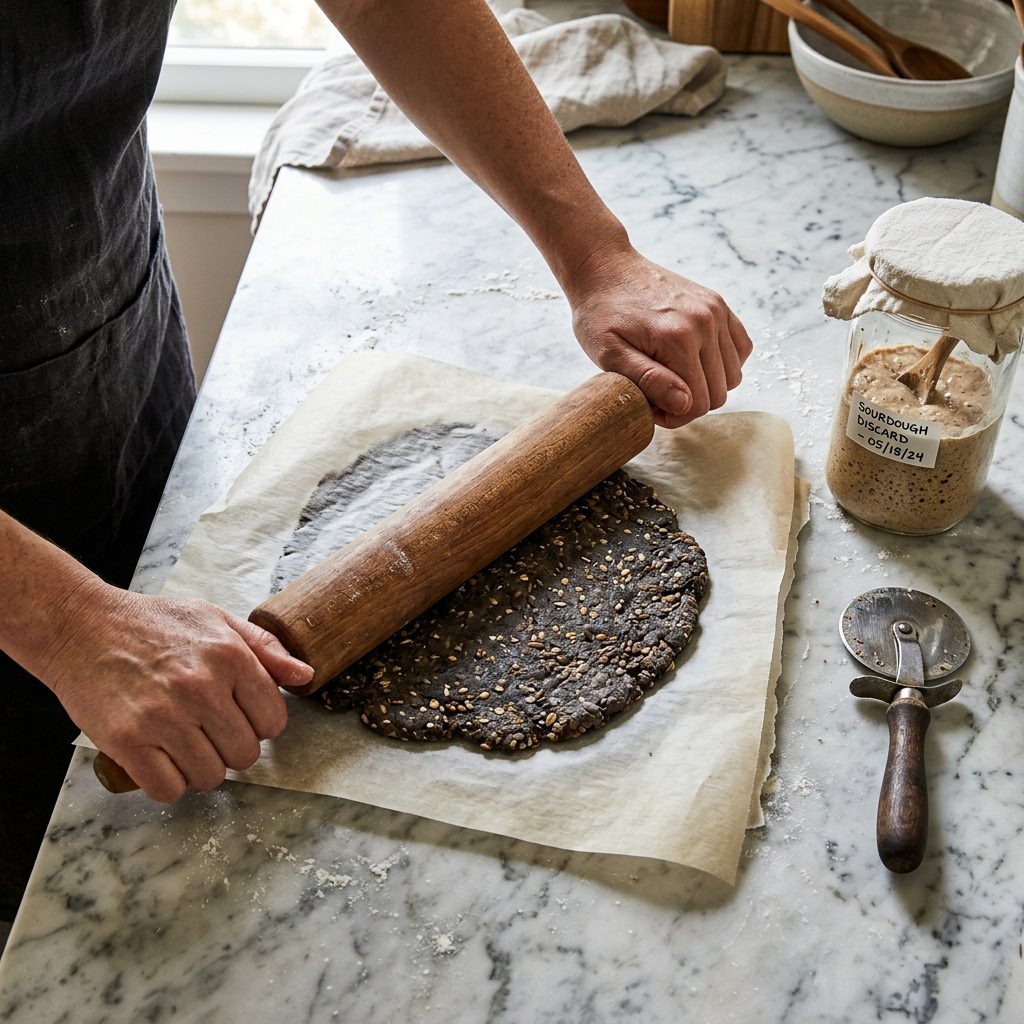
This isn’t just a recipe; it’s a formula. The goal is a cracker that is hard enough to provide a satisfying crunch but not so hard it breaks a tooth. Here is the ratio I use to keep my pack begging for more.
- 1 Cup Sourdough Discard: (Unfed, straight from the fridge is fine).
- 1/2 to 3/4 Cup Flour: Use Oat Flour or Whole Wheat Flour. Avoid ‘All-Purpose’ bleached flour if possible.
- 2 Tablespoons Healthy Fat: Melted Coconut Oil or, if you really want to be a hero, Duck Fat.
- Optional Hero Ingredients: 1 teaspoon of dried parsley (for fresh breath) or 1 tablespoon of nutritional yeast (for a cheesy flavor without the dairy).
Step-by-Step Instructions
- Mix: Combine the discard, fat, and herbs in a bowl. Slowly add flour until a stiff dough forms. It shouldn’t be sticky.
- Roll: Place the dough between two sheets of parchment paper. Roll it out as thin as possible—think 1/8th of an inch. The thinner it is, the crunchier it gets.
- Score: Use a pizza cutter to score the dough into small squares or diamonds. This makes it easy to snap them apart after baking.
- Bake: Bake at 325°F (160°C) for 30 minutes.
- The Hacker’s Dehydration Trick: Turn the oven off, crack the door slightly, and leave the crackers inside for another hour. This removes every trace of moisture, ensuring a long shelf life and maximum crunch.
Ingredient Analysis: Why These Are Better for the Gut
Exposing the ‘Filler’ Myth
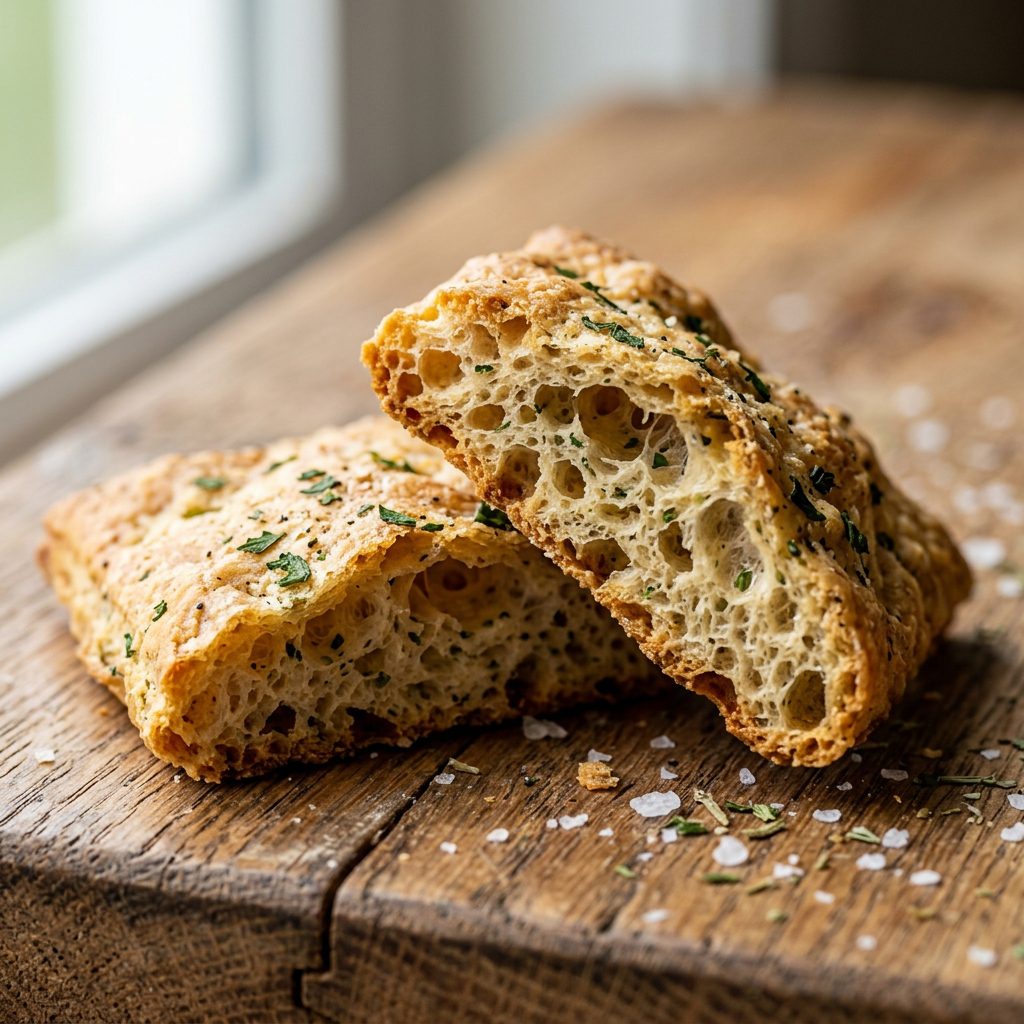
Commercial dog treats often use corn gluten meal or soy hulls to create bulk. These are biologically inappropriate for dogs and often lead to itchy skin and gas. Sourdough discard, however, undergoes a process where Lactobacillus bacteria consume the sugars and starches in the flour.
For dogs with mild grain sensitivities, sourdough is often the ‘missing link.’ The fermentation process ‘pre-digests’ the gluten. While I wouldn’t give these to a dog with a diagnosed celiac-level allergy, for the average dog, it’s a much cleaner source of energy. Plus, the lactic acid produced during fermentation acts as a natural preservative, meaning you don’t need to worry about mold if you’ve baked them correctly.
Insider Secret: If your dog has a sensitive stomach, add a tablespoon of pureed pumpkin (not pie filling!) to the dough. The soluble fiber in the pumpkin combined with the fermented grains is like a spa day for your dog’s microbiome.
Batch Cooking and Storage Secrets
Keep the Crunch, Skip the Mold
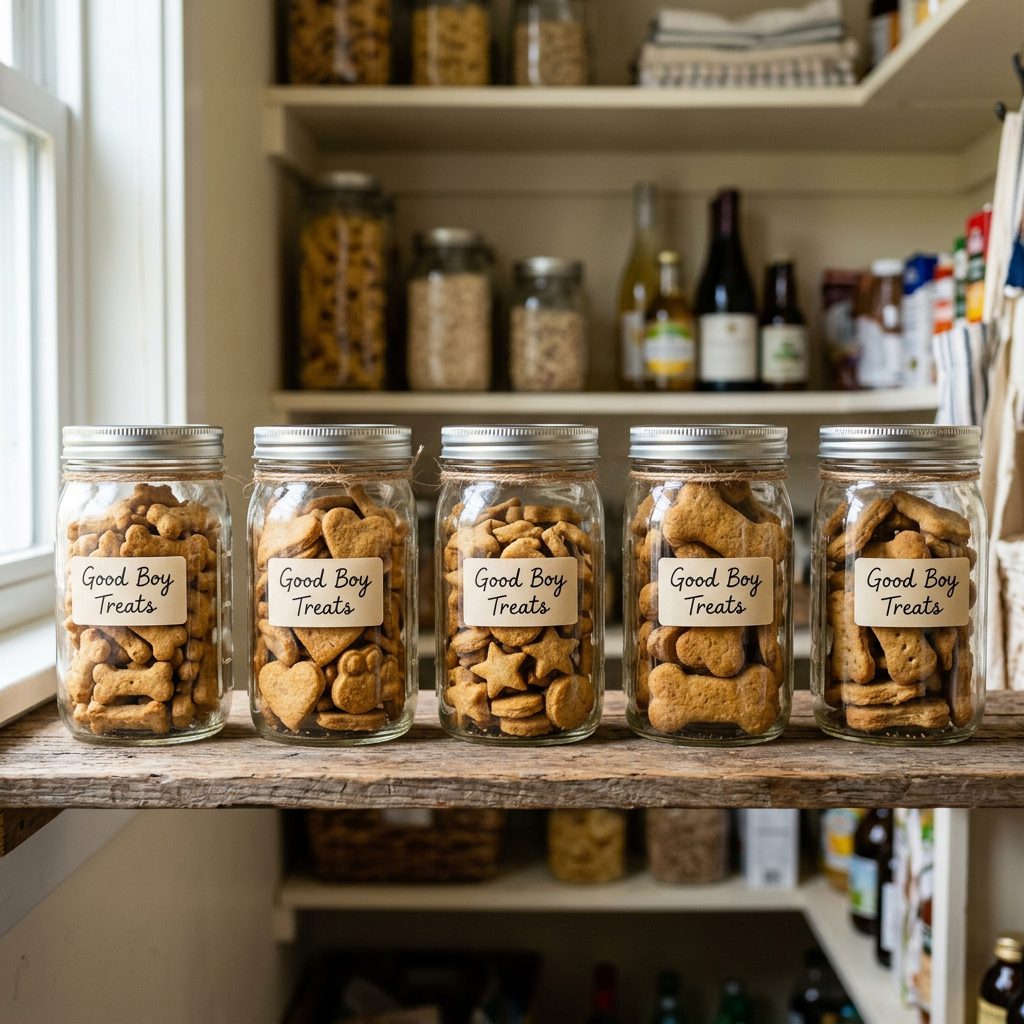
Because we aren’t using chemical preservatives, storage is key. If you leave these in a plastic bag while they are still even slightly warm, they will turn into a soggy mess (and eventually grow mold). Here is how a pro handles the haul.
- The Snap Test: Before storing, take one cracker and snap it. It should break cleanly with a loud ‘pop.’ If it bends, put it back in the oven.
- Air-Tight Glass: Store your crackers in glass mason jars. Glass doesn’t leach chemicals like plastic and keeps the moisture out better.
- Freezer Hack: You can make a massive batch (triple the recipe) and freeze the finished crackers. They stay crunchy even when frozen, making them a great cooling treat in the summer.
By batch cooking once a month, you reduce your ‘cost per treat’ even further by utilizing the oven’s residual heat. It’s the ultimate move for the Savvy Dog Owner who values both time and money.
Conclusion
Join the Nutrition Revolution
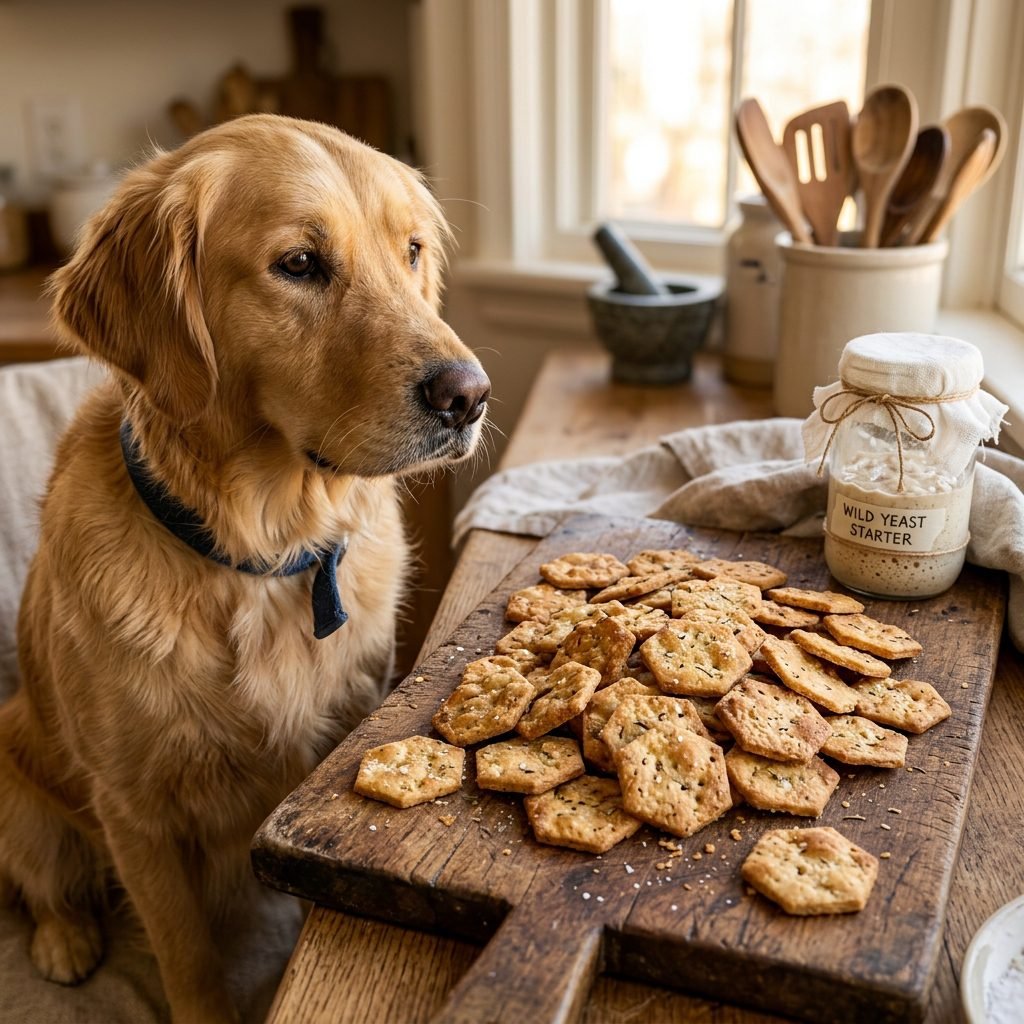
Stop being a victim of the ‘Big Pet Food’ marketing machine. You don’t need to spend $20 on a bag of treats to show your dog you love them. By using your sourdough discard, you’re providing a nutritionally superior, gut-friendly, and ultra-crunchy snack that costs almost nothing. Your dog doesn’t care about the fancy packaging; they care about the smell of fermented grains and the satisfying snap of a well-baked cracker. So, next time you go to feed your starter, remember: that discard isn’t trash—it’s your dog’s new favorite obsession. Get baking, and watch those tails wag!