Why Your Dog Hates Masks And How To Fix It Fast
In recent years, the visual landscape of our world has changed, and for our canine companions, this shift has been particularly confusing. While humans understand the medical or societal necessity of face masks, dogs often view them as an abrupt disruption to their primary method of communication: facial expressions. If your dog barks, retreats, or shows signs of aggression when they see someone wearing a mask, they are not being ‘bad’; they are experiencing a profound communication breakdown.
Dogs rely heavily on non-verbal cues. They scan our mouths, noses, and cheeks to determine our intent. When these features are obscured, a friendly neighbor can suddenly look like a threatening stranger. Furthermore, masks muffle our voices and hide the reassuring smiles that usually put a dog at ease. This phenomenon can lead to fear-based reactivity, which is stressful for both the owner and the dog.
The good news is that this behavior is treatable. Through a process called desensitization and counter-conditioning, we can change your dog’s emotional response to masks from fear to anticipation of a reward. This guide will walk you through the psychology behind the fear and provide a structured, professional training plan to resolve the issue efficiently and compassionately.
The Psychology: Why Masks Trigger Canine Anxiety
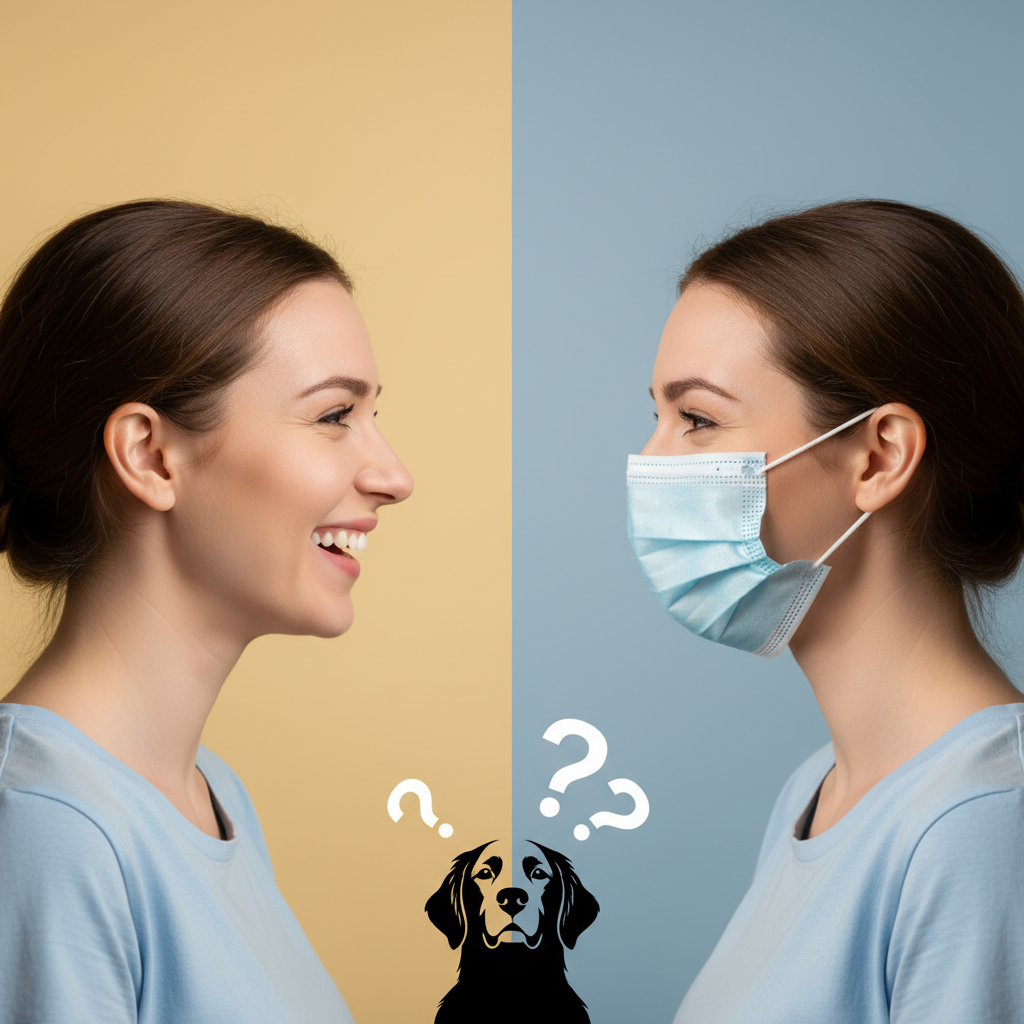
To fix the behavior, we must first understand the root cause. Dogs are masters of reading micro-expressions. Evolution has wired them to look at a human’s face to gauge safety. When a mask covers the lower half of the face, it removes critical data points that the dog uses to process information.
The Loss of Facial Cues
A mask hides the mouth, which is a primary indicator of mood. A relaxed mouth indicates safety, while a tight lip or bared teeth indicates a threat. Without access to the mouth, the dog is left guessing. Additionally, masks can emphasize the eyes. In dog language, a direct, unblinking stare can be a challenge or a threat. Without the softening effect of a smile, a person staring over a mask can appear significantly more intimidating to a sensitive dog.
Auditory Distortion
It is not just about sight; it is also about sound. Masks muffle voices and strip away some of the high-frequency tones that dogs often associate with friendly communication. A muffled command or greeting can sound deeper and more ominous, potentially triggering a defensive response. Understanding that your dog is suffering from sensory confusion rather than disobedience is the first step toward a solution.
Preparation: The Desensitization Toolkit
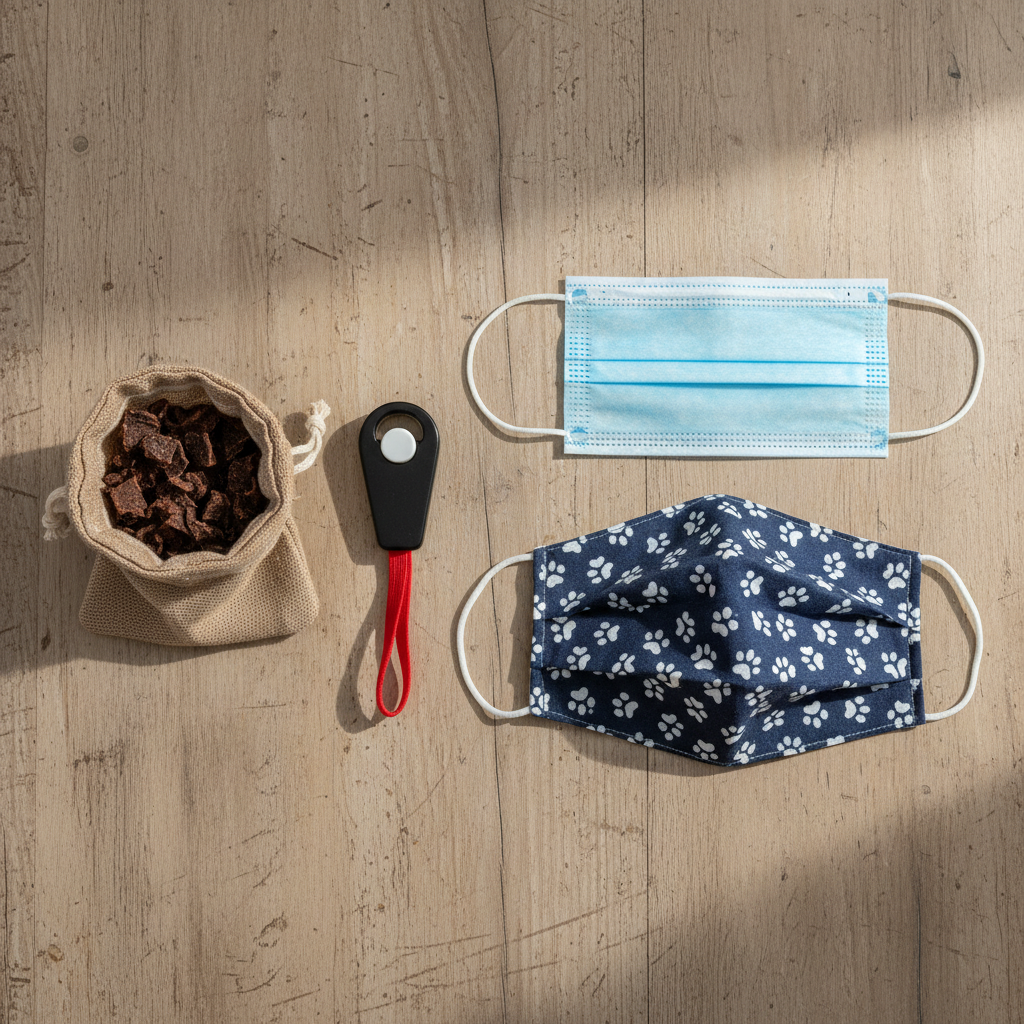
Before you begin the training sessions, you need to gather the right tools. Attempting to train without high-value motivators will likely result in failure, especially if the fear is deeply rooted. You are asking your dog to overcome a biological instinct to fear the unknown, so the payout must be worth the effort.
- High-Value Treats: Dry kibble will not suffice here. You need something smelly and soft, such as boiled chicken, freeze-dried liver, or string cheese. The value of the reward must exceed the intensity of the fear.
- A Marker Signal: A clicker or a consistent verbal marker like “Yes!” is essential to mark the exact moment your dog makes the right choice.
- Various Masks: Start with a standard surgical mask, but eventually, you will want to generalize the training to cloth masks, bandanas, and winter scarves.
- A Quiet Environment: Begin training inside your home where the dog feels safest. Do not attempt to start this training on a busy street or at the vet’s office.
Step-by-Step Guide: The ‘Mask Means Treats’ Protocol
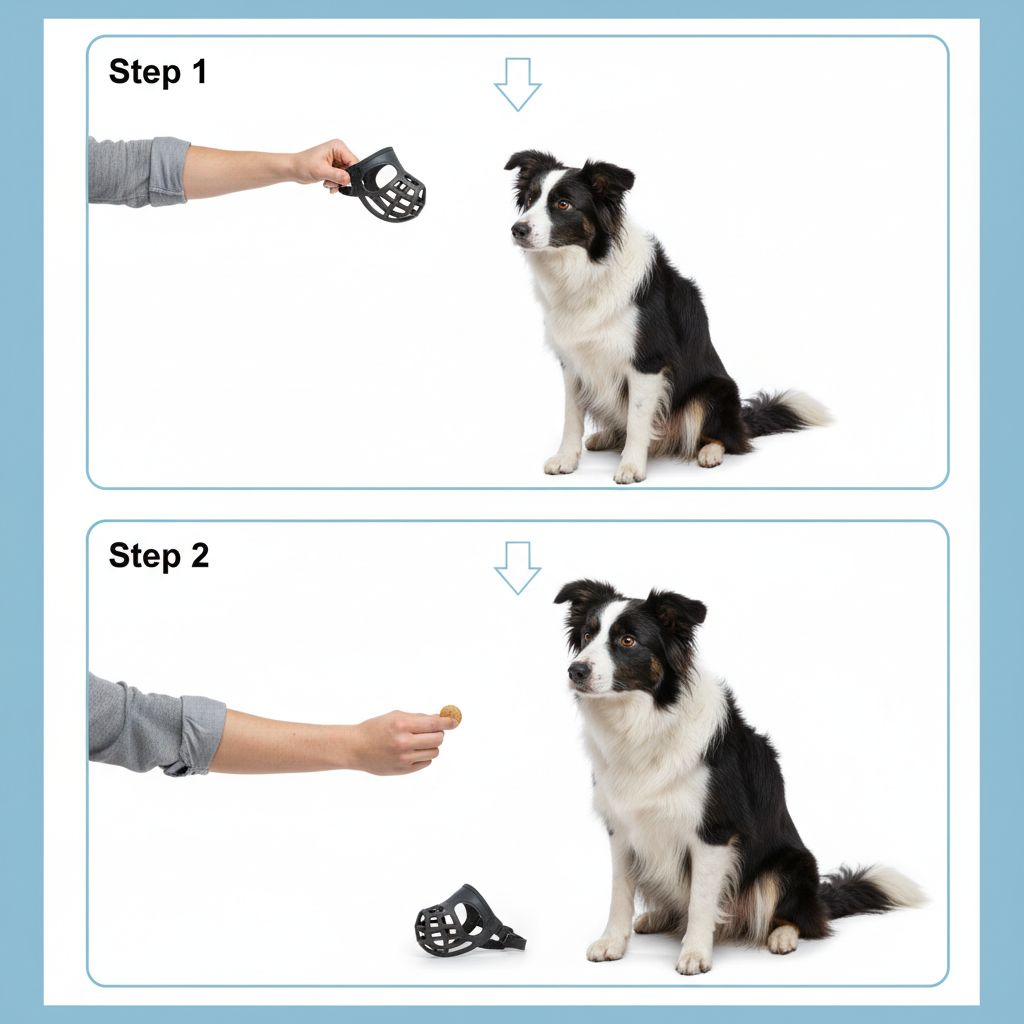
This protocol utilizes counter-conditioning. The goal is to change the dog’s emotional response so that the sight of a mask predicts something wonderful (treats), rather than something scary.
Step 1: The Static Presentation
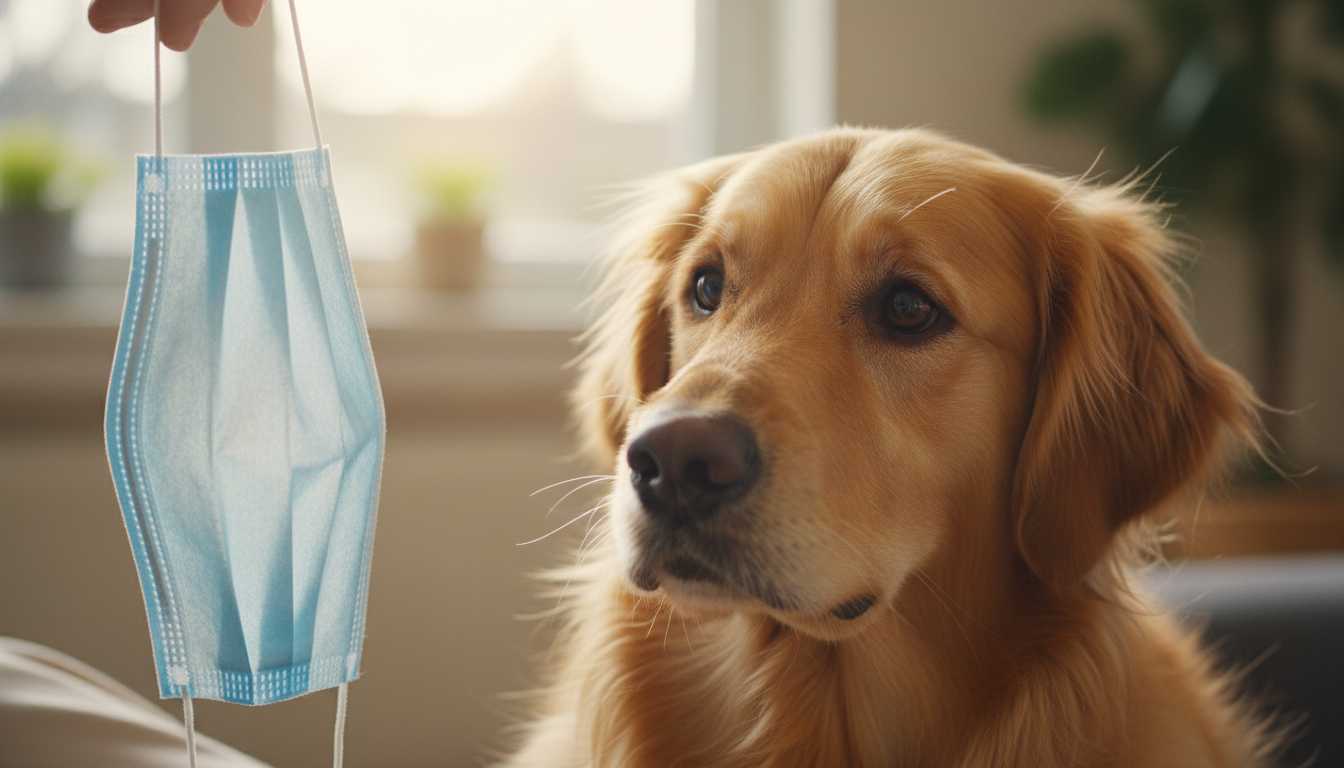
Do not put the mask on your face yet. Sit on the floor with your dog. Hold the mask in one hand behind your back. Reveal the mask by holding it out to the side (not near your face). As soon as the dog looks at the mask, mark (click or say “Yes!”) and immediately give a treat. Hide the mask again. Repeat this 10-15 times. The equation in the dog’s brain becomes: Mask appears = Chicken appears.
Step 2: Movement Toward the Face
Once your dog is happy to see the mask in your hand, begin slowly moving it toward your face. Move it two inches toward your chin, mark, treat, and remove the mask. Gradually work your way up until you can hold the mask in front of your face for a split second without securing it. If the dog shows signs of stress (lip licking, looking away), you have moved too fast. Go back to the previous step.
Step 3: Wearing the Mask
Place the mask fully on your face. Immediately mark and deliver a jackpot of treats (3-5 pieces in a row). Then, take the mask off and stop the treats. This establishes that the presence of the mask on the face is the cue for the party to start. Practice speaking happily while wearing the mask so the dog learns that your muffled voice is still you.
Troubleshooting and Common Mistakes
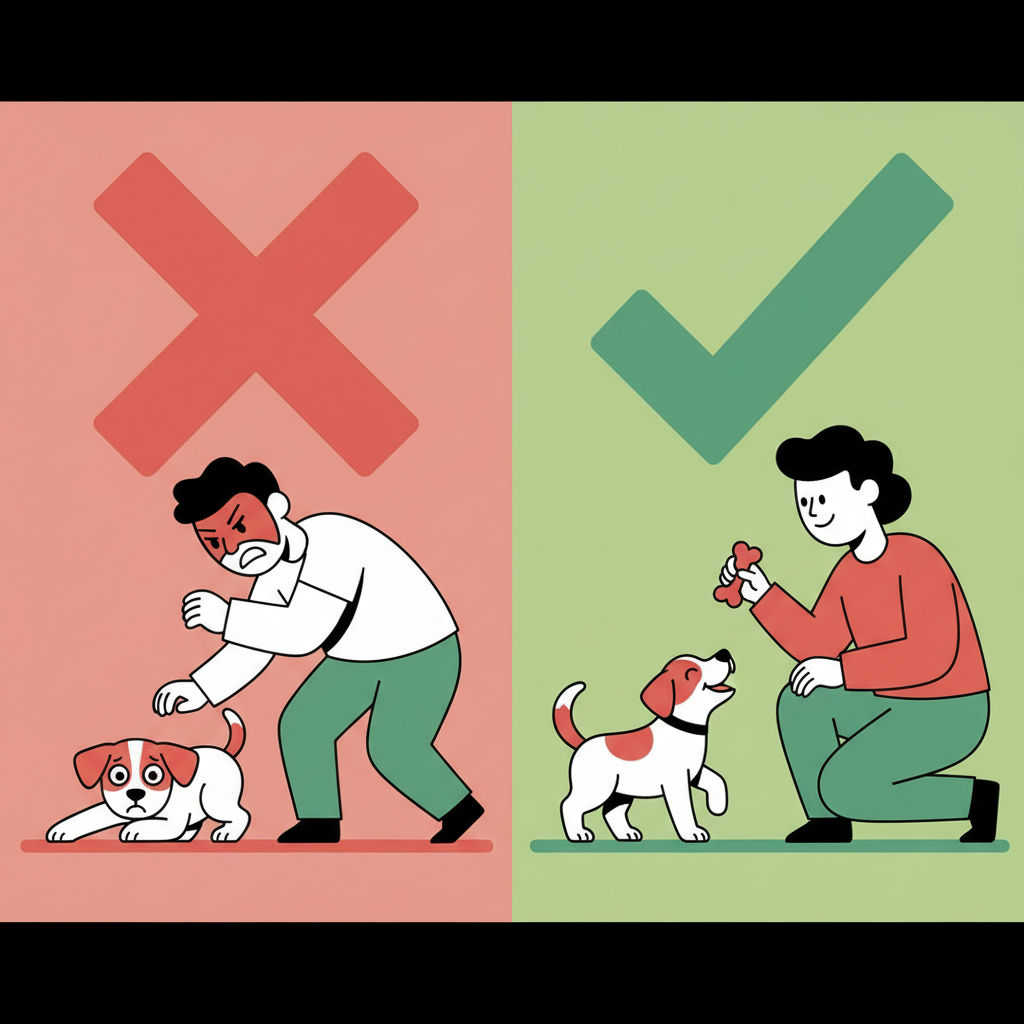
Even with the best intentions, owners often make mistakes that can stall progress or worsen the fear. Recognizing these pitfalls ensures you fix the behavior fast without causing regression.
The Mistake of Flooding
Flooding is the practice of forcing the dog to face their fear until they stop reacting. For example, holding the dog down and putting a mask on your face, or forcing them to approach a masked stranger. Do not do this. It often leads to “learned helplessness,” where the dog shuts down but remains terrified, or it can escalate to aggression. Always work under threshold—the point at which the dog notices the trigger but is not yet reacting fearfully.
Ignoring Body Language
A wagging tail does not always mean a happy dog. Look for subtle stress signals such as:
- Whale Eye: Showing the whites of the eyes.
- Yawning: When not tired, this is a stress release.
- Lip Licking: A quick flick of the tongue over the nose.
If you see these signs, stop the session and give your dog a break. You are pushing too hard, too fast.
Generalizing the Behavior to Strangers
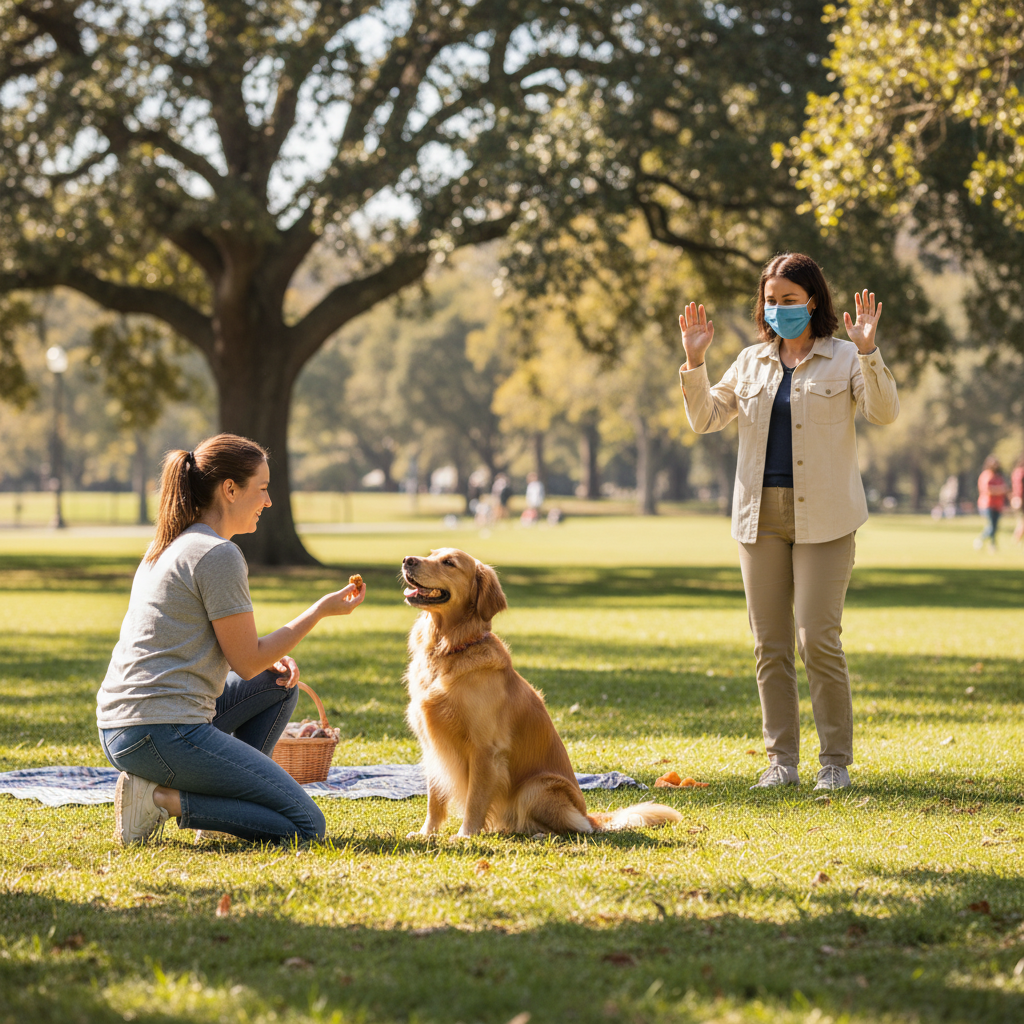
Just because your dog accepts you in a mask does not mean they will accept a stranger in one. Dogs do not generalize well; they need help applying the lesson to new contexts.
Once your dog is comfortable with you, enlist the help of a friend. Have the friend stand at a distance (10-15 feet) wearing a mask. When your dog looks at the friend, mark and treat. Gradually decrease the distance over several sessions. Do not ask the stranger to approach or pet the dog initially. The goal is simply to have the dog remain calm in the presence of a masked individual. Eventually, you can allow the stranger to toss treats to the dog, further reinforcing the positive association.
Patience is the Fastest Route to Success
Helping a dog overcome the fear of masks requires empathy and consistency. While the title promises a way to fix it “fast,” in the world of dog behavior, speed comes from precision, not rushing. By taking the time to desensitize your dog properly, you are building a foundation of trust that will last a lifetime.
Remember, your dog is not trying to be difficult; they are trying to stay safe in a confusing world. By becoming their advocate and guide, you can turn a scary object into a predictor of rewards. Start today with short, positive sessions, and you will soon see a confident dog who looks at a mask and thinks of nothing but tasty treats.