The Only Puppy Crate Training Schedule You’ll Ever Need for Sleep
Welcome to puppy parenthood! It’s a world filled with fluffy cuddles, tiny paws, and… sleepless nights. If you’re stumbling through your days in a sleep-deprived haze, you’re not alone. The good news is that there’s a secret weapon to reclaiming your sleep and helping your puppy feel secure: the crate. But how do you get from a crying puppy in a box to a peaceful, slumbering angel? It all comes down to the right schedule.
Forget thinking of a crate as a ‘cage.’ Instead, let’s reframe it as your puppy’s very own private den—a safe, comfortable space where they can relax and feel secure. This guide will provide you with a simple, effective, and compassionate crate training schedule specifically for nighttime. Get ready to say goodbye to 3 a.m. whining sessions and hello to peaceful nights for everyone in the house.
Setting the Stage: Creating a Cozy Crate Haven
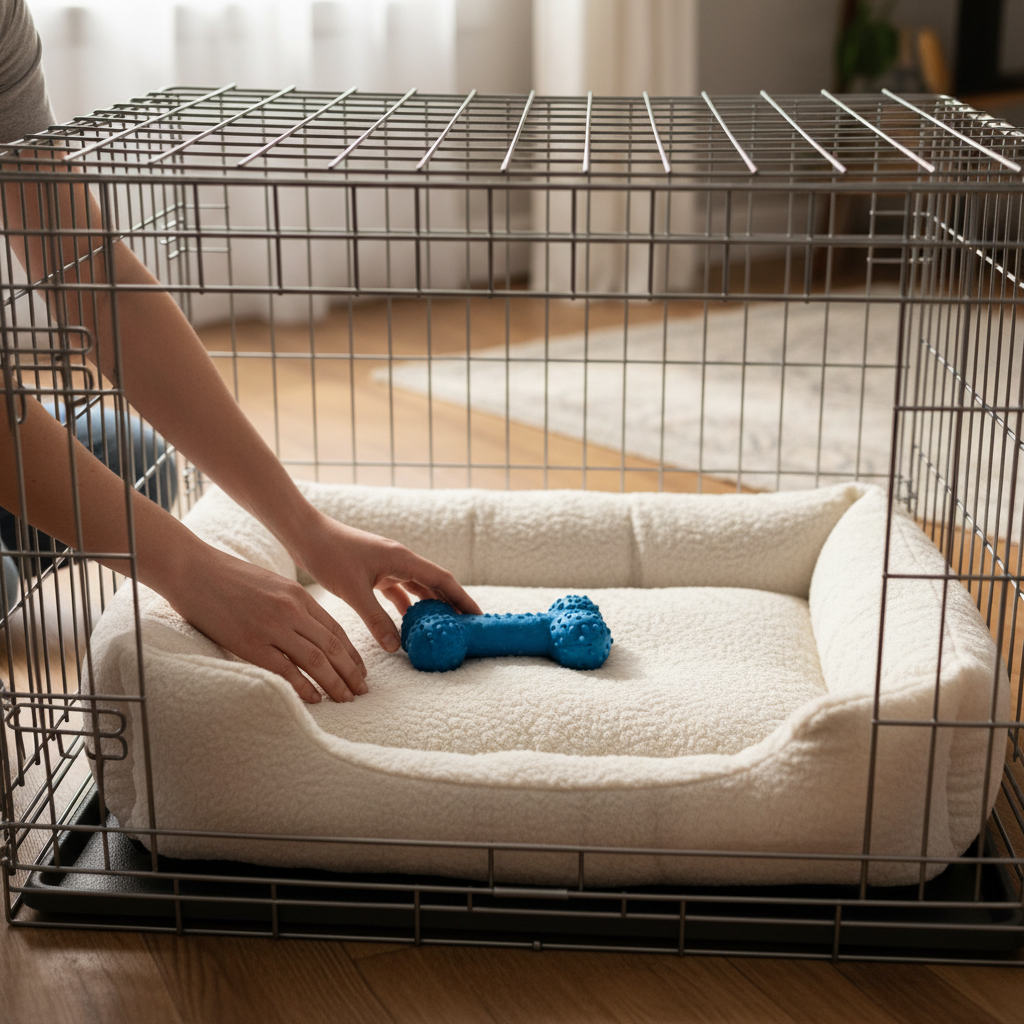
Setting the Stage: Creating a Cozy Crate Haven
Before you even think about the schedule, you need to make sure the crate is a five-star puppy resort. The goal is for your puppy to want to go in there. If the crate is uninviting, you’re fighting an uphill battle from the start.
Choosing the Right Crate
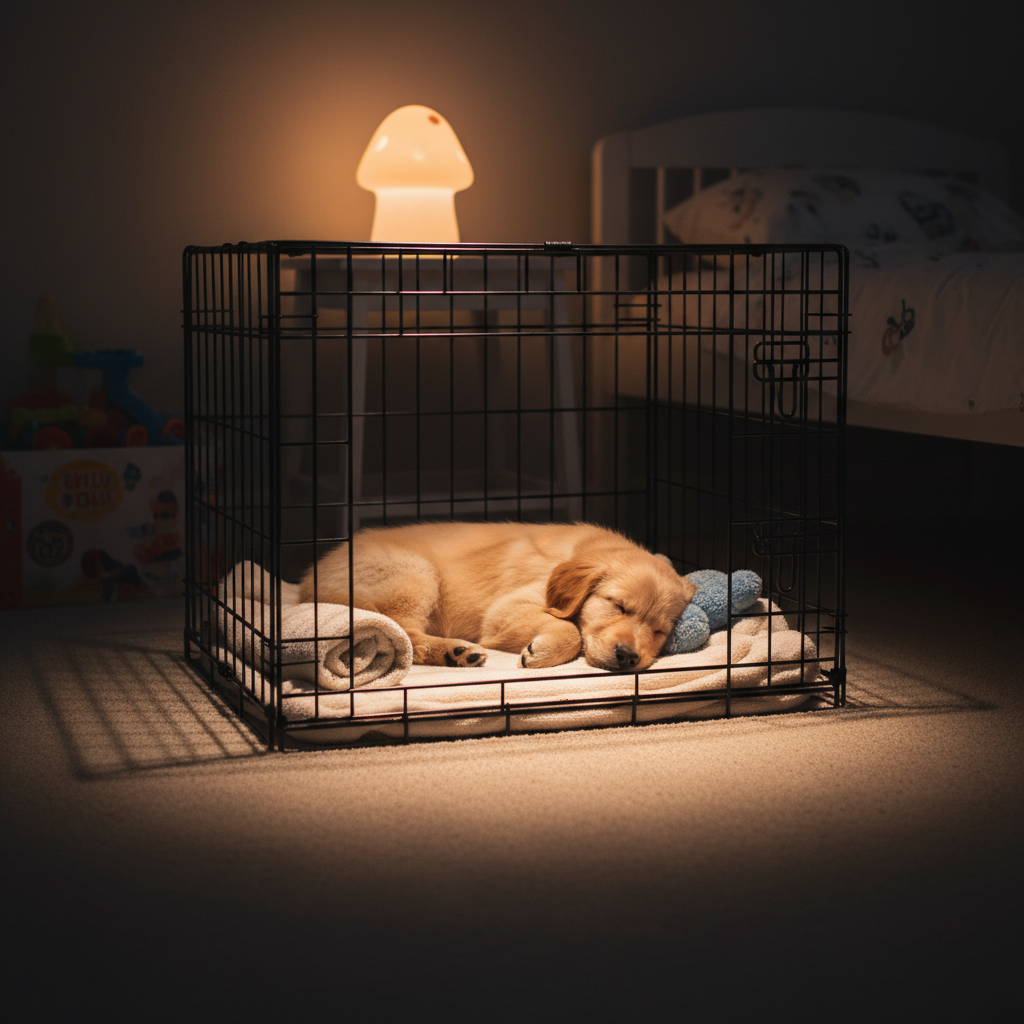
Size is everything. The crate should be large enough for your puppy to stand up, turn around, and lie down comfortably, but not so large that they can use one end as a bedroom and the other as a bathroom. Many wire crates come with a divider, which is perfect for adjusting the space as your puppy grows.
Making It Irresistible
Next, let’s furnish this new den. Add soft, comfortable bedding that’s easily washable. Include a safe chew toy to give them something to do if they wake up. You can even place a t-shirt that smells like you inside to provide extra comfort. The crate should scream ‘comfort and safety,’ not ‘time out’.
Location, Location, Location
For the first few weeks, the best place for the crate is in your bedroom. Being close to you helps your puppy feel secure and less anxious. It also allows you to hear them if they genuinely need a potty break in the middle of the night, helping you distinguish a real need from a lonely cry.
Daytime Drills: Building a Positive Crate Connection
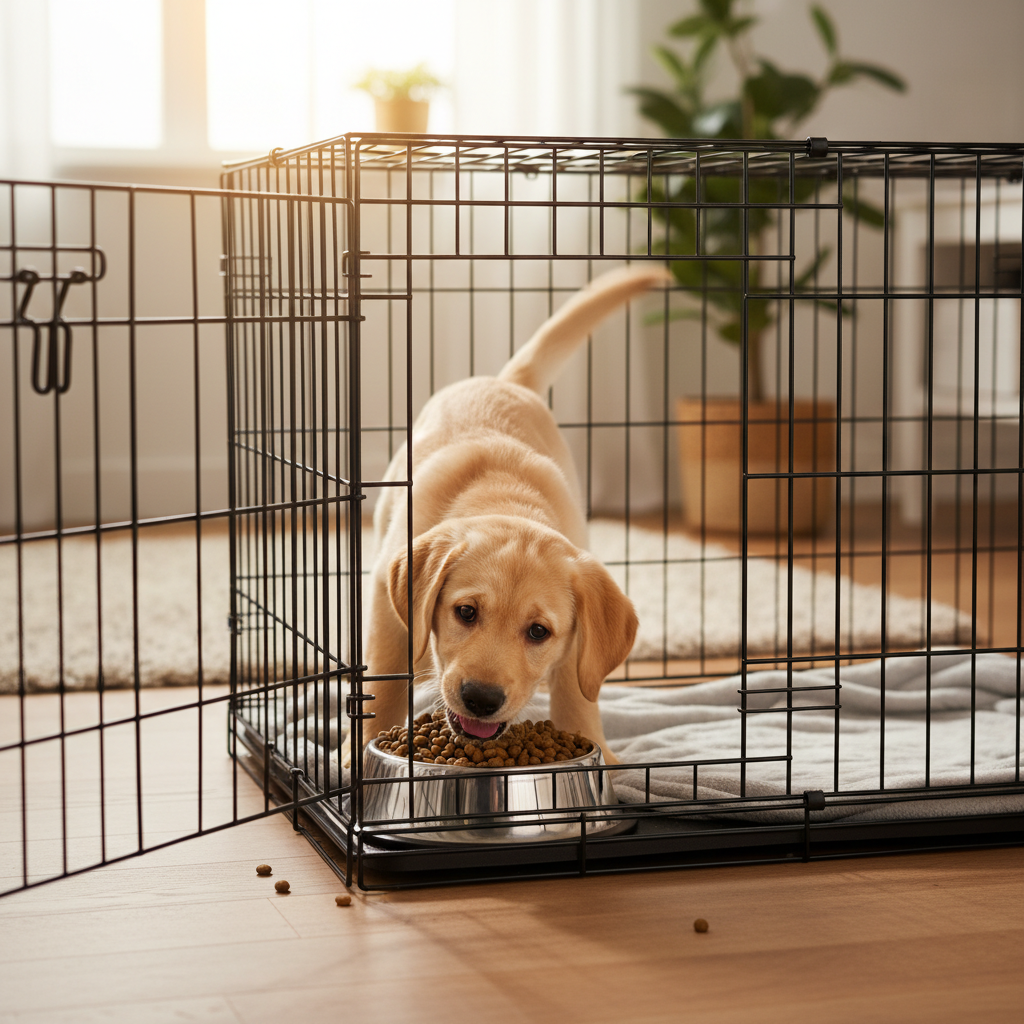
Daytime Drills: Building a Positive Crate Connection
What you do during the day has a massive impact on your nighttime success. You need to build a bank of positive experiences with the crate long before you ask your puppy to spend eight hours in it.
Start by simply leaving the crate door open and tossing high-value treats inside. Let your puppy go in and out at their own will to retrieve them. Once they are comfortable with that, you can start feeding them their meals inside the crate with the door open. This creates a powerful association: good things happen in this den!
Introduce a verbal cue like ‘Crate up!’ or ‘Go to bed!’ in a happy, upbeat tone. When they go in, reward them with praise and a treat. Practice short sessions of closing the door for a few seconds, then a minute, gradually increasing the time. Always stay nearby initially so they don’t feel abandoned.
Expert Tip: Never, ever use the crate as a form of punishment. Sending your puppy to the crate when they’ve been naughty will poison their perception of it, undoing all your hard work. It must always be a positive and safe space.
The Golden Ticket: Your Night-by-Night Crate Training Schedule
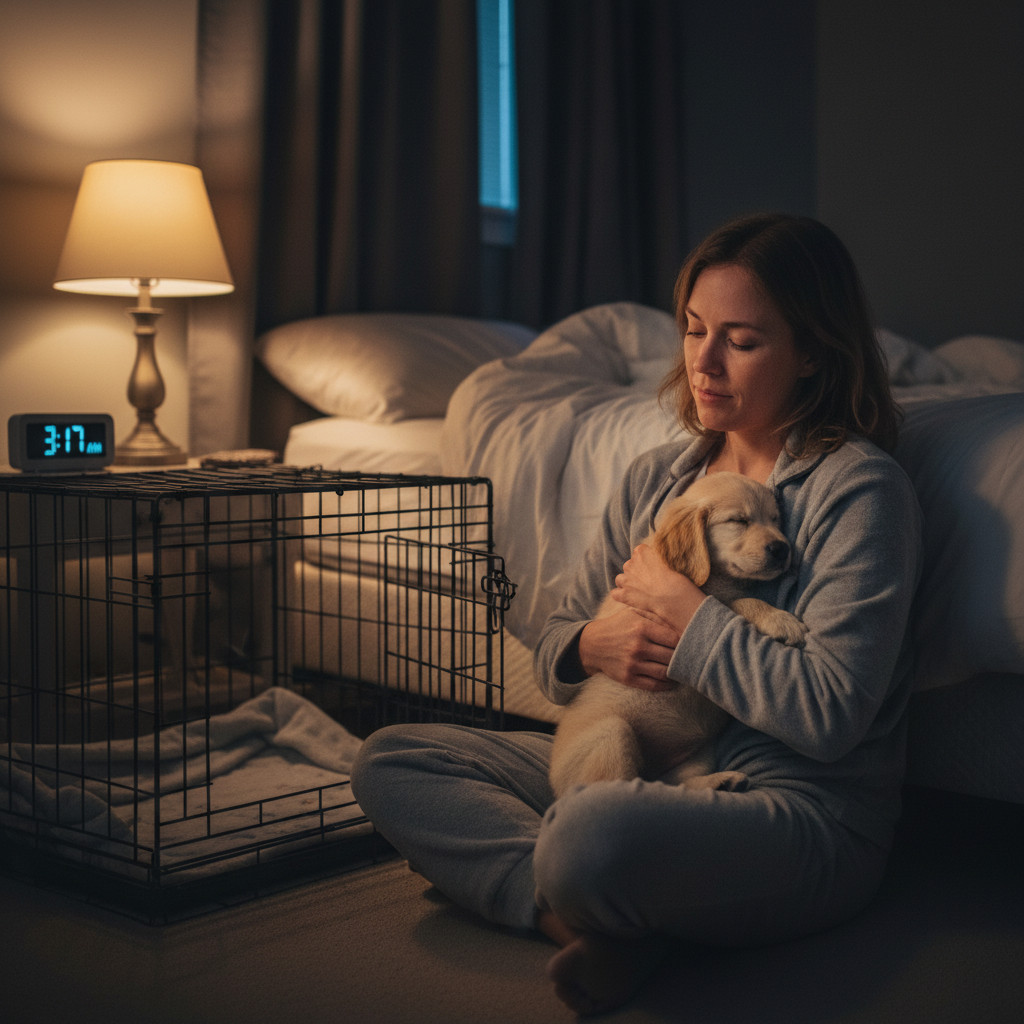
The Golden Ticket: Your Night-by-Night Crate Training Schedule
Alright, the sun has set, and it’s time for the main event. Consistency is your best friend here. Sticking to a routine will help set your puppy’s internal clock and make the process much smoother.
- Wear Them Out: An hour or so before bedtime, have a good play session, but avoid getting them too riled up right before bed. The goal is a tired puppy, not a hyper one.
- The Final Potty Trip: This is the most important potty break of the day. Take your puppy out right before you plan to put them in the crate for the night. Give them plenty of time to do their business. When they go, praise them calmly.
- Bedtime Cue: Lead your puppy to their crate using your verbal cue (‘Crate up!’). Give them a special, long-lasting ‘bedtime only’ treat, like a frozen Kong with a bit of peanut butter. This makes bedtime something to look forward to.
- Lights Out: Say your goodnight phrase, close the door, and turn out the lights. Now, the hard part: expect some whining for the first few nights. It’s normal.
- The Midnight Potty Run: A young puppy cannot hold it all night. A general rule of thumb is their age in months plus one. So, a 2-month-old puppy can hold it for about 3 hours. Set an alarm to wake up for a planned potty break. When you take them out, keep it all business. No talking, no playing, no excitement. Use a leash, take them to their potty spot, and as soon as they’re done, it’s straight back to the crate. This teaches them that nighttime is for sleeping, not for playing.
Sample Nighttime Schedule (8-10 Week Old Puppy)
- 10:00 PM: Final potty break and into the crate with a treat.
- 2:00 AM: Alarm goes off. Calm, boring potty break. Straight back to the crate.
- 5:30 AM – 6:00 AM: Wake up for the day! First thing is another potty break outside.
As your puppy gets older, you can gradually extend the time between potty breaks until they are sleeping through the night.
Help! My Puppy Won’t Stop Crying: Troubleshooting Tips
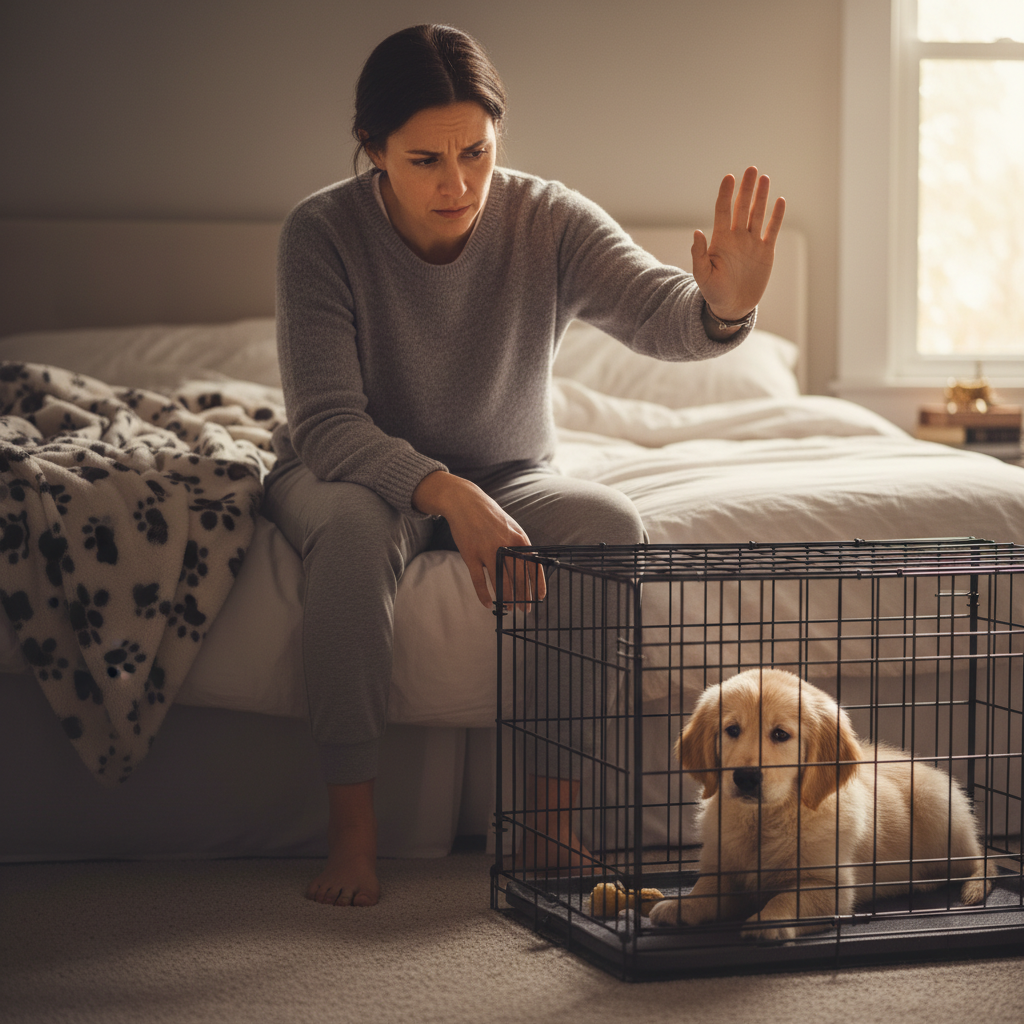
Help! My Puppy Won’t Stop Crying: Troubleshooting Tips
Hearing your puppy cry is heartbreaking, and it’s tempting to give in. But it’s crucial to understand why they’re crying. Are they lonely, or do they genuinely need something?
The ‘I Need to Go Potty’ Whine vs. The ‘I’m Lonely’ Whine
A potty whine is often more frantic and urgent. An ‘I’m lonely’ or ‘I’m bored’ cry might be more like a rhythmic bark or a drawn-out whine. If you just took them out 30 minutes ago, it’s likely an attention-seeking cry. In this case, you must ignore it. It’s tough, but giving in teaches them that crying gets them what they want. If you’re sure they are just fussing, try giving a sharp ‘Quiet!’ or ‘Shhh!’ command. Often, just hearing your voice is enough to settle them. Wait for a few seconds of silence, then quietly praise them.
Accidents in the Crate
If your puppy has an accident, don’t scold them. It likely means the schedule was off or the crate is too big. Clean it up thoroughly with an enzymatic cleaner (regular soap won’t eliminate the smell that encourages them to go there again) and reassess your potty break timing. You may need to add one more trip outside during the night for a week or two.
Conclusion
Crate training your puppy for sleep is a journey of patience, consistency, and love. There will be tough nights, but by following this schedule and establishing a positive routine, you are giving your puppy an incredible gift: a sense of security and a safe space to call their own. You’re also giving yourself the gift of a full night’s sleep! Remember to celebrate the small victories, stay consistent, and before you know it, you’ll have a confident, happy puppy who trots into their crate willingly at bedtime, ready for a night of sweet dreams.