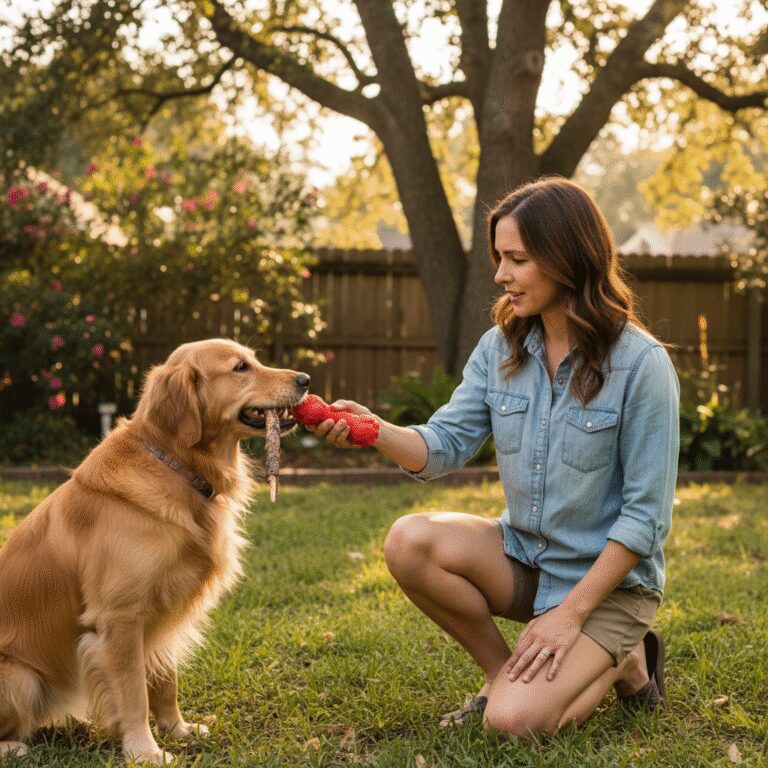
The Magic Tool That Teaches Perfect Off-Leash Freedom (Without The Risk)
Every dog owner shares a common dream: walking through a forest or a park with their canine companion trotting happily alongside them, unbound by a leash, yet perfectly responsive to every command. It is the image of the ultimate bond—trust, freedom, and safety all in one. However, the reality for most owners is starkly different. The fear of a dog bolting after a squirrel, ignoring a recall command, or running into traffic is a paralyzing barrier that keeps many dogs permanently tethered to a standard six-foot leash.
The gap between a short leash and total freedom is massive, and crossing it without a safety net is reckless. Many owners attempt to bridge this gap by simply unclipping the leash and hoping for the best, often with disastrous results. Others rely on retractable leashes, which teach dogs that pulling extends their range, effectively training the exact opposite of what is desired. So, how do professional trainers achieve that rock-solid off-leash reliability?
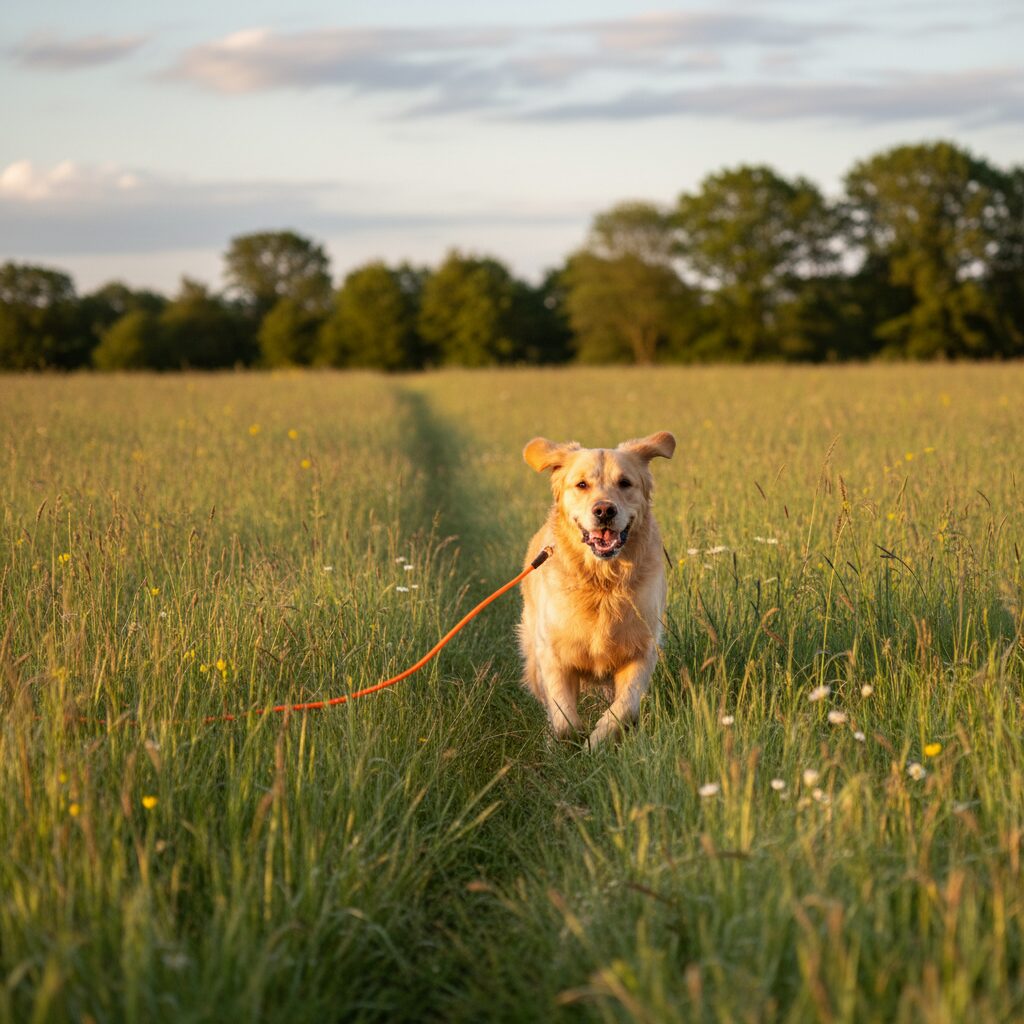
The answer lies in a simple, often overlooked piece of equipment that serves as the perfect intermediary: the Long Line. This is the magic tool that allows you to simulate off-leash freedom while maintaining 100% control, eliminating the risk while you build the behavior. In this guide, we will explore exactly what a long line is, why it is superior to other tools, and the step-by-step methodology to use it for achieving perfect off-leash freedom.
What Is a Long Line and Why Is It Essential?

A long line is distinct from a standard leash or a retractable lead. It is essentially a fixed-length tether, typically ranging from 15 to 50 feet, constructed from materials like nylon, cotton, or, most popularly among professionals, Biothane. Unlike a retractable leash, which maintains constant tension and teaches a dog to pull against resistance to get somewhere, a long line is designed to be dragged or handled with slack.
The primary function of the long line is to act as a safety net. It allows your dog to make choices—to sniff a tree 20 feet away, to lag behind, or to run ahead—while you retain the ability to stop them if they make a dangerous decision. This tool creates a controlled environment where you can test your dog’s recall and engagement without the catastrophic consequence of them running away.
Choosing the Right Material
While nylon is cheap, it absorbs water, becomes heavy, and can cause nasty friction burns on your hands. Professional trainers overwhelmingly recommend Biothane. This material is waterproof, easy to clean, does not knot easily, and glides smoothly through brush and hands. For most dog owners, a 30-foot line is the ‘Goldilocks’ length—long enough to simulate freedom, but short enough to manage easily.
Safety First: The Rules of Engagement

Before you head out to the field, there is one non-negotiable safety rule regarding long lines: Never attach a long line to a dog’s neck collar. If your dog takes off running and hits the end of a 30-foot line attached to their neck, the resulting force can cause severe whiplash, tracheal collapse, or spinal injury. The physics of a long line generate significantly more force than a standard leash due to the momentum a dog can build up over distance.
You must always use a properly fitted, non-restrictive back-clip harness. This distributes the force of any sudden stops across the dog’s chest and shoulders, protecting their delicate neck structure. Additionally, as the handler, you should consider wearing gloves, especially if using a nylon line or handling a powerful dog. If a dog bolts and the line rips through your bare hands, it can cause significant friction burns.
Step-by-Step: The ‘Check-In’ Game

The goal of the long line is not just to restrain the dog, but to teach them to mentally check in with you even when they feel physically distant. This psychological tether is what eventually replaces the physical leash. Here is how to begin the training process:
- Step 1: The Passive Walk. Go to an open area. Attach the long line to the harness and let the dog drag it (if safe) or hold the very end loosely. Allow the dog to sniff and explore. Do not give commands yet; just let them experience the distance.
- Step 2: Mark the Check-In. Wait for the dog to naturally look back at you. The moment they do, mark it (using a clicker or a word like ‘Yes!’) and reward them heavily with a high-value treat. You are teaching them that paying attention to you, even at 20 feet, is rewarding.
- Step 3: The Direction Change. As the dog moves ahead of you, silently change your direction. Do not yank the line; just walk the other way. When the dog hits the end of the line, they will feel a self-correction from the harness. When they turn to follow you, mark and reward. This teaches the dog to keep an eye on your location rather than assuming you will just follow them.
Building a Bulletproof Recall

Recall—the command to ‘come’—is the most critical skill for off-leash freedom. The long line allows you to enforce this command every single time, preventing the dog from learning that they can ignore you.
When your dog is distracted (sniffing a bush, for example), call their name and give your recall command once. If they turn and come, celebrate and reward. If they ignore you, do not repeat the command. Instead, gently pick up the long line and apply steady, low-level pressure to guide them toward you. You are not reeling them in like a fish; you are providing a tactile prompt that says, ‘This is not optional.’
As soon as the dog turns toward you and releases the pressure, praise them verbally. When they arrive at your feet, reward them. This process teaches the dog that the recall command is mandatory, regardless of the distance. Over time, the dog learns that ignoring the command is futile because you have a ‘magic arm’ that can reach them from 30 feet away.
Transitioning to True Off-Leash

The transition from long line to no leash should be gradual. You do not simply wake up one day and decide the line is gone. Instead, you fade the tool out. Once your dog is responding reliably to recall commands and checking in frequently while you are holding the line, you can move to the ‘drag’ phase.
Drop the handle of the long line and let the dog drag it along the ground (ensure the environment is free of snag hazards like heavy roots or jagged rocks). This gives the dog the sensation of total freedom, but you are still close enough to step on the line if they decide to bolt. This phase tests their reliability. If they fail to listen, you simply step on the line to stop them, reinforcing the training.
Only when your dog has proven reliable while dragging the line for several weeks—in various environments with different distractions—should you consider removing it entirely. Many owners choose to transition to a shorter ‘tab’ leash (a 6-inch handle) before going completely naked, just to have something to grab in an emergency.
Freedom Is Earned, Not Given
The long line is more than just a piece of webbing; it is a communication device that bridges the gap between management and freedom. It allows you to grant your dog the autonomy they crave while ensuring their safety is never compromised. By using this tool to reinforce check-ins and guarantee recall compliance, you are building a history of good behavior.
Remember that off-leash freedom is a privilege earned through consistent training, not a right. There is no shame in keeping a dog on a long line for months or even years if that is what keeps them safe. The goal is a happy, safe dog and a relaxed owner. With patience and the correct use of this ‘magic tool,’ that perfect off-leash walk is not just a dream—it is an achievable reality.