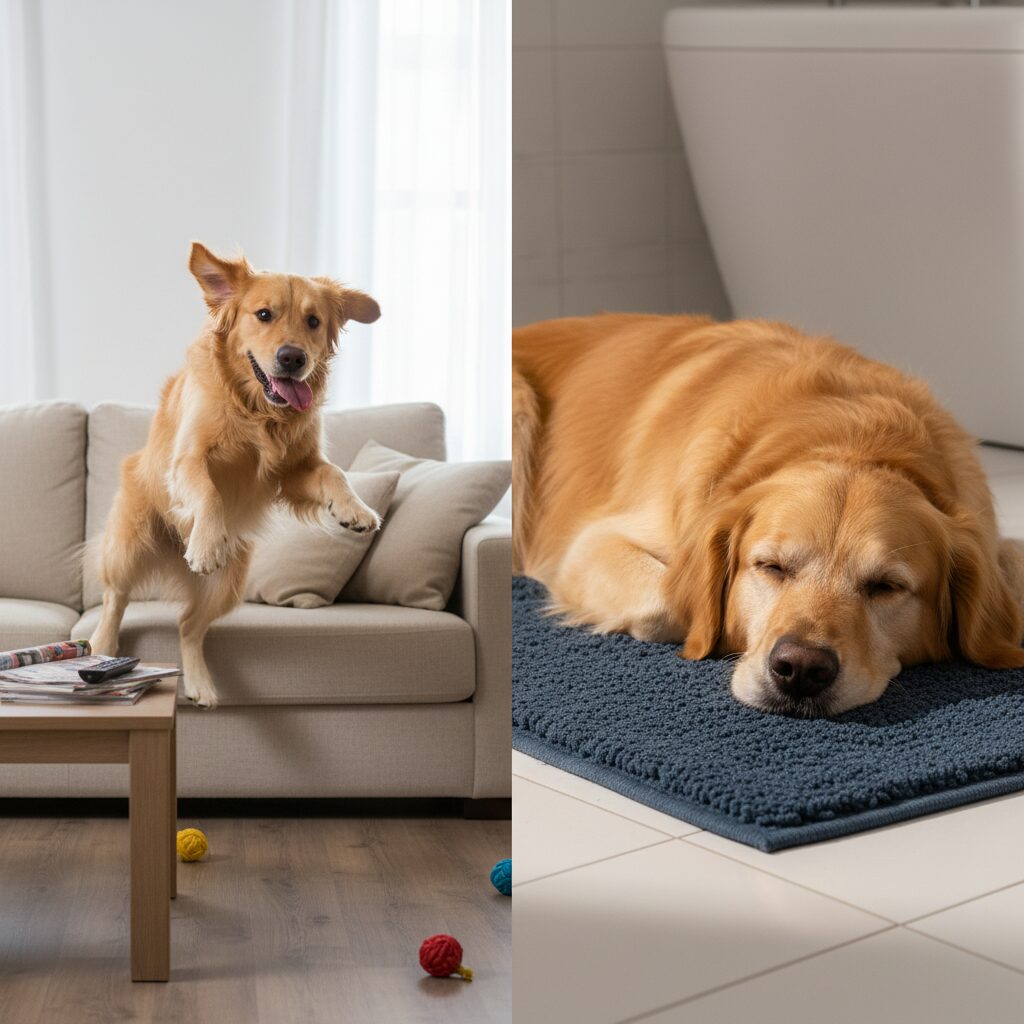
The ‘Magic Mat’ Method: How to Get Your Hyper Dog to Chill Instantly
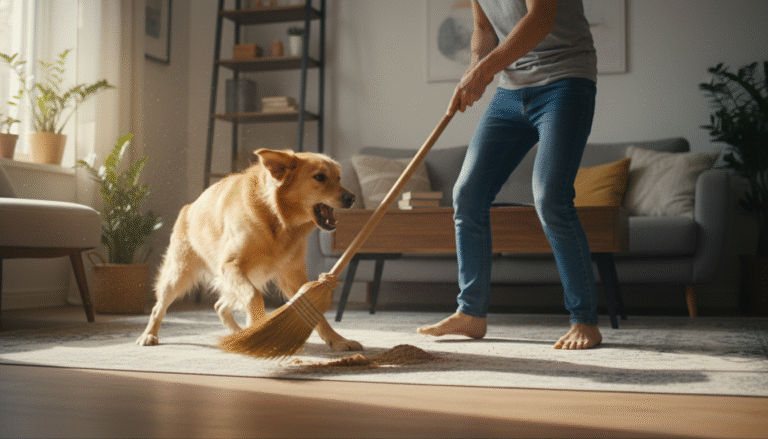
Every dog owner knows the look: the dilated pupils, the tucked tail, the frantic sprinting around the living room. Whether it is the evening ‘zoomies’ or over-excitement when guests arrive, dealing with a hyperactive dog can be exhausting. While exercise is crucial, sometimes physical activity alone is not enough to calm a canine mind that is stuck in high gear. Enter the ‘Magic Mat’ method.
This training technique is not actually magic, though the results often feel like it. It is a scientifically backed behavioral shaping protocol that teaches your dog to associate a specific physical object—a mat, towel, or bed—with the physiological state of deep relaxation. Unlike a standard ‘stay’ command, which often requires active impulse control, the Magic Mat method conditions an emotional response. The goal is for your dog to see the mat and think, ‘Ah, this is my safe spot where I turn off my brain and relax.’ In this guide, we will walk you through the psychology, the preparation, and the step-by-step training process to install a reliable ‘off switch’ in your dog.
The Psychology Behind the Magic Mat

To successfully implement this method, it is essential to understand why it works. The Magic Mat relies on Classical Conditioning (Pavlovian conditioning) and Operant Conditioning. Initially, we use operant conditioning to teach the dog that going to the mat results in a reward. Over time, through repetition, classical conditioning takes over: the mere presence of the mat triggers a parasympathetic nervous system response—rest and digest.
Many hyperactive dogs do not know how to self-regulate. They are in a constant state of arousal. By creating a designated station that is heavily reinforced with high-value rewards only when the dog is calm, we provide a clear structure. The mat becomes a context cue. Just as you might feel sleepy the moment your head hits your pillow, your dog learns to feel calm the moment their paws hit the mat.
Essential Tools for Success
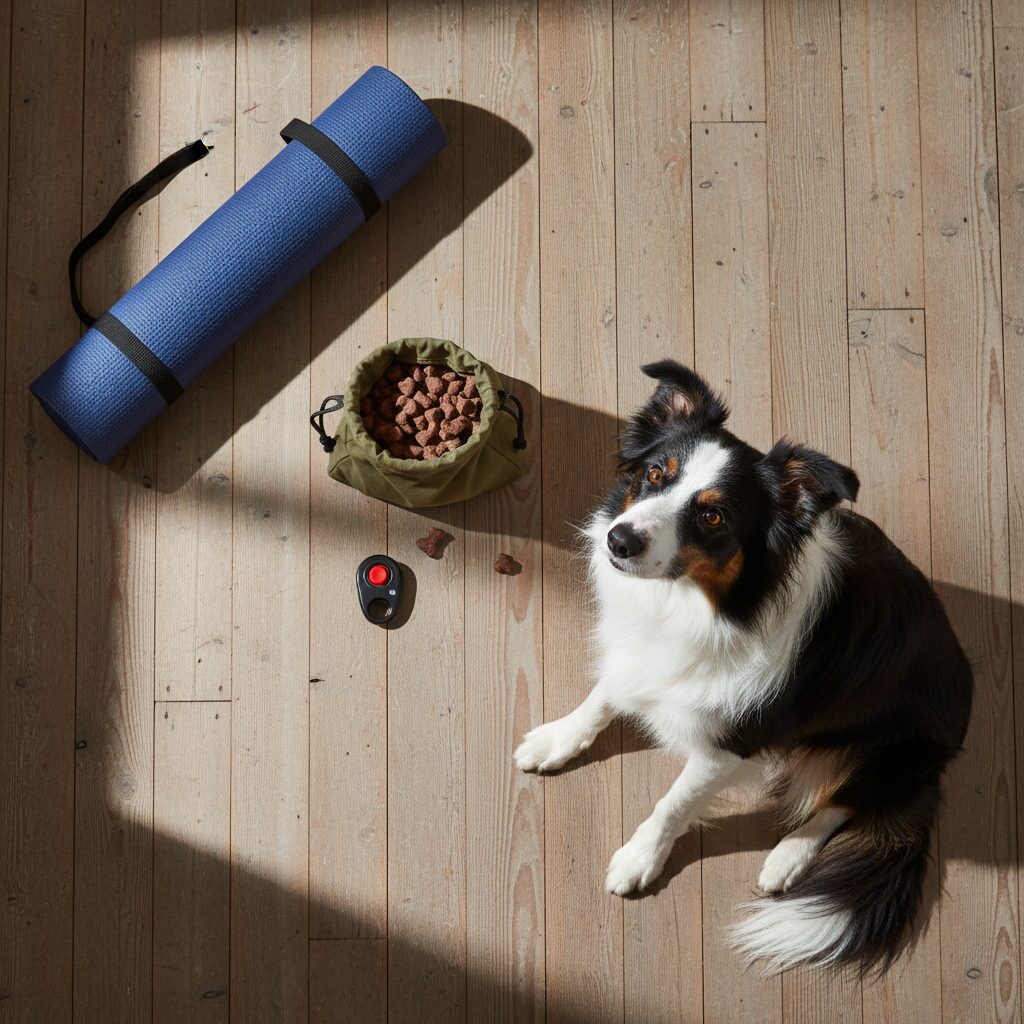
Before you begin training, you need to gather the right equipment. Consistency is key, and having a dedicated set of tools will speed up the learning process.
- The Mat: Choose a portable mat that is distinct from your dog’s regular bed. A bath mat with a rubber backing, a specific towel, or a yoga mat works well. It should be easy to roll up and take with you, as portability is a huge benefit of this method.
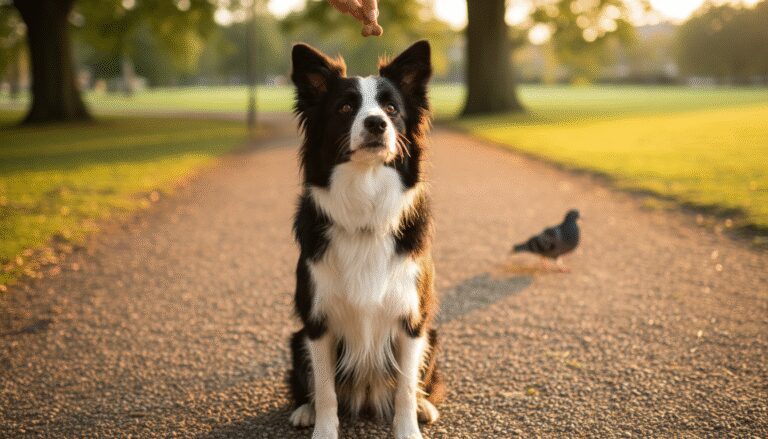
- High-Value Treats: Dry kibble will likely not be enough for a hyper dog. Use small pieces of boiled chicken, freeze-dried liver, or cheese. The reward must be worth the effort of calming down.
- A Marker: A clicker or a consistent verbal marker word like ‘Yes!’ is necessary to mark the exact moment your dog performs the desired behavior.
- A Leash (Optional): For particularly exuberant dogs, a leash can help prevent them from wandering off during the initial learning stages.
Step-by-Step Guide to Teaching the Magic Mat
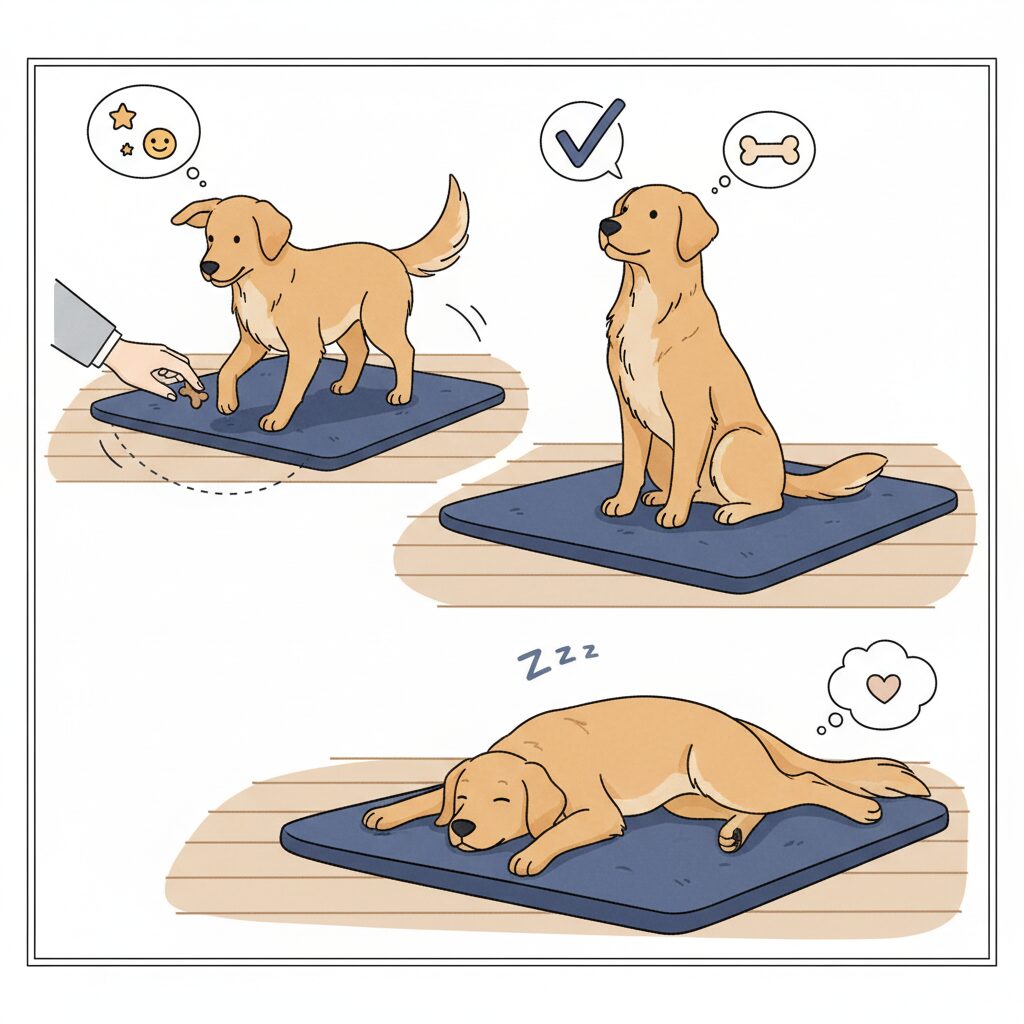
Follow these steps carefully. Do not rush; it is better to have a solid foundation than a shaky behavior that falls apart under distraction.
Step 1: Shaping the Interest
Place the mat on the floor. Do not say anything. Wait for your dog to investigate it. The moment they look at the mat or step a paw on it, mark (click/yes) and toss a treat onto the mat. This teaches the dog that the value is on the mat, not in your hand. Repeat this until the dog is eagerly stepping onto the mat.
Step 2: Adding the Down
Once the dog is consistently going to the mat, wait for them to offer a ‘sit’ or ‘down’. If they don’t offer it naturally, you can gently lure them into a down position. Mark and treat heavily for the ‘down’. We want the dog to understand that the mat implies lying down, not standing.
Step 3: The Duration Protocol
This is the crucial ‘chill’ phase. Once the dog is lying down, do not release them immediately. Give them a treat. Wait two seconds. Give another treat. Wait five seconds. Give another treat. You are rewarding the duration of the stay. Look for signs of relaxation: a hip roll (shifting weight to one side), a sigh, or resting the chin on the paws. Jackpot reward (give multiple treats) for these specific relaxation signals.
Step 4: Adding the Cue
Only add a verbal cue like ‘Place’ or ‘Mat’ once the dog is reliably going to the mat and lying down. Say the word just before the dog heads toward the mat.
Proofing the Behavior: The Three Ds

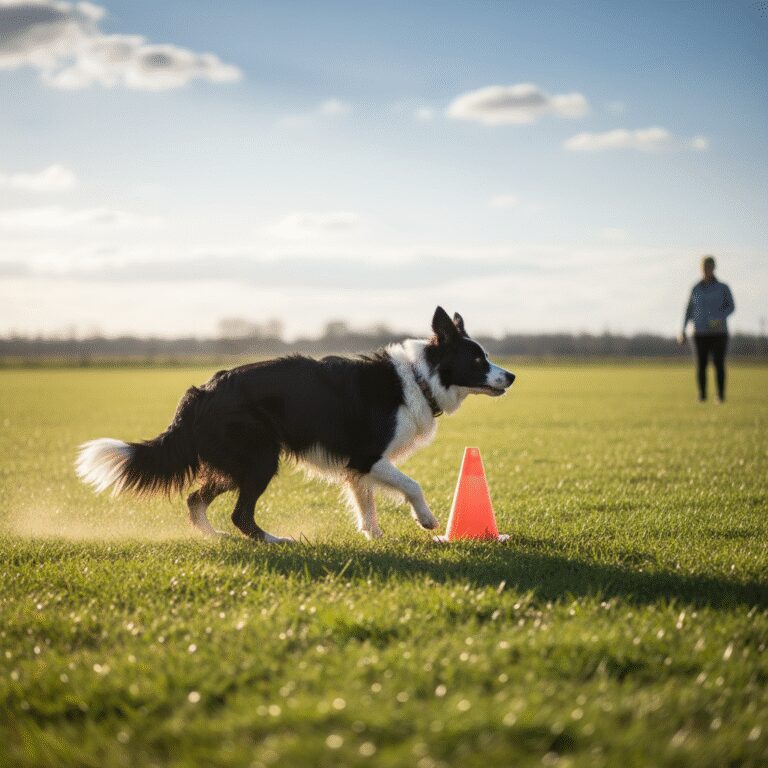
A dog that settles in a quiet living room may not settle at a busy café. To make the mat truly ‘magic’ everywhere, you must proof the behavior against the Three Ds: Distance, Duration, and Distraction.
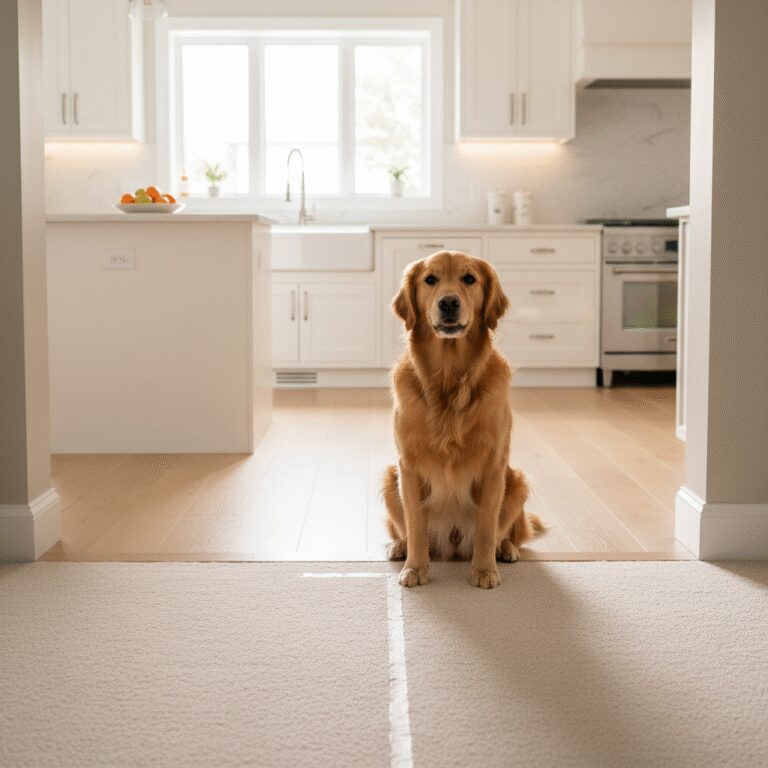
- Distance: Gradually increase the distance between you and the mat. Take one step back, reward. Take two steps back, reward. Eventually, you should be able to send your dog to the mat from across the room.
- Duration: Slowly increase the time the dog stays on the mat between treats. Move from seconds to minutes. The goal is for the dog to fall asleep or settle for 30 minutes or more.
- Distraction: This is the hardest part. Practice the mat protocol while you are cooking, while someone knocks on the door, or in the backyard. Start with low distractions and build up. If the dog breaks the stay, simply guide them back to the mat without scolding and lower the criteria slightly.
Troubleshooting Common Challenges
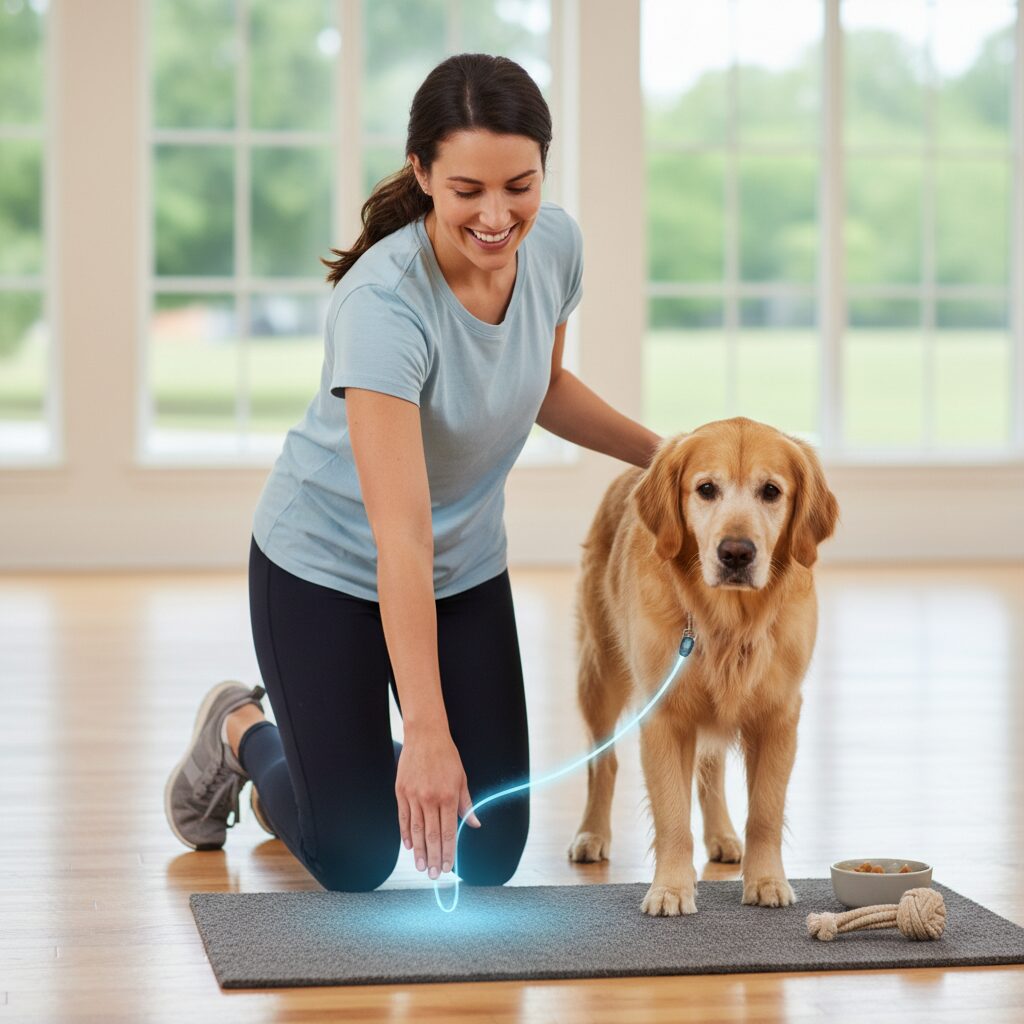
Even with the best training, setbacks happen. Here is how to handle common issues with the Magic Mat method.
The ‘Pop-Up’ Dog
If your dog eats the treat and immediately pops up, your rate of reinforcement is too low. You need to deliver treats faster so the dog realizes that staying down pays better than getting up. Feed the treat low, right between their front paws, to encourage keeping their head down.
The Bored Whiner
Some dogs will vocalize while on the mat. This is often an ‘extinction burst’—they are trying to see if barking gets a reaction. Ignore the whining completely. Only mark and reward when they are silent for at least a few seconds.
Refusal to Settle
If the dog refuses to settle, they may be physically uncomfortable or too full of energy. Ensure they have had a potty break and some physical exercise before a training session. The Magic Mat helps a hyper dog switch off, but it cannot replace the need for physical activity.
Creating a Lifetime of Calm
The ‘Magic Mat’ method is one of the most valuable tools in a dog owner’s arsenal. It bridges the gap between a chaotic, hyperactive pet and a calm, well-adjusted family member. By teaching your dog that they have a designated space to decompress, you are not just teaching a trick; you are providing them with a coping mechanism for the world around them.
Remember that training takes patience. Some dogs catch on in a day, while others take weeks to truly relax. Stick with the protocol, keep your sessions short and positive, and soon you will be able to roll out the mat anywhere—from a brewery to a vet’s office—and watch your dog instantly chill.