
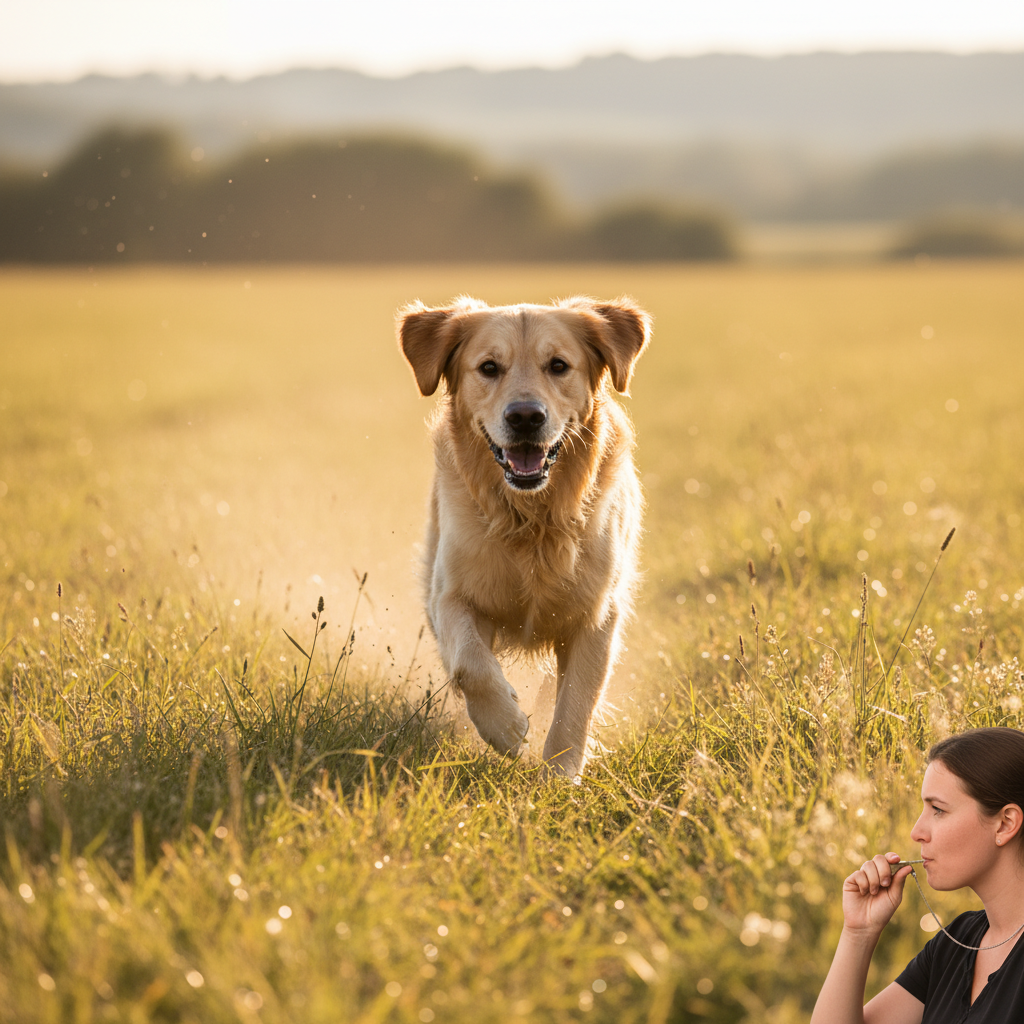
The Life-Saving Whistle: Train An Emergency Recall That Works Every Time
We’ve all felt that heart-stopping moment. Your dog, usually so well-behaved, catches the scent of a squirrel or the sight of another dog and is gone in a flash, deaf to your calls. In that split second, with a busy road or another hazard nearby, a standard recall command might not be enough. Your voice can betray your panic, getting higher, louder, and less familiar to your dog’s ears.
This is where the emergency recall comes in. It’s not your everyday ‘come-when-called.’ It’s a different, more powerful, and utterly reliable command reserved for true emergencies. And the secret weapon to making it foolproof isn’t your voice—it’s a whistle. In this guide, we’ll walk you through, step-by-step, how to train a whistle recall that could one day save your dog’s life.
Why a Whistle? The Science Behind the Sound
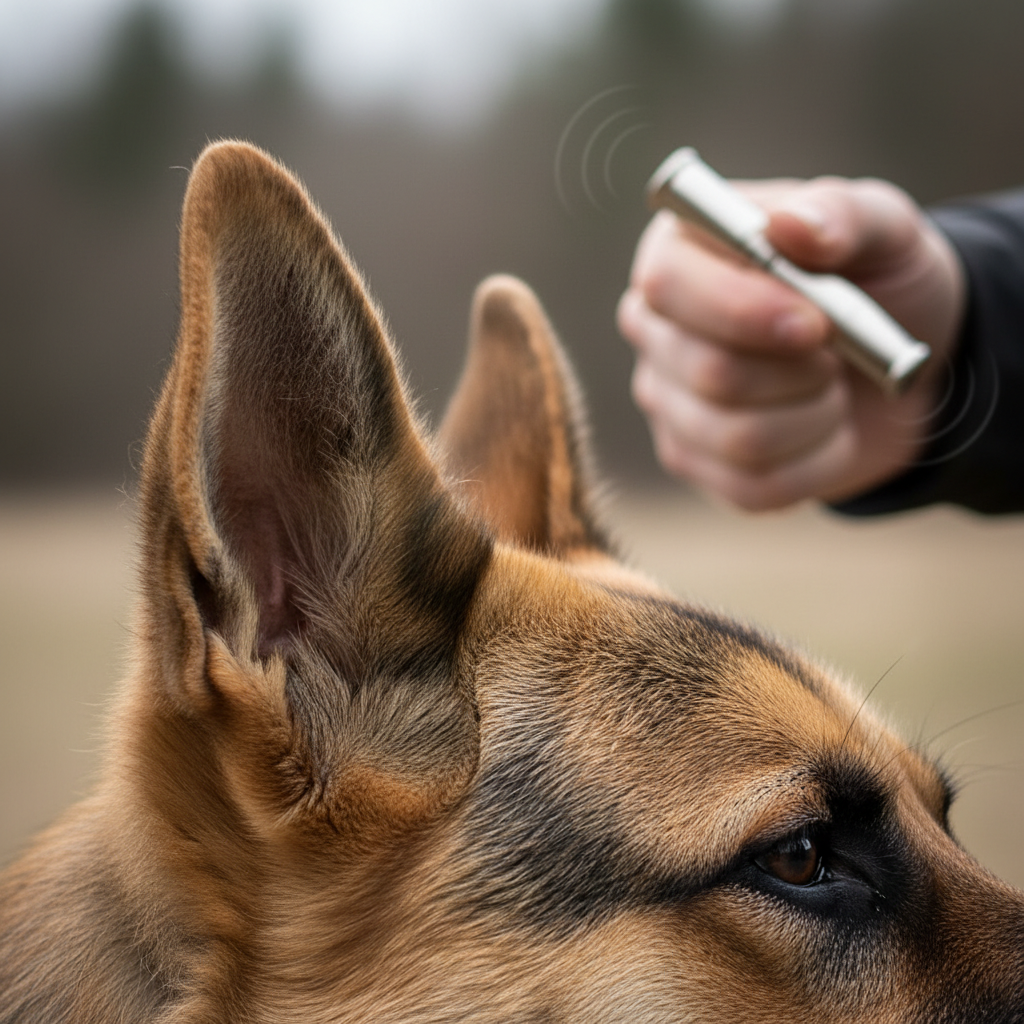
You might be wondering, ‘Why can’t I just use a special word?’ While you can, a whistle has several distinct advantages that make it the gold standard for emergency recalls.
- Emotional Consistency: When you’re panicking, the tone, pitch, and volume of your voice change dramatically. A dog might not recognize a high-pitched, frantic scream as their familiar ‘Come!’ command. A whistle, however, sounds exactly the same every single time, whether you’re calm and happy or terrified.
- Cuts Through Noise: The specific frequency of a good dog whistle is designed to travel long distances and cut through ambient noise like wind, traffic, crashing waves, or other barking dogs far more effectively than the human voice.
- A Unique Cue: We use words all day long. Your dog hears ‘come’ in various contexts—’come on, let’s go,’ ‘come here a sec.’ A whistle is a unique sound that you will reserve only for this specific, amazing recall. It doesn’t get diluted by everyday chatter, so it retains its power and urgency.
Think of the whistle as a direct, private line to your dog’s brain that bypasses all the usual noise and emotional chaos. It’s a clean, clear signal that means one thing and one thing only: ‘Drop everything and get to your human NOW for the best thing ever!’
Gathering Your Gear: The Whistle and the Ultimate Reward
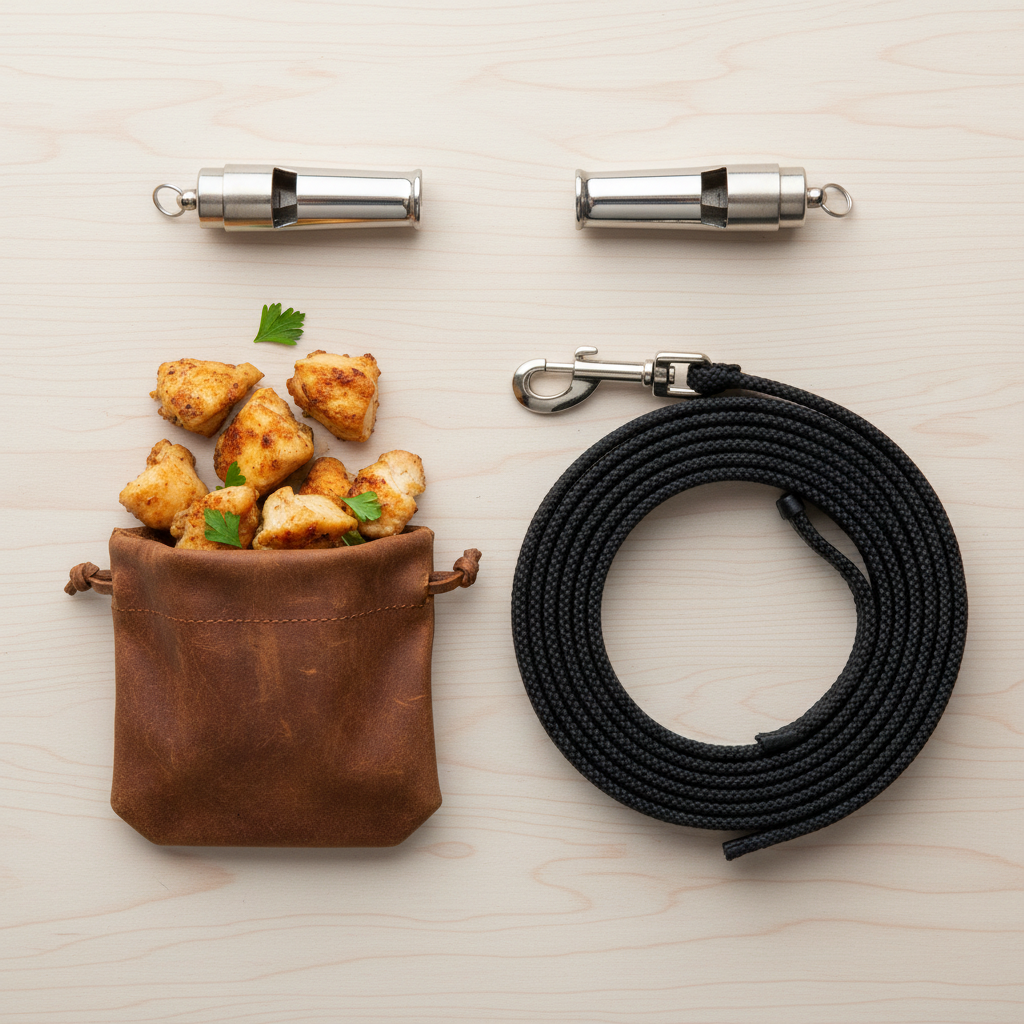
Before you start, you need two crucial items. Getting these right is half the battle!
1. The Right Whistle
Don’t just grab any old sports whistle. You want a specific ‘dog training whistle.’ Many trainers prefer ‘pea-less’ whistles (like the Acme brand) because they produce a single, consistent tone and won’t freeze up in cold weather. The exact pitch doesn’t matter as much as the fact that you use the same whistle every time. Buy two or three of the same model so you always have one handy—on your keys, in your car, and in your training bag.
2. The ‘Jackpot’ Reward
This is the most important part. The emergency recall is not paid for with regular kibble or a standard biscuit. It is paid for with the canine equivalent of a winning lottery ticket. This treat needs to be something your dog goes absolutely wild for and—this is critical—gets for no other reason than responding to the whistle. Ideas for jackpot rewards include:
- Small pieces of cooked steak or chicken
- Hot dog slices
- Real cheese cubes
- Liver pâté from a squeeze tube
- Whatever your dog considers the absolute pinnacle of culinary delight!
By making this reward exclusive to the whistle, you build an incredibly powerful association that will override almost any other distraction.
The Step-by-Step Training Plan: Building a Bulletproof Recall
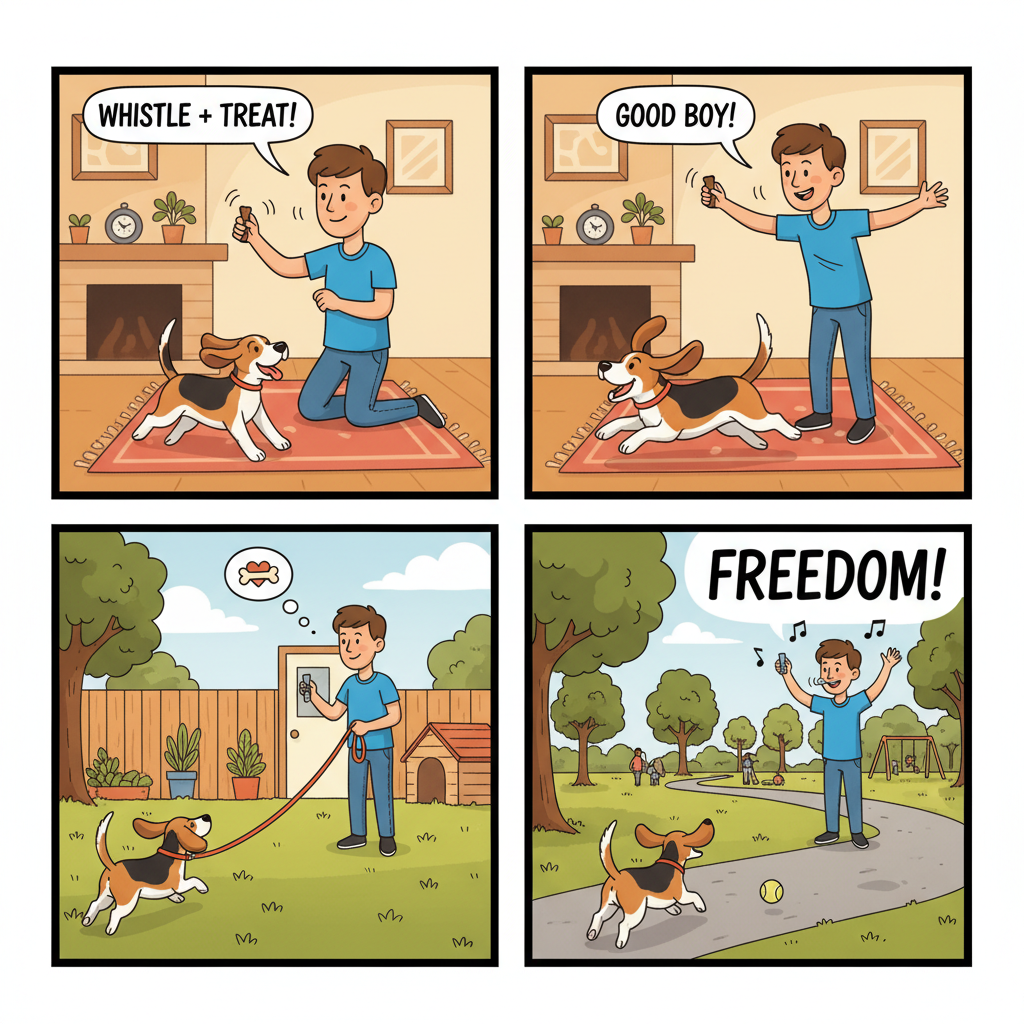
Patience and consistency are your best friends here. Follow these steps without skipping ahead, and keep sessions short and fun—just a few minutes, a couple of times a day.
Step 1: Charge the Whistle
The goal here is simple: teach your dog that the whistle sound magically produces jackpot treats. Start indoors with zero distractions.
- Have your dog near you.
- Blow one short, sharp blast on the whistle.
- The INSTANT you finish the blast, produce the jackpot treat and give it to your dog. Don’t say a word.
- Repeat 5 times. That’s the end of the session.
Do this for a few days. You’ll know it’s working when your dog’s head whips around looking for the treat the moment they hear the sound.
Step 2: Add a Little Distance (Indoors)
Now, we’ll ask the dog to move to get the reward.
- Wait for your dog to be across the room from you.
- Blow the whistle.
- The moment they start moving towards you, praise them enthusiastically (‘Yes! Good boy!’).
- When they get to you, deliver the jackpot reward with a mini-celebration.
Step 3: Move to a Secure Outdoor Space
It’s time to take it outside, but safety first! Use a fenced-in backyard or a long training leash (20-30 feet) in a quiet park.
- Let your dog wander to the end of the leash.
- Wait for them to be mildly distracted (sniffing a patch of grass).
- Blow the whistle.
- If they hesitate, you can give a little tug on the long line, but the sound itself should do the work. The moment they turn and run to you, shower them with praise and give them the jackpot reward right at your feet.
Step 4: Proofing with Distractions
This is the advanced level. The key is to start with very low-level distractions and set your dog up for success. Never use the whistle if you think they might fail. You want to build a long history of 100% success.
Start with a friend walking by at a distance. Blow the whistle. Reward. Gradually, over many sessions, you can increase the level of distraction. But remember, this is for emergencies. The goal isn’t for them to ignore a running squirrel on day one; it’s to build a response so strong that eventually, they will.
Keeping it Sacred: The Dos and Don’ts of the Emergency Whistle
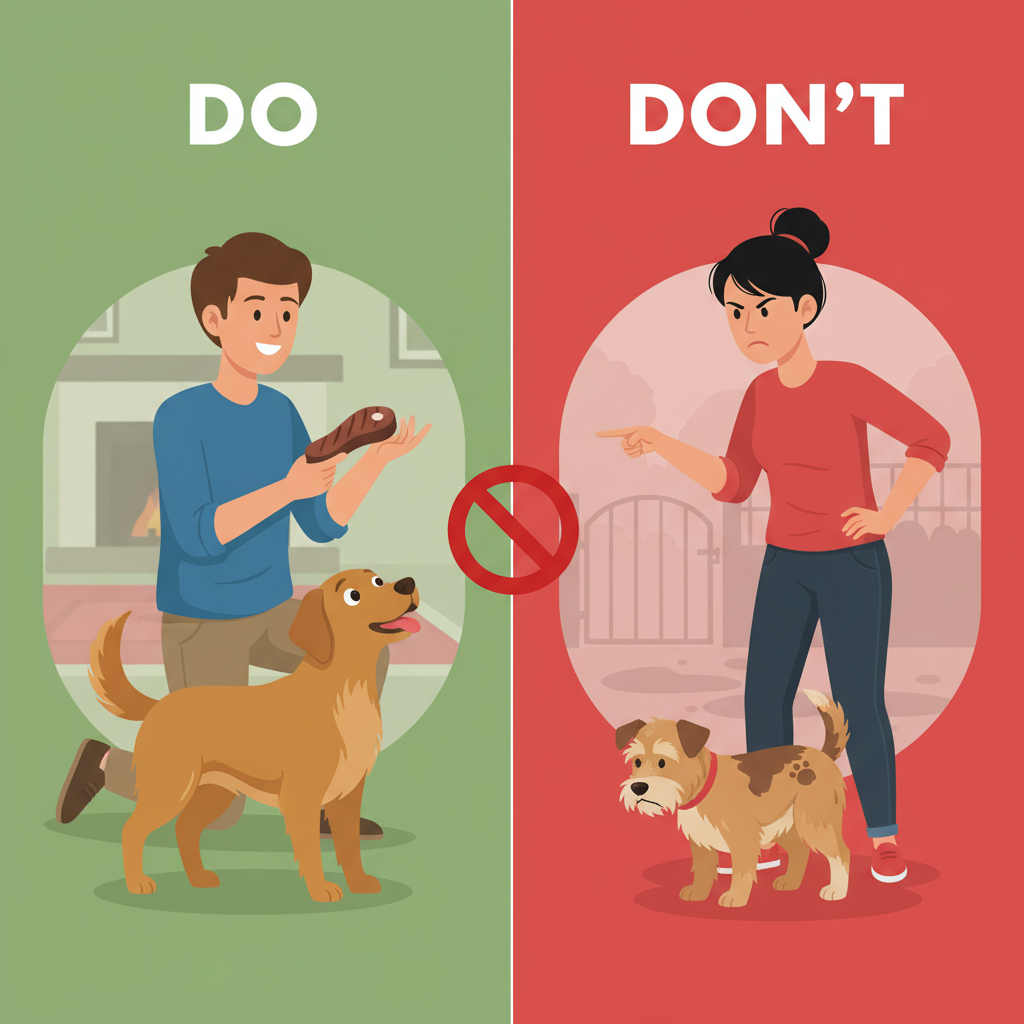
You’ve built a powerful tool. Now you have to protect it. Poisoning this cue by using it incorrectly can undo all your hard work. Follow these rules religiously.
- DO: Practice in short, fun sessions a few times a week in different locations to keep the skill sharp.
- DON’T: Ever use the whistle to call your dog for something they don’t like, such as a bath, nail trim, or to leave the dog park. This is the fastest way to teach them the whistle predicts bad things.
- DO: Always, always, ALWAYS reward with a jackpot-level treat. No exceptions. If you blow the whistle, you must pay up, and pay up big.
- DON’T: Use it when you’re frustrated or just to get your dog to come inside from the yard. Use your regular ‘come’ command for that. The whistle is for emergencies and dedicated practice sessions only.
- DO: Keep the celebration going! When they come, it should be a party. Praise, treats, and happiness.
- DON’T: Ever punish your dog when they come to the whistle. Even if they were rolling in something disgusting or running towards a road, the act of coming back to you must be the best thing that happens all day.
Conclusion
Training an emergency whistle recall is one of the greatest gifts you can give your dog. It’s an insurance policy you hope you never have to use, but one that can mean the difference between tragedy and safety. It builds a special line of communication and strengthens the bond you share. By investing the time, using incredible rewards, and protecting the sanctity of the whistle cue, you are giving your best friend the freedom to explore their world safely and giving yourself invaluable peace of mind.