
The Emergency Down: The One Command That Could Save Your Dog’s Life
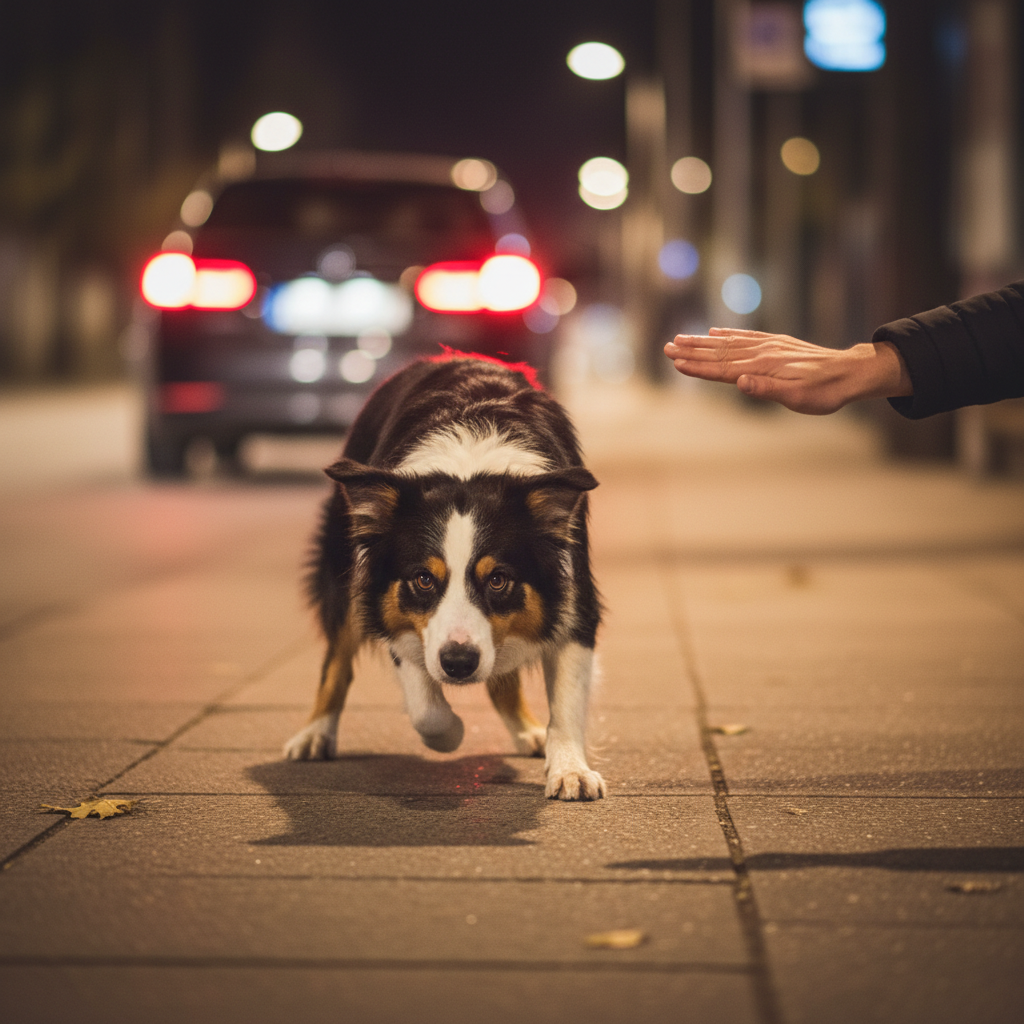
Imagine this: you’re on a walk, and the leash suddenly slips from your hand. Your dog, ecstatic with freedom, bolts towards a busy street. Your heart leaps into your throat. You shout their name, but the excitement is too much. This terrifying scenario is every dog owner’s nightmare. But what if you had a verbal emergency brake? A single command that could stop your dog in their tracks, no matter the distraction? That command is the Emergency Down, and it’s one of the most important skills you can ever teach your furry best friend.
You might be thinking, ‘My dog already knows ‘down’!’ That’s great, but the Emergency Down is a completely different beast. A regular ‘down’ is a request for a position. An Emergency Down is a lightning-fast, reflexive drop to the ground from a distance, designed to instantly halt all forward motion. It’s the difference between asking someone to please sit and hitting the emergency stop button on a machine. In this guide, we’ll walk you through everything you need to know to build this life-saving command with trust, positivity, and clarity.
Why the ‘Emergency Down’ is Radically Different (and Absolutely Essential)
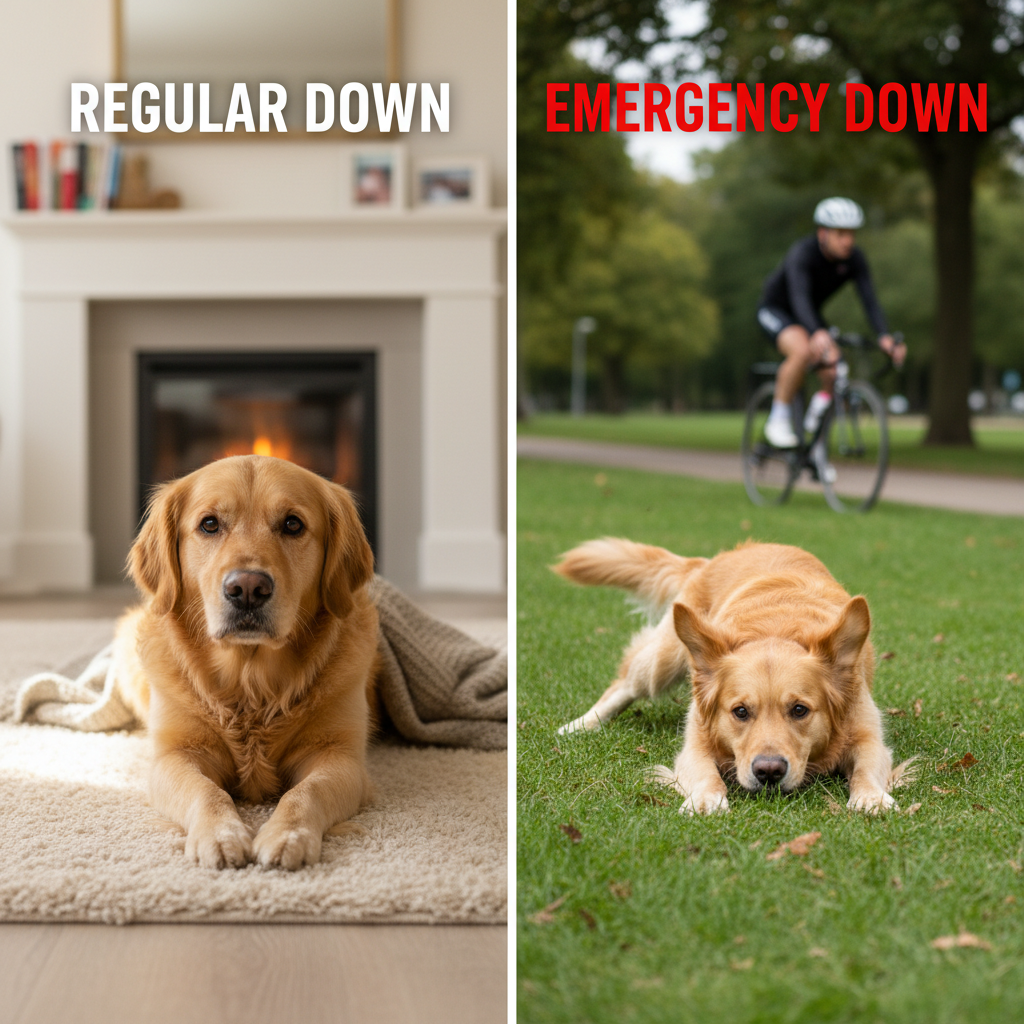
Before we grab the treats, it’s crucial to understand the ‘why’ behind this command. The distinction between a casual ‘down’ and an Emergency Down is all about three things: speed, distance, and reliability under pressure.
- Speed: A regular down can be slow and casual. The dog might circle a bit, sniff the ground, and then leisurely lower itself. An Emergency Down is instantaneous. The moment the word leaves your lips, the dog should drop as if their legs vanished.
- Distance: You usually ask for a regular down when your dog is right beside you. The Emergency Down is designed to work when your dog is 5, 20, or even 50 feet away—precisely when you can’t physically reach them.
- Reliability: This is the big one. Your dog might lie down perfectly in your quiet living room, but will they do it at the park when a squirrel is taunting them? The Emergency Down is ‘proofed’ against high-level distractions, making it a reliable tool in chaotic, real-world situations.
Think of it as your dog’s ultimate safety net. It can be used to prevent:
- Running into traffic
- Charging towards an unfriendly dog or a fearful person
- Eating something potentially toxic off the ground
- Getting into any dangerous situation where forward momentum is the primary threat
Expert Tip: Never poison the cue. Once your dog masters the Emergency Down, use it sparingly for true emergencies or high-stakes practice. Overusing it for everyday situations can dilute its power and urgency.
Gathering Your Training Toolkit
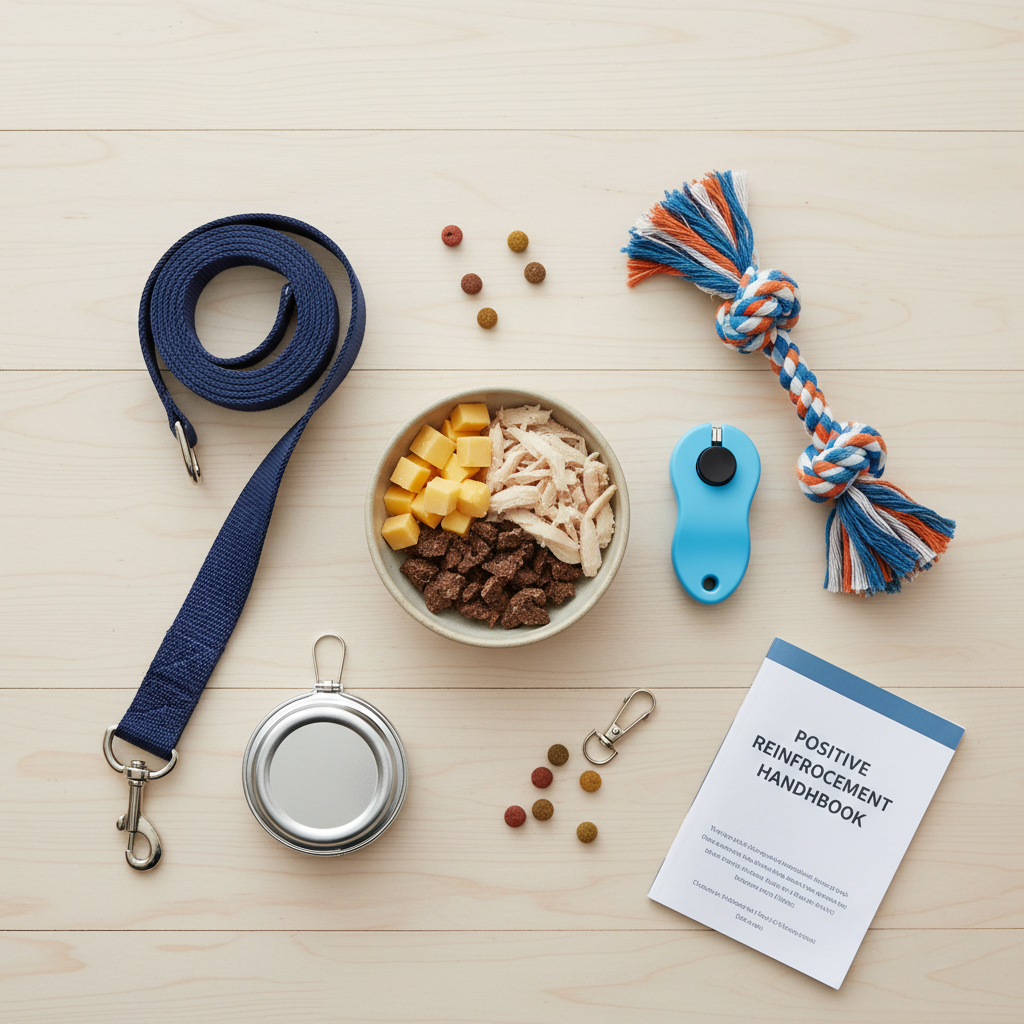
The good news is you don’t need a lot of fancy equipment to teach this powerful command. Success hinges on motivation, not complex gear. Here’s what you’ll want to have on hand:
- High-Value Treats: This is non-negotiable. We’re talking top-tier rewards your dog would do anything for. Forget the dry biscuits for this exercise. Think small pieces of cooked chicken, cheese, hot dogs, or freeze-dried liver. The reward must be worth slamming on the brakes for!
- A Unique Verbal Cue: Don’t use your regular ‘down’ command. You need a distinct, sharp word that will only ever be associated with this specific action. Good options include ‘DROP!’, ‘FLAT!’, or ‘CRASH!’. Pick one and stick with it.
- A Clicker (Optional, but Recommended): A clicker is a fantastic tool for marking the exact moment your dog does the right thing. It provides clear, precise communication that helps your dog learn faster. If you’re not using a clicker, you can use a verbal marker like a sharp ‘Yes!’.
- A Non-Distracting Environment: Start your training indoors in a quiet room where your dog feels safe and can focus entirely on you. You’ll add distractions later, but the foundation must be built in a sterile environment.
The 5-Step Plan to a Rock-Solid ‘Drop’
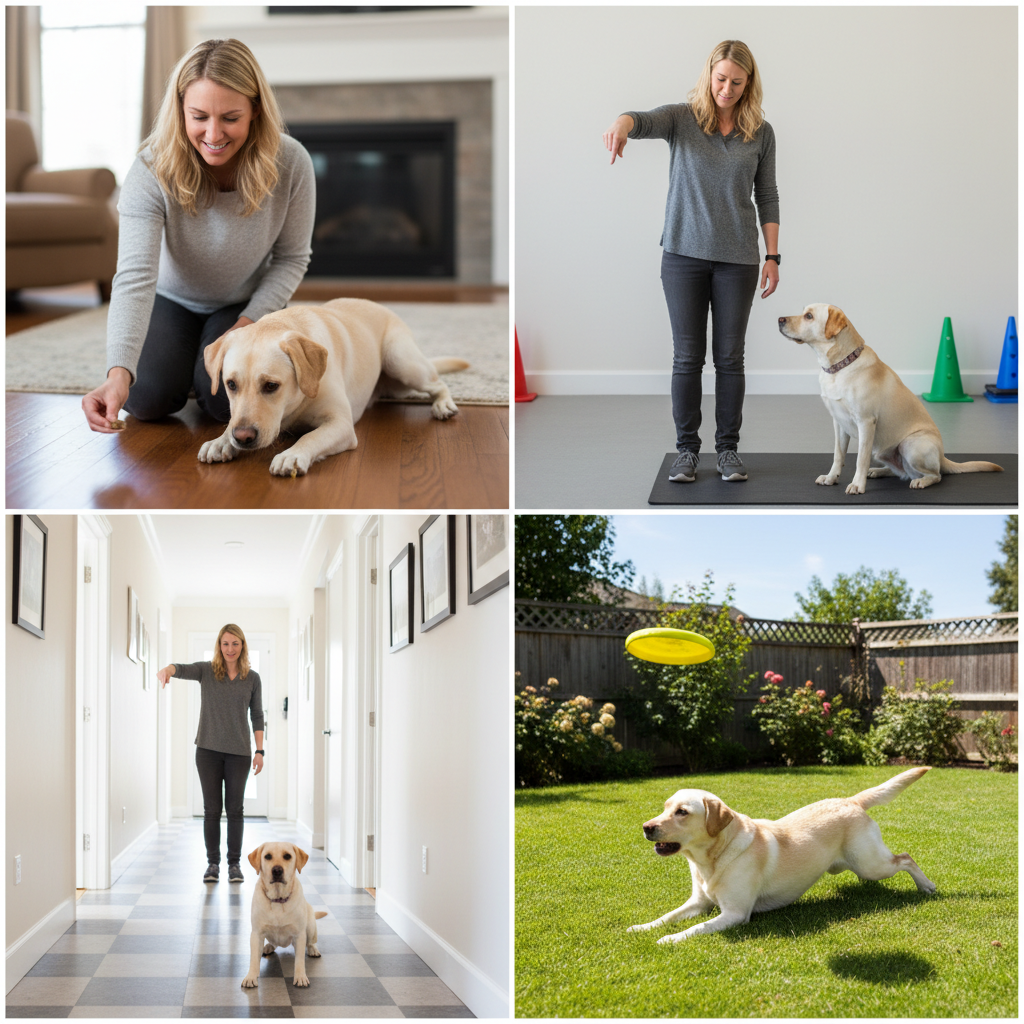
Ready to train? Remember to keep sessions short (5-10 minutes max) and always end on a positive note. Patience and enthusiasm are your best friends here. Let’s get started!
-
Step 1: Charge the Cue Word
Before you even ask for a down, you need to make your new cue word predict amazing things. With your dog in front of you (standing or sitting is fine), say your cue, ‘DROP!’, in a clear, urgent-but-happy tone. The instant you say it, toss a handful of high-value treats on the floor right between their paws. Don’t ask for any action. Just say the word, then make it rain treats. Repeat this 5-6 times. Your dog will quickly learn that ‘DROP!’ means a jackpot is coming.
-
Step 2: Lure the Motion
Now, we’ll connect the word to the action. Hold a treat in your hand. Say ‘DROP!’ and immediately lower your hand to the floor, luring your dog’s nose down. Slide the treat along the floor between their paws to encourage them to lie down fully. The second their elbows touch the floor, click (or say ‘Yes!’) and release the treat, followed by lots of praise. The goal is a quick, fluid motion.
-
Step 3: Fade the Lure and Add a Hand Signal
Once your dog is reliably following the lure, it’s time to fade it. Say ‘DROP!’ and use the same hand motion, but without a treat in your hand. When they lie down, click and reward them with a treat from your other hand. This transitions the motion into a hand signal. Gradually make the hand signal smaller and faster—a sharp, downward chop is a common choice.
-
Step 4: Build Distance
This is where it starts to feel like a real Emergency Down. Ask for the ‘DROP!’ from one step away. When they succeed, praise them lavishly. Then try from two steps away. Slowly and gradually increase the distance over many training sessions. If they fail, you’ve moved too fast. Just take a step closer and help them succeed.
-
Step 5: Proofing Against Distractions
Your dog’s ‘DROP’ is fast and works at a distance in your living room. Fantastic! Now it’s time for the final boss: distractions. This must be done gradually. Start small. Have a family member walk through the room. Practice in your backyard. Then try on a quiet sidewalk. The key is to set your dog up for success by starting with low-level distractions and slowly increasing the difficulty. If they fail, simply lower the distraction level and try again. This is the most important step for making the command reliable in a real emergency.
Troubleshooting Common Sticking Points
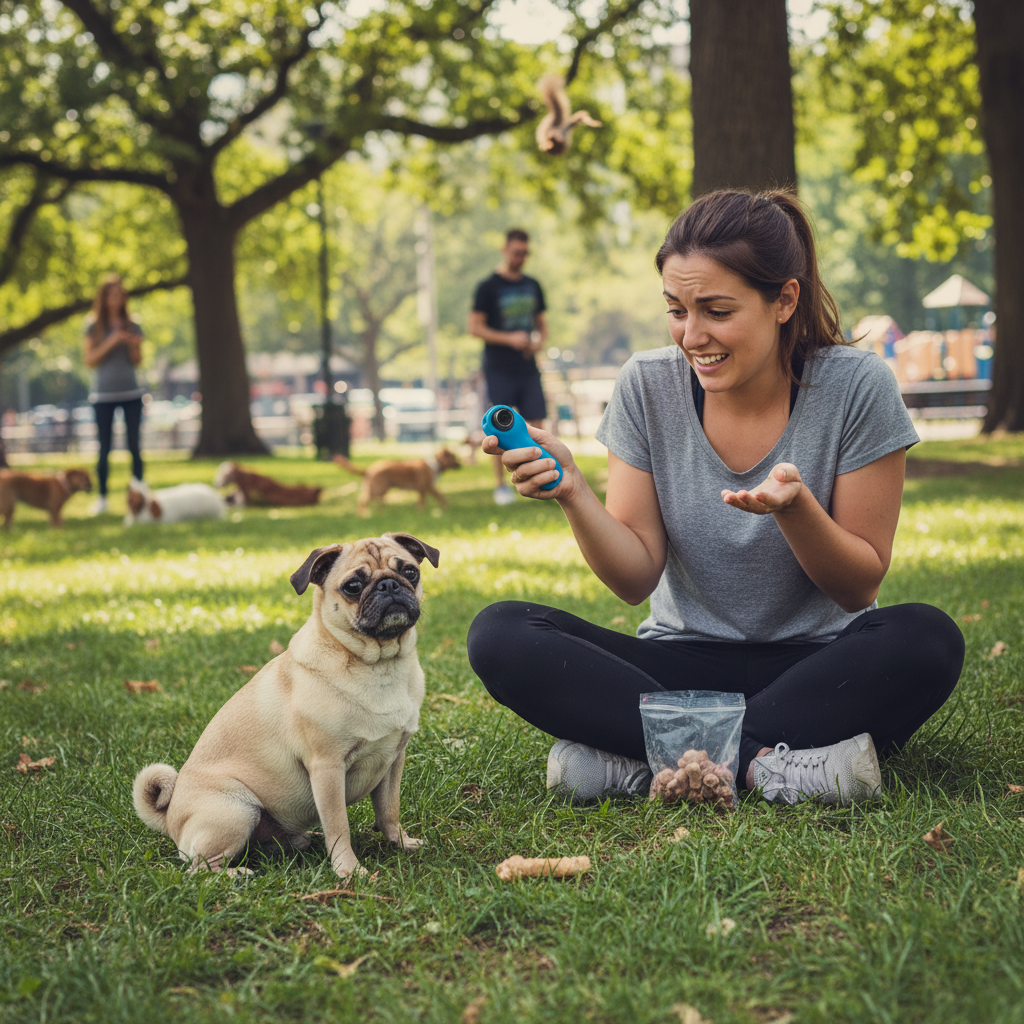
Even with the best plan, you might hit a snag. Don’t worry, it’s totally normal! Here are some common problems and how to fix them.
- ‘My dog is too slow or crawls into the down.’
This usually means the reward isn’t high-value enough or you’re not rewarding the speed. Go back to basics and only click and treat the fastest downs. Make it a fun, energetic game! Sometimes, tossing the treat a little bit away from them after they lie down encourages them to get up and ‘reset’ for the next try with more enthusiasm.
- ‘My dog just stares at me when we’re at a distance.’
You’ve likely increased the distance too quickly. The distance between you and your dog is a form of pressure. Take a few steps closer to a point where they were last successful and work at that distance for a while before trying to move further away again. Every successful repetition builds confidence.
- ‘It works perfectly inside, but falls apart outside.’
This is the classic proofing problem. The world outside is filled with sights, sounds, and smells that are way more interesting than you are! You need to bridge the gap. Practice in your doorway first, then on your porch, then in the quiet driveway. Increase the environmental difficulty in tiny, manageable steps. And remember to use your absolute highest-value treats for outdoor sessions.
- ‘My dog gets up the second they get the treat.’
For an Emergency Down, an immediate pop-up is fine, as the main goal is to stop forward motion. However, if you want to build a little duration, you can delay the click/reward by a single second after they hit the ground. Then gradually extend that time. You can also follow up the ‘DROP!’ with a ‘Stay’ command you’ve taught separately.
Conclusion
Teaching the Emergency Down is an investment in your dog’s safety and your peace of mind. It requires patience, consistency, and a whole lot of delicious treats, but the payoff is immeasurable. This single command acts as a powerful, invisible leash, giving you the ability to protect your dog even when they are out of physical reach. By turning training into a positive and rewarding game, you’re not just teaching a skill; you’re strengthening your bond and building a foundation of trust that will last a lifetime. So start today, keep it fun, and be proud of every small step of progress. You’re giving your best friend one of the greatest gifts possible: the gift of safety.