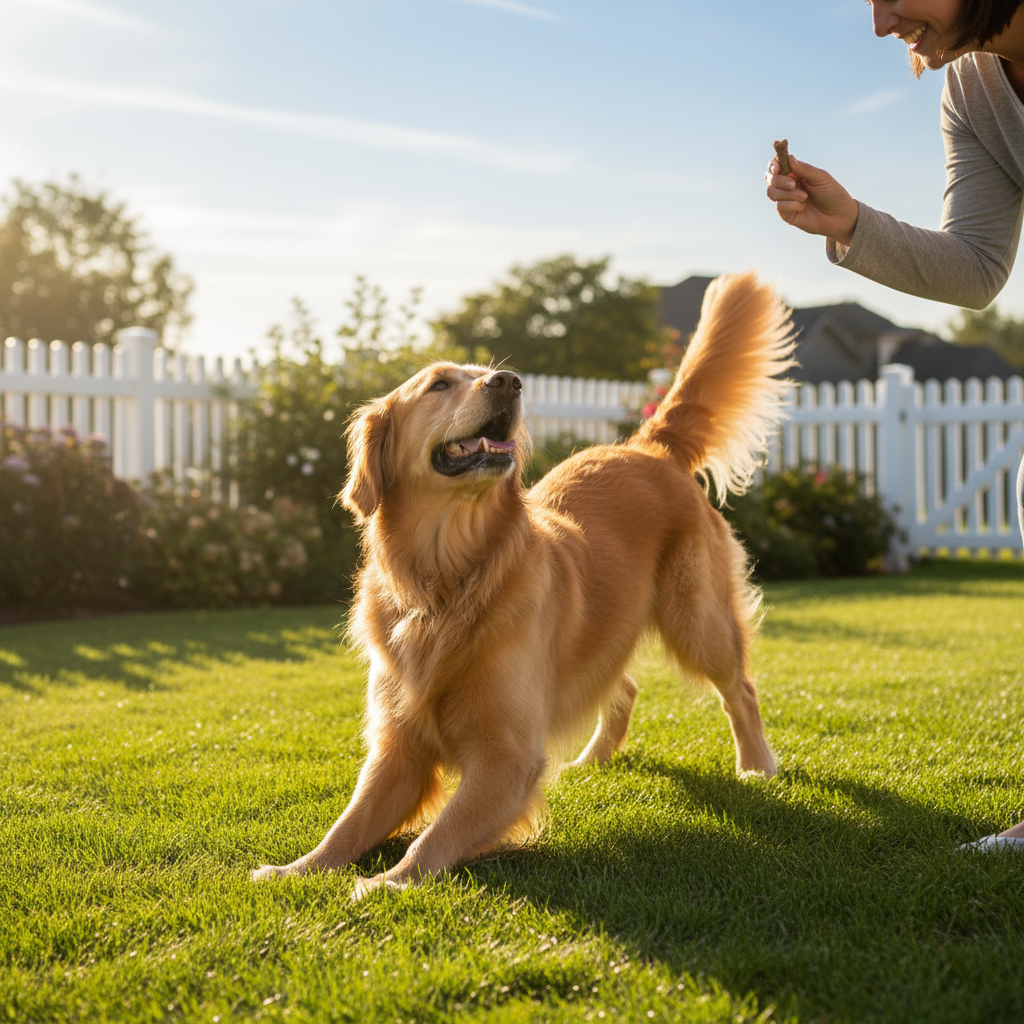
The Cutest Trick Ever: Teach Your Dog to ‘Take a Bow’ in 3 Steps
Have you ever seen a dog perform a trick so charming it made everyone in the room say, ‘Aww!’? The ‘take a bow’ trick is definitely one of those. It’s a real showstopper! Not only is it incredibly cute, but teaching it is also a fantastic way to bond with your furry friend, boost their confidence, and give their brain a great workout. You might think a trick this impressive is complicated, but I’m here to let you in on a little secret: it’s surprisingly simple!
In this guide, we’re going to break down the entire process into three easy-to-follow steps. We’ll be using positive reinforcement, which means lots of treats, praise, and fun. Forget about old-school, rigid training methods. This is all about making learning a joyful game for you and your pup. So, grab some tasty treats, find a comfy spot, and let’s get ready to teach your dog their new favorite party trick!
Before You Begin: Gathering Your Tools and Setting the Scene
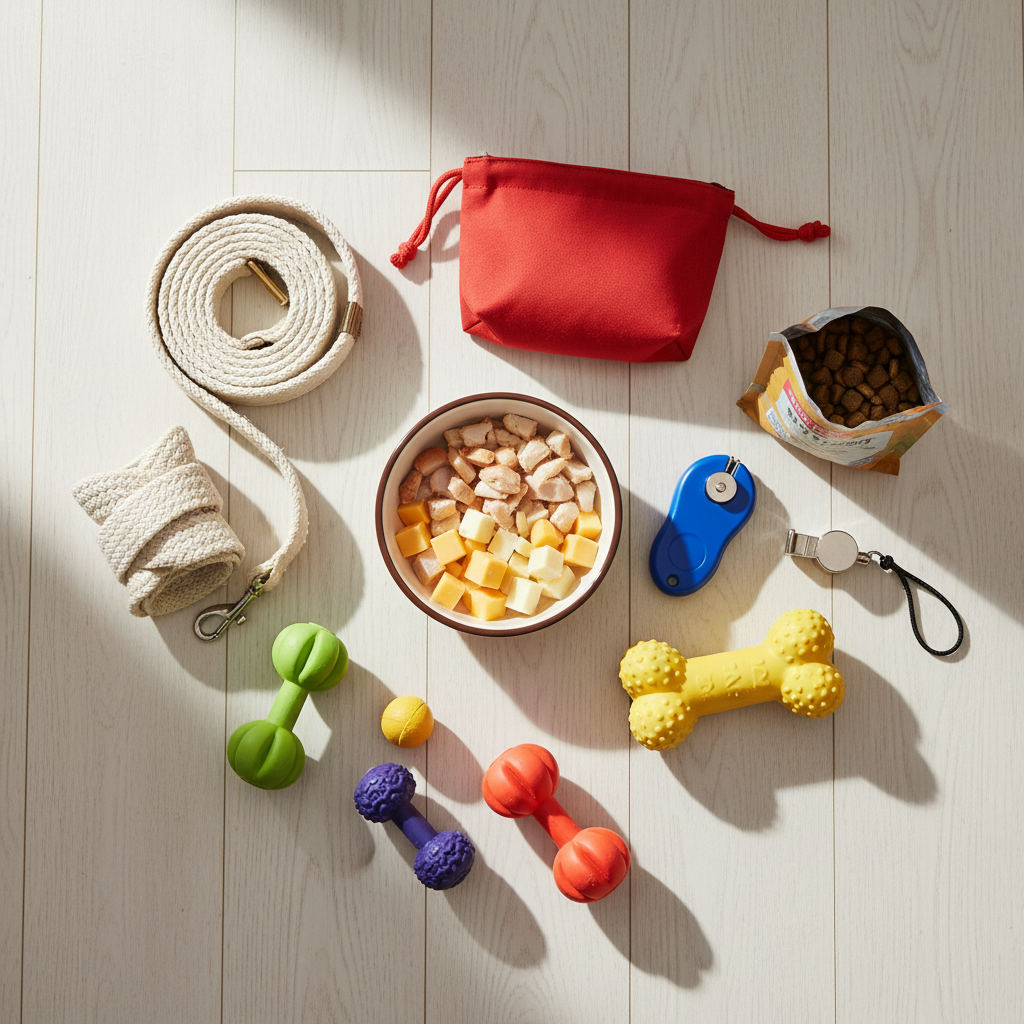
Great things start with a little preparation! Before you jump into training, let’s make sure you have everything you need to create a positive and successful learning environment for your dog. Think of it as setting the stage for a stellar performance.
What You’ll Need:
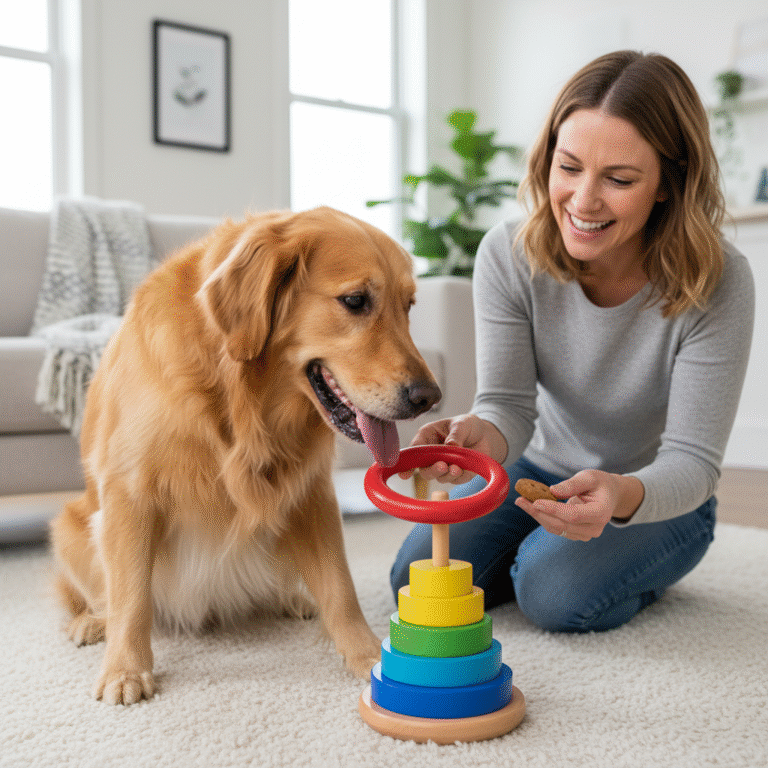
- High-Value Treats: We’re not talking about their regular kibble. You’ll want something extra special that your dog absolutely loves. Think small, soft, and smelly treats like tiny pieces of cheese, cooked chicken, or commercial training treats. The goal is to make them say, ‘Wow, I’ll do anything for that!’
- A Quiet Space: Choose a location with minimal distractions. Your living room or a quiet backyard is perfect. You want your dog’s focus to be on you and the fun game you’re about to play, not the mail carrier walking by or a squirrel outside the window.
- A Positive Attitude: This is the most important tool in your kit! Your dog feeds off your energy. Stay patient, keep it light, and be ready to celebrate the small wins. Remember, this is all about having fun together.
- A Clicker (Optional): If you’re familiar with clicker training, a clicker can be a fantastic tool for precisely marking the moment your dog does the right thing. If not, don’t worry! A simple, happy ‘Yes!’ works just as well.
Finally, keep your training sessions short and sweet, especially at the beginning. Aim for 5-10 minutes once or twice a day. This keeps your dog engaged and excited to learn, rather than feeling overwhelmed or bored. End each session on a high note, even if it’s just with a simple ‘sit’ or ‘down’, to keep their confidence soaring.
The Main Event: Teaching ‘Take a Bow’ in 3 Simple Steps
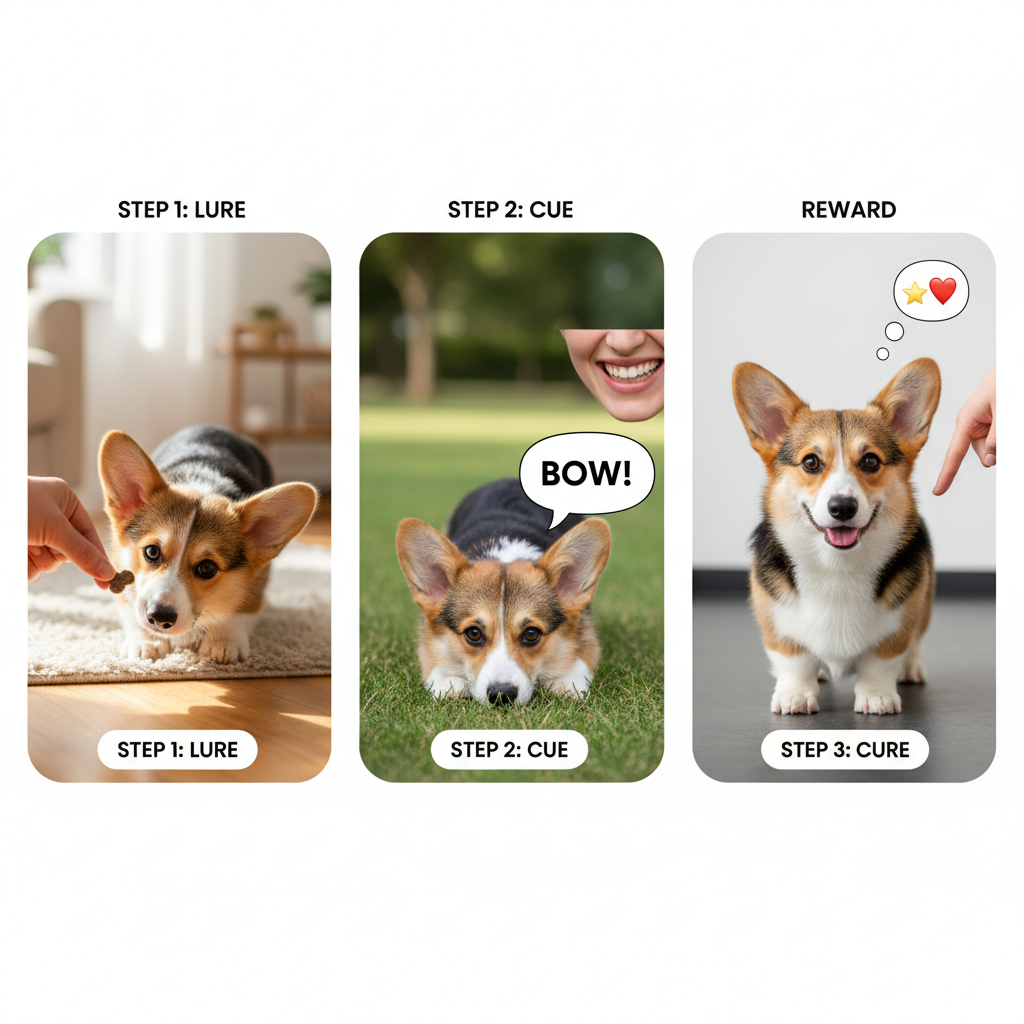
Alright, the stage is set, your treats are ready, and your dog is looking at you with anticipation. It’s time for the main event! We’re going to use a technique called ‘luring,’ which means using a treat to guide your dog into the desired position. It’s intuitive, easy, and most dogs pick it up in no time.
Step 1: Luring the ‘Play Bow’ Position
The ‘bow’ we’re teaching is essentially a dog’s natural play bow. Our first step is to capture that movement. Start with your dog in a standing position.
- Take a yummy treat and hold it right in front of your dog’s nose. Let them have a good sniff so they know you’ve got the goods.
- Slowly lower the treat straight down between their front paws. As their nose follows the treat, their front end will naturally lower.
- The key moment is when their elbows touch the floor while their rear end stays up in the air. The very second this happens, mark the behavior with your enthusiastic ‘Yes!’ or a click, and immediately give them the treat.
Expert Tip: If your dog lies down completely, you’re luring them a bit too far. Try to mark and reward just before their back end starts to drop. It’s all about timing! Repeat this process several times until your dog is confidently following the lure into the bow position.
Step 2: Adding the Verbal Cue
Once your dog is reliably moving into the bow position with the lure, it’s time to give the action a name. This is how your dog will learn to perform the trick on command.
- Choose your verbal cue. It could be ‘Bow,’ ‘Take a Bow,’ or something fun like ‘Curtsey!’ Just be consistent.
- Right before you begin the luring motion with the treat, say your chosen cue clearly and cheerfully. For example: Say ‘Bow!’ and then immediately start lowering the treat.
- When they complete the bow, mark and reward as you did before.
The pattern is now: Cue -> Lure -> Bow -> Mark & Reward. Repetition is your best friend here. Your dog is building an association between the word you’re saying and the action they’re performing.
Step 3: Fading the Lure
The final step is to transition from guiding your dog with a treat to having them perform the trick with just a hand signal or the verbal cue alone. We want them to understand the command, not just follow the food.
- Start by making your lure motion smaller. Instead of guiding their nose all the way to the floor, maybe just move your hand halfway.
- Next, try the same luring motion but without a treat in your hand (but still reward them from your other hand after they succeed!). Your empty hand is now becoming a hand signal.
- Gradually make that hand signal more subtle. Eventually, it might just be a simple point towards the floor.
- Practice using just your verbal cue. Say ‘Bow!’ and wait a second to see if they offer the behavior without the hand signal. If they do, throw a jackpot of treats and praise! If they’re stuck, give them a little help with the hand signal and try again.
With a little practice, your dog will be taking a bow like a true professional on just the verbal command!
Oops! What to Do When Your Pup Gets Puzzled
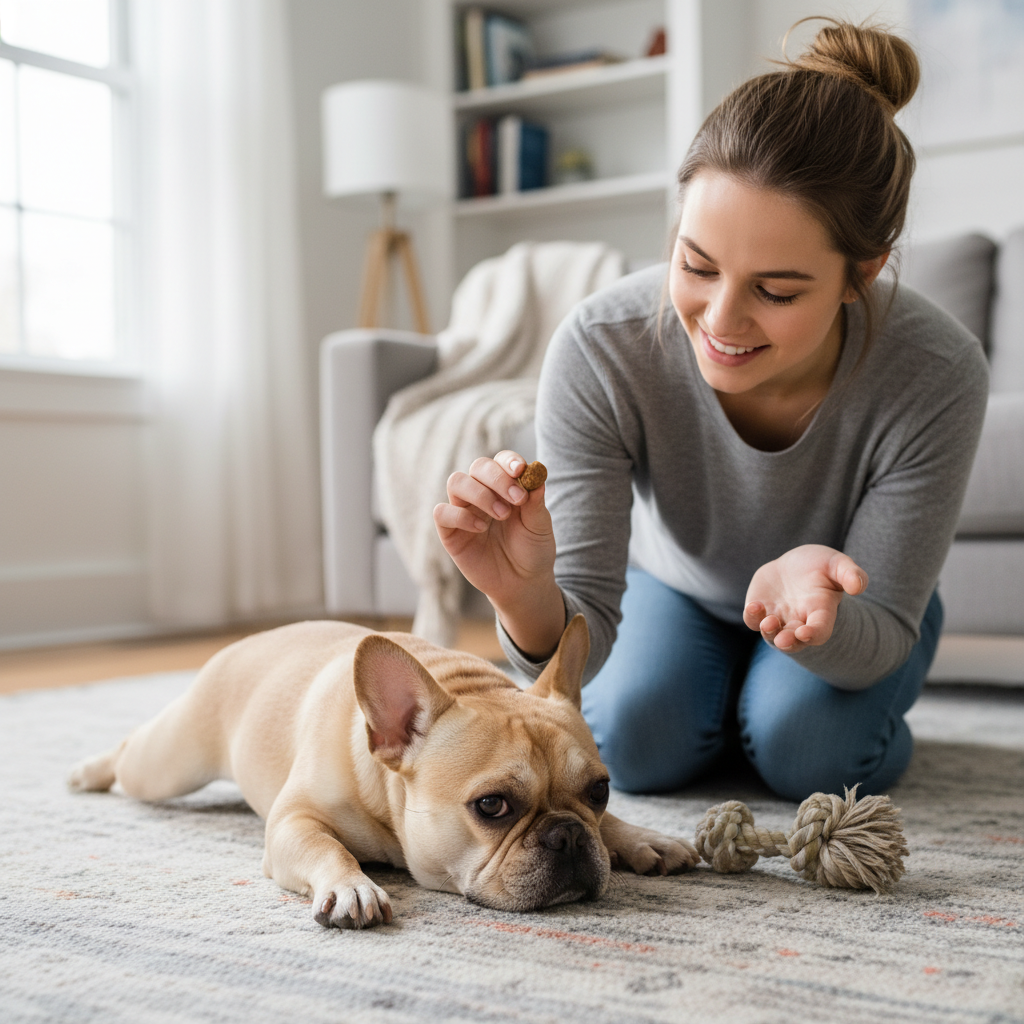
Even with the best instructions, sometimes our furry students get a little confused. Don’t worry, it’s a normal part of the learning process! Here are some common hurdles and how to navigate them with a smile.
- The Problem: My dog just lies all the way down.
This is the most common issue! It usually means the reward is coming a little too late. The Fix: Be quicker with your ‘Yes!’ or click. Mark and reward the instant their elbows hit the floor, before their hips follow. You can also try luring the treat slightly back towards their chest instead of straight down, which helps keep their rear end up. - The Problem: My dog keeps backing up instead of bowing.
Some dogs will back away from the downward pressure of the lure. The Fix: Try practicing with your dog in a space where they can’t easily back up, like in front of a sofa or near a wall. This encourages them to move down instead of back. - The Problem: My dog isn’t interested in the treats.
If the motivation isn’t there, the training won’t happen. The Fix: First, up the ante! Find a treat they truly can’t resist. Second, make sure you’re training when they’re a little hungry, like before a meal, not right after. - The Problem: My dog gets frustrated and walks away.
Frustration is a sign that the session has gone on too long or the step is too difficult. The Fix: Immediately end the session on a positive note. Ask for a simple trick you know they can do, like ‘sit,’ reward them enthusiastically for it, and then call it a day. Next time, come back to an earlier, easier version of the step and keep the session shorter.
Remember, every dog learns at a different pace. The key is to be a patient and encouraging teacher. Your dog isn’t being stubborn; they’re just trying to figure out the puzzle. Your job is to make the puzzle easier to solve!
Conclusion
And there you have it! You are now fully equipped to teach your dog one of the most endearing tricks around. By breaking it down into luring the position, adding a cue, and fading the lure, you’ve created a clear and positive path to success. Remember that the most important ingredients are your patience and your bond with your dog. Every training session, no matter how small the progress, is a chance to connect and have fun together.
So go ahead, show off your dog’s new talent to friends and family, and be prepared for a round of applause (for both of you!). You’ve not only taught a cool trick, but you’ve also enriched your dog’s life and strengthened the amazing relationship you share. Happy training!