The Coolest Trick Ever: Teach Your Dog To Jump Rope
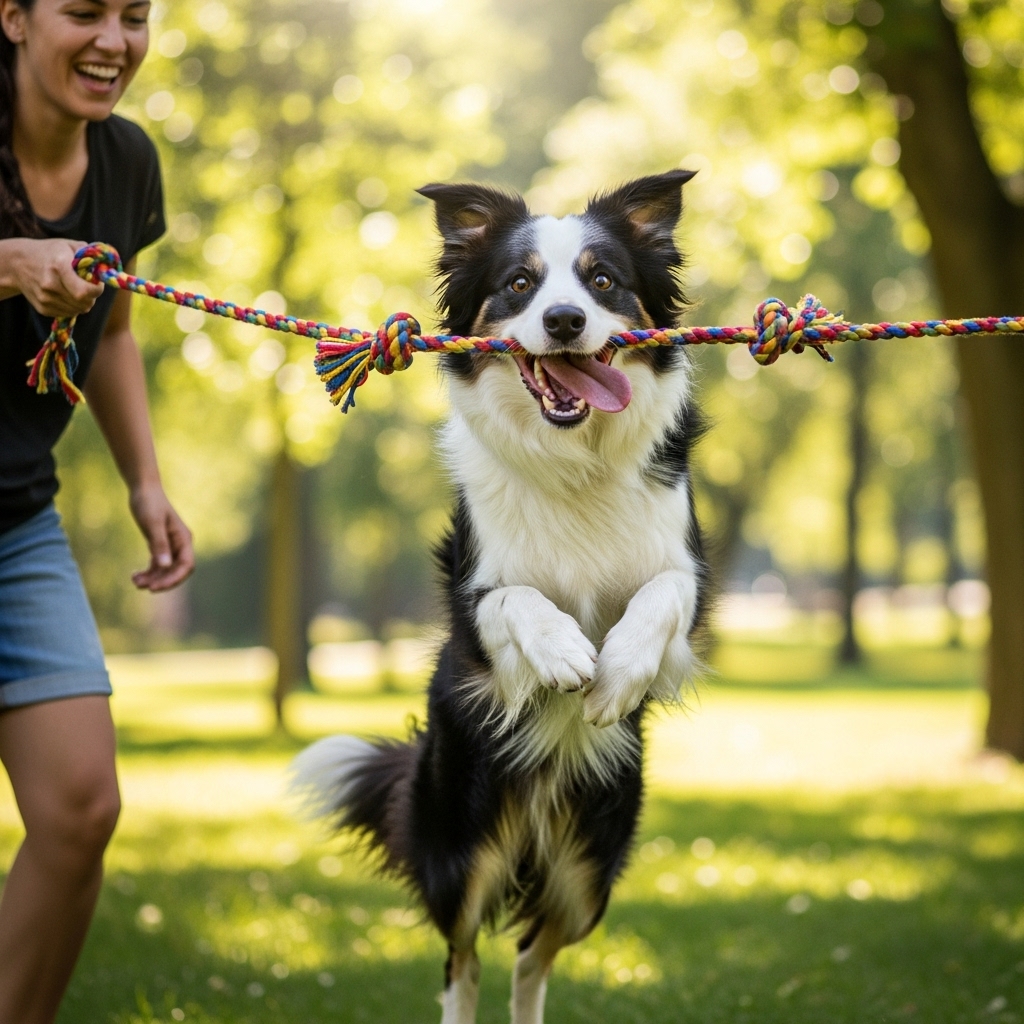
Have you ever seen a dog jump rope and thought, ‘Wow, I wish my dog could do that!’? Well, you’re in luck! Teaching your dog to jump rope isn’t just an amazing party trick; it’s a fantastic way to boost their physical fitness, sharpen their mental skills, and strengthen the bond you share. It might seem like a trick reserved for circus performers, but with a little patience, a lot of treats, and the right technique, you can teach your clever canine this incredible skill. This guide will break down the process into simple, fun, and manageable steps. So, grab a rope and your dog’s favorite snacks, and let’s get ready to jump for joy!
Gearing Up for Success: What You’ll Need
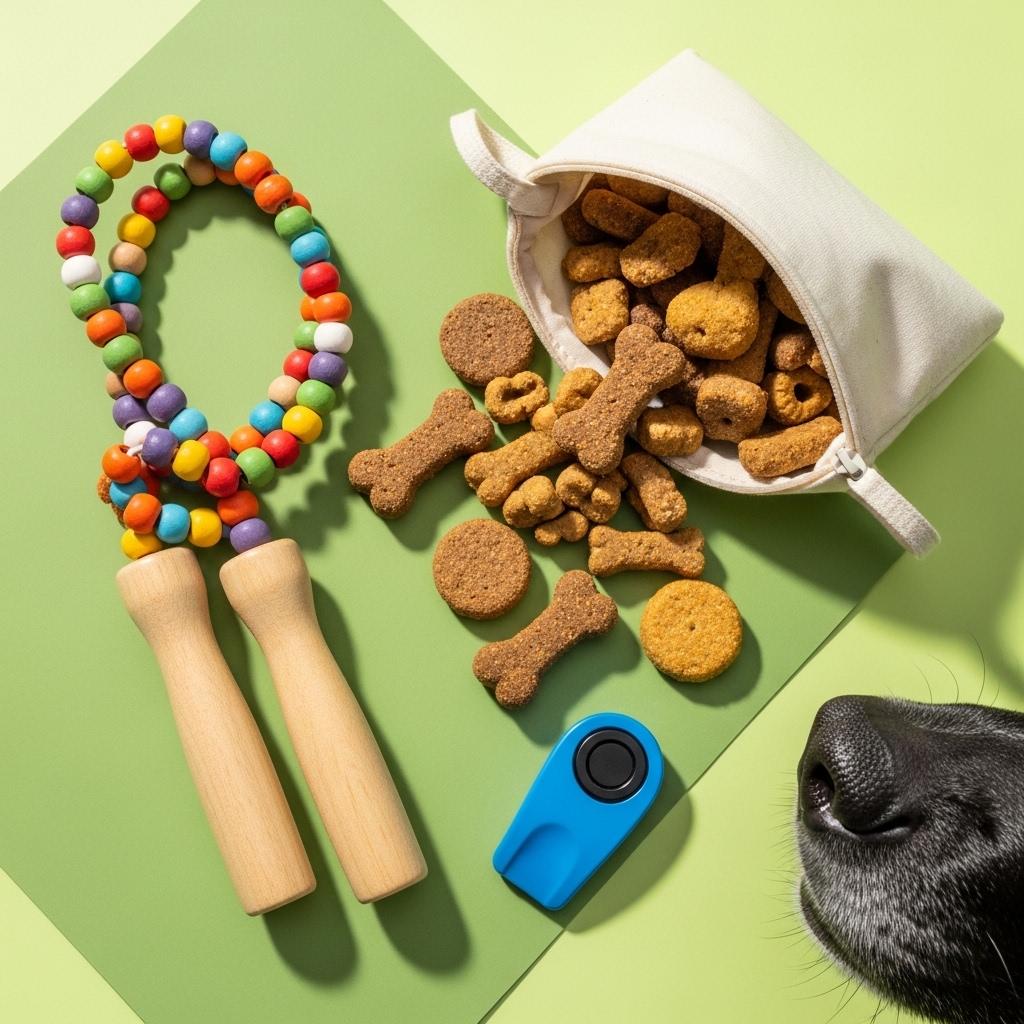
Before you start your jump rope journey, it’s important to gather the right equipment. Having the correct tools on hand will make the training process smoother, safer, and more enjoyable for both you and your furry friend. You don’t need a lot, but the right items make all the difference.
Essential Supplies:
- A Suitable Jump Rope: Don’t just grab any old rope from the garage! You’ll want something lightweight and soft. A beaded or cloth rope is often better than a plastic speed rope, as it’s less likely to sting if it accidentally hits your dog. A child’s jump rope is often a perfect choice. For this trick, you’ll ideally need a longer rope that two people can hold.
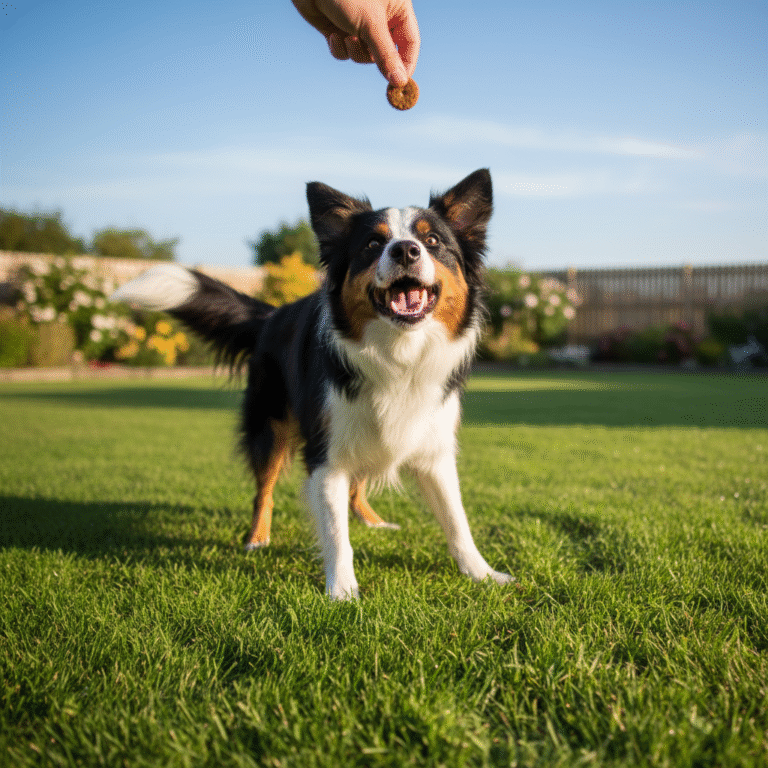
- High-Value Treats: This is a complex trick, so you’ll need to break out the good stuff! Think small, soft, and extra tasty treats that your dog absolutely loves, like tiny pieces of chicken, cheese, or special training treats. The goal is to make the reward so enticing that your dog is motivated to think and try new things.
- A Clicker (Optional): If you’re familiar with clicker training, this is a great time to use it. A clicker helps you mark the exact moment your dog does something right, making your communication crystal clear. If you don’t use a clicker, a consistent marker word like “Yes!” works just as well.
- A Partner: While you can start the basics on your own, teaching the full jump rope swing is much, much easier with a second person to help hold and turn the rope. This allows you to focus on guiding and rewarding your dog.
- A Safe, Distraction-Free Space: Start in a quiet room or a securely fenced yard where your dog can focus. A non-slip surface is crucial for preventing injuries. Avoid training on slippery tile, hardwood, or uneven ground.
Step 1: Making Friends with the Rope
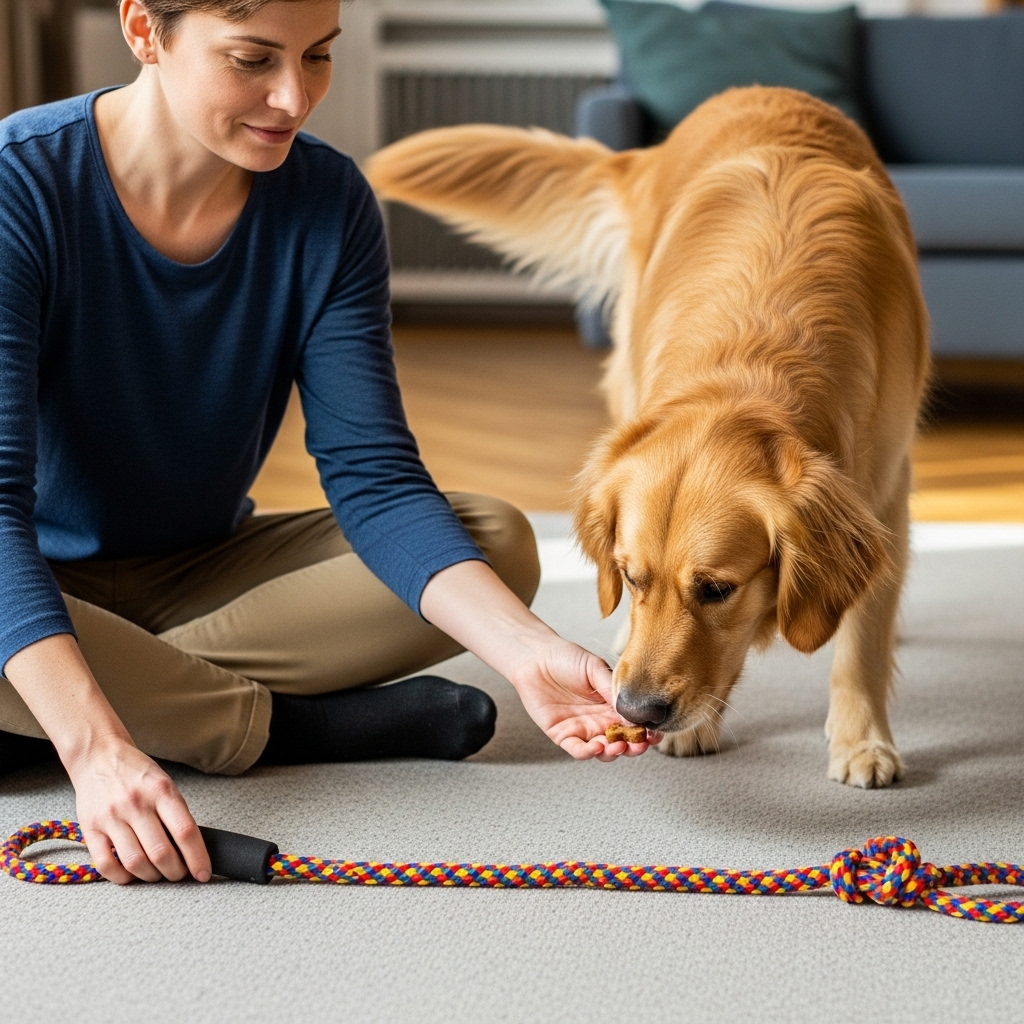
The first and most crucial step is ensuring your dog is completely comfortable with the jump rope. To your dog, this new object might look like a scary snake! Our goal is to create a positive association and show them the rope is nothing to fear—in fact, it’s a predictor of wonderful things (like treats!).
- Introduction: Lay the rope flat on the ground. Let your dog approach and investigate it at their own pace. The moment they sniff, touch, or show any calm curiosity towards the rope, click (or say “Yes!”) and give them a treat. Do this several times until they see the rope and look to you expectantly.
- Crossing the Line: Encourage your dog to walk or step over the stationary rope. You can toss a treat on the other side or use a hand lure to guide them across. Reward every successful crossing with praise and a tasty snack. Keep it fun and pressure-free.
- Adding a Little Wiggle: Once your dog is confidently stepping over the rope, have a partner hold the other end while you hold one. With the rope still on the ground, give it a very gentle wiggle. Reward your dog for staying calm and for stepping over the slightly moving rope. If they get nervous, stop the movement and go back to the previous step. The key is to build their confidence slowly.
Expert Tip: Keep these initial sessions short and sweet—just 5-10 minutes at a time. Ending on a positive note will make your dog excited for the next training session.
Step 2: From a Step to a Hop
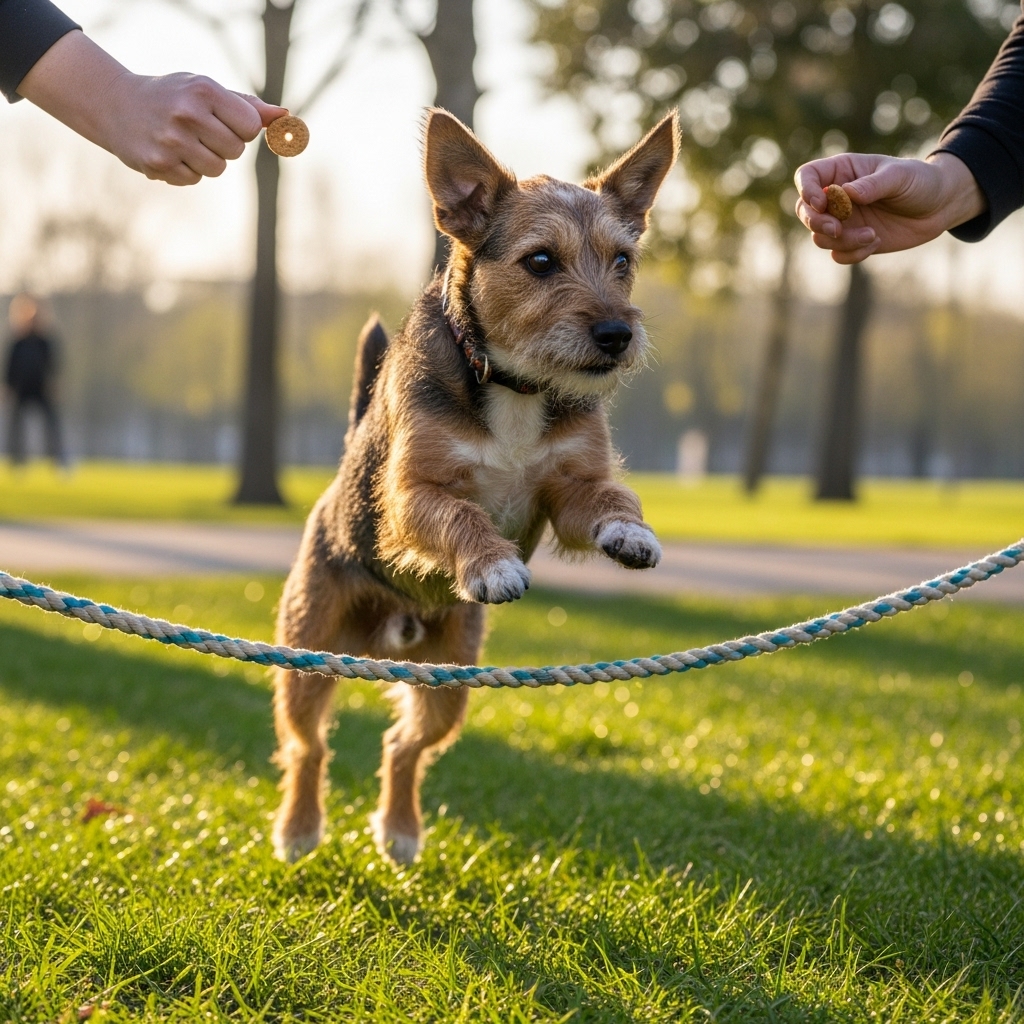
Now that the rope is a familiar friend, it’s time to introduce the concept of going ‘over’ it. We’ll transition from a simple step-over to a small hop, which is the foundation of the final jump. This is where your timing as a trainer really starts to come into play.
- The Tiny Hurdle: With your partner, hold the rope so it’s lifted just an inch or two off the ground. Make sure it’s held loosely, so it will drop if your dog bumps into it.
- Lure and Reward: Use a treat to lure your dog over the slightly raised rope. At this height, they will likely just step over it, but some dogs might give a tiny hop. Whatever they do, as long as they cross it, reward them enthusiastically!
- Encouraging the Hop: Gradually raise the rope inch by inch over several training sessions. As it gets higher (no more than shin-high for your dog), they will naturally have to switch from a step to a small hop to clear it. The moment they perform that first little hop, have a jackpot reward ready—several treats at once and lots of praise!
- Adding a Cue: Once your dog is reliably hopping over the stationary rope, you can add a verbal cue. Say your chosen word, like “Jump!” or “Hop!”, right as they are about to take off. Soon, they will associate the word with the action.
Step 3: The Grand Finale – Timing the Swing!
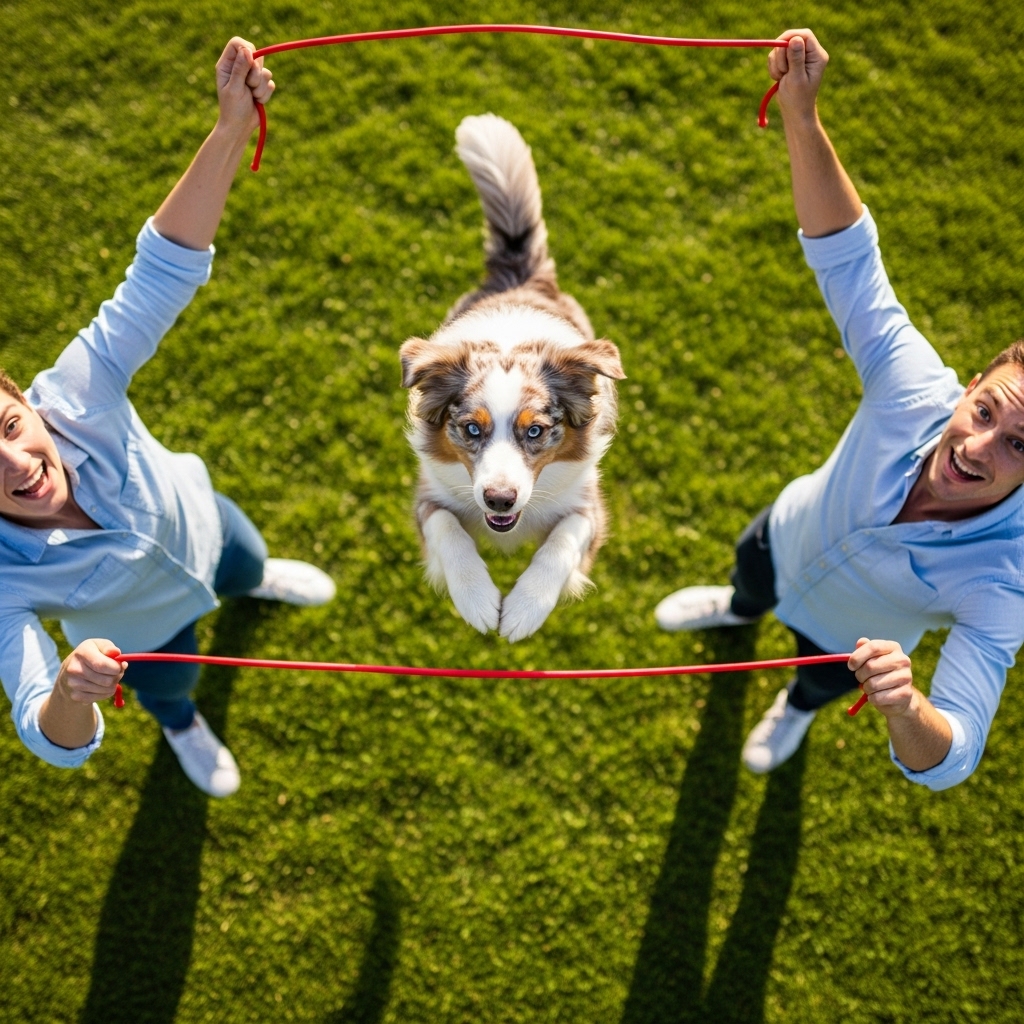
This is the most challenging, but also the most rewarding, part of the trick. Combining the hop with a moving rope requires excellent timing from everyone involved. Patience is your best friend here! Remember to keep it lighthearted and fun.
- The Slow Swing: Start with you and your partner swinging the rope very slowly in a full circle. For now, don’t even ask your dog to jump. Just swing the rope and reward your dog for staying calm and watching. Let them get used to the motion.
- The Approach: With the rope swinging slowly, use your lure to encourage your dog to approach the center. Your goal is to get them comfortable standing between you and your partner while the rope is in motion.
- Timing the Jump (The Hard Part!): This is where it all comes together. As the rope is coming around and is about to touch the ground in front of your dog, say your “Jump!” cue. Your dog should perform the hop they’ve already learned. Ideally, the rope will pass right under their feet as they are in the air.
- Celebrate Everything!: This will take many attempts. At first, reward any effort. Did they hop even if the timing was off? Treat! Did they stay in place as the rope passed over their head? Treat! Gradually, you’ll only reward the successful, timed jumps. With practice, your dog will learn to anticipate the rope and time their own jumps.
Troubleshooting and Keeping it Fun
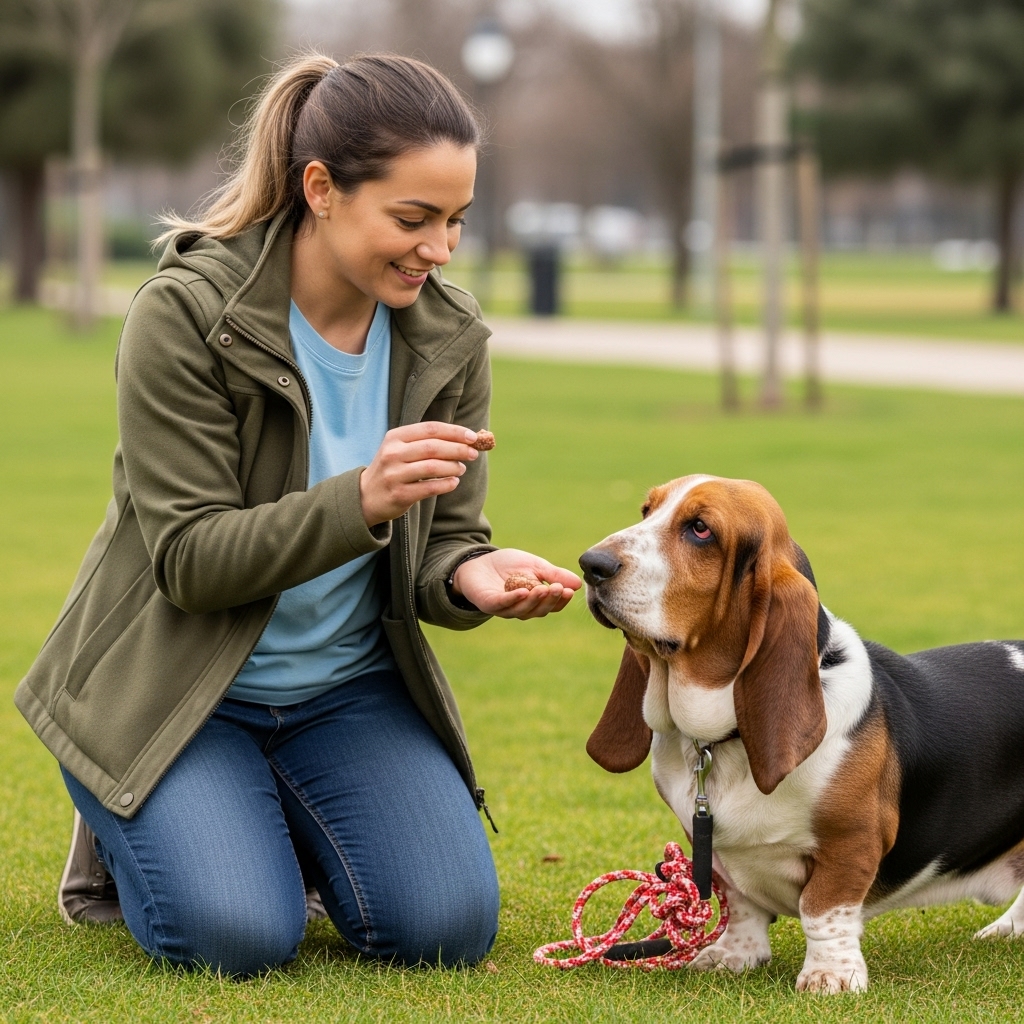
Even with the best plan, you might run into a few snags. That’s completely normal in dog training! The most important thing is to stay positive and not get frustrated. Here are some common issues and how to solve them.
- My dog is scared of the moving rope.
If the swing is too much, go back to basics. Stop all movement and just reward your dog for being near the stationary rope again. Re-introduce the ‘wiggle on the ground’ game until their confidence is back up. The fear means you’ve moved a little too fast. - My dog just runs under the rope.
This often happens when the rope is held too high. Lower it so it’s easier and more inviting to jump over. You can also have your partner provide a gentle physical block on the other side to prevent them from running through. - My dog keeps hitting the rope.
This is usually a timing issue. Try swinging the rope even slower to give your dog more time to process. Also, ensure you’re giving the “Jump!” cue at the right moment—just before the rope reaches their feet. - My dog seems bored or frustrated.
This is a clear sign to end the session. Always end on a high note, even if it means asking for a simple ‘sit’ and rewarding that. Keep sessions short (5-10 minutes) to maintain enthusiasm. You can always try again later or the next day. This trick is a marathon, not a sprint!
Conclusion
Congratulations! You now have all the steps to teach your dog one of the coolest tricks around. Remember that the real prize isn’t just the finished trick, but the time you spend working together, communicating, and building a stronger relationship. Every dog learns at a different pace, so celebrate the small victories along the way—the first step-over, the first tiny hop, and the first successful jump. Be patient, stay positive, and most importantly, have fun with your amazing canine companion. Now go on and get jumping!