The ‘All Done’ Button: How To End Playtime Without Meltdowns
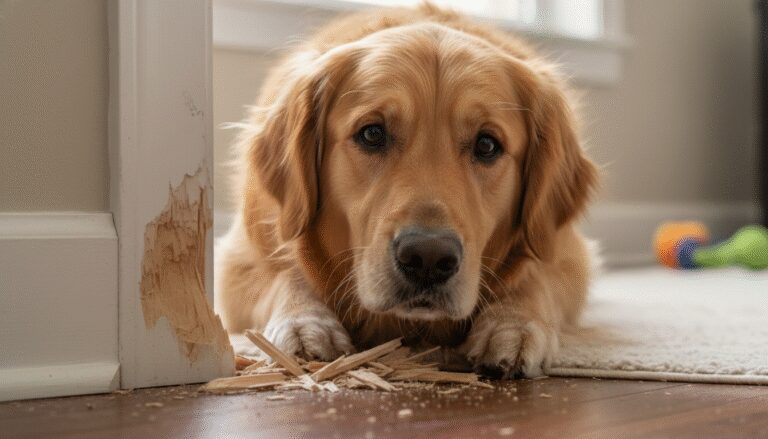
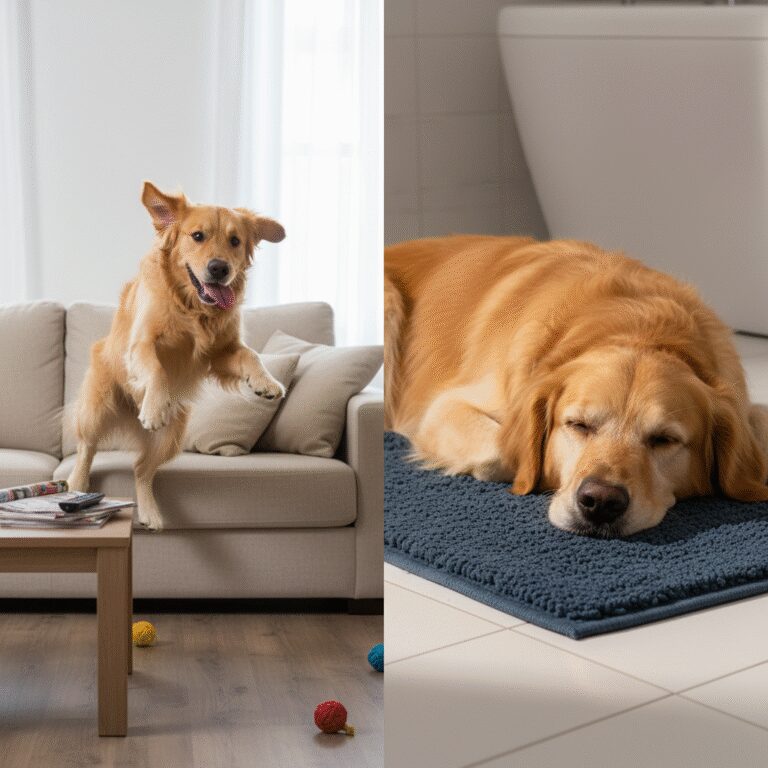
Playtime is an essential component of a dog’s life, providing necessary physical exercise, mental stimulation, and bonding opportunities between pet and owner. However, for many dog owners, the conclusion of a play session can be fraught with difficulty. It is not uncommon for dogs, particularly puppies and high-drive breeds, to struggle with the transition from high arousal to rest. This often manifests as the ‘zoomies,’ nipping, barking, or destructive behavior—a phenomenon frequently referred to as an arousal biting or a meltdown.
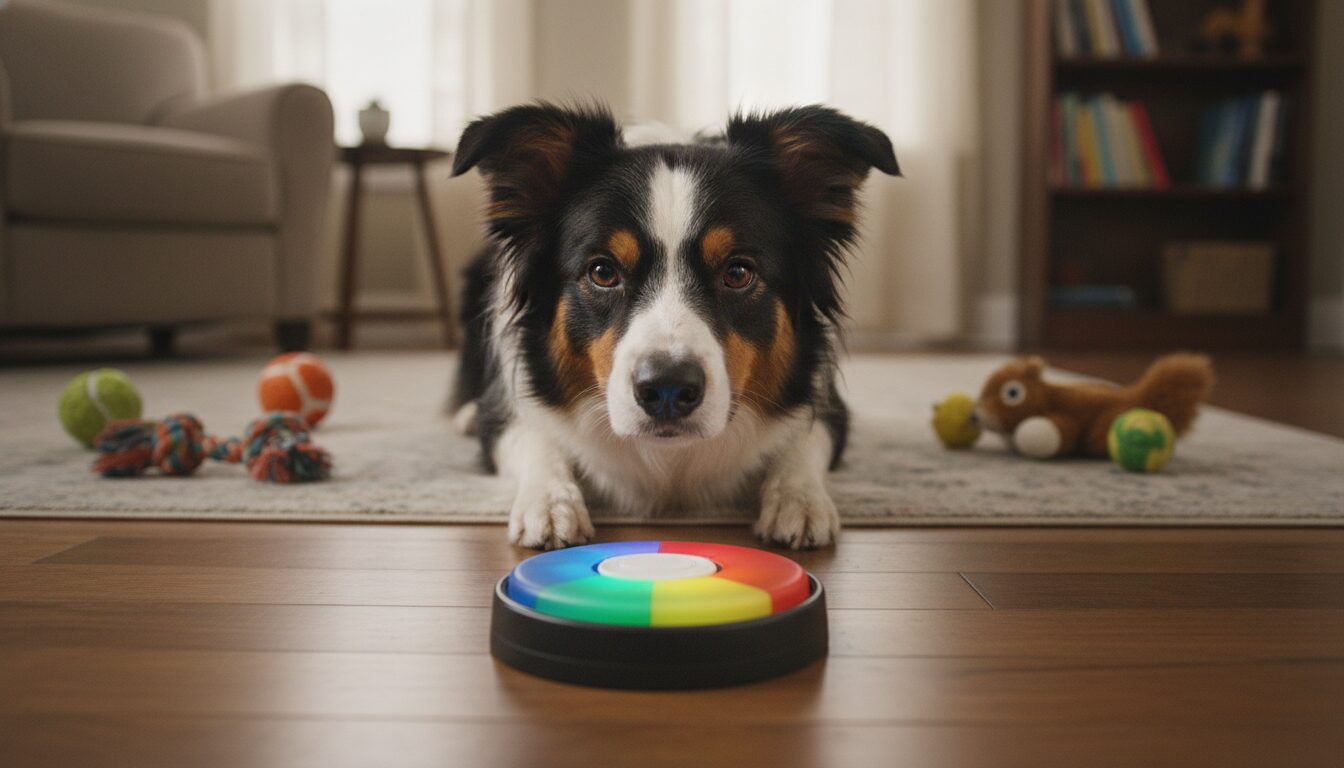
The root of this issue often lies in a lack of clear communication. Dogs thrive on predictability. When a fun activity ends abruptly without a signal, it can lead to frustration or confusion. Enter the concept of the ‘All Done’ button. Whether utilizing a physical recordable button (popularized by the AAC or Augmentative and Alternative Communication movement for pets) or a distinct verbal and visual cue, the objective remains the same: to provide a clear, consistent signal that high-energy interaction has ceased and a period of calm has begun.
In this comprehensive guide, we will explore the behavioral science behind transition cues, the tools required to implement them, and a step-by-step protocol to teach your canine companion that ‘All Done’ is not a punishment, but a cue for a rewarding decompression activity.
The Psychology of Transition: Why Meltdowns Happen
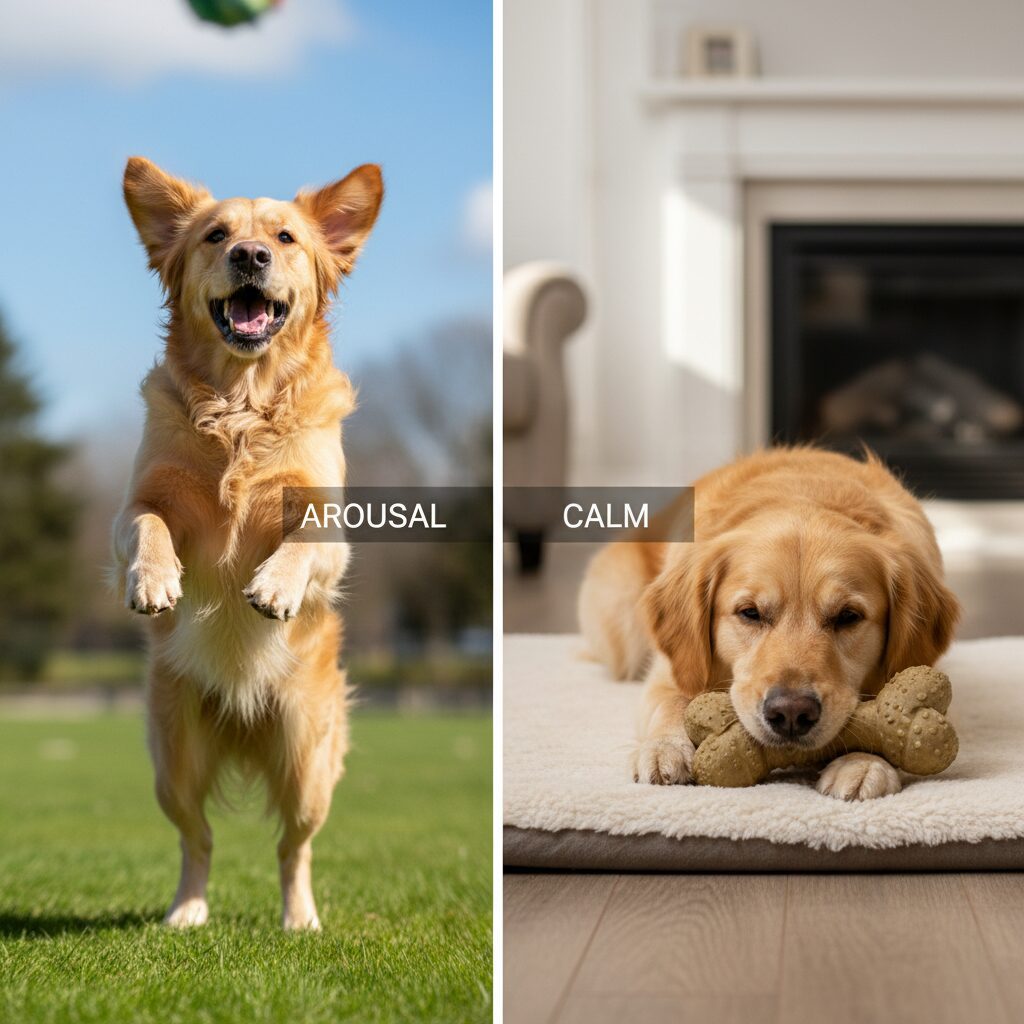
To effectively implement the ‘All Done’ button, one must first understand the canine arousal curve. During fetch, tug, or roughhousing, a dog’s cortisol and adrenaline levels spike. This is a physiological response that prepares the body for action. When you decide playtime is over, your dog’s physiology does not instantly return to baseline. Their brain is still in ‘go’ mode, even if you have put the toy away.
Without a bridge to help them come down from this chemical high, dogs often exhibit displacement behaviors. A toddler might throw a tantrum when tired; similarly, a dog may nip at your ankles or tear at the carpet. This is rarely aggression; it is an inability to self-regulate.
The ‘All Done’ button serves as a conditioned reinforcer and a discriminative stimulus. It explicitly tells the dog, "The reinforcement available for chasing/biting/running is no longer available, but reinforcement for calming down is now available." By making the end of play predictable, we reduce the frustration that leads to behavioral meltdowns.
Tools for Success: Setting the Stage
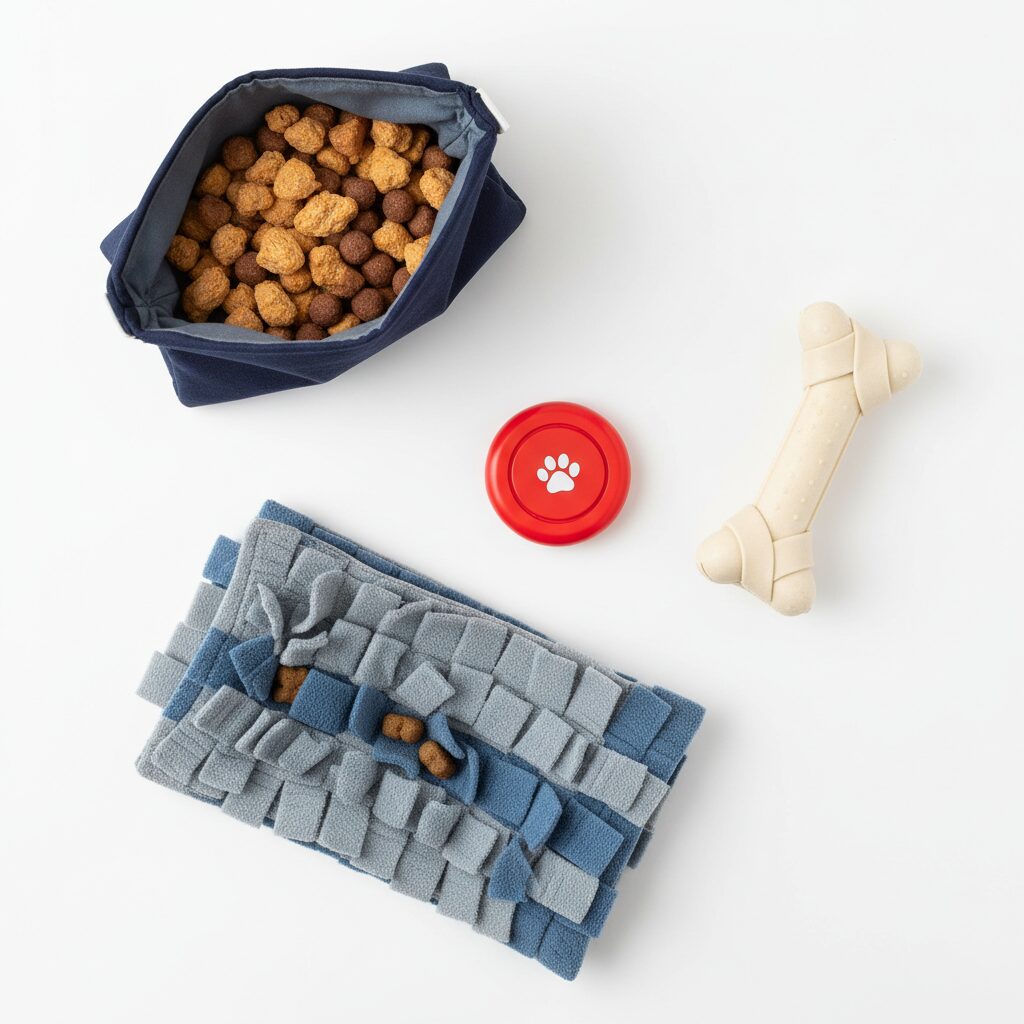
Before initiating training, gather the necessary tools to ensure a smooth learning process. The goal is to set the dog up for success by managing the environment.
- The Signal: A recordable button is excellent because it provides a consistent auditory sound that is distinct from your voice, which might vary in tone. If you do not have a button, choose a specific hand signal (e.g., wiping hands together) paired with a distinct verbal cue like "All Done."
- High-Value Rewards: You are asking your dog to stop doing something fun. The payment for this must be substantial. Use high-value treats like freeze-dried liver, cheese, or boiled chicken.
- Decompression Tool: The ‘All Done’ signal should not mean the end of fun, but a switch in the type of fun. Have a snuffle mat, a scatter of food, or a long-lasting chew ready. Licking and sniffing are naturally soothing behaviors that lower heart rate and arousal.
Step-by-Step: Teaching the ‘All Done’ Protocol
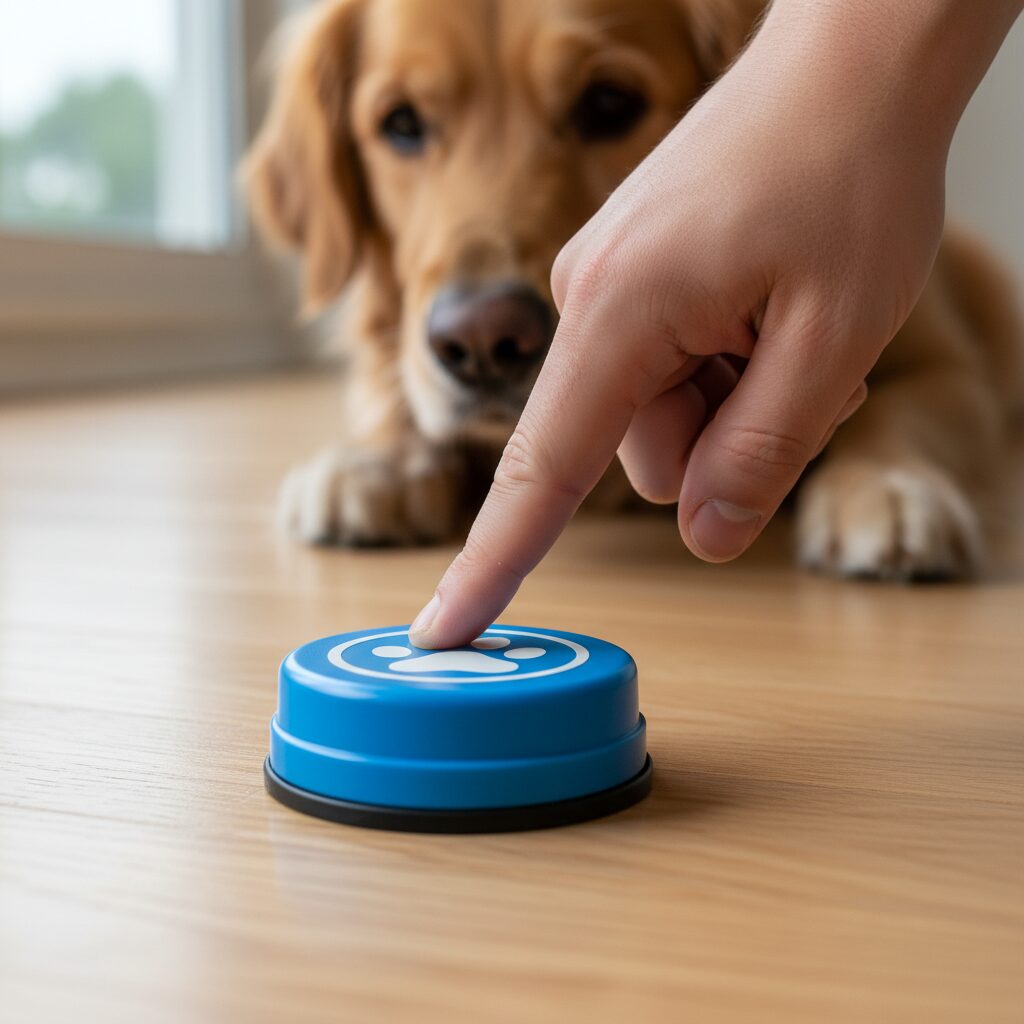
Training this behavior requires consistency. Do not attempt to use the button during a full-blown case of the zoomies initially; teach the concept when the dog is calm or only moderately aroused.
Phase 1: Charging the Button
First, the dog must learn that the sound of the button predicts a scatter feed. Do not combine this with play yet.
- Step 1: Press the button (or give your verbal cue).
- Step 2: Immediately toss a handful of treats on the floor (a scatter feed).
- Step 3: Repeat this 10-20 times over several short sessions until the dog immediately looks for treats upon hearing the button.
Phase 2: Low-Arousal Practice
Now, introduce the cue during low-intensity activity.
- Step 1: Engage in gentle interaction, such as petting or slow training.
- Step 2: Press the ‘All Done’ button.
- Step 3: Immediately deliver the scatter feed or present a snuffle mat.
- Step 4: Remove your attention and walk away while the dog is engaged with the food. This teaches that the button signals the owner’s disengagement.
Phase 3: Application During Play
Once the association is strong, apply it to playtime.
- Step 1: Play for a short duration. Do not wait until the dog is overtired.
- Step 2: Press the ‘All Done’ button firmly.
- Step 3: Immediately drop the toy and scatter the treats or provide the chew.
- Step 4: While the dog is sniffing (decompressing), put the toy away out of sight.
The Decompression Ritual: What Comes After the Button
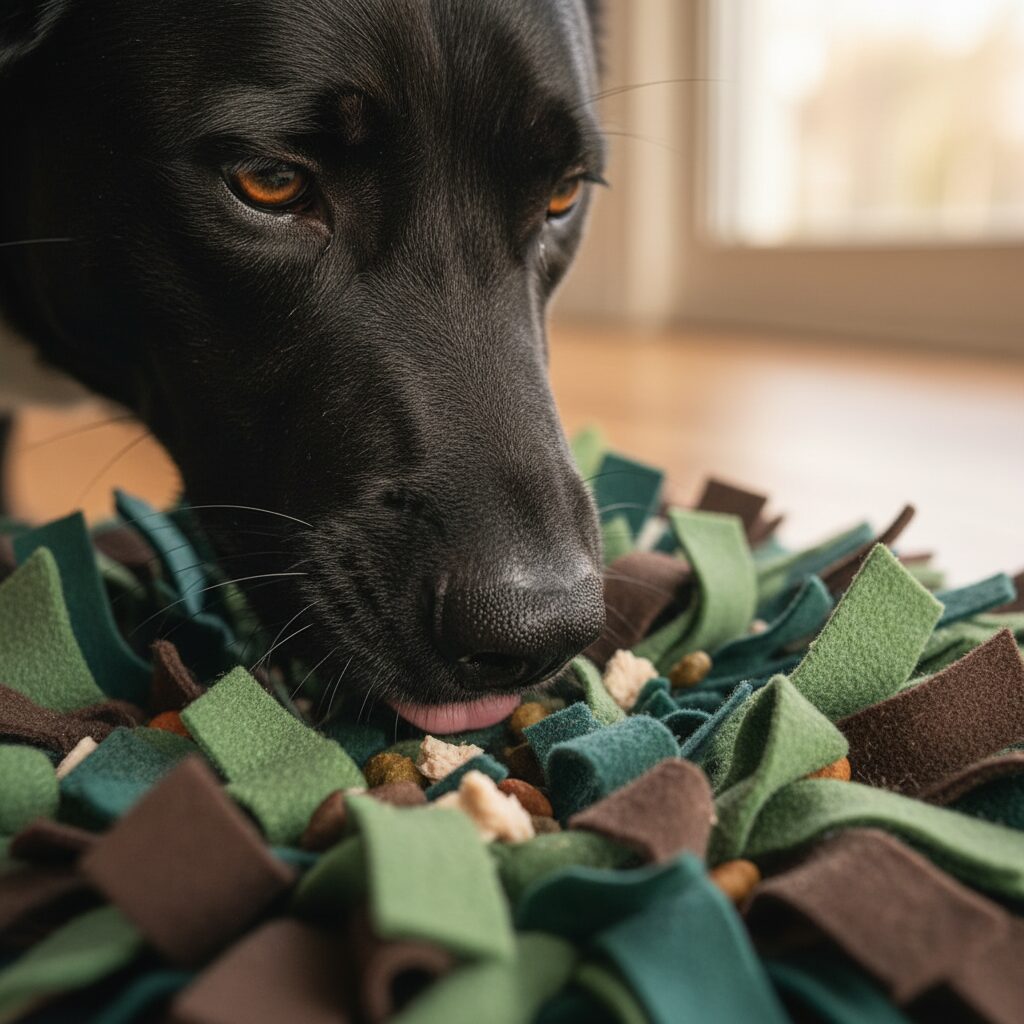
The success of the ‘All Done’ button hinges entirely on what happens immediately after the button is pressed. If you press the button and simply ignore the dog, they will likely continue to pester you because their energy has nowhere to go. You must redirect that energy.
Why Scatter Feeding Works: When a dog engages their olfactory system (sense of smell) to hunt for food on the ground, it encourages them to lower their head. Physically lowering the head and sniffing has a calming effect on the canine nervous system. It shifts the brain from a reactive state to a focused, thinking state.
Create a routine: Button Press → Scatter Feed/Chew → Human sits down or leaves the room. This routine creates a clear boundary that the dog can understand and respect.
Troubleshooting Common Resistance
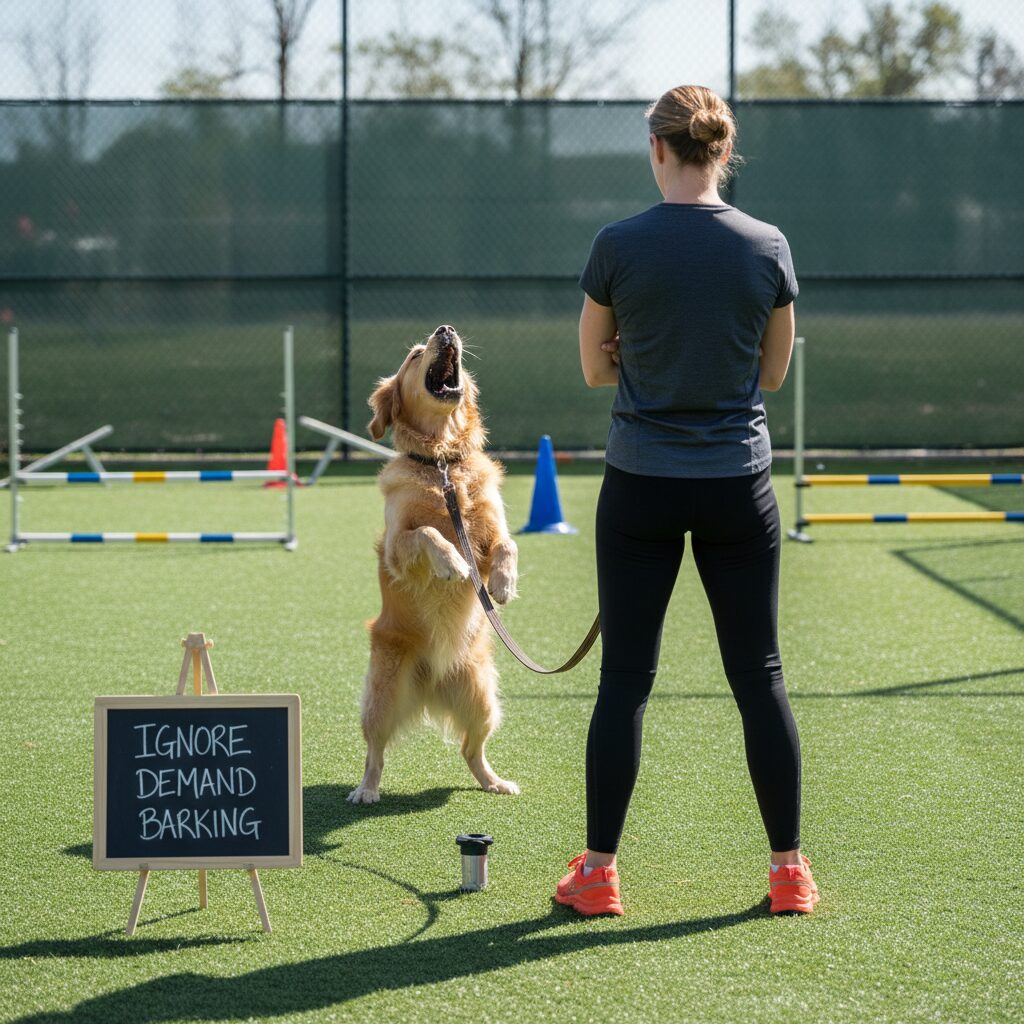
Even with proper training, you may encounter resistance, particularly an ‘extinction burst’—where the behavior gets worse before it gets better.
- The Dog Keeps Barking/Nipping: If you have pressed the button and provided the decompression activity, but the dog ignores it and demands more play, you must be boring. Cross your arms, look at the ceiling, or calmly leave the room (a reverse time-out). Do not say "No," do not push the dog away, and do not make eye contact. Any attention, even negative, can reinforce the demand behavior.
- The Dog is Too Aroused to Eat: If your dog ignores the treats, you likely waited too long to end the session. The dog has crossed the threshold into overstimulation. Next time, end the play session 5 minutes earlier.
- Inconsistency: If you press ‘All Done’ but then throw the ball one more time because the dog looked cute, you have devalued the cue. ‘All Done’ must be absolute.
Final Thoughts: Consistency Creates Calm
Implementing the ‘All Done’ button is more than a party trick; it is a fundamental communication tool that respects your dog’s emotional needs. By providing a clear signal that transitions the dog from high arousal to a soothing activity, you eliminate the confusion that leads to meltdowns and biting. Remember, behavior modification is a marathon, not a sprint. It may take several weeks for your dog to fully generalize this concept. However, the result—a dog that can switch from ‘party mode’ to ‘nap mode’ on cue—is well worth the effort. Be clear, be consistent, and always follow the ‘All Done’ cue with a rewarding decompression ritual.