Stop Your Dog Attacking Drones: 3 Step Desensitization Guide
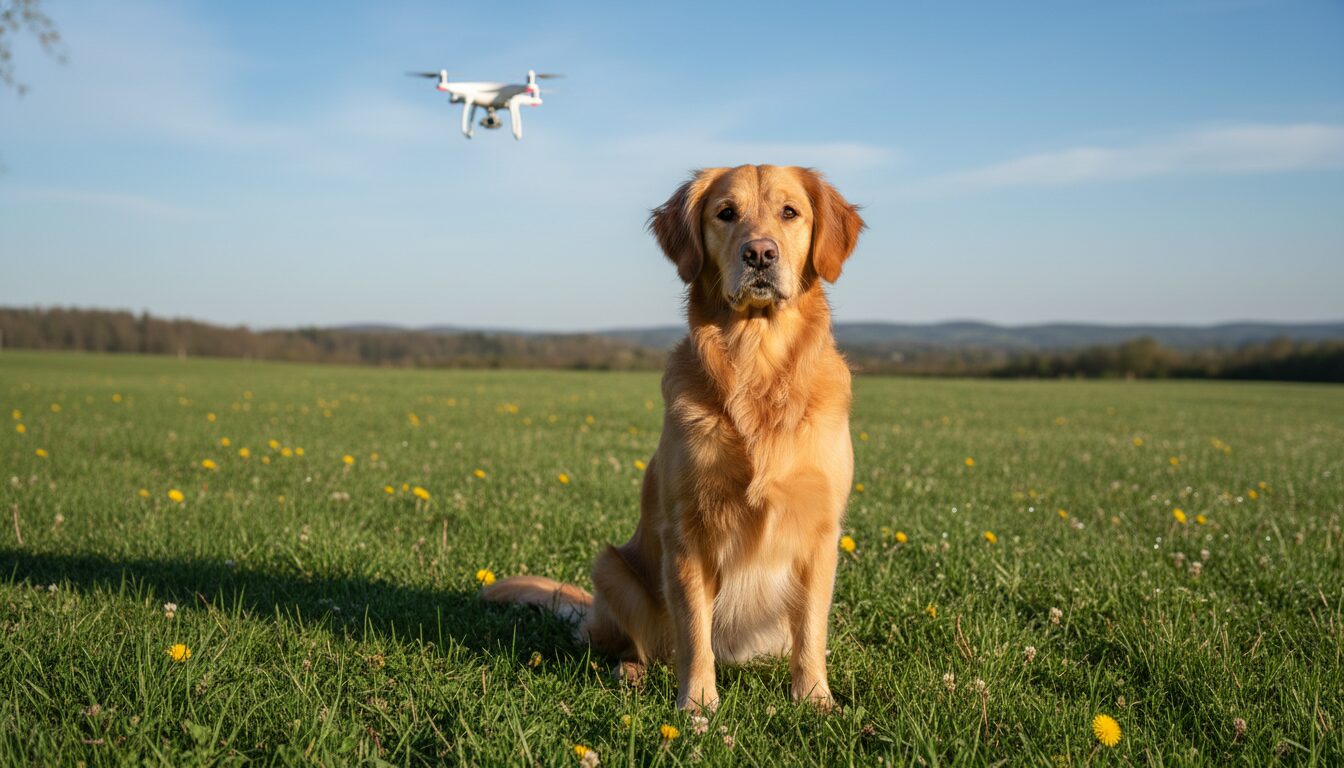
As recreational drones become increasingly ubiquitous in parks and neighborhoods, a new behavioral challenge has emerged for canine owners: drone aggression. For many dogs, the high-pitched whine of the rotors combined with the erratic, insect-like movement of the device triggers an intense prey drive or a fear-based defensive reaction. This is not merely a nuisance; it presents a significant safety hazard. Drone propellers spin at high velocities and can cause severe lacerations to a dog’s snout, eyes, or paws if they successfully catch their target. Furthermore, the ingestion of plastic or battery components following a ‘kill’ poses a serious medical emergency.
Addressing this behavior requires a structured approach rooted in behavioral science. We cannot simply scold the instinct away; we must change the dog’s emotional and cognitive response to the stimulus. This process is known as desensitization and counter-conditioning. By altering how your dog perceives the flying object—transforming it from a threat or prey item into a neutral background event—we can ensure the safety of your pet and the expensive equipment flying overhead.
In this guide, we will outline a professional, three-step protocol designed to stop your dog from attacking drones. We will cover the necessary preparation, the execution of the training steps, and how to manage setbacks safely.
Understanding the Trigger: Prey Drive vs. Fear
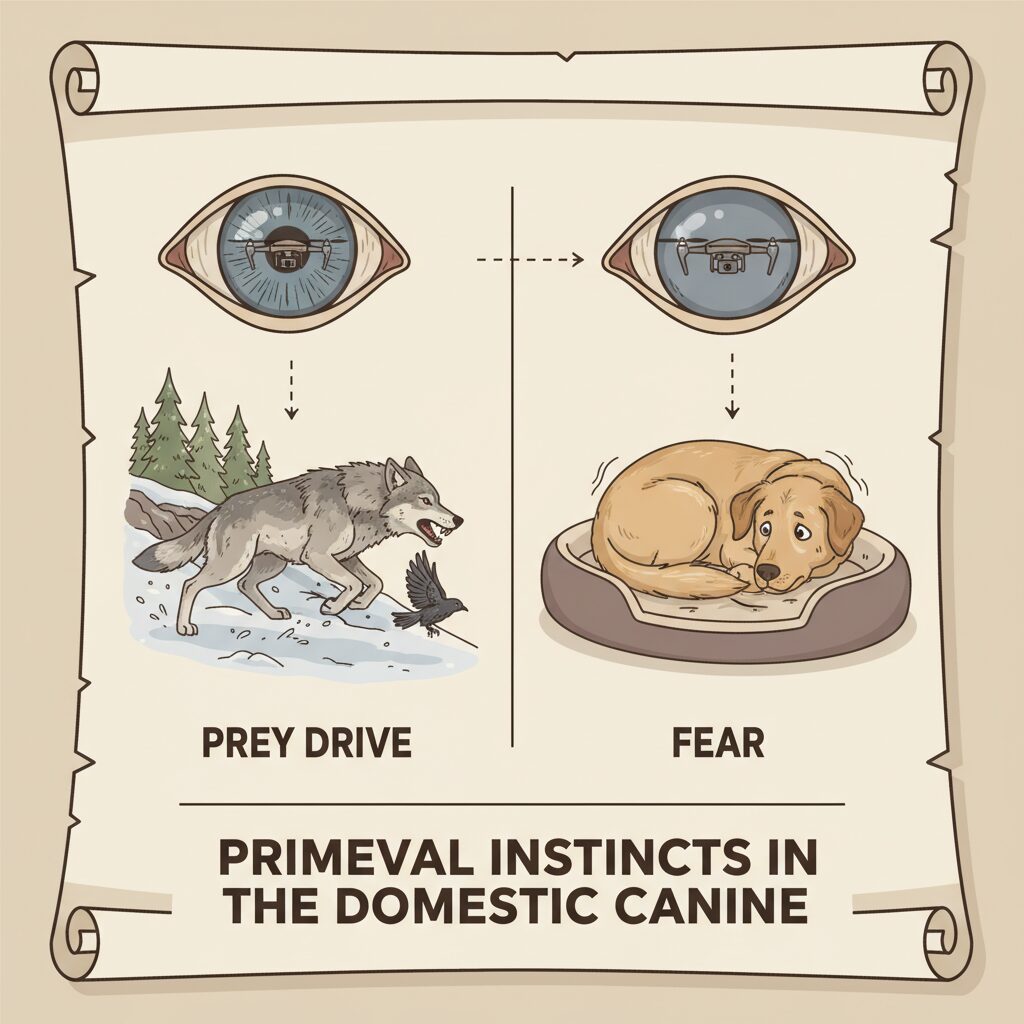
Before initiating a training regimen, it is crucial to diagnose the root cause of your dog’s reaction. Most drone-reactive dogs fall into one of two categories: high prey drive or fear aggression. Understanding which category your dog belongs to will help you tailor your timing and reinforcement strategies.
The Prey Drive Response
For breeds with high prey drives—such as Border Collies, Terriers, and Sighthounds—a drone mimics the behavior of a bird or a large insect. The sound of the motors often resembles the buzzing of a hive, and the sudden, jerky movements trigger a predatory sequence: eye-stalk, chase, grab-bite. These dogs often appear excited, with ears pricked forward, tails high, and a fixation that is difficult to break. They want to catch the object.
The Fear Response
Conversely, some dogs perceive the drone as a threatening, unnatural predator. The noise can be confusing and intimidating. These dogs may bark incessantly but back away, or they may lunge defensively to drive the object away. Their body language will likely show signs of stress, such as pinned ears, a tucked tail, or ‘whale eye’ (showing the whites of the eyes). Regardless of the motivation, the solution remains consistent: systematic desensitization.
Preparation: Tools and Safety Measures
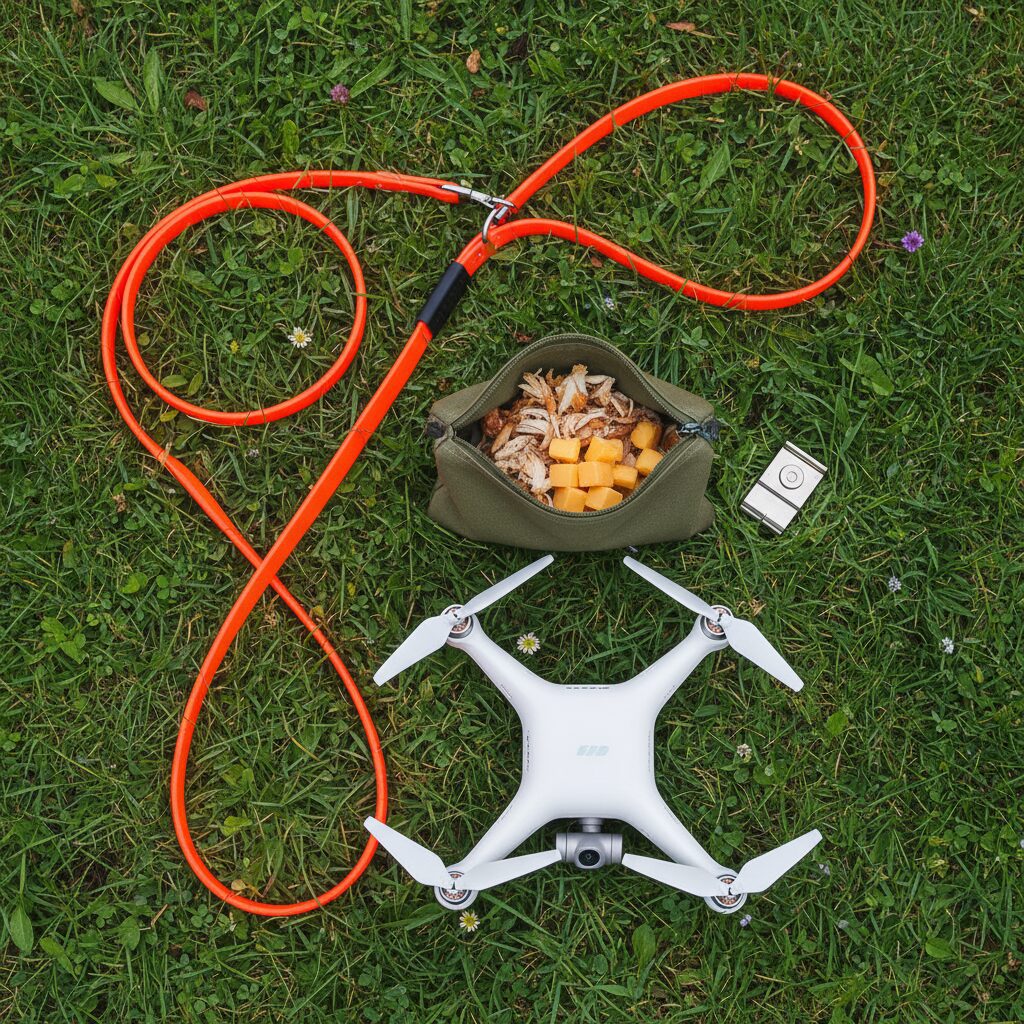
Safety is paramount when training with moving mechanical parts. You cannot attempt this training alone; you will need a helper to pilot the drone while you manage the dog. Attempting to pilot and handle a reactive dog simultaneously is dangerous and ineffective.
- High-Value Treats: You need a reward that is more interesting than the drone. Use real meat, cheese, or freeze-dried liver. Dry kibble is rarely sufficient for high-arousal training.
- A Controlled Environment: Begin in a large, fenced area where you can control the distance. A public park is too unpredictable for the initial stages.
- Leash and Harness: Use a non-retractable leash and a secure body harness. A collar may cause injury if the dog lunges suddenly.
- The Drone Pilot: Your helper must be competent enough to hover steadily and land quickly if the situation escalates.
Ensure the drone is small and relatively quiet for the initial sessions. Large, loud professional drones may be too intense for a starting point.
Step 1: Desensitization to the Sound

The auditory component of a drone is often the primary trigger. Before the dog ever sees the drone flying, they must learn to tolerate the sound. This step can often be started indoors or in your backyard without the drone actually flying.
The Audio Method
Start by playing a recording of a drone sound at a very low volume. As the sound plays, feed your dog high-value treats continuously. When the sound stops, the treats stop. This establishes a positive association: Drone noise equals chicken. Gradually increase the volume over several sessions until the dog looks for a treat upon hearing the noise rather than looking for the source of the sound.
The Distant Motor Method
If you are training outdoors, have your pilot place the drone on the ground at a significant distance (at least 50 yards). Have them start the motors without taking off. As soon as the motors spin up, mark the behavior (using a clicker or a verbal ‘Yes!’) and reward your dog for looking at you or remaining calm. If the dog reacts, you are too close. Increase the distance and try again. The goal is to have the dog hear the whine of the motors and immediately look to you for a reward.
Step 2: Visual Introduction and Controlled Hovering
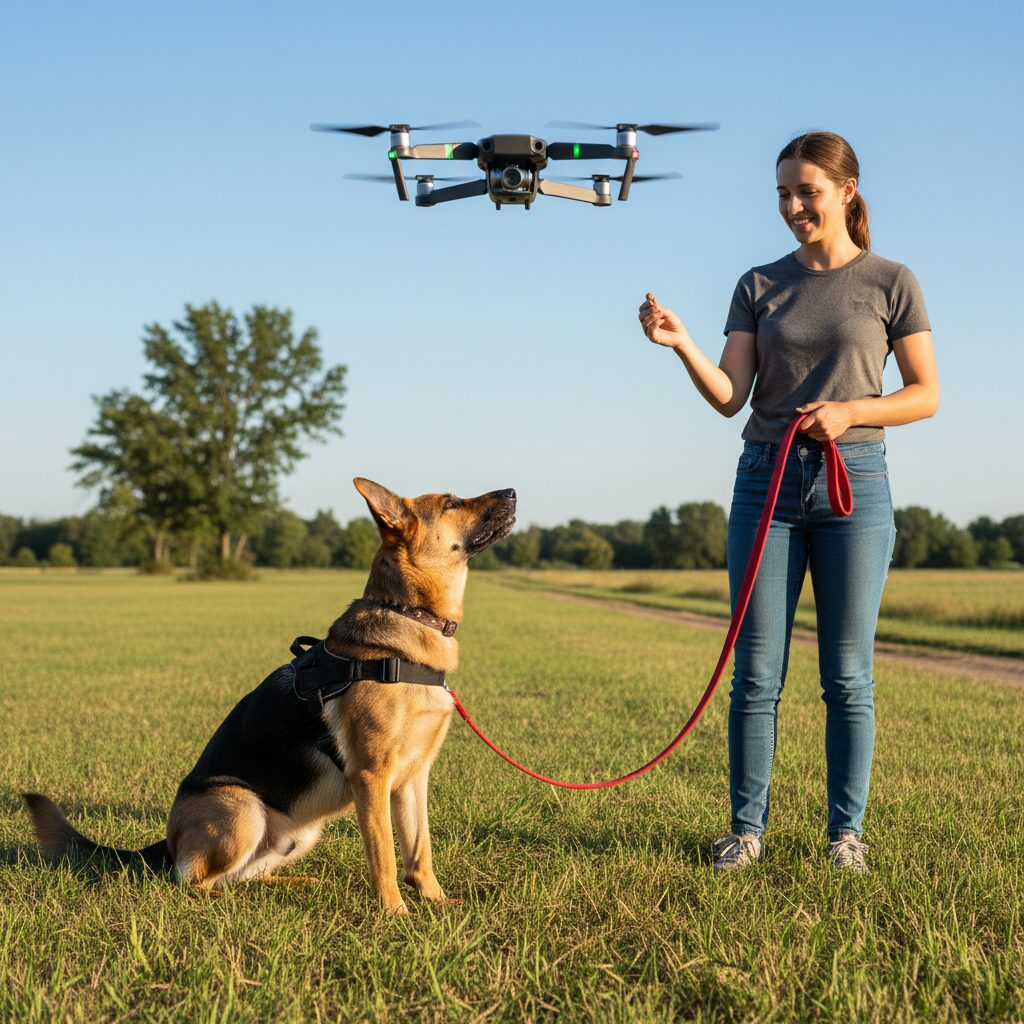
Once the sound is no longer a trigger, we introduce the visual element. This is the most critical phase and requires strict adherence to threshold management. The ‘threshold’ is the distance at which your dog notices the drone but does not react.
Have your pilot launch the drone but keep it hovering low and steady at a far distance. Do not fly it around; simply let it hover. The lack of erratic movement reduces the prey drive trigger.
- Engage and Disengage: Allow your dog to look at the drone. As soon as they look back at you, reward heavily. This is the ‘Look at That’ game.
- Decrease Distance Slowly: If the dog remains calm, move 5 feet closer to the hovering drone. Repeat the reward process.
- Keep Sessions Short: Mental exhaustion can lead to reactivity. Keep these training sessions under 10 minutes.
If at any point the dog barks, lunges, or fixates intensely, you have moved too fast. Retreat to the previous distance and reset.
Step 3: Adding Movement and Real-World Simulation
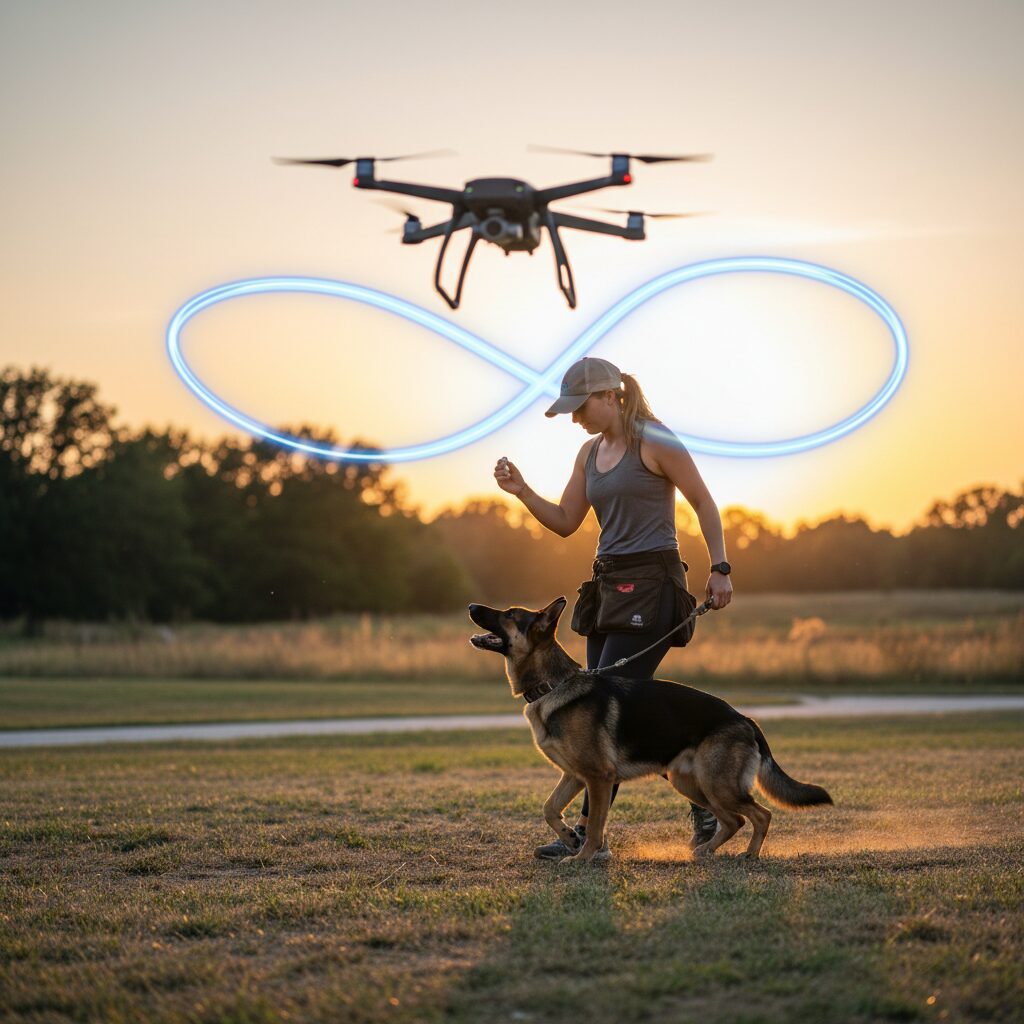
A hovering drone is one thing; a zipping, diving drone is another. Step 3 involves introducing movement. This should only be attempted once the dog is completely reliable with a stationary hovering drone at a relatively close distance (15-20 feet).
Lateral Movement
Return to a safe distance (30+ yards). Signal your pilot to move the drone slowly from left to right. This lateral movement triggers the tracking instinct. Ask your dog for a known command, such as ‘Sit’ or ‘Watch Me.’ Reward compliance immediately. You are teaching the dog that obedience commands override the impulse to chase.
Vertical Movement and Speed
Gradually increase the speed of the drone and introduce vertical ascents and descents. This is often the hardest part for the dog. Maintain a high rate of reinforcement. If the dog begins to fixate, use a ‘U-turn’ maneuver: immediately turn and walk briskly in the opposite direction of the drone, calling the dog with you. When they catch up, reward them. This teaches the dog that the presence of the drone is a cue to check in with the handler, not to engage the target.
Safety First: Troubleshooting and Risks
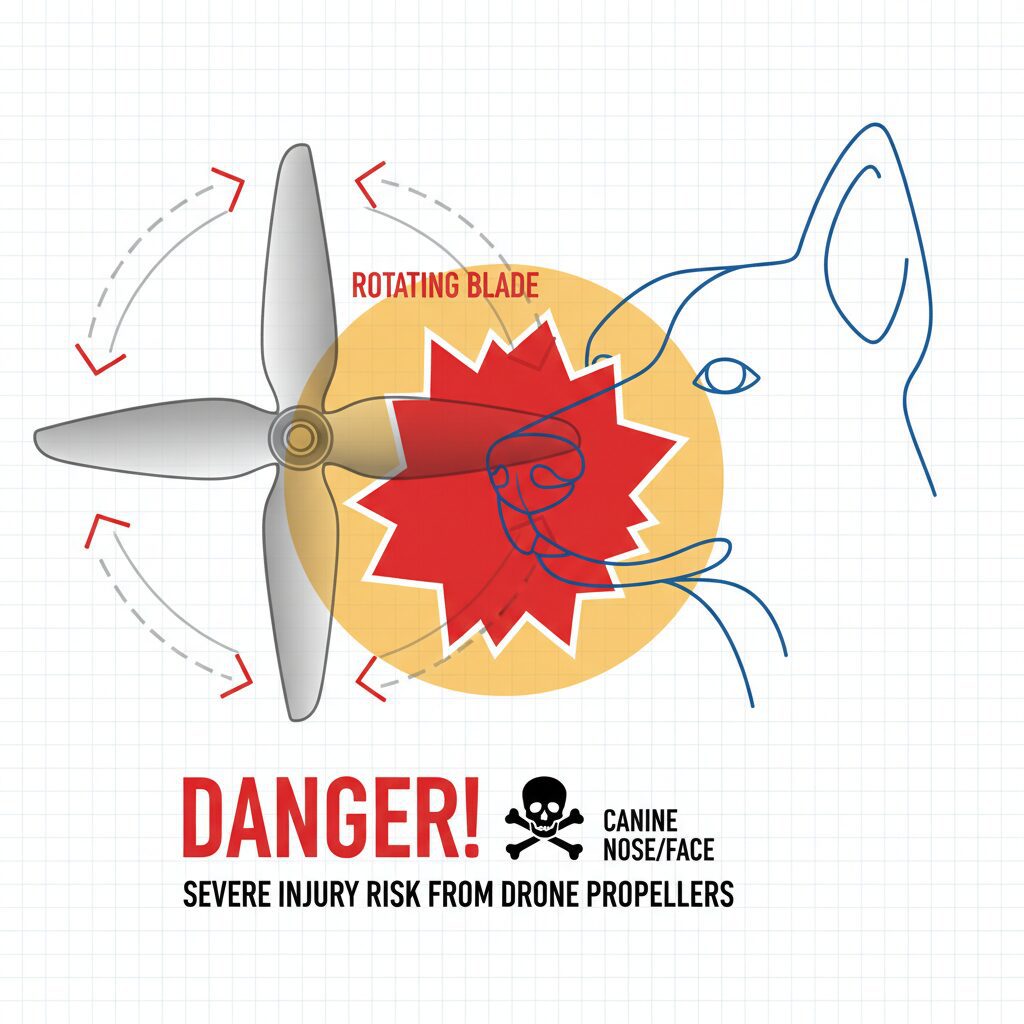
Even with excellent training, management is a key part of canine ownership. There are specific risks associated with drones that every owner must respect.
The Danger of Propellers
Carbon fiber or plastic propellers spinning at thousands of RPM act like knives. Never allow a dog to ‘catch’ a drone, even a toy one. If a dog succeeds in biting a spinning drone, the resulting injuries often require surgery to repair lips, tongues, or eyes. If your dog breaks a stay command and charges a drone, the pilot must immediately throttle up (fly straight up) to get out of reach, rather than trying to land, which brings the blades closer to the dog.
When to Consult a Professional
If your dog’s reaction is extremely violent, or if they are redirecting aggression onto you (biting the leash or your leg) when they see a drone, stop immediately. This level of arousal requires the intervention of a certified veterinary behaviorist or a professional dog trainer specializing in reactivity. Do not attempt to fix dangerous redirection aggression without expert guidance.
Conclusion
Stopping a dog from attacking drones is a process that demands patience, consistency, and a strict adherence to safety protocols. By breaking the behavior down and desensitizing your dog to the sound, sight, and movement of the device, you can curb their natural instincts and ensure a safe environment for everyone. Remember, the goal is not to make your dog love drones, but to reach a state of neutrality where the device is simply background noise. With time and practice, you can enjoy your walk in the park, regardless of what is flying overhead.