Stop Bird Chasing: 3 Steps to Master High Prey Drive
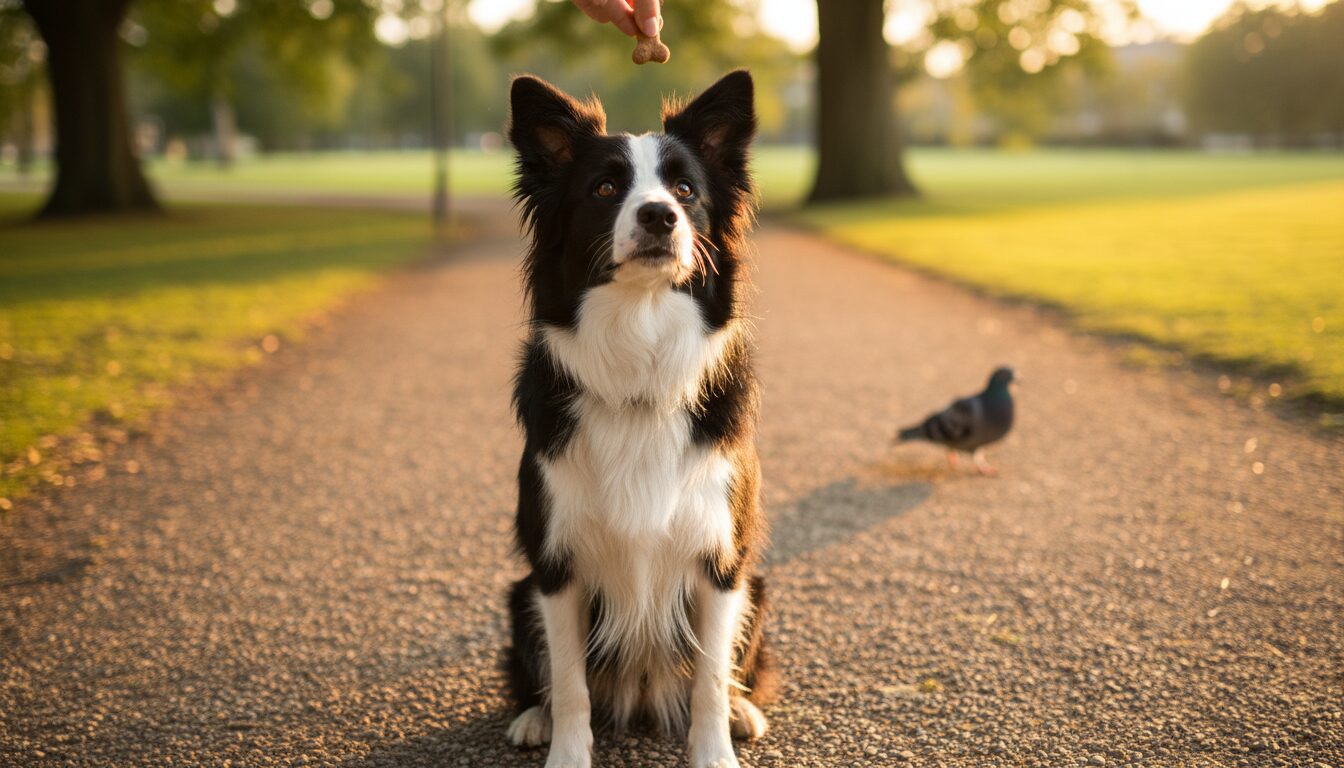
It is a scenario every dog owner with a high-drive breed knows all too well. You are enjoying a peaceful morning walk, the coffee is still warm in your hand, and your canine companion is trotting loosely by your side. Suddenly, a pigeon flutters across the path. In a split second, the tranquility shatters. Your arm is jolted forward, the leash goes taut, and your dog is deaf to your commands, entirely fixated on the fleeing bird.
Predatory drift and high prey drive are natural instincts, deeply hardwired into the genetics of many breeds, from Terriers to Pointers. However, when this instinct goes unchecked in an urban or suburban environment, it poses significant safety risks—not just to the wildlife, but to your dog, who may run into traffic, and to you, the handler.
You cannot simply train a dog to ‘stop’ having instincts, but you can train them to control their impulses. In this guide, we will move beyond basic obedience and implement a structured, three-step behavioral modification plan designed to redirect that intense focus back to you. We will cover the necessary tools, the psychology of the chase, and the specific drills required to master high prey drive.
The Science of the Chase and Essential Tools
Before we step onto the training field, it is crucial to understand why your dog chases. The predatory sequence involves several stages: Orient > Eye > Stalk > Chase > Grab-Bite > Kill-Bite > Dissect > Consume. In many domestic dogs, this sequence is fragmented; Herding dogs may stop at the ‘Eye’ or ‘Stalk’ phase, while Terriers may go straight to ‘Grab-Bite’. The act of chasing itself releases dopamine, making the behavior self-reinforcing. This means every time your dog successfully chases a bird, even if they do not catch it, they are being rewarded by their own brain chemistry.
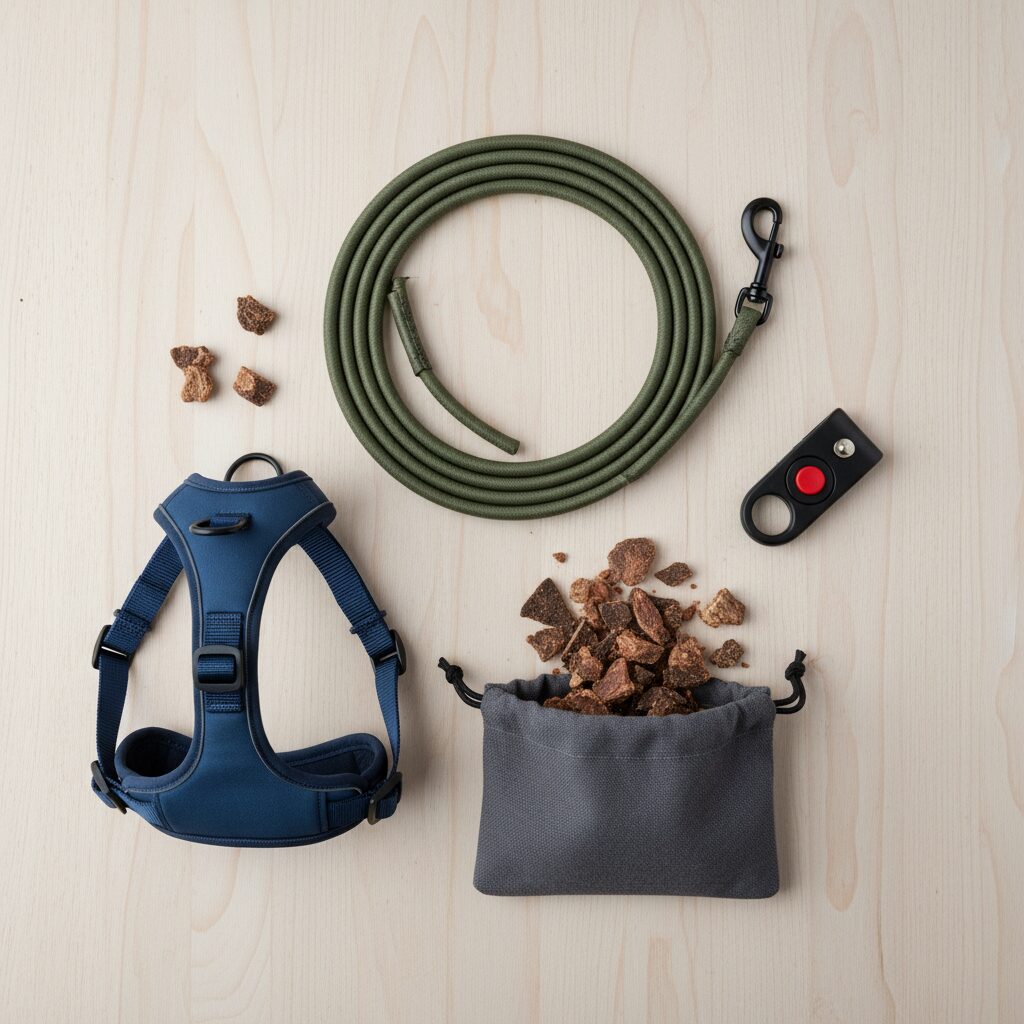
To compete with this biological high, you need the right equipment and motivators. Do not attempt this training with a standard retractable leash or low-value dry kibble.
Required Equipment Checklist
- A Long Line (15-30 ft): A biothane long line allows the dog freedom to make choices while preventing them from self-rewarding by successfully chasing.
- High-Value Rewards: Dry biscuits will not compete with a live bird. Use boiled chicken, freeze-dried liver, or cheese.
- A Clicker or Marker Word: Precision is key. You need a distinct sound (like a click or a sharp "Yes!") to mark the exact micro-second your dog makes the right choice.
- A Y-Shaped Harness: To prevent neck injury if the dog hits the end of the line during a lunge.
Step 1: The Foundation – Focus and Impulse Control
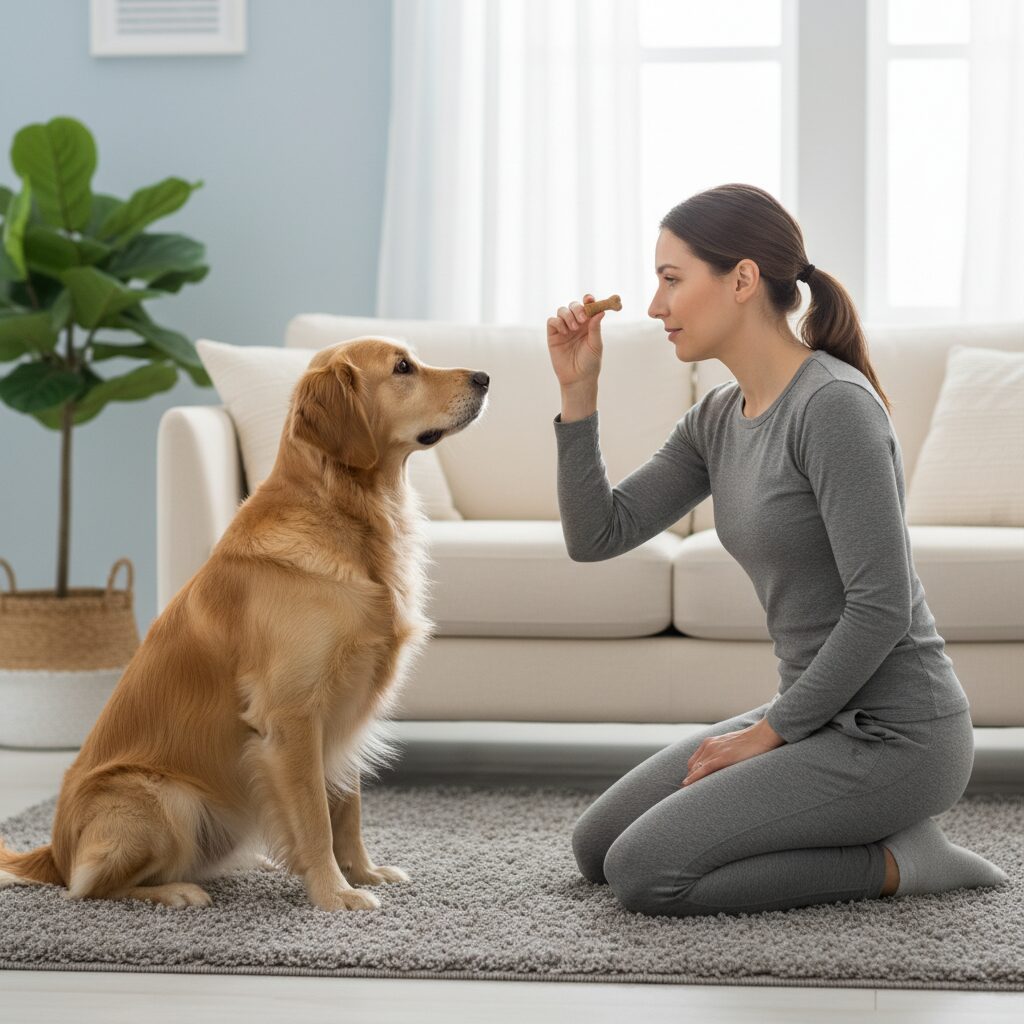
You cannot expect your dog to listen to you when a bird is flying away if they cannot listen to you in your living room. The first step is establishing a conditioned emotional response to their name and building impulse control in a low-distraction environment.
The "Look at Me" Protocol
Your goal is to make eye contact with you more valuable than scanning the horizon. Start indoors:
- Hold a high-value treat out to the side of your body (not near your face).
- Wait for your dog to stop looking at the treat and glance at your eyes.
- Immediately mark (Click/"Yes!") and reward.
- Repeat this until the dog understands that looking at you is the key to unlocking the treat, not staring at the food.
The "Leave It" Command
Practice "Leave It" with toys or food on the floor. The dog must learn that turning away from a temptation yields a better reward from the handler. Once this is 90% reliable indoors, move to your backyard or a quiet driveway before attempting to train around birds.
Step 2: The Engage-Disengage Game
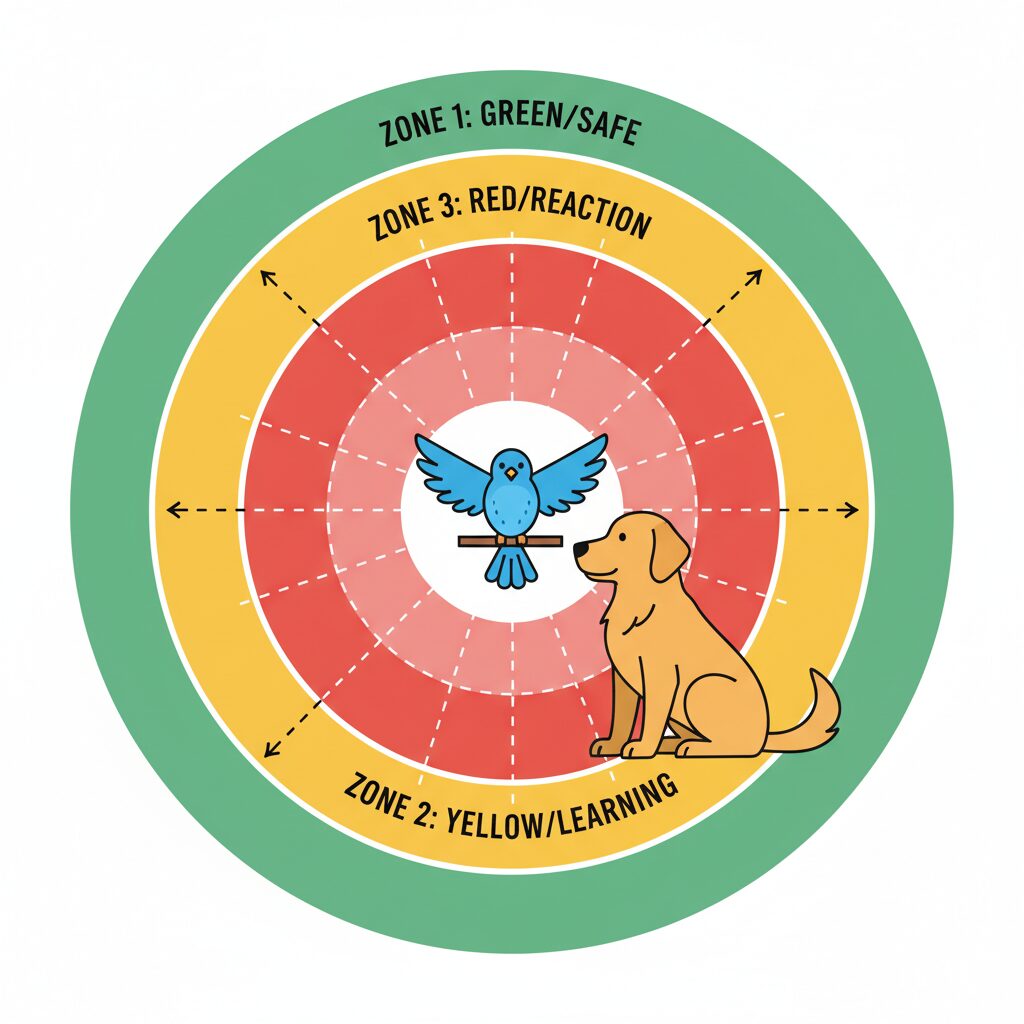
This is the core of your rehabilitation strategy. The Engage-Disengage Game helps change your dog’s emotional response to the trigger (the bird) from "Must Chase!" to "That thing predicts a treat from my owner."
Find a location where birds are present but distant—a large park is ideal. You must identify your dog’s Threshold: the distance at which they notice the bird but can still eat a treat and look at you. If they are barking or lunging, you are too close.
How to Play:
- Level 1 (Engage): When your dog spots a bird, immediately Click/Mark. Then, feed a treat. At this stage, we are not asking for behavior; we are simply pairing the sight of the bird with food. Bird appears = Chicken appears.
- Level 2 (Disengage): Once your dog starts anticipating the treat upon seeing the bird, wait for a split second. Let the dog look at the bird, then wait for them to voluntarily turn their head back to you. Mark that head turn and reward heavily.
This process rewires the brain. Instead of the bird triggering the predatory sequence, it becomes a cue to check in with the handler.
Step 3: Proofing and Generalization
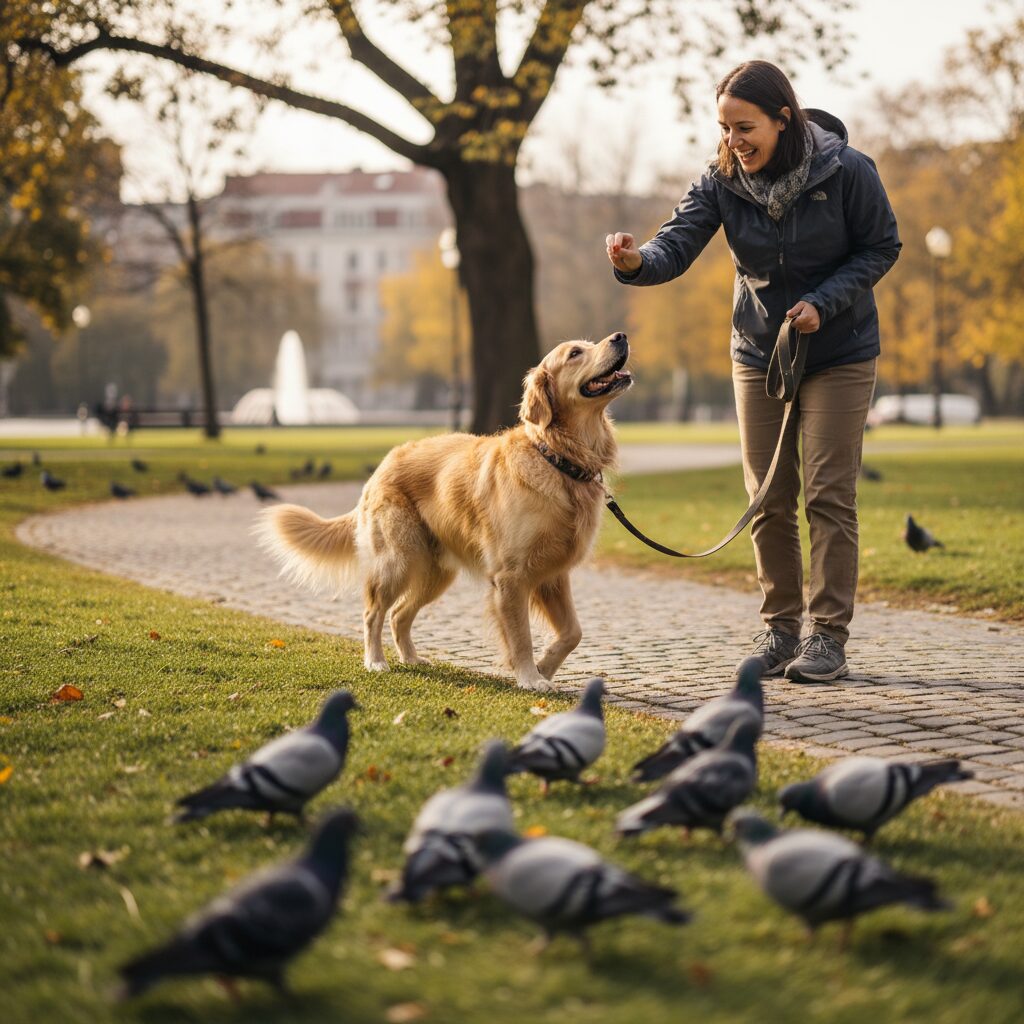
Once your dog is successful at a distance, you must gradually increase the difficulty. This is known as "proofing." Do not rush this stage; moving too close too quickly can undo weeks of progress.
Decreasing Distance
Gradually close the gap between you and the birds. If you were working at 50 feet, try 40 feet. If the dog reacts, retreat to the previous distance. This is a dance of two steps forward, one step back.
Adding Movement
Stationary birds are easier to ignore than flying ones. Practice near trees or feeders where movement is unpredictable. Keep your long line attached for safety. If a bird takes flight and your dog stays seated or looks at you, this is the "Jackpot" moment—deliver a handful of treats consecutively to make a lasting impression.
Pro Tip: Incorporate play. If your dog can switch from looking at a bird to playing a game of tug with you, their arousal is being successfully channeled into a cooperative activity rather than a solitary hunt.
Troubleshooting Common Mistakes
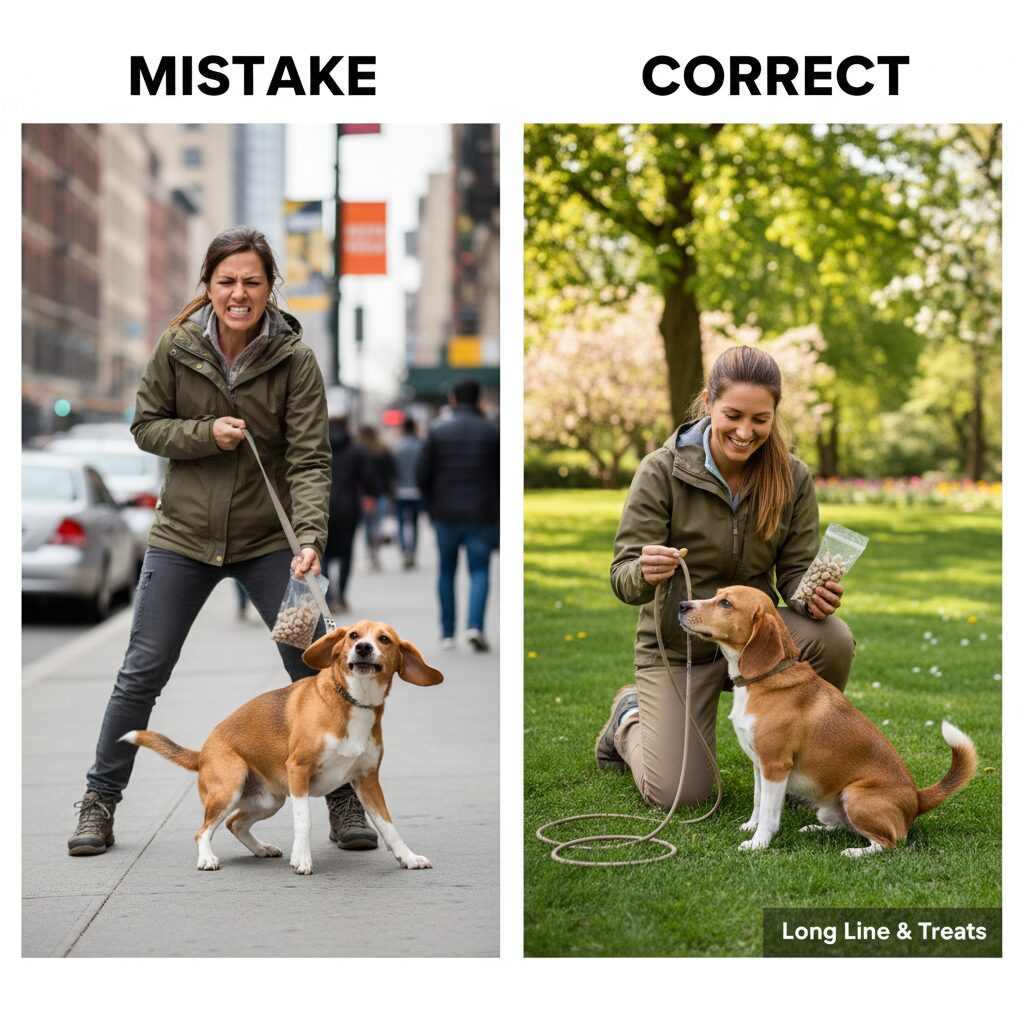
Even with the best intentions, owners often inadvertently reinforce the behavior they are trying to stop. Here are the most common pitfalls to avoid:
- The Tight Leash: Keeping constant tension on the leash can actually increase frustration and drive (known as the Opposition Reflex). Keep the leash loose unless safety is compromised.
- Poisoning the Cue: Do not scream your dog’s name or "No!" repeatedly while they are chasing. If they are in drive mode, they likely cannot hear you, and you are simply teaching them to ignore their name. Rely on the long line for management, not your voice, until you have control.
- Low Rate of Reinforcement: If you are stingy with treats, the environment will win. In the beginning stages, you should be a vending machine of rewards.
Patience is the Key to Success
Mastering high prey drive is not an overnight fix. It requires consistency, patience, and a deep understanding of your dog’s biological needs. By managing the environment with a long line, building value in your relationship, and systematically playing the Engage-Disengage game, you can transform a chaotic walk into a cooperative partnership.
Remember, the goal is not to suppress the dog’s personality, but to channel their energy. With time, the sight of a bird will no longer be a call to the wild, but a cue to look at you for direction. Stay consistent, keep your rewards high-value, and celebrate the small victories along the way.