Scared of the Dryer? The 5-Minute Hack to Dry Your Dog Without Drama
For many dog owners, the bath itself is manageable, but the drying process is where the real battle begins. You finish rinsing your dog, reach for the blow dryer, and suddenly your calm companion transforms into a trembling ball of anxiety or a frantic escape artist. This scenario is incredibly common, yet it poses a significant problem. Leaving a dog, particularly those with double coats or long hair, to air dry can lead to hot spots, matting, and fungal skin infections.
As a canine specialist, I often see owners inadvertently reinforcing this fear by forcing the process or using the wrong equipment. The fear of the dryer usually stems from two distinct triggers: the loud, high-pitched mechanical noise and the strange sensation of pressurized air hitting the skin. To overcome this, we do not need force; we need psychology.
In this guide, I will walk you through a professional, behavior-based approach to desensitizing your dog to the dryer. By utilizing a specific ‘5-Minute Hack’ based on counter-conditioning, we can change your dog’s emotional response from fear to anticipation, turning a chaotic chore into a bonding experience.
Why Is Your Dog Terrified? Understanding the Triggers
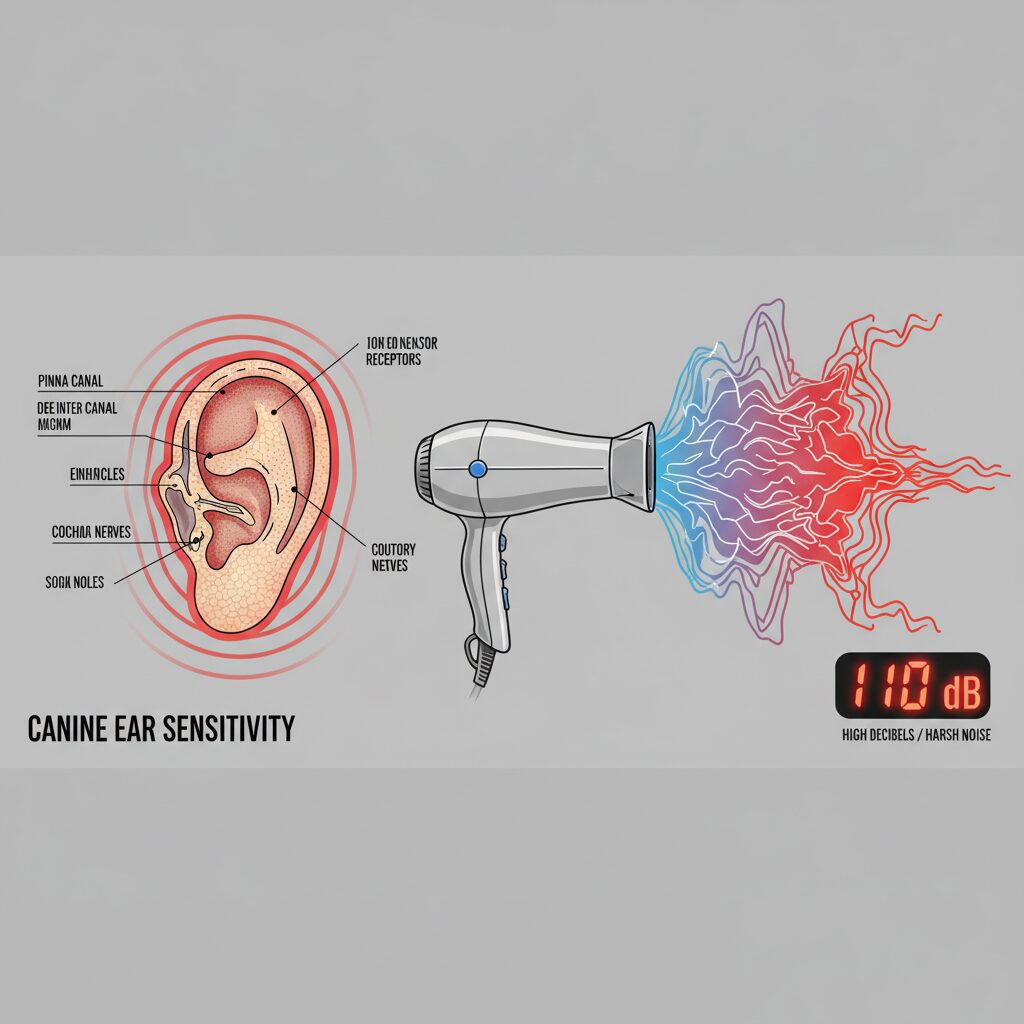
Before we can fix the behavior, we must understand the root cause. Dogs perceive the world differently than humans, and a blow dryer presents a multi-sensory assault that triggers their fight-or-flight response.
Acoustic Sensitivity
Canine hearing is significantly more acute than ours. Dogs can hear frequencies up to 45,000-67,000 Hz, whereas humans cap out around 20,000 Hz. The motor of a standard hair dryer emits high-frequency whines that are annoying to us but potentially painful to them. To a dog, a dryer isn’t just loud; it is physically overwhelming.
Tactile Overload
The sensation of high-velocity air moving fur against the grain can feel strange or even threatening. If the air is too hot, it can cause immediate discomfort or burns, as canine skin is thinner and more sensitive to heat than human skin. When you combine the roaring sound with the physical sensation of being ‘attacked’ by air, it is logical for a dog to react with fear.
Preparation: The Toolkit for Success
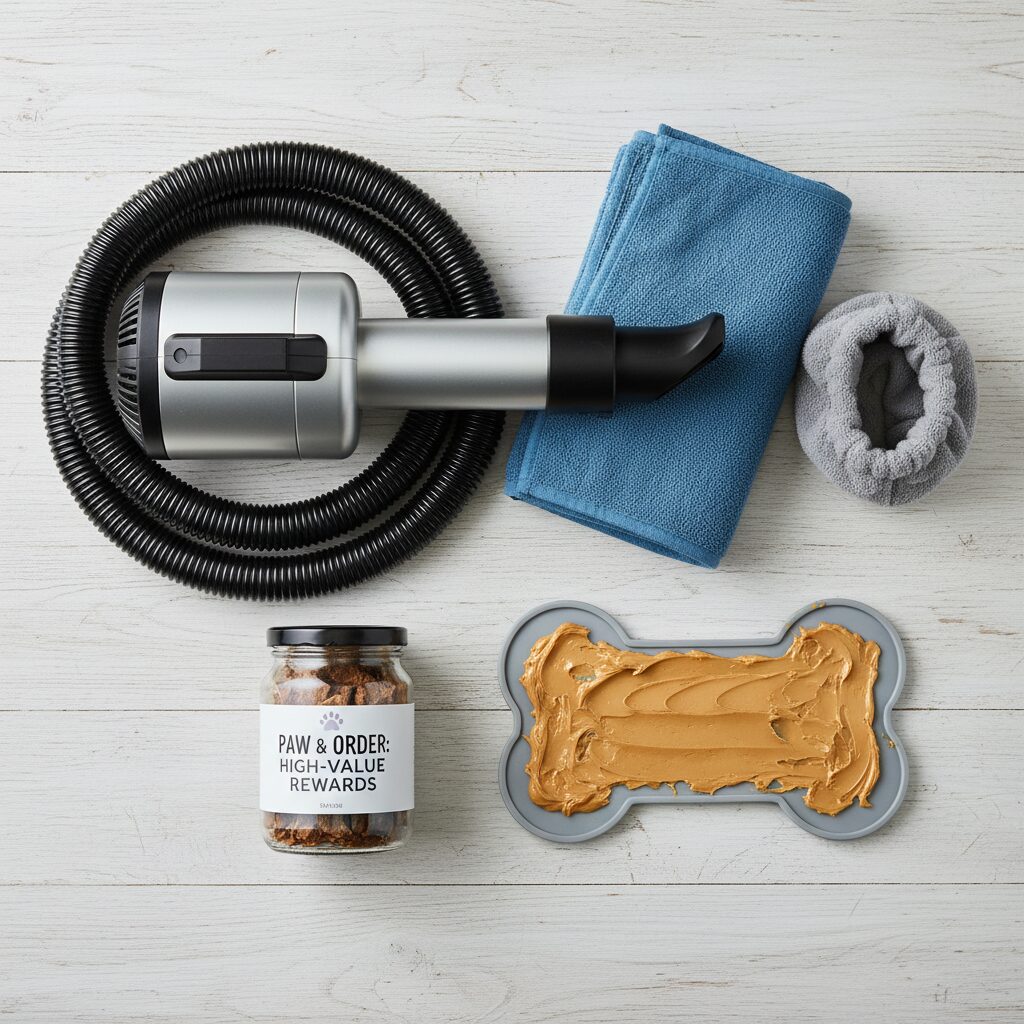
Attempting to train a fearful dog without the right tools is setting yourself up for failure. To execute the 5-minute hack effectively, you need to prepare your environment and your equipment.
- High-Value Rewards: Kibble will not work here. You need something that overrides fear, such as freeze-dried liver, cheese, or boiled chicken. Alternatively, a lick mat with peanut butter can keep them stationary and distracted.
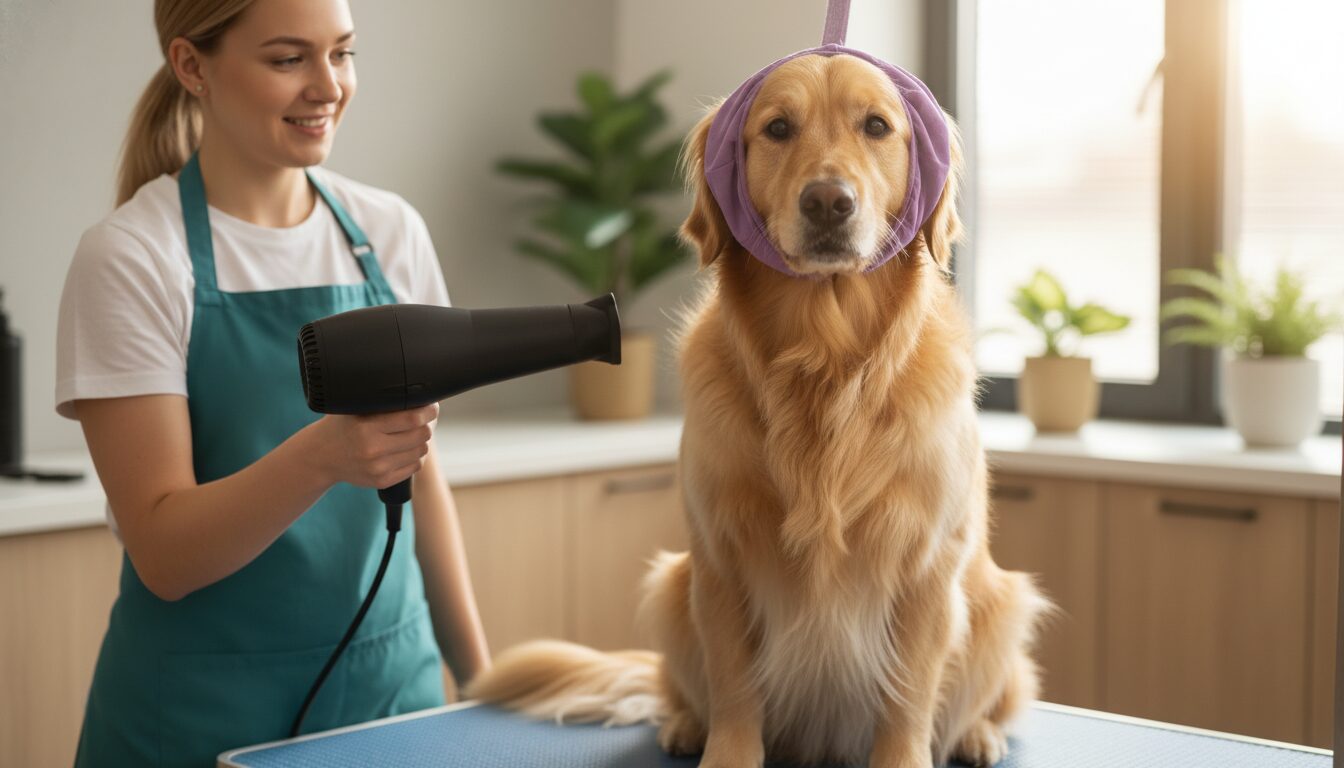
- The ‘Happy Hoodie’: This is a game-changer in professional grooming. It is a terry cloth band that goes over the dog’s ears and neck. It serves two purposes: it significantly muffles the noise of the dryer and provides a swaddling, calming effect known as compression therapy.
- The Right Dryer: Human hair dryers often run too hot and take too long. A variable-speed pet dryer allows you to start with very low airflow and zero heat, which is essential for the training phase.
- Microfiber Towels: Remove as much water as possible before turning the dryer on. The less time the dryer needs to be running, the lower the stress load on the dog.
The 5-Minute Hack: A Step-by-Step Desensitization Protocol

This technique uses Systematic Desensitization and Counter-Conditioning. The goal is to associate the dryer with the best things in life. Do not attempt this immediately after a bath when the dog is already stressed. Practice this ‘dry’ first.
Minute 1: The Silent Introduction
Place the dryer on the floor, turned off. Scatter high-value treats around it. Let your dog investigate the machine at their own pace. If they sniff it, praise them heavily and give a jackpot of treats. We are establishing that the machine predicts food.
Minute 2: The Distant Sound
Move your dog to the other side of the room. Have a helper turn the dryer on the lowest setting while you immediately feed the dog treats. As soon as the dryer turns off, stop feeding. This teaches the dog: Noise = Chicken. Silence = Nothing.
Minute 3: Closing the Gap
With the dryer still on low, slowly move the dog closer to the unit (or bring the unit closer, depending on the setup). Keep the rate of reinforcement high—feed a treat every 3-5 seconds. If the dog shows signs of stress (lip licking, whale eye), back up to the previous distance.
Minute 4: The Breeze
Turn the nozzle away from the dog so they don’t feel the air yet, just the proximity. Then, briefly sweep the air across their rear flank (never the face) for one second, followed immediately by a treat. Repeat: Air, Treat. Air, Treat.
Minute 5: Duration
Gradually increase the time the air is on the dog from one second to three seconds, then five. Always end on a positive note. If you can get 10 seconds of calm drying on the lowest setting, you have succeeded for the day.
Troubleshooting: What If My Dog Still Panics?
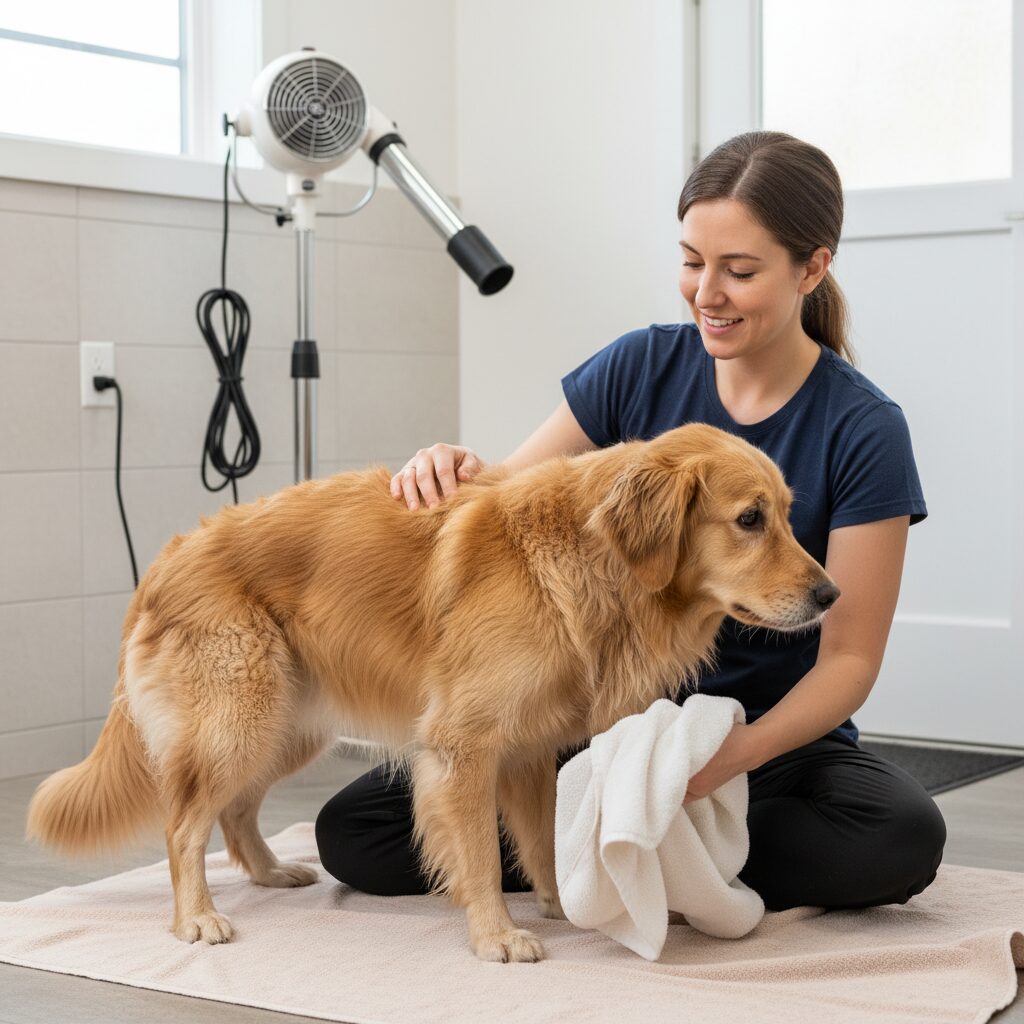
If the 5-minute hack doesn’t yield immediate results, your dog may have a deeply ingrained phobia. In these cases, we must adjust our expectations and strategy.
- Increase Distance: If the lowest setting is too scary, turn the dryer on in a different room while feeding the dog. Gradually work your way closer over several days.
- Use a Diffuser: Remove the nozzle from the dryer hose. The nozzle concentrates the air and increases the pitch of the sound. Drying without the nozzle is quieter and feels gentler, though it takes longer.
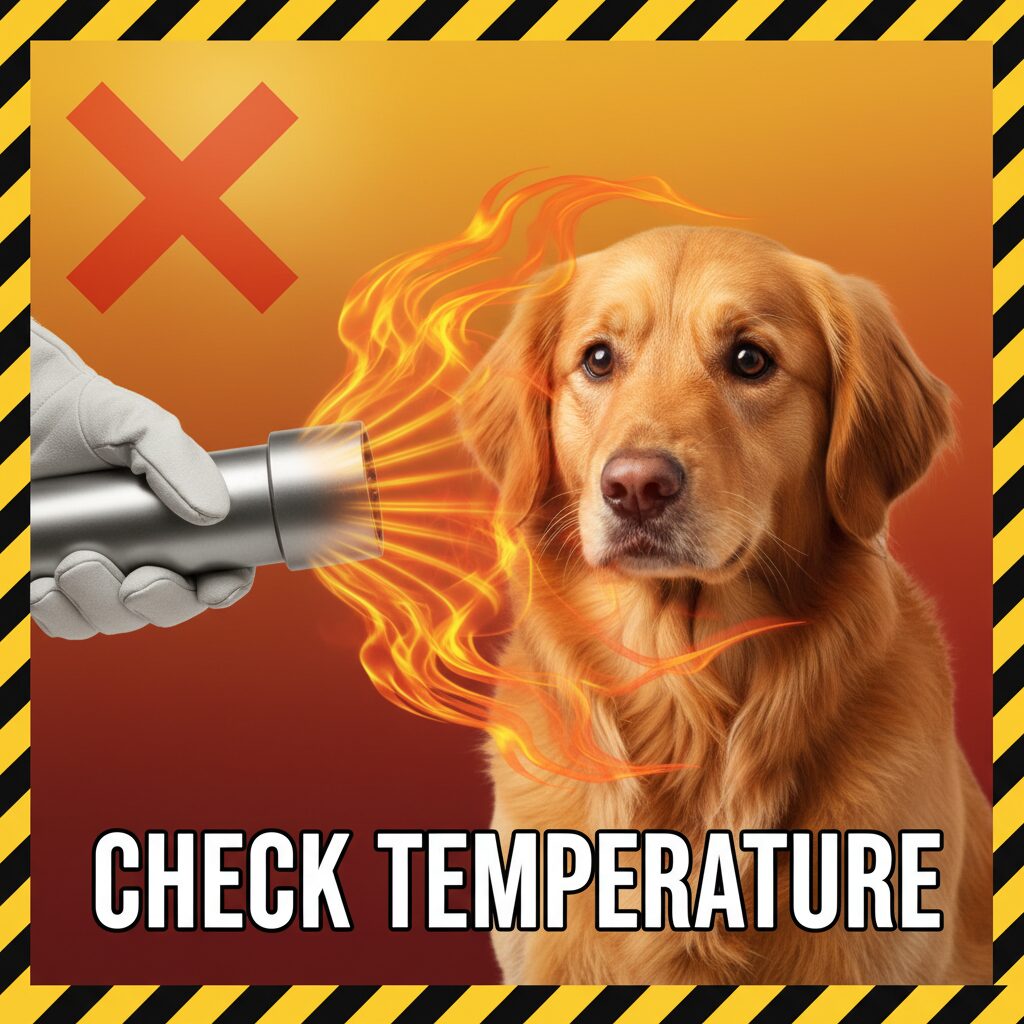
- Check the Temperature: Ensure the air is cool or lukewarm. Even mild heat can feel intense on sensitive skin, causing the dog to react to pain rather than noise.
- Consider Alternatives: For dogs that simply cannot tolerate the machine yet, invest in a high-quality drying coat. These are wearable microfiber robes that wick moisture away from the dog’s body effectively, preventing the chill without the noise.
Safety First: Avoiding Common Drying Mistakes
Even with a calm dog, improper drying techniques can lead to injury or setbacks in training. As a professional, I urge you to avoid these common errors:
- Never Dry the Face Directly: Blowing air into a dog’s eyes or ears is uncomfortable and can cause injury. Always towel dry the face and head, using the dryer only from the neck down.
- Watch for Overheating: Keep the dryer moving constantly. Holding it in one spot, even on a medium setting, can cause thermal burns. Test the air on your own wrist frequently.
- Don’t Chase the Dog: If your dog tries to move away, do not chase them with the nozzle. This mimics predatory behavior. Stop, reset, and ask for a ‘stay’ or ‘stand’ command, rewarding them for compliance before resuming.
Patience Pays Off
Transforming a fearful dog into one that tolerates, or even enjoys, the blow dryer does not happen overnight. However, by utilizing the 5-minute hack and respecting your dog’s thresholds, you can remove the drama from your grooming routine. Remember, the goal is not just a dry dog, but a trusting relationship. Take your time, keep the treats flowing, and celebrate the small victories. A calm, dry, and happy dog is well worth the effort.