Scared Of Stairs? The One Trick To Get Your Dog Moving Up And Down Confidently
There are few things more perplexing—and physically exhausting—for a dog owner than having to carry a 60-pound Golden Retriever up a flight of stairs every night. Whether you have a new puppy encountering steps for the first time or an older rescue dog harboring a deep-seated phobia, stair anxiety is a common behavioral hurdle. In the canine world, this fear often stems from a combination of visual confusion, lack of exposure, or a negative past experience.
As a canine specialist, I often see owners attempting to pull their dogs up the stairs or lure them from the very top, which only exacerbates the panic. The secret to overcoming this fear isn’t force; it is physics and psychology working in tandem. In this guide, we will rule out medical causes, optimize your environment for safety, and utilize The One Trick—a professional training method known as ‘Back-Chaining’—to turn your staircase from a scary cliff into a fun game.
Step 1: Rule Out Medical Issues and Physical Limitations

Before we dive into behavioral modification, we must address the physiological reality of your dog. If a dog suddenly develops a fear of stairs after years of navigating them with ease, this is a major red flag for a medical issue. Stairs require significant range of motion in the hips, knees, and spine.
Common physical deterrents include:
- Hip Dysplasia or Arthritis: The incline places extra weight on the hindquarters going up and the forequarters going down, causing pain.
- Vision Loss: Dogs with degrading depth perception may see stairs as a flat surface or a steep drop-off.
- Long Nails: Overgrown nails prevent the paw pads from gripping the surface, making hard surfaces feel like ice.
If your dog is hesitant, a veterinary check-up is mandatory to ensure that ‘stubbornness’ isn’t actually a symptom of pain.
Step 2: Environmental Management and Safety
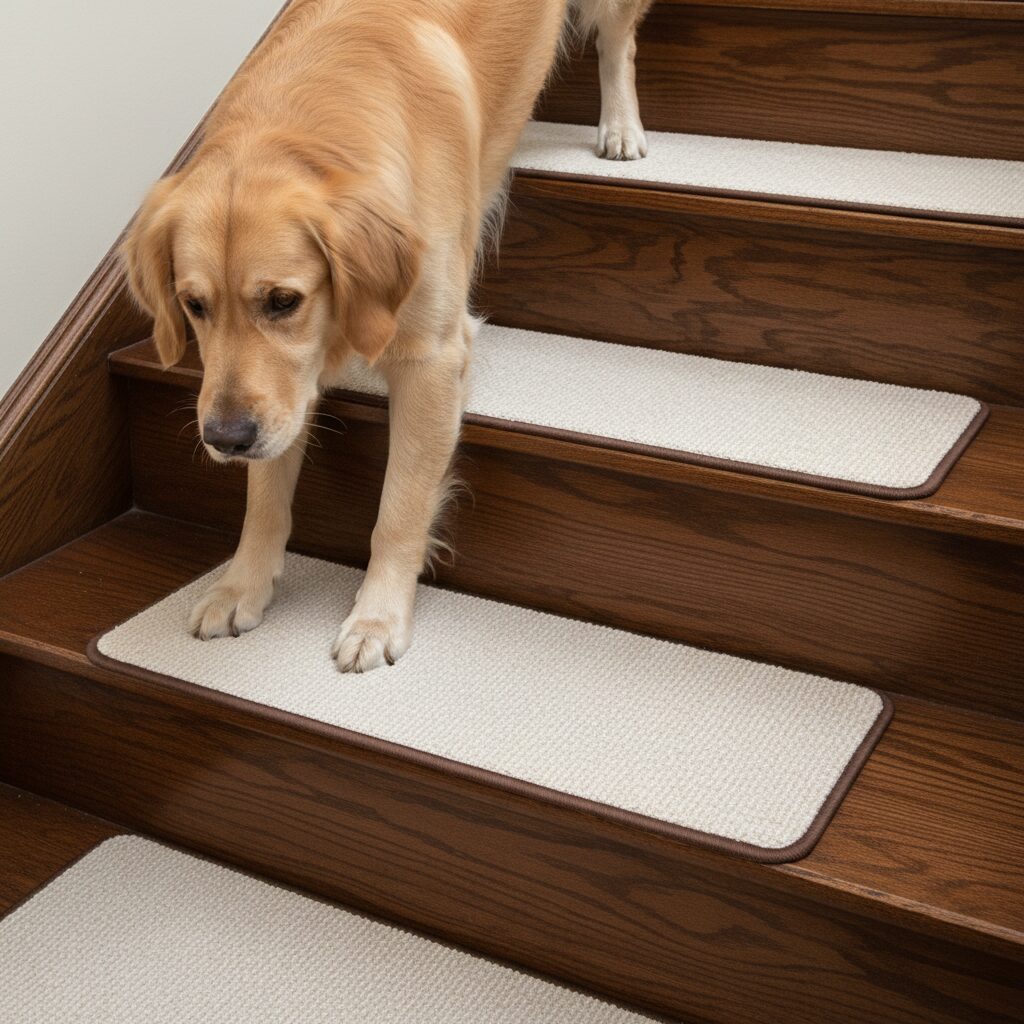
From a dog’s perspective, a hardwood staircase is essentially a slippery slide with no brakes. If your dog has ever slipped on the stairs, they have a valid reason to be afraid. To build confidence, you must first provide traction. If you have hardwood or tile stairs, you must install non-slip treads or a carpet runner, even if temporarily.
Additionally, consider the visual aspect. Open-riser stairs (stairs with gaps between the steps) are terrifying for dogs because they can see through them, creating the illusion of floating in mid-air. If you have open risers, try blocking the view by taping cardboard or fabric to the back of the steps during the training process to create a solid visual barrier.
The One Trick: The ‘Back-Chaining’ Technique
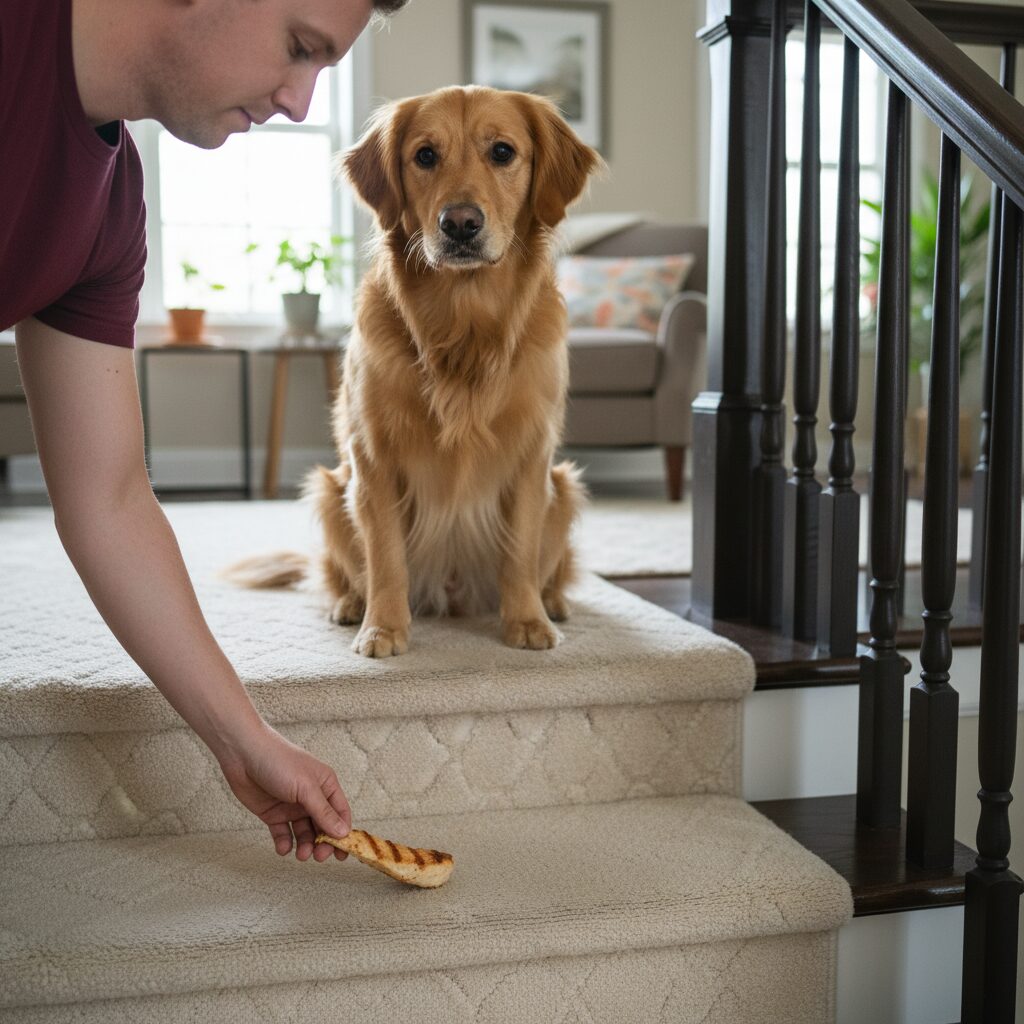
Now, for the solution you have been waiting for. The most common mistake owners make is trying to lure the dog from the top of the stairs to the bottom, or vice versa. This presents the dog with the entire mountain to climb at once. The ‘One Trick’ that professional trainers use is called Back-Chaining.
Back-chaining involves teaching the last step of the behavior first. This ensures that the dog is always moving toward a ‘safe zone’ rather than away from it. Here is how to execute it:
The Execution
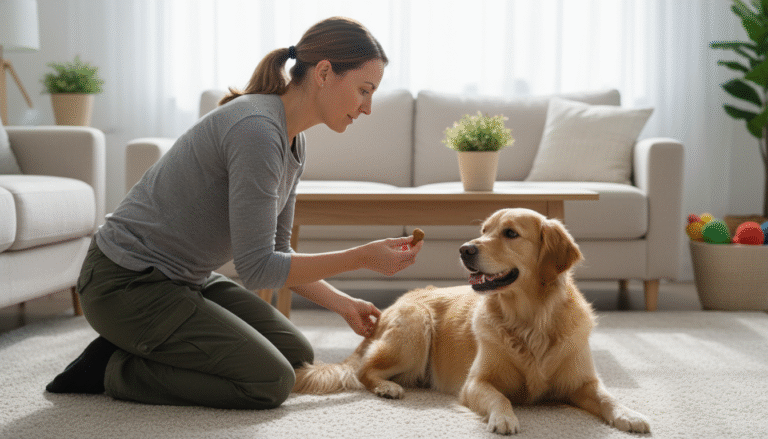
- Start at the Bottom: Do not ask the dog to go up yet. Place a high-value treat (chicken, cheese, or liver) on the floor near the stairs.
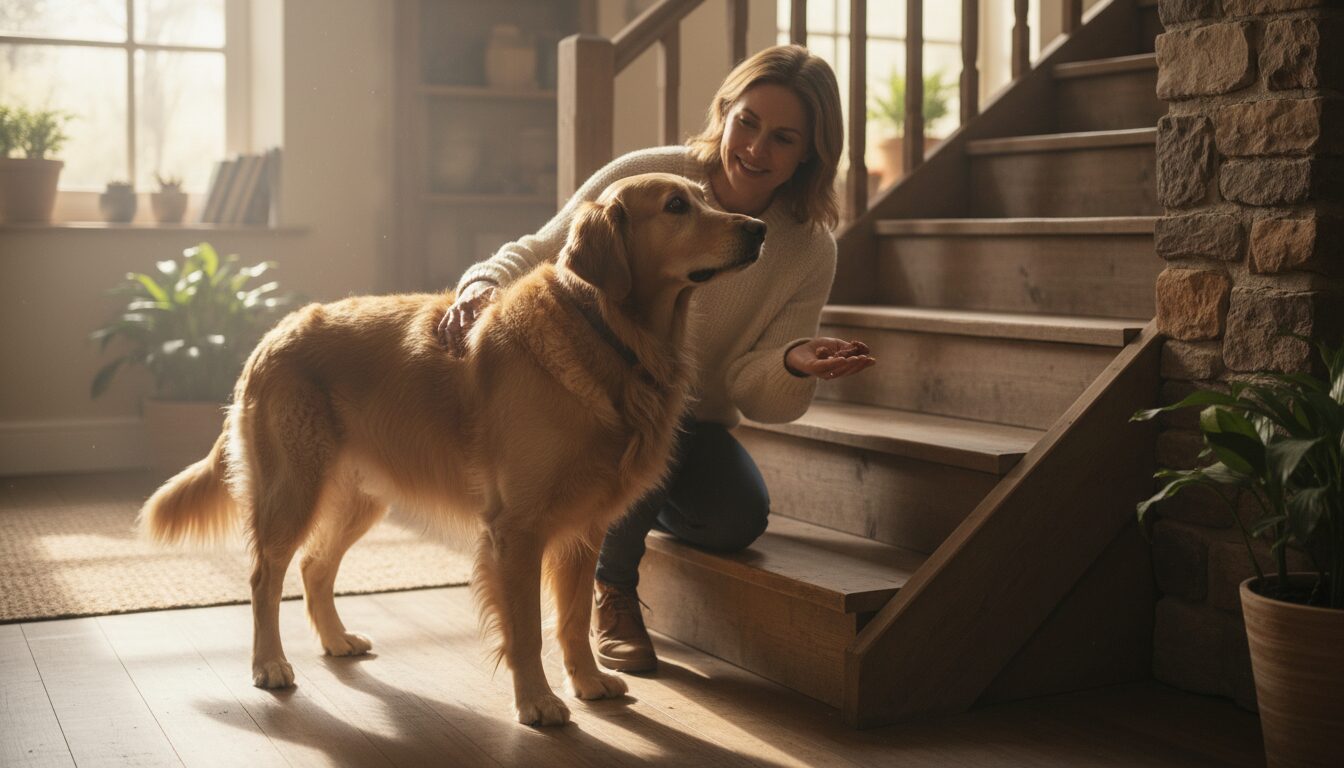
- The First Step: Place a treat on the very first step (the lowest one). Encourage your dog to put just their front paws on the step to eat it, then immediately retreat to the floor.
- Repetition is Key: Repeat this until the dog is happily placing front paws on step one.
- The Second Step: Place a treat on the second step. The dog now has to put rear legs on step one and front legs on step two. Once they eat, they can retreat to the floor.
By starting at the bottom, the dog knows that safety (the flat floor) is always just one step behind them. This reduces the feeling of being trapped.
Step 4: Going Down (The Gravity Challenge)
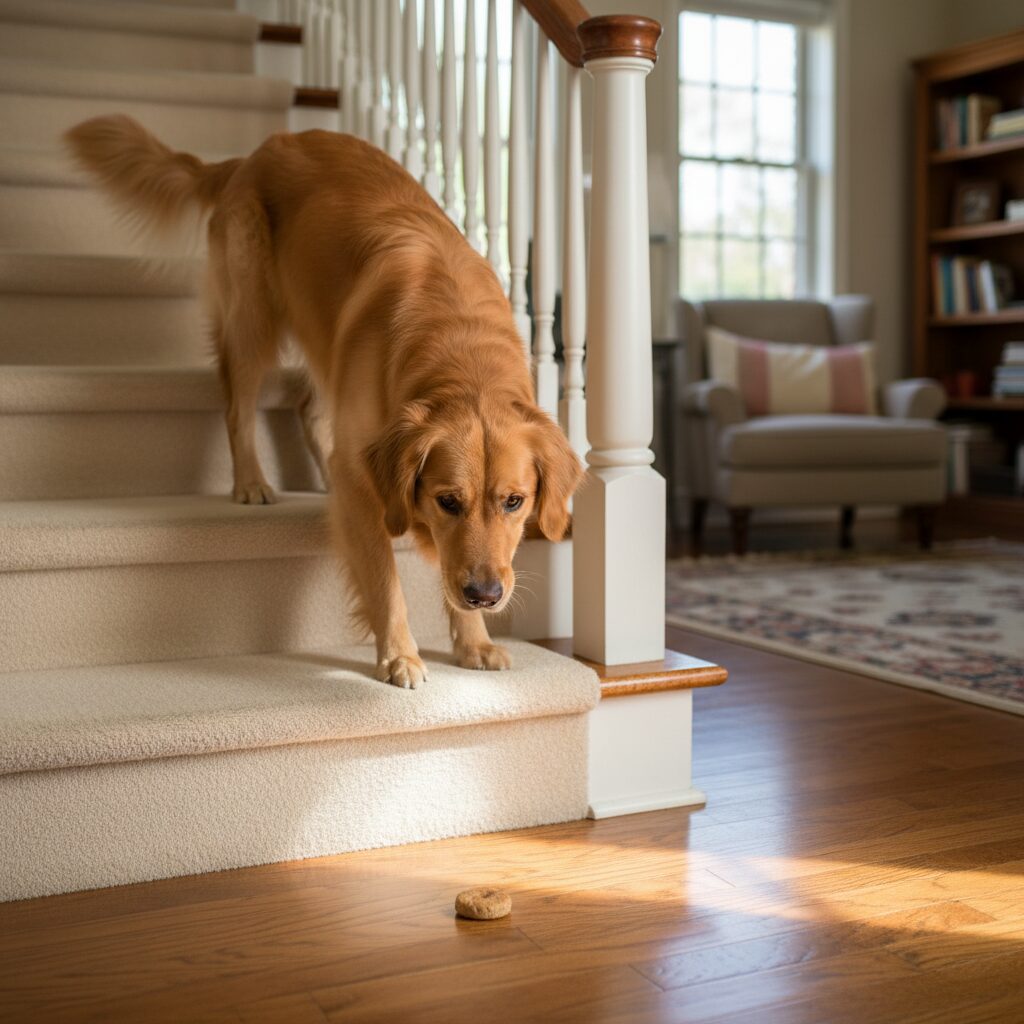
Going down is often scarier than going up because of gravity and the visual drop. We apply the same Back-Chaining principle here, but we start at the bottom of the staircase, not the top.
Do not carry your dog to the top and hope they walk down. Instead:
- Place your dog on the second step from the bottom.
- Place a pile of treats on the floor.
- Encourage them to step down that single step to get the reward.
- Once confident, place them on the third step from the bottom, requiring them to walk down two steps to reach safety.
This method builds a history of success. The dog learns that walking down leads to rewards and safety, and you slowly increase the height as their confidence grows.
Troubleshooting Common Setbacks
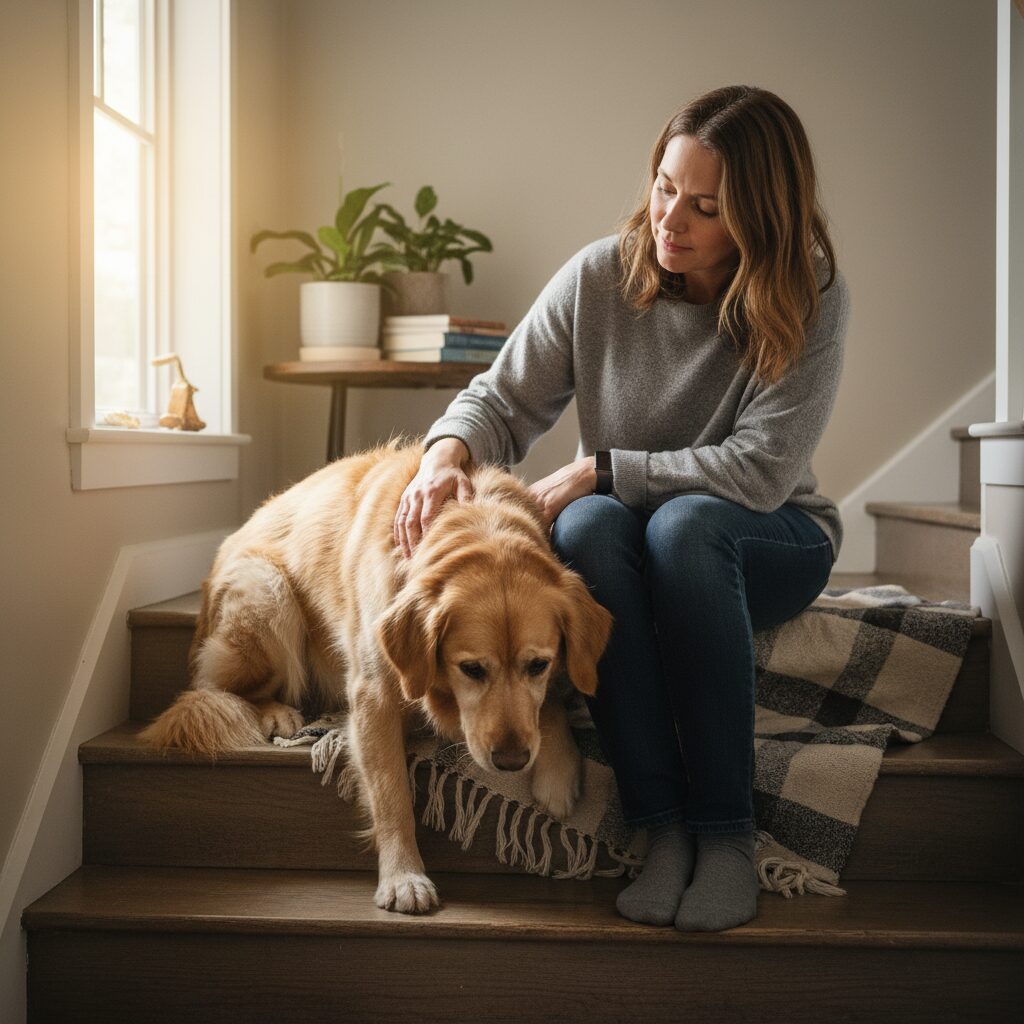
Even with the best techniques, progress can be slow. Here is how to handle common roadblocks:
The Freeze Response
If your dog freezes in the middle of the stairs, do not pull their leash. Pulling engages their ‘opposition reflex,’ causing them to pull back harder and potentially slip. Instead, gently support their harness handle to prevent a fall and use a happy, high-pitched voice to encourage movement. If they are truly stuck, calmly help them down and end the session.
The Rush
Some dogs overcome fear by rushing dangerously fast. If your dog tries to bolt up or down, use a leash to control their speed, forcing them to take one step at a time. Treat them for slow movement, not just completion.
Patience is the Ultimate Tool
Conquering a fear of stairs does not happen overnight. For some dogs, the ‘Back-Chaining’ trick will work in ten minutes; for others, it may take weeks of daily, short sessions. The goal is to change your dog’s emotional response to the stairs from fear to anticipation of reward.
Remember to keep training sessions short (5 minutes maximum) and always end on a positive note. By removing the pressure and breaking the task down into manageable pieces, you will eventually have a dog that moves up and down confidently, safely, and without a second thought.