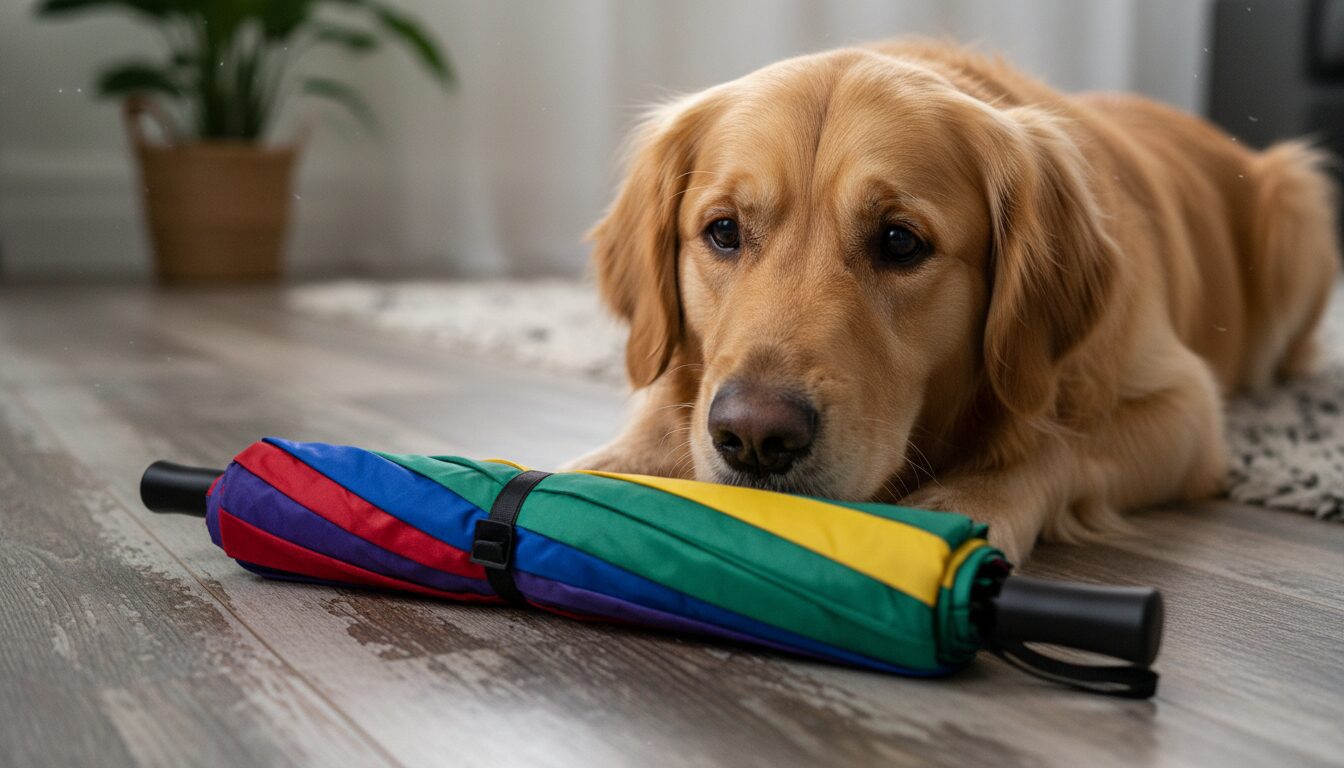
Scared of Rain Gear? How To Desensitize Your Dog To Umbrellas
For many dog owners, a rainy day walk is a simple logistical necessity. However, for a significant number of canines, the sudden appearance of an umbrella can trigger a profound fear response. Whether it is the sudden expansion of the object, the mechanical sound it makes, or the way it looms overhead, umbrellas can appear threatening to a dog who does not understand their function.
As a canine behavior specialist, I often see this specific phobia categorized under environmental sensitivities. The fear is real, but it is also treatable. By utilizing systematic desensitization and counter-conditioning, you can change your dog’s emotional response from fear to neutrality, or even positive anticipation. This guide will walk you through the professional steps required to help your dog feel safe around rain gear.
Understanding the Fear: Why Umbrellas?
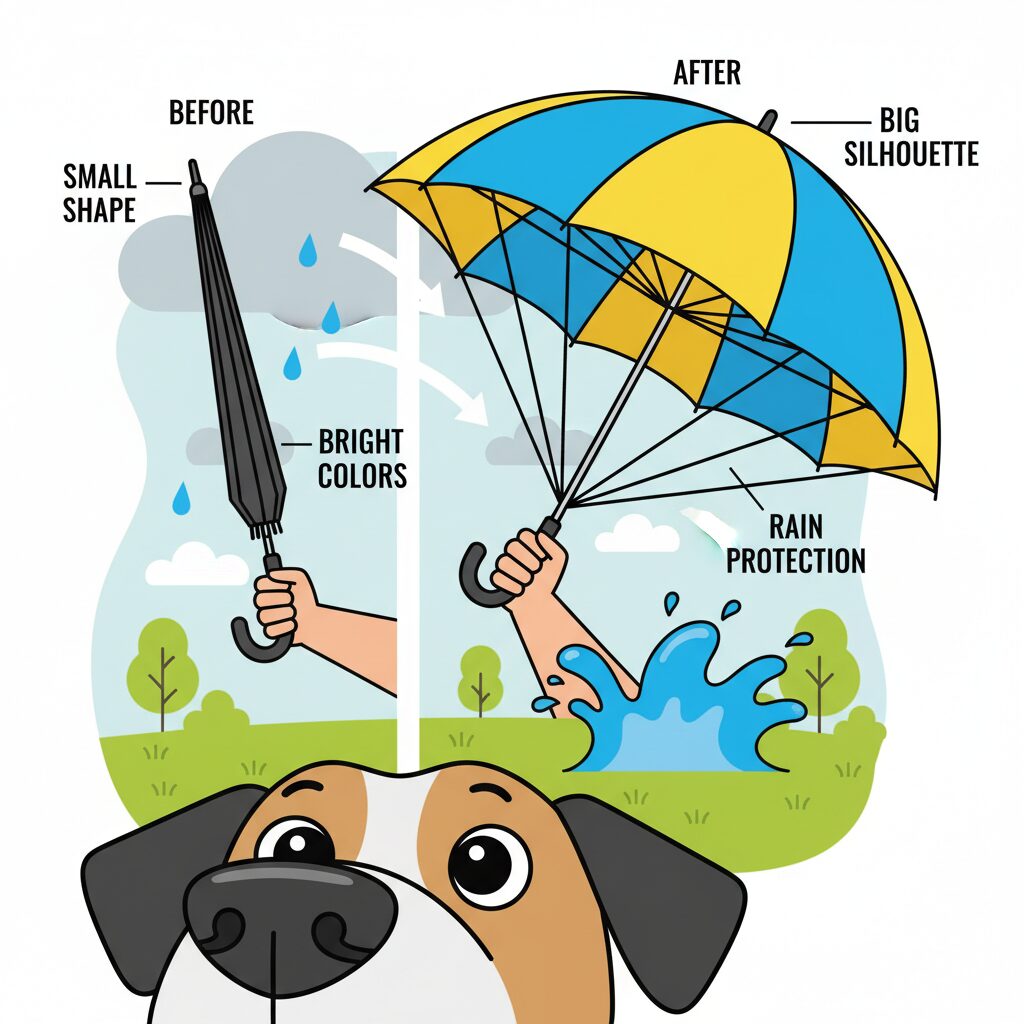
To effectively treat the fear, we must first understand the root cause. To a human, an umbrella is a tool. To a dog, it is a shape-shifting object that violates their personal space. There are three primary triggers associated with umbrellas:
- The Visual Expansion: Dogs are sensitive to movement. An object that instantly quadruples in size mimics the behavior of a predator making a sudden lunge or a threat display.
- The Auditory Trigger: The mechanical click and the whoosh of the fabric opening can be startling, especially for noise-sensitive breeds.
- The Looming Effect: In canine body language, leaning over another dog is a dominance or threat signal. An umbrella is held directly over the handler and the dog, creating a constant ‘looming’ presence that can feel oppressive.
Recognizing these triggers helps us break the training down into manageable components rather than overwhelming the dog with all three stimuli at once.
Preparation: Tools and Environment
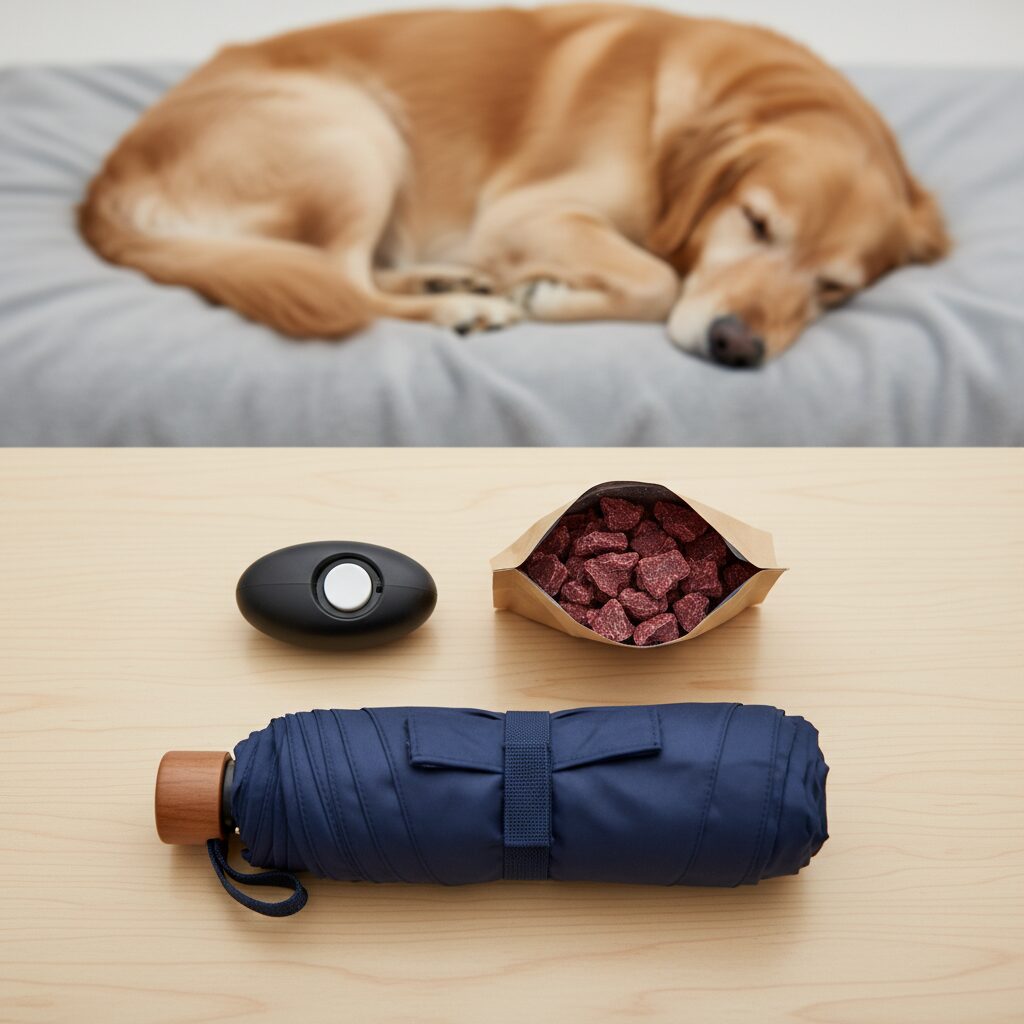
Before you begin the training sessions, you must gather the necessary tools. This process relies heavily on positive reinforcement, meaning we need to motivate the dog to engage with the scary object voluntarily.
What You Will Need
- High-Value Treats: Dry kibble will likely not be enough. Use boiled chicken, cheese, or freeze-dried liver—something your dog rarely gets.
- A Clicker or Marker Word: If you have clicker-trained your dog, this is the perfect time to use it. If not, a consistent marker word like "Yes!" works well.
- Different Umbrellas: Start with a smaller, manual-open umbrella if possible, as automatic ones are louder and faster.
- A Controlled Environment: Begin indoors in a quiet room where the dog feels safe. Do not attempt this outside in the rain initially.
Step-by-Step Desensitization Protocol
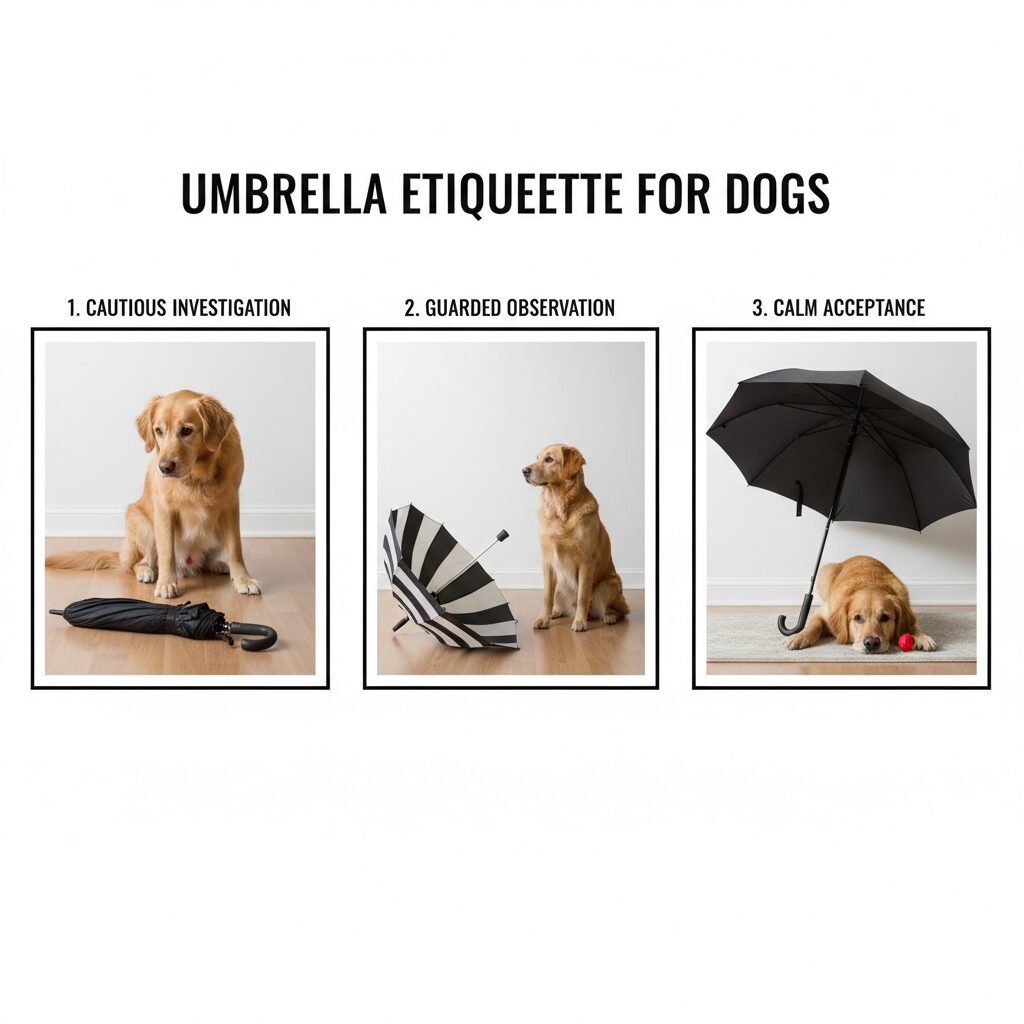
This process should be spread out over several days or weeks. Do not rush. If your dog shows signs of stress (lip licking, yawning, tucking tail), go back to the previous step.
Phase 1: The Stationary Object
Place the closed umbrella on the floor. Do not move it. Allow your dog to investigate it at their own pace. Every time they look at or sniff the umbrella, mark (click/"Yes!") and reward. The goal is to establish that the presence of the umbrella predicts a treat.
Phase 2: Adding Movement
Pick up the closed umbrella. Do not open it. Simply hold it, walk with it, or shift it from hand to hand. Reward your dog for remaining calm while the object is in motion. If they back away, you are moving the object too aggressively.
Phase 3: The Opening Mechanism
This is often the hardest part. Move to a distance where your dog is comfortable (this might be across the room). Slowly open the umbrella partially, then close it. Mark and reward immediately. Gradually increase the speed of opening and the proximity to the dog over several sessions. Tip: You can muffle the sound of the click by placing a hand over the mechanism initially.
Phase 4: The Overhead Position
Once the dog accepts the open umbrella on the floor or held low, lift it above your head. This changes the silhouette. Rain treats down from your hand so the dog associates the ‘looming’ canopy with food falling from the sky.
Troubleshooting and Common Mistakes
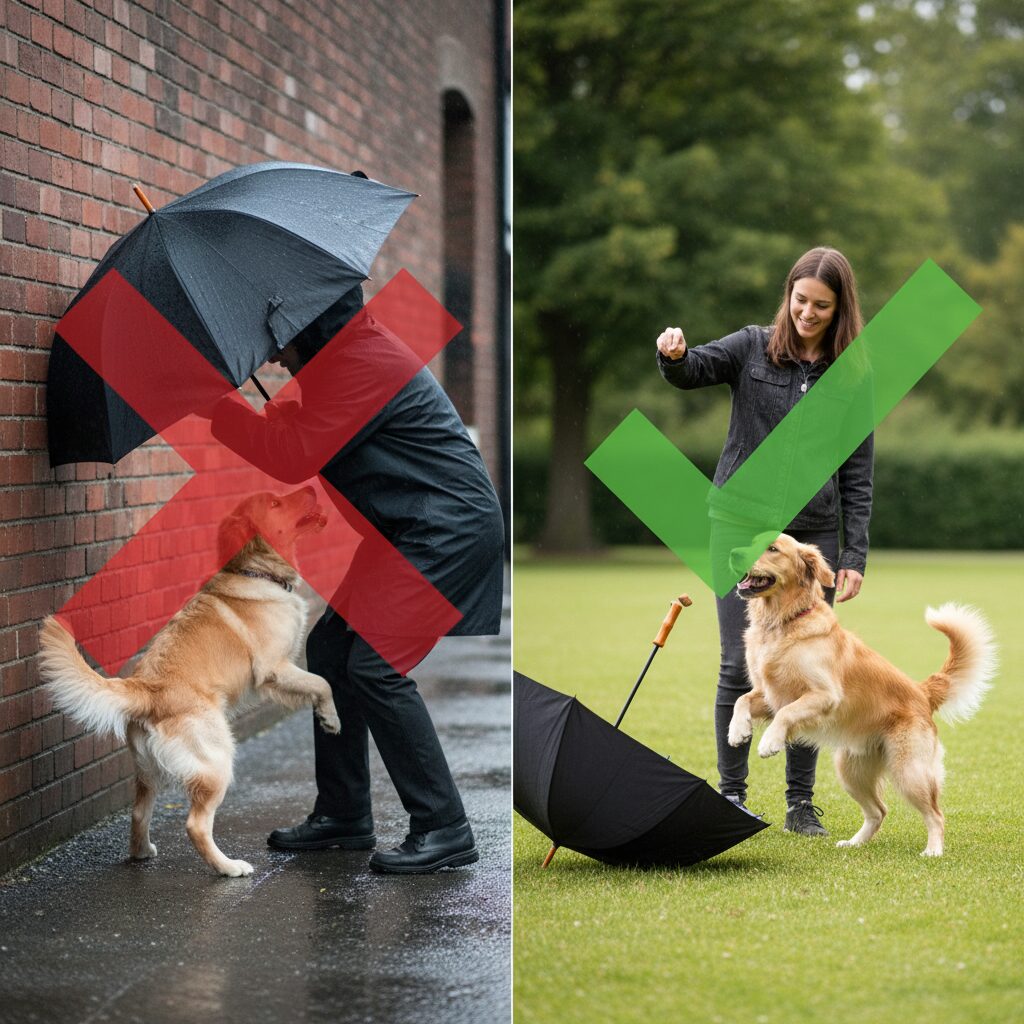
Even with the best intentions, owners often inadvertently reinforce the fear or sensitize the dog further. Avoid these common pitfalls to ensure success.
- Flooding: This occurs when you expose the dog to the full intensity of the fear (e.g., taking them out in a storm with a huge umbrella) hoping they will ‘get over it.’ This usually makes the phobia worse and damages trust.
- Luring vs. Rewarding: Do not use the treat to lure the dog closer to the scary object than they are comfortable with. This creates an approach-avoidance conflict. Instead, toss the treat away from the umbrella to reset the dog and take the pressure off.
- Ignoring Body Language: If your dog freezes or refuses to eat the high-value treat, they are over their threshold. End the session immediately and try again later with a less intense version of the exercise.
Walking with Confidence
Desensitizing a dog to rain gear is not an overnight fix, but it is a highly effective process when patience is applied. By breaking the scary concept of an ‘umbrella’ down into manageable sensory pieces—sight, sound, and shape—you allow your dog to process the information without panic.
Remember, the goal is not just to get through a walk; it is to build your dog’s confidence in navigating the human world. Once your dog is comfortable indoors, transition to the backyard, and finally to walks in light rain. With consistency and plenty of rewards, your dog will soon see the umbrella not as a threat, but as a cue that a fun, dry walk is about to begin.