
Save Your Tables: Stop Dog Chewing on Wooden Furniture Legs
Walking into your dining room to find your antique table legs reduced to splinters is a frustration many dog owners face. The sound of gnawing on wood can be like nails on a chalkboard to a pet parent who values their home furnishings. However, before you lose your temper, it is crucial to understand that chewing is a natural, instinctive behavior for canines. Whether you are raising a teething puppy or managing an adult dog with behavioral quirks, the urge to chew is hardwired into their DNA.
While the behavior is natural, the destruction of your property is not something you have to accept. Saving your tables requires a multi-faceted approach that blends management, training, and biological fulfillment. This guide will walk you through the professional steps necessary to stop your dog from chewing on wooden furniture legs, ensuring your home remains intact and your dog remains safe from the dangers of ingesting wood splinters.
Diagnosing the Cause: Why Wood?
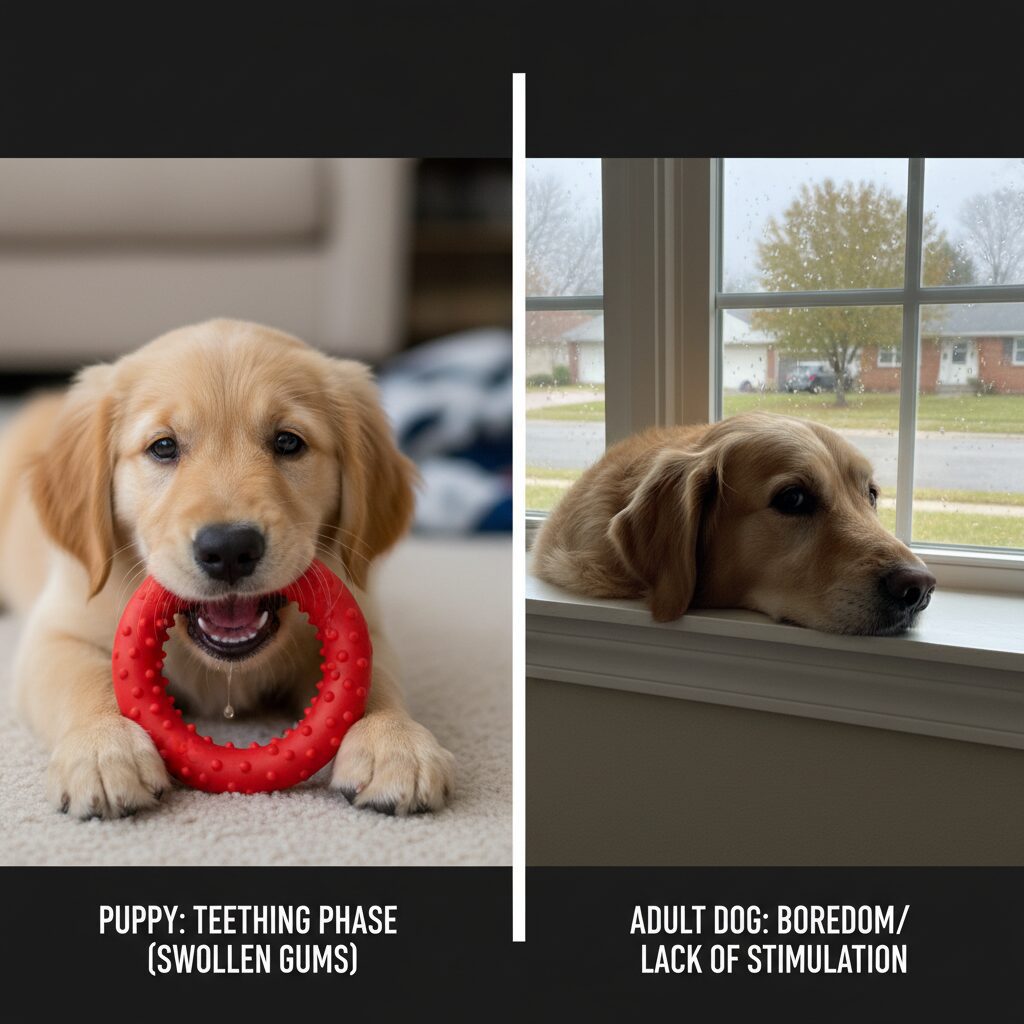
To effectively stop the behavior, you must first identify the root cause. Dogs rarely destroy furniture out of spite; there is almost always an underlying physiological or psychological driver. Treating the symptom without addressing the cause often leads to the behavior manifesting elsewhere.
Teething in Puppies
If your dog is under six months old, they are likely teething. Chewing on hard surfaces like wooden legs provides relief for sore gums. The texture of wood is particularly satisfying because it offers resistance that massages the gum line.
Boredom and Excess Energy
For adult dogs, the most common culprit is boredom. Working breeds and high-energy dogs require significant mental and physical stimulation. If these needs are not met, they will create their own entertainment, and dismantling a table leg is a physically engaging activity.
Separation Anxiety
If the damage only occurs when you are away from home, your dog may be suffering from separation anxiety. Chewing serves as a self-soothing mechanism to release stress hormones. In this context, the chewing is a panic response rather than a behavioral vice.
Immediate Management: Deterrents and Barriers
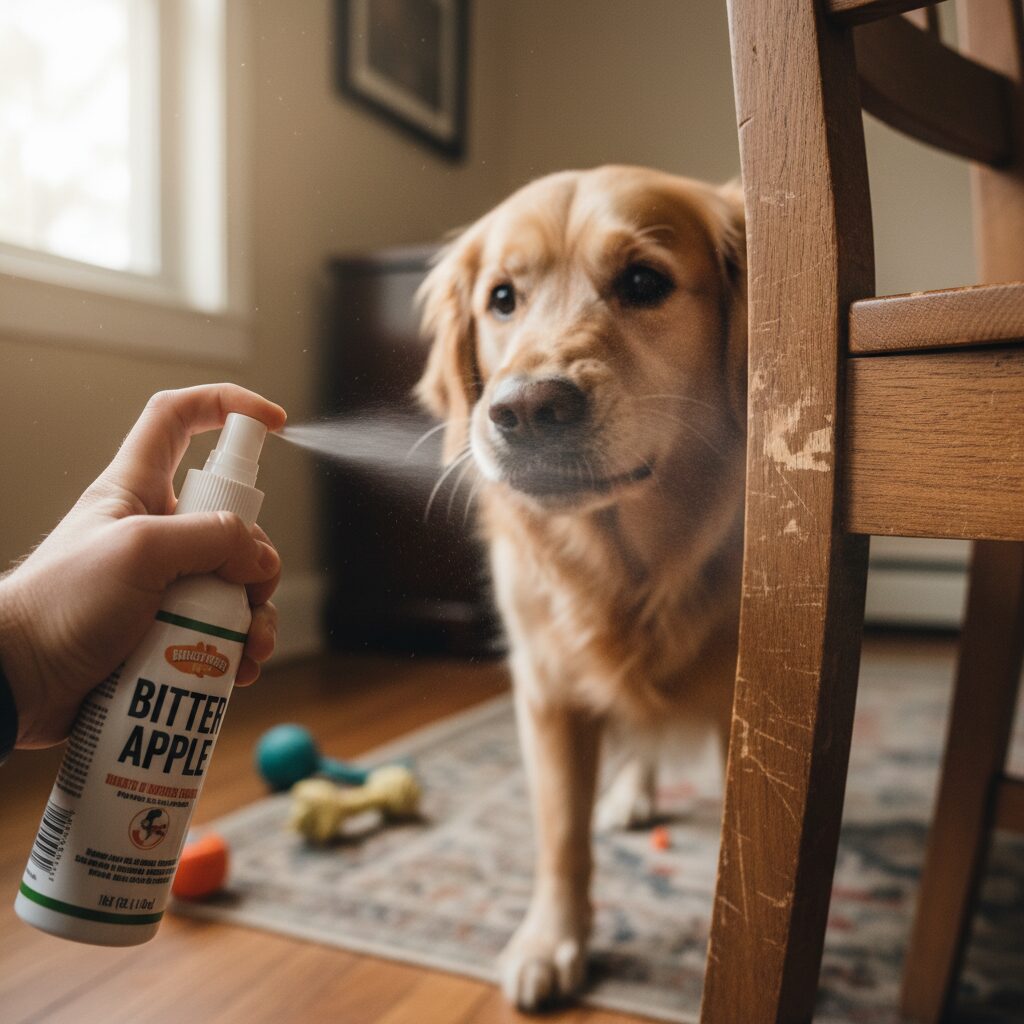
While you work on long-term training, you must stop the bleeding—figuratively and literally. Management prevents the dog from rehearsing the unwanted behavior. The more a dog chews the wood, the more habitual the action becomes.
- Taste Deterrents: Apply a commercial anti-chew spray, such as bitter apple or cherry, to the furniture legs. These sprays have a foul taste that discourages oral contact. Note: Always test a small, hidden area of the wood first to ensure it does not stain.
- Physical Barriers: If the dog cannot be supervised, they should not have access to the furniture. Utilize baby gates, exercise pens (x-pens), or crate training to keep the dog away from tempting wooden targets when you are unable to intervene.
- Furniture Guards: For persistent chewers, consider temporary PVC pipe covers or heavy-duty plastic guards that wrap around the table legs, physically blocking access to the wood.
The Training Protocol: Redirection and the ‘Leave It’ Command
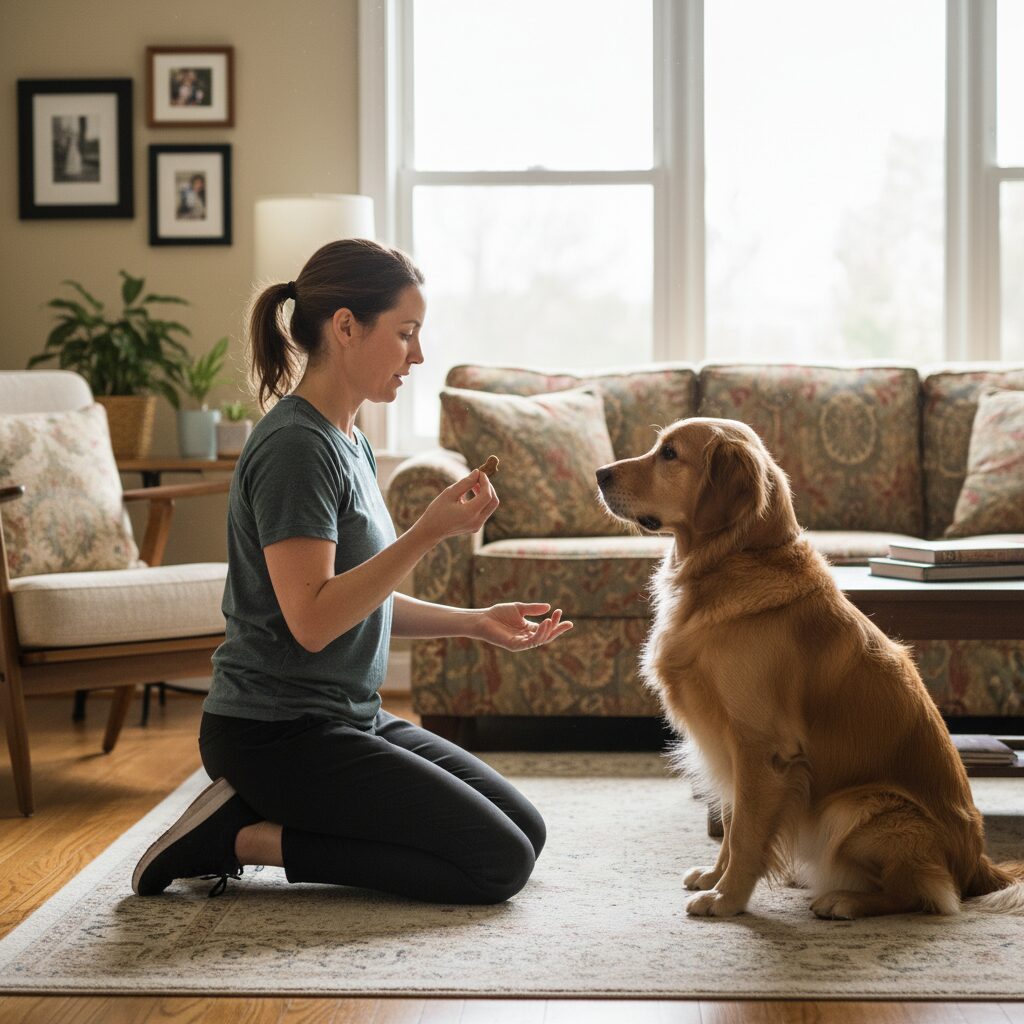
Training is the bridge between management and a permanent solution. You must teach your dog what not to chew, but more importantly, what to chew.
The Art of Redirection
When you catch your dog chewing on a table leg, avoid harsh punishment, which can cause fear or aggression. Instead, interrupt the behavior with a calm, firm noise (like “Ah-ah!”) to get their attention. Immediately offer a high-value chew toy or bone. When they engage with the appropriate item, praise them lavishly. You are teaching them: “Wood is boring; this toy is rewarding.”
Mastering ‘Leave It’
The “Leave It” command is essential for safety. Practice this away from the furniture first:
- Hold a treat in a closed fist and present it to your dog. Say “Leave it.”
- Wait for them to stop sniffing or licking your hand.
- The moment they pull away or make eye contact with you, say “Yes!” and give them a different treat from your other hand.
- Gradually apply this to the furniture. As they approach the table leg, give the command. Reward heavily when they turn away from the wood.
Enrichment: Solving the Boredom Crisis
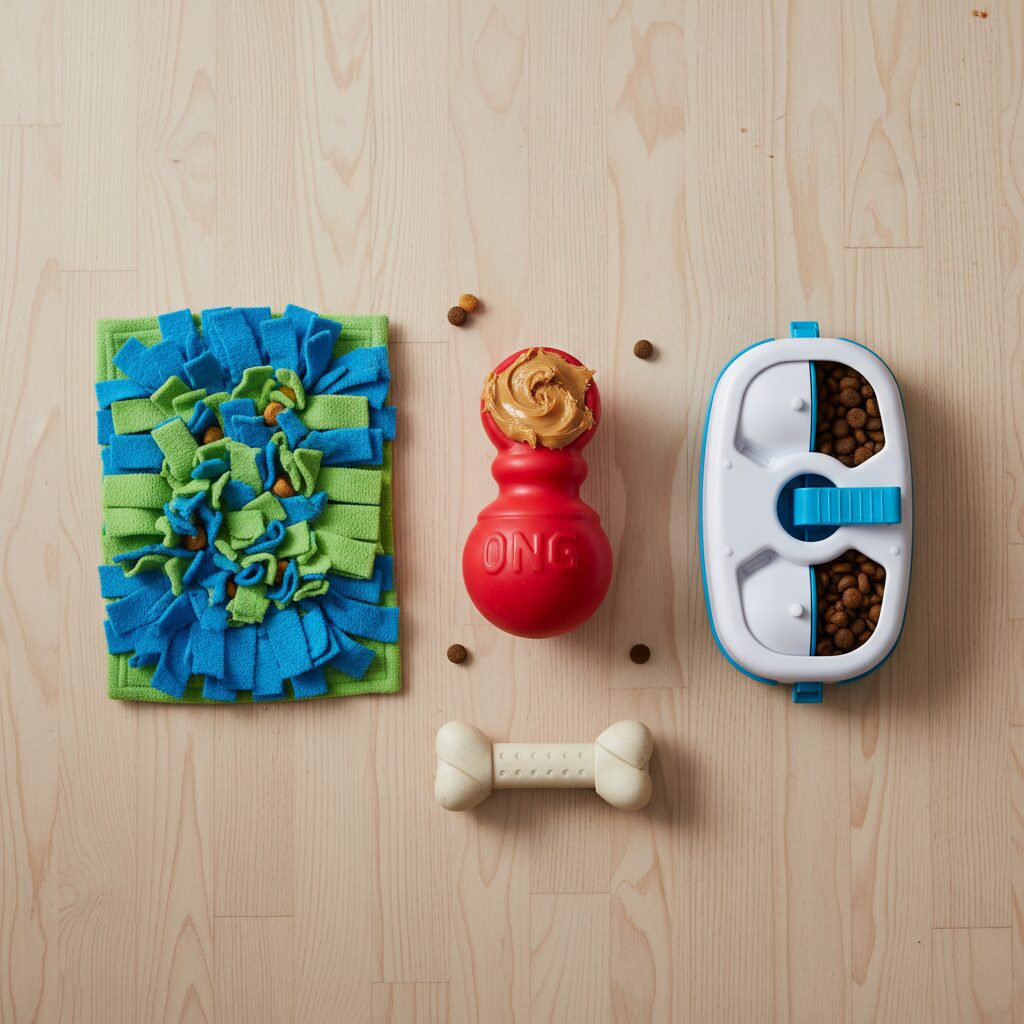
A tired dog is a good dog. If your dog is chewing wood because they have surplus energy, no amount of bitter spray will permanently solve the problem. You must provide an outlet for their natural drives.
Mental Stimulation
Feed your dog their meals using puzzle toys or slow feeders rather than a bowl. This engages their brain and burns energy. Frozen Kongs stuffed with peanut butter or yogurt can keep a chewer occupied for 30 to 45 minutes, satisfying the urge to lick and chew in a non-destructive way.
Physical Exercise
Ensure your dog is getting adequate aerobic exercise. A casual walk around the block may not be enough for a young Labrador or Shepherd. Fetch, flirt poles, or jogging can help deplete the energy reserves that would otherwise be directed at your furniture.
Repairing the Damage to Prevent Relapse
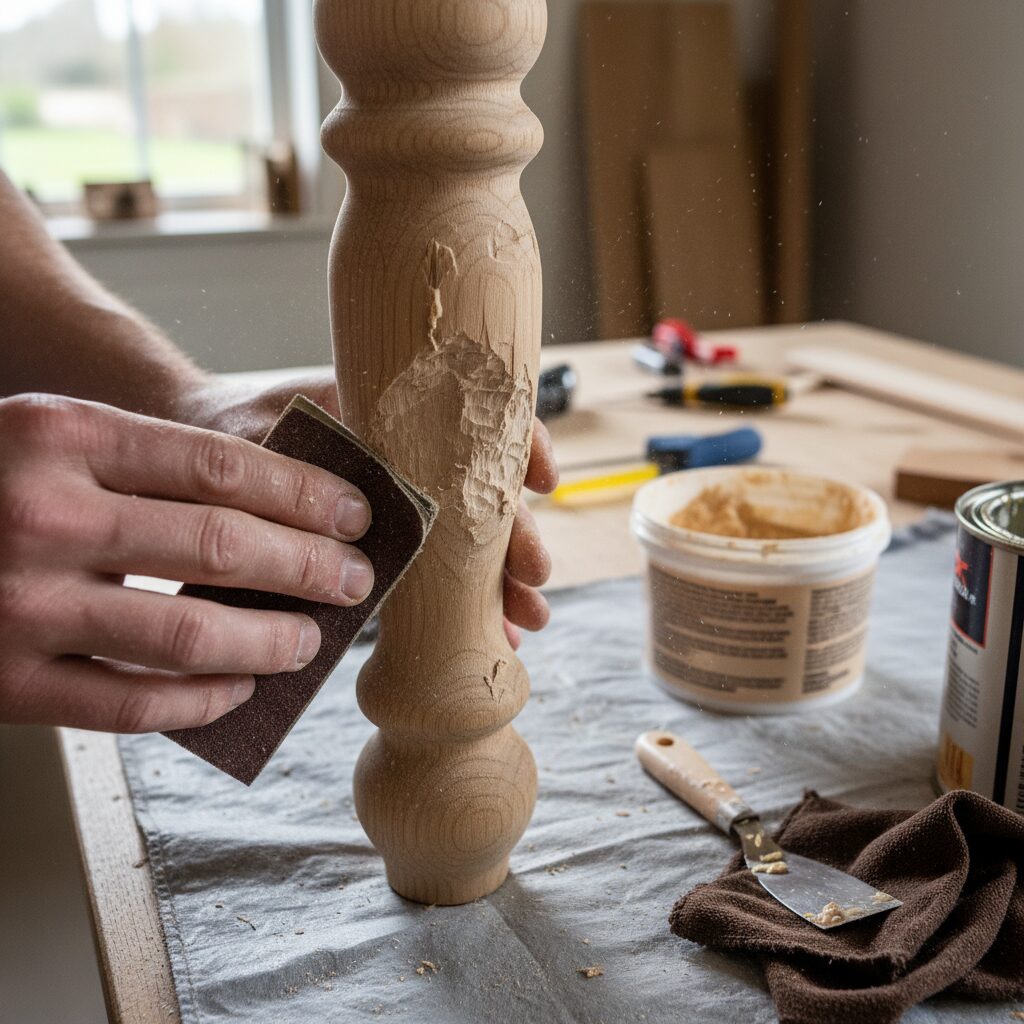
It is a little-known fact in canine behavior that dogs are often attracted back to the scene of the crime by the texture of previously chewed wood. Splintered, rough wood feels different and interesting to a dog’s tongue and gums, inviting them to continue the demolition.
Once you have the behavior under control, repair the furniture legs. Sand down rough edges and splinters until the surface is smooth again. If necessary, use wood filler and refinish the leg. By removing the tactile “fun” of the splintered wood, you reduce the likelihood of your dog returning to that specific spot to finish the job.
Consistency is Key to Saving Your Furniture
Stopping a dog from chewing on wooden furniture legs is rarely an overnight fix. It requires a combination of restricting access, applying deterrents, and consistently training alternative behaviors. Remember that your dog is not trying to ruin your home; they are simply fulfilling a biological need or expressing an emotional state.
By addressing the root cause—whether it is teething, boredom, or anxiety—and providing appropriate outlets for their energy, you can protect your heirlooms and build a stronger, more communicative bond with your canine companion. Be patient, be consistent, and keep plenty of chew toys within arm’s reach.