
Reverse Timeouts: The Gentle Way To Stop Puppy Biting Fast
Welcome to the wonderful, chaotic world of puppy parenthood! It’s all fuzzy bellies, clumsy pounces, and unconditional love. But let’s be honest, it’s also filled with moments where your little angel turns into a piranha with paws. Those needle-sharp puppy teeth can be a real shock, turning a fun play session into a painful ordeal. If you’re wondering how to stop the biting without squashing your pup’s playful spirit, you’ve come to the right place.
Forget old-school, punishment-based methods that can create fear and anxiety. We’re going to introduce you to a game-changing technique called the reverse timeout. It’s a simple, gentle, and surprisingly fast way to teach your puppy a crucial lesson: biting makes the best thing in the world—you—go away. Get ready to reclaim your hands and build an even stronger bond with your furry best friend.
What Exactly Is a ‘Reverse’ Timeout?

So, what’s the magic behind this technique? A traditional timeout involves removing the puppy from the situation and putting them in a crate or another room. A reverse timeout flips that script. Instead of removing the puppy, you remove yourself and all the fun that comes with you.
Think of it from your puppy’s perspective. They are playing with their favorite person (you!), having a fantastic time. In their excitement, they nip you. Suddenly, the game stops. Their playmate gets up and leaves. The fun is over. After a few repetitions, a lightbulb goes on in their clever little brain: ‘Oh! When my teeth touch human skin, the party ends. To keep the party going, I need to keep my teeth to myself!’
This method is rooted in positive reinforcement principles. You’re not yelling, scaring, or hurting your puppy. You are simply removing the reward (your attention and playtime) for an unwanted behavior (biting). It teaches them to make better choices on their own, which is the foundation of all great training.
Expert Tip: The goal isn’t to punish, but to create a clear and immediate consequence. The message is simple: ‘Gentle mouths get to play, nippy mouths don’t.’
Your 4-Step Guide to the Perfect Reverse Timeout
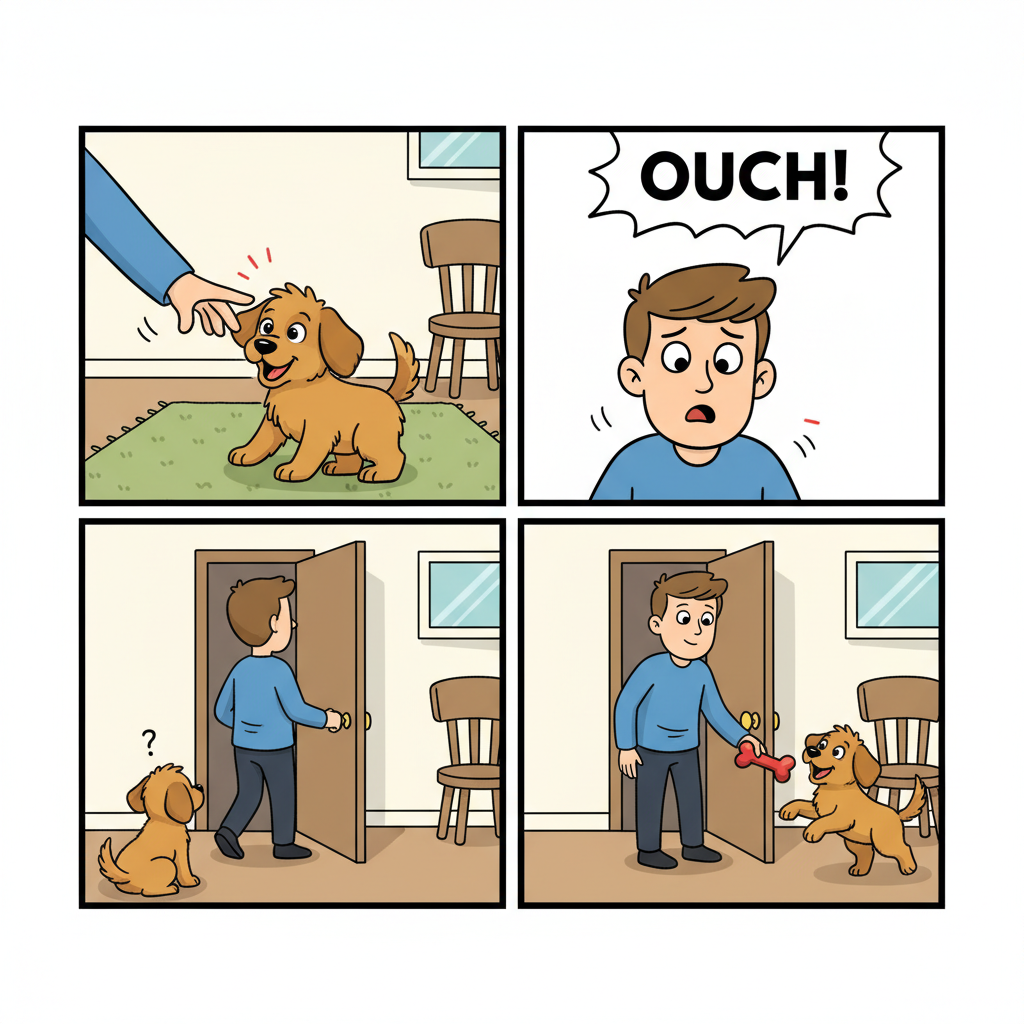
Ready to put it into practice? The beauty of the reverse timeout is its simplicity. The key is to be consistent, calm, and quick. Follow these four steps every single time your puppy’s teeth make contact with your skin.
- The Moment of Contact: The instant you feel those sharp teeth on your skin—even if it’s gentle—the training begins. Don’t wait to see if they’ll bite harder. Any teeth-on-skin contact is the trigger.
- The Marker Word: Let out a short, sharp, but not overly dramatic, sound. A simple ‘Ouch!’ or ‘Oops!’ works perfectly. This isn’t meant to scare your puppy, but to mark the exact moment the unwanted behavior occurred. Keep the tone surprised, not angry.
- The Removal: This is the most critical step. Immediately and without another word, stand up and walk away. Step over a baby gate, go into another room, or simply walk to the other side of the living room. The goal is to completely withdraw all attention—no eye contact, no talking, no touching.
- The Brief Pause & Calm Return: Wait for just 15 to 30 seconds. This is not a long punishment. It’s just long enough for the message to sink in. After the short pause, return to your puppy calmly. Don’t hold a grudge. Invite them to play again with an appropriate toy, giving them a chance to make the right choice this time.
If you return and they immediately nip you again, simply repeat the process. It may take several repetitions in a single play session, but your puppy will catch on faster than you think!
Common Mistakes to Avoid (And What to Do Instead)
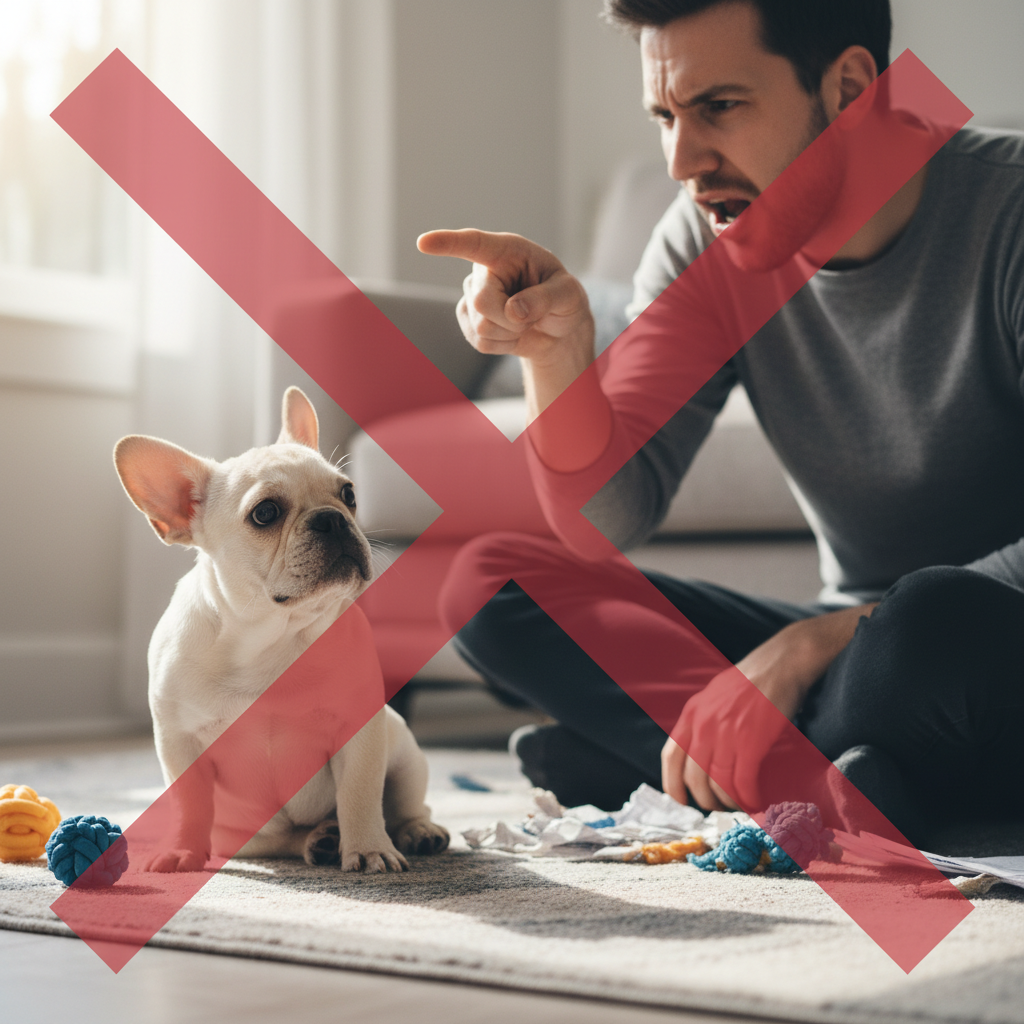
The reverse timeout is powerful, but a few common mistakes can undermine its effectiveness. Are you accidentally sabotaging your own training? Here’s what to watch out for:
- Getting Emotional: It’s easy to get frustrated, but yelling or scolding your puppy will only confuse or scare them. It can even make some puppies more frantic and bitey. Instead: Take a deep breath and stay neutral. Your calm departure is the most powerful message.
- Making the Timeout Too Long: A puppy’s attention span is short. If you leave for five minutes, they will have completely forgotten why you left in the first place. The connection between the bite and the consequence will be lost. Instead: Keep the timeout super short—no more than 30 seconds.
- Inconsistency: If sometimes you do a reverse timeout, other times you just pull your hand away, and other times a different family member lets them chew on their fingers, your puppy will get mixed messages. Instead: Make sure every single person in the household is on board and uses the exact same method every single time. Consistency is non-negotiable!
- Not Providing Legal Outlets: Puppies have a biological need to chew, especially when teething. If you don’t give them something appropriate to bite, they will always choose you. Instead: Always have a variety of puppy-safe chew toys available. When you return from a timeout, immediately redirect their mouth onto a toy and praise them enthusiastically for chewing it.
When Biting Is More Than Just Play

While reverse timeouts are fantastic for typical puppy mouthing and play-biting, it’s important to recognize when something more serious might be going on. Normal puppy biting is exploratory and usually lacks real pressure. However, you should pay closer attention if you notice other behaviors.
Is it Fear or Aggression?
Observe your puppy’s body language. Is the biting accompanied by stiff posture, a hard stare, growling, or snarling? Does it happen when you try to take something away (resource guarding) or when they feel cornered? This could be more than simple play-biting and may indicate fear, anxiety, or aggression.
When to Call a Professional: If you see these signs, or if the biting is breaking skin consistently and seems aggressive rather than playful, it’s time to consult a professional. A certified professional dog trainer or a veterinary behaviorist can help you understand the root cause and develop a safe and effective behavior modification plan. It’s always better to seek help early!
For the vast majority of puppies, however, biting is a normal phase. With patience, consistency, and the gentle guidance of the reverse timeout, you’ll navigate it successfully and teach your pup the soft-mouthed manners they need to be a wonderful companion for life.
Conclusion
Navigating the puppy biting phase is a rite of passage for every dog owner, but it doesn’t have to be a battle. By using the reverse timeout technique, you’re not just stopping an unwanted behavior; you’re communicating with your puppy in a way they can understand. You’re building a relationship based on trust and clear boundaries, not fear.
Remember the keys to success: be immediate, be consistent, and be patient. Every time you calmly walk away, you’re depositing a lesson in your puppy’s ‘good manners’ bank. Before you know it, those needle-like nips will be replaced by gentle licks and appropriate play. So hang in there, stay consistent, and get ready to enjoy a fun, bite-free life with your well-behaved best friend!