
Porcupine Avoidance Training: The Ultimate Safety Guide for Hiking Dogs
There’s nothing quite like the freedom and joy of exploring a winding trail with your canine companion trotting happily by your side. The fresh air, the new smells, the shared experience—it’s what being a dog owner is all about! But as responsible pet parents, we also know that the wilderness comes with its own set of risks. While we might worry about bigger predators, one of the most common and painful dangers our curious dogs face is a surprisingly small creature: the porcupine.
A single, inquisitive sniff can lead to a face full of agonizing quills, an emergency vet visit, and a hefty bill. But what if you could teach your dog to recognize the danger and actively avoid it? That’s where porcupine avoidance training comes in. This specialized training is one of the most important safety skills you can give your hiking buddy. In this guide, we’ll walk you through everything you need to know to keep your dog safe from a prickly predicament, so you can focus on making amazing memories on the trail.
Understanding the Prickly Problem: Why Porcupines and Dogs Don’t Mix
It’s a common misconception that porcupines can “shoot” their quills. In reality, the quills detach very easily upon contact. A dog’s natural curiosity—leading with their nose and mouth—makes them the perfect target. And these aren’t just simple splinters; porcupine quills are a serious medical threat.
The Anatomy of a Quill
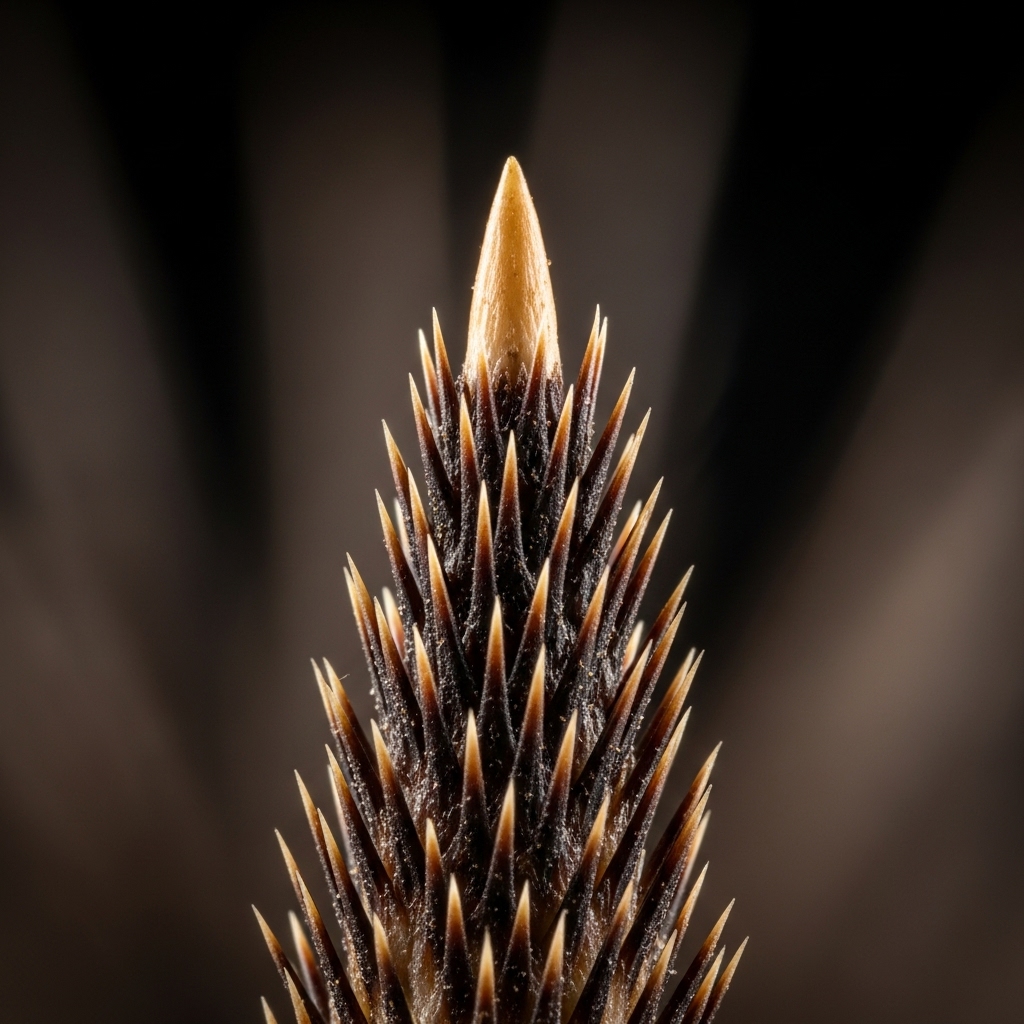
Each quill is a hollow, modified hair made of keratin, tipped with a sharp point and covered in microscopic, overlapping barbs that face backward. Think of it like the tip of a fishhook. When a quill enters the skin, these barbs act like anchors, making removal incredibly difficult and painful. Any movement, including your dog’s muscle contractions, can cause the quills to migrate deeper into the body.
The Dangers Go More Than Skin Deep
A porcupine encounter can lead to a host of severe complications:
- Extreme Pain and Distress: A muzzle full of quills is excruciatingly painful for a dog.
- Infection: The puncture wounds can easily become infected if not treated properly.
- Internal Damage: Migrating quills can travel inward, potentially puncturing vital organs like lungs, eyes, or even the heart, which can be fatal.
- Complicated Removal: Quills must be removed by a veterinarian, usually under sedation or general anesthesia. Attempting to pull them out yourself can cause the quills to break, leaving the barbed tip embedded in the tissue.
A porcupine encounter is always a veterinary emergency. The cost of treatment can easily run into hundreds or even thousands of dollars, depending on the severity. Prevention through training isn’t just smart; it’s a crucial part of responsible pet ownership.
The ‘Uh-Oh’ Signal: How Avoidance Training Works
Porcupine avoidance training is a form of aversive conditioning. Now, the word ‘aversive’ can sound scary, but in this context, it’s about creating a powerful, negative association that can save your dog’s life. The goal is simple: teach your dog that the sight, smell, and sound of a porcupine is something to be avoided at all costs.
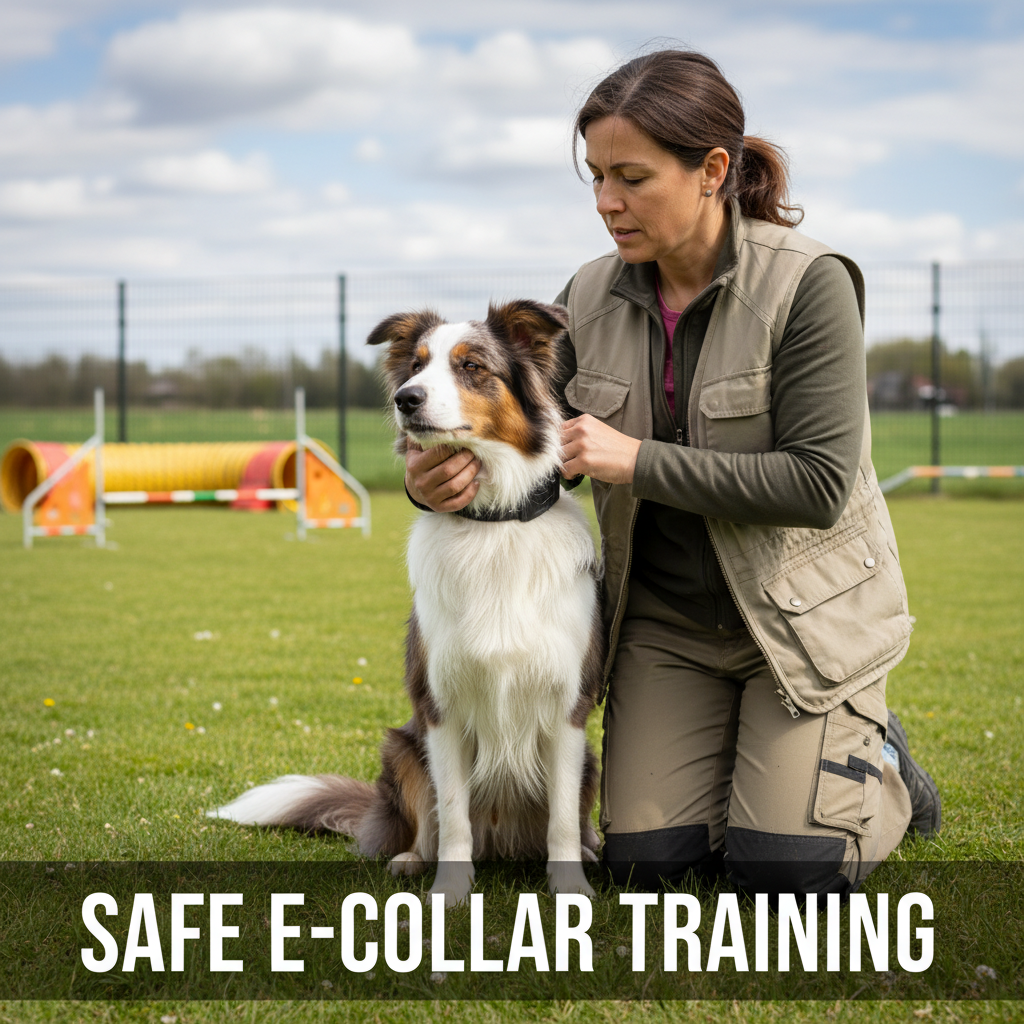
We achieve this by pairing the stimulus (the porcupine) with an unpleasant but harmless consequence. In a controlled and safe setting, this is most effectively done using a modern, high-quality electronic collar (e-collar). When the dog shows interest in a porcupine decoy, it receives a brief, startling stimulation. This mimics the kind of sharp, negative feedback nature would provide, but in a way that we can control and that doesn’t cause actual harm.
Why Not Just Use Treats?
While positive reinforcement is the gold standard for teaching behaviors like ‘sit’ and ‘stay,’ it’s often not reliable enough for life-or-death situations. A dog’s prey drive or curiosity can easily override the desire for a treat when faced with a fascinating new creature. The ‘uh-oh’ signal created by aversive training needs to be stronger than the dog’s instinct to investigate. It teaches the dog to make its own decision to stay away, even when you’re not there to say ‘leave it’.
Your Step-by-Step Training Plan
While we strongly recommend working with a professional trainer who specializes in wildlife avoidance, understanding the process is key. This training should be done in a controlled environment where the dog can learn safely.
What You’ll Need:
- A realistic porcupine decoy (many trainers use taxidermied animals to include the real scent).
- A high-quality e-collar that has been properly fitted to your dog.
- A long lead (15-20 feet).
- High-value rewards, like small pieces of chicken or cheese.
- A safe, enclosed outdoor area.
The Training Process:
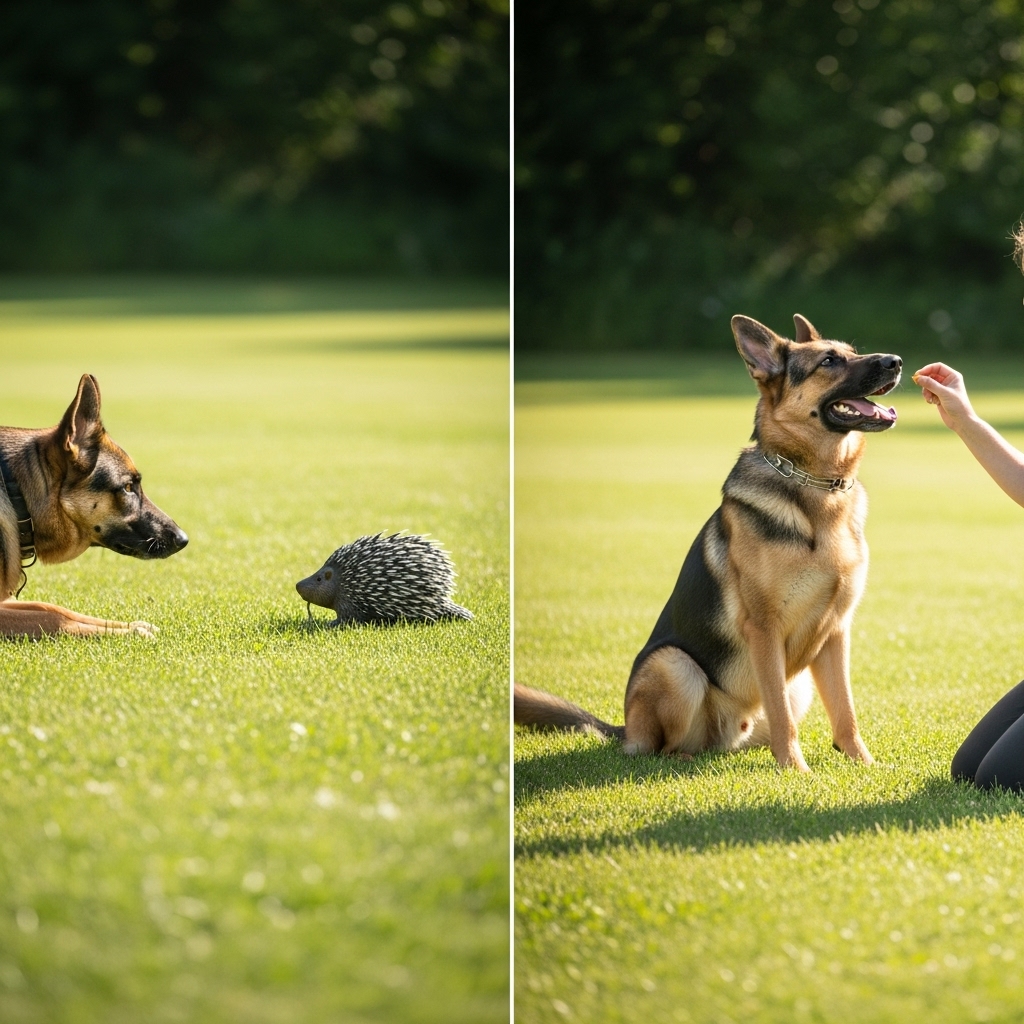
- The Setup: Place the decoy in the training area before bringing your dog out. Ensure the e-collar is on, fitted correctly, and you have the remote ready. Your dog should be on the long lead.
- Step 1: The Approach: Walk your dog through the area, allowing them to explore. Act neutral and let them ‘discover’ the decoy on their own.
- Step 2: The Correction: The very instant your dog shows clear interest in the decoy—moving towards it, ears perked, sniffing intently—apply a momentary stimulation from the e-collar at a level that is startling but not painful. Simultaneously, you can give a sharp verbal cue like “No!” or “Leave it!”. Timing is absolutely critical here. The correction must be associated with the decoy, not with you.
- Step 3: The Retreat and Reward: The dog’s natural reaction will be to back away from the unpleasant sensation. The moment they turn away from the decoy, the pressure is gone. Now is the time for praise! Use an upbeat, happy voice, and reward them with a high-value treat for making the right choice to move away.
- Step 4: Repetition and Proofing: Repeat the exercise a few times from different angles. You are looking for your dog to spot the decoy and actively choose to give it a wide berth. Once the dog reliably avoids it, you can practice in different locations to ‘proof’ the behavior, ensuring they understand that all porcupines are to be avoided.
Oops! What to Do When Quills Happen
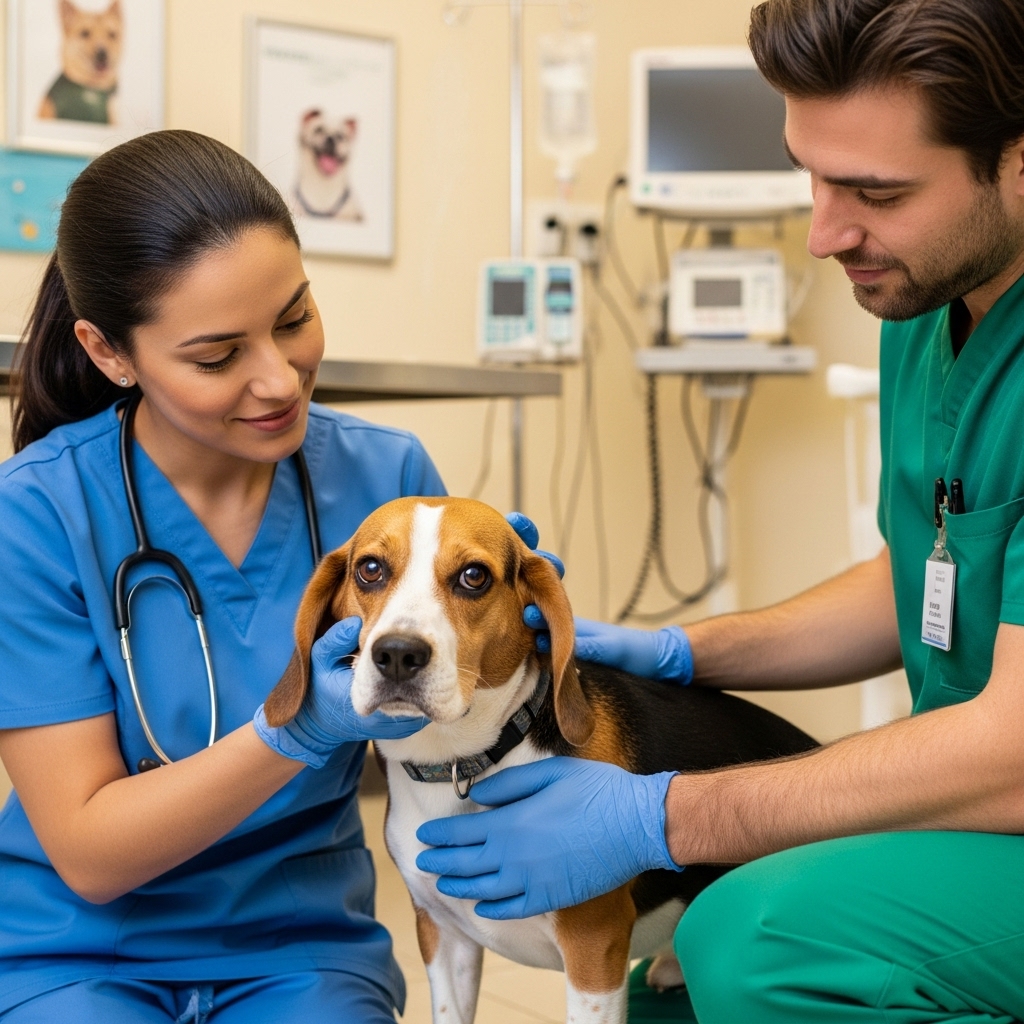
Even with the best training, accidents can happen. A dog might be surprised by a porcupine hiding under a log, or their instincts could kick in before their training does. If your dog gets quilled, staying calm and acting fast is paramount.
Immediate Action Plan:
- Stabilize Your Dog: Keep your dog as calm as possible. If you have a muzzle, use it. A dog in pain may bite, even their beloved owner. It will also prevent them from pawing at their face and driving the quills in deeper.
- DO NOT Pull the Quills: This is the most important rule. The barbs make it impossible to pull them out cleanly. You will likely break the quill, leaving the barbed tip embedded deep in the tissue, making the veterinarian’s job much harder and risking infection. You will also cause your dog immense pain.
- Do Not Cut the Quills: An old myth suggests cutting the quills relieves pressure. This is false. It actually makes them harder for the vet to grip and remove.
- Go to the Vet. Immediately. This is a true medical emergency. Do not wait. Call your vet or the nearest emergency animal hospital to let them know you are on your way. The sooner the quills are removed professionally, the lower the risk of complications.
Conclusion
Investing in porcupine avoidance training is investing in your dog’s safety and your own peace of mind. It transforms your dog from a curious liability into a savvy trail partner who understands how to navigate the wilderness safely. By teaching them to recognize and steer clear of this common danger, you’re not just preventing a painful and expensive incident—you’re ensuring that your adventures together remain joyful and worry-free. So, before you lace up your hiking boots for your next outing, consider giving your best friend the gift of knowledge. Happy (and safe) trails!