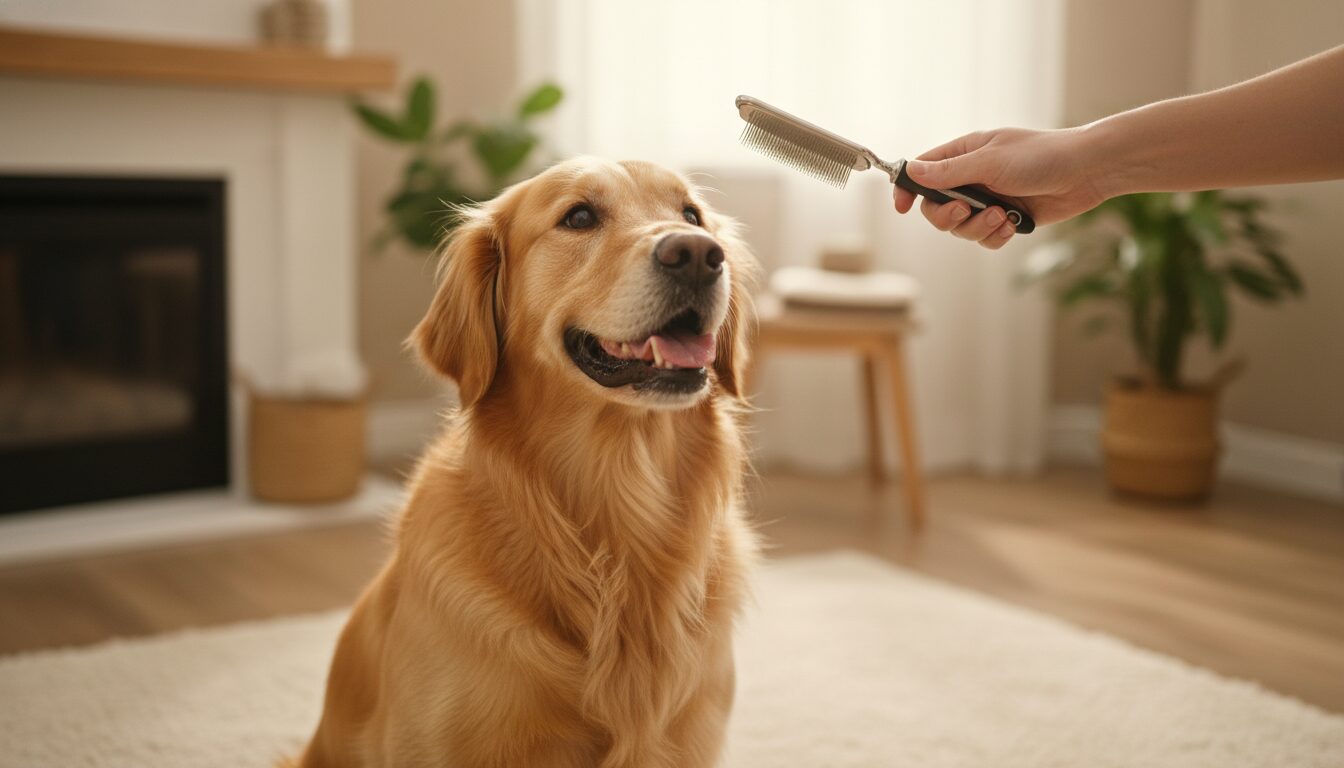
No More Matting: How To Train Your Dog To Actually Like Being Brushed
For many dog owners, the sight of a grooming brush triggers an immediate reaction from their pet: running under the bed, trembling, or even snapping. This aversion creates a difficult cycle where the dog avoids brushing, leading to painful mats, which in turn makes the eventual grooming session even more uncomfortable. Matting is not merely a cosmetic issue; it is a significant health concern that can restrict movement, trap moisture and bacteria, and cause severe skin irritation.
However, grooming does not have to be a battle of wills. As a canine specialist, I assure you that with patience, the right tools, and a scientific approach known as desensitization and counter-conditioning, you can change your dog’s emotional response to the brush. The goal is to move from forceful restraint to cooperative care, where your dog voluntarily participates in the process. This guide will walk you through the step-by-step process of training your dog to not just tolerate, but actually like being brushed.
Understanding the Resistance: Why Does Your Dog Hate the Brush?
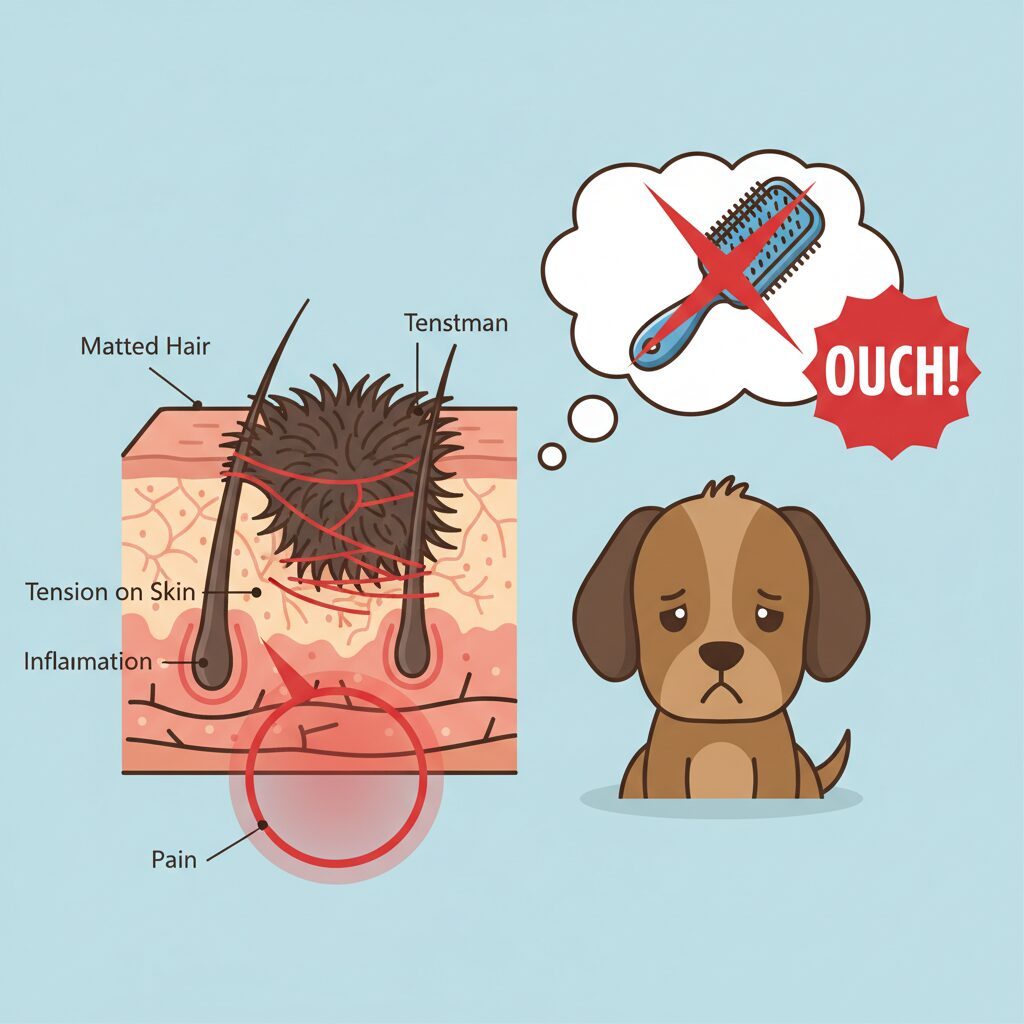
Before we can fix the behavior, we must understand the root cause. Dogs rarely act out of spite; their resistance is usually rooted in fear or physical discomfort. If a dog has been brushed too roughly in the past, or if a brush has snagged on a tangle and pulled the skin, the dog creates a strong negative association with the tool.
Common reasons for grooming aversion include:
- Painful Mats: Tight mats pull constantly on the skin. Brushing over them without preparation causes acute pain.
- Wrong Tools: Using a sharp slicker brush on a short-haired dog or pressing too hard can scratch the skin (brush burn).
- Sensory Overload: The sound of the bristles and the sensation of restraint can be overwhelming for sensitive dogs.
- Lack of Early Exposure: Puppies that were not handled frequently during their critical socialization period (8-16 weeks) often struggle with handling later in life.
Recognizing that your dog is likely afraid or in pain, rather than being ‘stubborn,’ is the first step toward a successful training outcome.
The Toolkit: Essential Gear for Pain-Free Grooming
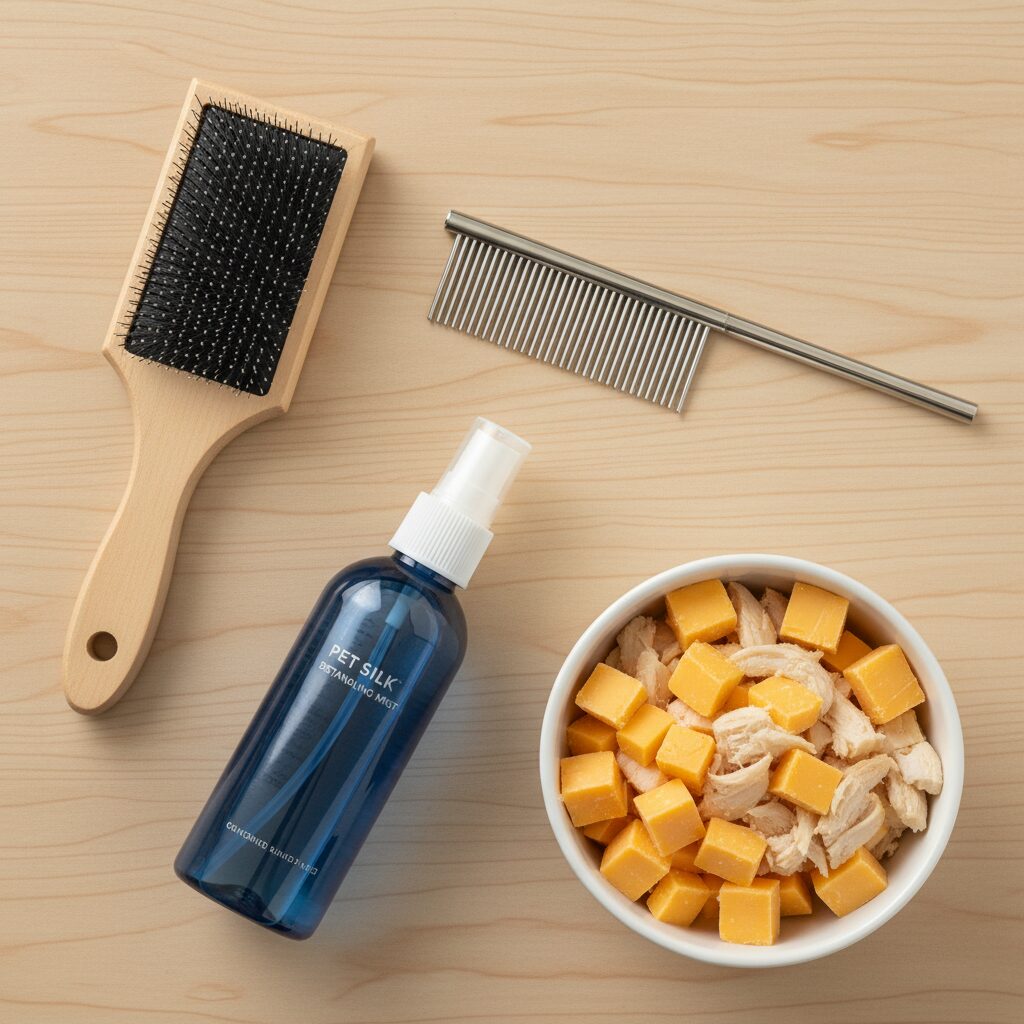
Success depends heavily on using the correct equipment. The wrong brush can cause pain, reinforcing the dog’s fear. Conversely, high-value rewards are the currency you will use to pay your dog for their cooperation.
Choosing the Right Brush
Select a brush appropriate for your dog’s coat type. For double-coated breeds (like Huskies or Golden Retrievers), an undercoat rake is essential. For curly coats (like Poodles), a high-quality slicker brush and a metal greyhound comb are standard. Ensure the bristles are polished or coated so they do not scratch the skin.
High-Value Reinforcers
Dry kibble is rarely sufficient for overcoming fear. You need high-value treats that your dog loves but rarely gets. Excellent options include:
- Boiled chicken breast (shredded)
- Small cubes of cheese
- Freeze-dried liver
- Peanut butter (xylitol-free) smeared on a lick mat
The lick mat is particularly useful as it keeps the dog occupied and creates a calming endorphin release while you work.
Step-by-Step Desensitization: The Training Protocol
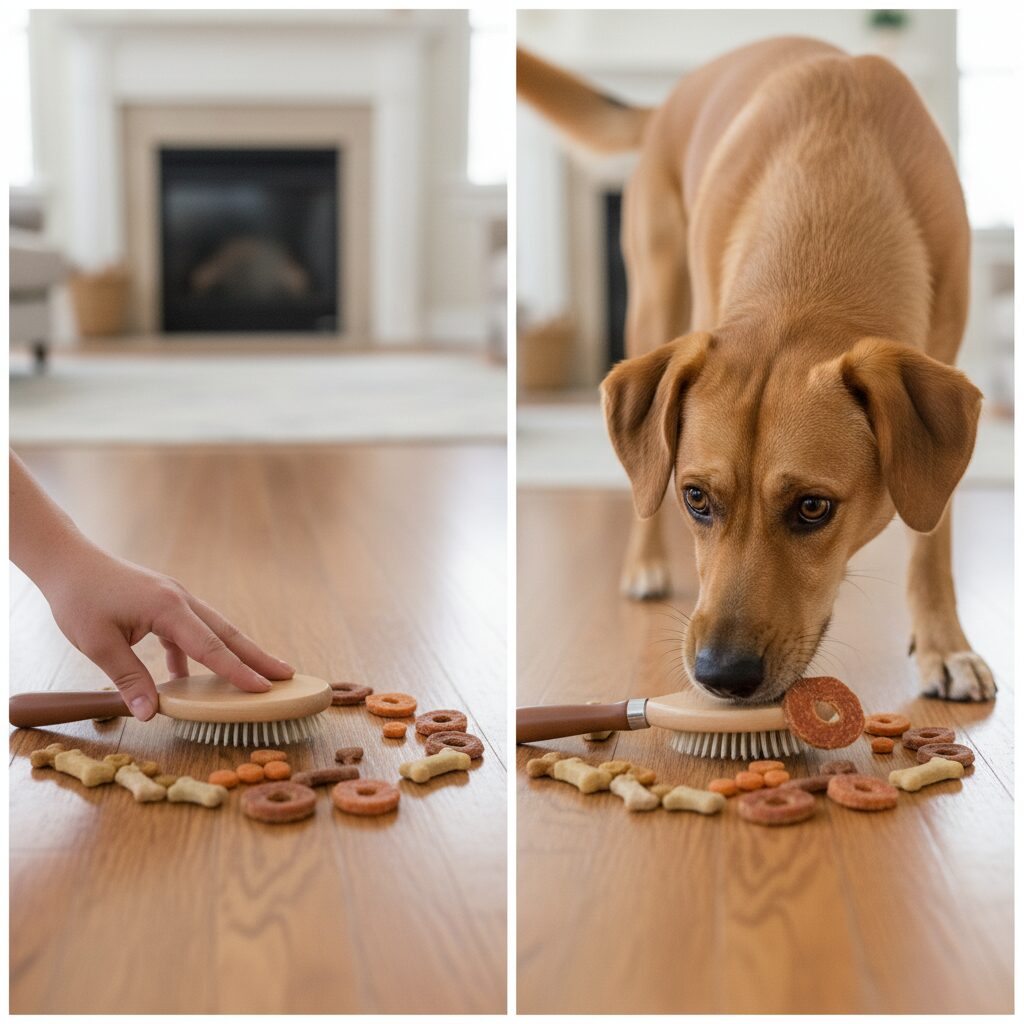
This process utilizes counter-conditioning: changing the dog’s emotional response from ‘Brush = Pain’ to ‘Brush = Chicken.’ Do not rush these steps. If your dog shows signs of stress (lip licking, yawning, turning away), go back to the previous step.
Step 1: The Appearance of the Tool
Bring the brush out but do not touch the dog with it. Place the brush on the floor. When the dog looks at the brush or sniffs it, immediately mark the behavior with a ‘Yes!’ or a clicker, and deliver a high-value treat. Repeat this until the dog looks for a treat the moment the brush appears.
Step 2: The Touch (No Brushing)
Hold the brush in one hand and treats in the other. Gently touch the back of the brush (the smooth side, not the bristles) to the dog’s shoulder for one second. Say ‘Yes!’ and treat. Repeat this on safe areas like the shoulder or chest. Do not attempt to brush yet; we are simply teaching the dog that contact with the object predicts a reward.
Step 3: The Single Stroke
Turn the brush over. Perform one very gentle, short stroke on a non-matted area. Immediately feed a treat while you are stroking or directly after. The sequence is critical: Stroke -> Treat. If you stop stroking and the dog stops eating, you are making progress.
Step 4: Building Duration
Gradually increase the number of strokes before giving the treat. Move from one stroke to three, then five. If the dog pulls away, you have pushed too far too fast. Reset to one stroke.
Handling Sensitive Areas and Existing Mats
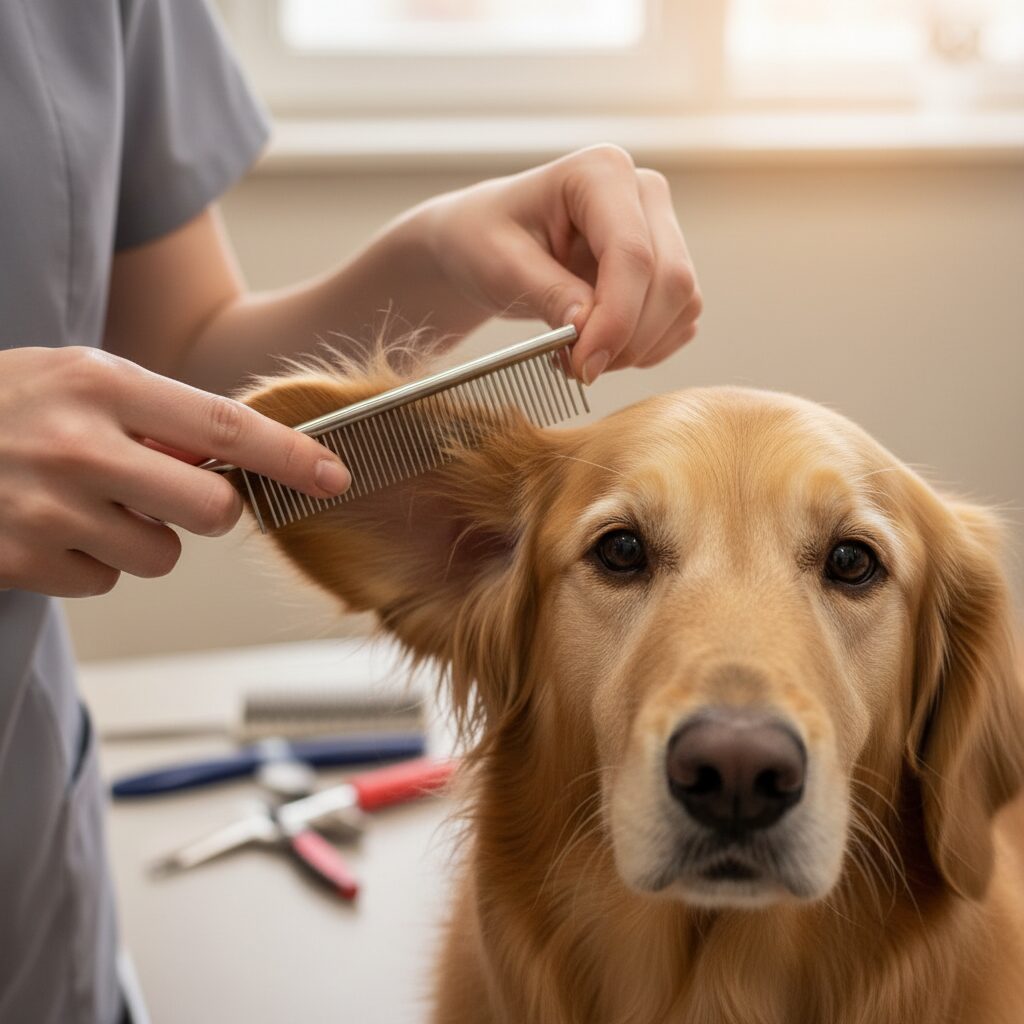
Most dogs have specific ‘no-go’ zones, typically the paws, tail, sanitary areas, and behind the ears. These areas require extra patience. When approaching these sensitive spots, revert to Step 2 (touch without brushing) and heavily reinforce with treats.
The Line Brushing Technique
For long-haired breeds, surface brushing often misses the mats close to the skin. Use the ‘line brushing’ technique: lift the hair up and brush a small section of the coat down, layer by layer, until you see the skin. This ensures you are removing the dead undercoat that causes matting.
Dealing with Mats
If you encounter a mat, do not pull. Use a detangling spray and let it sit for a few minutes. Use a metal comb to gently pick the mat apart from the ends up toward the skin. If the mat is tight against the skin, for safety reasons, it is often best to have a professional groomer or veterinarian shave it out rather than risking a cut with scissors.
Troubleshooting: When to Stop and Seek Help
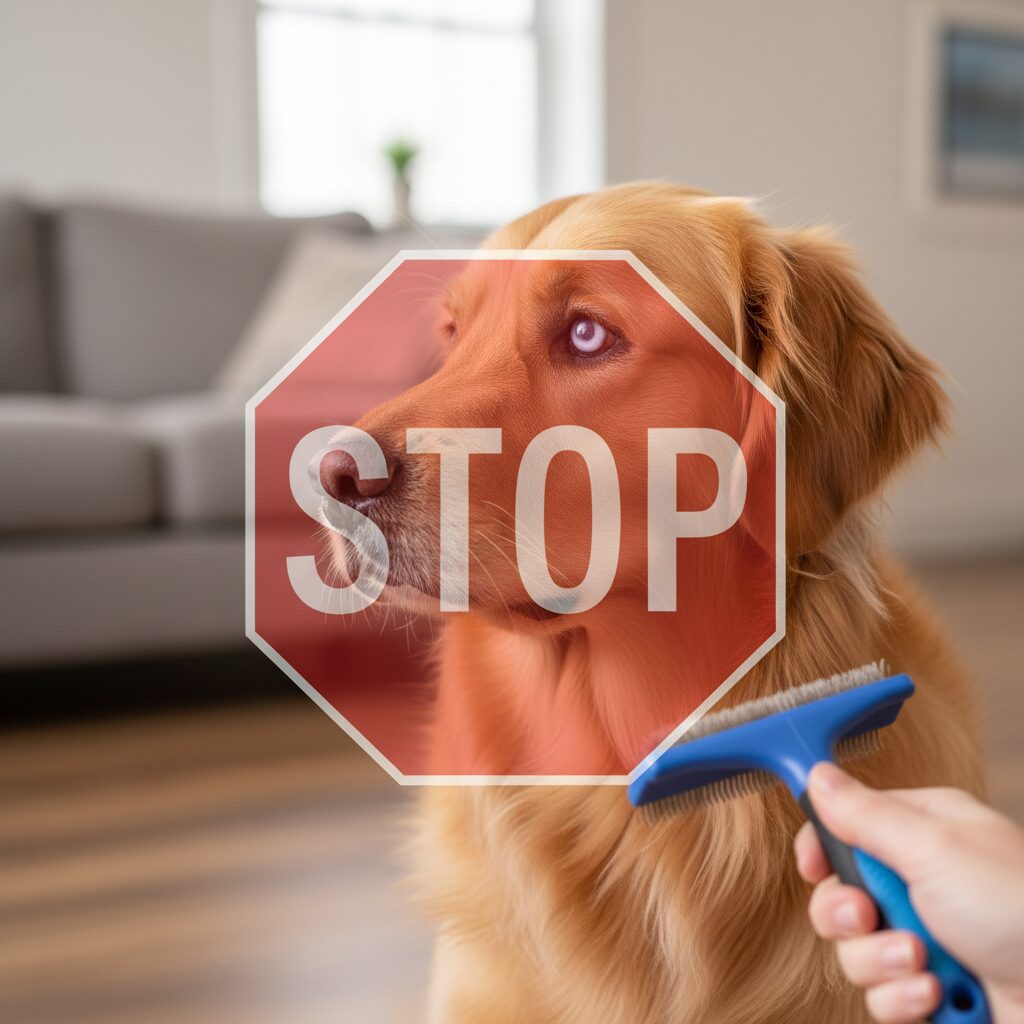
Training takes time, and pushing a dog past their threshold can undo weeks of progress. It is vital to recognize the subtle signs of canine stress before they escalate to a growl or a bite.
Watch for these signals:
- Freezing: The dog goes rigid.
- Whale Eye: Showing the whites of the eyes.
- Lip Licking or Yawning: Common displacement behaviors indicating anxiety.
- Tucking the Tail: A clear sign of fear.
If you see these signs, stop the session immediately. End on a positive note with a simple command the dog knows (like ‘sit’) and a treat. If your dog is severely matted or shows aggression when the brush appears, consult a professional force-free trainer or a veterinary behaviorist. In severe cases, sedation grooming at a veterinary clinic may be necessary to reset the coat to a manageable length so you can start training from scratch without the pain of existing mats.
Consistency is Key to a Mat-Free Future
Training your dog to enjoy being brushed is an investment in their long-term health and your relationship. By respecting their boundaries, using high-value reinforcement, and moving at their pace, you transform a terrifying ordeal into a bonding activity. Remember, a few minutes of positive training every day is far more effective than a marathon grooming session once a month. With consistency, ‘No More Matting’ will become your reality, resulting in a happier, healthier, and better-looking dog.