My Dog Growls On The Couch: How To Fix Sofa Guarding Safety
It is a scenario that catches many dog owners off guard: you approach your beloved pet while they are resting comfortably on the sofa, perhaps to sit down next to them or to pet them, and suddenly, a low rumble emanates from their chest. The growl is a clear warning, and it can be terrifying. This behavior, known as resource guarding, is a common issue where a dog reacts defensively to protect something they perceive as high value—in this case, the comfort and elevation of the couch.
While it is easy to interpret this behavior as ‘dominance’ or anger, it is more accurately rooted in insecurity and the fear of losing a prized possession. As a canine specialist, I want to assure you that while this behavior is serious and requires immediate attention to ensure safety, it is also highly modifiable with the right approach. Punishing the growl can often make the behavior worse by removing the dog’s warning system. Instead, we must focus on management, changing the dog’s emotional response, and teaching clear, positive cues.
In this guide, we will walk through the critical steps to fix sofa guarding safety, ensuring that your living room returns to a place of relaxation rather than conflict.
Understanding the Root Cause: What is Resource Guarding?

Before we can fix the behavior, we must understand the motivation behind it. Resource guarding is a natural, evolutionary behavior. In the wild, an animal that gives up its resources (food, shelter, mates) easily does not survive. While our domestic dogs do not need to worry about survival in the same way, the instinct remains. The couch represents a high-value resource because it is comfortable, elevated (providing a better vantage point), and smells like their favorite people.
When your dog growls, they are communicating: “I am worried you are going to take this spot away from me, and I am not ready to leave.” It is crucial to recognize the early warning signs that precede a growl, which often include:
- Freezing: The dog suddenly stops panting or moving.
- Whale Eye: Showing the whites of the eyes while looking at you sideways.
- Hard Stare: A fixed, unblinking gaze directed at the approaching person.
- Lip Curling: A slight lifting of the lip to show teeth.
Recognizing these signs allows you to de-escalate the situation before a growl or a snap occurs. Understanding that this is an emotional response based on fear of loss, rather than a desire to rule the household, is the first step toward a compassionate and effective solution.
Phase 1: Immediate Management and Safety Protocols
Until the behavior is modified through training, safety is the absolute priority. If a dog has practiced growling or snapping on the couch, they have learned that this behavior works to keep people away. To break this cycle, we must prevent the situation from occurring in the first place.
Revoke Couch Privileges Temporarily
For the time being, the couch should be off-limits. This is not a punishment, but a management strategy to prevent the dog from practicing the guarding behavior. If the dog cannot be on the couch, they cannot guard it. Use baby gates or close doors to keep the dog out of the living room when you cannot supervise them.
Use a House Line
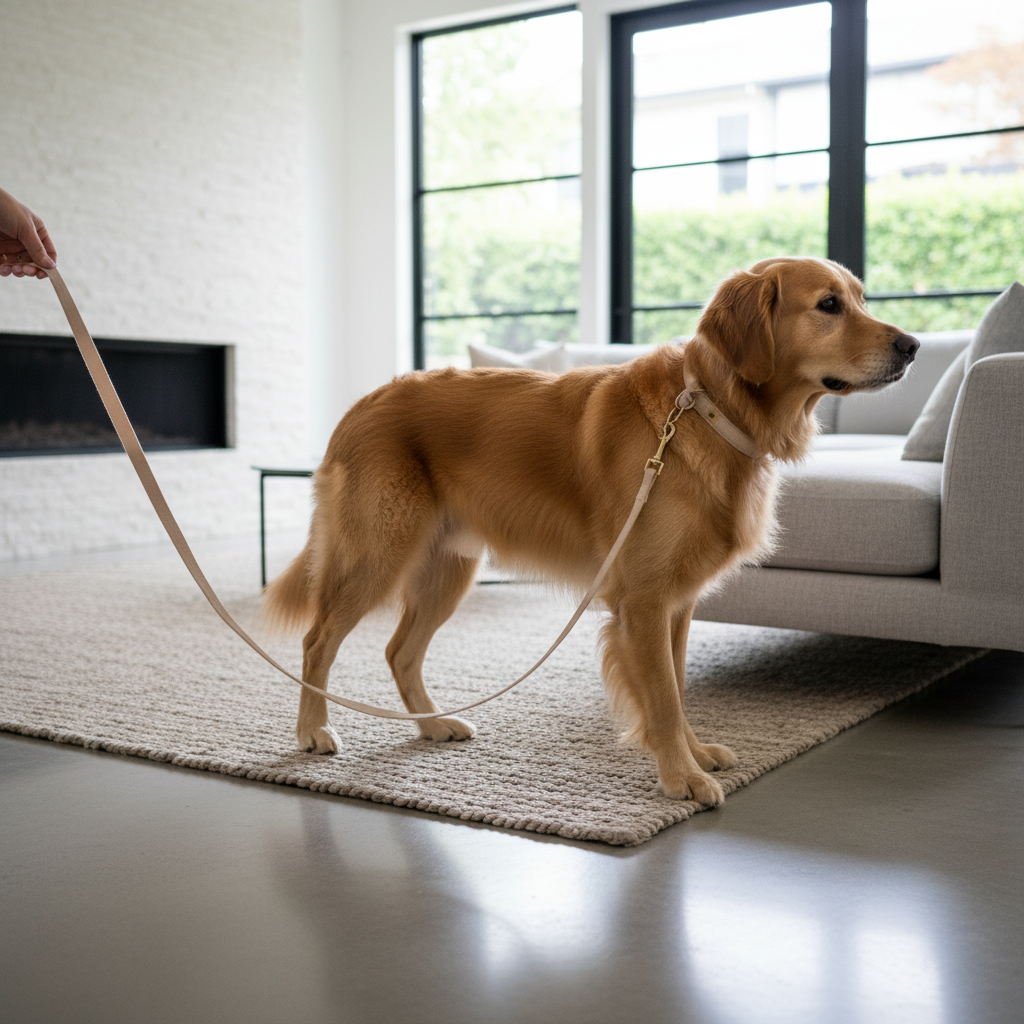
A house line is a lightweight leash (with the handle cut off to prevent snagging) that the dog wears while supervised indoors. If your dog jumps on the couch, do not reach for their collar, as this is the most common trigger for a bite. Instead, calmly pick up the end of the leash and gently guide them off the furniture while giving a neutral command. This keeps your hands at a safe distance and avoids the physical confrontation that escalates guarding.
Provide a Better Alternative
Ensure your dog has a highly comfortable bed of their own near the sofa. Make this spot rewarding by periodically dropping treats there so they begin to value their own space over yours.
Phase 2: Teaching the ‘Off’ Command with Positive Reinforcement
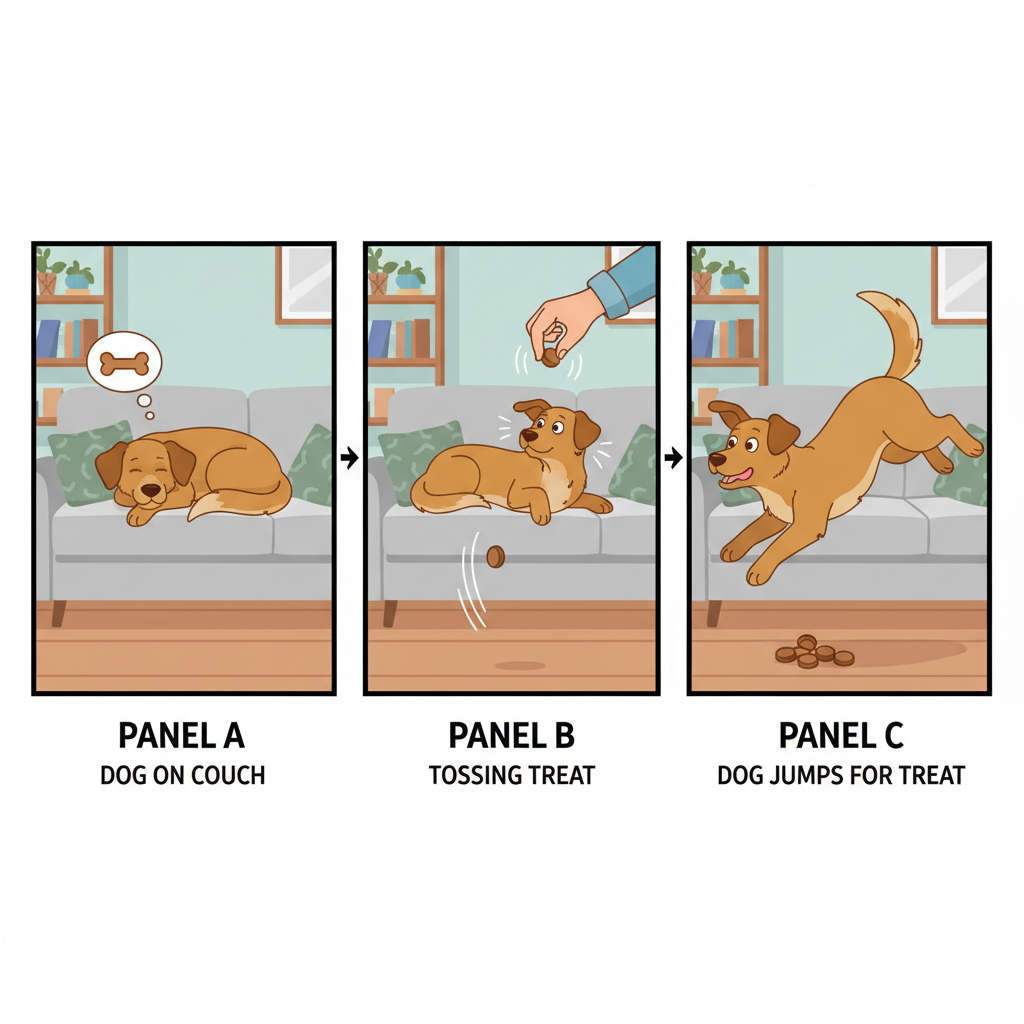
Once safety measures are in place, you can begin active training. The goal is to teach the dog that getting off the furniture is more rewarding than staying on it. We do this by teaching a reliable “Off” cue.
The Setup
You will need high-value treats (chicken, cheese, or freeze-dried liver) that are significantly better than the comfort of the couch. Wait for a moment when the dog is on the couch but not growling or guarding.
The Steps
- Step 1: Stand at a distance where the dog is relaxed. Say the word “Off” in a cheerful tone.
- Step 2: Immediately toss a high-value treat onto the floor, a few feet away from the couch.
- Step 3: As the dog jumps down to eat the treat, praise them verbally (“Good dog!”).
- Step 4: Do not force the dog back up. If they jump back up, wait a moment, then repeat the process.
Eventually, the dog will learn that the word “Off” predicts a delicious reward on the floor. The movement off the couch becomes a voluntary, happy choice rather than a confrontation. Never physically push or pull a guarding dog off the furniture, as this can trigger a bite.
Phase 3: Counter-Conditioning the Approach
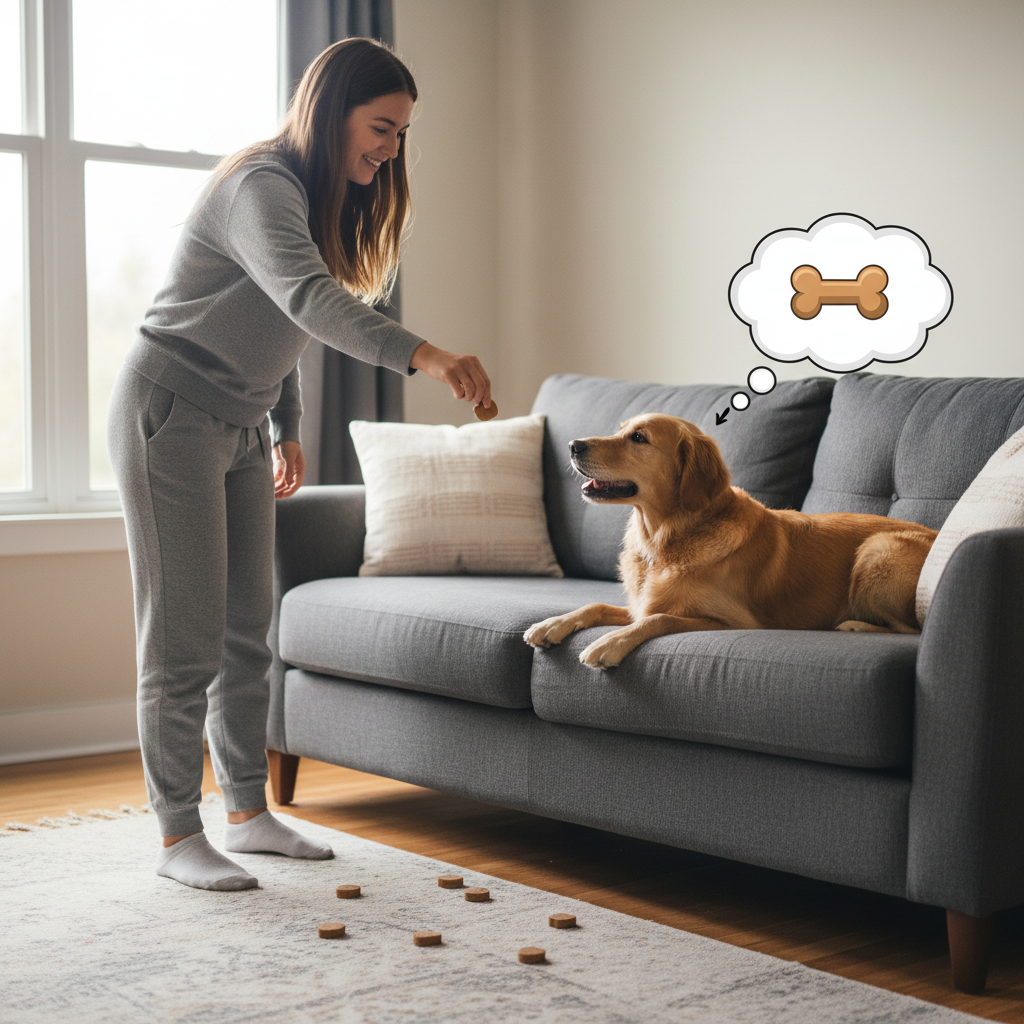
To fix the root of the problem, we must change how the dog feels when a human approaches them on the couch. This process is called Desensitization and Counter-Conditioning (DSCC). We want to change the dog’s internal monologue from “Oh no, they are coming to move me” to “Yay, they are coming, which means I get snacks!”
The Approach Game
Start this exercise when the dog is relaxed on the couch (only if it is safe to do so; otherwise, practice this with the dog on their own bed first).
- Step 1: Walk toward the couch but stop before the dog shows any signs of tension.
- Step 2: Toss a treat to the dog (right where they are lying) and immediately walk away.
- Step 3: Repeat this multiple times. Approach, treat, retreat.
Over time, the dog begins to anticipate your approach with happy expectation rather than dread. Gradually, you can decrease the distance until you can walk all the way up to the couch without the dog stiffening. If the dog growls at any point, you have moved too fast. Back up and work from a greater distance.
Phase 4: Establishing New Rules and Invitation-Only Access
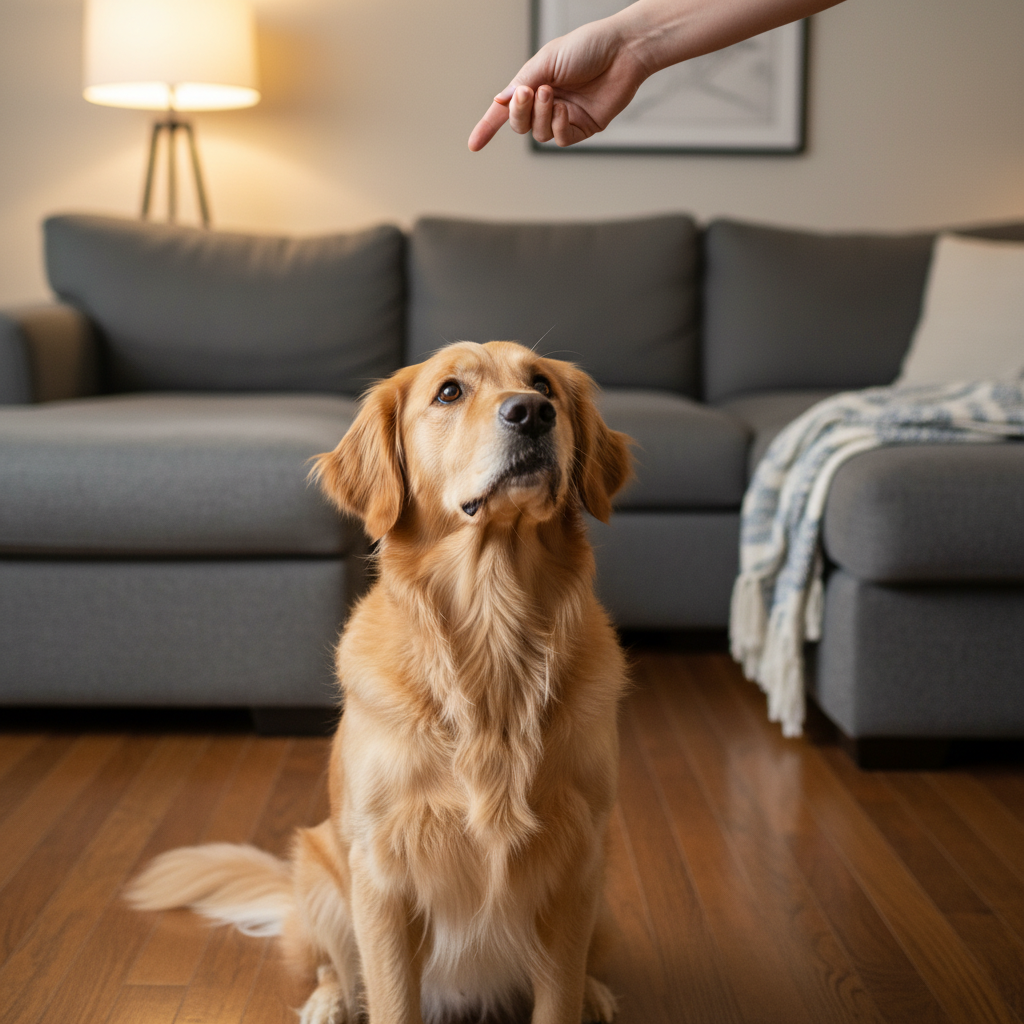
Once the guarding behavior has subsided and the dog happily responds to the “Off” command, you may choose to allow them back on the furniture, but under new terms. This helps maintain a healthy structure and prevents regression.
Invitation Only
Adopt an “invitation-only” policy. The dog should not be allowed to jump on the couch whenever they please. Instead, ask for a simple behavior first, such as a “Sit,” and then invite them up with a specific cue like “Up” or “Cuddle.”
If the dog jumps up without an invitation, calmly use your “Off” command (and the house line if necessary) to remove them. Consistency is key here. If the dog realizes that the couch is a privilege granted by you, rather than a right they must defend, the guarding behavior is unlikely to return. However, for some dogs with severe guarding history, a permanent “no furniture” rule may be the safest and clearest option for the household.
Restoring Harmony to Your Home
Dealing with a dog that growls on the couch can be emotionally draining and frightening, but it is a behavior that can be modified with patience, consistency, and the right techniques. By removing the conflict through management, teaching a positive “Off” command, and changing the dog’s emotional association with your approach, you can resolve sofa guarding effectively.
Remember, growling is communication. Never punish the growl, or you risk a dog that bites without warning. If at any point you feel unsafe, or if the dog’s aggression escalates to snapping or biting, please seek the help of a certified professional dog trainer or a veterinary behaviorist immediately. Your safety and your dog’s well-being are worth the investment.