Muzzle Training 101: Why Every Dog Needs to Know This Skill
When most people see a dog wearing a muzzle, their immediate reaction is often fear or pity. The prevailing stigma suggests that a muzzled dog must be aggressive, dangerous, or uncontrollable. However, as canine professionals, we view muzzles through a completely different lens: they are essential safety tools, much like a seatbelt in a car or a helmet for a cyclist. Muzzle training is not an admission of failure; it is a proactive act of responsible pet ownership.
Every dog, regardless of their temperament or history, should learn to wear a muzzle comfortably. Even the friendliest dog may bite if they are severely injured, frightened, or in pain after an accident. Furthermore, emergency veterinary procedures often require muzzling for the safety of the medical staff. If a dog has never seen a muzzle before, introducing one during a high-stress crisis adds unnecessary trauma to an already difficult situation.
In this comprehensive guide, we will dismantle the myths surrounding muzzles, help you select the appropriate equipment, and provide a step-by-step protocol to train your dog to view the muzzle as a predictor of rewards and fun, rather than punishment.
Destigmatizing the Muzzle: Why Your Dog Needs It
Before diving into the mechanics of training, it is crucial to understand the why. Many owners hesitate to muzzle train because they worry about what others will think. However, prioritizing public perception over safety is a risk no owner should take. There are several scenarios where a muzzle is indispensable:
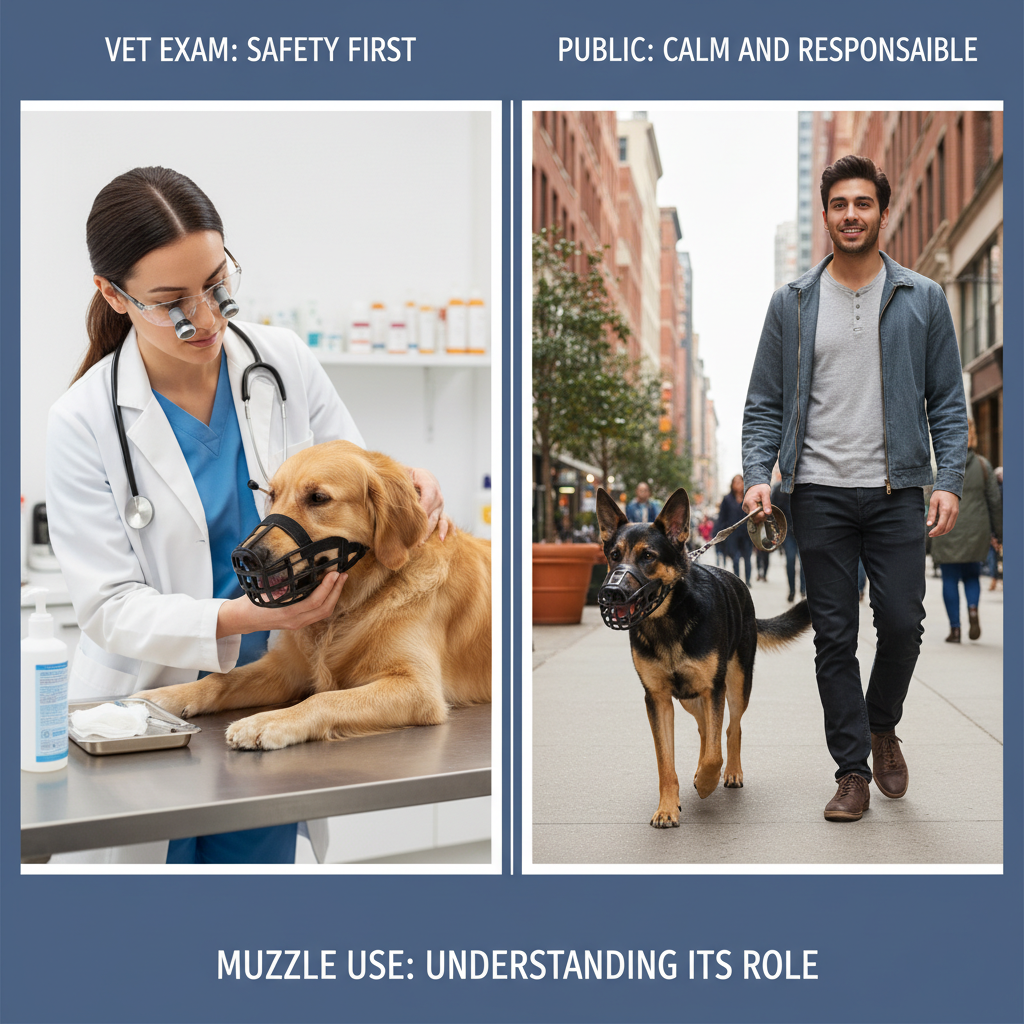
- Medical Emergencies: Pain can cause any dog to bite reflexively. If your dog is hit by a car or suffers a broken bone, a muzzle allows you to transport them safely to the vet without risking injury to yourself.
- Veterinary Handling: Some procedures are invasive or uncomfortable. A muzzle protects the veterinary staff and allows them to work quickly and confidently, which reduces the stress on your dog.
- Scavenging Prevention: For dogs that eat dangerous items off the ground (rocks, toxic foods, trash), a muzzle can literally be a lifesaver by preventing intestinal blockages or poisoning.
- Public Safety and Legislation: In some jurisdictions, specific breeds are required by law to be muzzled in public. Additionally, public transport systems often mandate muzzles for dogs traveling outside of carriers.
By training this skill early, you ensure that if the need ever arises, the muzzle itself is a non-event for the dog.
Selecting the Right Equipment: Basket vs. Mesh
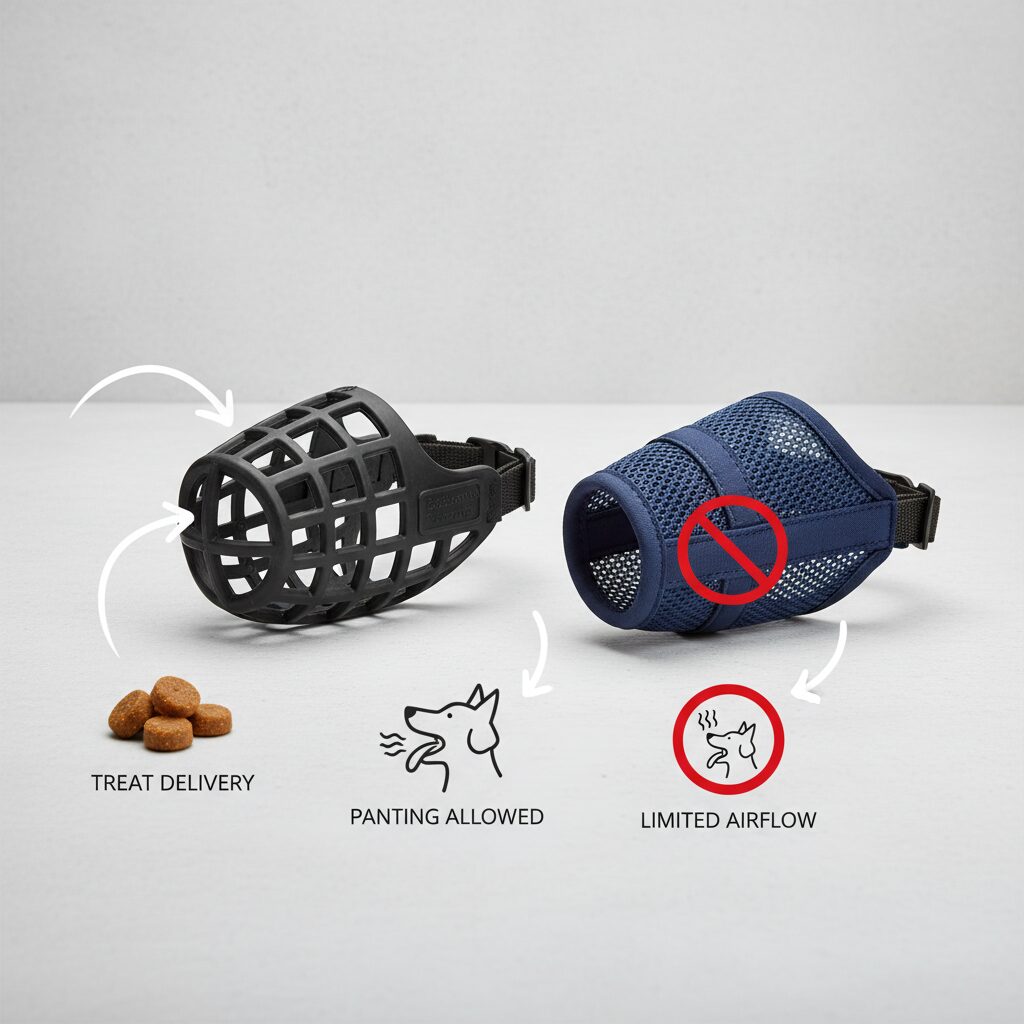
Not all muzzles are created equal, and choosing the wrong one can be dangerous or counterproductive to training. The two most common types are basket muzzles and soft (occlusion) muzzles.
The Basket Muzzle (Recommended)
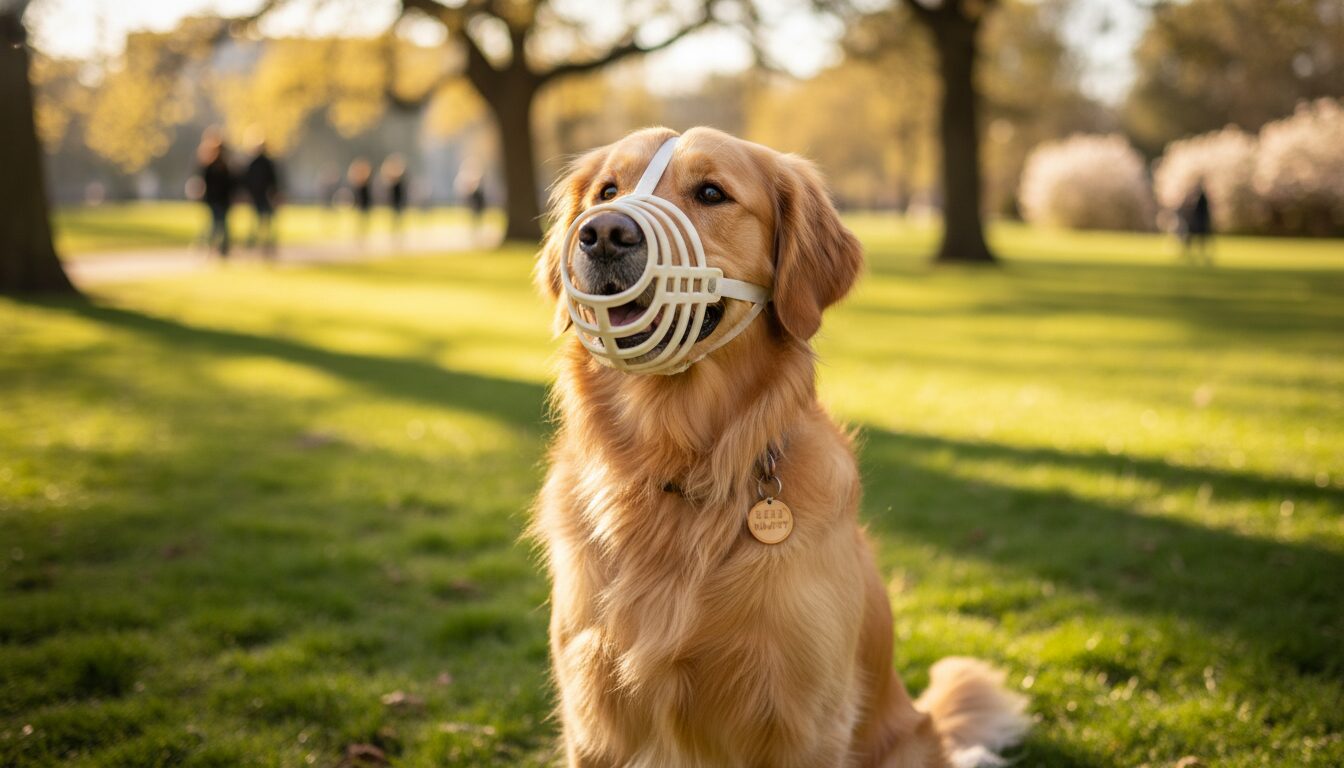
For training, walking, and long-term wear, a basket muzzle (such as the Baskerville Ultra) is the gold standard. These are typically made of hard plastic, rubber, or wire. The grid design allows the dog to:
- Open their mouth to pant (crucial for thermoregulation).
- Drink water.
- Take treats during training.
The Soft/Mesh Muzzle (Avoid for Training)
Fabric or mesh muzzles that hold the mouth closed are known as occlusion muzzles. These are designed strictly for very short-term use, such as a quick vaccine injection or nail trim at the vet. Do not use these for walks or training. Because they prevent the dog from panting, they pose a significant risk of overheating and heatstroke, especially in warm weather or during stress.
Fit is Critical: The muzzle should be secure but comfortable. The nose should not touch the end of the basket, and there should be enough depth for the dog to open their mouth to pant.
The Step-by-Step Training Protocol
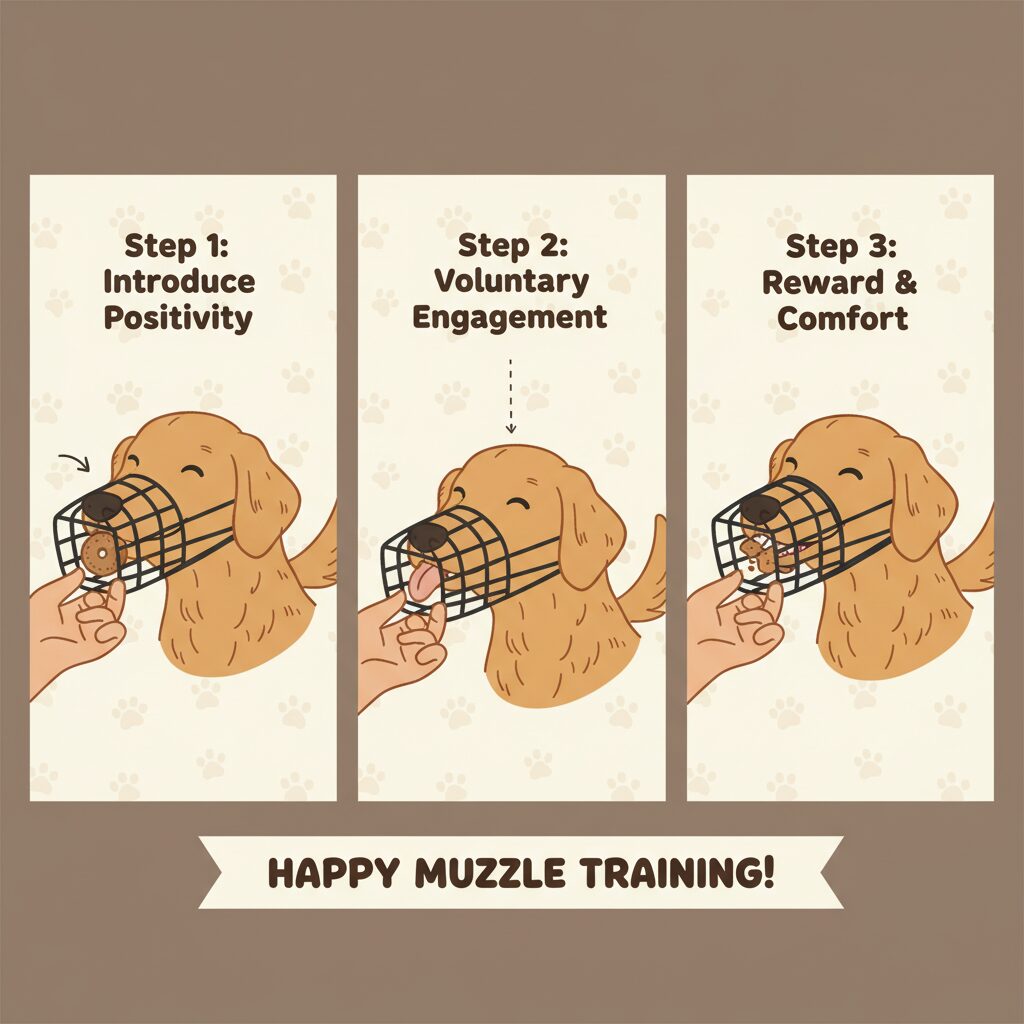
The goal of muzzle training is to create a positive emotional response. We want the dog to see the muzzle and think, "Yay! Treats are coming!" Never force the muzzle onto the dog’s face. We use a process called desensitization and counter-conditioning.
Step 1: The Introduction
Hold the muzzle in one hand and a high-value treat (like chicken or cheese) in the other. Show the dog the muzzle, then immediately give them the treat. Hide the muzzle behind your back, then show it again and treat. Repeat this until the dog looks for the treat eagerly whenever the muzzle appears.
Step 2: The Peanut Butter Cup
Smear a little peanut butter or squeeze cheese on the inside edge or at the bottom of the basket muzzle. Hold the muzzle still and let the dog approach it to lick the treat off. Do not move the muzzle toward the dog; let them choose to put their face in. Repeat this multiple times until they are happily shoving their nose into the basket.
Step 3: Duration and Fastening
Once the dog is comfortable keeping their nose in the muzzle to eat:
- Begin feeding treats through the basket bars to keep their nose in place for longer periods.
- Briefly hold the straps behind the ears without fastening them, treat, and release.
- Eventually, fasten the buckle, feed a stream of treats, unbuckle immediately, and stop the treats.
The rule is: Muzzle On = Party Time. Muzzle Off = Boring Time.
Troubleshooting and Common Mistakes
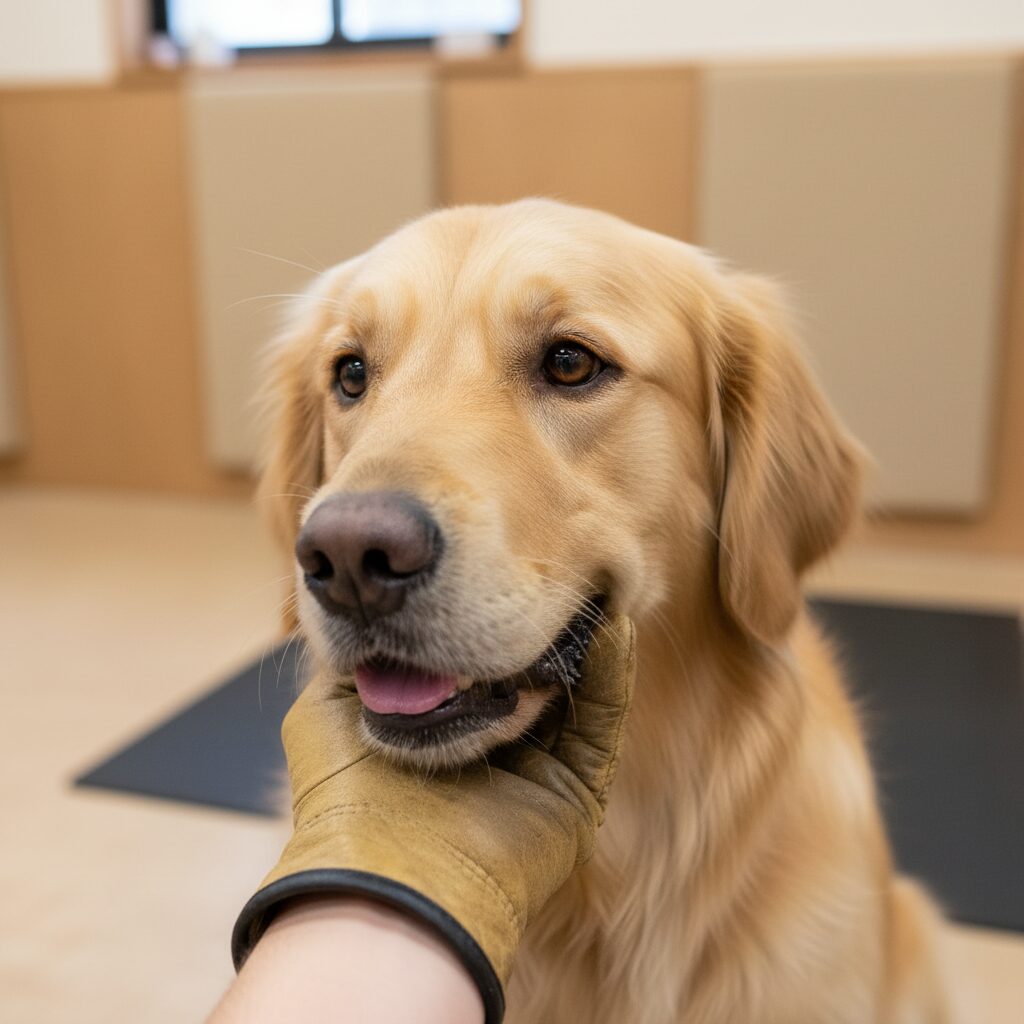
Even with the best intentions, owners often hit roadblocks. Here are common pitfalls to avoid to ensure success:
Rushing the Process
The most common mistake is moving too fast. If your dog backs away, freezes, or tries to paw the muzzle off, you have proceeded too quickly. Go back to the previous step. Training might take a few days or a few weeks depending on the dog’s sensitivity.
Using the Muzzle for Punishment
Never use the muzzle to stop barking or as a punishment for bad behavior. If the muzzle becomes a predictor of social isolation or your anger, the dog will learn to hate it, and putting it on will become a dangerous struggle.
Leaving the Dog Unsupervised
A dog should never be left alone in a muzzle. They can get the basket caught on furniture or crates, leading to panic or injury. Muzzles are for supervised safety only.
Empowerment Through Safety
Muzzle training is one of the most compassionate gifts you can give your dog. It prepares them for the unexpected and ensures that, should the worst happen, they can be treated safely and effectively without the risk of a bite incident complicating their care. By shifting your perspective and viewing the muzzle as a safety tool rather than a restraint, you empower yourself and your dog to navigate the world with confidence. Start training today with patience and plenty of treats, and you will have a skill that lasts a lifetime.