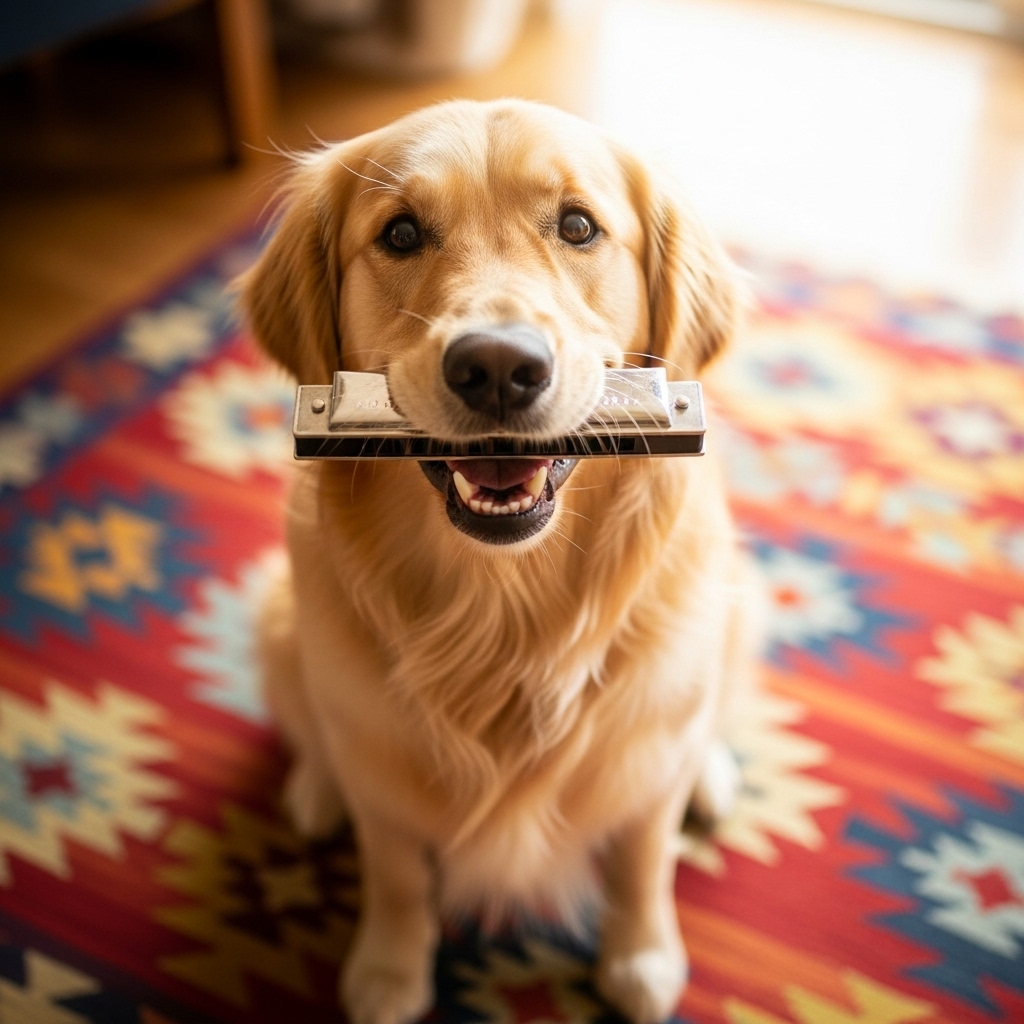
Musical Dog Trick: Teach Your Pup To Play The Harmonica
Have you ever wanted to teach your dog a trick that’s truly unique and guaranteed to be the life of any party? Forget ‘shake’ and ‘roll over’ for a moment—let’s talk about something with a little more… musical flair! Teaching your dog to play the harmonica is not only an incredibly fun and impressive trick, but it’s also a wonderful mental exercise that strengthens the bond you share. It engages their mind, builds their confidence, and let’s be honest, it’s hilariously adorable.
Don’t worry, you don’t need to be a professional dog trainer or a musician to succeed. All you need is a little patience, a handful of tasty treats, and a dog who’s ready for a fun challenge. In this guide, we’ll walk you through every single step, from choosing the right instrument to taking a final bow after your pup’s first performance. Let’s get ready to make some music!
Gathering Your Musical Instruments (and Treats!)
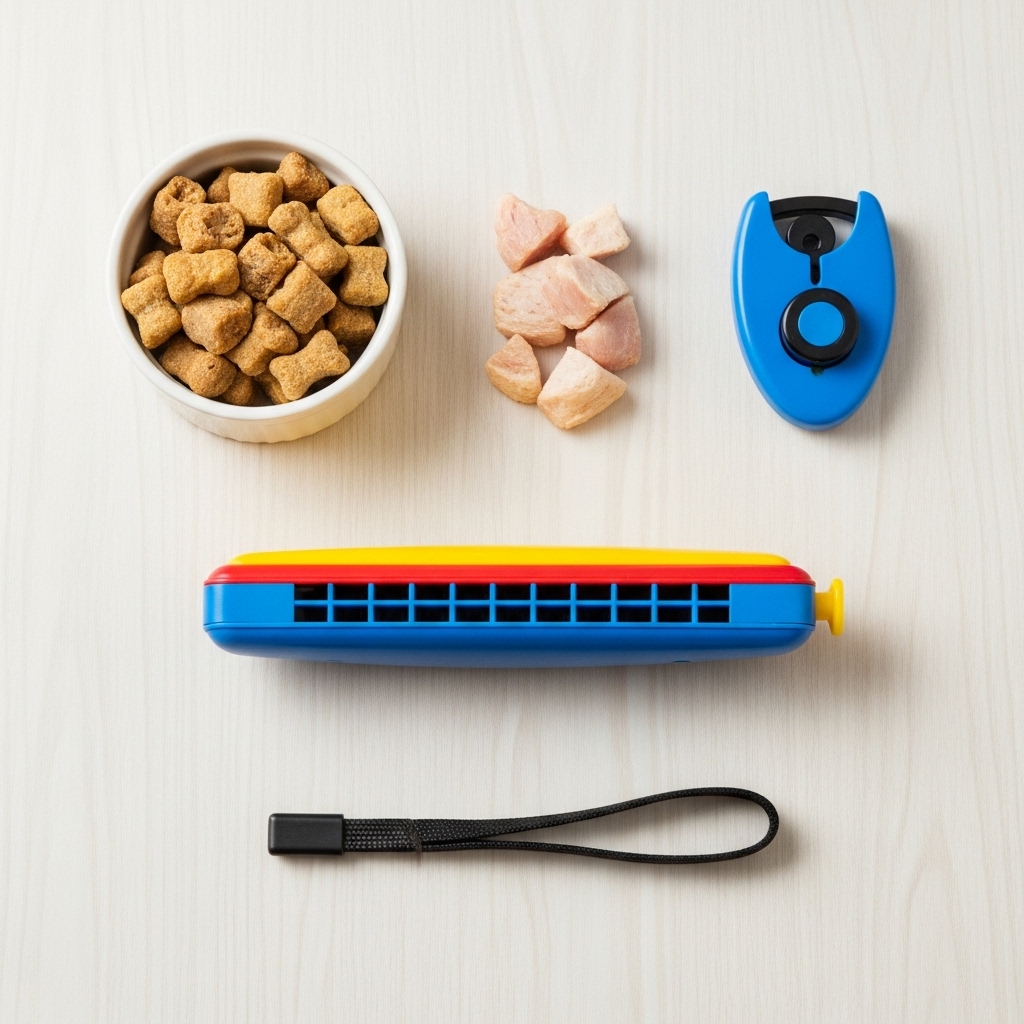
Before you can train your little maestro, you need to gather a few essential supplies. Setting yourself up for success starts with having the right tools on hand. This ensures your training sessions are smooth, efficient, and, most importantly, fun for your pup!
What You’ll Need:
- A Dog-Safe Harmonica: This is non-negotiable. Do not use your own personal, expensive harmonica. Look for a simple, sturdy, and inexpensive child’s harmonica or one made from non-toxic plastic. The goal isn’t perfect sound quality; it’s safety and durability. Make sure there are no small, detachable parts your dog could swallow.
- High-Value Treats: Standard kibble might not cut it for this trick. You need something extra special to keep your dog motivated. Think small, soft, and smelly treats like tiny pieces of chicken, cheese, or commercial training treats that your dog absolutely loves. The more exciting the reward, the more eager they’ll be to learn.
- A Clicker (Optional but Recommended): A clicker is a fantastic tool for marking the exact moment your dog performs the correct behavior. This precision makes communication crystal clear. If you’ve never used a clicker before, it’s easy to ‘charge’ it by simply clicking and immediately giving your dog a treat several times in a row until they associate the sound with a reward.
- A Quiet Training Space: Choose a location free from distractions. A quiet room in your house is perfect. You want your dog’s full attention on you and the new, shiny ‘instrument’ you’re introducing.
The Step-by-Step Guide to Your Pup’s First Concert
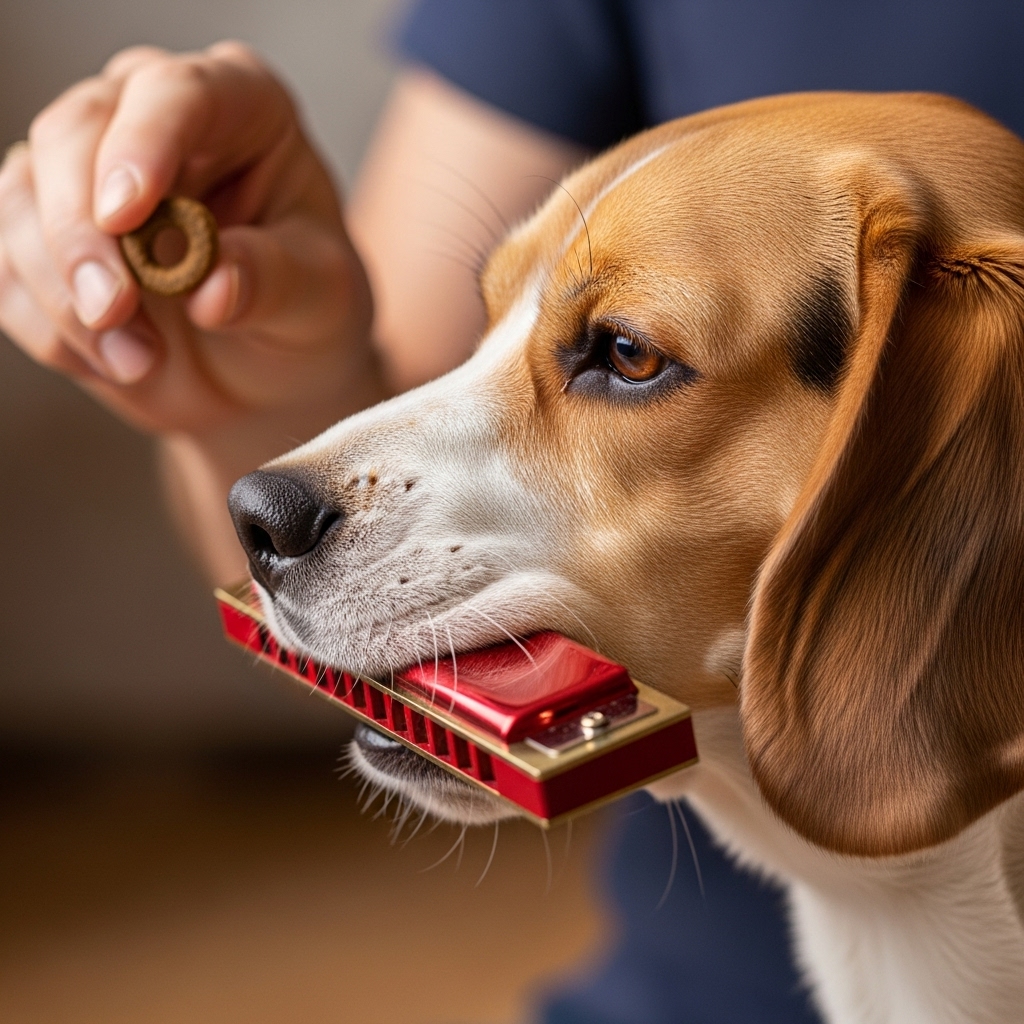
Alright, it’s showtime! Remember to keep your training sessions short and sweet—about 5-10 minutes at a time is plenty. Always end on a positive note when your dog is successful and still engaged. Let’s break this amazing trick down into manageable steps.
-
Step 1: Introduce the Harmonica (Targeting)
The first goal is to make your dog comfortable with this strange new object. We want them to see the harmonica as a fun toy, not something to be scared of. Hold the harmonica in the palm of your hand. The moment your dog sniffs or touches it with their nose, click and give them a treat. Repeat this several times until your dog is eagerly booping the harmonica with their nose as soon as you present it.
-
Step 2: Encourage Holding the Harmonica (The ‘Take It’ Cue)
Now, we’ll transition from touching to holding. Hold the harmonica out and say a cue like “Take It” or “Hold.” When your dog’s mouth touches the harmonica, even for a split second, click and treat. Gradually, start waiting for them to hold it for a tiny bit longer before you click and treat. We’re looking for just a gentle hold, not a chew! If they start chewing, simply take the harmonica away calmly and try again after a short break. The goal is a soft mouth.
Expert Tip: If your dog is hesitant to put the harmonica in their mouth, you can smear a tiny bit of peanut butter (xylitol-free) or cream cheese on it to make it more appealing.
-
Step 3: Introduce the ‘Blow’ Cue
This is the magic step! Once your dog is comfortably holding the harmonica, watch them closely. The moment they exhale or breathe out through their nose or mouth while holding it—even if it doesn’t make a sound at first—click and give them a huge reward (a ‘jackpot’ of several treats!). You can encourage this by holding a treat near their nose to get them to sniff and exhale. Once they make a noise, no matter how small, add a verbal cue like “Play it!” or “Music!” right before they do it.
-
Step 4: Putting It All Together and Fading the Lure
Now you can start combining the steps. Say your “Take It” cue, and once they are holding it, say your “Play It!” cue. Reward only when they produce a sound. Over time, you can start to build duration, asking them to ‘play’ for a few seconds longer. Eventually, you won’t need to lure them with a treat to their nose; the verbal cue alone will be enough to get them to blow into the harmonica.
Troubleshooting: When Your Pup Hits a Sour Note
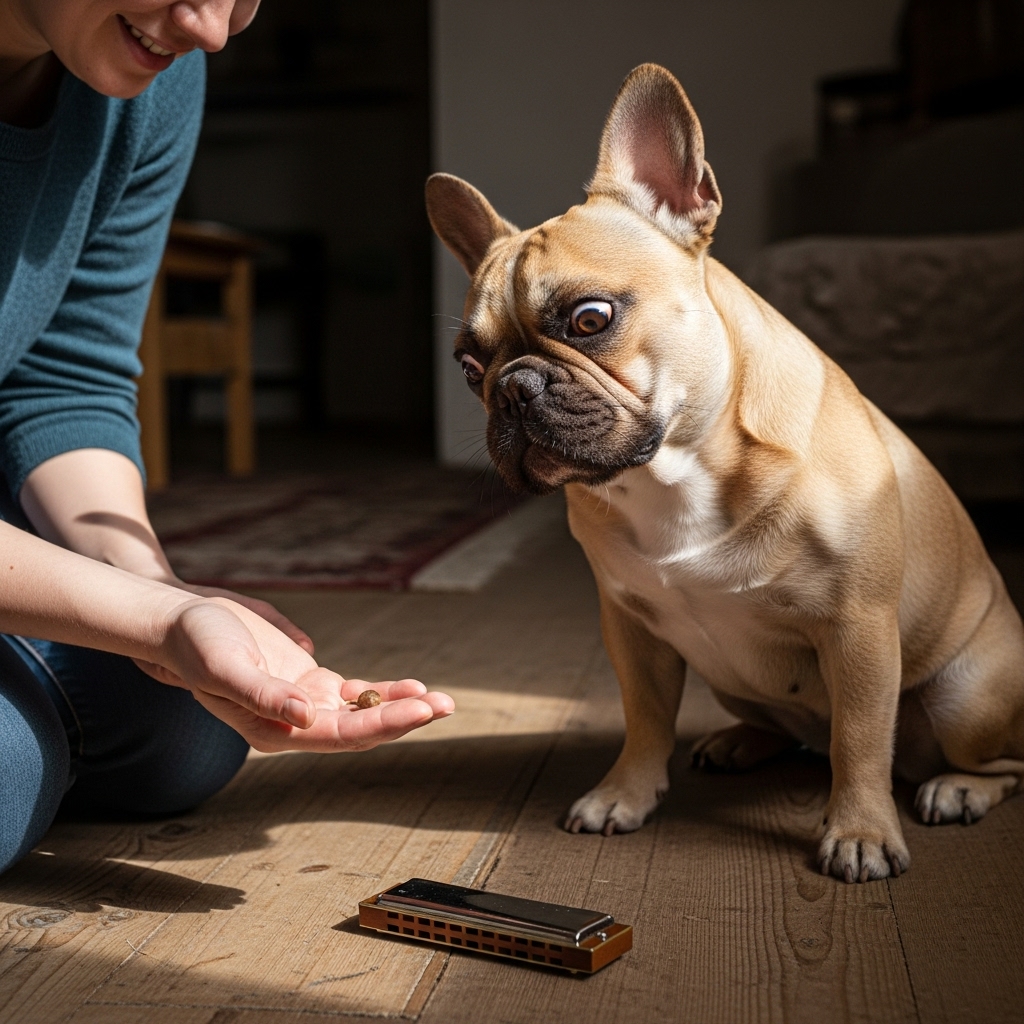
Even the most talented musicians have off days. It’s completely normal to run into a few snags while training this trick. The key is to stay patient, positive, and never force your dog to do something they’re uncomfortable with. Here are some common issues and how to solve them.
My dog keeps chewing the harmonica!
This is very common! It usually means the training session has gone on too long and your dog is getting bored or antsy. It can also mean they don’t understand that the goal is a ‘soft mouth.’ Go back to Step 2 and reward heavily for very short, gentle holds. If they start to chew, say “Oops!” in a neutral tone, gently take the harmonica away for a few seconds, and then present it again. Keep sessions super short to prevent frustration.
My dog won’t pick up the harmonica.
If your dog is hesitant, the harmonica might seem scary. Go back to Step 1 and spend more time just rewarding them for sniffing or touching it. Make it a fun game! You can also try a different harmonica—perhaps a different shape or color is more inviting. Remember the peanut butter trick; it works wonders for building a positive association.
My dog holds it but won’t make a sound.
This is the trickiest part. The ‘blow’ is often an accidental behavior at first. The best way to capture it is to be patient. You can try gently blowing on your dog’s nose to elicit a puff of air back from them. Or, hold a very smelly treat right by their nose while they hold the harmonica, encouraging them to exhale in anticipation. The instant you hear the faintest toot, throw a party! Make it the best thing that has ever happened.
Encore! Advanced Moves and Important Safety Tips
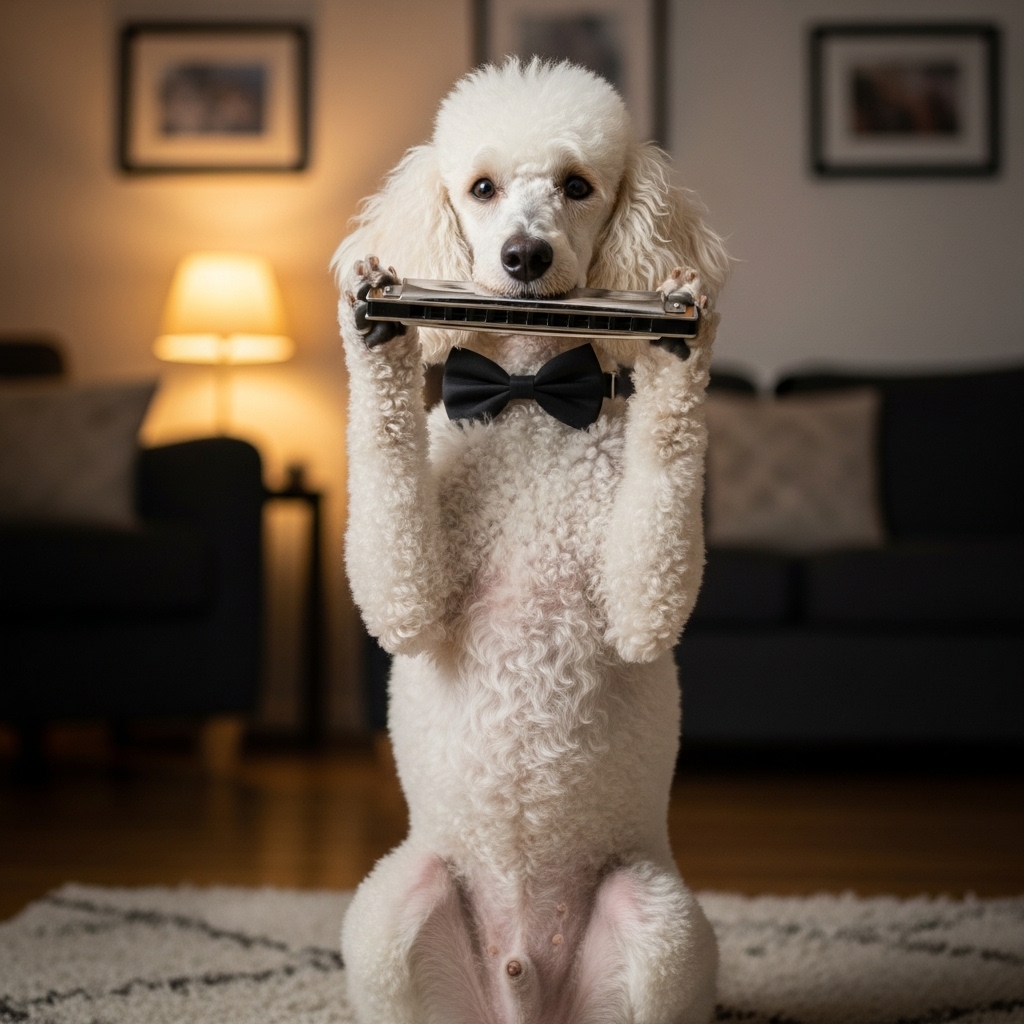
Once your dog has mastered their solo performance, you can add some extra flair to the routine. This is where you can get creative and turn a simple trick into a full-blown performance piece!
Taking the Show on the Road
- Add a Cue from a Distance: Start asking your dog to “Play It!” when you’re a few feet away.
- Combine with Other Tricks: Can your dog spin, bow, or wave? Try having them perform another trick right before or after their musical number. A spin followed by a harmonica toot is a real crowd-pleaser!
- Use Props: Have your dog ‘play’ while wearing a cute bandana, a bow tie, or even a little hat. This adds to the performance value and makes for adorable photos.
Crucial Safety Reminders
While this is a fun trick, safety should always be your top priority. Never forget these important rules:
- Always Supervise: Never leave your dog alone with the harmonica. It is a training prop, not a chew toy. They could break off a piece and choke on it.
- Inspect the Harmonica: Before and after every training session, check the harmonica for any signs of damage, like cracks or loose pieces. If it’s damaged, throw it away immediately.
- Keep it Clean: Wash the harmonica regularly with soap and water to keep it sanitary for your pup.
Conclusion
Congratulations! You now have all the steps to teach your dog one of the most charming and unique tricks around. Remember that the journey is just as important as the destination. Every training session is an opportunity to communicate, bond, and have fun with your best friend. Some dogs will pick it up in a few days, while others might take a few weeks—and that’s perfectly okay! Celebrate the small victories, keep it positive, and get ready to be amazed by your talented, musical pup. Now go on and get ready for that standing ovation!