
Mantrailing 101: How to Teach Your Dog to Track Human Scent Like a Pro
Have you ever watched a movie and been amazed by the dogs that can track a person for miles? That incredible skill isn’t just for Hollywood or elite search-and-rescue teams. It’s a natural talent hidden inside your own dog, and you can unlock it through an exciting sport called mantrailing. At its heart, mantrailing is a team game where your dog uses its powerful nose to find a specific person (the ‘runner’) by following their unique scent trail. It’s more than just a walk in the park; it’s a brain game that provides incredible mental stimulation, builds confidence, and strengthens the bond between you and your canine partner. Ready to turn your pup into a scent-sleuthing pro? Let’s get started!
Gearing Up: Essential Equipment for Mantrailing
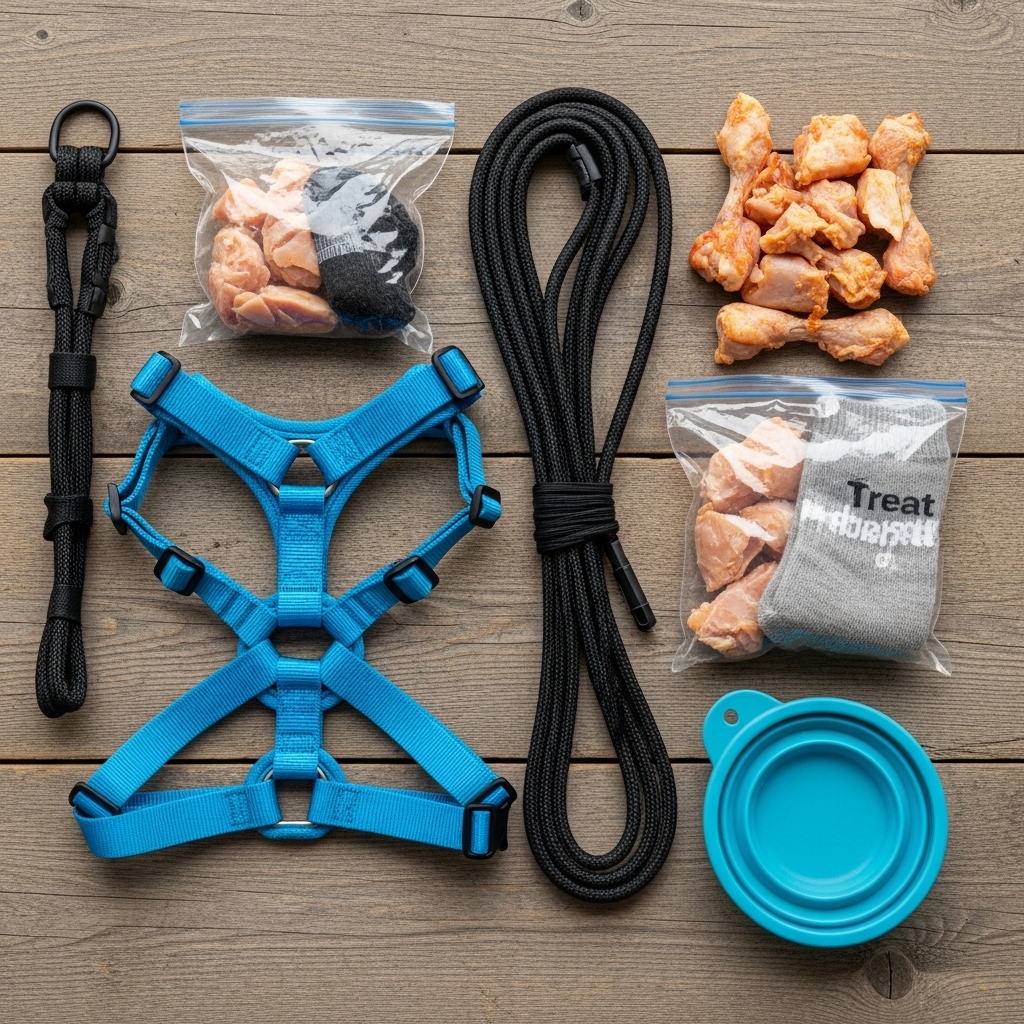
Before you hit the trails, you’ll need to gather a few key pieces of equipment. The right gear ensures your dog is safe, comfortable, and understands when it’s ‘game on’. Think of this as their official trailing uniform!
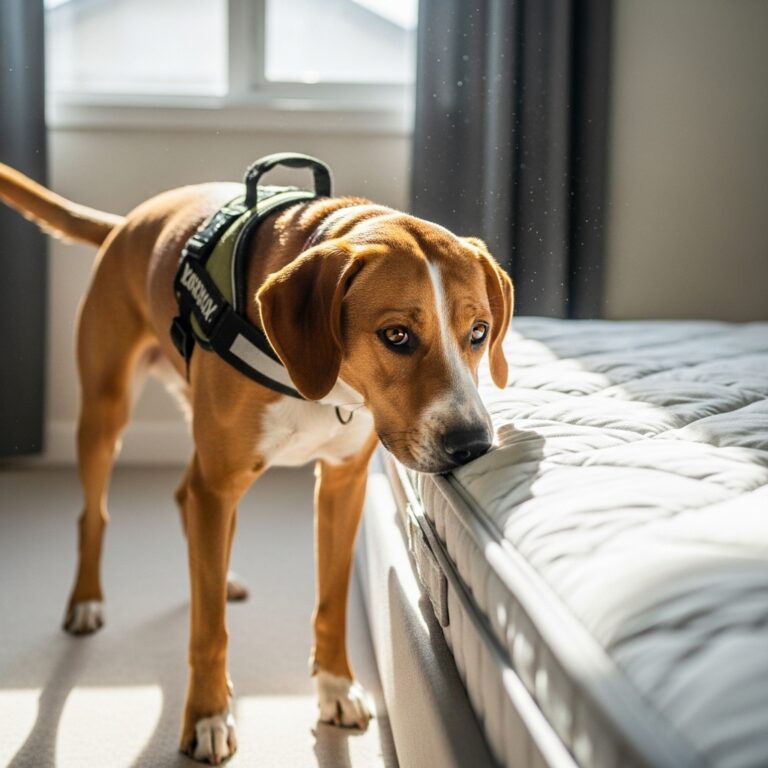
- A Well-Fitting Harness: This is non-negotiable. A harness prevents any pressure on your dog’s neck, allowing them to breathe freely as they pull into the scent. Look for a ‘Y-front’ style harness that doesn’t restrict shoulder movement. This harness should only be used for mantrailing, so your dog learns that when this specific harness comes out, it’s time to track.
- A Long Line: A 15 to 30-foot long line is ideal. It gives your dog the freedom to work ahead of you and follow the twists and turns of the scent trail without feeling restricted. Avoid retractable leashes, as they don’t provide the consistent, safe connection you need.
- A Scent Article: This is an item that has been in direct contact with your ‘runner’s’ skin for a while, like a worn glove, hat, sock, or even a car key they’ve held. The article should be stored in a clean, scent-free ziplock bag to avoid contamination until you’re ready to start the trail.
- High-Value Rewards: You need something extra special to reward your dog when they find the runner. We’re talking about the good stuff—small pieces of chicken, cheese, hot dogs, or their absolute favorite squeaky toy. The reward should be exciting enough to make finding the person the best thing that’s happened all day!
- Water: Scent work is thirsty work! Always carry plenty of fresh water and a bowl for your dog to stay hydrated, especially on warmer days.
The Foundation: Starting Your First Trail
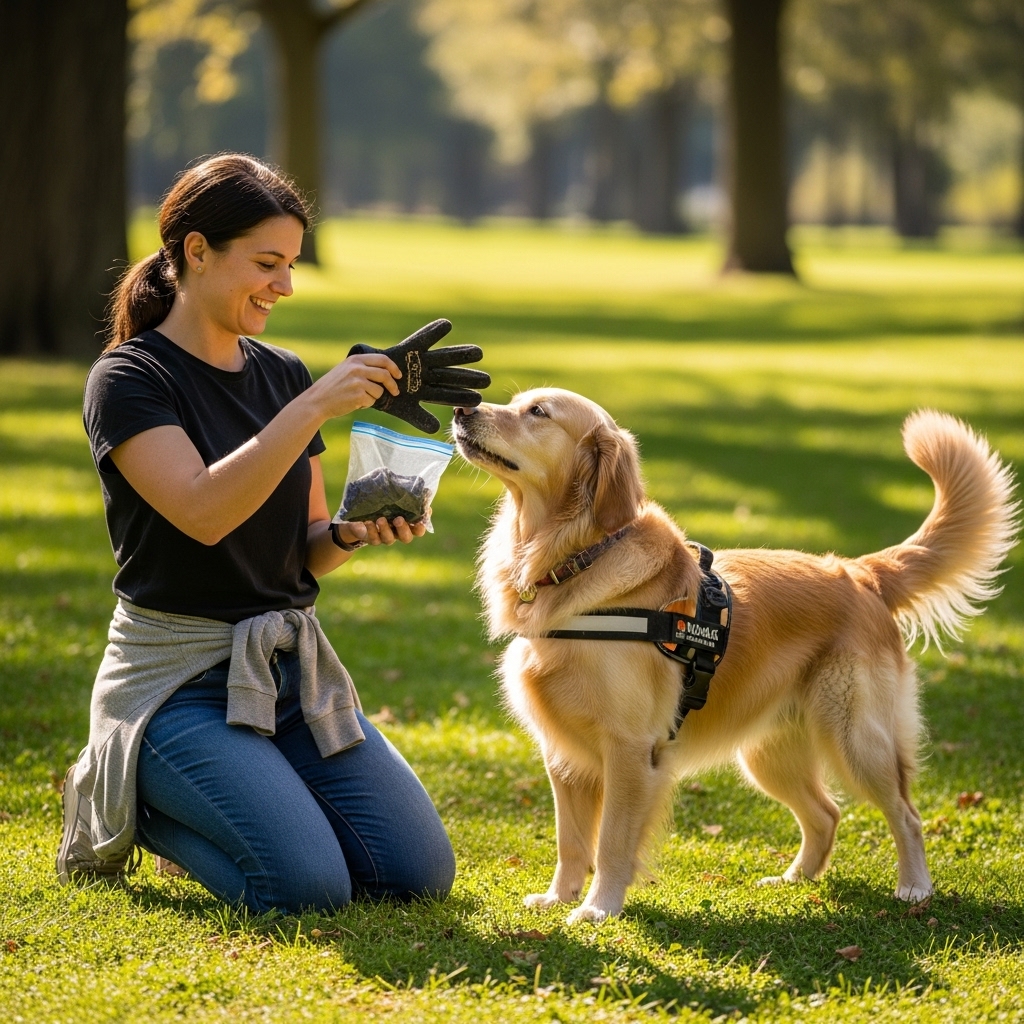
The key to your first few trails is to make it incredibly easy and overwhelmingly fun for your dog. We want them to think, ‘This is the best game ever!’ and build a strong desire to play. Here’s how to lay the groundwork for success.
- Prepare the Scent Article: Have your ‘runner’ (a friend or family member the dog likes) handle their scent article for a minute or two. They should then place it in the ziplock bag.
- The ‘Runner’ Hides: For the very first trail, have your runner get your dog excited, maybe play for a second, and then run away in a straight line while your dog watches. They should hide just 20-30 feet away behind a big tree or a bush. Their goal is to be super easy to find.
- Present the Scent: While the runner is hiding, put the special mantrailing harness on your dog. Approach your starting point, open the ziplock bag right in front of your dog’s nose, and let them get a good sniff of the article. As they sniff, use your cue word in an encouraging tone, like ‘Find!’ or ‘Track!’.
- Release the Hound!: Let the long line slide through your hands and encourage your dog to move forward. Don’t direct them; let them figure it out. Since they saw the person run, they’ll likely head in the right direction. Your job is just to be the anchor and keep up!
- The Reward Party: The moment your dog gets to the runner, it’s time to celebrate! The runner should immediately shower the dog with praise, the high-value treats, or play with their favorite toy. Make it a huge, exciting party. After a minute of celebration, the game is over. End on a high note!
Expert Tip: Keep your first sessions incredibly short—just one or two simple ‘finds’. This builds enthusiasm and leaves your dog wanting more, which is the perfect foundation for future training.
Level Up: Increasing the Difficulty

Once your dog is confidently and excitedly finding the runner on short, simple ‘sight-away’ trails, it’s time to start making the game a little more challenging. The goal is to gradually increase the difficulty so your dog is always learning but never getting overwhelmed or discouraged. Introduce these changes one at a time.
- Increase the Distance: Slowly start making the trail longer. Go from 30 feet to 50 feet, then to 100 feet, and so on.
- Add Some ‘Age’: Instead of starting the trail immediately after the runner hides, wait a minute or two. This is called ‘aging the trail’. As your dog gets better, you can gradually increase the age from a few minutes to 10, 20, or even longer.
- Introduce Turns: Start with a simple 90-degree turn in the middle of the trail. As your dog successfully navigates that, you can add more turns or more complex angles.
- Vary the Environment: Move from an open grassy field to an area with more distractions. A quiet park with a few trees, a light forest trail, or a deserted parking lot can add new scent challenges for your dog to solve.
- Lose the Visual: The biggest step is the ‘blind’ trail, where your dog does not see the runner leave. This is when they have to rely 100% on their nose to solve the puzzle. Start this with a very short, simple trail to build their confidence.
Reading Your Dog: Understanding Scent Work Signals

One of the most fascinating parts of mantrailing is learning to read your dog’s body language. They are communicating everything you need to know about the scent trail—you just have to learn their language. Your role will shift from guide to observant partner.
Key Signals to Watch For:
- The Head Snap: This is when your dog is trotting along and their head suddenly snaps to the side. This often means they’ve hit the edge of the ‘scent cone’ and are re-orienting to find the trail. Trust the snap!
- Change in Pace: Your dog might slow down and get very ‘sniffy’ in areas where the scent is pooled or confusing (like a crossroads). They might speed up when the trail is straight and the scent is strong.
- Nose to the Ground vs. Air Scenting: A dog with their nose glued to the ground is likely following the runner’s literal footsteps. If their head is up and they’re sniffing the air, they might be catching scent that’s drifting on the breeze. Both are correct!
- Proximity Alerts: As your dog gets very close to the runner, you may notice a distinct change in behavior. Their tail might start wagging faster, their pace might quicken, and their body language will scream, ‘They’re right here!’
Important Takeaway: Your number one job as a handler is to trust your dog. They have the super-powered nose. Even if they seem to be going in the ‘wrong’ direction, follow them. They are often processing scent information that we can’t begin to comprehend.
Conclusion
Welcome to the wonderfully addictive world of mantrailing! You’ve learned the basics of the gear you need, how to start your first trail, and how to gradually build the challenge for your canine partner. Remember, mantrailing is a journey, not a race. It’s about celebrating your dog’s incredible natural abilities and building an unbreakable partnership. Be patient, keep it fun, and always end with a huge party when your dog finds their person. Now get out there, trust your dog, and happy trailing!