Living Near A Course? Stop Your Dog From Chasing Golf Balls
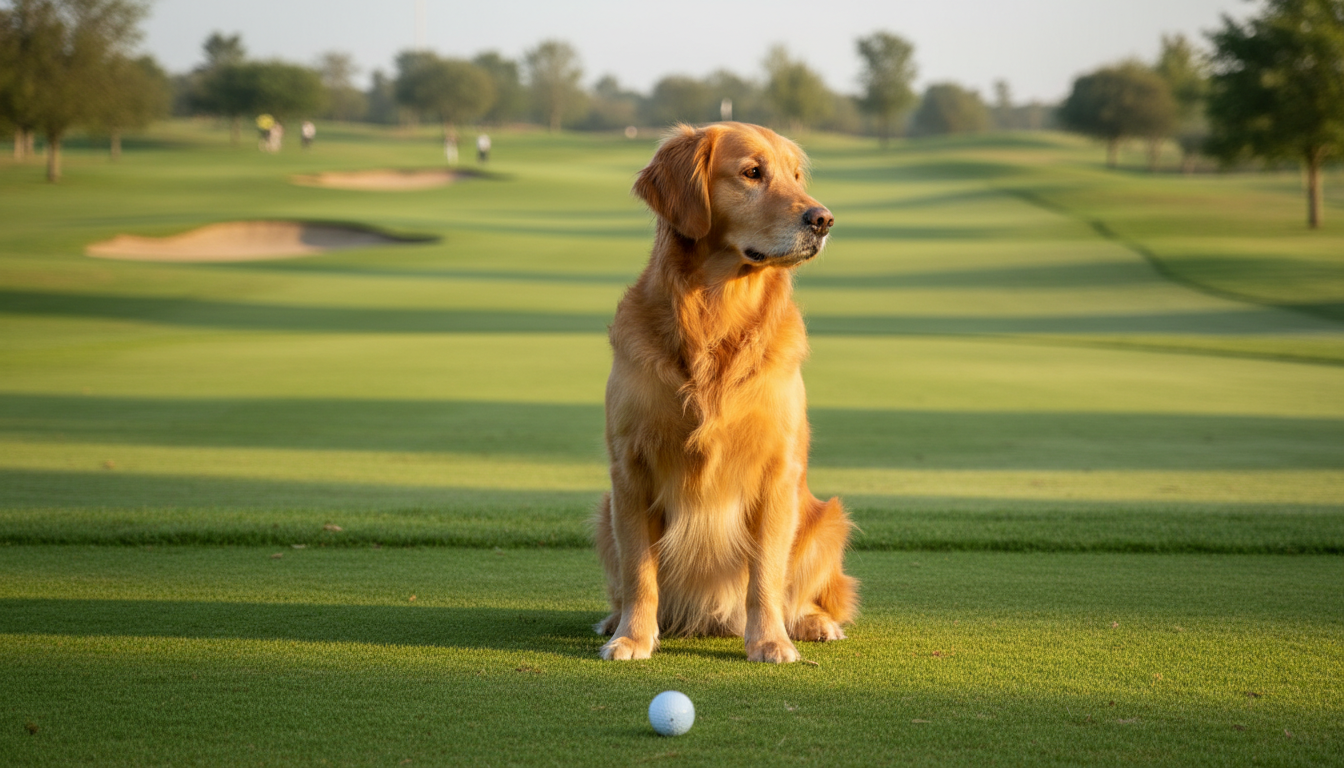
Living adjacent to a golf course offers a serene lifestyle, manicured landscapes, and often, a front-row seat to the sport. However, for dog owners, this proximity presents a unique and often underestimated challenge: the golf ball. To a canine, a white ball flying through the air or rolling across the grass is not a piece of sporting equipment; it is the ultimate trigger for their predatory drift. It mimics the movement of prey, activating an instinctive urge to chase, catch, and often chew.
While this behavior may seem like harmless play, allowing your dog to chase golf balls is fraught with danger. Beyond the annoyance to golfers and the potential for lost balls, the health risks to your dog are severe, ranging from dental fractures to life-threatening intestinal blockages. As a canine specialist, I often see owners struggle to differentiate between healthy play and dangerous obsession. The environment of a golf course requires a specific set of obedience skills that go beyond basic backyard training.
In this comprehensive guide, we will move beyond simple corrections. We will explore the medical reasons why golf balls must be off-limits, implement immediate management strategies to prevent accidents, and provide a step-by-step training protocol to proof the "Leave It" command against high-velocity distractions. Your goal is to cultivate a dog that sees a golf ball not as a toy, but as a neutral object to be ignored.
The Hidden Dangers: Why Golf Balls Are Not Toys
Before diving into training, it is imperative to understand the medical gravity of the situation. Many owners assume that because golf balls are round and bounce, they are similar to the rubber balls sold in pet stores. This misconception can be fatal. Golf balls are engineered for distance and durability on the fairway, not for the crushing force of a canine jaw.
Dental Trauma and Toxicity
The outer coating of a golf ball is incredibly hard. When a dog chews on a golf ball, the resistance it provides is often greater than the structural integrity of the dog’s teeth. Veterinary dentists frequently treat slab fractures of the carnassial teeth caused by golf balls. Furthermore, older or cheaper golf balls may contain cores made of materials that can be toxic if ingested, or rubber bands that can cause linear foreign body obstructions in the intestines.
The Choking Hazard
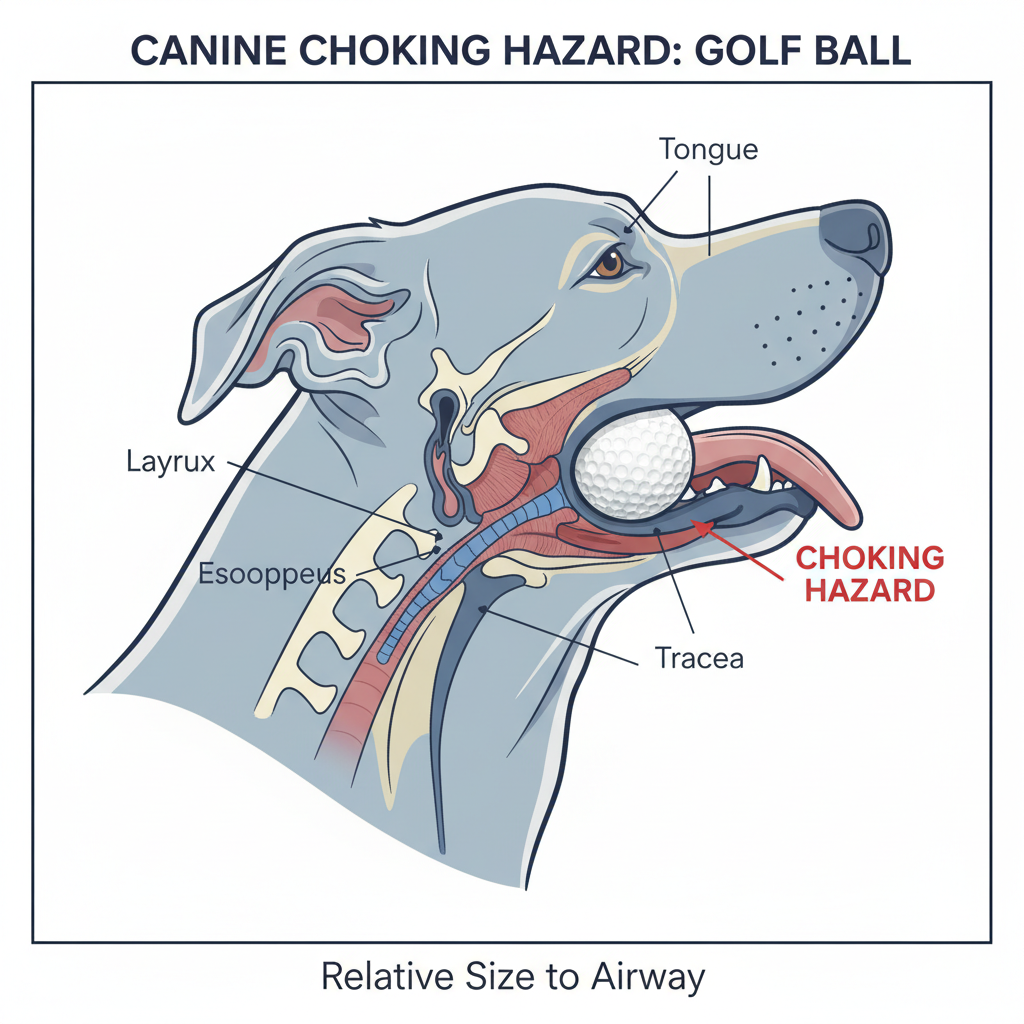
Perhaps the most immediate danger is the size. A standard golf ball is approximately 1.68 inches in diameter. For medium to large breeds—such as Labradors, Boxers, and Shepherds—this is the perfect size to slip past the teeth and become lodged in the pharynx or the trachea. A smooth, saliva-slicked golf ball is notoriously difficult to dislodge, leading to full airway obstruction and asphyxiation within minutes. Understanding these risks is the fuel you need to commit to the strict training regimen that follows.
Management Strategies: Prevention Before Training
In canine behavioral science, we operate on a fundamental rule: management always fails first. You cannot train a dog to ignore a stimulus if they are constantly rehearsing the unwanted behavior. Every time your dog successfully chases a golf ball, the behavior is self-reinforced by the dopamine rush of the chase. Therefore, until your training is 100% reliable, you must prevent the behavior physically.
- Visual Barriers: If your property borders the course, consider landscaping or privacy netting attached to fences. If the dog cannot see the ball landing, the prey drive is not triggered.
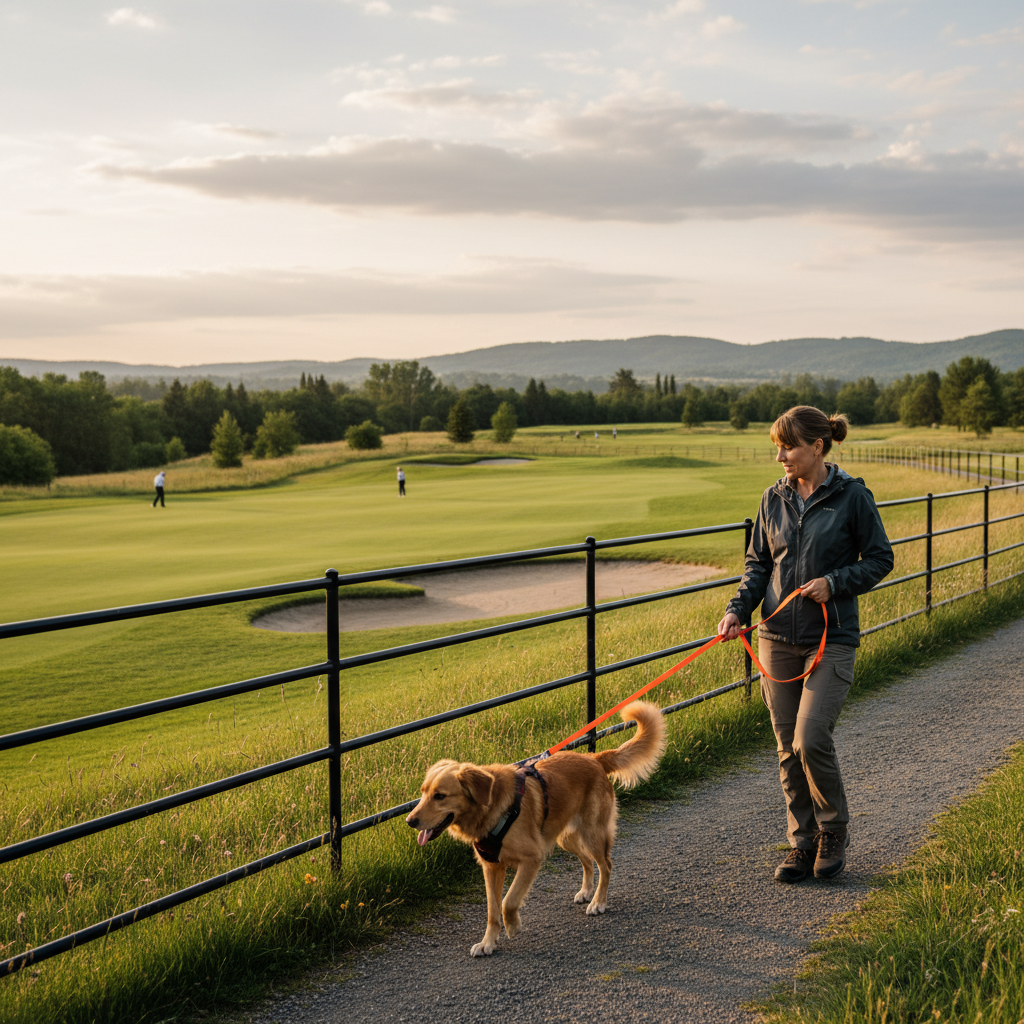
- Leash Protocols: Never allow your dog off-leash in unfenced areas near the course, even if you believe no golfers are playing. A lost ball in the tall grass is just as tempting as a moving one. Use a long-line (15-30 feet) to allow freedom of movement while maintaining the ability to stop a chase instantly.
- Environmental Sweeps: Before letting your dog out into your own yard, perform a ‘perimeter sweep’ to collect any stray balls that may have landed on your property. Removing the temptation removes the risk.
By controlling the environment, you lower the dog’s arousal levels, creating a headspace where learning can actually occur.
Mastering the ‘Leave It’ Command
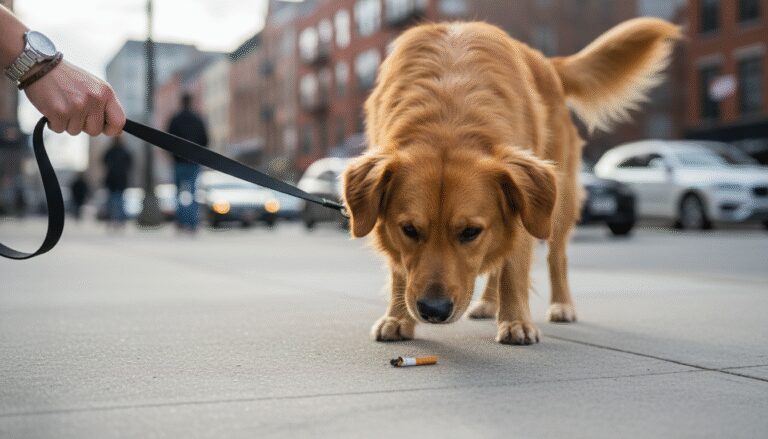
The cornerstone of safety for a golf course dog is a bulletproof "Leave It" command. This is not merely a suggestion; it is an emergency brake. We will build this behavior using positive reinforcement, teaching the dog that turning away from the item yields a higher reward than the item itself.
Step 1: The Closed Hand
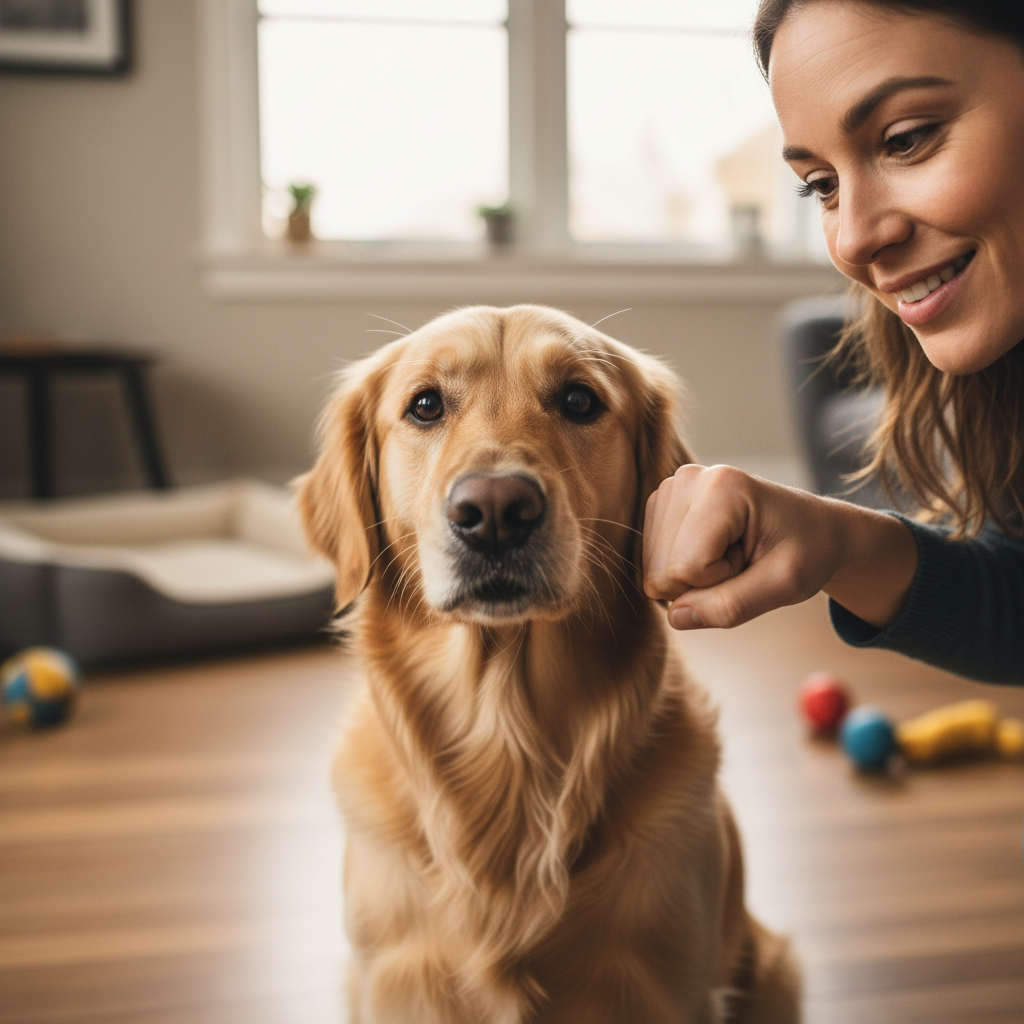
Start indoors with zero distractions. Place a low-value treat inside your closed fist. Present your fist to your dog. They will likely sniff, lick, or paw at your hand. Do nothing; say nothing. Wait for the split second they stop trying and pull their head back slightly. The moment they disengage, mark the behavior with a word like "Yes!" and reward them with a high-value treat from your other hand. Repeat this until the dog immediately backs away when the fist is presented.
Step 2: The Open Hand
Once the dog understands the concept, place the low-value treat on your open palm. If the dog dives for it, close your hand immediately. Wait for them to back off again. Open your hand. The goal is for the dog to look at the open treat but choose not to take it, looking at you instead. Mark and reward heavily.
Step 3: The Floor Drop
Progress to dropping a treat on the floor while covering it with your foot if necessary. Use the cue "Leave It." When the dog looks up at you, reward. Gradually work up to tossing the item. The dog must learn that the movement of the object is the cue to look at you, not to chase the object.
Proofing Behavior in the Real World
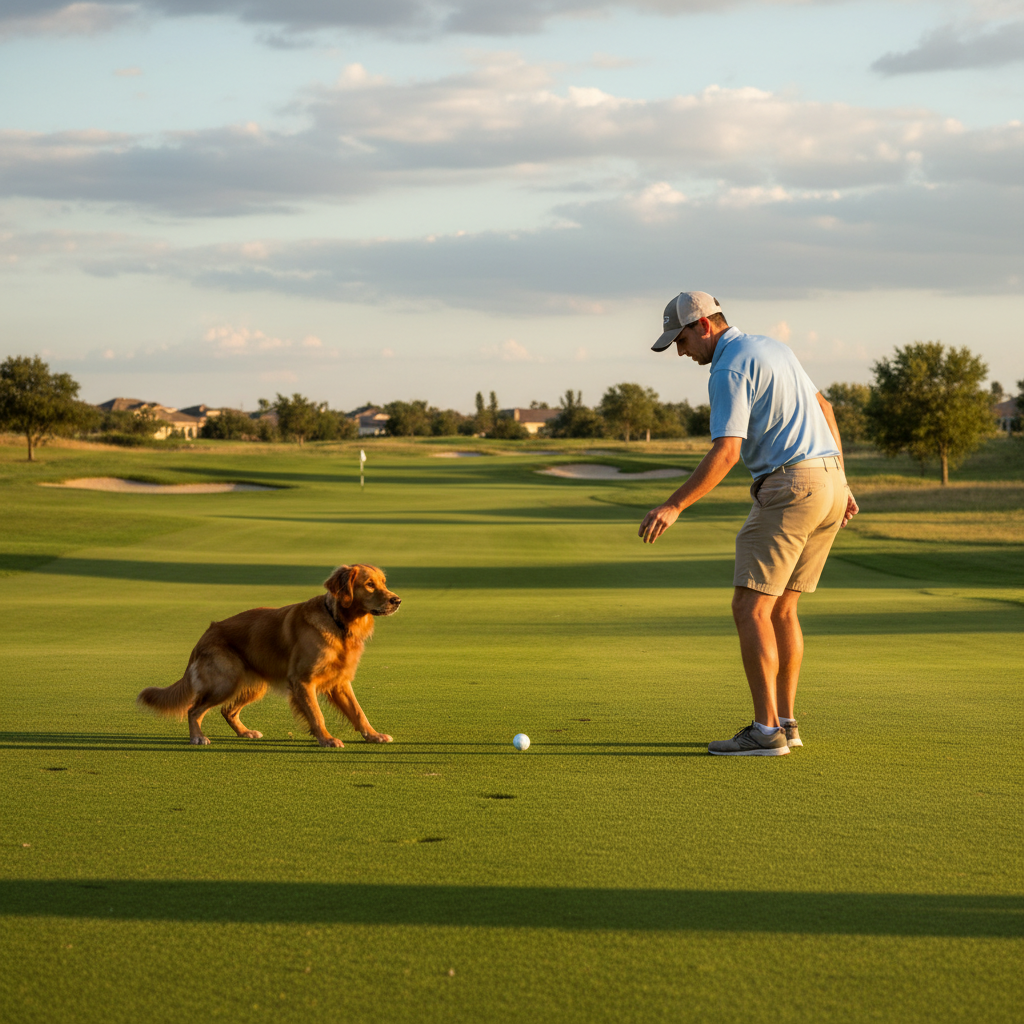
Training in the living room is vastly different from training on the edge of a fairway. Dogs are contextual learners; they may understand "Leave It" in the kitchen but fail to apply it outside. To bridge this gap, we must "proof" the behavior by gradually increasing the difficulty.
Desensitization to the Object
Bring a golf ball into your training sessions. Start with the ball stationary. Ask for a "Leave It." If successful, roll the ball slowly across the floor. If the dog lunges, you have moved too fast; go back to a stationary ball. You are rewiring the brain to see the white sphere as a cue to check in with you, rather than a cue to chase.
Distance and Distraction
Move your training to the edge of the course (on a leash). Start at a distance where the golfers are visible but far away. Practice your obedience drills here. If your dog is too fixated on the game to eat a high-value treat, you are too close. Increase the distance until the dog can focus. Over weeks, gradually decrease the distance to the course, always rewarding calm observation over reactive chasing.
Redirecting the Prey Drive
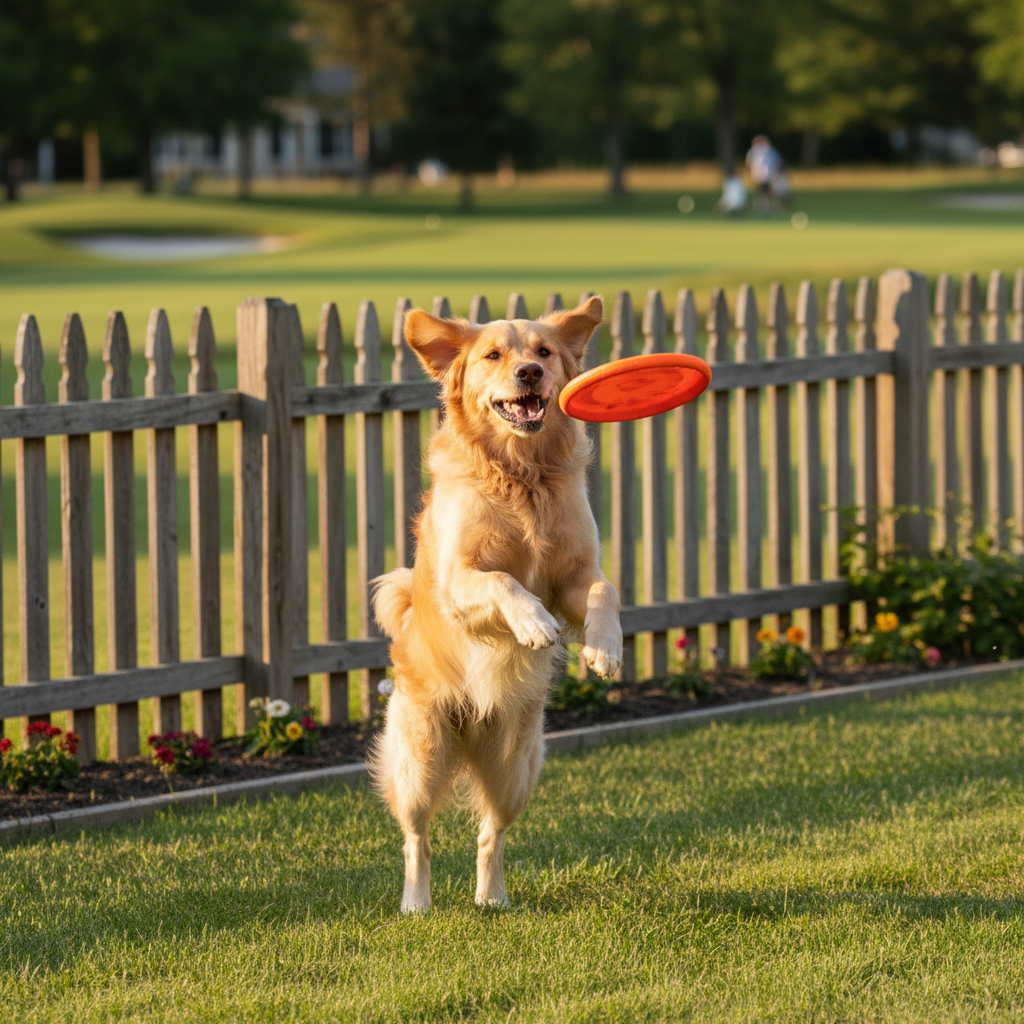
It is unfair to suppress a dog’s natural prey drive without providing an outlet for it. The urge to chase is biological. If you constantly tell your dog "No" regarding golf balls, you must provide a "Yes" elsewhere. This is called differential reinforcement.
Engage in structured play sessions with safe toys, such as frisbees, flirt poles, or rubber balls that are too large to choke on (like a Chuckit! Ultra Ball in a size appropriate for your breed). Use a specific command for these sessions, such as "Take it" or "Get it." This helps the dog distinguish between authorized prey (their toys) and forbidden prey (golf balls). By satisfying their chase instinct in a controlled, safe manner, they will have less pent-up frustration and energy to direct toward the golf course activities.
Safety and Harmony on the Green
Living near a golf course can be a wonderful experience for both you and your canine companion, provided that clear boundaries are established. The allure of the chase is powerful, but with consistent management and positive reinforcement training, it can be curbed. Remember that safety is paramount; the risk of choking or dental damage is too high to leave to chance.
By implementing the "Leave It" command, managing your environment to prevent rehearsal of the behavior, and providing healthy outlets for their energy, you can ensure your dog remains safe. Be patient, be consistent, and always advocate for your dog’s health by keeping them clear of the fairway.