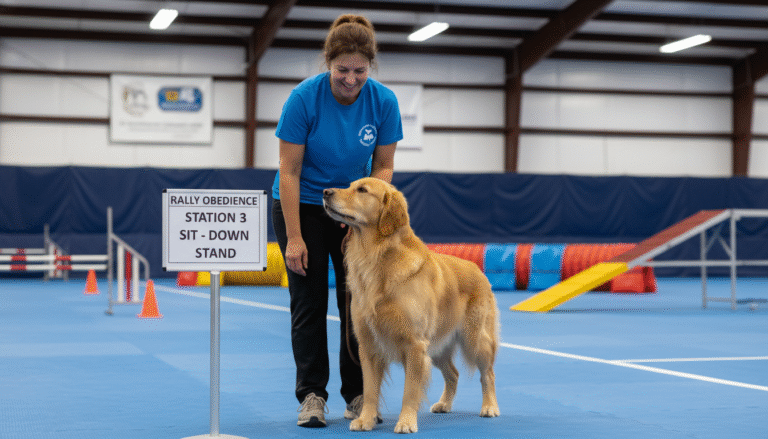

Keep Your Dog Out of the Kitchen Without Using Baby Gates
The kitchen is often referred to as the heart of the home, a place of warmth, activity, and delicious aromas. However, for a dog owner, the kitchen can also represent a zone of potential chaos and danger. From the risk of tripping over a pet while carrying a hot pot to the dangers of toxic foods like onions and chocolate falling to the floor, keeping your canine companion out of this high-traffic area is often a matter of safety rather than just convenience.
Many owners resort to baby gates to physically block access. While effective, baby gates can be cumbersome, unsightly, and inconvenient for human family members to navigate constantly. Fortunately, physical barriers are not the only solution. As a canine specialist, I can assure you that dogs are highly capable of learning spatial boundaries through consistent behavioral training.
By utilizing positive reinforcement, clear communication, and impulse control techniques, you can create an ‘invisible gate’ that your dog respects. This article will guide you through the professional methods required to teach your dog to respect the kitchen threshold without the need for plastic or metal barricades.
Understanding the Motivation: Why Your Dog Invades the Kitchen
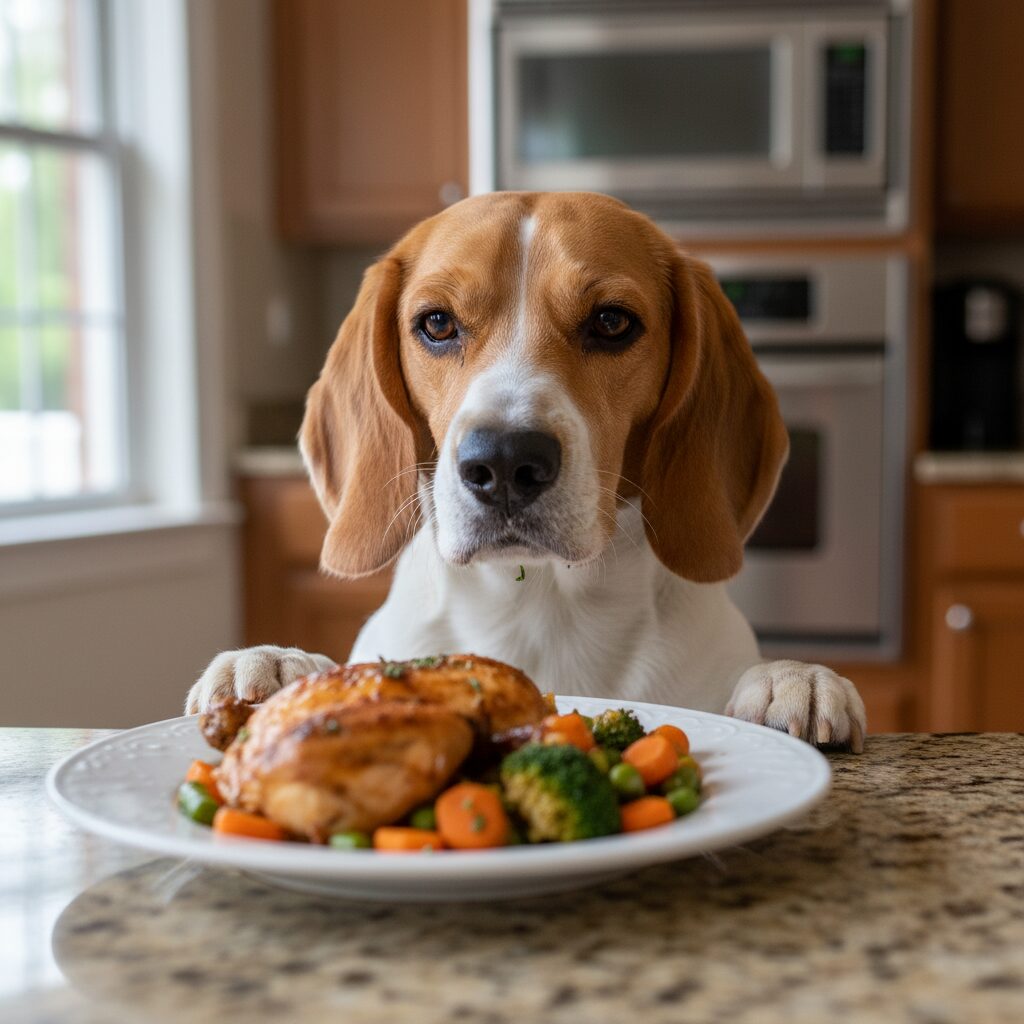
Before implementing a training protocol, it is essential to understand the ethology behind your dog’s behavior. Dogs are opportunistic scavengers by nature. The kitchen is a sensory overload of high-value rewards: the smell of roasting meat, the sound of a treat bag opening, or the accidental crumb that falls from the counter. In your dog’s mind, the kitchen is a giant slot machine that pays out frequently.
When a dog enters the kitchen and finds a scrap of food, the behavior is intermittently reinforced. This is the strongest form of conditioning, making the habit difficult to break. To successfully keep your dog out of the kitchen without a gate, you must compete with these biological drives by establishing a new rule structure where the reward for staying out is higher than the potential reward for going in.
Step 1: Defining the Threshold
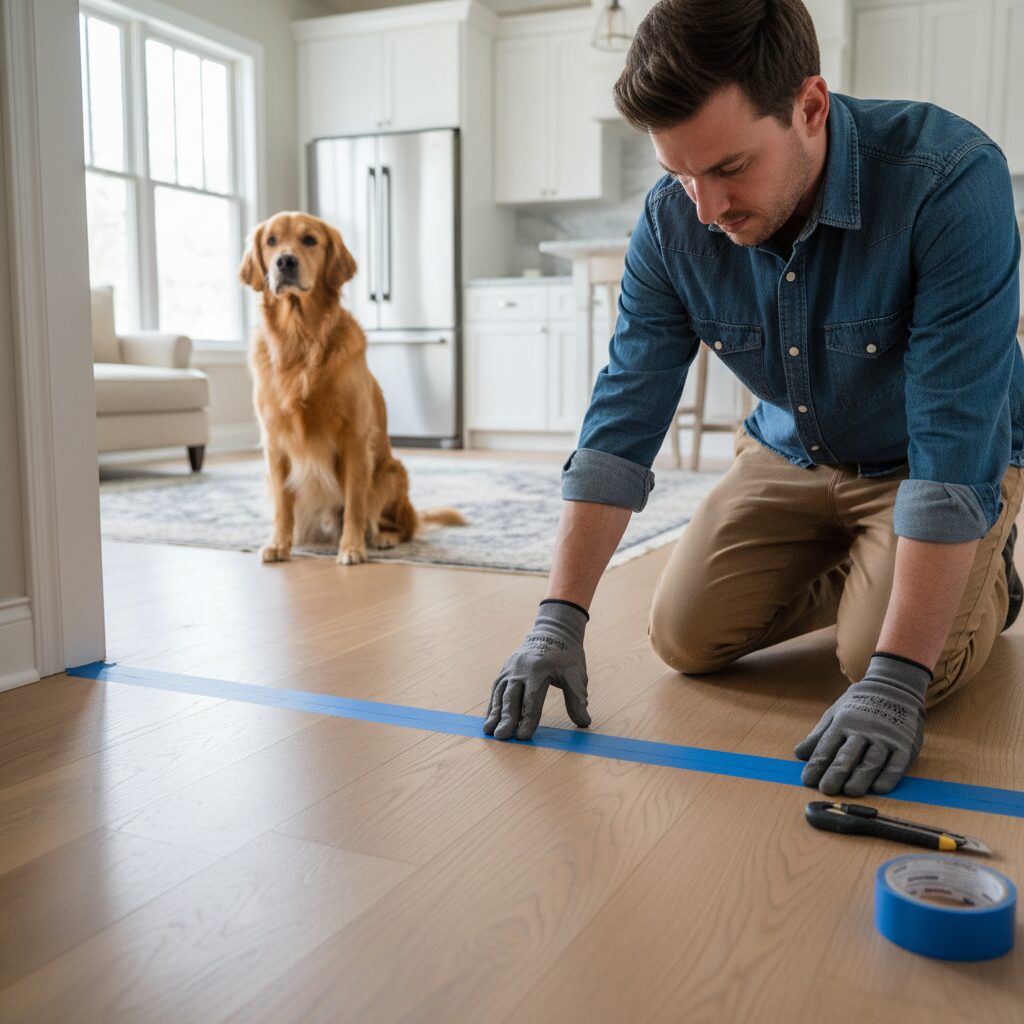
Dogs do not generalize concepts as humans do; they need concrete visual cues to understand where a boundary begins and ends. Without a physical gate, you must define the ‘invisible’ line clearly.
Visual Markers
Initially, use a visual aid to help your dog identify the boundary. Painter’s tape applied to the floor across the kitchen entrance works exceptionally well. This tape serves as a clear demarcation line during the learning phase.
The ‘Back’ or ‘Out’ Command
Stand at the threshold. If your dog attempts to cross the tape, step into their space assertively (but not aggressively) and use a verbal cue such as "Out" or "Back." Your body language should claim the space. As soon as the dog retreats behind the line, mark the behavior (using a clicker or a verbal "Yes!") and immediately toss a high-value treat behind the line, away from the kitchen. This teaches the dog that the reward happens outside the kitchen, not inside.
Step 2: Mastering the ‘Place’ Command
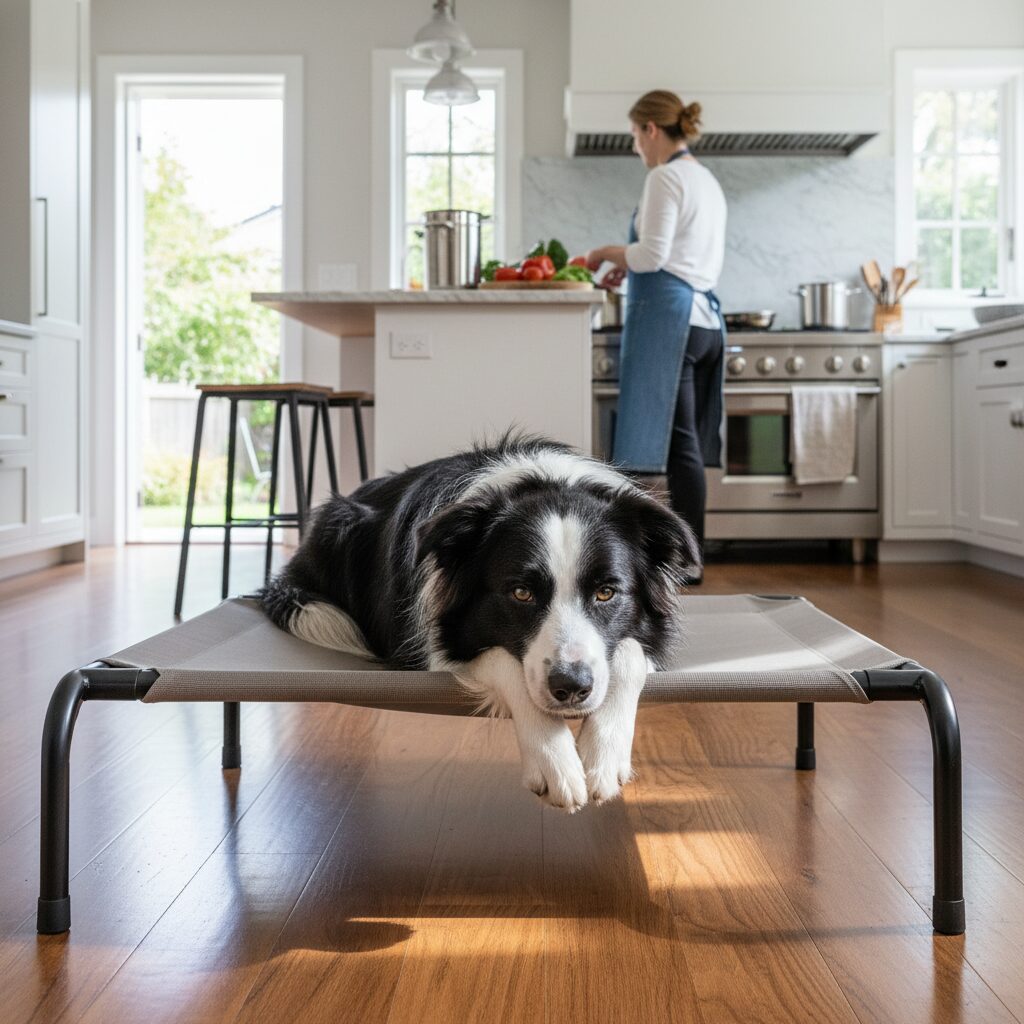
One of the most powerful tools in a trainer’s arsenal is the "Place" command. This directive tells the dog to go to a specific spot (like a mat, bed, or raised cot) and remain there until released. This is incompatible behavior; a dog cannot be underfoot in the kitchen if they are holding a stay on their bed.
- Select a Spot: Position a comfortable bed or mat just outside the kitchen boundary where the dog can still see you but is not in the way.
- Shape the Behavior: Lure your dog onto the mat and reward them heavily for lying down. Use a release word like "Free" to let them get up.
- Build Duration: Gradually increase the time the dog must stay on the mat before getting the reward.
- Add Distractions: Practice this while you are chopping vegetables or opening the fridge. If the dog breaks the command to enter the kitchen, calmly guide them back to the "Place" without a reward, then reward them after they settle again.
Step 3: Environmental Management and Prevention
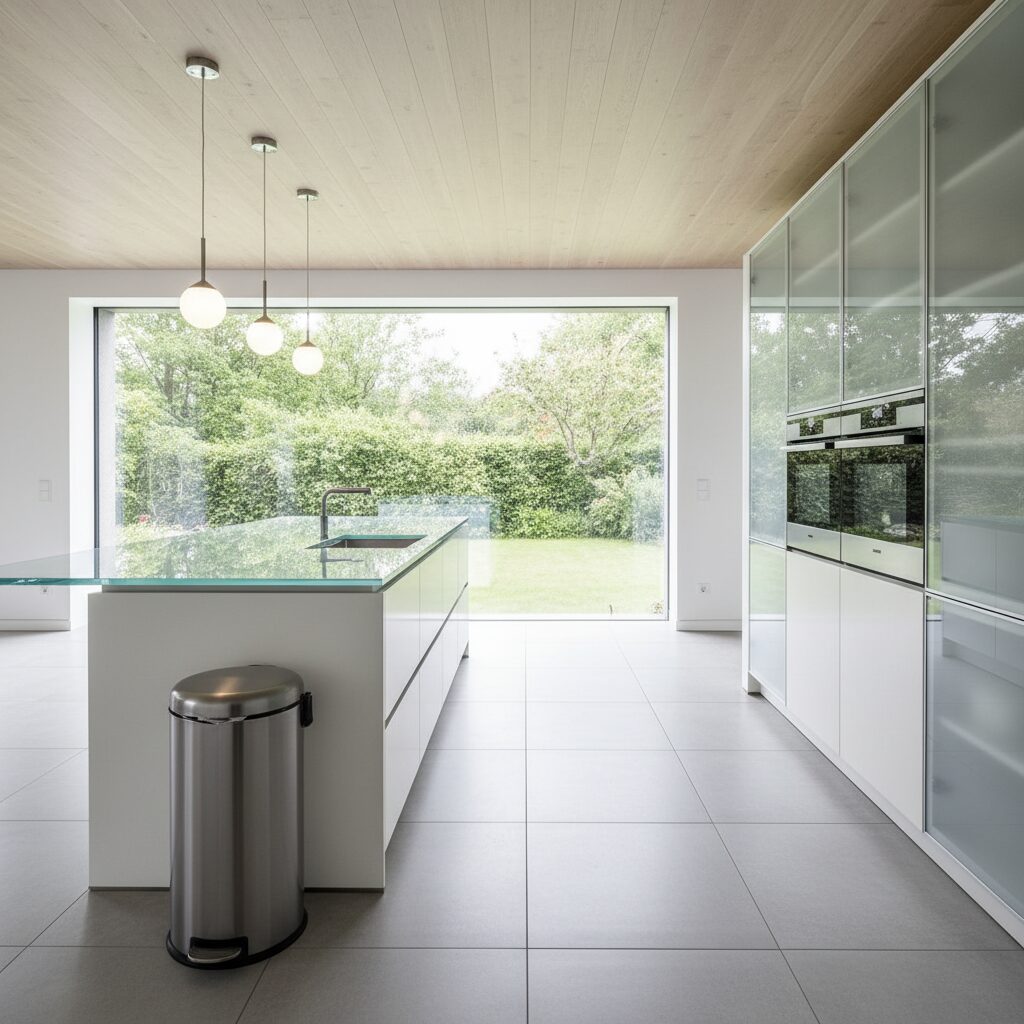
Training takes time, and during the learning process, management is critical. If your dog manages to sneak into the kitchen and steal a steak off the counter, your training will suffer a significant setback. You must remove the environmental temptations that compete with your training.
Counter Surfing Prevention
Ensure countertops are completely clear of food when you are not actively supervising. Push food items far back against the backsplash. If there is no reward to be found, the motivation to enter decreases.
Secure the Trash
Kitchen garbage cans are treasure chests for dogs. Invest in a heavy-duty trash can with a locking lid or keep the bin inside a pantry or under the sink. By eliminating the possibility of scavenging, you force the dog to look to you for direction and rewards.
Troubleshooting and Consistency
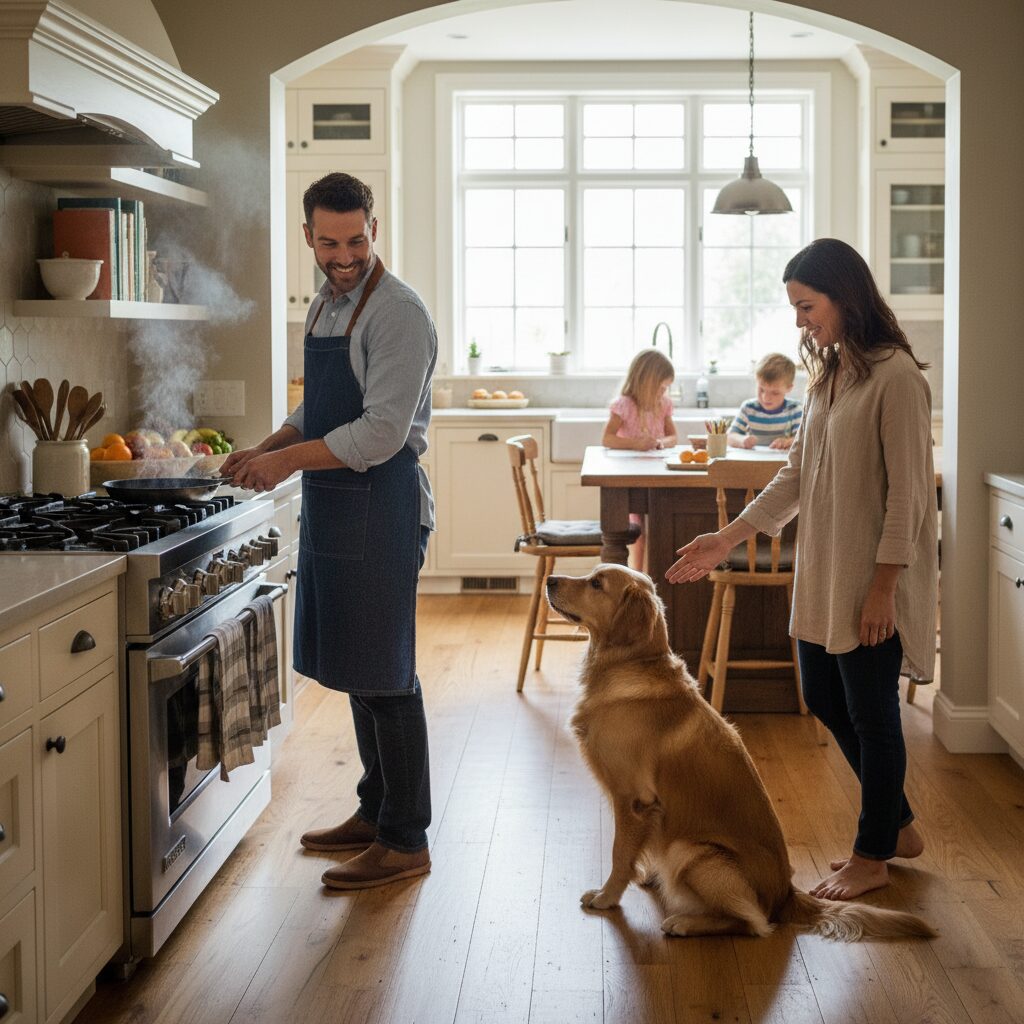
Inconsistency is the enemy of dog training. If one family member allows the dog in the kitchen while another forbids it, the dog will become confused and anxious, leading to persistent testing of the boundaries.
Everyone on Board
Ensure every member of the household enforces the invisible boundary. If the dog crosses the line, the reaction must be the same every time: a verbal correction and redirection out of the space.
Extinction Bursts
Be prepared for an "extinction burst." When you first stop allowing the dog in the kitchen, they may try harder to get in, barking or whining. This is a sign that the training is working—they are frustrated that the old rules no longer apply. Remain calm, do not give in, and continue to reward the dog for staying on the correct side of the boundary line.
A Safer, Calmer Home
Teaching your dog to stay out of the kitchen without using baby gates is a testament to the bond and communication you share. It moves beyond simple physical restriction and fosters psychological impulse control. While this process requires patience, repetition, and unwavering consistency, the result is a safer environment for your pet and a more peaceful cooking experience for you.
Remember that training is a journey. There will be days of regression, but by sticking to the protocols of defining the threshold, utilizing the "Place" command, and managing the environment, you will establish a respectful boundary that lasts a lifetime.