Is Your Dog Terrified of Ceiling Fans? Try This Simple Desensitization Method
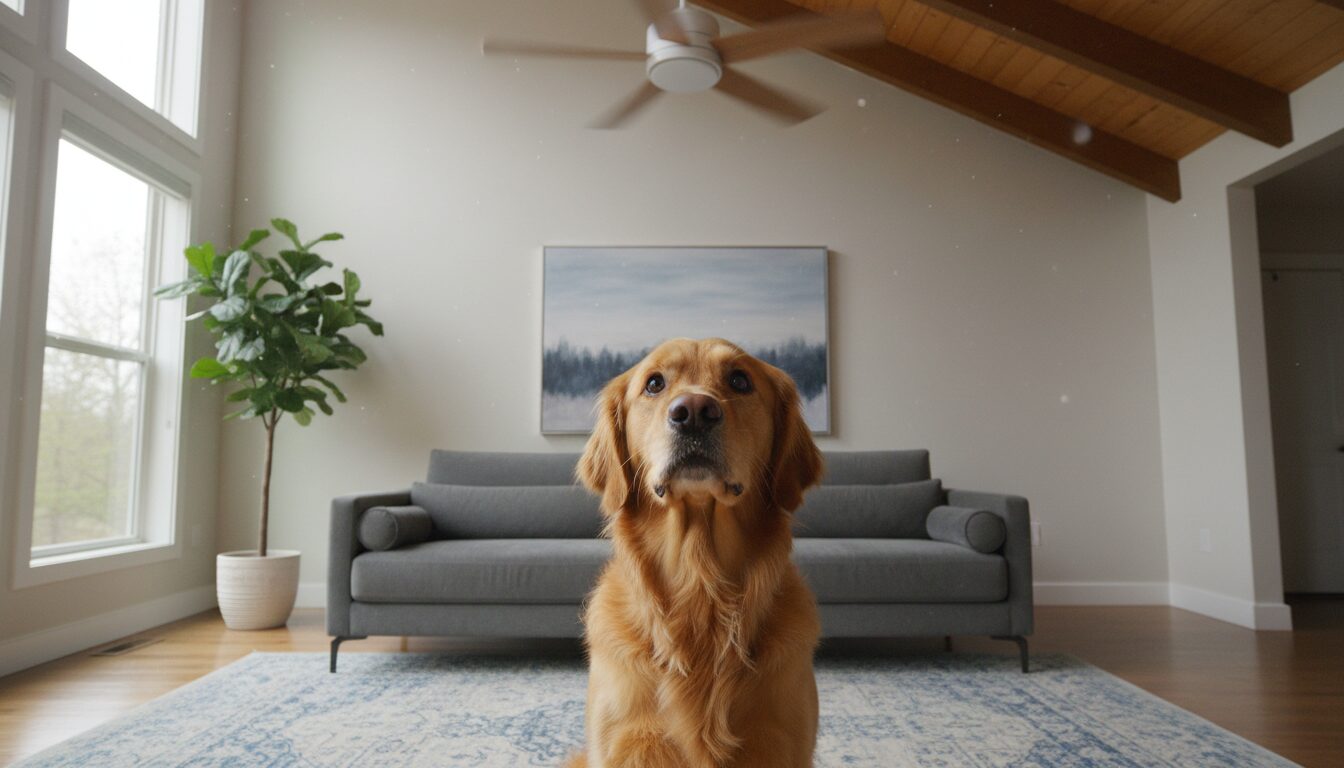
It is a scenario that baffles many pet owners: your dog, usually brave and confident, suddenly cowers, trembles, or flees the room the moment you flip a switch. If your canine companion is terrified of ceiling fans, you are not alone. This specific phobia is surprisingly common in the canine world, often leaving owners confused about the cause and unsure of the solution.
To a human, a ceiling fan provides comfort. To a dog, however, the spinning blades can represent a confusing visual disturbance, a threatening shadow, or even a source of ultrasonic noise that we cannot hear. Ignoring this fear can lead to generalized anxiety, where your dog begins to avoid specific rooms or becomes constantly hyper-vigilant within the home.
As a canine behavior specialist, I approach this issue not by forcing the dog to ‘get over it,’ but by changing their emotional response to the stimulus. In this guide, we will explore the root causes of this fear and implement a proven, step-by-step desensitization and counter-conditioning protocol designed to turn that terrifying spinning monster on the ceiling into a neutral, or even positive, part of your dog’s environment.
Understanding the Fear: Why Ceiling Fans?
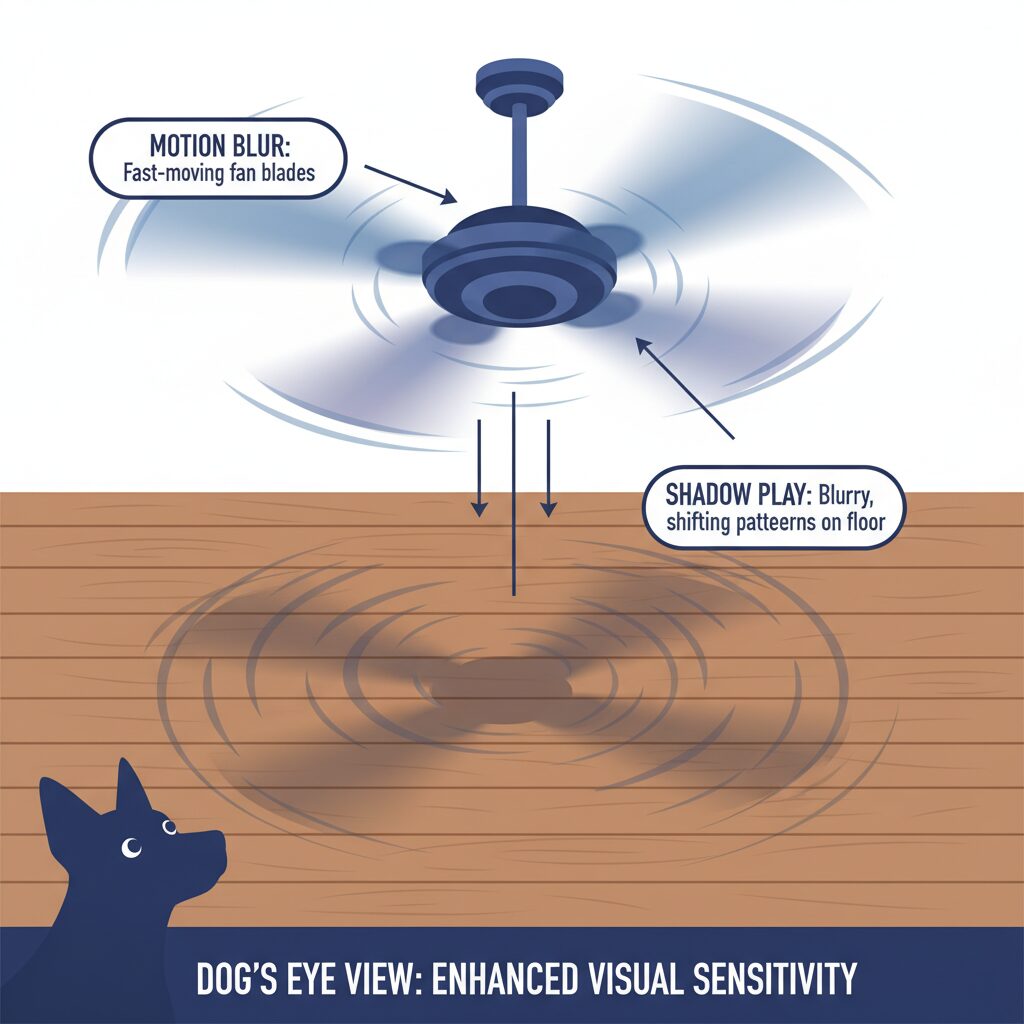
Before we can fix the behavior, we must understand the trigger. Anthropomorphism often leads us to believe dogs see the world exactly as we do, but their sensory processing is vastly different. There are three primary reasons why a ceiling fan might trigger a fear response in your dog:
- Visual Processing and Flicker Fusion: Dogs have a higher ‘flicker fusion rate’ than humans. This means they process visual information faster. While a spinning fan looks like a smooth blur to us, a dog may see it as a choppy, strobe-like movement that is visually disorienting or threatening.
- Predatory Drift and Shadows: In the wild, threats often come from above (birds of prey). The moving shadows cast by a ceiling fan across the floor can mimic the movement of a predator, triggering an instinctual survival response.
- Mechanical Noise: Even if the fan sounds silent to you, the motor may be emitting a high-frequency hum or vibration that is audible and irritating to your dog’s sensitive ears.
Recognizing that this is a genuine sensory assault, rather than ‘bad behavior,’ is the first step toward empathy and successful training.
Preparation: Tools for Success
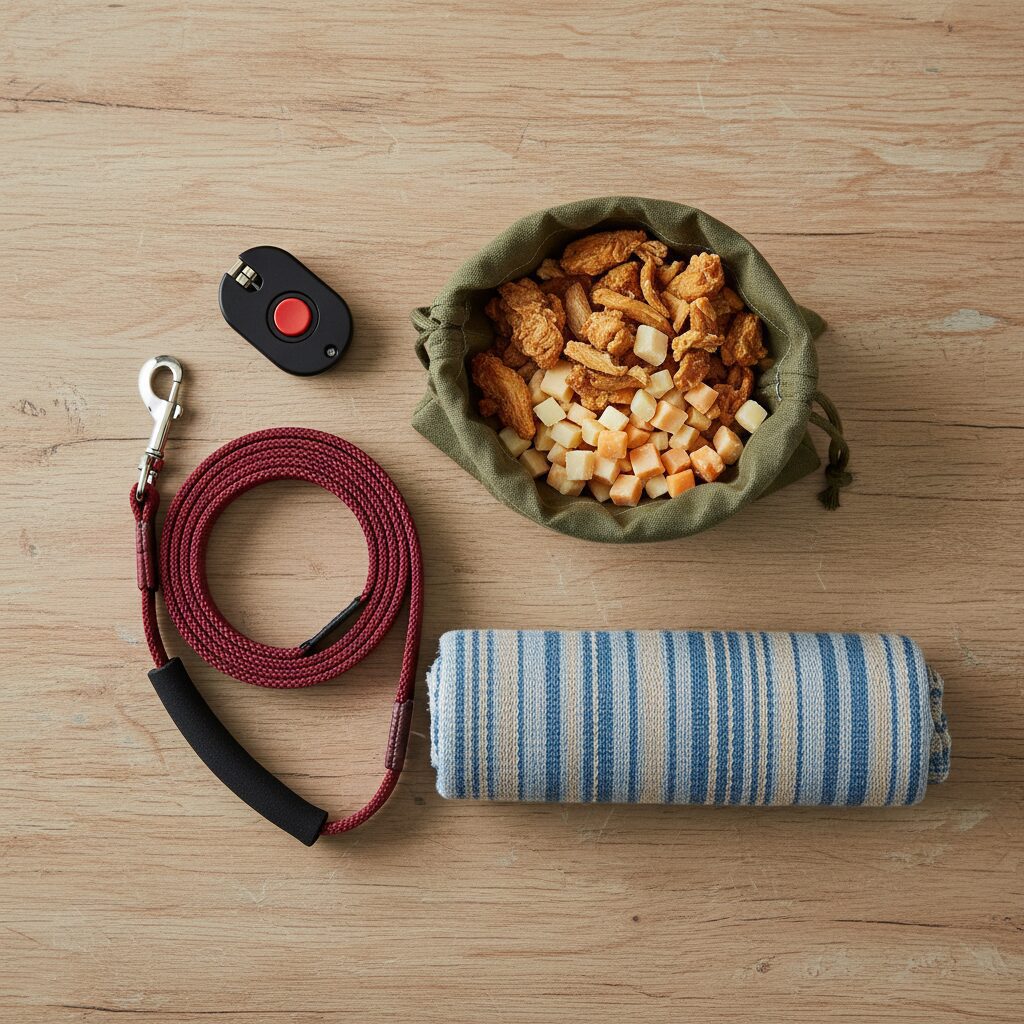
Desensitization is a precise science. To execute this method effectively, you need to prepare your environment and your toolkit. Attempting this training without high-value motivators will likely result in failure, as the fear of the fan will outweigh a mediocre reward.
The Toolkit
- High-Value Treats: Dry kibble will not work here. You need something distinct and smelly, such as boiled chicken, freeze-dried liver, or string cheese. The reward must be powerful enough to compete with the fear.
- A Clicker or Marker Word: You need a way to mark the exact moment your dog makes the right choice. If you do not use a clicker, choose a consistent word like ‘Yes!’
- A Safe Zone: Identify a place in the room (or an adjacent room) where the dog feels safe. This is your starting line.
Ensure the environment is otherwise quiet. Turn off the TV and minimize foot traffic. You want your dog’s focus to be entirely on you and the fan.
Step 1: Establishing a Baseline with the Fan Off
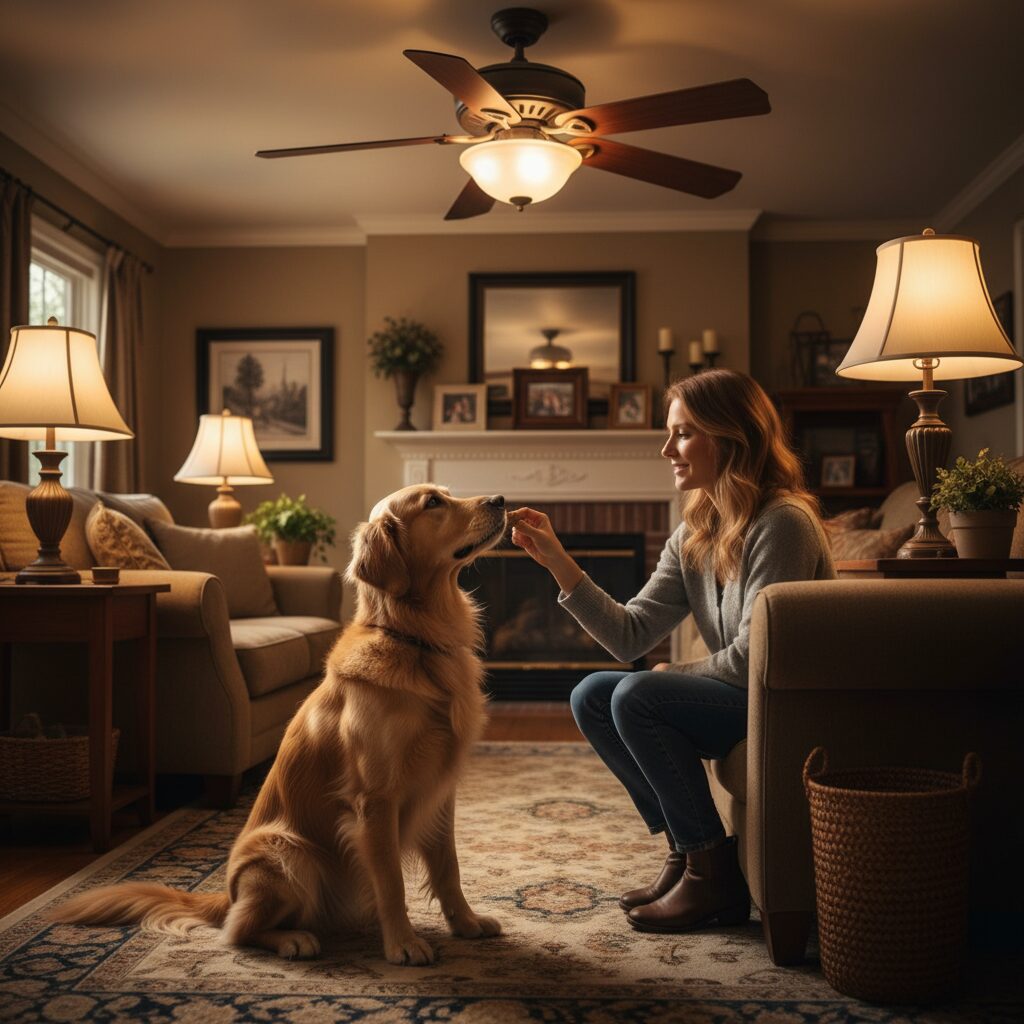
We begin with the fan completely stationary. For some dogs, even the presence of the object is enough to cause anxiety. If your dog refuses to enter the room even when the fan is off, you must start this step at the threshold of the doorway.
The Process:
- Stand near the fan (or under it, if the dog permits) with the fan turned off.
- Encourage your dog to look at the fan. You can point to it or simply wait for their gaze to shift upward.
- The second your dog looks at the stationary fan, mark (click/”Yes!”) and reward immediately.
- Repeat this 10 to 15 times.
The goal here is to create a positive association with the object itself. We are teaching the dog: ‘Looking at that thing on the ceiling makes chicken appear.’ Do not proceed to the next step until your dog is happy and relaxed around the stationary fan.
Step 2: The Distance and Duration Method
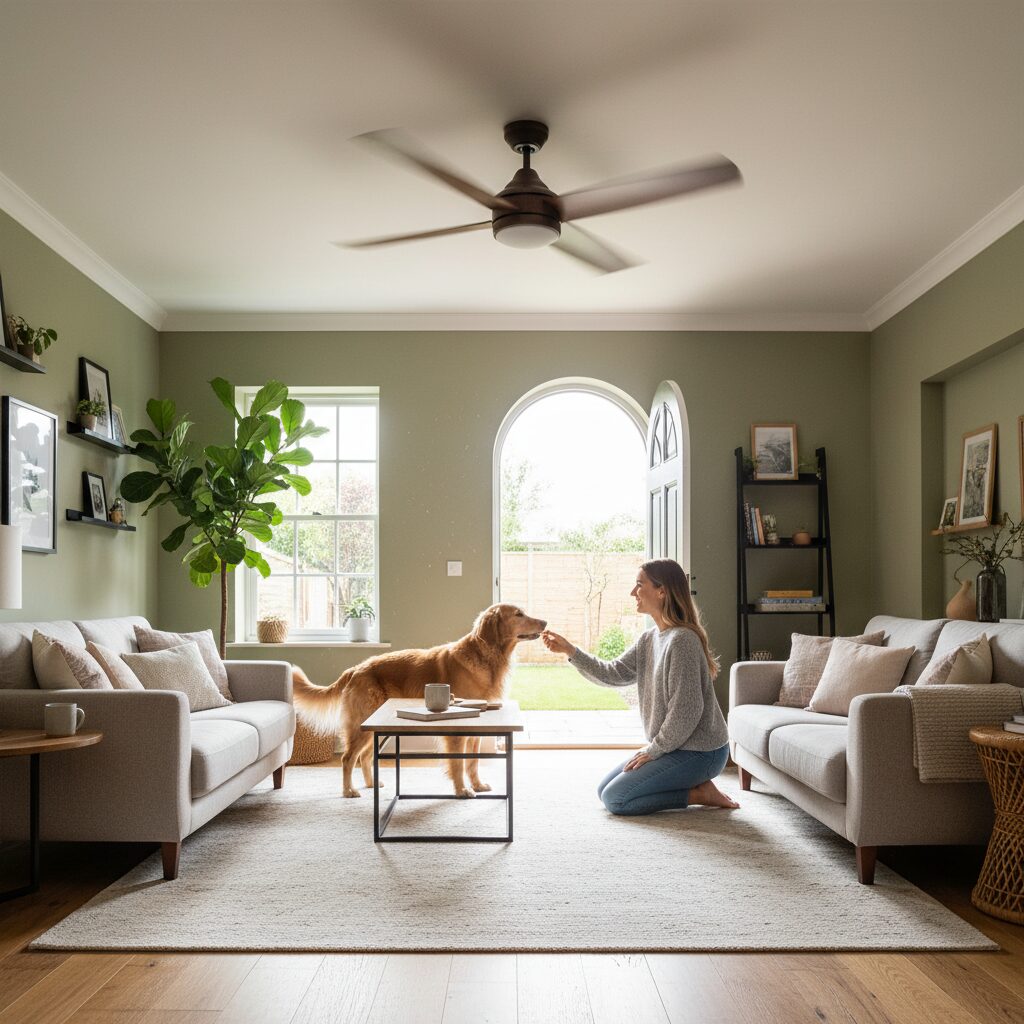
This is the most critical phase. We are now introducing the trigger (movement) but managing the intensity by controlling the distance. This is known as working ‘under threshold’—the point where the dog notices the scary thing but is not yet reacting with fear.
Setting the Scene
Move your dog to the farthest point in the room, or even into the hallway looking in. Have a helper stand by the fan switch, or use a remote if available.
The Execution
- Signal the Helper: Have your helper turn the fan on the lowest possible setting.
- Immediate Reward: The moment the fan starts moving, begin ‘open bar’ feeding. This means you are feeding treat after treat, continuously, while the fan is moving.
- Stop the Fan: Have the helper turn the fan off. Simultaneously, stop feeding.
This creates a clear contingency: Fan moving = delicious treats. Fan stopped = boring reality. Repeat this in short bursts (10-15 seconds of fan movement) until the dog looks at you expectantly when the fan turns on.
Step 3: Closing the Gap
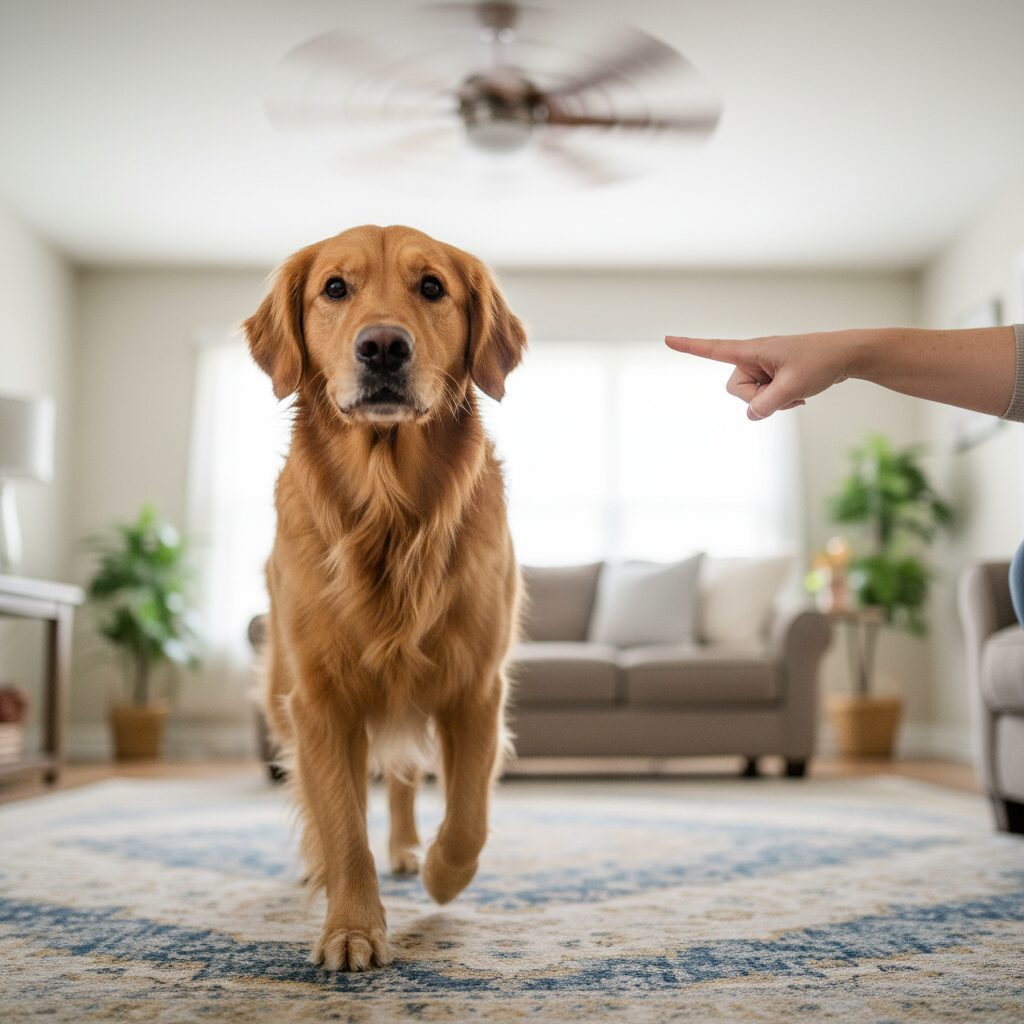
Once your dog is comfortable watching the slow-moving fan from a distance, it is time to gradually decrease the space between the dog and the trigger. This must be done in inches, not feet.
Move one step closer to the fan. Repeat the ‘open bar’ feeding technique described in Step 2. If the dog shows any sign of stress (lip licking, whale eye, trembling, or refusing food), you have moved too close, too fast. Back up to the previous safe distance and reset.
Progression Tips:
- Vary the Angle: Don’t just walk in a straight line. Approach from different sides of the room to generalize the safety.
- Increase Speed (Cautiously): Only when the dog is comfortable directly under the fan at the lowest speed should you attempt to increase the fan’s speed to medium. Treat this as a new trigger and start from a distance again.
Troubleshooting Common Mistakes
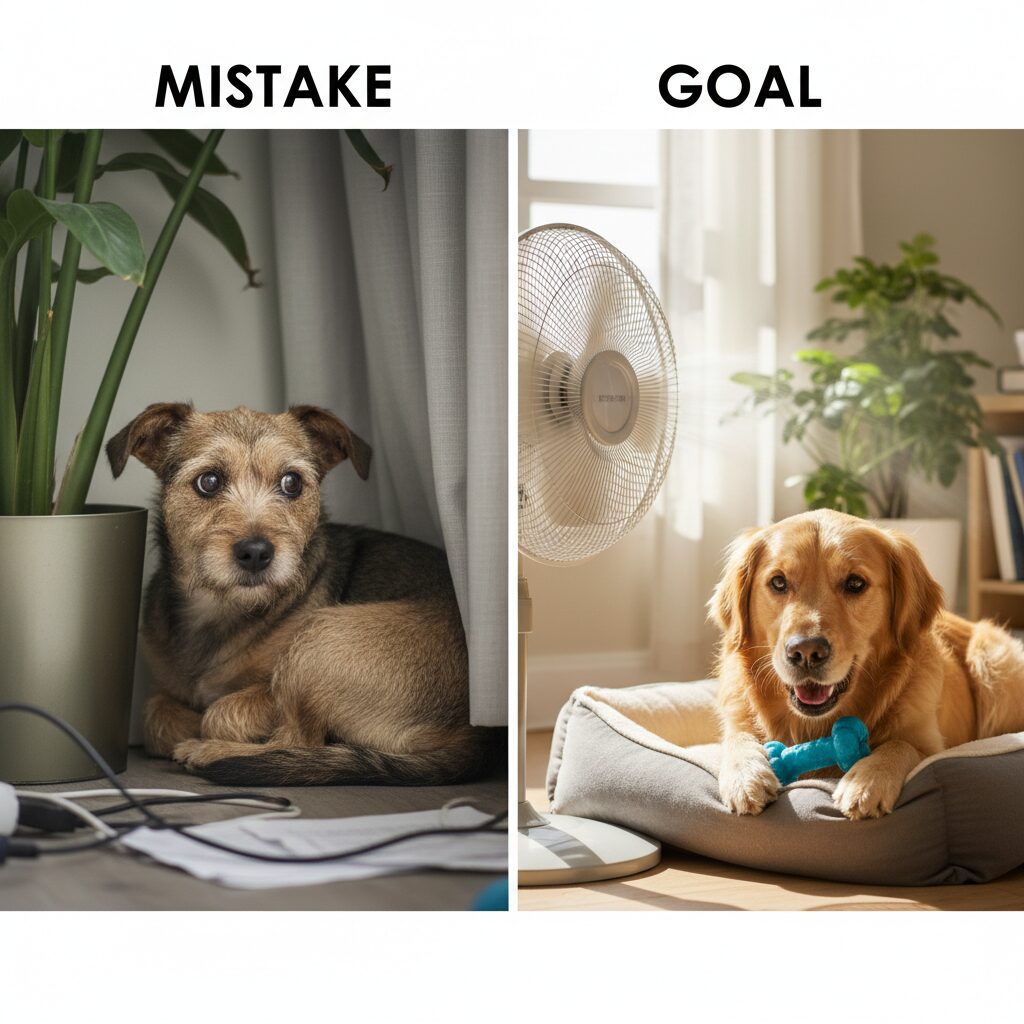
Even with the best intentions, owners often inadvertently reinforce the fear or stall progress. Avoid these common pitfalls to ensure success:
- Flooding: Never force your dog to stay in the room with the fan on full blast hoping they will ‘get used to it.’ This is called flooding, and it usually results in sensitization (making the fear worse) rather than desensitization.
- Soothing the Fear: If your dog panics, do not coddle them with ‘It’s okay, good boy.’ In canine psychology, this can validate their anxiety. Instead, be a calm, confident leader. Remove them from the situation without fanfare and try again later at a lower intensity.
- Rushing the Process: This protocol might take three days, or it might take three months. Moving to the next step before the dog is ready is the number one cause of training regression.
Patience is the Key to Rehabilitation
Helping a dog overcome a phobia of ceiling fans is rarely an overnight fix. It requires a commitment to observing your dog’s body language and a dedication to the principles of desensitization. By breaking the fear down into manageable components—presence, distance, and movement—and pairing them with high-value rewards, you can rewire your dog’s brain to view the ceiling fan as a predictor of good things rather than a threat.
Remember, the goal is a dog that is neutral and relaxed in their own home. If you find your dog’s fear is severe and accompanied by other anxieties, do not hesitate to consult with a board-certified veterinary behaviorist for additional support. With patience and consistency, you can help your companion reclaim their confidence.