Don’t Throw It Away! Turn Salmon Skin Into The Ultimate Omega-3 Chew
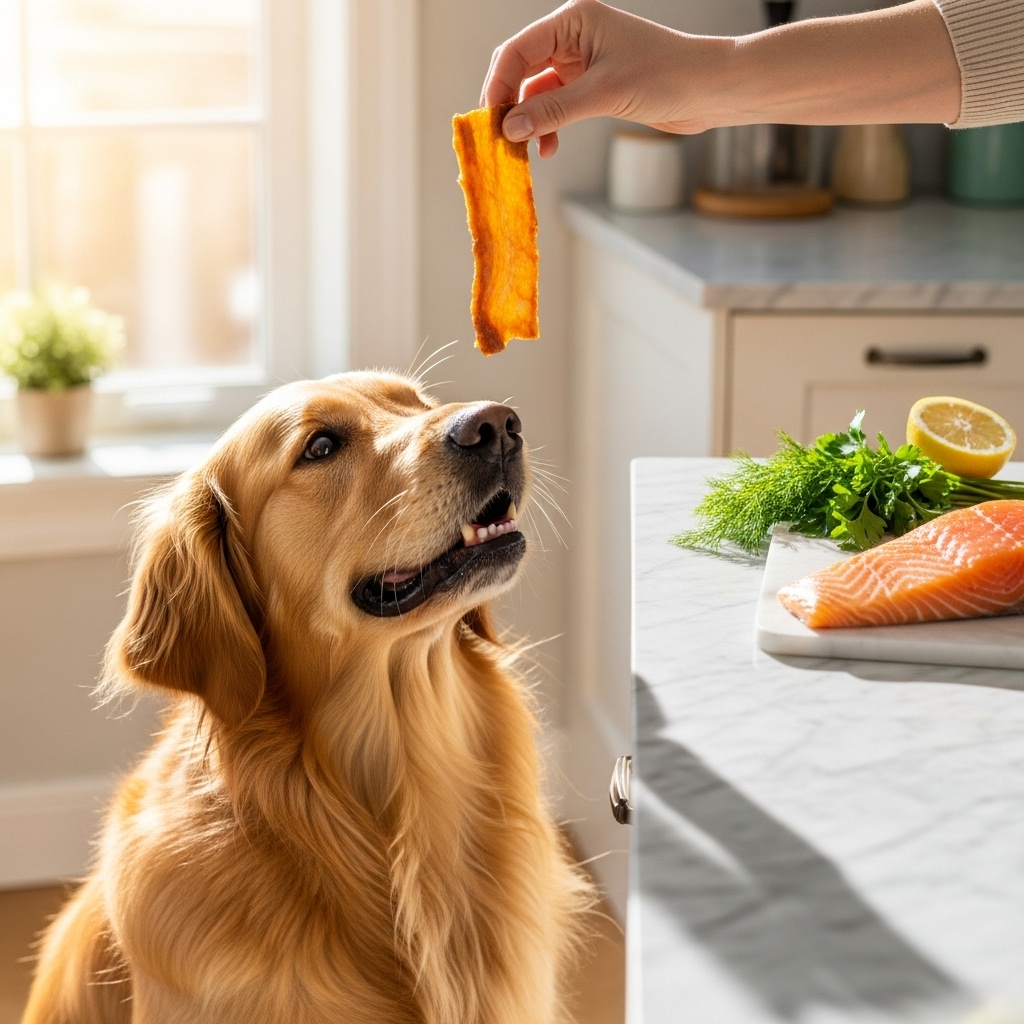
Picture this: you’ve just cooked a delicious salmon dinner. You slide the perfectly flaky fillet onto your plate, leaving behind the skin on the cutting board or in the pan. Your first instinct is probably to scrape it into the trash, right? Well, hold on a second! That silvery, often-discarded piece of skin is actually a treasure trove of nutrients for your furry best friend.
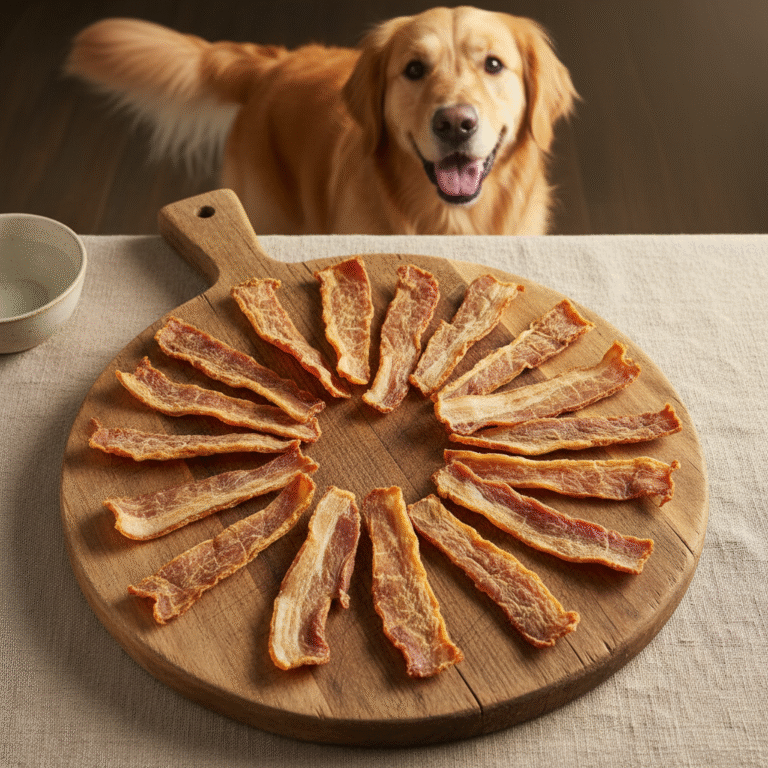
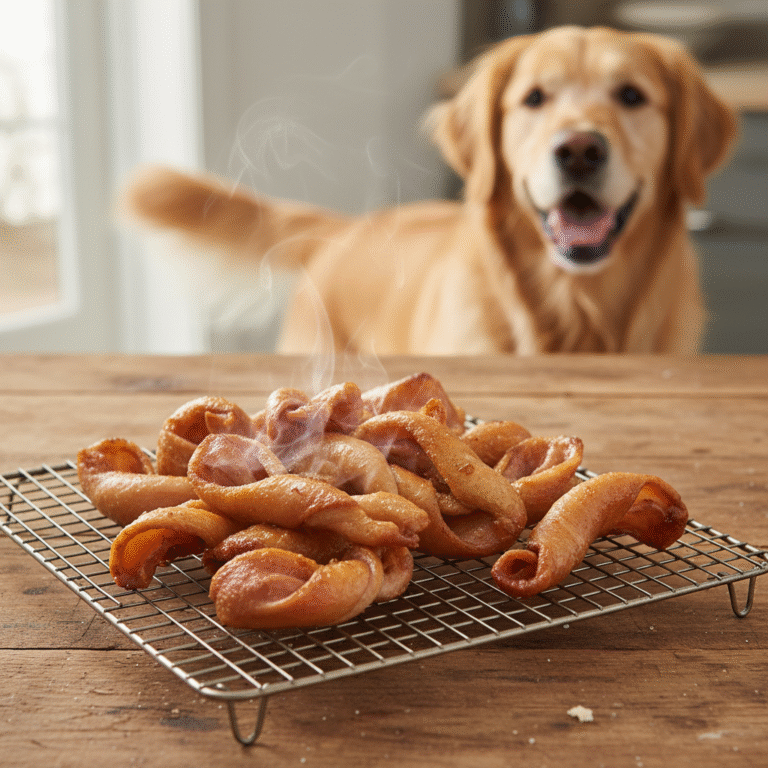
Believe it or not, salmon skin can be transformed from kitchen scrap to a gourmet, health-boosting chew for your dog. It’s packed with powerful Omega-3 fatty acids that can do wonders for their coat, joints, and even brain function. In this guide, we’ll walk you through everything you need to know to safely and easily turn salmon skin into the ultimate crunchy treat your pup will go wild for.
Why Salmon Skin is a Superfood for Your Pup
So, what makes this simple fish skin so special? It’s all about the incredible concentration of nutrients packed inside. While we see it as a byproduct, it’s a direct source of some of the most beneficial compounds for canine health.
The Omega-3 Powerhouse
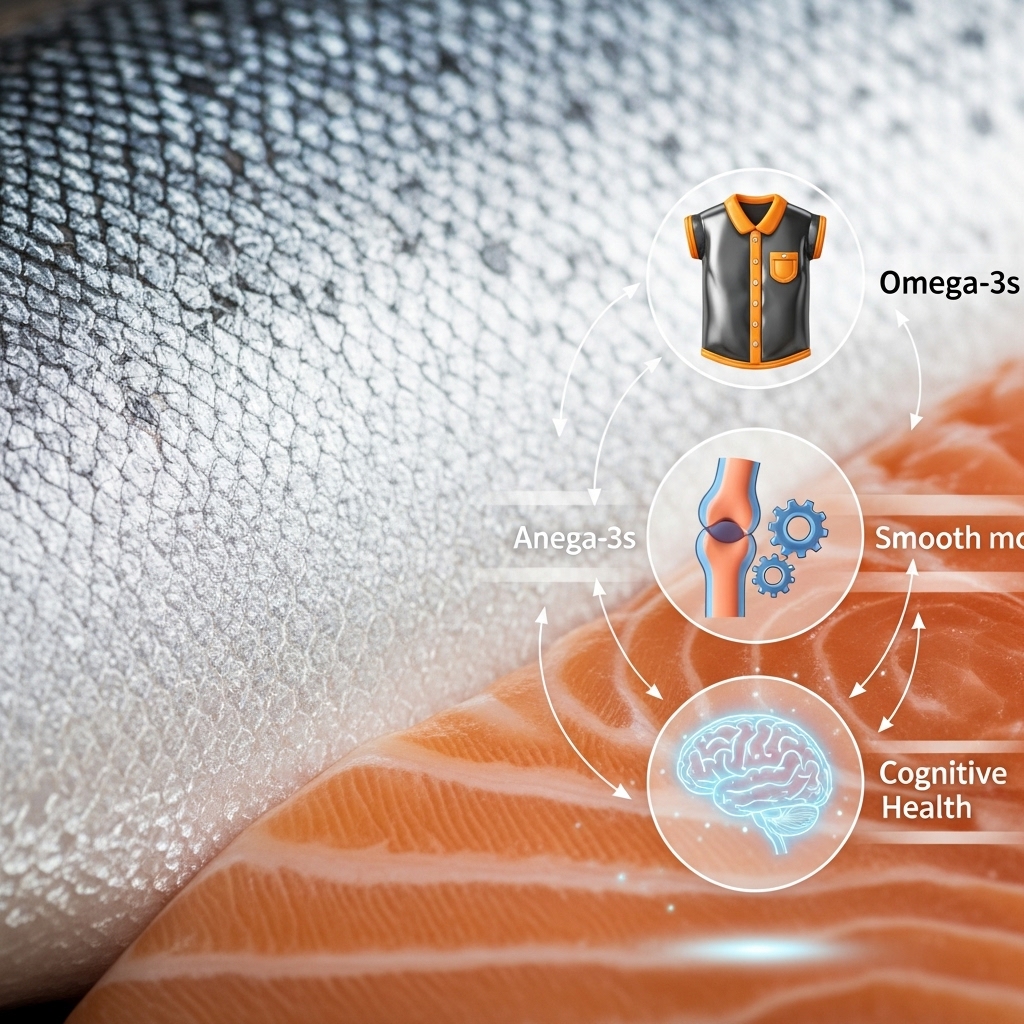
The star of the show is, without a doubt, the high concentration of Omega-3 fatty acids, specifically EPA (eicosapentaenoic acid) and DHA (docosahexaenoic acid). These aren’t just buzzwords; they are essential fats that dogs can’t produce efficiently on their own. Here’s what they do:
- Shiny Coat & Healthy Skin: Omega-3s are fantastic for reducing inflammation. This can help soothe dry, itchy skin and reduce shedding, leading to a glossier, healthier coat.
- Joint Support: The anti-inflammatory properties also work wonders for joint health, helping to ease the discomfort of arthritis in older dogs and supporting mobility in dogs of all ages.
- Brain Booster: DHA is a critical component of brain and eye development in puppies. For senior dogs, it can help support cognitive function, keeping their minds sharp.
More Than Just Omegas
Beyond the fatty acids, salmon skin is also a great source of collagen. This protein is vital for maintaining healthy connective tissues, which includes skin, tendons, and ligaments. It provides elasticity and strength, contributing to overall resilience and health.
Giving your dog a salmon skin chew is like offering them a natural supplement for their skin, joints, and brain, all wrapped up in a crunchy, delicious package.
The Safe & Simple Way to Make Salmon Skin Chews
Ready to become your dog’s favorite chef? Making these chews is incredibly easy, but the key is to do it safely. Your dog’s health comes first, so follow these steps closely.
What You’ll Need:
- Raw, unseasoned salmon skin
- A sharp knife or kitchen shears
- A baking sheet
- Parchment paper
The Step-by-Step Process:
- Source Your Skin: Start with high-quality skin. Whenever possible, opt for skin from wild-caught salmon, as it typically has lower levels of contaminants than some farmed varieties. The most important rule: the skin must be plain. No salt, pepper, oils, lemon juice, or any other seasonings you used for your own meal.
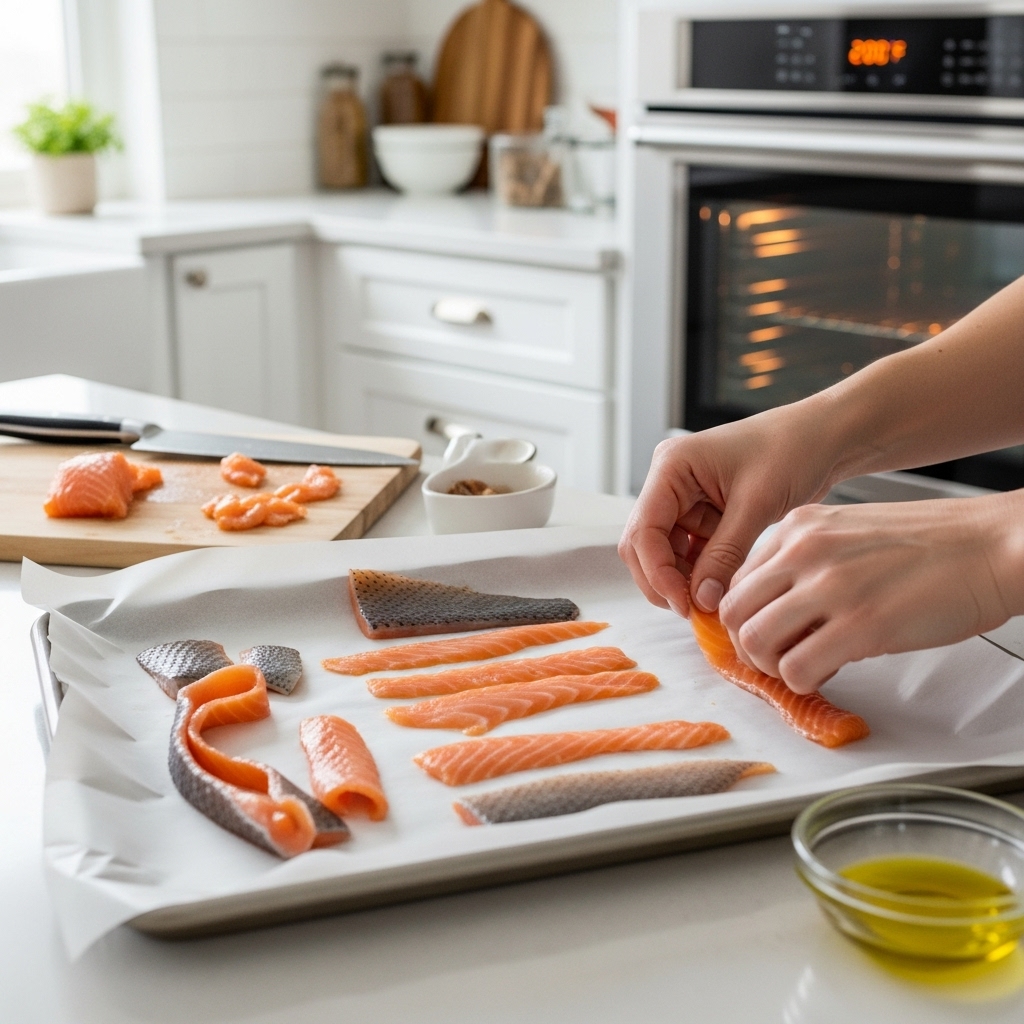
- Prepare the Skin: If the skin has any scales, you can easily scrape them off with the back of a knife. Pat the skin completely dry with a paper towel. A dry skin results in a crispier chew. Cut the skin into manageable strips, about 1-2 inches wide. You can make them as long or short as you like, depending on the size of your dog.
- Cook It Low and Slow: This is the most crucial step. You want to dehydrate the skin, not fry it. Frying can create harmful compounds and adds unnecessary fat. Preheat your oven to a low temperature, around 200°F (or 95°C). Line a baking sheet with parchment paper and lay the salmon skin strips flat, making sure they don’t overlap.
- Bake to Perfection: Let the skins bake for several hours. The exact time will depend on the thickness of the skin and your oven, but it could take anywhere from 2 to 6 hours. You’re looking for them to be completely dry, brittle, and crispy, like a potato chip. They should snap easily. If they are chewy or flexible, they need more time.
- Cool and Store: Once they’re perfectly crispy, turn off the oven and let them cool completely. Store the finished chews in an airtight container in the refrigerator. They should last for a couple of weeks.
Hold On! Potential Risks and What to Watch For

While salmon skin is fantastic, it isn’t without a few caveats. Being a responsible pet parent means knowing the potential downsides so you can make the best choices for your specific dog.
Fat Content and Pancreatitis
Salmon skin is high in fat. While it’s healthy fat, too much can be a problem for some dogs, especially those prone to pancreatitis or with sensitive stomachs. A sudden introduction of a high-fat treat can cause gastrointestinal upset. Always start with a very small piece to see how your dog tolerates it.
Contaminants like Mercury
Fish can absorb heavy metals like mercury from the water they live in. Larger, predatory fish tend to have higher levels. Choosing smaller, wild-caught salmon (like Coho or Sockeye) over farmed Atlantic salmon can help minimize this risk.
Choking Hazards and Bones
Ensure you remove any stray pin bones before you cook the skin. Additionally, make sure the chew is an appropriate size for your dog to prevent them from swallowing it whole. As with any chew or treat, always supervise your dog while they are enjoying their salmon skin snack.
Expert Tip: Never, ever give your dog the cooked salmon skin from your own plate. It’s often cooked in oils, butter, salt, garlic, or onions, all of which can be harmful or even toxic to dogs. The chews you make must be 100% plain.
How Much is Too Much? A Guide to Serving Sizes
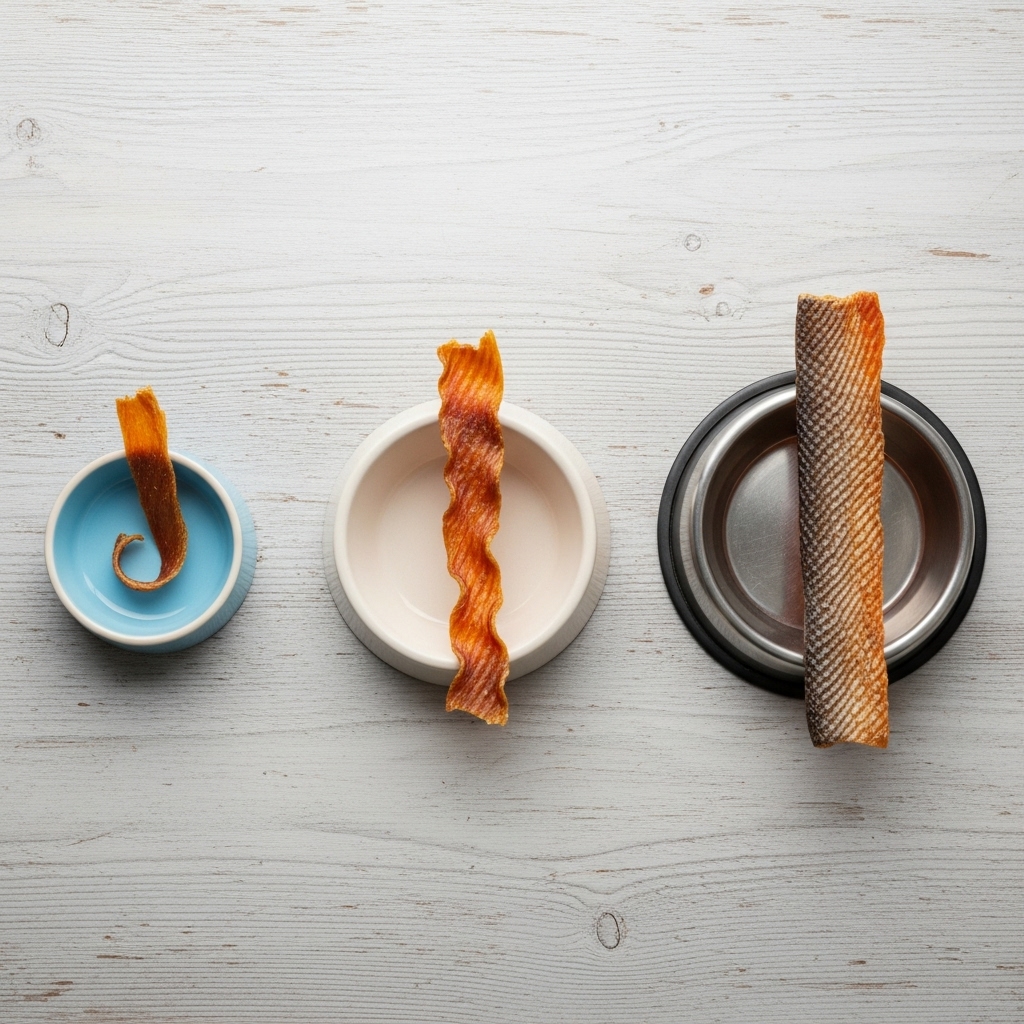
Moderation is everything when it comes to treats. The golden rule of dog nutrition is that treats should make up no more than 10% of your dog’s total daily caloric intake. Salmon skin is a rich, high-value treat, so a little goes a long way.
When you first introduce salmon skin, start with a tiny piece to ensure it doesn’t cause any stomach upset. Once you know your dog handles it well, you can use the following as a general guideline a few times per week:
Here is a simple table to help you visualize safe serving suggestions:
| Dog Size | Weight | Suggested Serving (per treat session) |
|---|---|---|
| Toy Breed | Under 10 lbs | One small, thin strip (1-2 inches long) |
| Small Breed | 10-25 lbs | One medium strip (3-4 inches long) |
| Medium Breed | 25-50 lbs | One to two medium strips |
| Large Breed | Over 50 lbs | One large strip or two medium strips |
Remember, this is a treat, not a meal replacement. It’s a special bonus for being a good boy or girl, not a daily staple. Always provide plenty of fresh water, as the crunchy, dehydrated nature of the chew might make your dog thirsty.
Conclusion
So, the next time you’re preparing a salmon feast, think twice before you toss that skin! With a little bit of time and care, you can turn a piece of kitchen waste into a ridiculously tasty, incredibly healthy, and satisfyingly crunchy chew for your dog. It’s a wonderful way to reduce waste and give your pup a powerful boost of Omega-3s that will have them looking and feeling their best.
Just remember the golden rules: keep it plain, cook it low and slow, and serve it in moderation. Your dog will thank you with happy wags and a shiny coat!